
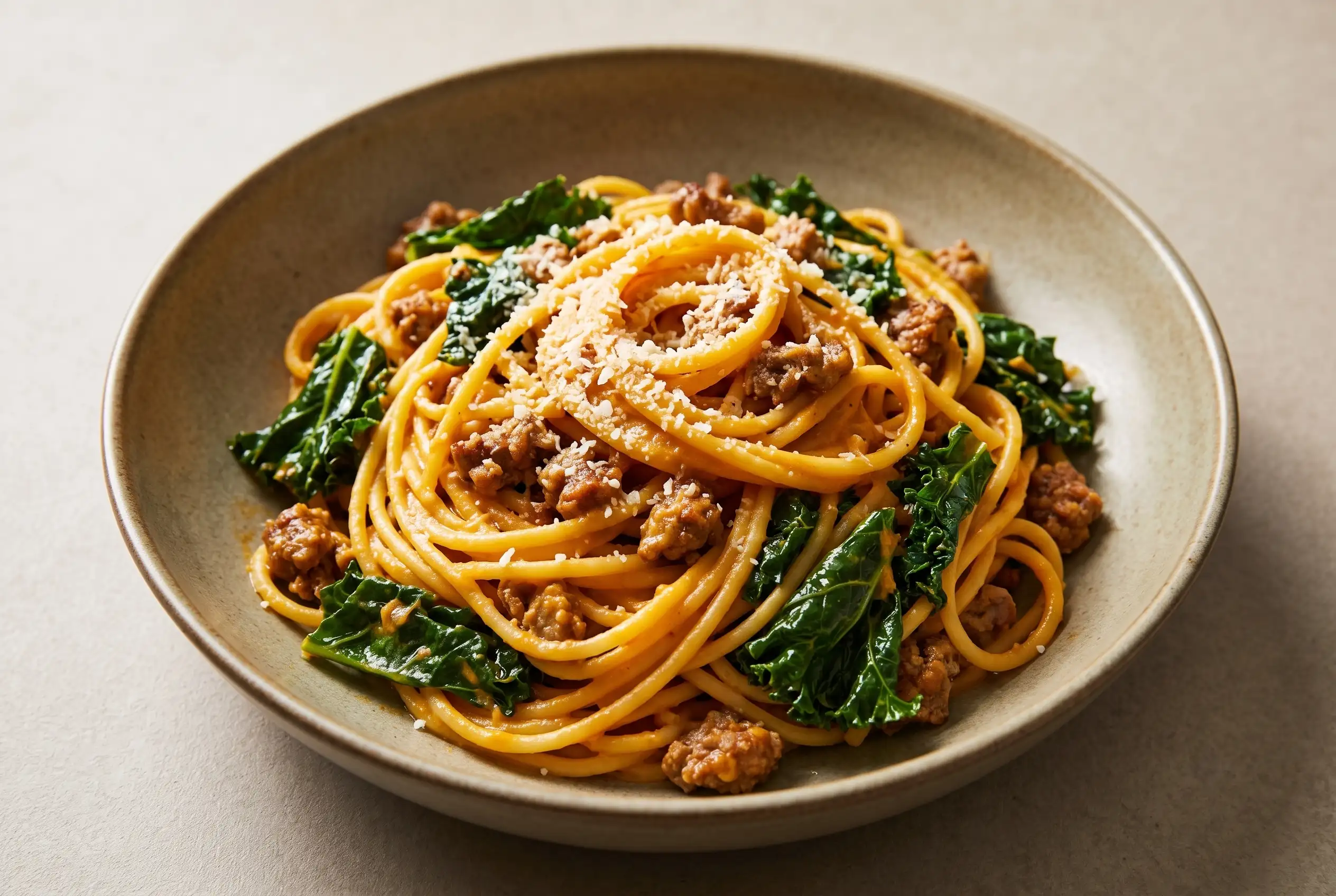
Pumpkin spaghetti brings together a silky pumpkin sauce, seasoned turkey, tender pasta, and garlicky kale in a cool-weather dinner built around contrasting textures. The combination works because the sauce carries sweetness from pumpkin and tomato while the turkey, herbs, and cheese introduce savory depth. Unlike a simple creamy pasta, this version balances a smooth blended base with distinct toppings that remain noticeable in every serving.
Pumpkin spaghetti builds flavor through roasted tomato depth
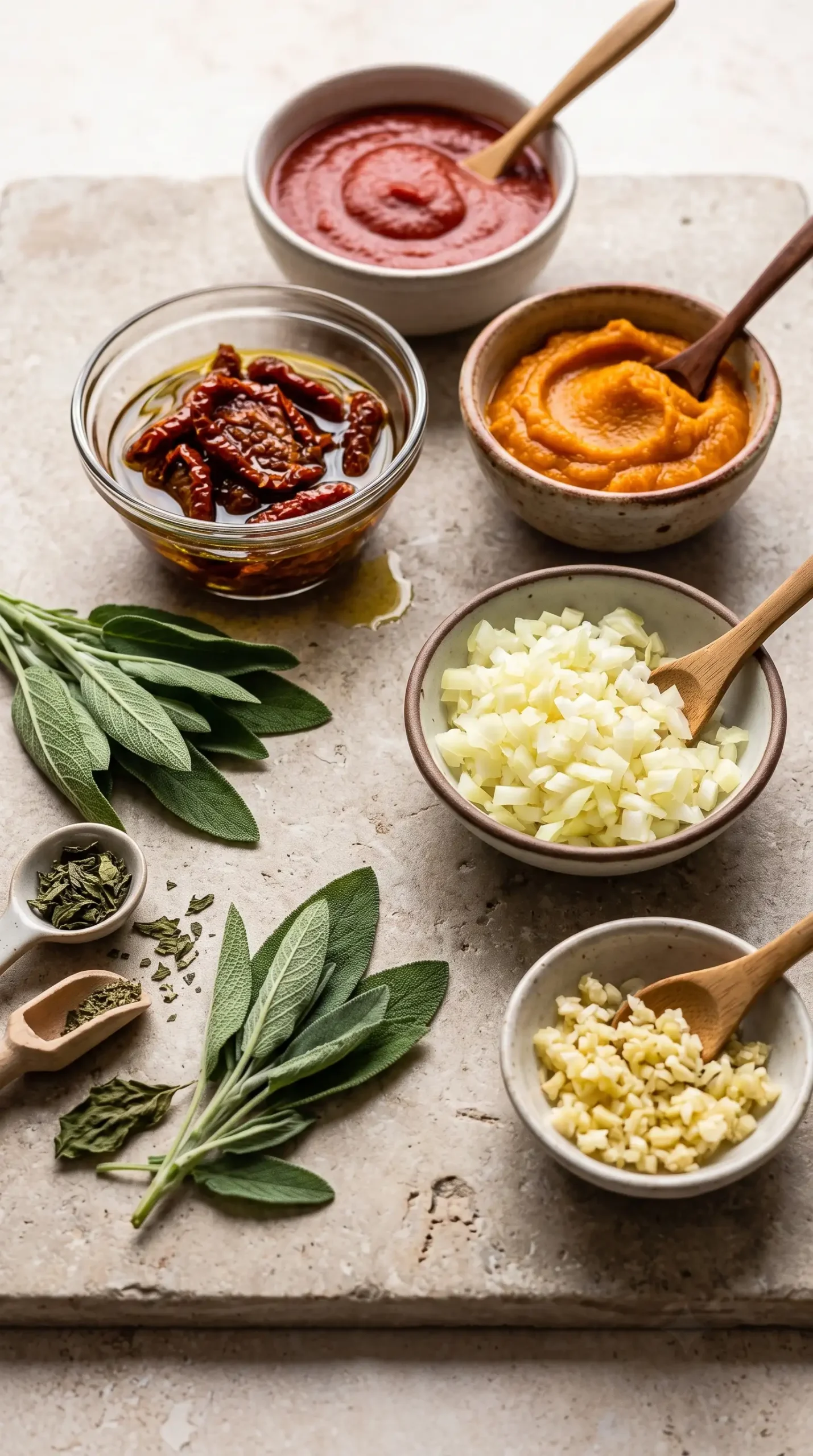
The character of pumpkin spaghetti comes from the interaction between pumpkin puree, tomato puree, and sun dried tomatoes. The sun dried tomatoes are especially important because their concentrated flavor gives the sauce a deeper foundation before the pumpkin is added. Their oil also helps carry the aromatic flavors of onion, garlic, and sage throughout the pot. A rich tomato and garlic combination can be explored through creamy garlic pasta with sun-dried tomatoes, where the sauce focus remains on balancing bold aromatics with a smooth pasta coating.
Tomato elements keep the pumpkin from becoming overly sweet. The puree creates acidity and body, while the sun dried tomatoes contribute a richer, more intense note. Together, they create a pumpkin spaghetti sauce that feels balanced and savory instead of tasting like a dessert-inspired pasta.
Fresh aromatics shape how those flavors develop. Sage adds an earthy quality that matches the pumpkin, while basil supports the tomato side of the sauce. A small amount of cinnamon works in the background by reinforcing the warm flavors without making the dish taste like a sweet pumpkin preparation.
Pumpkin puree and sage shape the pumpkin spaghetti sauce
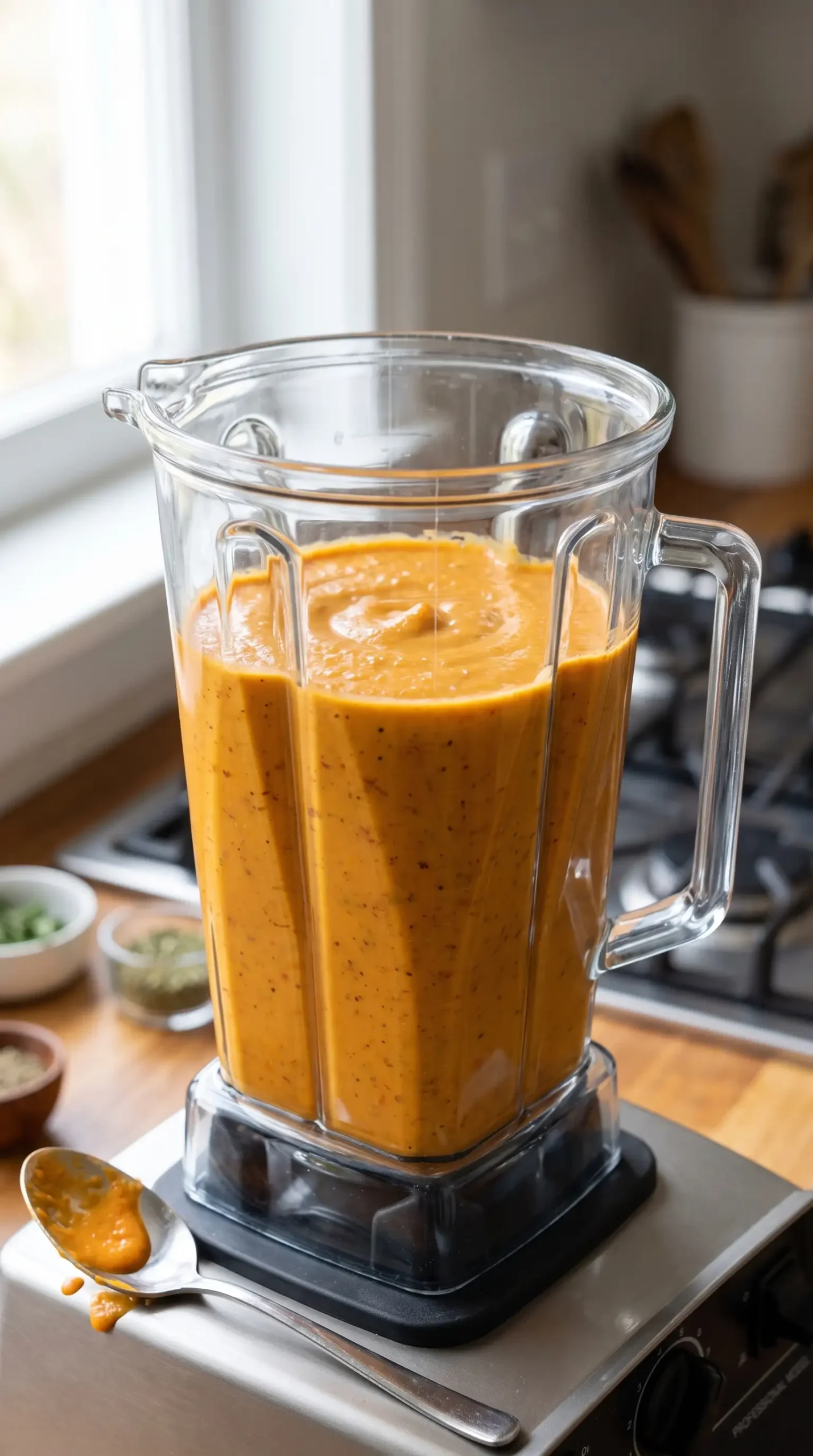
The ingredient decisions behind creamy pumpkin spaghetti have the biggest effect on the finished texture. Pumpkin puree provides natural thickness, but the sauce depends on blending it with broth and tomato components so the consistency remains smooth and easy to coat pasta.
| Ingredient choice | Effect on sauce | Best handling approach |
|---|---|---|
| Pumpkin puree | Creates a creamy body and mild sweetness | Blend thoroughly with the liquid base |
| Sun dried tomatoes | Add concentrated savory tomato flavor | Use some of the infused oil for sautéing |
| Sage | Provides an earthy herbal note | Mince finely so the flavor distributes evenly |
| Cream or half and half | Softens acidity and rounds the sauce | Stir in after blending |
The dairy component changes the personality of the sauce after blending. Cream or half and half smooths the sharper tomato notes and creates the rich finish associated with a creamy pumpkin spaghetti dish.
Choosing quality pumpkin puree matters because the vegetable base remains prominent throughout the meal. A smooth puree blends easily with the other ingredients and helps the sauce cling to long pasta shapes without requiring a heavy texture.
Bucatini choices control the creamy pumpkin spaghetti texture
Long pasta shapes are especially effective for this sauce because they allow the pumpkin mixture to surround each strand. Bucatini and perciatelli offer a substantial bite, while spaghetti provides a lighter option that still captures the creamy coating.
The pasta shape influences how the sauce feels at the table. Thicker strands hold onto the blended pumpkin and tomato mixture, creating a more generous bite, while thinner noodles highlight the smoothness of the sauce itself.
Maintaining the connection between pasta and sauce depends on combining them while both are warm. The turkey and sauce should coat the noodles evenly so the creamy texture remains integrated instead of separating into individual layers.
Kale preparation keeps pumpkin pasta with kale balanced
Kale provides a fresh contrast to the richness of pumpkin pasta with kale. Removing the stems and cooking the leaves until tender creates a softer texture that fits naturally beside the creamy sauce and seasoned pasta.
Turkey seasoning creates a savory contrast in pumpkin spaghetti
The seasoned turkey mixture gives pumpkin spaghetti a hearty element without overwhelming the sauce. Browning the meat with onion, chili powder, and garlic powder creates a savory layer that complements the sweeter notes from pumpkin and tomato.
Moisture control matters when cooking the turkey. Adding small amounts of water when needed helps keep the mixture tender while the seasonings distribute through the meat. The finished turkey should remain flavorful and easy to combine with the sauce instead of forming a dry topping.
The seasoning approach also keeps the dish balanced. Chili powder introduces warmth, garlic powder reinforces the aromatic base, and onion connects the meat with the flavors already developed in the sauce.
- Turkey texture: Keep the meat moist so it blends smoothly with the pasta.
- Seasoning balance: Use warm spices that support pumpkin without hiding it.
- Serving contrast: Pair the rich sauce with the fresh kale finish.
Sauce consistency determines successful cooking control for pumpkin spaghetti
Cooking control matters most when managing the sauce texture. The pumpkin mixture needs enough liquid to move easily through the pasta, but it should still have enough body to remain attached to each strand.
Blending changes the structure of the sauce by combining the pumpkin, tomatoes, aromatics, and broth into a unified base. An immersion blender allows the mixture to stay in the pot, while a countertop blender can create an especially smooth finish when handled carefully.
Adjustments during cooking should focus on observation. If the sauce becomes too thick, additional broth or water can loosen it. If it seems too thin, gentle simmering allows excess moisture to reduce while preserving the creamy texture.
Small adjustments can also improve how the sauce connects with the noodles. Adding a little pasta water helps sauce cling because the starch in the cooking liquid supports a smoother, better-integrated finish.
Common mistakes can flatten pumpkin spaghetti flavors
Pumpkin spaghetti depends on balance, so small preparation choices can change the result. Avoiding a few common issues helps protect the sauce texture and the contrast between components.
- Over-thick sauce: A sauce that reduces too far can become difficult to toss with pasta. Add liquid gradually until it coats the noodles easily.
- Muted seasoning: Pumpkin and cream can soften flavors, so tasting the sauce after blending helps determine whether more salt, pepper, or heat is needed.
- Harsh kale flavor: Kale that is only lightly warmed may remain tough. Cooking it until wilted creates a better match for the creamy pasta.
Another issue occurs when the turkey, pasta, and sauce are served as separate elements instead of being combined. Tossing them together allows the savory meat juices and pumpkin sauce to create a more connected dish.
Pasta and sauce pairings create serving flexibility
The blended sauce works with several long pasta shapes, making it adaptable while keeping the pumpkin flavor at the center. Bucatini, perciatelli, and spaghetti each create a slightly different eating experience based on how much sauce they hold.
Leftover pumpkin spaghetti benefits from careful reheating
Stored portions of pumpkin spaghetti can become thicker as the pasta absorbs the sauce. Gentle reheating with a small splash of liquid helps restore a smoother texture without drying out the noodles.
Garlic oil choices refine the kale finish
Garlic infused olive oil creates a subtle garlic flavor in the kale without leaving small pieces throughout the greens. Regular olive oil with minced garlic also works, while gently warming whole smashed cloves and removing them afterward provides another way to add aroma.
Cinnamon and basil guide the pumpkin spaghetti flavor profile
The supporting seasonings define the difference between a simple pumpkin sauce and a savory pasta dinner. Basil reinforces the tomato foundation, while the tiny amount of cinnamon enhances the warm notes already present from pumpkin and sage.
Seasonings should remain supportive because the main appeal of pumpkin spaghetti comes from the relationship between creamy sauce, pasta, turkey, and greens. Each addition works best when it strengthens the overall balance.
Pumpkin spaghetti brings creamy texture through layered cooking
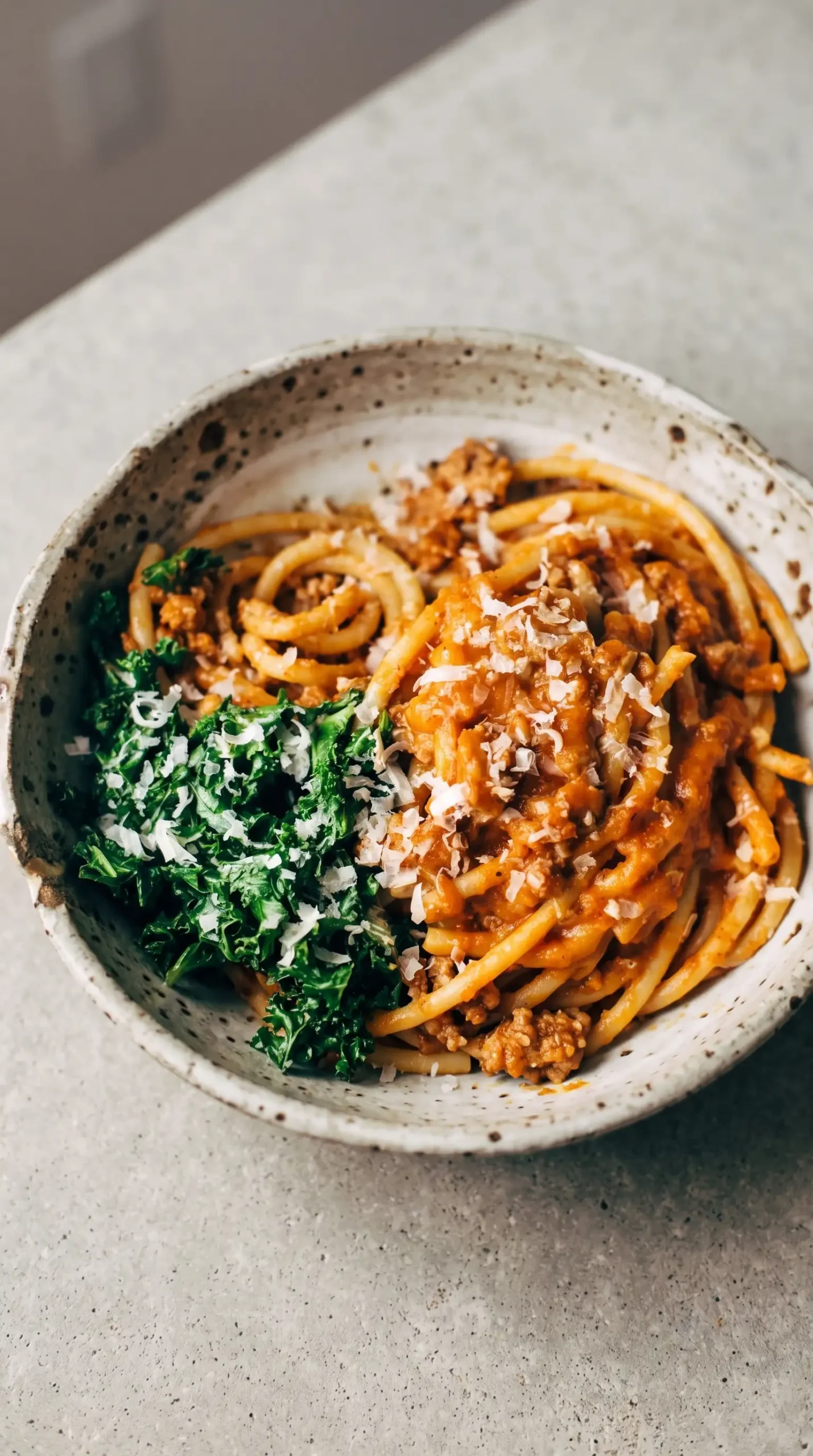
Pumpkin sauce becomes the defining element of this pasta because its smooth texture connects every part of the dish. The blended pumpkin, tomato, and aromatic base provides enough richness to coat the pasta while the turkey and kale preserve the contrast that makes each bite distinct.
Careful attention to sauce consistency, seasoning, and the treatment of the greens allows pumpkin spaghetti to maintain its balance. The result comes from combining a creamy foundation with ingredients that bring savory depth, freshness, and texture at the same time.
Pumpkin spaghetti questions about storage and texture
Can pumpkin spaghetti be made without turkey?
Yes, the pasta can be prepared without turkey while keeping the pumpkin sauce and kale combination intact. Additional vegetables, beans, or simply extra kale can provide more substance if a meat-free version is preferred.
How can the pumpkin spaghetti sauce stay smooth?
A smooth sauce depends on thorough blending and careful liquid adjustments. Keeping enough broth in the mixture allows the pumpkin and tomato base to remain easy to coat the pasta instead of becoming dense.
What is the best pasta shape for this pumpkin sauce?
Bucatini, perciatelli, and spaghetti all work well because their long shape carries the creamy sauce. Thicker strands provide a more substantial bite, while traditional spaghetti creates a lighter texture.
How should leftover pumpkin spaghetti be reheated?
Reheat portions gently and add a small amount of liquid if the sauce has tightened. Slow warming helps the pasta regain a creamy consistency while keeping the noodles tender.
Pumpkin Spaghetti with Garlic Kale, Turkey and Cheese
Ingredients
Method
- Add the sun dried tomatoes with a few tablespoons of their oil to a large pot over medium high heat. Stir in the chopped onion, garlic, and sage, then sauté until the aromatics soften and become fragrant.
- Mix in the pumpkin puree, tomato puree, chicken broth, basil, and cinnamon. Let the sauce simmer for about 15 minutes, adding more water or broth as needed to maintain the desired consistency.
- Blend the sauce with an immersion blender in the pot or transfer it carefully to a blender until mostly smooth. Stir in the cream and adjust the seasoning with salt, pepper, and red pepper flakes if desired.
- Cook the pasta according to the package directions. While it cooks, brown the ground turkey in a large skillet with the sliced onion, chili powder, and garlic powder, adding a small amount of water if needed to keep the mixture moist.
- Warm the garlic infused olive oil over medium heat. Add the kale and sauté until the leaves are wilted.
- Combine the cooked pasta, turkey mixture, and pumpkin sauce. Serve with the sautéed kale and finish with Manchego or Parmesan cheese.