
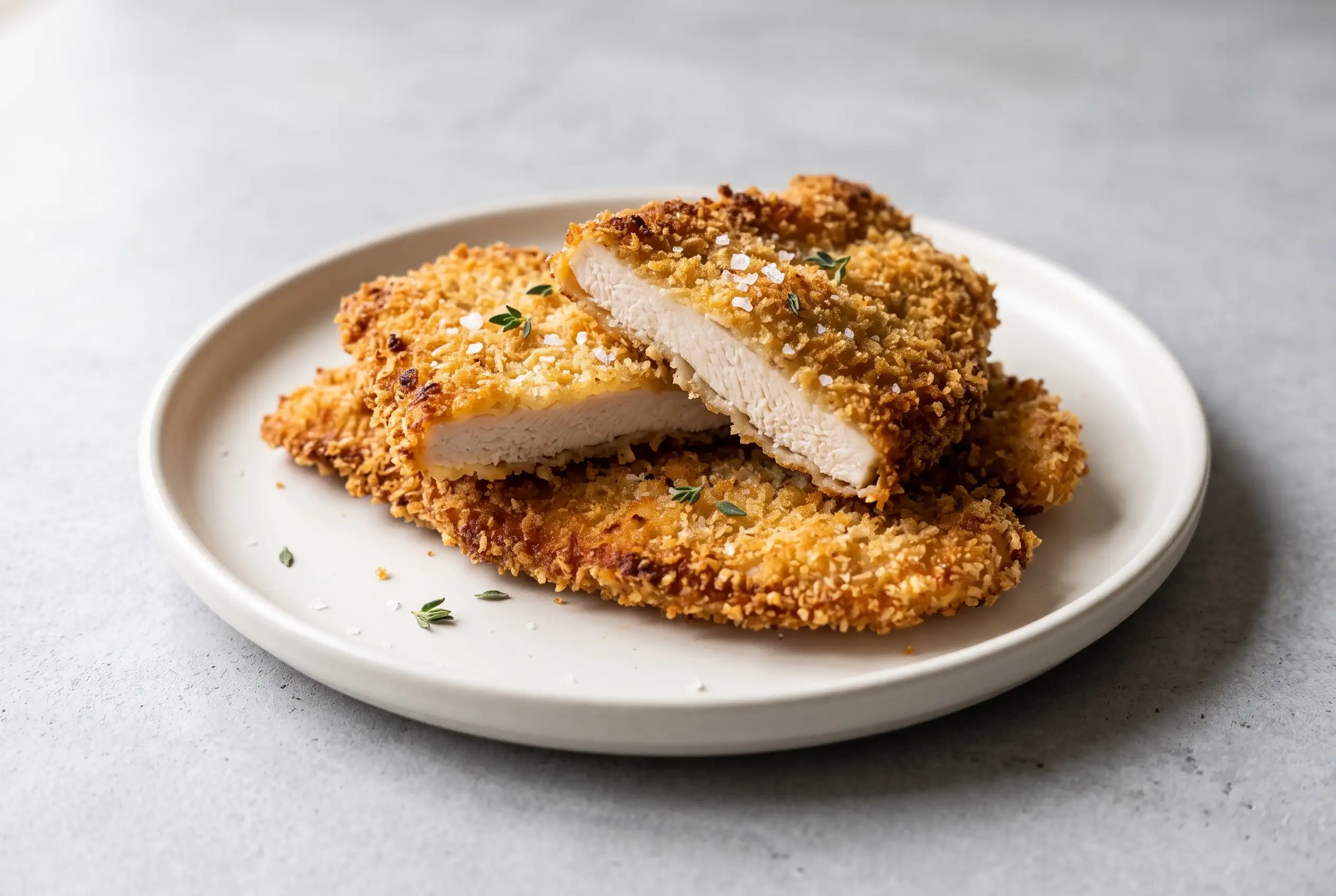
Crispy chicken cutlets create a dinner built around contrast: a thin, tender chicken center surrounded by a deeply crunchy coating. The combination of seasoned flour, egg wash, and panko creates a layered crust that turns simple chicken breasts into crispy breaded chicken cutlets with plenty of texture. Air frying helps the coating develop an even golden surface while keeping the preparation straightforward.
Thinly sliced chicken changes the way breading behaves because more surface area is available for the coating to cling to. Each piece becomes a balance of juicy meat and crisp edges, making these cutlets useful for dipping, serving over salads, or building sandwiches with bold sauces.
Chicken Breast Cuts Create Better Crispy Chicken Cutlets
Boneless skinless chicken breasts provide the foundation for this dish because their shape allows them to be divided into thinner pieces. A thinner cut cooks more evenly and gives the panko coating enough room to become browned without requiring a long cooking period.
Careful slicing affects the finished texture. Removing the tenderloin first and dividing the remaining breast portions horizontally creates pieces with a more consistent thickness. Consistency matters because each cutlet reaches the desired doneness while maintaining a crisp exterior.
Freshly prepared portions also make the breading process easier to manage. Flat pieces can be pressed into the coating evenly, helping the flour, egg mixture, and panko form a complete layer around the chicken.
Panko Builds the Signature Crunch on Breaded Chicken Cutlets
Panko breadcrumbs are the ingredient choice that most strongly shapes the coating. Their larger, airy flakes create a rough surface that becomes especially crisp during air frying, giving the chicken a texture that feels light instead of dense.
Traditional breadcrumbs can also work when a finer coating is preferred. The smaller crumbs create a tighter layer around the chicken while still producing a flavorful crust. Both options depend on complete coverage and gentle pressing so the breading stays attached.
| Coating choice | Texture result | Best fit |
|---|---|---|
| Panko breadcrumbs | Larger flakes with a more open crunch | Extra-crispy air fryer cutlets |
| Traditional breadcrumbs | Finer, tighter coating | A smoother breaded surface |
| Seasoned panko mixture | More pronounced savory flavor | Serving without heavy sauce |
Seasoned Layers Shape the Flavor Before Cooking
Salt and pepper begin the seasoning process before the coating is added. Seasoning the chicken itself gives the meat flavor, while lightly seasoning the flour and panko helps the crust taste complete from the outside inward.
Hot sauce in the egg mixture offers a simple way to introduce extra flavor without changing the structure of the coating. A few shakes can add a mild spicy note while the egg still performs its important role of helping the breadcrumbs adhere.
Air Fryer Chicken Cutlets Need Even Browning Control
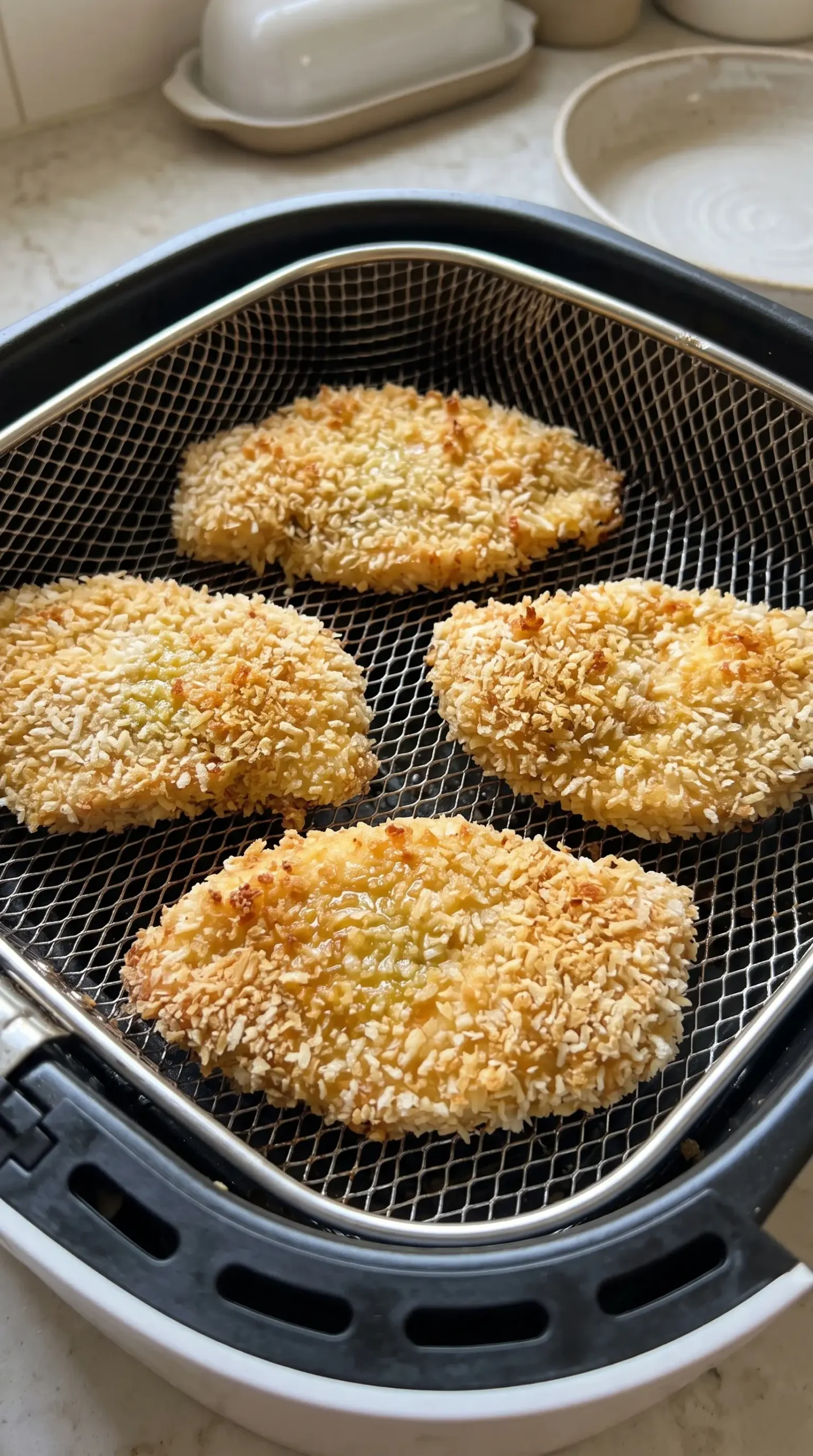
Air fryer chicken cutlets depend on airflow and surface coverage to develop their characteristic golden crust. Spraying the panko coating with avocado oil helps the dry crumbs brown more evenly across each piece.
Spacing also affects the result. Cooking in a single layer allows hot air to move around the chicken, which encourages crisp edges and reduces the chance of unevenly colored areas.
Temperature changes during cooking provide another layer of control. Beginning with a moderate heat level helps cook the chicken through, while increasing the heat near the end encourages additional browning on the coating.
- Oil coverage: Use a light, even spray so the panko has enough moisture to brown.
- Single layer: Keep pieces separated so circulating air can reach the coating.
- Temperature check: Confirm the chicken reaches a safe internal temperature before serving.
Cutlet Mistakes That Leave Chicken Less Crispy
Common crispy chicken cutlets problems usually come from coating issues or uneven preparation. A few small choices can determine whether the breading stays crunchy or becomes patchy.
Skipping excess flour removal can leave thick spots under the egg layer, which may prevent the panko from creating a balanced crust. Shaking off extra flour before dipping helps the coating remain structured.
Another frequent issue happens when the panko is not pressed firmly enough onto the chicken. Loose crumbs can fall away during cooking, leaving areas with less crunch and uneven coverage.
Overcrowding the air fryer can also affect browning. When pieces touch or overlap, some surfaces receive less direct airflow and may not develop the same crisp texture as exposed areas.
Coating Preparation Decides the Cutlet Texture
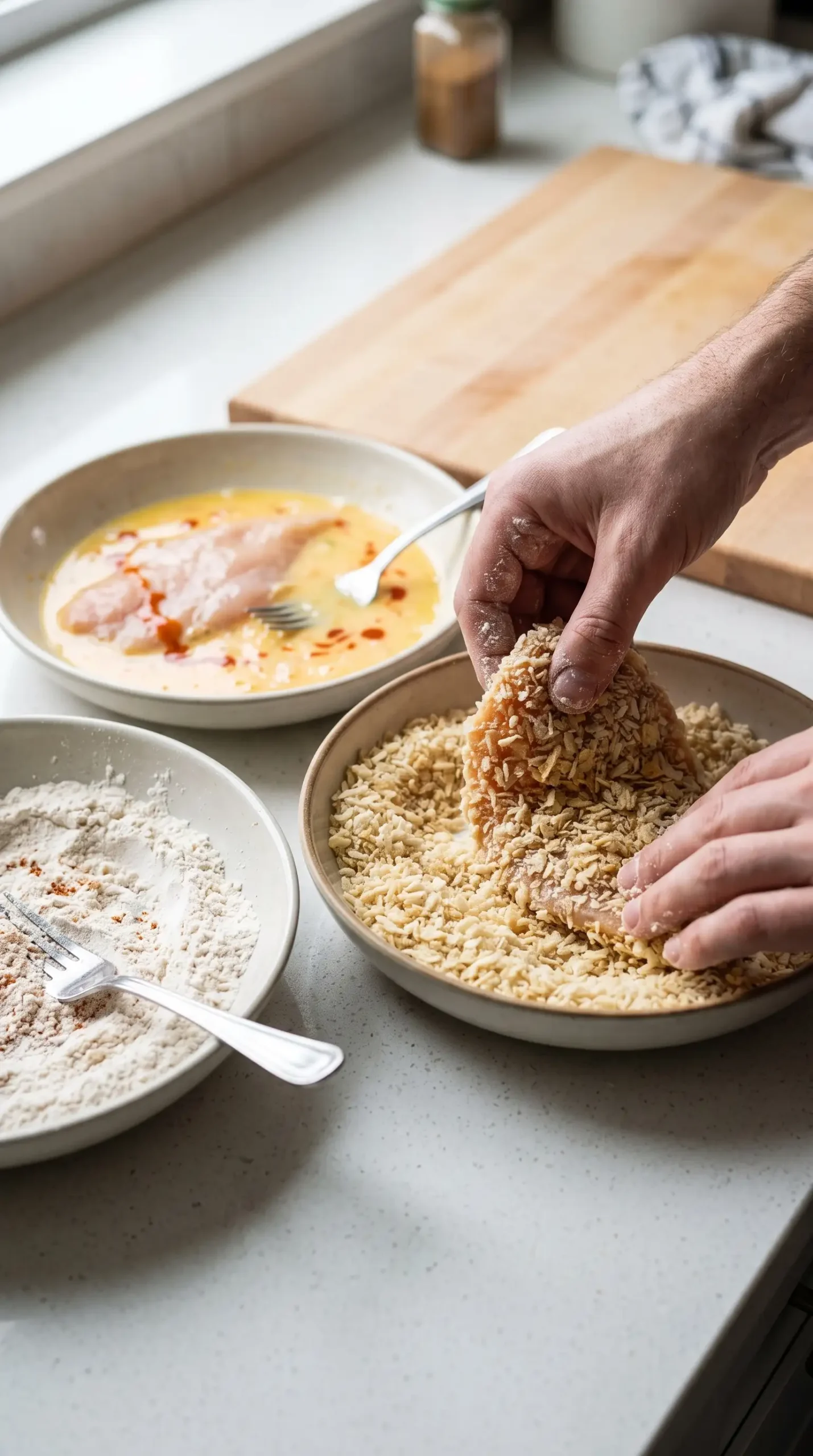
Preparation order matters because each coating layer has a specific job. This chicken cutlet breading technique uses flour, egg, and panko in sequence to create a coating that adheres well and develops a crisp exterior during cooking.
Wide shallow bowls make the coating stages easier to handle because each piece can be turned and covered without forcing the chicken into a crowded container. This simple setup also helps maintain an even layer from one cutlet to the next.
Cooking Methods Offer Different Crispy Results
Air frying is the main approach for these cutlets, but other cooking methods can create a similar style of breaded chicken. The choice changes how heat reaches the coating and how much oil is involved.
| Cooking method | Coating outcome | Key consideration |
|---|---|---|
| Air fryer | Light, crisp panko surface | Keep pieces in a single layer |
| Cast iron frying | Deep golden fried crust | Maintain hot oil for even browning |
| Baking | Dry, oven-browned coating | Turn pieces for balanced color |
Cast iron frying creates a more traditional fried texture because the coating directly contacts hot oil. Monitoring the chicken as it cooks helps the crust brown while the interior reaches the proper temperature.
Sauces Turn Crispy Chicken Cutlets Into Flexible Meals
Serving options expand because the cutlets have a neutral, savory coating that pairs well with many flavors. Their crisp surface can support dipping sauces, creamy toppings, or bright acidic finishes.
- Dipping plates: Slice cutlets into strips and serve with a favorite sauce.
- Sandwich builds: Layer the chicken with fresh toppings inside bread or rolls.
- Meal combinations: Pair the cutlets with vegetables, grains, or salads.
Texture is especially important when adding sauces. Applying a small amount at a time helps maintain the contrast between crunchy breading and tender chicken.
Storage Choices Protect Cutlet Crispness
Stored cutlets can still be enjoyable after cooking when they are handled carefully. Keeping moisture away from the coating helps preserve more of the original texture.
Reheating works best when the chicken can return to a dry, hot environment instead of being exposed to steam. Methods that recreate circulating heat are useful for bringing back some of the crisp exterior.
Simple Adjustments Customize Chicken Cutlet Texture
Small changes allow cooks to adjust the finished result without changing the core preparation. Breadcrumb size, oil application, and serving style each influence how the cutlets feel when eaten.
Choosing panko emphasizes a lighter crunch, while traditional breadcrumbs create a finer coating. A slightly stronger oil application can encourage deeper browning, while careful spraying keeps the surface more evenly colored.
Timing and Temperature Guide Better Cooking Decisions
Cooking control comes from watching the chicken itself instead of relying only on appearance. The coating can become beautifully browned while the interior still needs additional cooking time, so checking doneness remains an important step.
Thin portions respond quickly to heat changes. Adjusting the cooking environment near the end can improve color, but the chicken should always be evaluated for safe doneness before serving.
Crispy Chicken Cutlets Stay Balanced Through Simple Technique
Golden panko shells, thin chicken pieces, and careful heat control define the success of crispy chicken cutlets. A second preparation style built around a crunchy coating is crispy Parmesan chicken, where the breaded chicken remains the focus of the finished meal.
Crispy Chicken Cutlets Deliver Crunch Through Layered Preparation
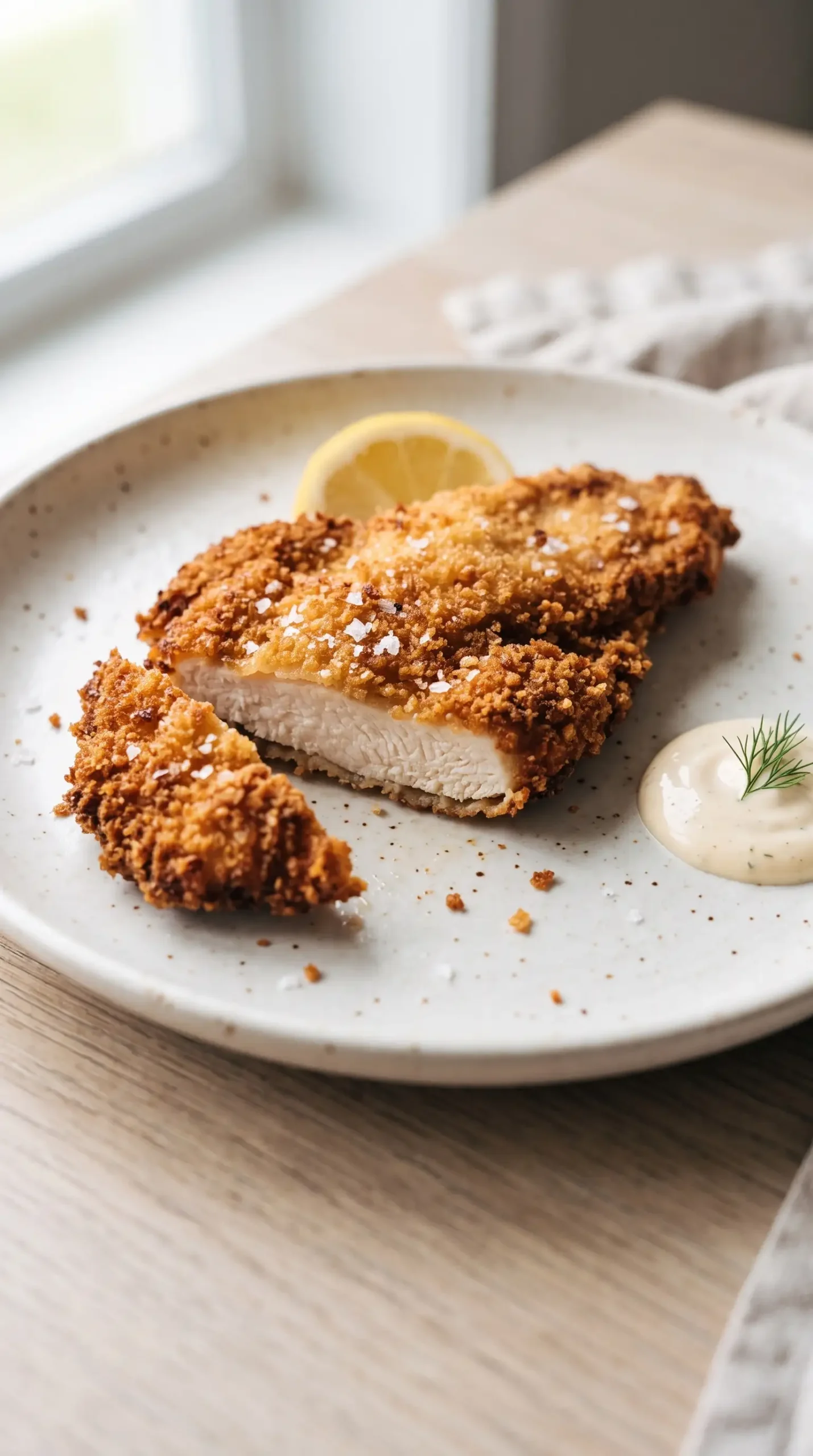
The chicken pieces reveal why coating technique matters: a well-attached panko crust creates the crunchy exterior while the thin interior stays tender. Each preparation choice, from slicing to browning, supports the contrast that makes this dish work.
Balanced cooking decisions keep the breading crisp and the chicken satisfying. When the coating is handled carefully and the heat is managed properly, simple ingredients become a dependable meal with restaurant-style texture.
Crispness Questions About Crispy Chicken Cutlets
Why do my chicken cutlets lose their crunch?
Moisture is usually the main reason the coating softens. Keeping the breaded surface exposed to dry heat during cooking and reheating helps the panko maintain more of its texture.
Can I use regular breadcrumbs instead of panko?
Yes, regular breadcrumbs work well when a finer coating is preferred. They create a more compact breading layer while still providing a satisfying crust around the chicken.
How can I make the coating brown more evenly?
Even browning comes from covering the panko lightly with oil and arranging the chicken so air can circulate around each piece during cooking.
What sauces pair well with these cutlets?
The mild seasoned coating works with many dipping sauces, spicy condiments, creamy toppings, and fresh sauces because the chicken provides a sturdy base for additional flavors.
Can I prepare the chicken pieces ahead of cooking?
The sliced chicken can be organized before cooking so the coating process moves smoothly. Keeping the prepared pieces handled carefully helps maintain the structure of the breading.
Crispy Chicken Cutlets with Panko Coating and Egg Wash
Ingredients
Method
- Slice each chicken breast into 3 thin pieces by removing the tenderloin first, then cutting the remaining breast pieces in half horizontally. Season the chicken with salt and pepper.
- Prepare three wide shallow bowls: one with flour, one with beaten eggs mixed with hot sauce, and one with panko breadcrumbs. Add 1/2 teaspoon salt to both the flour and panko bowls.
- Coat each chicken piece by dipping it in flour and removing excess, then covering it with the egg mixture and allowing extra liquid to drip away. Press the chicken into the panko, turning and gently pressing until fully coated. Transfer coated pieces to a plate.
- Apply a light, even spray of avocado oil to each breaded chicken piece before cooking.
- Arrange the chicken in a single layer in the air fryer and cook in batches. Air fry at 375°F (191°C) for 6 minutes, then increase the temperature to 400°F (204°C) for 2-3 minutes to deepen the browning. Confirm the chicken reaches an internal temperature of at least 165°F (74°C) before serving.