
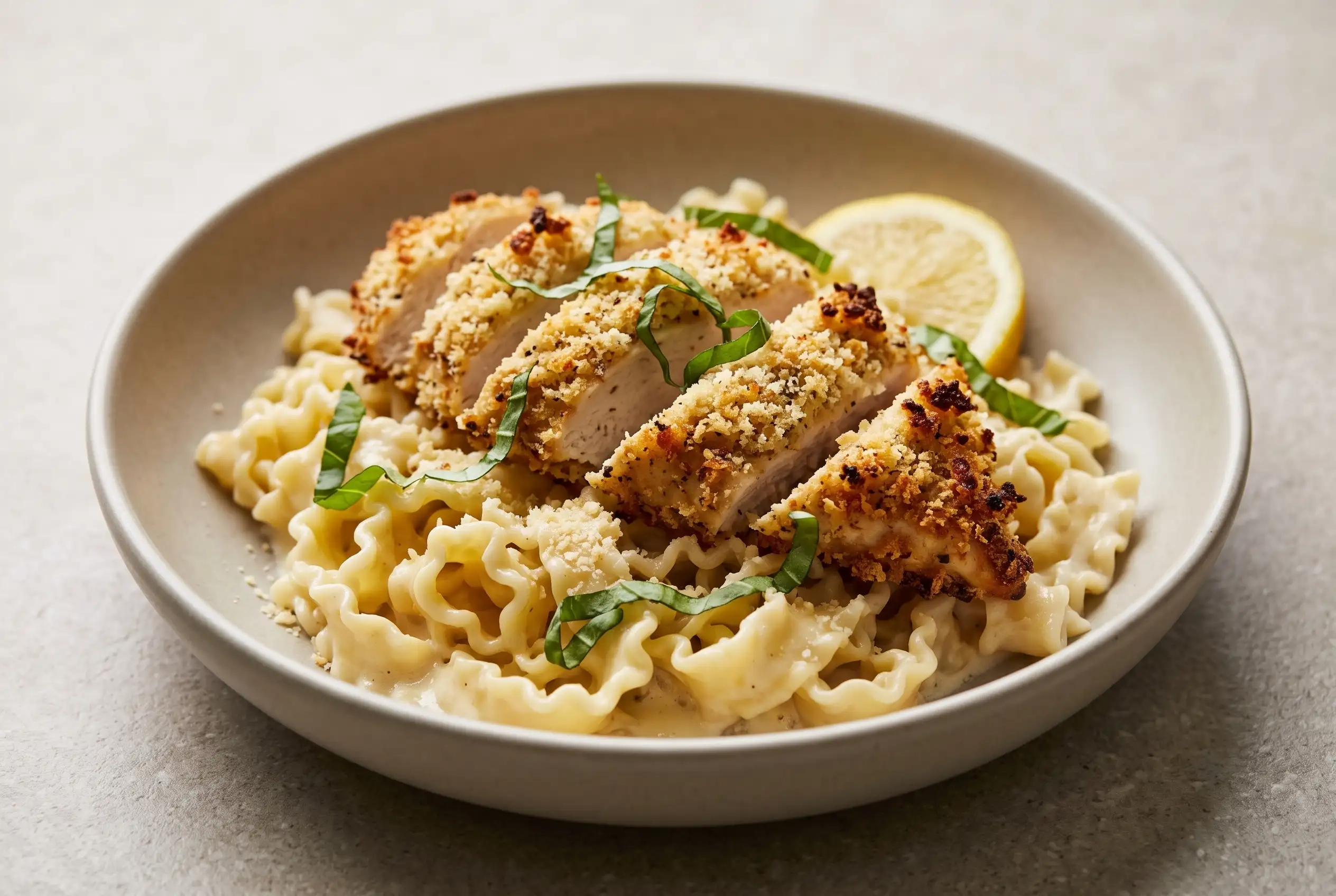
Crispy parmesan chicken turns a familiar dinner combination into a plate built around contrast: a deeply golden Parmesan and panko crust covering tender chicken beside silky lemon cream pasta. The technique depends on thin chicken pieces, a firmly attached crumb coating, and a sauce that stays smooth enough to cling to every curve of the pasta.
Unlike heavier breaded chicken dishes, crispy parmesan chicken with lemon pasta balances a crisp exterior with a bright, creamy finish. The lemon, basil, and fresh salad pairing keep the meal from feeling one-dimensional while the Parmesan crust provides the savory character that carries the dish.
Crispy Parmesan Chicken Builds Its Crust Around Thin Cuts
Thin chicken pieces create the foundation for the texture of baked parmesan crusted chicken. Slicing the breasts into flatter portions allows the coating to brown before the interior has a chance to become overcooked. The shape also creates more surface area for the Parmesan panko mixture to cover, while crispy chicken cutlets with panko coating use careful crumb coverage to build a firm, crunchy exterior.
Careful preparation matters before the crumbs ever reach the chicken. Excess moisture can make the coating harder to attach, so dry surfaces help the mayo layer spread evenly and give the seasoned crumbs something to hold onto. Pressing the mixture firmly creates a thicker crust that stays connected during baking and slicing.
Several details work together to create the finished texture. Parmesan brings a salty, savory note while panko creates larger spaces that become crisp during baking. The short broiling step adds deeper color and helps develop the browned appearance associated with a restaurant-style chicken dinner.
Parmesan Panko Crust Gets Better From The Right Coating
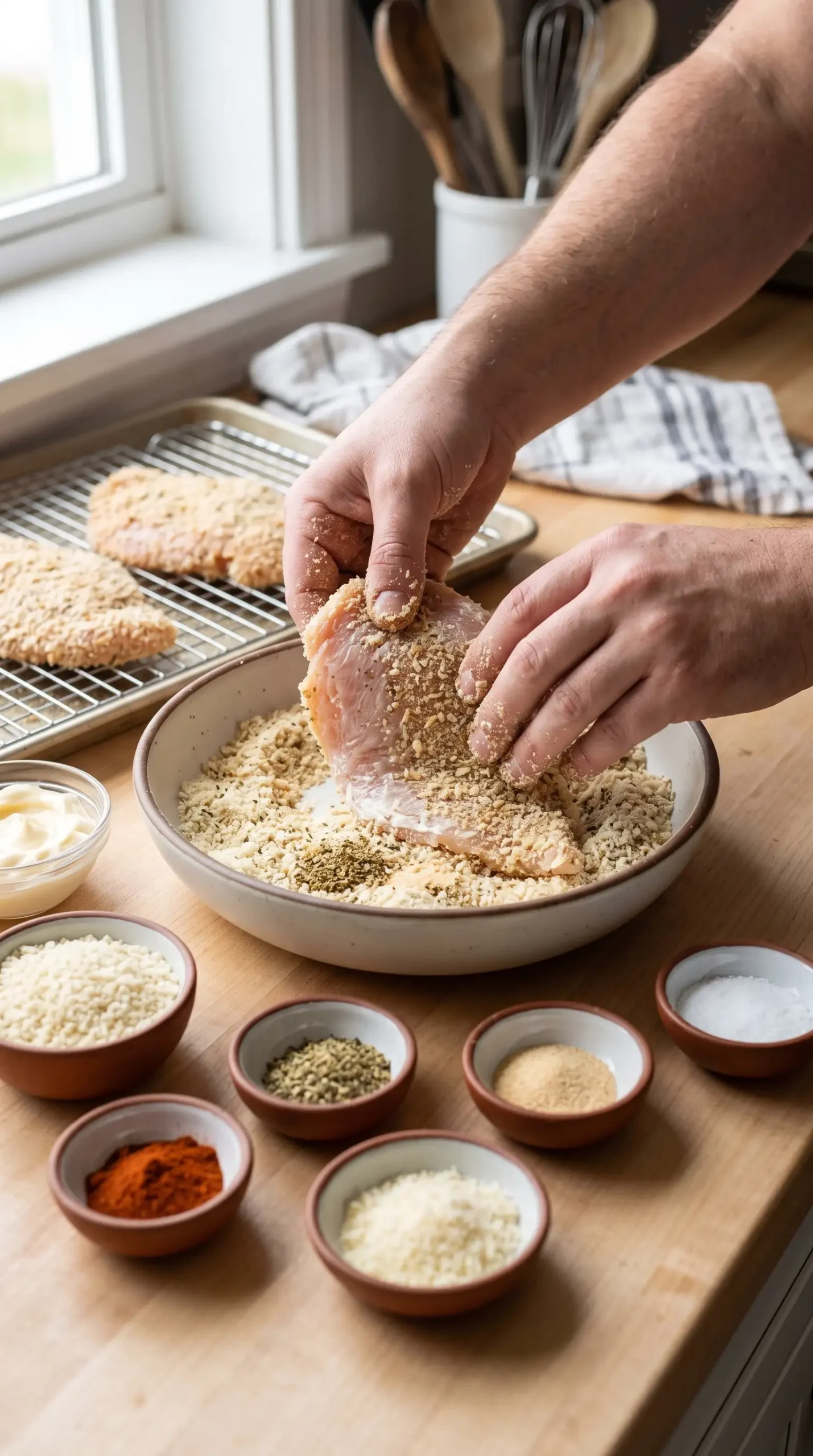
Grated Parmesan, panko, and the seasoned crumb blend are the ingredient choices that most influence the crust. A thin layer of mayo replaces a traditional egg wash by helping the crumbs adhere while adding richness directly beneath the crunchy surface.
Mafalda Pasta Carries The Creamy Lemon Sauce
Mafalda pasta works especially well with the creamy lemon sauce because its ruffled edges capture the thickened mixture. Each curve holds onto the buttery sauce, creating a stronger connection between the pasta and the chicken placed on top.
Building the sauce slowly keeps the texture cohesive. Butter and garlic create the aromatic base, flour helps the mixture thicken, and cream combines with water and chicken base to form a sauce that can coat the pasta without becoming too heavy.
Lemon enters after the sauce has thickened and cooled slightly. Adding the zest and juice at that stage keeps the bright citrus flavor noticeable alongside the richness of the cream, while reserved pasta water gives the finished dish flexibility when combining everything together.
| Component | Texture it creates | Key handling choice |
|---|---|---|
| Chicken coating | Crisp, golden crust | Press crumbs firmly onto mayo-coated chicken |
| Cream sauce | Smooth pasta coating | Simmer until it clings to a spoon |
| Pasta water | Adjustable sauce consistency | Add gradually after tossing pasta |
Chicken Thickness Controls The Golden Finish
Successful cooking control starts with the thickness of the chicken. Flat pieces allow the crust to brown evenly while the chicken reaches the needed internal temperature, making the slicing step easier and helping each serving keep its crisp coating.
Baking Choices That Protect Crispy Parmesan Chicken Texture
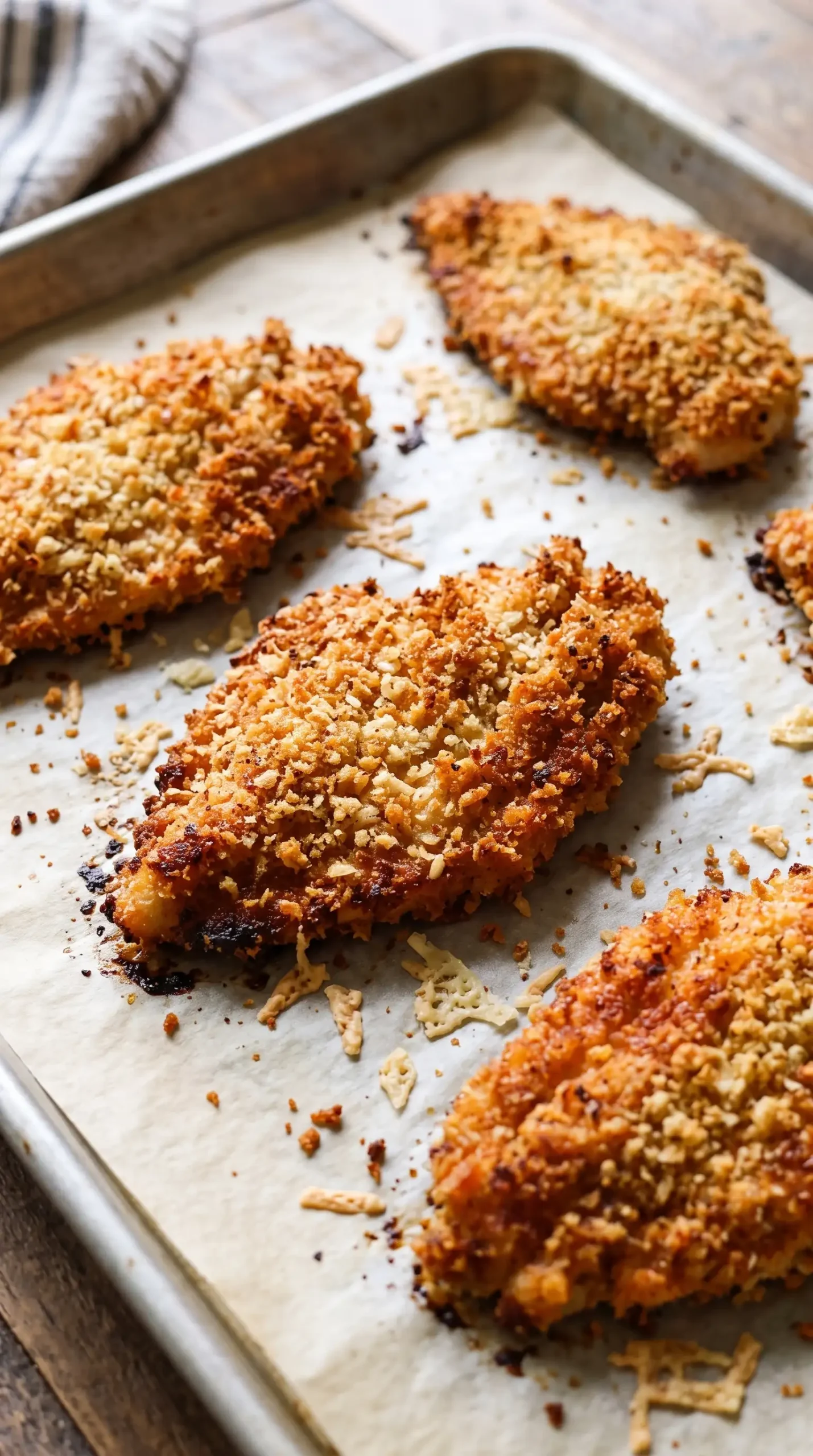
Oven heat creates the first stage of crisping, while a brief broil intensifies the color. The chicken benefits from space on the baking sheet because exposed crumb surfaces have a better chance of becoming golden instead of staying soft.
The golden Parmesan crust develops through heat-driven browning on the surface, where the Maillard reaction helps create deeper color and flavor as the chicken bakes.
Flipping during the broiling stage gives both sides attention. Using tongs to turn the pieces carefully prevents the crust from breaking apart and allows the underside to develop the same toasted appearance as the top.
Temperature checks remain important because the chicken needs to be fully cooked while the coating stays appealing. Slicing the chicken into strips after cooking also protects the crust better than cutting repeatedly during baking.
Crispy Parmesan Chicken Mistakes That Ruin The Crust
Common problems with crispy parmesan chicken usually come from preparation choices that affect the coating. The most noticeable issues are connected to moisture, crumb attachment, and uneven browning.
- Wet chicken surface: Extra moisture can prevent the crumb mixture from gripping the meat properly. Patting the chicken dry before coating improves adhesion.
- Loose crumb layer: Lightly placing crumbs on top can leave thin spots. Pressing the Parmesan panko mixture onto both sides creates a more complete crust.
- Uneven pieces: Thick and thin sections cook at different speeds. Cutting flatter portions helps the chicken and crust finish together.
- Overheated sauce: Aggressive cooking after adding dairy can affect the smooth texture. Gentle simmering supports a creamy consistency.
Lemon Sauce Balance Depends On Gentle Heat
The creamy lemon pasta sauce relies on gradual thickening and careful timing. Garlic develops flavor during the butter stage, flour builds structure, and the lemon additions provide contrast once the sauce has reached the desired texture.
Basil And Salad Bring Contrast To The Plate
Fresh basil ribbons add a bright herbal note that cuts through the richness of the Parmesan crust and cream sauce. A simple green salad provides another fresh element, creating a plate with different textures and flavors in each bite.
Serving Slices Preserve The Chicken Crunch
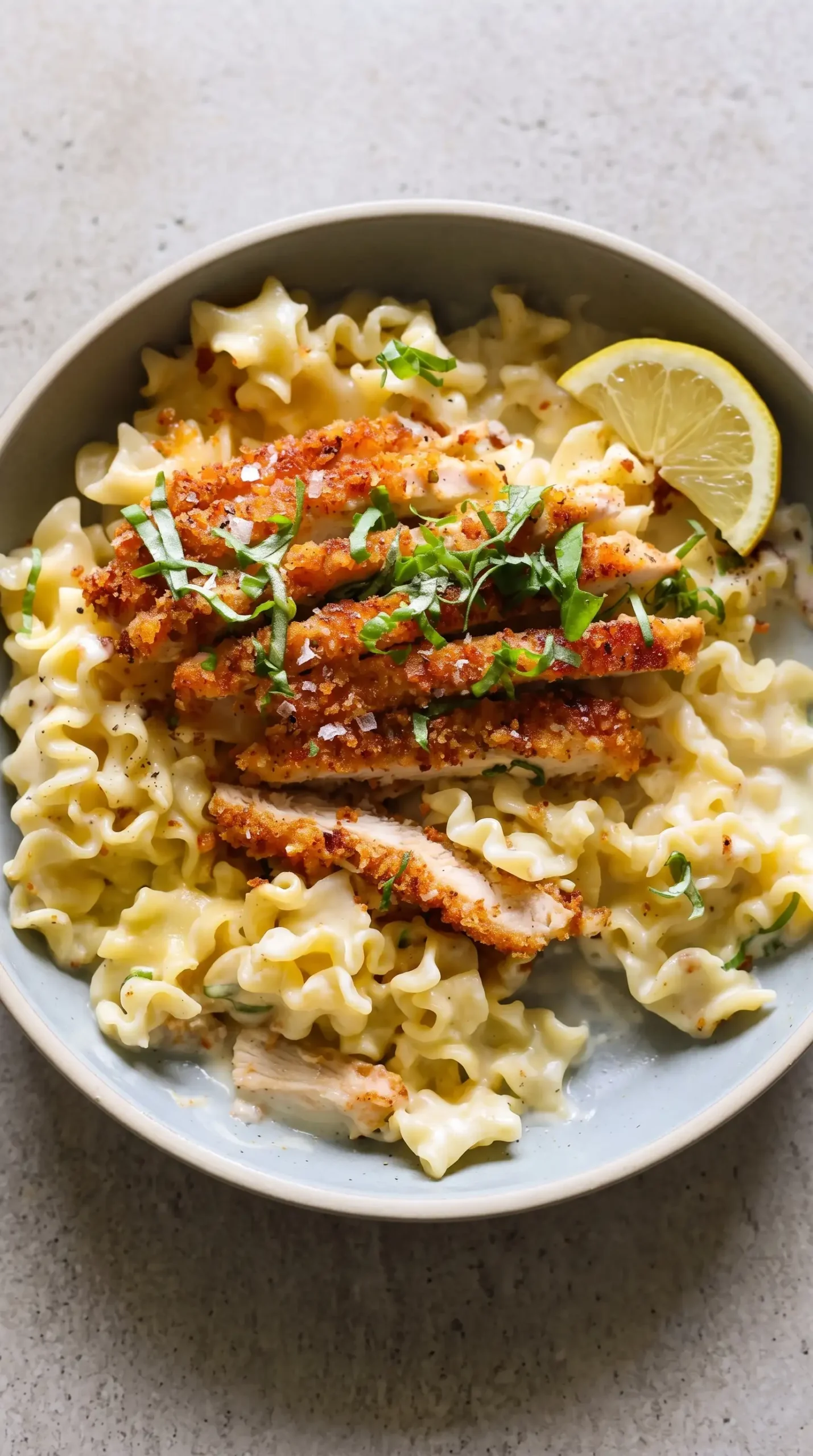
Presentation affects how the textures come together at the table. Placing sliced chicken over the pasta allows the creamy sauce to surround the meal while keeping the crust visible and inviting.
Extra crumb pieces left on the baking sheet can become a finishing touch when scattered over the pasta. Those toasted bits add small bursts of Parmesan flavor and reinforce the contrast between smooth sauce and crisp chicken.
Lemon wedges offer another optional finishing detail for diners who want more brightness. The citrus works alongside the zest already incorporated into the sauce without changing the overall balance of the dish.
Leftover Parmesan Chicken Needs Careful Reheating
Stored portions are best handled with attention to the separate textures of the meal. Keeping the chicken and pasta apart when possible helps protect the crust from absorbing too much moisture from the sauce.
Crispy Parmesan Chicken With Creamy Lemon Pasta Rewards Texture Control
Crispy parmesan chicken succeeds because each part is prepared with a specific purpose. Thin chicken creates a better crust-to-meat balance, Parmesan and panko provide the golden exterior, and the lemon cream pasta creates a smooth base for the crunchy slices.
Careful coating and controlled heat turn simple ingredients into a dinner where crisp chicken and creamy pasta support each other. The strongest results come from protecting those two textures all the way from the baking sheet to the serving bowl.
Crispy Parmesan Chicken Troubleshooting Questions About Crunch
Why did my chicken crust fall off?
The coating can loosen when crumbs are not pressed firmly into the mayo layer or when the chicken surface has too much moisture. Drying the chicken first and applying pressure while adding the crumb mixture improves how the crust stays attached.
Can I use another pasta shape for the creamy lemon sauce?
Yes, other pasta shapes can work when they have enough surface area or texture to hold the sauce. Mafalda is useful because its ridges and folds naturally catch the creamy mixture, but similar shapes can also pair well.
How can I make the Parmesan chicken more golden?
A short broiling step after baking helps deepen the color of the crust. Keeping the chicken positioned so heat reaches both sides during that stage supports a more evenly browned exterior.
What causes the lemon pasta sauce to feel too thick?
A thick sauce can usually be adjusted with small additions of reserved pasta water. Adding it gradually while tossing helps loosen the sauce while keeping it attached to the pasta.
Can the chicken and pasta be served separately?
Serving the components separately works well when you want maximum crust texture. The chicken can remain crisp on its own while the pasta continues to provide the creamy lemon flavor as a side.
Crispy Parmesan Chicken with Creamy Lemon Pasta and Basil
Ingredients
Method
- Preheat the oven to 425°F (218°C) and line a baking sheet with parchment paper.
- Slice each chicken breast into thin, flat pieces rather than small chunks. Pat the chicken dry if needed.
- Combine the Parmesan cheese, panko bread crumbs, Italian seasoning, paprika, garlic powder, and salt in a bowl.
- Spread mayo over each chicken piece in a thin layer, then coat both sides with the Parmesan panko mixture, pressing the crumbs firmly into place. Spray the top side with avocado oil spray.
- Arrange the coated chicken on the prepared baking sheet and bake for 13-15 minutes, until the crust is golden.
- Broil the chicken for 1-2 minutes, then carefully flip each piece with tongs and broil the other side until crisp and the chicken reaches an internal temperature of 165°F (74°C).
- Melt the butter over medium-low heat. Add the garlic and cook for 2-3 minutes.
- Stir in the flour and cook for another 2-3 minutes until the mixture bubbles and becomes slightly foamy.
- Add the cream, water, and chicken base. Simmer for about 10 minutes until the sauce thickens and coats the back of a spoon.
- Remove the sauce from the heat and mix in the lemon zest and lemon juice.
- Cook the pasta according to package directions, reserving some pasta water before draining.
- Add the pasta to the sauce and toss to coat, adding reserved pasta water as needed.
- Slice the crispy chicken into strips. Place the pasta in shallow bowls, top with chicken slices, and finish with basil ribbons.