
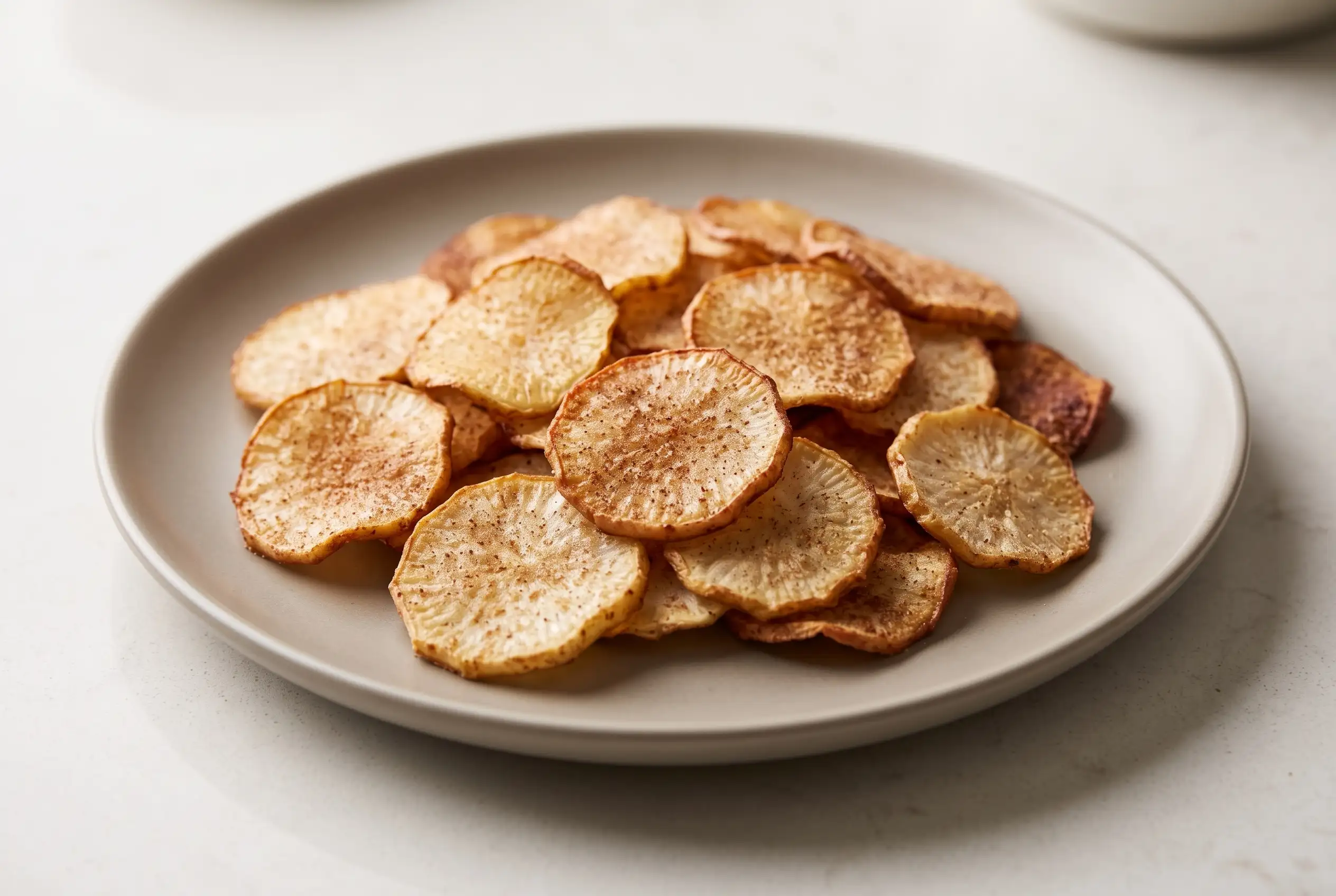
Radish chips turn a familiar garden vegetable into a crisp snack with a sweet cinnamon coating and a lightly savory center. These cinnamon sugar radish chips use thinly sliced radishes, a small amount of oil, honey, and cinnamon sugar to create a baked treat with a unique contrast between caramelized sweetness and the natural character of radishes.
Cinnamon Sugar Radish Chips Create a Sweet Savory Crunch
The appeal of radish chips comes from the way the vegetable changes during baking. Fresh radishes have a crisp, peppery bite, but heat softens their sharpness while removing moisture and concentrating their texture. The result is a snack that feels familiar like a chip while still keeping the distinctive qualities of radishes.
Unlike traditional potato chips, baked radish chips begin with a naturally compact vegetable that becomes smaller as it cooks. That shrinking process is part of the texture change readers should expect, because the slices lose water and develop a firmer finish across their surfaces.
Cinnamon sugar radish chips also stand out because the seasoning is applied before baking. The olive oil helps the coating cling to the slices, while honey contributes a light sweetness that works alongside the cinnamon sugar mixture without requiring a heavy topping.
Radish Selection Shapes the Crisp Finish
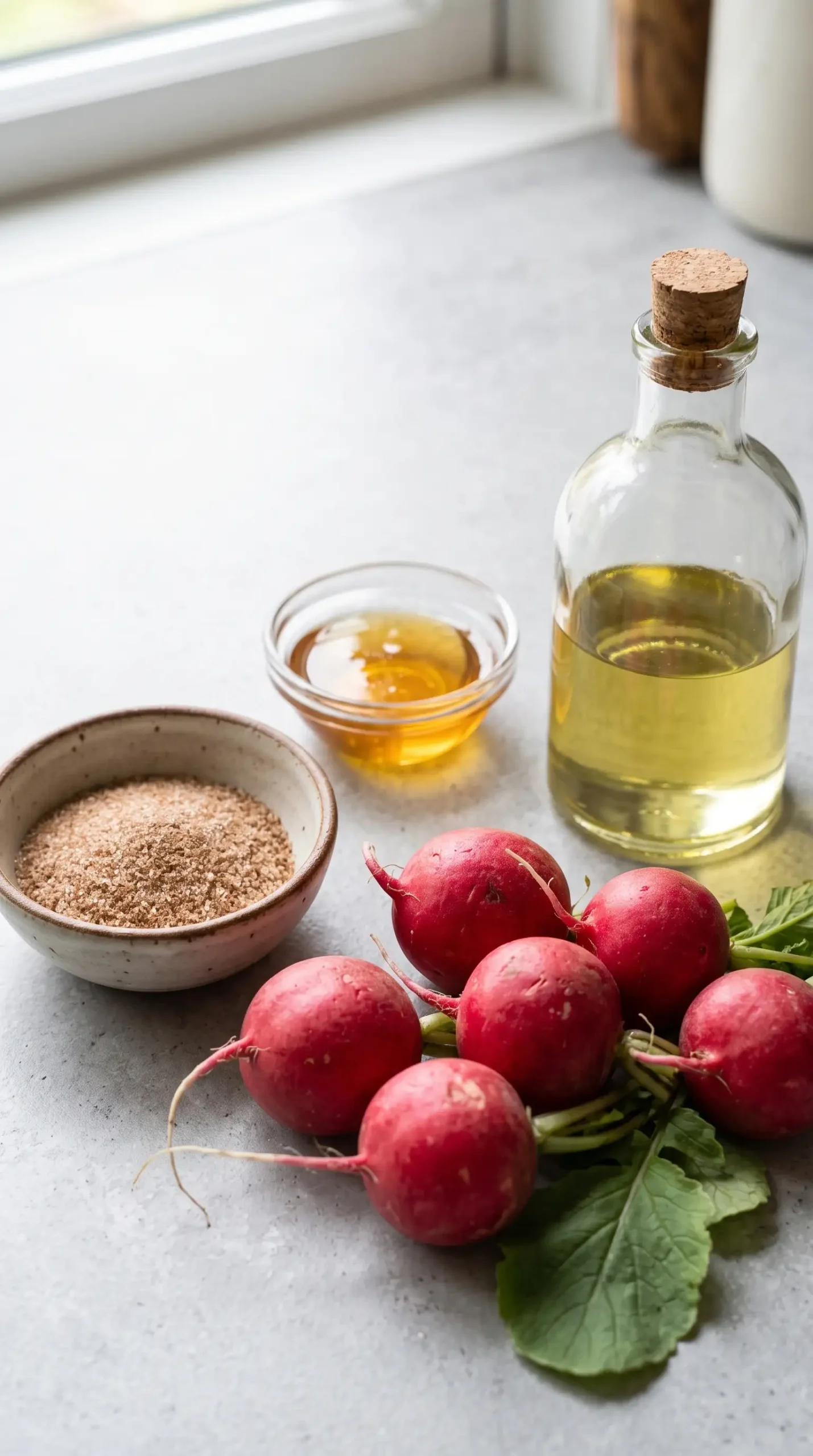
Choosing firm radishes with a consistent size helps create slices that cook more evenly. The vegetable selection matters because the slices need similar thicknesses to move through softening and crisping stages at a similar pace.
Cinnamon Sugar Balance Changes the Bite
The seasoning mixture defines the personality of these radish chips. A cinnamon sugar coating creates a dessert-inspired direction, while the radish base keeps the flavor from becoming one-dimensional. The honey adds another layer of sweetness that helps connect the coating to the vegetable.
Small adjustments can change the finished snack. A lighter coating allows more of the radish flavor to remain noticeable, while a fuller coating creates a stronger sweet cinnamon impression. Since the ingredients are mixed directly with the slices, every piece can carry some of the seasoning.
When preparing the coating, even coverage matters more than adding a large amount of sweetener. The slices need enough seasoning to complement the vegetable, but excess coating can make it harder to notice the crisp texture that defines baked radish chips.
| Choice | Effect on flavor | Effect on texture |
|---|---|---|
| Lighter cinnamon sugar coating | More radish flavor remains | Crisp surface stays prominent |
| More cinnamon sugar coating | Sweeter dessert-like taste | Coating becomes more noticeable |
| Added honey with oil | Rounds out sweetness | Helps seasoning cling to slices |
Microwave Softening Sets Up Better Baked Radish Chips
The brief microwave step gives the sliced radishes a helpful start before they move into the oven. Softening the slices first allows moisture to release before baking, which supports the later crisping stage.
Even Spacing Prevents Uneven Radish Chips
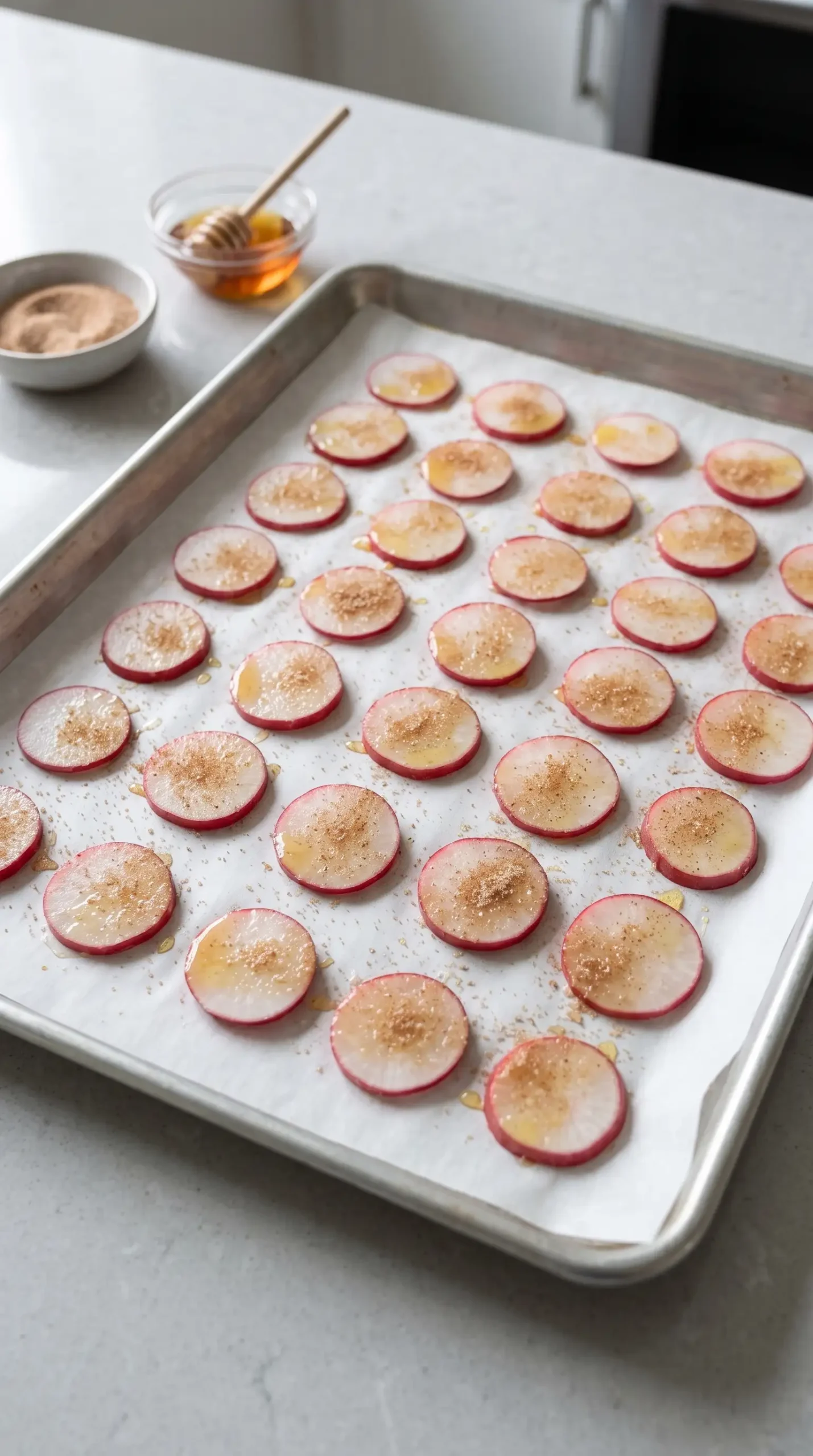
Spacing the slices across the baking sheet is one of the most important details for consistent results. When radish slices overlap, the covered areas hold onto moisture and have less exposure to the oven heat.
The arrangement on the baking sheet influences how each piece changes. A single layer gives the slices room to shrink, dry, and develop their crisp edges during baking.
Careful handling during the flip also helps maintain the shape of the slices. The radishes become smaller and firmer as they cook, so moving them gently keeps the pieces intact while allowing both sides to bake evenly.
- Slice thickness: Keep pieces close to the same thickness so they finish cooking together.
- Pan arrangement: Spread slices apart instead of stacking them for better exposure to heat.
- Texture check: Look for shrinking and crisping as signs that the baking process is progressing.
Common Cinnamon Sugar Radish Chips Mistakes to Avoid
One common mistake with cinnamon sugar radish chips is leaving slices crowded together on the pan. Overlapping pieces can slow moisture loss and create softer spots instead of an even crisp texture.
Another issue is skipping the attention to moisture. Radishes naturally contain water, and the recipe includes a softening step before baking to help prepare them for the texture change that happens in the oven.
Rushing the second baking stage can also affect the result. The lower oven temperature after flipping gives the slices additional time to shrink and crisp, so removing them too early may leave them less developed.
Serving Ideas Highlight the Finished Crunch
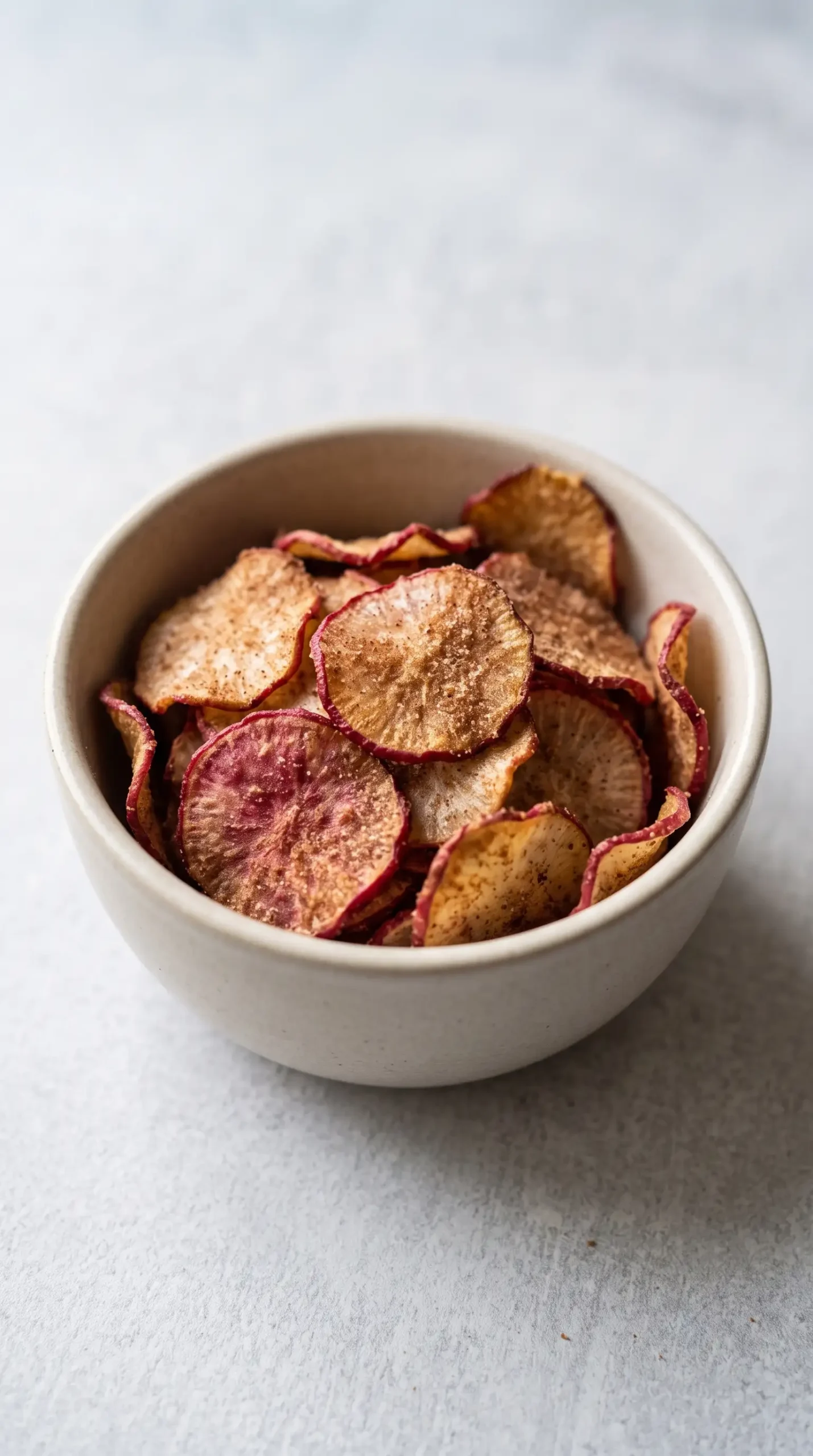
Radish chips work well as a snack on their own or as a small sweet-and-savory addition alongside other foods. Their cinnamon coating makes them different from typical vegetable chips and gives them a place among creative snack options.
Pairing snack plates with varied textures can create a more satisfying serving, and crunchy pecan granola with honey cinnamon and oats brings nuts and oats into a crisp format that complements the light sweetness of these radish chips.
Storage Choices Protect the Texture
Keeping leftover radish chips in a way that limits trapped moisture helps preserve their texture. Because crisp snacks can soften when exposed to humidity, a dry airtight container is a practical choice for maintaining their finished quality.
Adjustments That Keep Radish Chips Interesting
The simple seasoning approach leaves room for small changes while keeping the original idea intact. The foundation remains radishes coated with oil, honey, and cinnamon sugar, but the balance can be adjusted depending on the desired flavor direction.
Some servings may benefit from a more noticeable cinnamon presence, while others may highlight the vegetable itself. Changing the coating amount slightly can create different experiences without changing the cooking process.
These baked radish chips are also a useful option for cooks who want to explore vegetables in unexpected formats. The method transforms a crisp raw ingredient into something with a completely different eating experience.
Baking Observations Guide the Crisping Stage
Watching the slices during baking is more useful than relying only on appearance. The radishes naturally become smaller as moisture leaves vegetables, and that visible change signals that the texture is developing.
The temperature change during baking serves two purposes. The initial heat begins the transformation, while the reduced temperature provides additional time for the slices to continue drying and crisping.
Every oven can behave slightly differently, so visual cues remain important. Pieces that have reduced in size and developed a firmer texture show the progress expected from this snack.
| Stage | What to notice | Cooking purpose |
|---|---|---|
| After softening | Slices are more flexible | Prepares radishes for baking |
| During first bake | Coating warms and slices cook | Begins texture transformation |
| During lower-temperature bake | Slices shrink and crisp | Develops the finished snack texture |
Sweet Coatings Pair With Radish Texture
The combination of cinnamon sugar and radishes works because the contrasting qualities create a more interesting snack. Sweetness softens the vegetable-forward profile, while the baked texture gives the slices a satisfying bite.
Radish Chips Depend on Controlled Crisping
Radish chips succeed when the slices have enough space, enough time, and the right balance of seasoning to transform in the oven. The vegetable does not need complicated additions; careful handling allows the natural texture change to become the focus.
The crisping process also determines the final character of the snack. Watching for shrinking and firm edges helps cooks recognize when the radishes have reached the intended finish.
Questions About Cinnamon Sugar Radish Chips Texture and Storage
Why do radish chips shrink while baking?
Radishes contain moisture, and baking releases that moisture. As the slices lose water, they become smaller and develop a firmer texture that creates the chip-like finish.
Can I make cinnamon sugar radish chips less sweet?
Yes, the coating amount can be reduced while keeping the same preparation approach. A lighter seasoning will allow more of the natural radish flavor to remain noticeable.
How should I slice radishes for this snack?
Slice the radishes into pieces with a similar thickness so they have a better chance of cooking evenly. Consistent slices help prevent some pieces from finishing much earlier than others.
Why are my radish chips not crisp?
Soft results can happen when slices are crowded together or when they have not had enough time to continue drying during the lower-temperature baking stage. Proper spacing and patience help support a crisper finish.
Can baked radish chips be served with other foods?
They can be enjoyed as a snack or added alongside other dishes where a sweet, crunchy vegetable bite fits. The cinnamon coating makes them especially suited for snack-style serving.
Cinnamon Sugar Radish Chips with Honey and Cinnamon
Ingredients
Method
- Preheat the oven to 350°F (177°C). Slice the radishes into approximately 1/4 inch thick pieces and place them in a microwave-safe bowl.
- Microwave the sliced radishes for about 30 seconds to soften them, then drain away any released liquid and transfer the slices to a larger bowl.
- Add the olive oil, honey, and cinnamon sugar mixture to the radishes and stir until the slices are evenly coated.
- Arrange the coated radish slices on a parchment-lined baking sheet in a single layer with space between pieces.
- Bake for 15 minutes at 350°F (177°C), then remove the baking sheet and turn the radish slices over.
- Lower the oven temperature to 225°F (107°C) and continue baking for another 20 minutes, until the slices have reduced in size and become crisp.
- Remove the radish chips from the oven, transfer to a plate, and serve.