
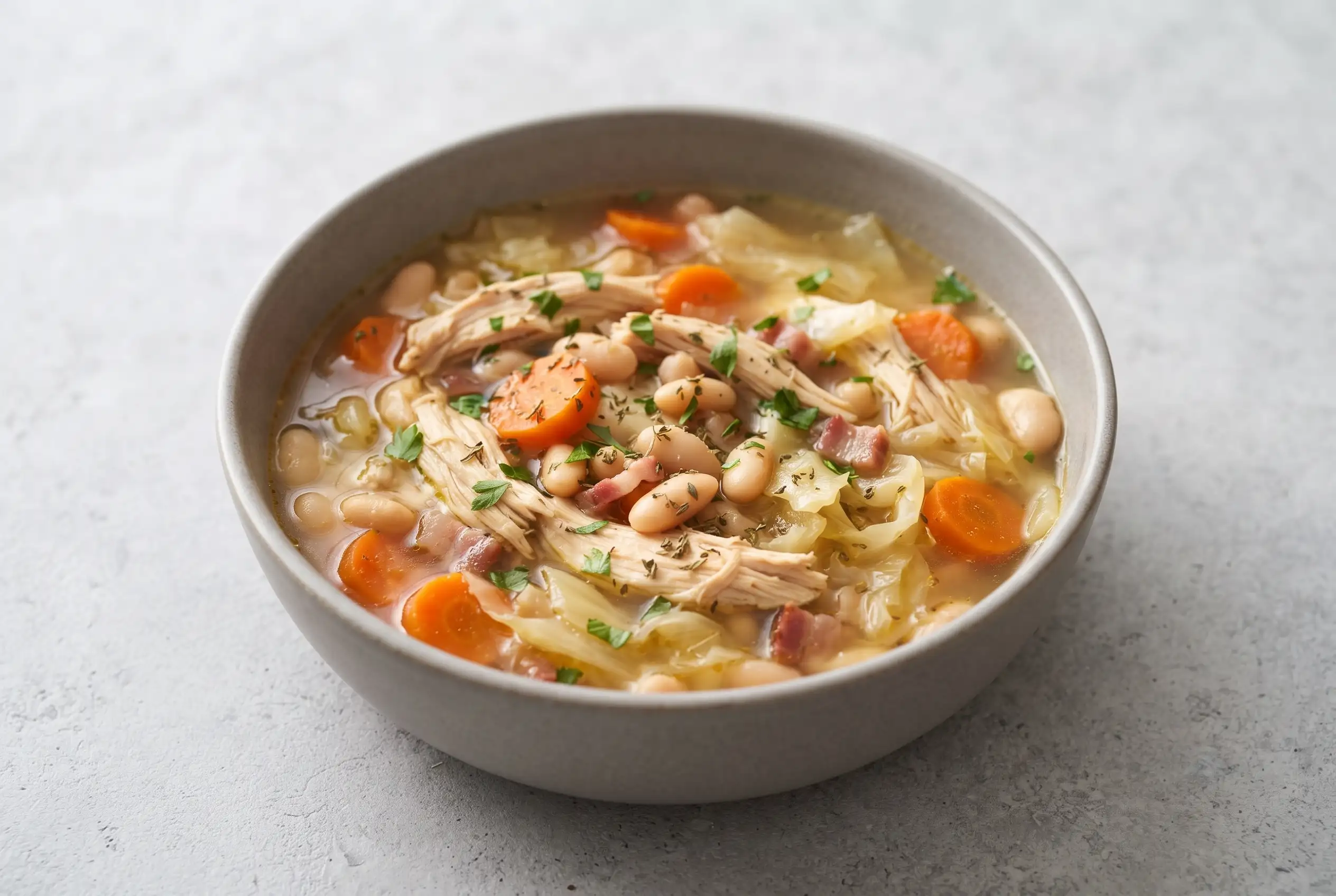
Country chicken stew brings together a whole bird, creamy navy beans, smoky bacon, and tender vegetables in a deeply comforting pot built around patience and simple techniques. The combination creates a chicken stew with navy beans that feels hearty without relying on complicated preparation. Each stage contributes something important: beans soften into the broth, the chicken enriches the cooking liquid, and the vegetables finish the meal with gentle sweetness and texture.
Unlike quick chicken soups that focus mainly on speed, a country chicken stew develops its character through slow changes inside the pot. The whole chicken releases flavor as it simmers, while the beans create body and help transform the cooking liquid into something satisfying. A few finishing touches, including bright acidity and fresh herbs, keep the finished bowl balanced.
Country Chicken Stew Carries Old-Fashioned Comfort
Rural-style cooking often centers on making a small group of dependable ingredients feel generous, and this stew follows that tradition. A whole chicken allows the broth to become naturally rich while providing plenty of tender meat for serving. Navy beans bring a familiar, comforting quality that pairs especially well with poultry because their mild flavor absorbs the surrounding seasonings. A broth-centered meal such as hearty chicken soup depends on careful simmering to develop a satisfying texture and rich flavor.
Warm bowls of country chicken stew work because every element has time to become connected. The beans, chicken, bacon, aromatics, and vegetables do not remain separate pieces on the plate; they become part of one unified dish. That quality makes the stew suitable for relaxed family meals, colder evenings, or occasions when a substantial meal needs to be prepared with straightforward ingredients.
Navy Beans Shape the Stew’s Foundation
Dried navy beans are one of the most important choices in this pot because their texture changes during cooking. After soaking, the beans have a head start toward tenderness, allowing them to cook alongside the chicken and absorb the savory liquid around them. Understanding dried bean soaking methods helps explain why this preparation step affects the final texture. Their small size helps them blend naturally into the stew without overpowering the poultry.
| Bean preparation choice | Effect in the stew | Cook-facing benefit |
|---|---|---|
| Soaked dried navy beans | Soft, creamy texture after simmering | Creates a fuller broth |
| Beans cooked with the chicken | Absorbs poultry and herb flavors | Builds a connected flavor base |
| Beans left intact | Maintains gentle bite | Keeps the stew from becoming completely smooth |
Careful bean handling matters because the finished texture depends on the beans becoming tender while still holding their shape. Adding them at the beginning gives them time to contribute their natural starches, which helps create the comforting consistency associated with a chicken and cabbage stew.
Whole Chicken Creates Deep Stew Flavor
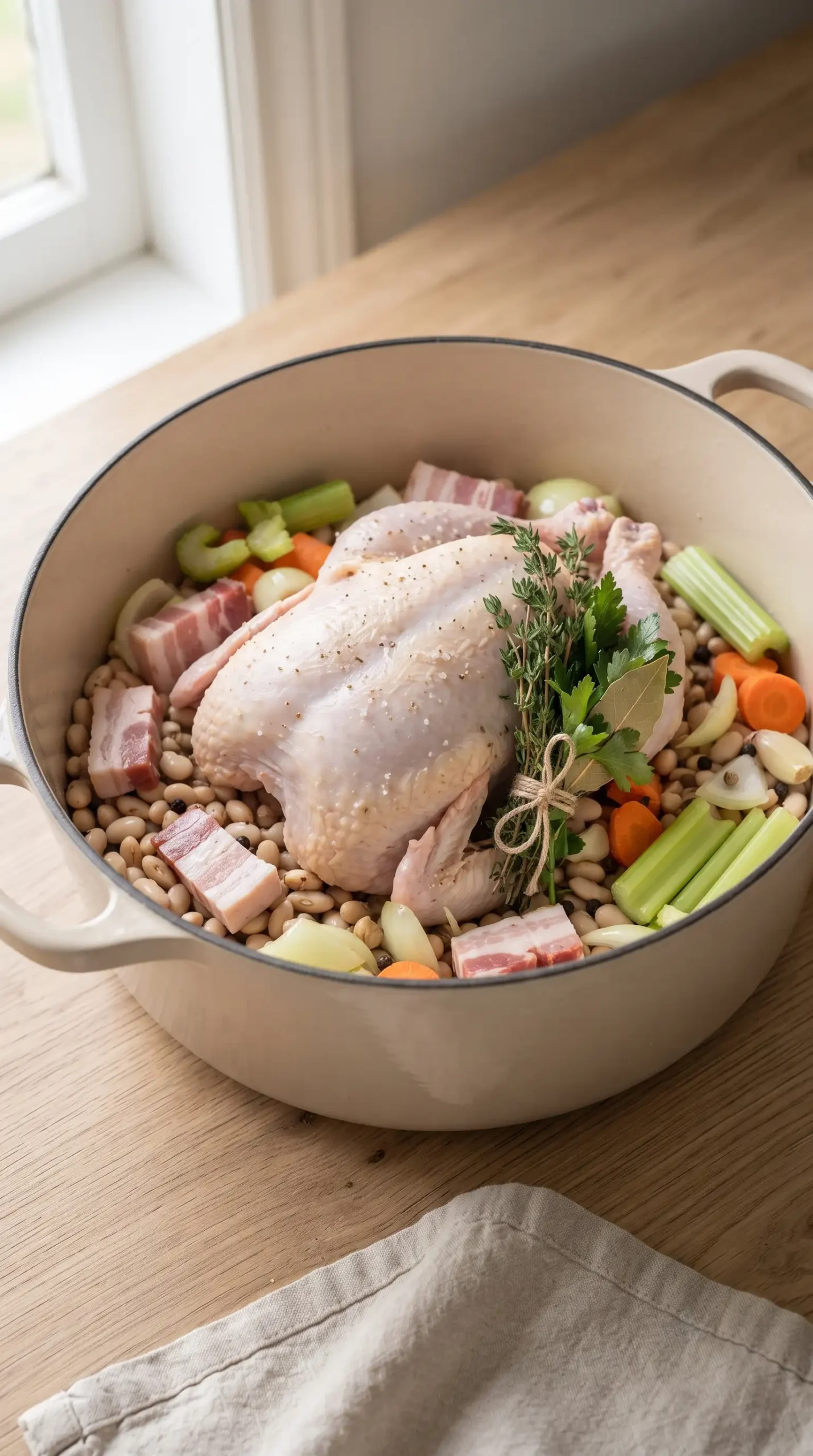
A whole chicken changes the character of the pot because different parts contribute different qualities during cooking. Meat provides tenderness, while bones and connective tissues enrich the surrounding broth. The result is a whole chicken stew recipe built around a naturally developed cooking liquid instead of a separate sauce or heavy addition.
Salting the chicken ahead of time can help season the meat more evenly, especially when the bird cooks as one piece. Keeping the chicken whole during the early simmer also makes the process simpler because the meat can be removed, cooled, and separated after it has given the broth its depth.
- Whole bird cooking: Allows the broth to develop while the chicken stays protected during simmering.
- Resting before shredding: Makes the meat easier to handle and helps create clean bite-sized pieces.
- Returning selected chicken: Keeps the stew hearty while leaving extra meat available for another meal.
Bacon and Aromatics Build the Starting Point

Early flavor decisions shape the entire pot. Bacon provides a savory foundation, while softened onions and garlic create the aromatic base that supports the beans and chicken. Cooking these ingredients until they become deeply tender allows their flavors to blend before the remaining ingredients enter the pot.
Simple aromatics have a major effect in a dish where the cooking liquid becomes the main feature. Thinly sliced onions and garlic have enough time to soften into the broth, while the herbs tied together for easy removal provide a subtle background note without leaving loose pieces throughout the stew.
Vegetable Timing Keeps Chicken and Cabbage Stew Balanced
Carrots and cabbage enter later because their texture needs different attention from the beans and chicken. Adding them after the initial simmer allows the vegetables to soften without disappearing completely into the broth. Their sweetness and freshness provide contrast against the richer poultry base.
Cabbage is especially useful in this style of cooking because it becomes tender while still contributing a recognizable vegetable presence. Thin slices blend into the broth, creating a satisfying chicken and cabbage stew that feels rustic and complete.
Cooking Control Protects the Whole Chicken Stew Texture
Successful simmering depends on gentle heat and observation. A steady simmer gives the chicken time to flavor the broth and allows the beans to soften gradually. Excessively aggressive boiling can disturb the texture of the meat and vegetables, while patient cooking encourages a more cohesive result.
Several small choices help maintain control throughout preparation:
- Monitor the simmer: Keep the pot cooking steadily so the ingredients soften without unnecessary agitation.
- Remove the chicken carefully: Allow enough cooling time before pulling the meat into serving pieces.
- Finish with brightness: Add lemon juice or red wine vinegar after cooking to sharpen the rich flavors.
Attention to these details improves the final texture because the stew depends on timing more than complicated technique. The cooking liquid should feel full and savory, while the chicken and vegetables should remain pleasant to eat in each spoonful.
Country Chicken Stew Mistakes That Ruin the Pot
Even simple comfort food can lose its balance when a few key decisions are overlooked. Country chicken stew depends on properly treated beans, controlled simmering, and a thoughtful finish. Recognizing common problems helps protect the qualities that make this dish satisfying.
- Skipping bean soaking: The beans may take longer to soften and may not reach the expected creamy texture.
- Cutting chicken too early: Removing the meat before it has enriched the broth changes the structure of the dish.
- Ignoring the finishing acid: Without lemon or vinegar, the rich flavors may taste heavier and less defined.
- Overcooking vegetables: Adding carrots and cabbage too soon can reduce their texture and character.
These issues are avoidable because each one connects directly to the supplied preparation approach. Keeping the process organized allows the ingredients to support one another instead of competing for attention.
Serving Choices Complete the Rustic Meal

Presentation does not need to be elaborate for this stew to feel special. A bowl filled with tender chicken, beans, vegetables, and flavorful broth already provides the heart of the meal. Fresh herbs scattered at the end add color and a lighter note that complements the deeper flavors.
Crusty bread is a natural companion because it captures the broth and turns every serving into a more complete experience. Garlic herb butter adds another layer of flavor, creating a simple finishing touch that matches the rustic personality of the dish.
Storing and Reusing Chicken Stew with Navy Beans
Leftover portions can become even more satisfying as the flavors continue to blend. The beans and broth maintain the stew’s hearty character, while the chicken remains useful for future meals when separated and stored appropriately.
Extra chicken from the pot can be used in sandwiches, salads, or another simple meal, which makes cooking a whole bird especially practical. Keeping some meat separate also allows the original stew to remain balanced instead of becoming overloaded with chicken pieces.
| Storage approach | Best use | Helpful consideration |
|---|---|---|
| Keep stew together | Reheating full bowls | Maintains the combined flavors |
| Reserve shredded chicken | Adding protein to another meal | Creates flexibility after cooking |
| Save broth-rich portions | Future comforting meals | Preserves the stew’s texture and flavor |
A Simple Pot Rewards Patient Cooking Decisions
The appeal of this stew comes from how each choice supports the next one. Beans need time to soften, the chicken needs time to enrich the broth, and the vegetables need careful timing to remain recognizable. Those decisions create a meal that feels generous without requiring a long list of complicated steps.
Many traditional dishes succeed because they respect the natural qualities of their ingredients. Here, the combination of navy beans, whole chicken, bacon, herbs, and vegetables creates a dependable balance between richness and freshness.
Country Chicken Stew Finds Its Best Flavor Through Layered Cooking
Country chicken stew reaches its strongest character when the pot is allowed to develop slowly from one stage to the next. The chicken shapes the broth, the beans provide comfort and body, and the vegetables bring balance after the deeper flavors have formed.
A carefully managed simmer turns simple ingredients into a meal where every spoonful reflects the decisions made along the way. The finished stew succeeds because patience allows the ingredients to become connected while a small amount of acidity and fresh herbs keep the bowl lively.
Country Chicken Stew Troubleshooting Questions
Why do navy beans need soaking before making chicken stew?
Soaking dried navy beans helps them begin hydrating before they cook with the other ingredients. This supports a more even texture and allows the beans to become tender while they absorb the flavors surrounding them.
How can the chicken stay tender in a whole chicken stew recipe?
Keeping the chicken whole during the initial simmer helps protect the meat while it contributes flavor to the broth. Removing it after the first cooking stage and shredding it once cooled makes it easier to serve tender pieces.
What causes country chicken stew to taste too heavy?
A stew can feel overly rich when the finished flavors lack contrast. Adding lemon juice or red wine vinegar at the end introduces brightness that helps balance the savory broth and beans.
Can extra chicken from the stew be used separately?
Yes, reserved shredded chicken works well in other meals because it has already been gently cooked and seasoned. Keeping some aside creates another option without changing the texture of the main pot.
Country Chicken Stew with Navy Beans and Smoky Bacon
Ingredients
Method
- Cover the beans with water and soak for 4-12 hours.
- Cook the bacon, onion, and garlic over medium high heat until the mixture is very soft and flavorful, about 10 minutes.
- Add the beans and tied herbs to the pot, then place the whole chicken on top. Add enough water to cover, season with salt, cover with a lid, and simmer for about an hour.
- Remove the chicken from the pot and transfer it to a large plate or cutting board to cool. Skim off any foam from the surface of the soup and remove the herbs. Add the carrots and cabbage, then continue cooking until the vegetables soften.
- Once the chicken is cool enough to handle, remove the meat and cut or shred it into bite-sized pieces. Return half of the chicken to the pot and reserve the remaining chicken for another use. Finish with lemon juice or a splash of red wine vinegar, then serve with additional herbs if desired.