
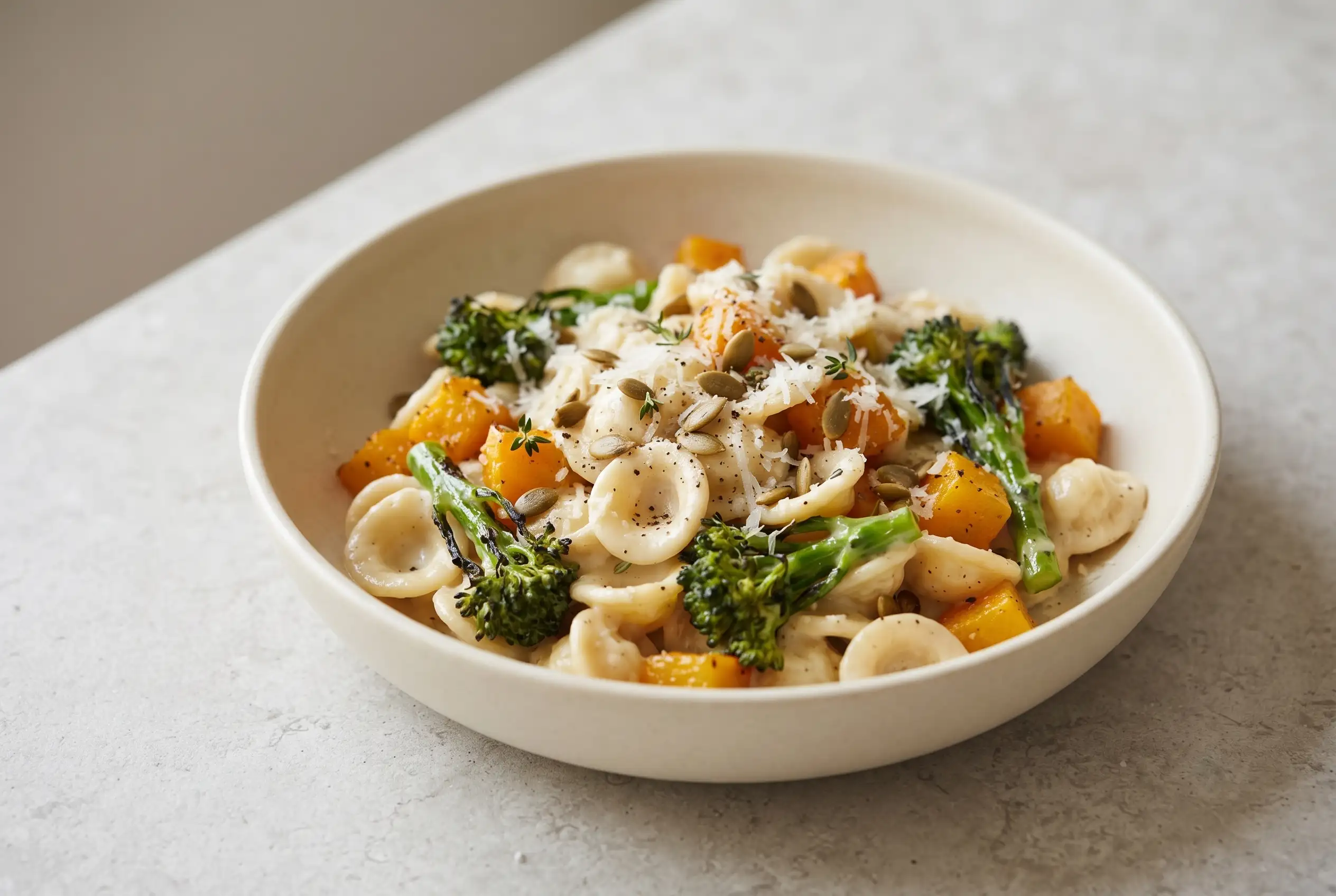
Creamy Parmesan Orecchiette brings together silky cheese sauce, roasted butternut squash, and tender broccolini in a pasta dish that feels both comforting and fresh. The small cup-shaped pasta catches the light sauce beautifully, while roasted vegetables add color, texture, and a gentle sweetness that balances the Parmesan.
Creamy Parmesan Orecchiette Builds a Balanced Pasta Bowl
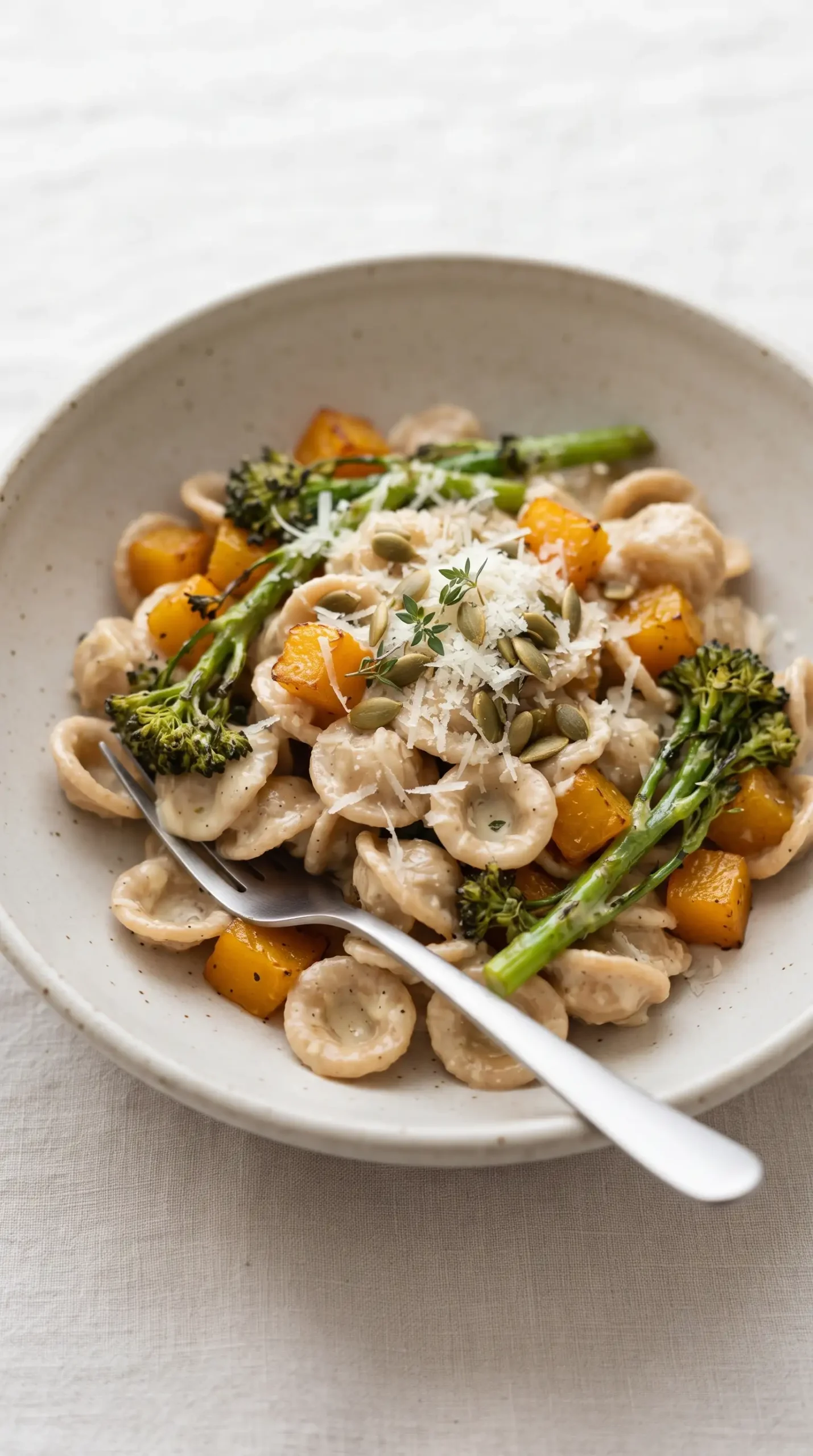
The combination of creamy parmesan orecchiette, roasted vegetables, and herbs works because each element contributes a different texture. The smooth sauce coats the pasta, the squash provides a soft roasted bite, and the broccolini keeps the dish from becoming too heavy. Every forkful has a mix of creamy, savory, and lightly crisp flavors.
Roasting the vegetables separately from the pasta keeps their character intact. Butternut squash becomes tender while holding its shape, and broccolini develops lightly browned edges without losing its structure. That contrast is especially important in a creamy pasta, where too many soft components can make the finished dish feel flat.
Fresh thyme, garlic, lemon juice, and Parmesan create a sauce with depth without requiring a long list of additions. The white wine option adds another layer of flavor, but broth or milk can also create the smooth texture needed for a creamy butternut squash pasta.
Roasted Butternut Squash Adds Sweetness to Orecchiette
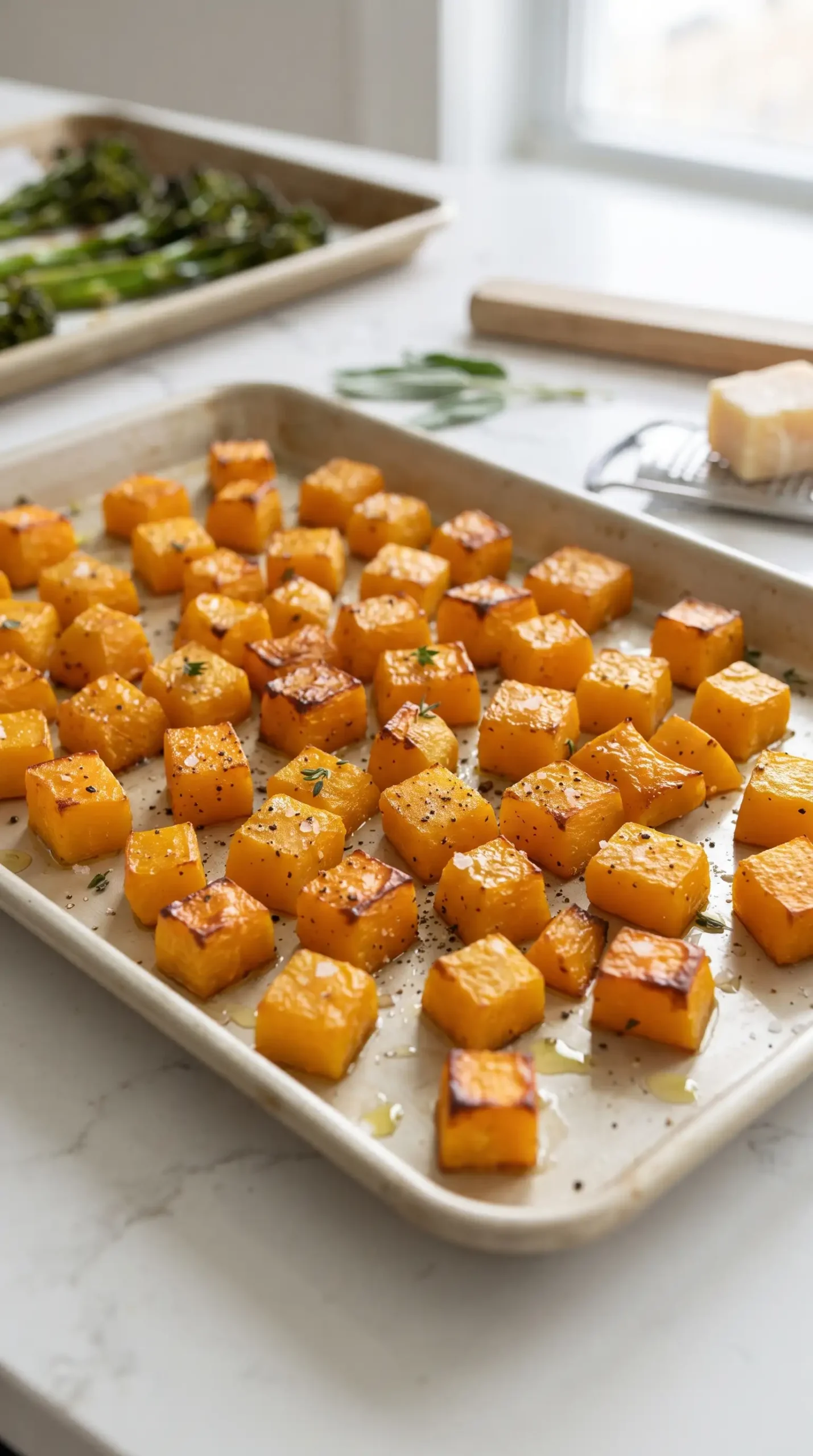
Butternut squash is the ingredient that most changes the personality of this pasta. Cubes roasted with olive oil, salt, and pepper develop a concentrated flavor that pairs naturally with the nutty Parmesan sauce and earthy broccolini.
Parmesan Sauce Keeps the Pasta Light and Silky
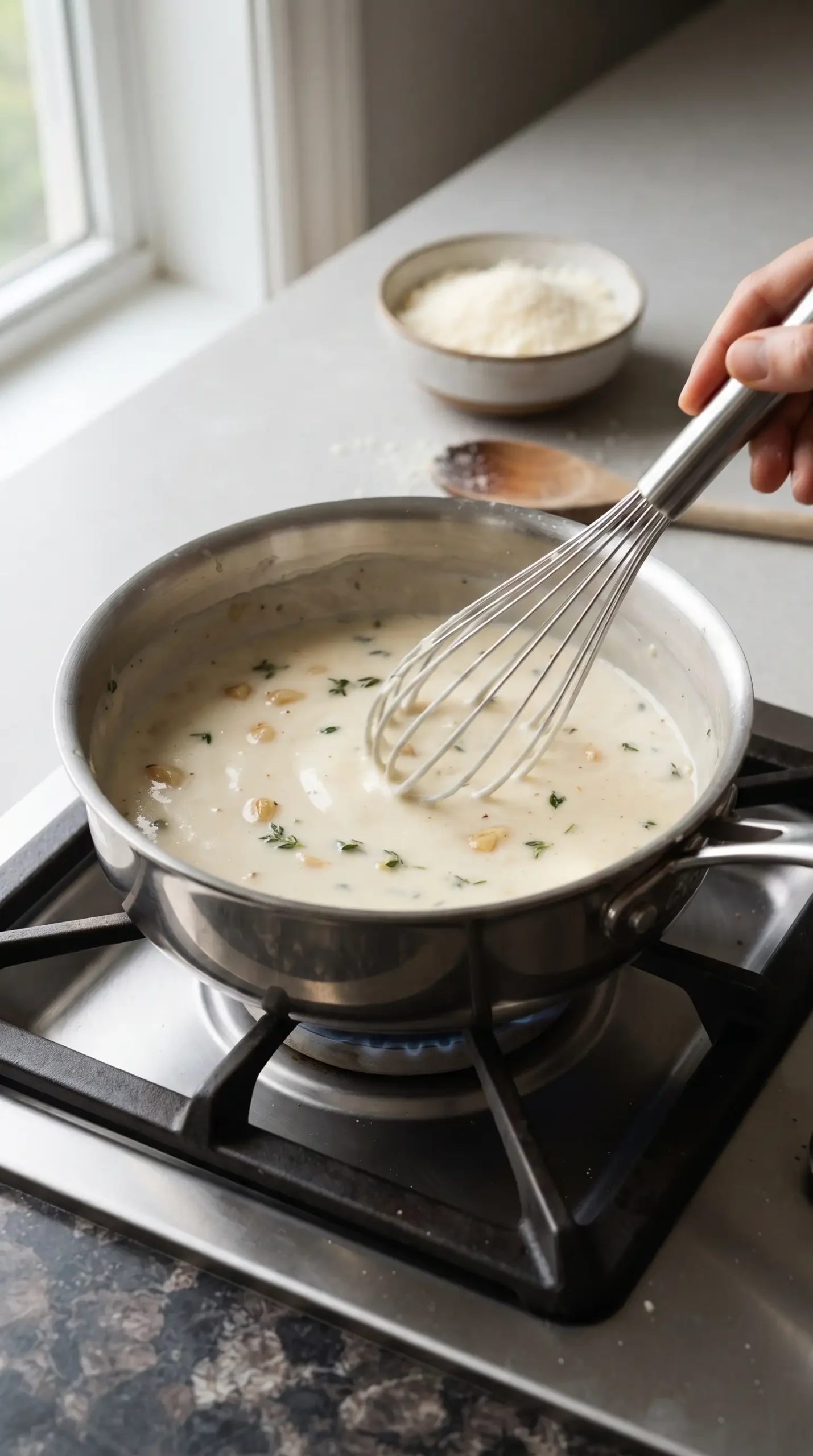
The sauce for parmesan orecchiette with broccolini depends on careful thickening. Butter and flour create the base, but the texture comes from slowly incorporating liquid so the mixture stays smooth. Adding the liquid gradually allows the sauce to develop a light consistency instead of becoming dense. Pasta dishes such as creamy vegetable-based pasta can follow the same focus on building a smooth sauce around fresh ingredients.
Garlic and thyme should soften gently in the butter before the flour is added. Cooking the flour briefly helps remove its raw taste while creating the foundation for a sauce that can hold Parmesan cheese evenly.
Once Parmesan and lemon juice are added, the sauce should remain fluid enough to coat the pasta. Extra broth can loosen the finished dish when needed, especially after the pasta absorbs some of the creamy mixture.
Orecchiette Shape Makes Every Bite More Flavorful
Orecchiette, meaning “little ears,” has a natural bowl shape that captures sauce, roasted squash pieces, and small bits of broccolini. Whole wheat orecchiette also adds a slightly nutty character that works well with the vegetables and cheese.
Cooking Control Protects the Creamy Pasta Texture
Successful creamy butternut squash pasta depends on managing texture at every stage. The roasted vegetables should become tender but still hold their form, because they continue to meet heat when tossed with the warm pasta and sauce.
Liquid control matters most when combining the components. Pasta absorbs sauce quickly, so keeping additional broth available makes it possible to maintain a smooth coating instead of ending with a dry mixture.
Timing the finish also affects the result. Tossing the pasta while the sauce is warm allows the Parmesan mixture to cling to the orecchiette and distribute evenly around the roasted vegetables.
| Component | Desired texture | Key cooking choice |
|---|---|---|
| Butternut squash | Tender with intact cubes | Roast until soft but not falling apart |
| Broccolini | Soft stems with browned edges | Season and roast separately |
| Parmesan sauce | Smooth and lightly thickened | Add liquid gradually while whisking |
Pumpkin Seeds Finish the Orecchiette with Texture
Pumpkin seeds provide a crunchy contrast to the creamy sauce and roasted vegetables. A generous sprinkle with additional Parmesan gives the finished bowl a simple finishing layer without changing the main flavors.
Mistakes That Can Affect Creamy Parmesan Orecchiette
Several small choices can change the texture of creamy parmesan orecchiette. A sauce that becomes too thick often comes from adding liquid too quickly or not reserving enough extra broth for the final toss.
Over-roasting the vegetables can also affect the dish. Squash that breaks apart completely can disappear into the sauce, while broccolini cooked beyond tenderness may lose the contrast that makes the pasta more interesting.
Another common issue is rushing the flour step. Allowing the flour to cook briefly after combining it with butter helps create a smoother sauce. Skipping that step can leave an unpleasant flour flavor in the finished pasta.
- Sauce texture: Keep the Parmesan mixture smooth and loose enough to coat the pasta.
- Vegetable shape: Roast until tender while preserving visible pieces of squash and broccolini.
- Seasoning balance: Finish with lemon juice, salt, and pepper according to taste after combining.
Separate Roasting Preserves Squash and Broccolini
Using two baking sheets gives the vegetables enough space to roast properly. Crowded pans reduce browning because trapped moisture lowers the surface temperature and makes it harder for vegetables to develop the caramelized edges that add flavor to this pasta.
Storage Choices Keep the Pasta Enjoyable Later
Leftover creamy pasta can thicken as it cools because the sauce continues to cling to the orecchiette. A small amount of broth or milk can help restore a smoother consistency when reheating.
Keeping the vegetables and pasta together is convenient, but the texture will change over time as the sauce absorbs into the noodles. Gentle reheating helps warm the dish without making the sauce separate.
Extra Parmesan and pumpkin seeds are best added after reheating so their flavors and textures remain noticeable. A fresh sprinkle can refresh the creamy pasta after storage.
Serving Ideas Highlight the Roasted Pasta Flavors
Creamy Parmesan Orecchiette with Butternut Squash and Broccolini works well as a complete pasta meal, with the roasted vegetables providing color and substance alongside the cheese sauce.
Creamy Parmesan Orecchiette Shows the Power of Roasted Vegetables
The roasted squash and broccolini create the defining balance in creamy parmesan orecchiette. Their textures allow the silky Parmesan sauce to feel rich while still keeping the dish bright and layered.
A carefully loosened sauce, properly roasted vegetables, and a textured pasta shape are the details that make this combination succeed from the first bite to the last.
Questions About Creamy Pasta Texture and Orecchiette
Can I make creamy parmesan orecchiette without white wine?
Yes. The white wine can be replaced with additional broth or milk. The sauce will still become smooth and flavorful when finished with Parmesan, lemon juice, garlic, and thyme.
Can I use another pasta shape for this dish?
Yes. Shapes with curves or ridges can work well because they hold onto the creamy sauce. Orecchiette is especially suitable because its small cups collect the sauce and vegetables.
How do I keep the Parmesan sauce from becoming too thick?
Add extra broth gradually when combining the pasta and sauce. The noodles naturally absorb some liquid, so adjusting the consistency at the finish helps keep the coating silky.
Can I replace broccolini in this pasta?
A similar vegetable with a tender texture can be used, but the replacement should still complement the roasted squash and creamy Parmesan flavors. Keeping a vegetable component maintains the balance of the dish.
Why roast the squash and broccolini separately?
Separate roasting gives each vegetable room to brown and develop flavor. It also helps preserve the different textures that make the pasta more enjoyable.
Creamy Parmesan Orecchiette Pasta with Butternut Squash
Ingredients
Method
- Melt the butter over medium heat. Add the garlic and thyme, then cook until softened.
- Stir in the flour and whisk until smooth. Continue cooking for a few minutes to remove the raw flour taste.
- Add the white wine and whisk to combine. Gradually add the broth or milk in 1/2 cup portions, whisking between additions until incorporated and slightly thickened.
- Stir in the Parmesan cheese, lemon juice, and salt to finish the sauce. Keep the sauce smooth and light.
- Arrange the vegetables on two separate baking sheets. Drizzle with olive oil and season with salt and pepper.
- Roast at 400°F (204°C) for about 20-30 minutes, until the vegetables are tender but still hold their shape.
- Cook the pasta according to the package directions. Set aside.
- Combine the sauce, pasta, and roasted vegetables, adding additional broth as needed to maintain a loose consistency.
- Top with pumpkin seeds and additional Parmesan cheese. Season with salt and pepper.