
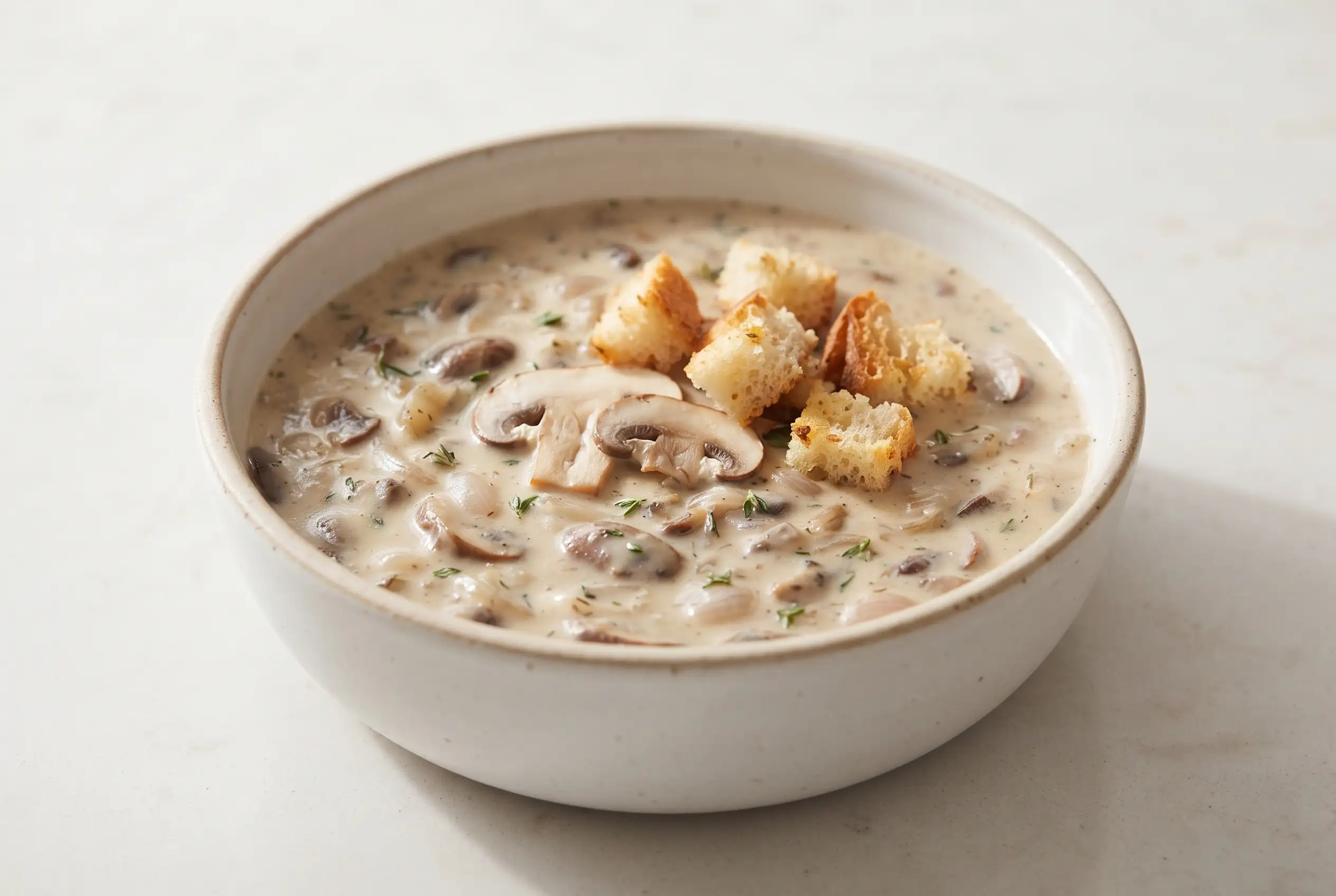
Creamy mushroom soup brings together deeply sautéed mushrooms, a silky broth, gentle herbs, and a rich finish that feels both comforting and elegant. A well-made creamy mushroom soup is not just about adding cream at the end; the best texture comes from building layers of flavor before the liquid reaches the pot. Thinly sliced mushrooms, fragrant aromatics, and a carefully prepared base create a bowl with a smooth consistency and a savory character.
Creamy Mushroom Soup Starts With Deep Mushroom Flavor
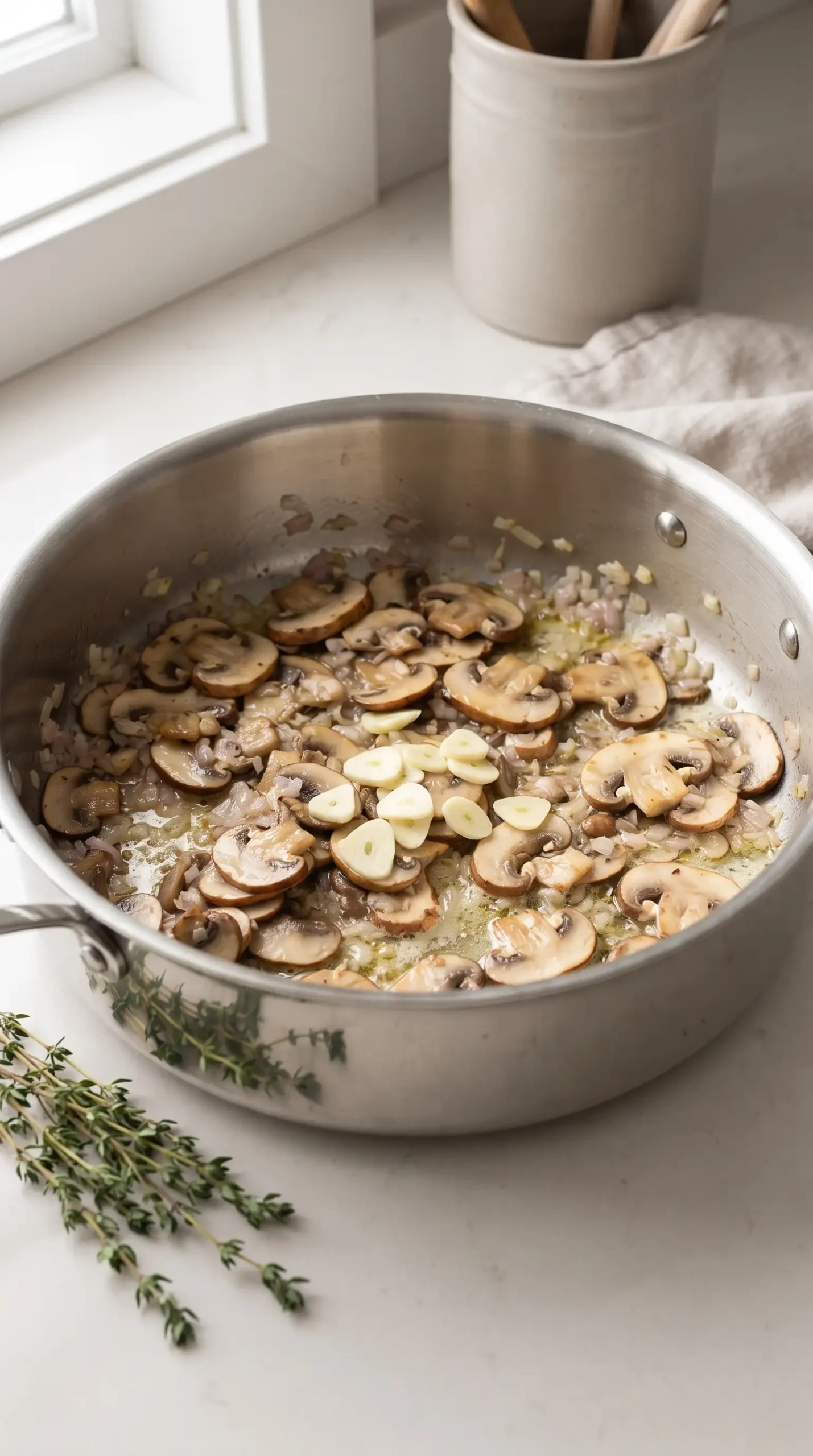
Fresh mushrooms develop their best flavor when they have enough contact with heat to soften, concentrate, and become fragrant. The early sautéing stage shapes the entire soup because the mushrooms and shallots create the foundation that the broth, cream, and herbs later carry. Understanding mushroom moisture release helps explain why allowing mushrooms to cook properly before building the soup base creates deeper flavor. The result is a homemade mushroom soup with a richer taste than a quick blended mixture.
Choosing Mushrooms and Building the Soup Base
Mushrooms are the defining ingredient in creamy mushroom soup, so their preparation deserves attention. Removing the stems and slicing the mushrooms very thinly helps them soften evenly and blend naturally into the finished bowl. The thin slices also allow the mushrooms to become part of the texture instead of sitting as large pieces throughout the soup.
Butter and olive oil work together to create a flavorful cooking surface for the mushrooms and shallots. Once garlic is added, the aromatic base becomes more complex, while flour helps create the structure needed for a creamy texture. Adding the flour at the right point allows it to coat the sautéed mixture before the liquids are introduced.
White wine adds another layer of flavor before the broth and cream bring everything together. Chardonnay works well here, but the important choice is using a wine that complements the earthy mushroom flavor. The finished soup should taste balanced, with the mushrooms still clearly leading the bowl.
| Soup Element | Purpose in the Bowl | Cooking Consideration |
|---|---|---|
| Mushrooms | Create the main savory flavor and texture | Slice thinly for even softening |
| Flour | Helps build a creamy soup base | Coat the cooked mixture before adding liquids |
| Heavy cream | Adds richness and smoothness | Warm gently without boiling |
| Fresh thyme | Brings herbal balance | Add near the finishing stage |
Why Homemade Mushroom Broth Changes the Bowl
Using mushroom stems to create a simple broth is a practical way to extend the mushroom flavor already present in the soup. The reserved liquid captures the earthy notes from the stems and can provide a delicate background flavor that supports the creamy base.
Creating Croutons That Complete Mushroom Soup With Croutons
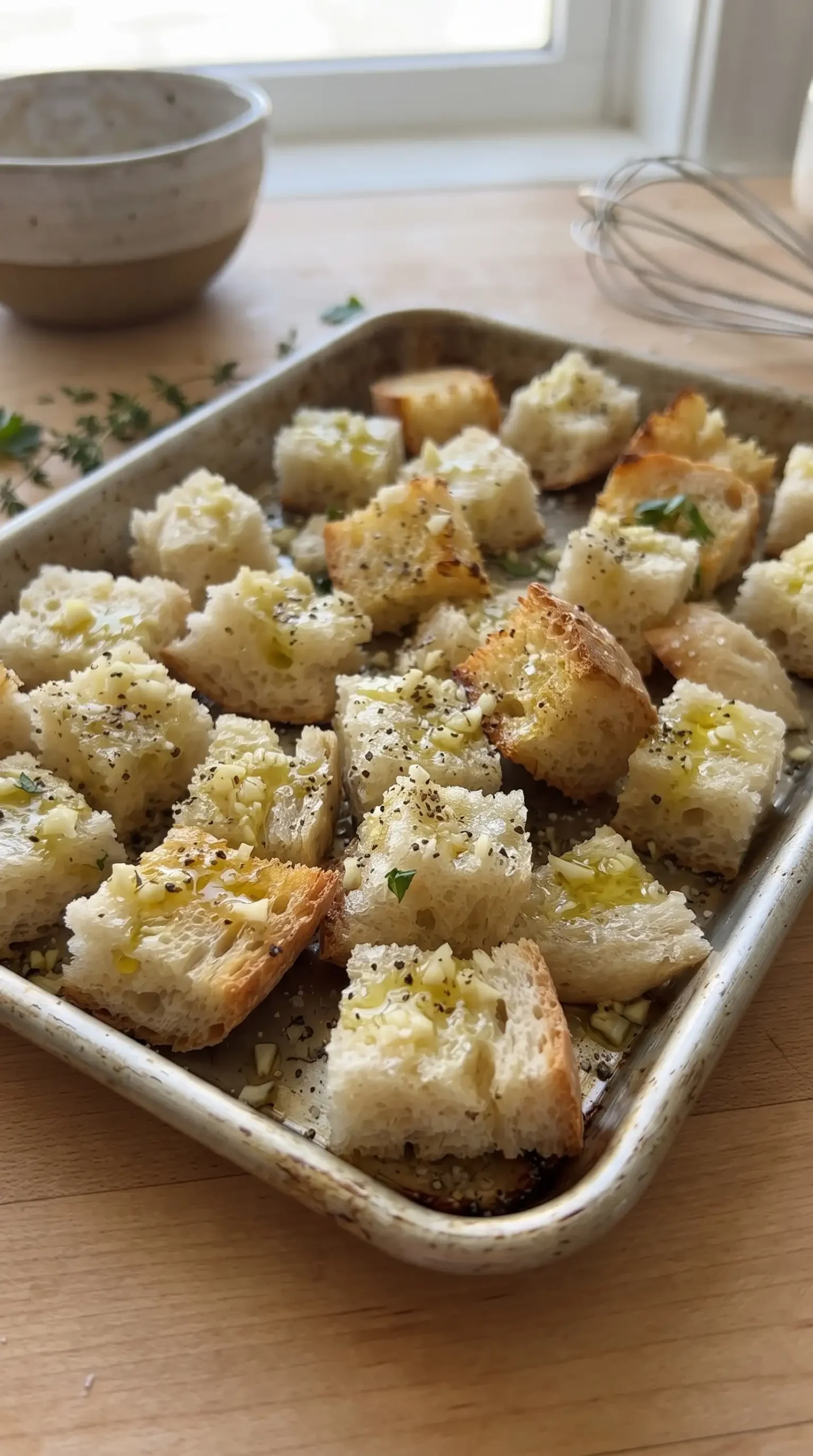
Crunchy toppings give creamy mushroom soup a useful contrast against its smooth texture. The sourdough croutons are prepared separately with olive oil, garlic, salt, and pepper, creating pieces that bring a toasted element to every spoonful.
Sourdough is a strong match because its tangy flavor stands up to the richness of the soup. The bread should complement the bowl instead of overwhelming it, so the seasoning remains simple and focused on the garlic and toasted flavor.
Serving mushroom soup with croutons also gives diners control over texture. Some croutons can remain crisp on top, while others soften slightly after meeting the warm soup. That contrast makes each bite feel more layered without changing the character of the dish.
Cooking Control Keeps Creamy Mushroom Soup Smooth
Temperature management is one of the most important parts of a creamy mushroom soup recipe. After the cream is added, gentle heat helps the ingredients settle together while protecting the smooth texture created by the soup base. Careful finishing is especially important in cream-based soups, including Creamy Chicken Noodle Soup with Heavy Cream and Spinach, where maintaining a cohesive broth keeps the final bowl balanced.
Careful stirring matters when the broth is introduced because the flour-coated mushroom mixture needs enough movement to become a smooth soup. Adding liquid gradually helps prevent uneven pockets and keeps the base cohesive.
Mushroom Soup Mistakes That Affect Creaminess and Flavor
Certain small choices can change the final result of creamy mushroom soup. Avoiding these common problems helps preserve the texture and balanced flavor that make the dish special.
- Wet mushroom texture: Mushrooms that release excess moisture can prevent the base from becoming thick enough. Adjusting the flour or liquid balance can help recover the desired consistency.
- Rushed aromatics: Adding garlic too early or skipping the sautéing stage can leave the flavor less developed.
- Boiling cream: High heat after adding cream can affect the smooth finish, so gentle warming is the better approach.
- Overpowering toppings: Heavy seasoning on croutons can distract from the earthy mushroom flavor.
Extra liquid from mushrooms may require small adjustments while cooking. If the mixture does not become thick after the flour is added, adding a little more flour and balancing with additional liquid later can help create the creamy structure expected from the soup.
Serving Ideas for a Cozy Soup Course
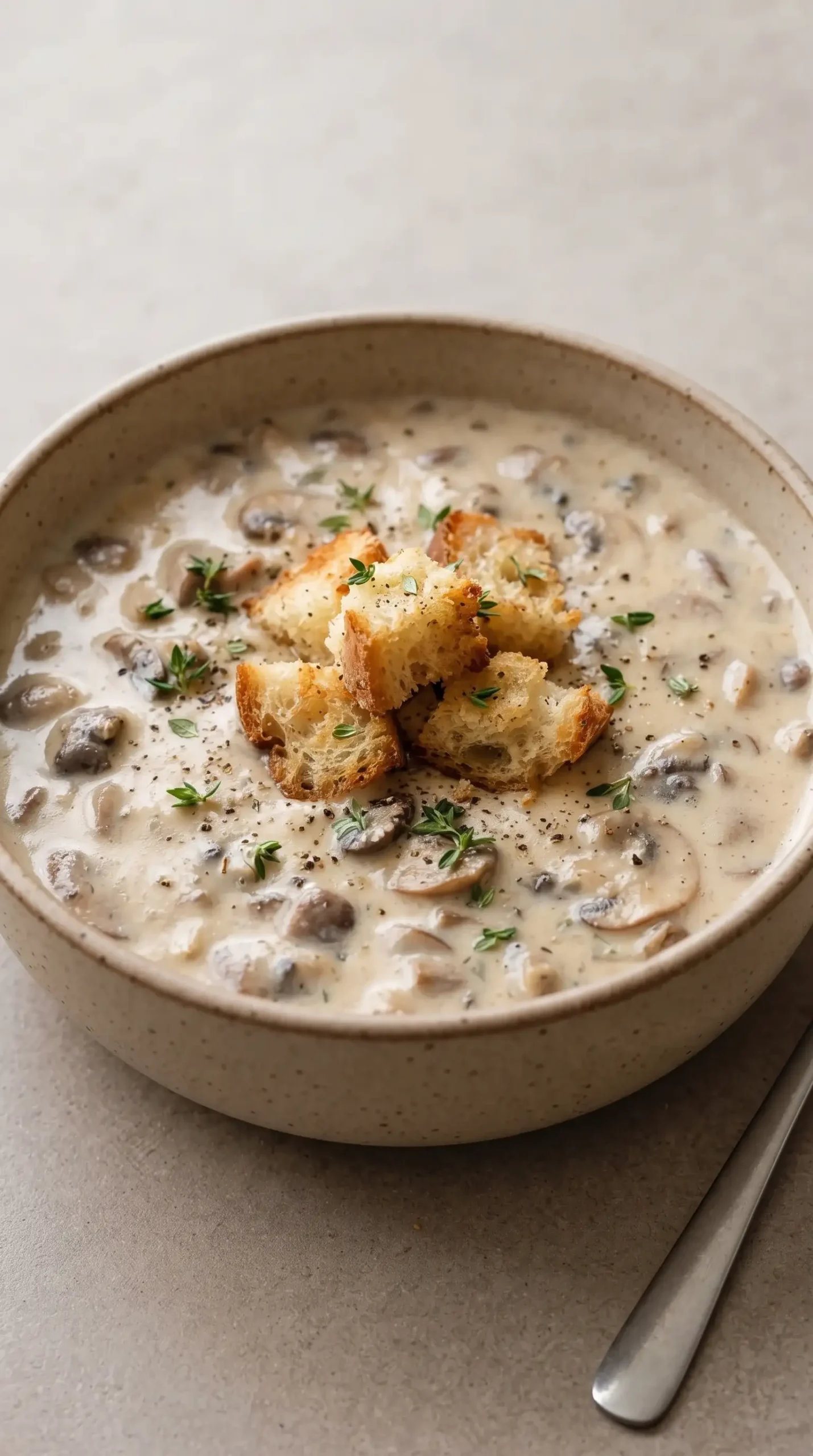
Creamy mushroom soup works beautifully as a comforting lunch, a starter, or a simple dinner when paired with bread. The toasted sourdough croutons already provide texture, while fresh black pepper and thyme reinforce the savory flavors in the bowl.
Adjusting Texture Without Losing the Mushroom Character
The texture of homemade mushroom soup can be adjusted while keeping the main flavors intact. A thicker soup highlights the creamy base, while a slightly looser consistency allows the mushroom and herb notes to feel lighter.
Extra broth can be used when the soup becomes thicker than desired after resting. Small additions are easier to control because the soup can gradually reach the preferred consistency without losing its richness.
Different mushroom sizes can also affect the eating experience. Very thin slices create a smoother integration, while thicker pieces provide a more noticeable mushroom bite. The supplied preparation style focuses on a texture where the mushrooms become part of the creamy soup itself.
Storing and Reheating Homemade Mushroom Soup
Homemade mushroom soup can be enjoyed beyond the first serving when it is stored carefully. Keep leftovers chilled and reheat gently so the creamy texture remains pleasant. Slow warming helps the soup return to a smooth consistency without unnecessary heat stress.
Pairings That Bring Out Creamy Mushroom Soup
Simple pairings allow the earthy flavor of creamy mushroom soup to remain the center of the meal. Sourdough bread is an obvious companion because the same bread used for croutons can also help complete the serving.
A fresh salad or lightly seasoned vegetables can balance the richness of the soup without competing with it. Mild accompaniments allow the mushrooms, thyme, and cream to remain noticeable.
For a more complete meal, consider serving the soup alongside additional bread or another simple side with clean flavors. The creamy texture provides enough richness that supporting dishes do not need complicated seasoning.
Wine and Herb Choices Shape the Mushroom Soup Finish
The white wine and fresh thyme used in creamy mushroom soup each influence the final impression. Wine contributes brightness, while thyme adds an herbal note that matches the earthy mushrooms. Keeping these flavors balanced allows the soup to stay comforting without becoming heavy.
Mushrooms Settle Into a Creamy Soup When Gentle Cooking Leads the Way
Mushrooms create their deepest flavor when they are given time to soften before the creamy base is built around them. The combination of sautéed mushrooms, carefully incorporated flour, broth, cream, and thyme depends on steady handling more than complicated techniques.
A smooth creamy mushroom soup comes together when texture decisions are made intentionally, from thin mushroom slices to gentle finishing heat. The finished bowl reflects those choices through a rich texture, savory depth, and a crisp crouton contrast.
Creamy Mushroom Soup Questions About Slicing, Storage, and Texture
Can creamy mushroom soup be made without homemade mushroom broth?
Yes. The soup can be made with broth as written, while using mushroom stems for a separate homemade broth option can add extra earthy flavor when available.
Why does my mushroom soup become too thin?
A thin soup can happen when mushrooms release more moisture than expected or when the flour base is not thick enough. Adjusting the flour amount and balancing with liquid can help create the intended creamy consistency.
Should mushrooms be sliced thinly for this soup?
Thin slices work well because they soften evenly and blend into the creamy texture. They also help the mushrooms become part of the soup base instead of remaining large pieces.
Can I prepare the croutons separately from the soup?
Yes. Preparing the sourdough croutons separately keeps their toasted texture intact and allows them to be added just before serving.
How can I keep the cream from affecting the soup texture?
Adding cream and keeping the soup at gentle heat helps maintain a smooth finish. Avoiding a hard boil after the cream is incorporated supports the creamy texture.
Creamy Mushroom Soup with Shallots, Garlic and Herbs
Ingredients
Method
- Prepare the croutons and set them aside for serving.
- Warm the butter and olive oil in a soup pot over medium-high heat. Add the mushrooms and shallots, then cook for 10 minutes until softened and fragrant. Stir in the garlic and continue cooking for 1-2 minutes.
- Add the flour and mix until the mushroom mixture is coated. Slowly pour in the wine, stirring as the mixture loosens, then gradually add the broth while stirring to create a smooth soup base.
- Stir in the cream, salt, pepper, and fresh thyme. Keep the soup over very low heat or remove it from the heat to allow the flavors to develop without boiling.
- Serve the creamy mushroom soup topped with the prepared croutons.