
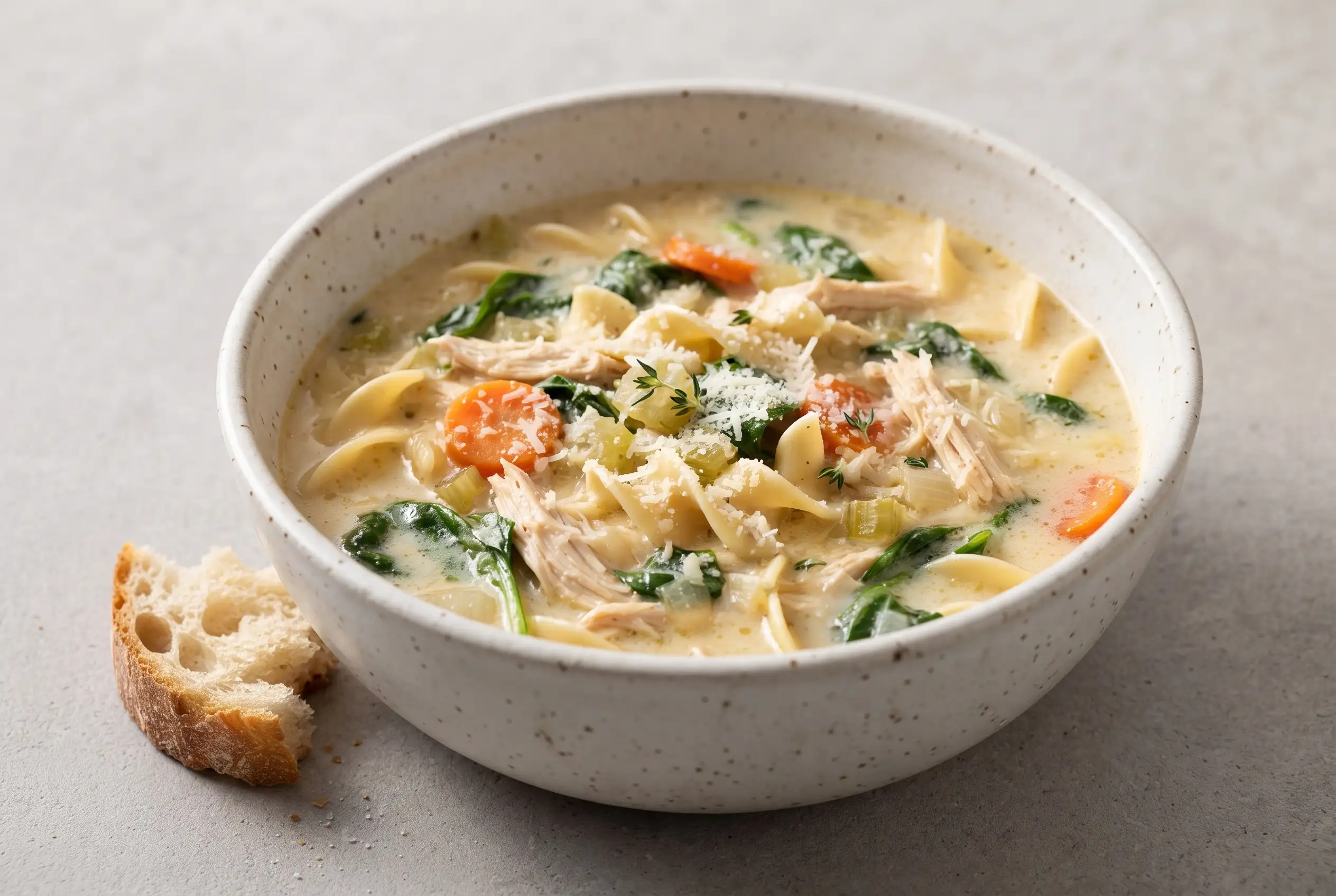
Creamy Chicken Noodle Soup Creates a Richer Bowl of Comfort
Creamy chicken noodle soup combines familiar comfort with a silky finish, turning simple pantry staples into a cozy meal with tender noodles, savory vegetables, and a generous layer of creaminess. The addition of heavy cream changes the texture without hiding the flavors that make classic chicken noodle soup so appealing.
Unlike broth-only versions, a chicken noodle soup with heavy cream delivers a fuller mouthfeel while still keeping the herbs, vegetables, and chicken easy to recognize. The balance comes from careful timing, allowing the vegetables to soften deeply and letting the noodles absorb enough flavor before the dairy is added.
Fresh spinach, shredded chicken, and Parmesan provide the finishing touches that make each bowl feel complete. A warm slice of crusty bread alongside the soup also fits naturally because the creamy broth is ideal for dipping and soaking up every last bit.
The Creamy Texture Comes From Smart Finishing Choices
Heavy cream is added near the end of cooking so the soup keeps a smooth consistency and the dairy does not spend unnecessary time simmering. This simple choice protects the texture while allowing the broth, vegetables, and noodles to remain the focus.
Resting the soup briefly after combining the ingredients also matters. Some separation may appear on the surface immediately after the cream and chicken are stirred in, but the noodles continue absorbing liquid as the soup settles. A gentle stir brings everything back together.
Parmesan added at serving gives the creamy chicken noodle soup recipe a savory finish that complements the thyme and garlic. Freshly grated cheese melts more easily into the hot soup, creating small pockets of richness in every bowl.
Carrots Celery and Thyme Build the Soup’s Signature Flavor
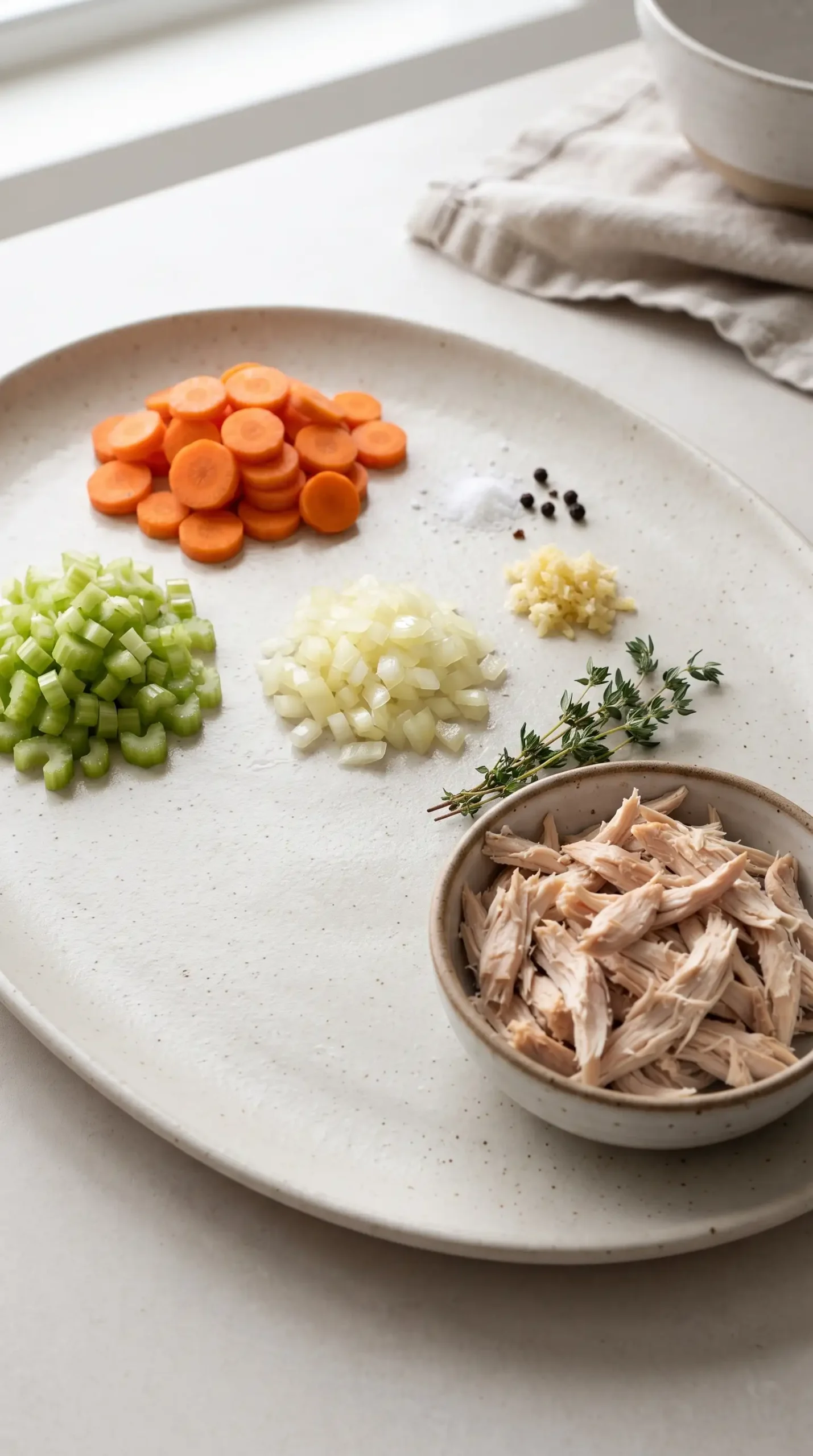
The vegetables in this creamy chicken noodle soup are more than background ingredients. Slowly cooking the onion, carrots, and celery until tender creates a flavorful foundation before broth and noodles enter the pot.
Thin carrot rounds soften evenly, while finely chopped celery blends into the broth instead of creating large pieces that compete with the noodles. This preparation helps every spoonful carry a balanced combination of textures.
Garlic and fresh thyme bring a fragrant layer that works especially well with chicken and cream. Removing the thyme sprigs before serving keeps the herb flavor present while leaving the finished soup smooth and easy to enjoy.
A Flavorful Base Starts Before the Noodles Arrive
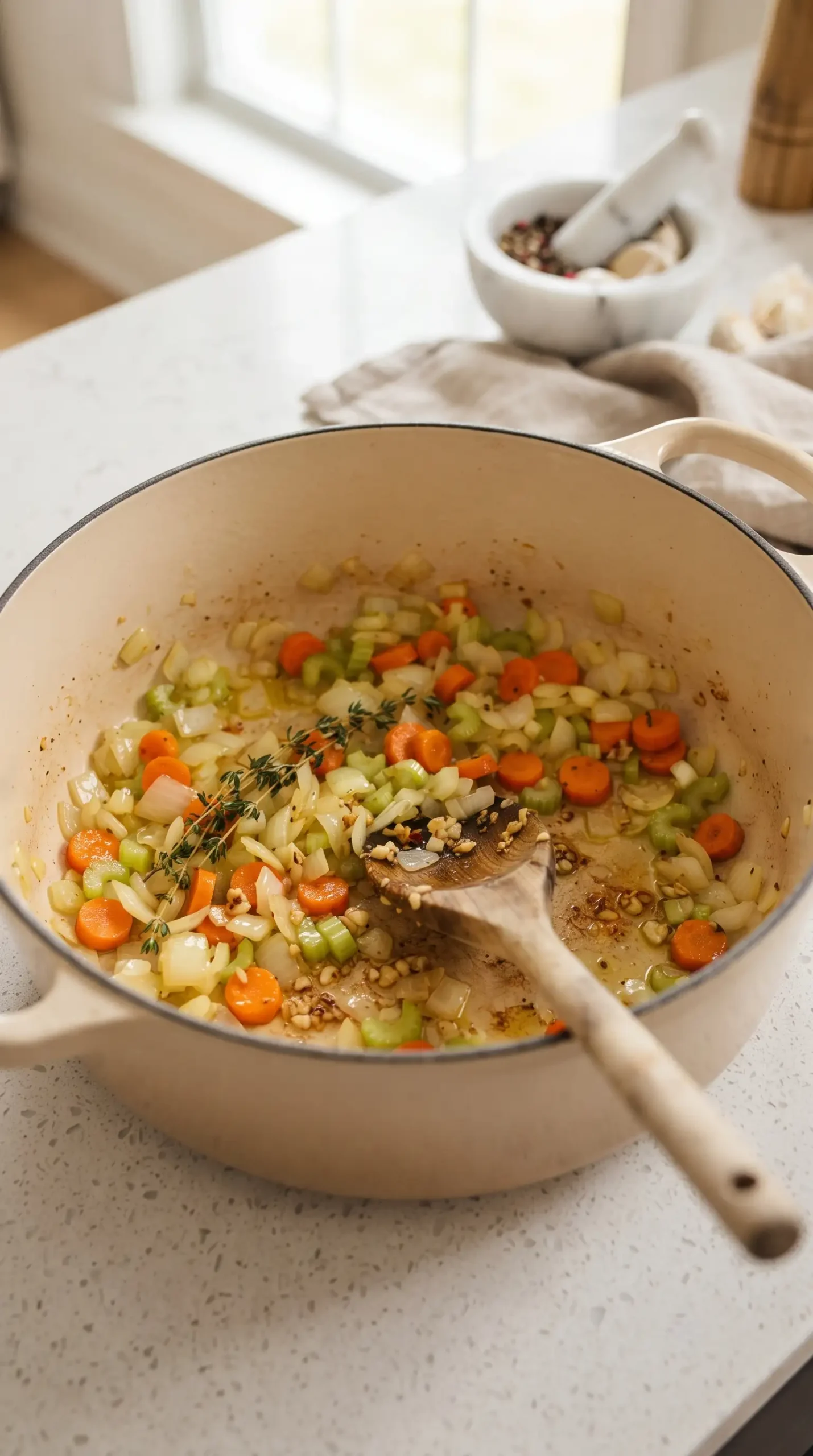
The early cooking stage determines how developed the soup tastes later. Allowing the vegetables to become very tender gives the broth a deeper savory character before the noodles begin releasing starch.
This combination of onion, carrots, and celery is known as mirepoix, a classic culinary foundation used to build flavor in stocks, soups, and other preparations.
Chicken broth provides the liquid structure for the soup, but the vegetables, garlic, salt, and herbs shape the overall flavor. Building these layers first prevents the finished bowl from tasting flat or one-dimensional.
Broth and Noodle Choices Change the Finished Bowl
The broth and noodles influence both the texture and the way the soup eats. Old-fashioned egg noodles bring a classic texture because they hold their shape while soaking up the creamy broth, while a chicken-and-noodle comfort meal can highlight how tender noodles pair with rich, savory flavors.
| Choice | Effect in the soup | Best consideration |
|---|---|---|
| Egg noodles | Soft, classic texture with good broth absorption | Use when aiming for traditional chicken noodle soup comfort |
| Chicken broth | Provides the savory liquid base | Choose a broth with a flavor level that supports the herbs |
| Heavy cream | Adds smooth richness and body | Stir in near the end for the best texture |
Using rotisserie chicken noodle soup as inspiration makes preparation easier because cooked shredded chicken can be added after the noodles are tender. The chicken warms through without needing extra cooking time that could dry it out.
Cooking Control Keeps Creamy Chicken Noodle Soup Balanced
Managing heat and timing helps the soup maintain the right consistency. A low simmer cooks the noodles gently while allowing the broth to remain smooth and flavorful.
Several small observations can guide the cooking process:
- Noodle texture: Add attention when noodles become tender so they do not continue softening excessively in the hot liquid.
- Cream addition: Stir dairy in after the main simmering stage to preserve its smooth quality.
- Resting time: Allow a short pause after finishing so the noodles can settle into the broth.
Adding spinach, chicken, and cream after removing the pot from direct heat helps the spinach wilt gently and keeps the chicken tender. This approach also gives the finished soup a more cohesive texture.
Serving Details Make Each Bowl Feel Complete
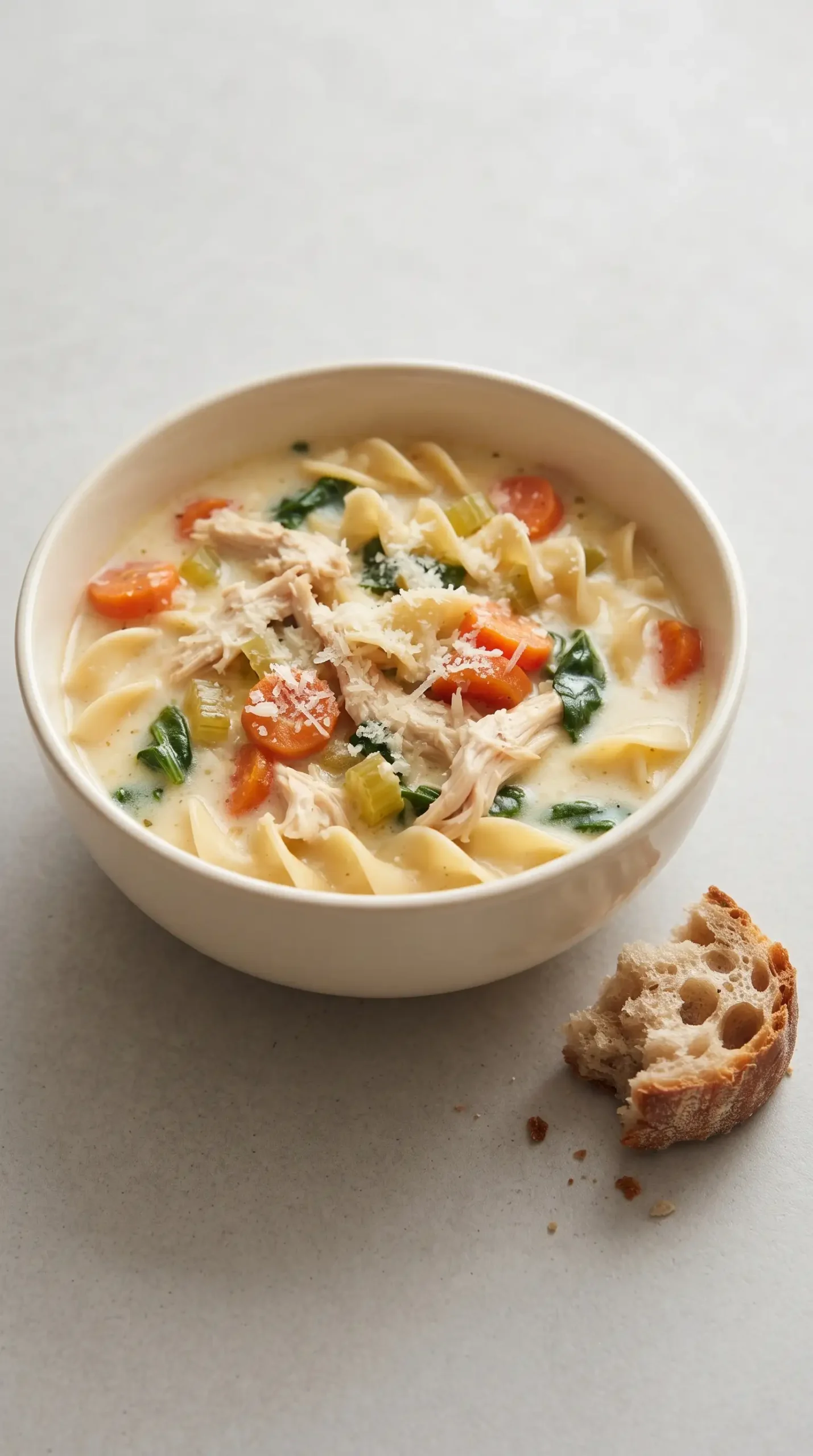
Serving creamy chicken noodle soup hot with freshly grated Parmesan creates a simple but satisfying finish. The cheese melts into the surface, adding a salty, nutty note that works with the creamy broth.
Crusty bread is a natural companion because the soup has enough richness to pair well with a hearty side. A warm serving bowl also helps maintain the comforting experience from the first spoonful to the last.
Mistakes in Creamy Chicken Noodle Soup Can Affect Texture
Even a straightforward soup can lose its best qualities when small details are overlooked. Creamy chicken noodle soup mistakes usually come from timing issues that change the balance between noodles, broth, and dairy.
- Overcooking noodles: Leaving noodles in hot soup too long can make them overly soft because they continue absorbing liquid.
- Adding cream too early: Extended cooking after dairy is added can affect the smooth texture that makes the soup special.
- Skipping the vegetable cook-down: Rushing the onion, carrots, and celery stage can leave the flavor foundation less developed.
If the soup appears slightly separated after finishing, stirring gently and allowing it to rest can help the ingredients come back together. The noodles naturally continue interacting with the broth as the soup settles.
Storage Keeps Leftover Soup Ready for Another Meal
Leftover creamy chicken noodle soup changes as it sits because noodles continue absorbing moisture. A thicker texture the next day is normal, and reheating gently with attention to consistency helps restore its comforting character.
Store cooled soup in a covered container and reheat portions carefully until warmed through. Adding a small amount of liquid during reheating can help loosen the broth if the noodles have absorbed much of it.
Simple Variations Add New Directions Without Losing Balance
The core flavors of this soup allow for small adjustments while keeping the creamy chicken noodle soup recipe recognizable. The existing ingredients provide enough flexibility for cooks who want to adapt the bowl to their preferences.
Useful changes include:
- Greens: Keep the spinach addition for extra color and a tender finish.
- Cheese finish: Adjust the Parmesan amount at serving to match the desired savory flavor.
- Chicken preparation: Use shredded cooked chicken when convenience is important.
Rotisserie Chicken Makes the Soup Easier to Finish
Rotisserie chicken noodle soup is a practical approach for busy evenings because the cooked chicken can be added after the noodles are ready. The meat absorbs the creamy broth while keeping its tender texture.
Shredding the chicken into bite-sized pieces helps it distribute evenly throughout the soup. Each serving then receives a balanced amount of chicken, noodles, vegetables, and broth.
Creamy Chicken Noodle Soup Questions About Storage and Texture
Can creamy chicken noodle soup be made ahead of time?
Yes, the soup can be prepared ahead, but the noodles will continue absorbing liquid as it sits. When reheating, gently warm the soup and adjust the consistency if needed so the creamy texture remains enjoyable.
Why does my creamy chicken noodle soup look separated?
A slight separation on the surface can happen after cream is added because of the different components in the soup. Stirring gently and allowing the soup to rest helps bring the texture back together.
Can I use leftover chicken instead of rotisserie chicken?
Cooked shredded chicken works well as long as it is added near the end and heated through. Keeping the chicken warm in the finished soup helps preserve its tenderness.
How do I keep noodles from becoming too soft?
Watch the noodles closely as they approach tenderness and avoid extended simmering after they are cooked. Serving portions promptly also helps maintain their texture.
The Soup’s Creamy Finish Depends on Gentle Timing
Creamy chicken noodle soup succeeds when the vegetables develop flavor early, the noodles reach the right texture, and the dairy is introduced at the proper stage. Each choice supports the next, creating a bowl where richness and comfort remain balanced.
The finished soup shows how a few careful decisions can transform familiar ingredients into a satisfying meal. The creamy broth, tender chicken, herbs, and noodles come together best when handled with patience and attention to texture.
Creamy Chicken Noodle Soup with Heavy Cream and Spinach
Ingredients
Method
- Warm the olive oil in a large Dutch oven over medium heat. Add the onion, carrots, and celery, then cook for 7-10 minutes until the vegetables are very tender and beginning to caramelize.
- Stir in the garlic, salt, and thyme sprigs. Cook briefly until the garlic becomes fragrant.
- Pour in the chicken broth and add the egg noodles. Bring the soup to a low simmer and cook for 10 minutes, or until the noodles are tender.
- Take the pot off the heat and remove the thyme sprigs. Add the spinach, shredded chicken, and heavy cream, then stir until combined and heated through with wilted spinach.
- Serve the soup hot with freshly grated Parmesan cheese added to each bowl.