
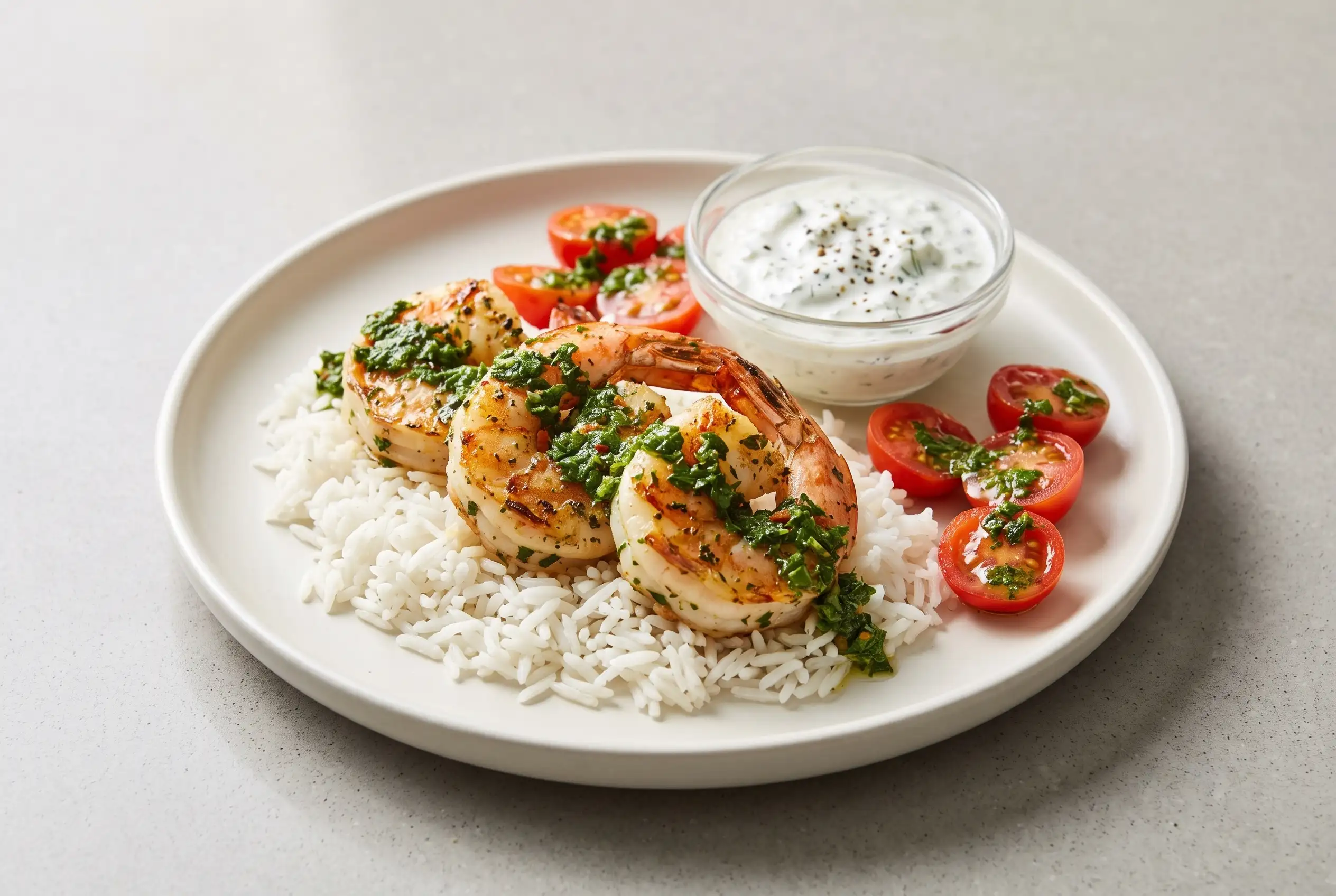
Chimichurri shrimp brings together a fresh herb sauce, quick-cooking seafood, and creamy tzatziki in a meal built around contrast. The sharp garlic, parsley, vinegar, and chile flavors create a sauce that works with the natural sweetness of shrimp, while rice and tomatoes provide a simple base for serving.
Built around a bright green chimichurri, Chimichurri Shrimp with Rice and Tzatziki keeps the preparation focused on flavor balance. The sauce is used in different ways during cooking and serving, allowing the shrimp to carry seasoning while the reserved portion adds freshness at the table.
Chimichurri Shrimp Uses a Balanced Sauce Base
Fresh parsley gives the chimichurri its herbal foundation and helps define the character of the dish. Since the sauce is blended with olive oil and vinegar, the parsley should remain noticeable instead of becoming a background seasoning.
Dried oregano contributes an earthy note that connects the sauce to the grilled style of the shrimp. The small chile brings adjustable heat, so the amount used can be adapted depending on the pepper and personal preference.
Red wine vinegar controls the richness of the olive oil and keeps the sauce bright enough to pair with rice and tzatziki. The garlic should support the sauce without overwhelming the shrimp, especially because the seafood cooks quickly and absorbs flavor easily.
Chimichurri Texture Depends on Resting
Sauce consistency changes slightly after blending because the olive oil, vinegar, herbs, and seasonings settle together. letting chimichurri rest briefly helps the flavors combine before it is divided for cooking and serving.
Raw Shrimp Preparation Shapes the Finished Bite
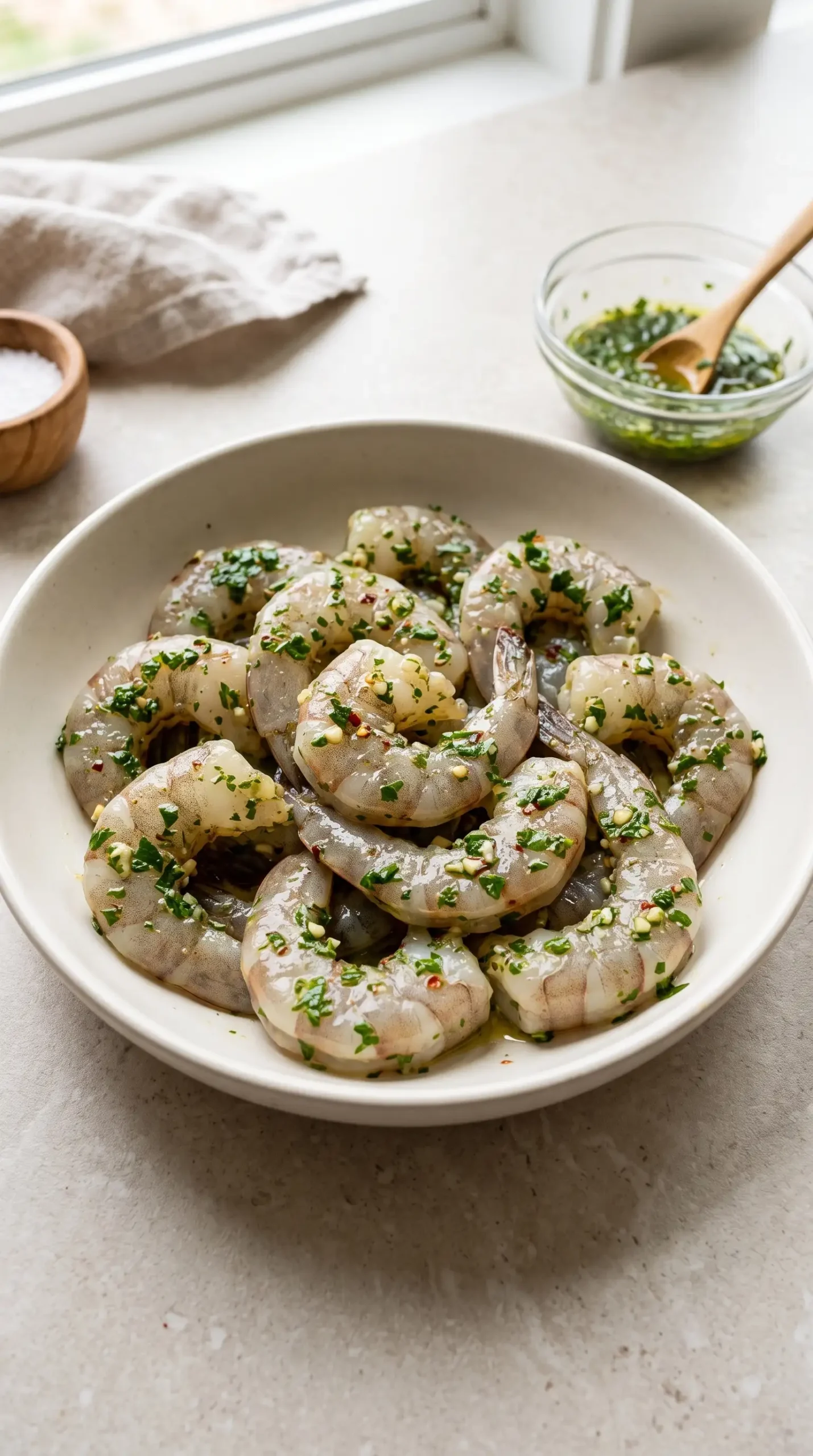
Raw shrimp require attention before seasoning because surface moisture can affect browning during cooking. Patting the shrimp dry helps the chimichurri coat the seafood more evenly and allows the exterior to develop color in a hot pan or on a grill.
Shell and tail choices depend on how the shrimp will be served. Removing them creates an easier eating experience with rice and tzatziki, while keeping tails can provide a more traditional grilled presentation.
Jumbo shrimp work well with the cooking approach because their larger size gives enough time for the exterior to cook while the center remains tender. Avoid letting the shrimp sit in sauce for too long before cooking, since the fresh ingredients are intended to season the surface.
Cooking Control Keeps Chimichurri Shrimp Tender
Before cooking, divide the chimichurri so each portion has a clear purpose. One part seasons the shrimp, another can be used during cooking, and the reserved amount stays fresh for serving.
Careful timing matters because shrimp change texture quickly once they hit heat. Medium high heat encourages browning while allowing the shrimp to cook through without needing a long cooking period.
Observable signs are more useful than guessing. Shrimp should lose their translucent appearance and reach an internal temperature of 145 degrees, creating a firm texture without becoming dry.
Rice Carries Chimichurri Shrimp Serving Flavors
Rice creates a neutral foundation that allows the herb sauce, tomatoes, and shrimp to remain distinct. A spoonful of reserved chimichurri can also connect the rice to the main protein without requiring extra seasoning throughout the plate. Rice-based seafood meals can pair a mild grain with bold seasonings, including Chipotle Orange Shrimp with Cilantro Rice for a complete serving combination.
Tzatziki Adds Cooling Contrast to the Plate
Tzatziki balances the smoky, garlicky, and spicy notes from Chimichurri Shrimp with Rice and Tzatziki. Serving it on the side keeps the creamy texture separate until each bite is dipped and combined.
Grilled Chimichurri Shrimp Benefits From Direct Heat
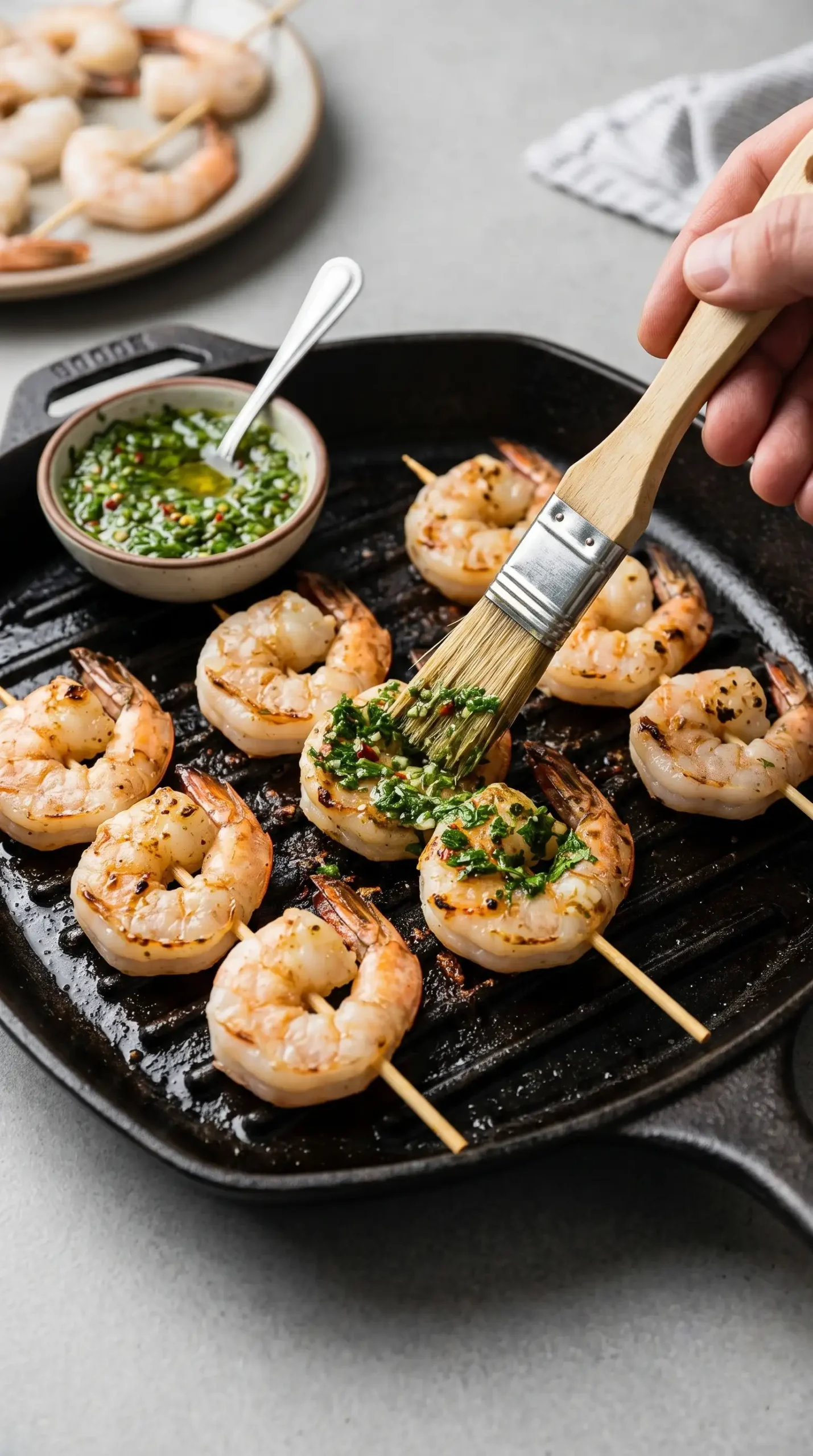
Grilled chimichurri shrimp highlights the way quick cooking preserves the fresh character of the sauce. The shrimp only need enough time over heat to develop a cooked exterior while maintaining their natural texture.
Across the cooking options, the same principles apply whether the shrimp are prepared on a grill, grill pan, or sauté pan. A hot surface, dry shrimp, and controlled cooking time matter more than the specific equipment.
Skewered shrimp can be easier to turn and brush during cooking. Soaking wooden skewers before use helps prevent burning while the shrimp cook over direct heat.
| Cooking approach | Main advantage | Important control point |
|---|---|---|
| Grill | Direct heat and smoky exterior | Turn shrimp carefully after a few minutes |
| Grill pan | Indoor option with grill marks | Keep the pan hot before adding shrimp |
| Sauté pan | Simple stovetop preparation | Avoid crowding the shrimp |
Common Chimichurri Shrimp Mistakes to Avoid
Overcooked shrimp are one of the easiest problems to create with this dish. Leaving the seafood on heat after it has lost its translucent appearance can remove the tender texture that makes the quick cooking method effective.
Another mistake comes from using all of the chimichurri at once. Keeping a portion aside preserves the fresh sauce flavor and gives the finished plate a brighter element alongside the cooked shrimp.
Keeping sauce and shrimp proportions balanced also matters. Too much sauce before cooking can hide the shrimp’s texture, while too little reserved sauce can leave the rice and tomatoes without the finishing flavor that ties the plate together.
Tomatoes Complete the Chimichurri Shrimp Plate
Cherry tomatoes add a fresh component when they are tossed with a small amount of reserved chimichurri before serving. Their juicy texture contrasts with the shrimp and provides another way to use the sauce beyond the main protein.
Simple Adjustments Change Chimichurri Shrimp Variations
Different serving choices can shift the balance of the meal without changing the core preparation. Rice creates a hearty base, while bread can be used for soaking up extra sauce from the plate.
Heat levels can also be adjusted through the chile selection and quantity. Keeping the parsley, garlic, oil, and vinegar proportions consistent helps maintain the recognizable chimichurri profile when changing spice levels.
Additional vegetables can be considered when building a larger meal, but the strongest pairings are those that allow the shrimp, sauce, and tzatziki to remain noticeable. Supporting ingredients should complement the main flavors instead of competing with them.
- Less heat: Use a smaller amount of chile while keeping the herb and vinegar balance.
- More sauce impact: Reserve enough chimichurri for finishing the plated shrimp and rice.
- Easier serving: Remove shrimp shells and tails before combining with the other components.
Chimichurri Shrimp Storage Requires Separation
Separate storage keeps the cooked shrimp, rice, tzatziki, and chimichurri from changing each other’s textures. Store the components individually when saving leftovers so the fresh sauce remains useful for reheating and serving.
Serving Choices Define Chimichurri Shrimp With Rice
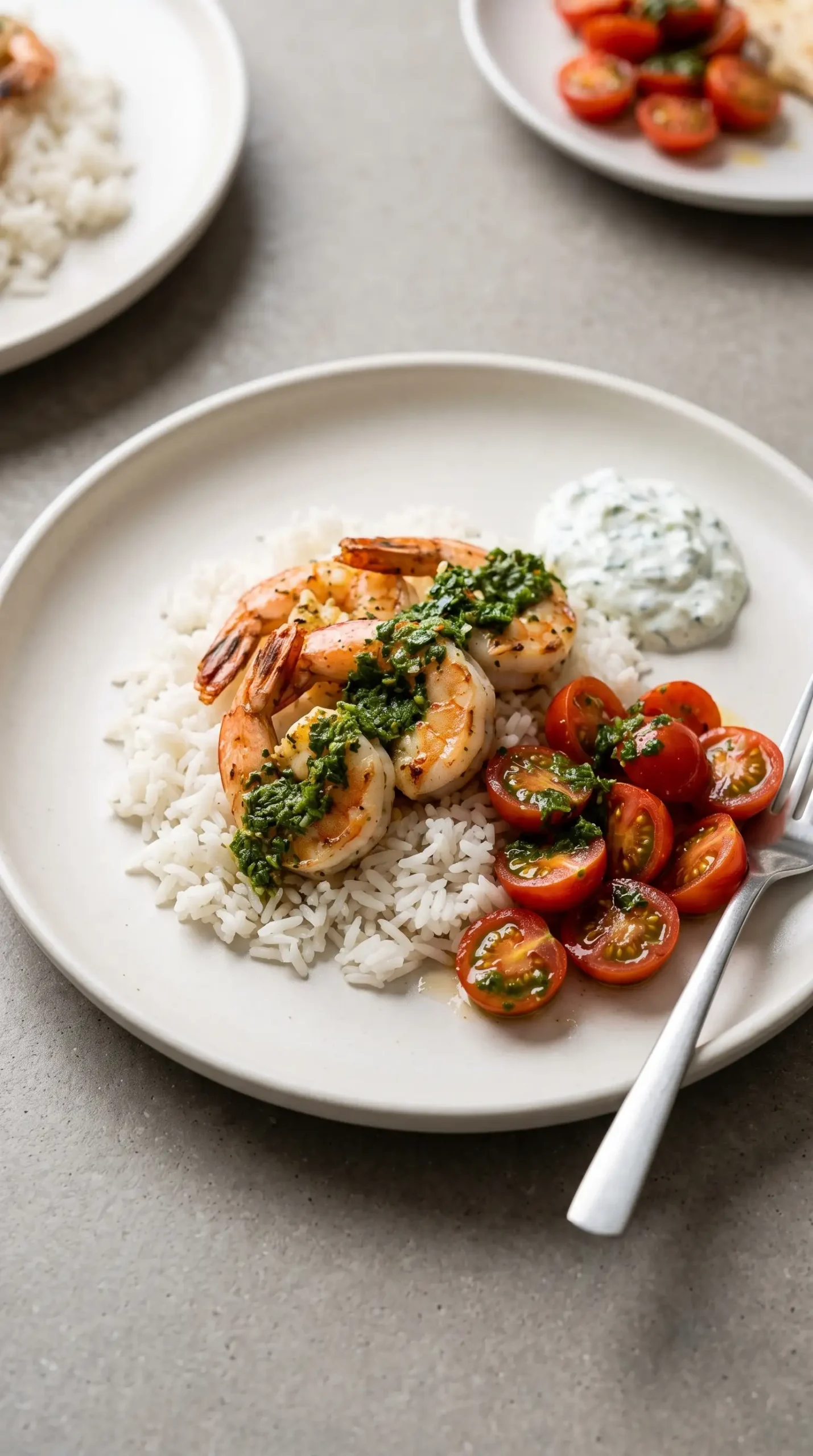
Chimichurri shrimp with rice works because each part has a distinct role on the plate. The rice carries the sauce, the tomatoes provide freshness, and tzatziki creates a creamy element that can be added as desired.
| Serving component | Texture contribution | Flavor role |
|---|---|---|
| Rice | Soft, absorbent base | Carries chimichurri |
| Cherry tomatoes | Juicy contrast | Add fresh acidity |
| Tzatziki | Creamy dip texture | Balances chile and garlic |
Preparation Details Protect Chimichurri Shrimp Quality
Small decisions before cooking have the greatest effect on the finished result. Dry shrimp, properly divided sauce, and careful heat management allow the simple ingredients to remain clear and balanced.
Chimichurri Shrimp Finishes With Balanced Freshness
Chimichurri shrimp succeeds when the cooked seafood stays tender and the sauce keeps its fresh character. The most important judgment comes from protecting the difference between the cooked, seasoned shrimp and the uncooked chimichurri used at the table.
Balanced portions of rice, tomatoes, and tzatziki allow the shrimp to remain the focus while giving each serving different textures and flavors. The reserved sauce is what connects the entire plate without replacing the character of the individual components.
Questions About Chimichurri Shrimp Heat and Storage
Can Chimichurri Shrimp Be Made Less Spicy?
Yes, the heat can be reduced by adjusting the amount of Fresno chile used in the chimichurri. Keeping the parsley, garlic, olive oil, and vinegar mixture intact maintains the sauce structure while lowering the spice level.
How Should Leftover Chimichurri Shrimp Be Stored?
Cooked shrimp should be refrigerated separately from tzatziki and leftover sauce when possible. Keeping the components apart helps preserve the creamy texture of the dip and the freshness of the herb mixture.
Can Chimichurri Shrimp Be Cooked Without Skewers?
Yes, the shrimp can be cooked directly in a grill pan, on a grill surface, or in a sauté pan. Skewers are useful for handling the shrimp but are not required for the cooking process.
Why Add Tzatziki Sauce to Shrimp?
Tzatziki provides a creamy contrast to the garlic, chile, and vinegar notes in the chimichurri. Serving it separately lets diners control how much cooling sauce combines with each bite.
Chimichurri Shrimp with Rice, Tzatziki and Tomatoes
Ingredients
Method
- Blend the olive oil, red wine vinegar, parsley, chile, garlic, oregano, and salt in a food processor until combined. If a food processor is unavailable, finely chop the ingredients and mix them together in a bowl.
- Separate the chimichurri into three portions: one for coating the shrimp, one for brushing during cooking, and one for serving.
- Thaw the shrimp if frozen, remove shells and tails if needed or desired, and pat the shrimp dry. Coat the shrimp with one portion of the chimichurri.
- Thread the coated shrimp onto soaked wood skewers.
- Heat a grill pan, grill, or sauté pan over medium high heat. Cook the shrimp for 2-3 minutes per side, brushing with additional chimichurri as they cook.
- Continue cooking until the shrimp are no longer translucent and reach 145°F (63°C).
- Toss the cherry tomatoes with a spoonful of reserved chimichurri. Serve the rice, tomatoes, shrimp, and tzatziki together with additional chimichurri as desired.