
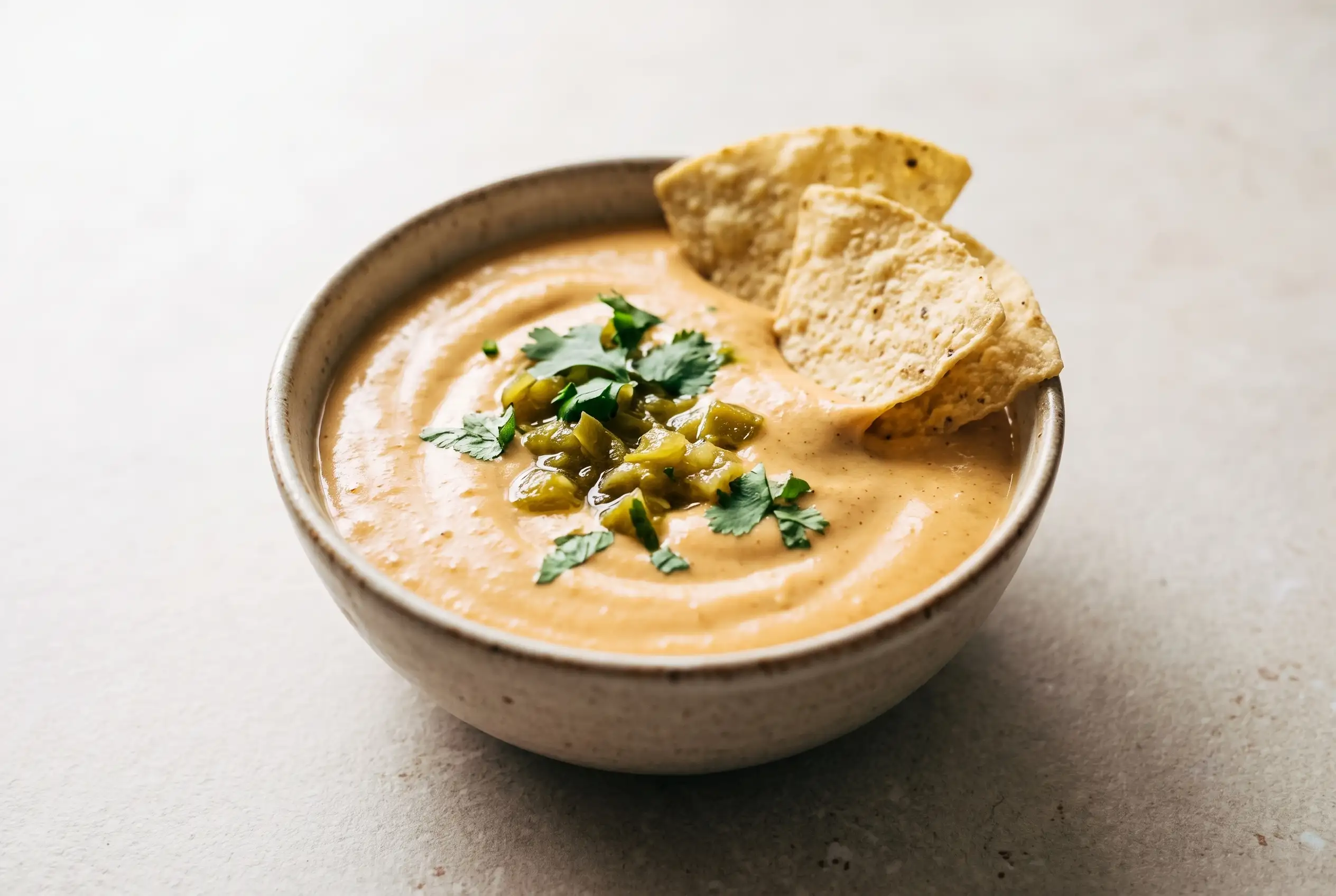
Chipotle cashew queso brings together creamy blended cashews, smoky peppers, and bright green chiles in a dairy-free sauce designed for dipping, drizzling, and layering into meals. The combination works because a simple base can carry bold flavors while keeping the texture smooth enough for everything from tortilla chips to tacos.
Chipotle Cashew Queso Creates a Creamy Plant-Based Dip
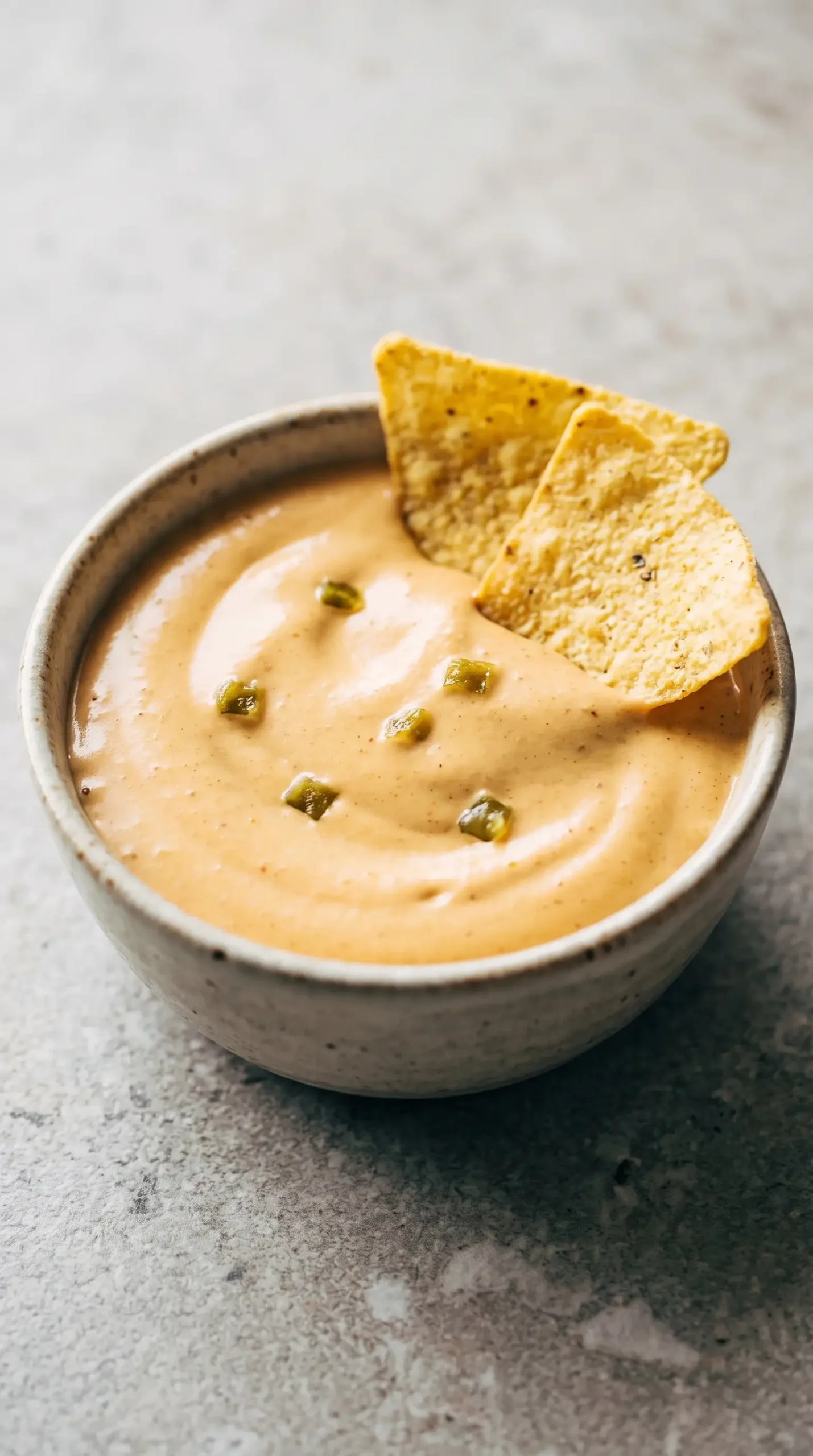
The appeal of chipotle cashew queso comes from the way a handful of ingredients creates a satisfying queso-style texture without traditional dairy. Cashews provide the body, water helps the mixture blend, and peppers create the savory heat that makes the finished sauce feel complete.
Unlike a thin sauce that simply coats food, this blend is meant to cling. A smooth consistency allows it to sit on nachos, fill taco shells, or spread across bowls while keeping the smoky chile flavor present in every bite.
Cashews Set the Texture Foundation for Chipotle Cashew Queso
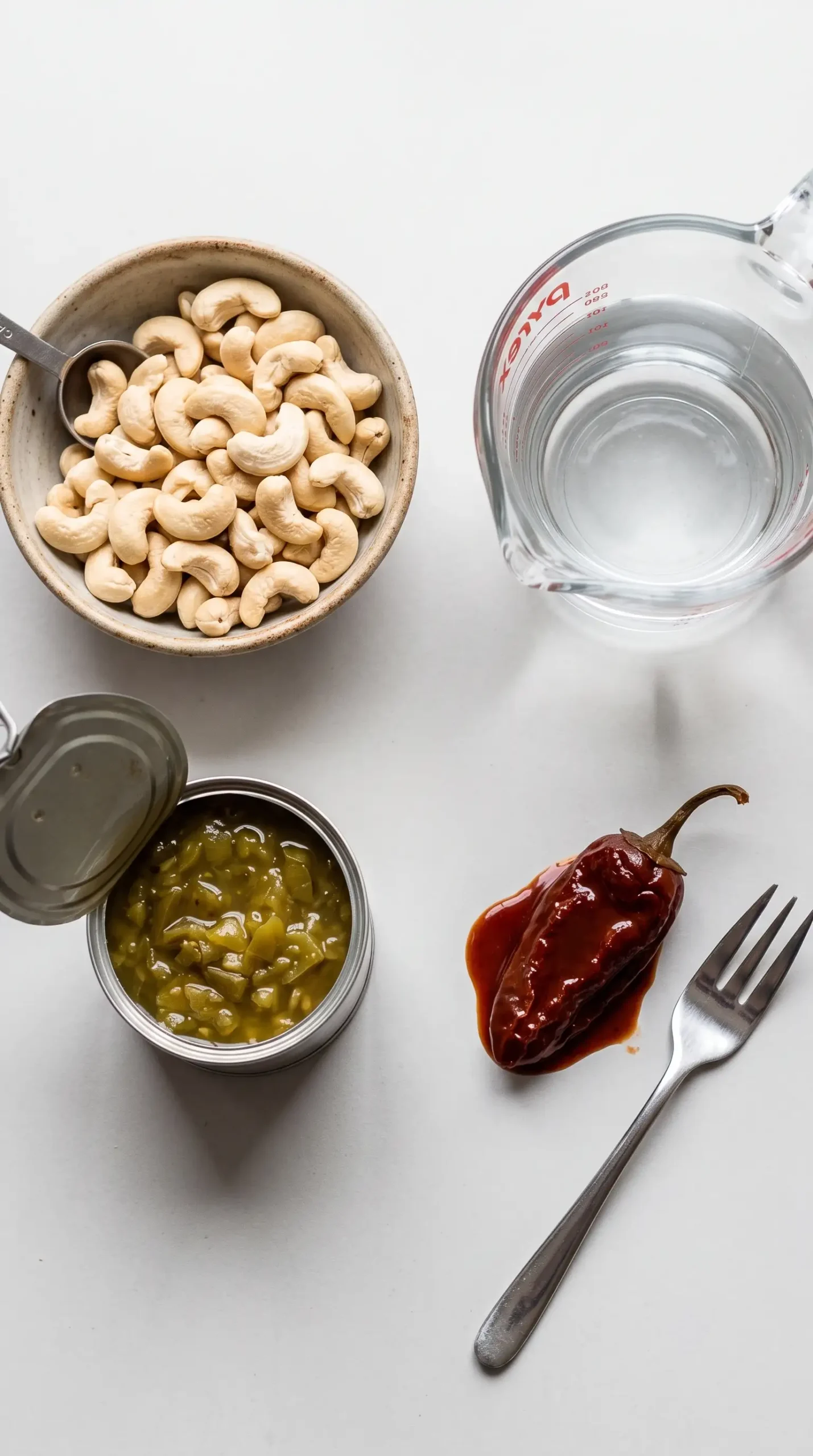
Cashews are the ingredient choice that determines the character of the sauce. Their natural richness creates a creamy texture after blending, which is why the preparation focuses on achieving a very smooth finish instead of leaving a coarse or grainy mixture.
Water works alongside the cashews by creating the consistency needed for a pourable queso. The amount included gives the blender enough liquid to move the ingredients together while preserving the thickness expected from a dip.
A few texture decisions can change the final result:
- Smoother finish: Blend until the cashews disappear into the sauce and the mixture looks uniform.
- Thicker spread: Keep the consistency concentrated for topping foods where a heavier coating works well.
- Looser drizzle: Add small adjustments of liquid if a pourable finish is needed for bowls or vegetables.
Green Chiles and Chipotle Build Smoky Depth Without Overcomplicating the Blend
The pepper combination gives chipotle cashew queso its recognizable flavor. Diced green chiles bring a mild chile character, while the chipotle pepper canned in adobo adds the deeper smoky note associated with the sauce.
Adobo sauce can be included when extra intensity is desired. Its concentrated chile flavor changes the overall balance quickly, so small additions allow the smoky element to develop without covering the creamy cashew base.
Blending Control Shapes the Smoothness of Chipotle Cashew Queso
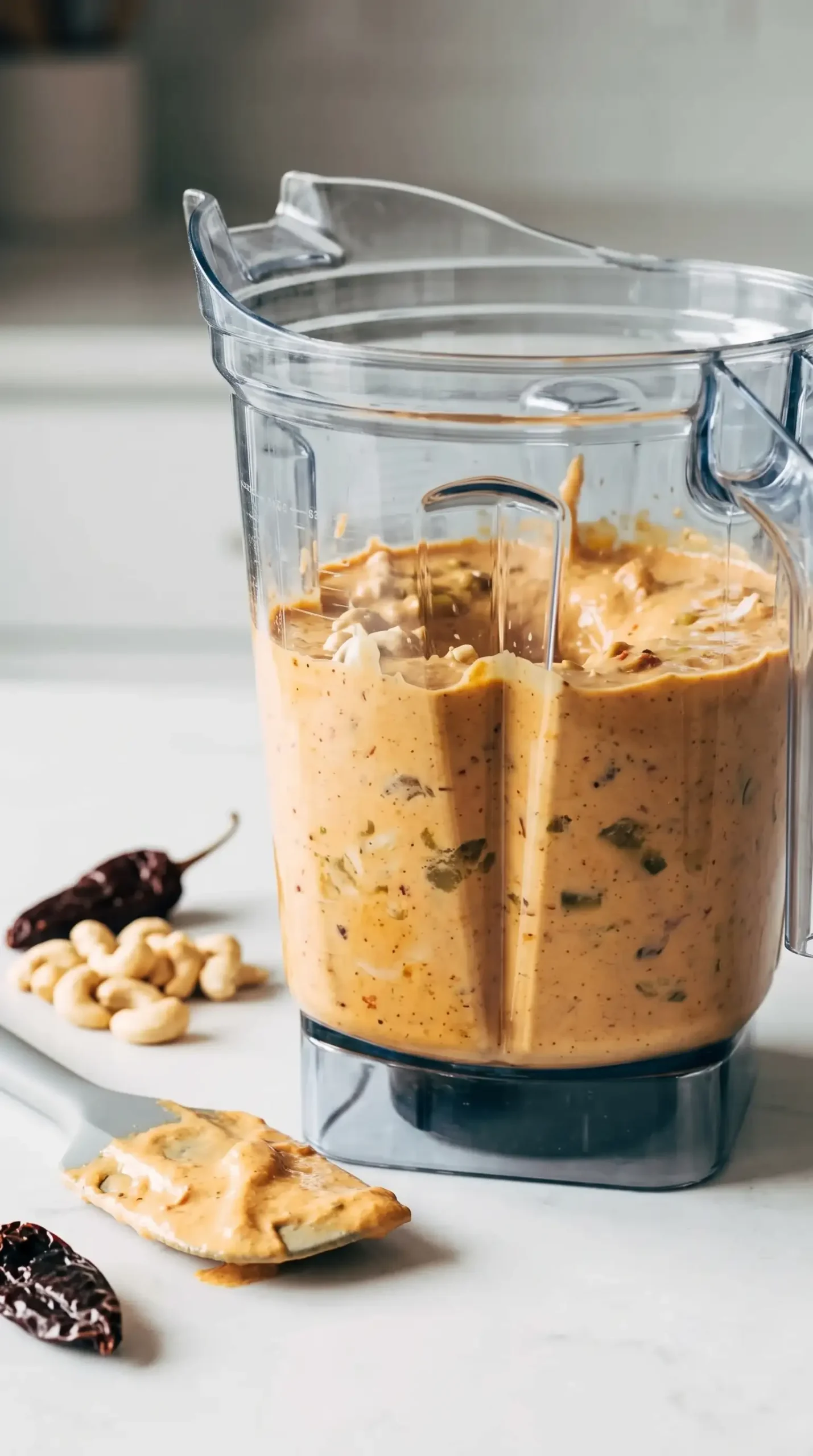
High-speed blending is the key technique that transforms separate ingredients into a cohesive queso. The blender needs enough time to break down the cashews completely, creating the silky texture that defines the finished sauce.
For an especially smooth texture, soaking cashews before blending can help soften the nuts and make it easier for the blender to create a creamy sauce.
Texture checks are useful during preparation because the appearance tells you whether the blend is ready. A properly combined vegan chipotle queso should look creamy and consistent, without visible pieces of cashew interrupting the surface.
Tasting after blending provides an opportunity to adjust the balance. More chipotle can increase smoky heat, extra adobo sauce can deepen the chile flavor, and nutritional yeast can add a more pronounced cheesy note when desired.
Adjustments Refine the Finished Cashew Queso Dip
Small changes allow the sauce to match different meals. The base is flexible because the main flavors come from adjustable additions instead of a complicated seasoning mixture.
| Adjustment | Changes the flavor | Best use |
|---|---|---|
| Extra chipotle pepper | More smoky heat | Spicy nachos or bold taco toppings |
| Adobo sauce | Deeper chile intensity | Meals needing a stronger smoky finish |
| Nutritional yeast | More cheesy character | Queso-style dips and vegetable toppings |
Serving Ideas Highlight the Versatility of Chipotle Cashew Queso
Chipotle cashew queso works across many dishes because its creamy texture connects ingredients that have different textures. The sauce can add richness to crisp foods, fresh toppings, hearty grains, and roasted vegetables.
Plant-based bowls benefit from sauces that add moisture and richness without covering the other ingredients. A creamy finish like plant-based bowl toppings helps bring grains, vegetables, and seasoned fillings together for a more balanced meal.
Classic dipping applications include tortilla chips and snack platters, but the sauce also fits into meals where a creamy finish replaces a heavier topping. Its smoky flavor pairs especially well with foods that already carry grilled or roasted notes.
Common Chipotle Cashew Queso Mistakes Come From Texture and Balance
Most problems with chipotle cashew queso happen when the texture or flavor balance is not adjusted carefully. Since the ingredient list is short, each choice has a noticeable effect on the finished sauce.
- Stopping the blend too early: A rough texture usually means the cashews need more blending time to become fully incorporated.
- Adding too much heat at once: Extra chipotle or adobo sauce can quickly dominate the creamy base, so gradual adjustments help maintain balance.
- Ignoring salt levels: Cashews vary depending on whether they are salted, making tasting important before adding more seasoning.
Correcting the sauce is usually straightforward. More blending can improve texture, while careful additions of the remaining ingredients can bring the flavor back into balance.
Nutritional Yeast Changes the Character of Vegan Chipotle Queso
Nutritional yeast is an optional addition that shifts the personality of the sauce. When included, it moves the flavor closer to a traditional cheesy profile while keeping the recipe plant-based.
The amount can be adjusted according to the type of meal being served. A lighter touch keeps the smoky peppers prominent, while a larger addition creates a more pronounced queso-inspired taste.
Storage and Reheating Keep Smoky Cashew Queso Ready for Meals
Smoky cashew queso is best handled as a prepared sauce that can be kept available for quick meals. The creamy texture makes it useful when a simple dish needs extra flavor without additional cooking.
When stored, the sauce may become thicker as it rests. Stirring can help restore its spreadable consistency, and small adjustments can bring it back to the texture needed for serving.
Pairings Bring Chipotle Cashew Queso Into Everyday Dishes
The sauce fits naturally with foods that benefit from creamy contrast. Its smoky notes complement fresh vegetables, hearty grains, and dishes with grilled flavors.
Popular combinations include:
- Taco toppings: Add a creamy layer alongside vegetables, beans, or other fillings.
- Rice bowls: Use the queso to connect grains with roasted or fresh toppings.
- Vegetable plates: Serve as a dip for grilled vegetables or a flavorful finishing sauce.
Heat Choices Personalize the Smoky Finish
The spice level of chipotle cashew queso can be shaped around personal preference. Keeping the basic blend unchanged while adjusting pepper additions makes it easier to create a mild, medium, or more intense version.
Green chiles provide a gentle chile flavor, while chipotle peppers bring the signature smoky quality. Balancing these two elements allows the sauce to remain flavorful without relying only on heat.
Serving Temperature Reveals the Best Chipotle Cashew Queso Texture
The texture of chipotle cashew queso is most noticeable when it is served at a temperature that matches the dish around it. A creamy consistency helps it spread smoothly over warm foods or sit comfortably beside crunchy snacks.
Chipotle Cashew Queso Succeeds Through Texture and Flavor Control
Chipotle cashew queso succeeds when the creamy cashew base, smoky pepper flavor, and smooth blended texture stay in balance. Each adjustment matters because the recipe relies on a small group of ingredients that work together to create a complete queso-style experience.
Careful blending and thoughtful seasoning choices allow the sauce to move easily between dips, toppings, and meal components. The result is a versatile smoky sauce where texture supports the bold flavors instead of competing with them.
Chipotle Cashew Queso Questions About Heat and Texture
Can chipotle cashew queso be made less spicy?
Yes. Reducing the chipotle pepper or leaving out the optional adobo sauce lowers the heat while keeping the creamy cashew base and green chile flavor. Adjusting gradually makes it easier to find the preferred level.
Why is my cashew queso dip not completely smooth?
A less-than-smooth cashew queso dip usually means the cashews need additional blending time. Continuing until the mixture looks uniform helps create the creamy texture expected from a queso-style sauce.
How can the smoky flavor be increased?
The smoky flavor can be increased by adding more chipotle pepper or a small amount of adobo sauce. These additions should be made carefully because they also increase the chile intensity of the sauce.
Does nutritional yeast make vegan chipotle queso taste cheesier?
Nutritional yeast can add a stronger cheesy flavor to vegan chipotle queso. It changes the overall profile of the sauce while keeping the creamy cashew and smoky pepper elements present.
What foods pair best with this smoky cashew queso?
This smoky cashew queso pairs well with tortilla chips, tacos, fajitas, rice bowls, grilled chicken, and vegetables. The creamy texture helps connect crisp, fresh, and savory elements in the same meal.
Chipotle Cashew Queso Dairy-Free Sauce with Green Chiles
Ingredients
Method
- Add all ingredients to a high-speed blender.
- Blend until the sauce is completely smooth and creamy.
- Taste the queso and adjust the seasoning or optional additions as desired.
- Serve the chipotle cashew queso with desired foods such as chips, tacos, fajitas, rice bowls, grilled chicken, or vegetables.