
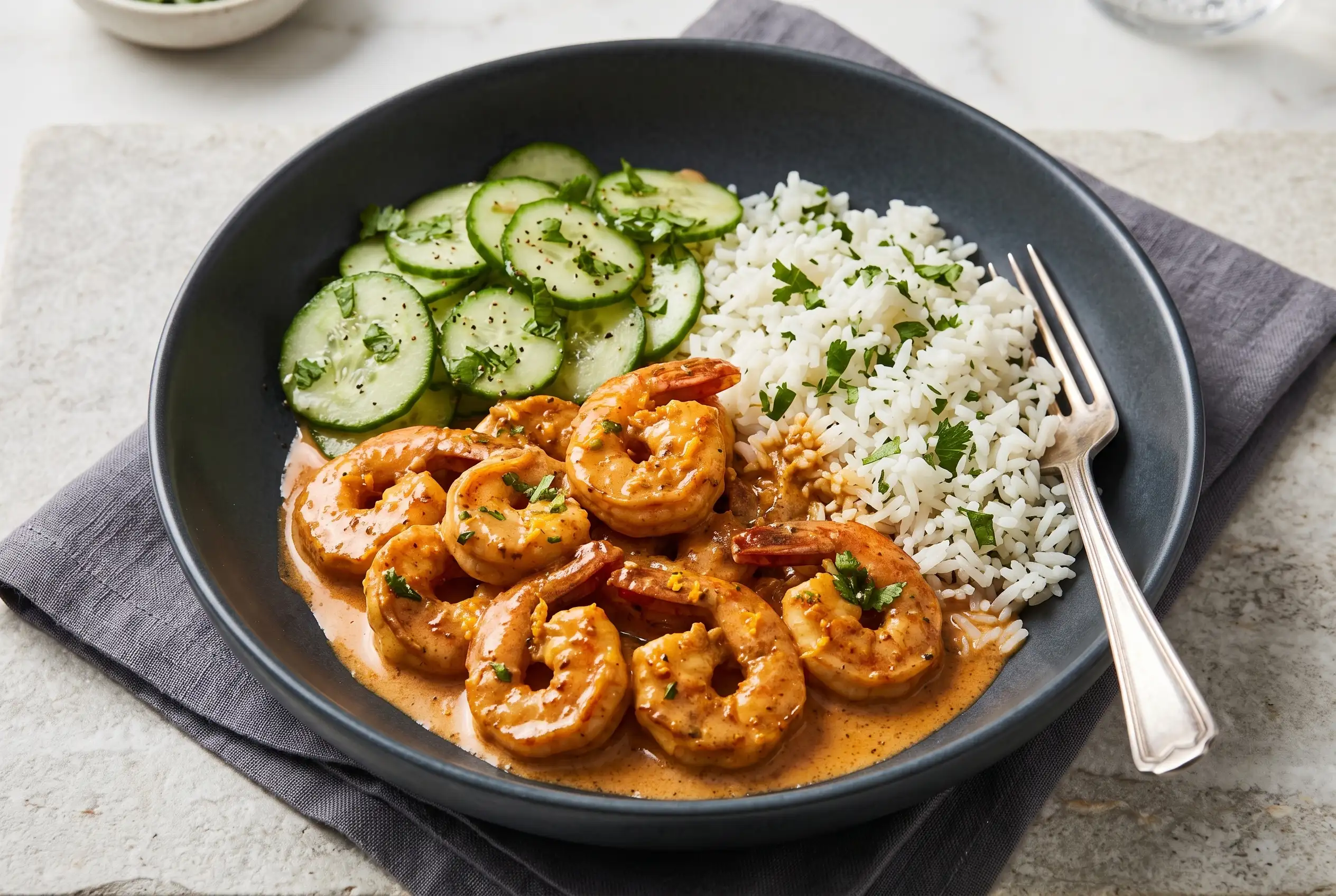
Chipotle orange shrimp brings smoky chile flavor, bright citrus notes, and a creamy sauce together with fragrant cilantro rice for a meal that feels layered without becoming complicated. The combination works because each part has a clear role: the shrimp carries the savory heat, the rice provides a mild foundation, and the fresh cucumber salad adds a crisp contrast that keeps the plate balanced.
The appeal of chipotle orange shrimp comes from the way a few bold ingredients create a complete flavor profile. Chipotle pepper and garlic establish depth, orange zest lifts the sauce, and cilantro rice gives the finished dish a familiar comfort that makes the spicy elements easier to enjoy. Small preparation choices have a noticeable impact here, especially when handling the shrimp and blending the cream-based sauce.
Chipotle Orange Shrimp Finds Balance Between Heat and Brightness
Smoky flavors can quickly dominate a seafood dish, but the creamy orange sauce changes how the chipotle character is experienced. The pepper brings warmth and depth while the citrus notes prevent the sauce from feeling heavy. That contrast is what makes the dish feel vibrant instead of one-dimensional.
Fresh elements also shape the final experience. The cucumber mixture introduces acidity and crunch alongside the tender shrimp, creating a plate where every bite has a different texture. The simple rice base allows those stronger flavors to remain noticeable without competing for attention.
Chipotle Heat Depends on Creamy Orange Sauce Choices
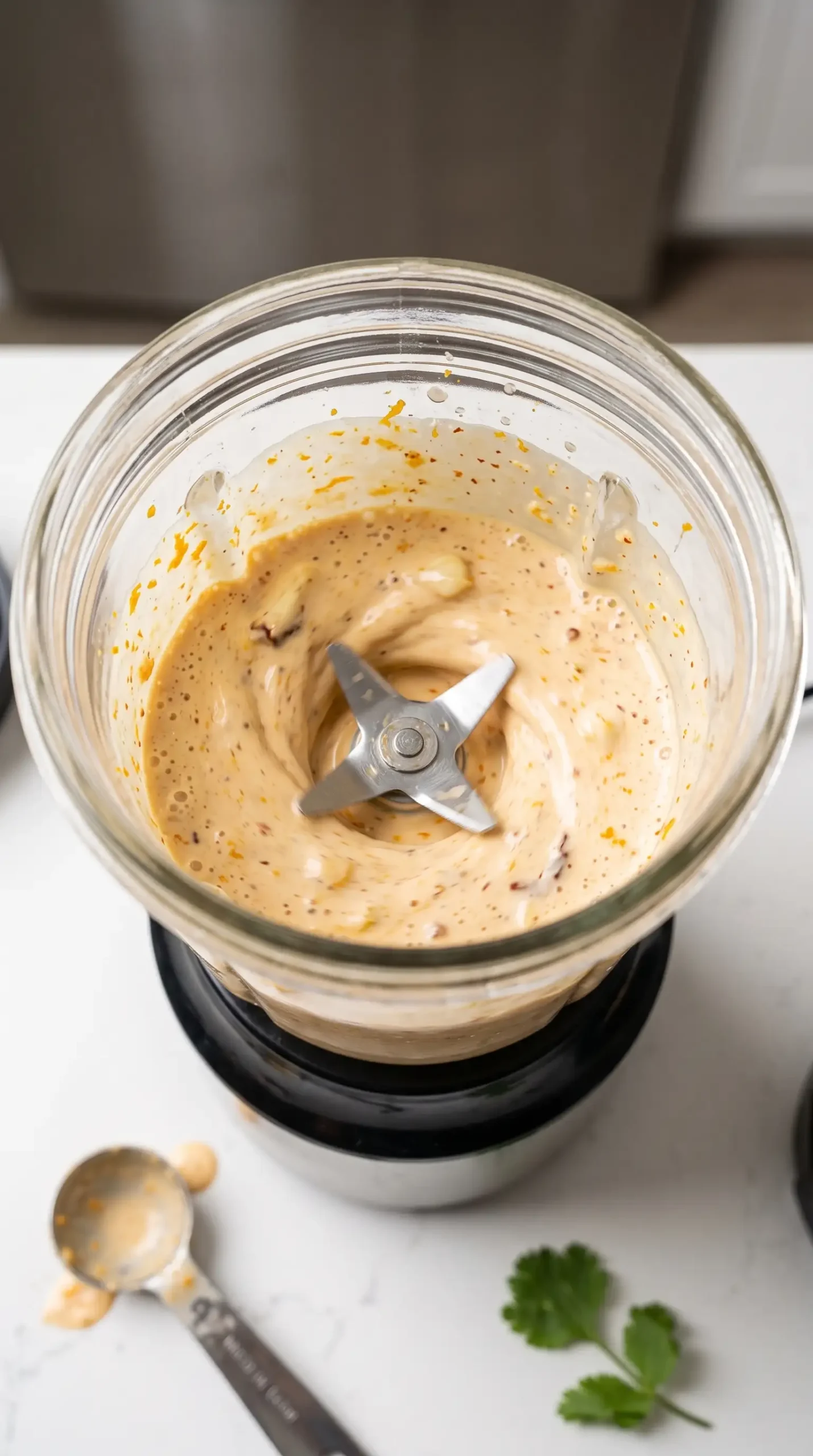
The sauce determines much of the personality in this orange chipotle shrimp recipe. Heavy cream creates a smooth base that carries the chipotle and garlic throughout the dish, while orange zest adds a fragrant citrus layer that supports the smoky pepper.
Blending requires restraint because the cream behaves differently from thinner sauces. A quick blend is enough to break down the garlic and pepper so they distribute evenly. Excessive blending can change the texture by introducing a whipped consistency, which is unnecessary for the sauce’s purpose.
- Chipotle amount: Use less pepper when a milder smoky flavor is preferred, while keeping the same sauce structure.
- Citrus balance: Orange zest can be supported with additional citrus juice when a brighter finish is desired.
- Seasoning control: Salt and garlic should support the shrimp without covering the seafood flavor.
Cilantro Rice Shapes the Plate’s Gentle Foundation
Cilantro rice gives the shrimp a neutral partner that can absorb the creamy sauce while still maintaining its own fresh character. Jasmine rice or plain long grain rice both work because their mild flavor leaves room for the chipotle mixture to stand out.
Rice preparation matters because the grains should remain separate enough to hold the sauce without becoming overwhelmed. Stirring in cilantro after cooking keeps the herb flavor noticeable and creates a fresh connection between the rice and the cucumber topping.
Cucumbers Add Fresh Contrast Beside Chipotle Orange Shrimp
The cucumber salad provides a crisp, acidic element that offsets the richness of the sauce and creates contrast with the warm shrimp. Vinegar and sugar create a quick balance of tang and sweetness, while the thin slices help the seasoning coat each piece.
Shrimp Texture Improves Through Pan Control
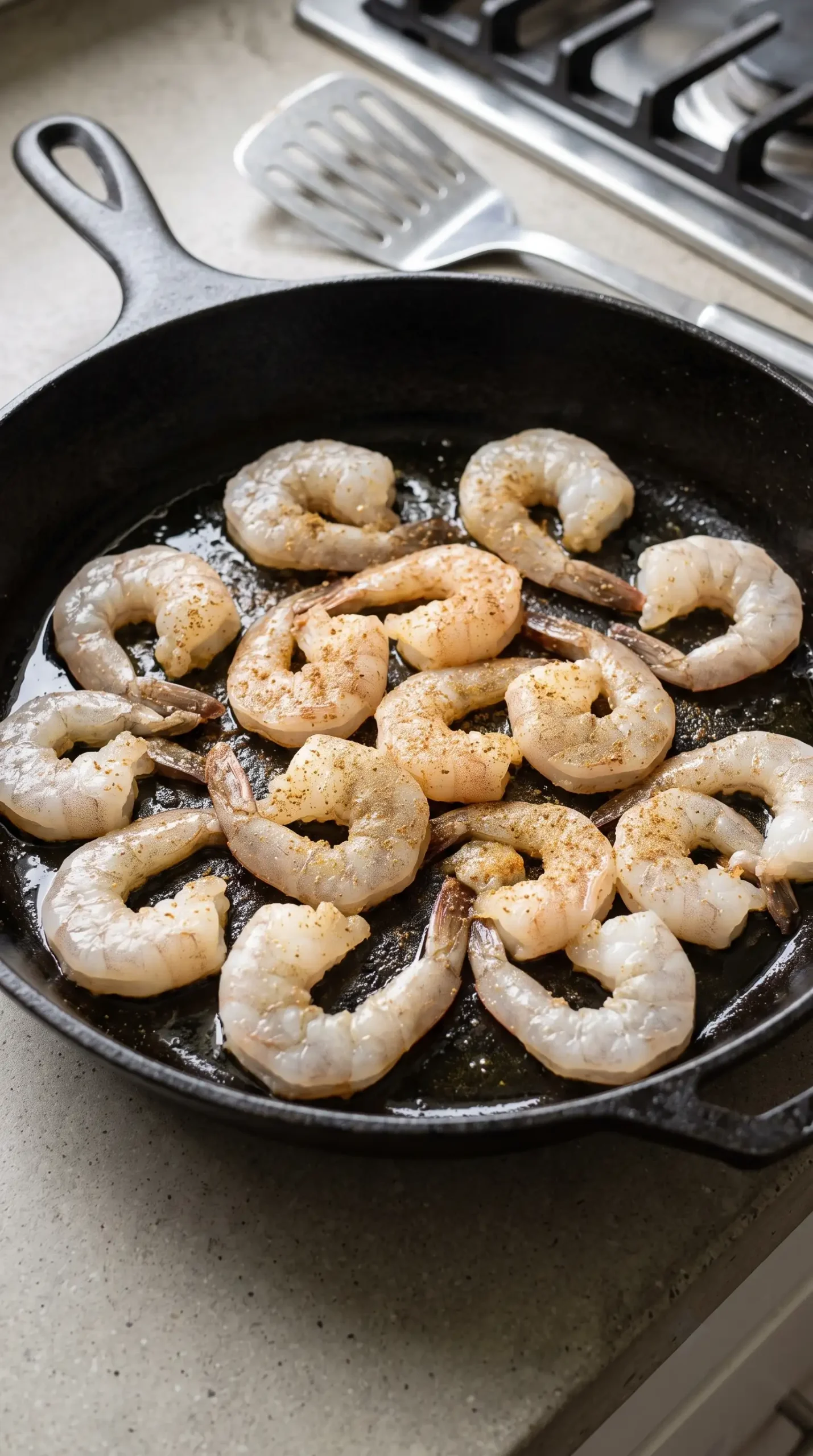
Cooking control is especially important with chipotle orange shrimp because shrimp changes texture quickly when exposed to heat. Starting with shrimp that is dry allows the surface to cook properly and helps the cumin seasoning cling to the seafood.
Moisture management affects the sauce as well. Excess liquid in the pan can dilute the creamy mixture and prevent it from coating the shrimp as intended. Dry shrimp creates a cleaner transition when the sauce is added and warmed together.
The timing of the sauce addition also matters. The shrimp needs enough cooking before the sauce enters so the seafood develops its texture, while the final simmer allows the flavors to combine without requiring a long cooking period.
Blending Chipotle Orange Shrimp Sauce Requires Care
The sauce blending step is less about achieving maximum smoothness and more about creating the right texture. Garlic and chipotle should be incorporated enough to distribute their flavors, but the cream should remain stable and silky.
A small blending tool can be useful because it allows control over the process. If the mixture becomes slightly thicker from blending, gentle warming in the pan can help it loosen as the sauce reaches serving temperature.
Chipotle Orange Shrimp Mistakes That Ruin the Sauce
Several avoidable choices can change the finished result of chipotle shrimp with cilantro rice. The most common problems come from handling moisture, overworking the sauce, or losing the balance between smoky and fresh flavors.
| Mistake | What happens | Better approach |
|---|---|---|
| Using wet shrimp | The pan can collect excess water | Thaw completely and pat shrimp dry before cooking |
| Over-blending the cream sauce | The texture can become overly whipped | Blend only until the garlic and pepper are incorporated |
| Adding too much chipotle | The smoky heat can overpower the citrus | Adjust pepper quantity to match preferred spice level |
Shrimp Preparation Decisions Shape the Finished Meal
Good shrimp preparation begins before the skillet is heated. Removing excess moisture creates better contact with the pan and allows the cumin seasoning to remain concentrated on the seafood.
Frozen shrimp can still work well when properly prepared. The important consideration is giving the shrimp enough time to thaw and removing surface moisture before it reaches the heat.
Orange and Chipotle Pairing Changes Flavor Balance
The pairing of orange and chipotle creates a contrast that defines the dish. Orange contributes brightness and aroma, while chipotle contributes a deeper pepper character that feels warm and savory.
That balance allows the sauce to complement shrimp without masking it. The seafood remains recognizable because the supporting flavors are strong but carefully matched.
Serving Chipotle Orange Shrimp Beyond the Basic Bowl
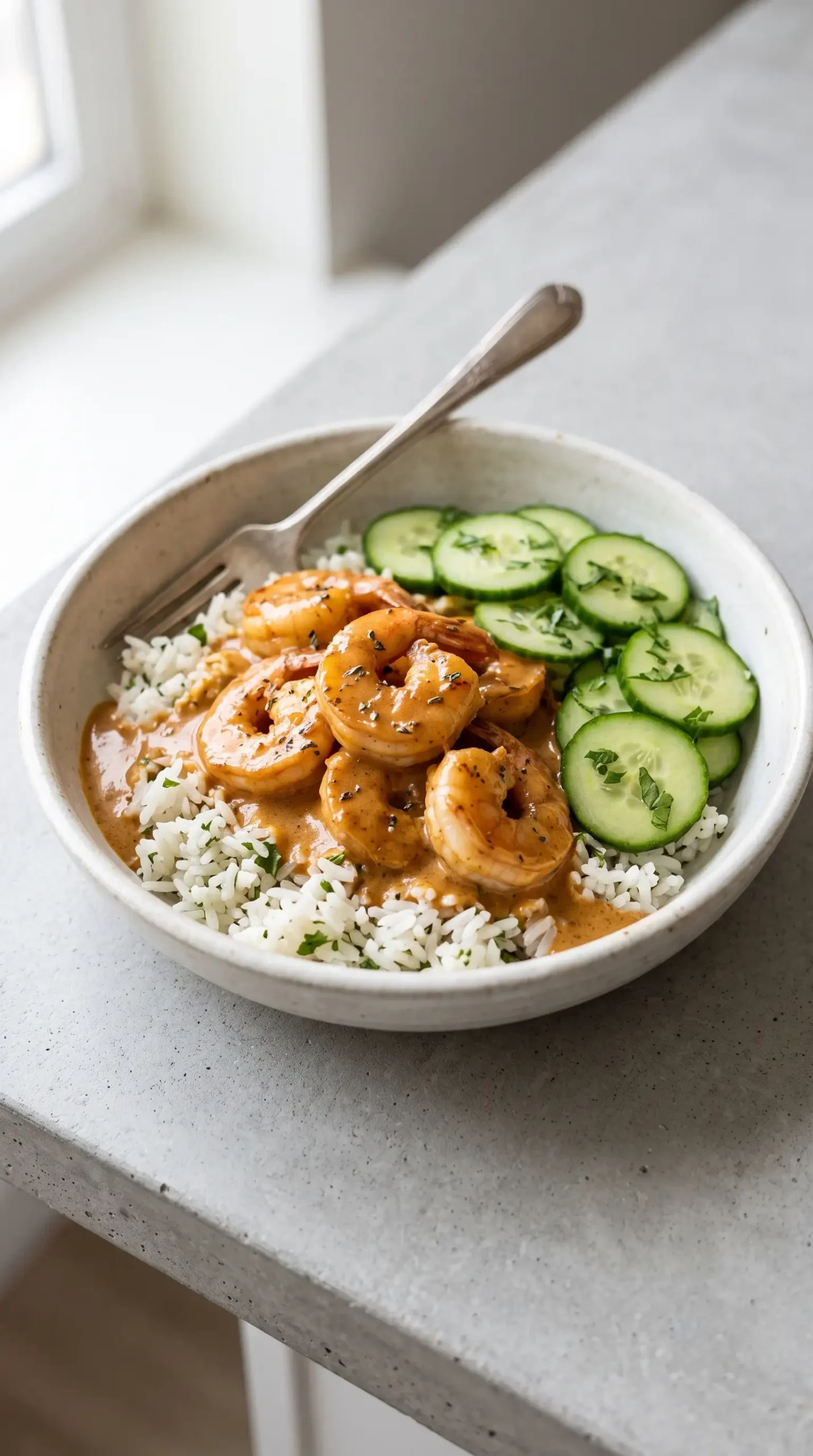
Serving shrimp with cilantro rice creates the most natural presentation because the rice catches the sauce and provides a dependable base. A shrimp and rice meal can be built around fresh toppings and sauce contrasts, making the plate feel complete while keeping each component distinct. The cucumber salad can sit alongside the shrimp to add freshness with each serving.
- Plate structure: Start with rice as the foundation, then arrange shrimp so the sauce can reach the grains.
- Fresh finish: Add the cucumber mixture close to serving time to preserve its crisp texture.
- Citrus adjustment: A small amount of orange or lime juice can brighten the dish if a sharper finish is preferred.
Leftover Chipotle Orange Shrimp Needs Gentle Reheating
Stored portions benefit from careful reheating because shrimp is naturally quick-cooking. Gentle warming helps maintain its texture while allowing the sauce to return to a smooth consistency.
Separating the fresh cucumber mixture from the warm components helps preserve the contrast that makes the meal appealing. The rice and shrimp can be reheated together, while the fresh topping remains a cooler element.
Chipotle Orange Shrimp Variations Stay Close to the Original Flavor
Small adjustments can change the emphasis of the dish without moving away from its core identity. A little extra citrus can highlight the orange notes, while a lighter hand with chipotle keeps the creamy sauce more subtle.
The shrimp can also be served with additional fresh elements that complement the existing flavors. The important choice is maintaining the relationship between smoky sauce, mild rice, and crisp cucumber.
Chipotle Orange Shrimp Delivers Its Best Results Through Balance
Chipotle orange shrimp succeeds when the sauce, seafood, rice, and fresh cucumber each keep their own character. Dry shrimp, careful blending, and thoughtful seasoning allow the creamy chipotle mixture to support the meal instead of overwhelming it.
The combination of smoky pepper, citrus brightness, cilantro rice, and crisp cucumber creates a complete plate where texture and flavor stay connected from the first bite to the last.
Chipotle Orange Shrimp Questions About Heat Texture and Preparation
Can chipotle orange shrimp be made less spicy?
Yes. Reducing the amount of chipotle pepper lowers the heat while allowing the garlic, cream, and orange flavors to remain part of the sauce.
Why should shrimp be dried before cooking?
Drying shrimp helps prevent excess moisture from collecting in the pan, which supports better cooking texture and keeps the sauce from becoming diluted.
Can the cilantro rice use another type of rice?
Yes. Jasmine rice and plain long grain rice both fit the dish because their mild flavor works well with the stronger sauce and shrimp.
How can the creamy sauce texture be protected?
Keeping blending brief helps preserve a smooth sauce texture because the goal is to combine the ingredients without creating a whipped consistency.
What makes the cucumber topping important?
The cucumber topping adds a fresh, crisp contrast that balances the richness of the cream sauce and the smoky character of the shrimp.
Chipotle Orange Shrimp with Cilantro Rice and Creamy Sauce
Ingredients
Method
- Combine the cucumber ingredients and set the mixture aside.
- Blend the sauce ingredients until mostly smooth, stopping before the cream develops a whipped texture.
- Cook the rice according to package directions, then mix in cilantro and salt to taste. Add lime juice or the juice from the zested orange if desired.
- Warm the oil over medium-high heat. Add the shrimp and cook for 2 minutes per side, seasoning with cumin and additional salt and pepper.
- Pour in the sauce and simmer for about 5 minutes.
- Serve the shrimp over the cilantro rice with the cucumber mixture alongside.