
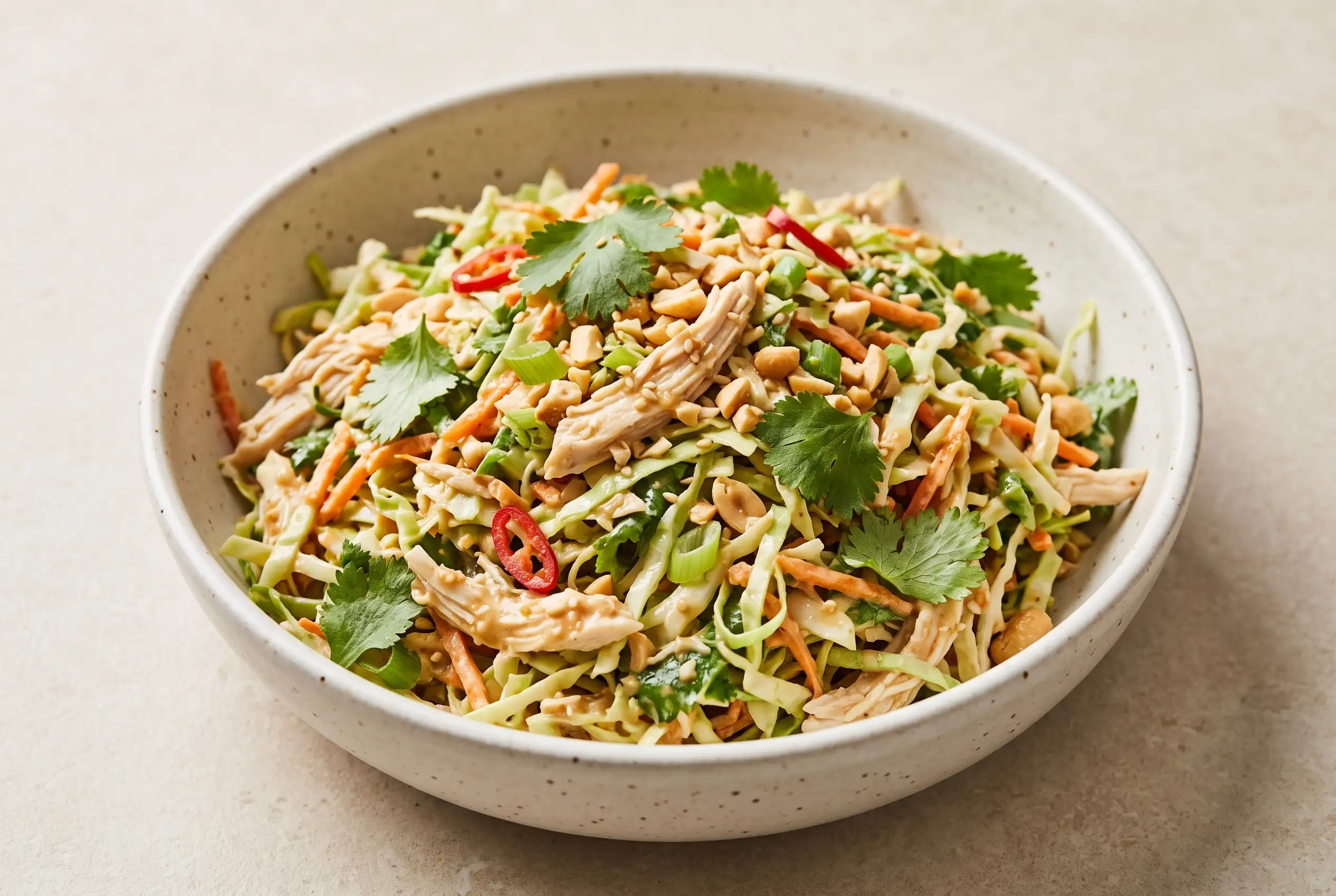
Thai chicken salad brings together crisp vegetables, tender shredded chicken, and a bold peanut dressing in a dish built for fresh flavors and contrasting textures. This thai chicken salad takes inspiration from Thai-style ingredients while keeping the preparation approachable, with thinly sliced cabbage, carrots, herbs, peppers, and a savory-sweet sauce coating every bite.
The combination works because each part has a clear purpose. The crunchy vegetables hold up against the creamy dressing, the chicken makes the salad satisfying, and the lime, ginger, garlic, and chili elements keep the flavors bright. A chopped Thai chicken salad is especially useful for lunches, gatherings, or make-ahead meals when you want something that feels fresh without requiring complicated cooking.
The flavor balance behind Thai chicken salad
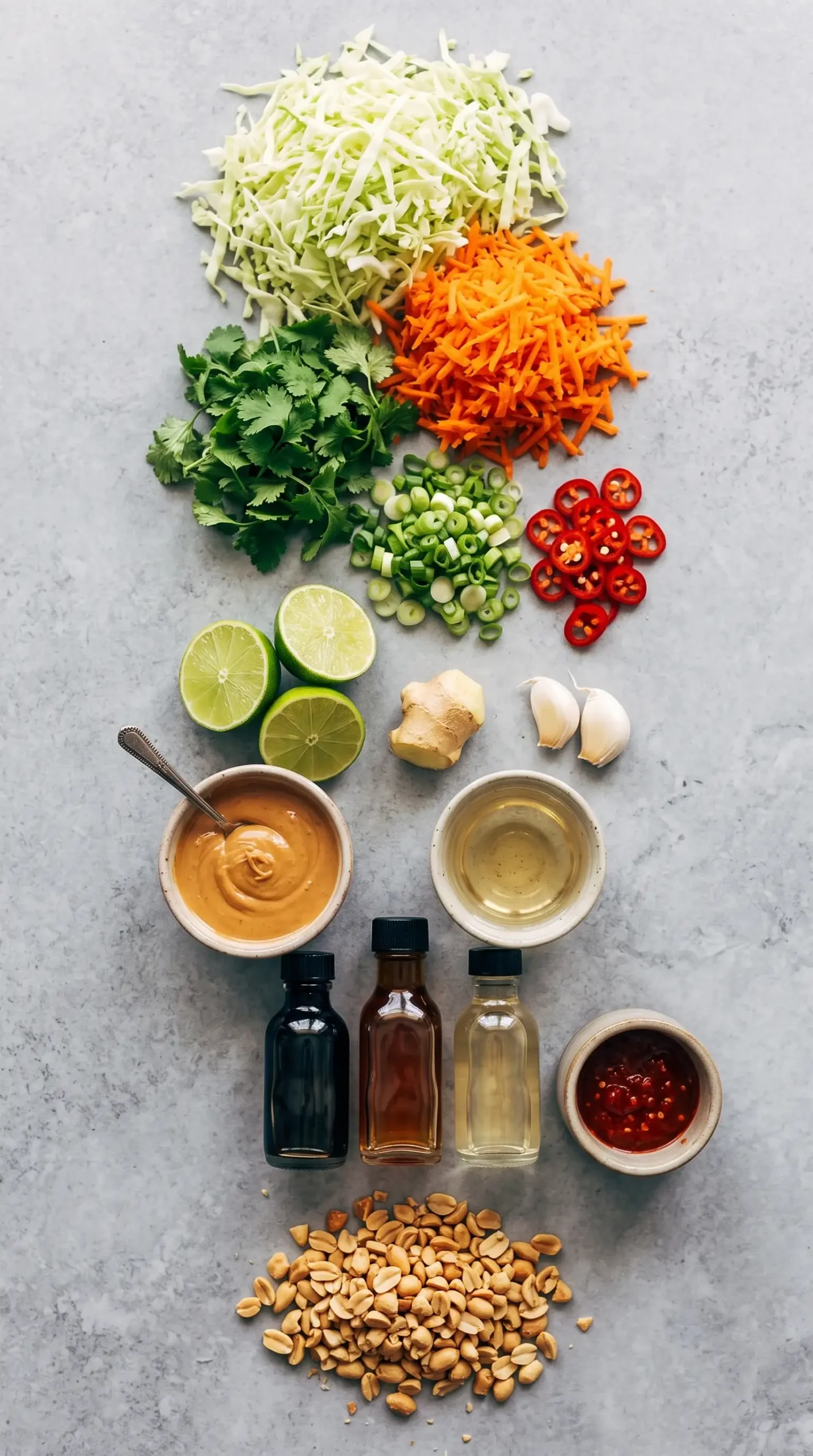
Thai-inspired flavors often rely on a careful balance of salty, sweet, sour, and spicy notes. The peanut dressing in this salad follows that approach with low sodium soy sauce, sesame oil, rice vinegar, sugar, sambal oelek, ginger, and garlic. Lime juice added at serving helps sharpen those richer flavors.
The vegetables also influence the overall taste. Green cabbage provides a sturdy base, while carrots add natural sweetness and color. Cilantro and green onions bring a fresh herbal quality, and serrano peppers contribute heat that can be adjusted depending on preference.
- Peanut dressing: Creates a creamy coating with savory, sweet, spicy, and tangy notes.
- Cabbage texture: Keeps the salad crisp and gives it the shredded style associated with coleslaw.
- Fresh additions: Cilantro, lime, peppers, and herbs keep the finished dish lively.
Chopped ingredients that improve the salad’s texture
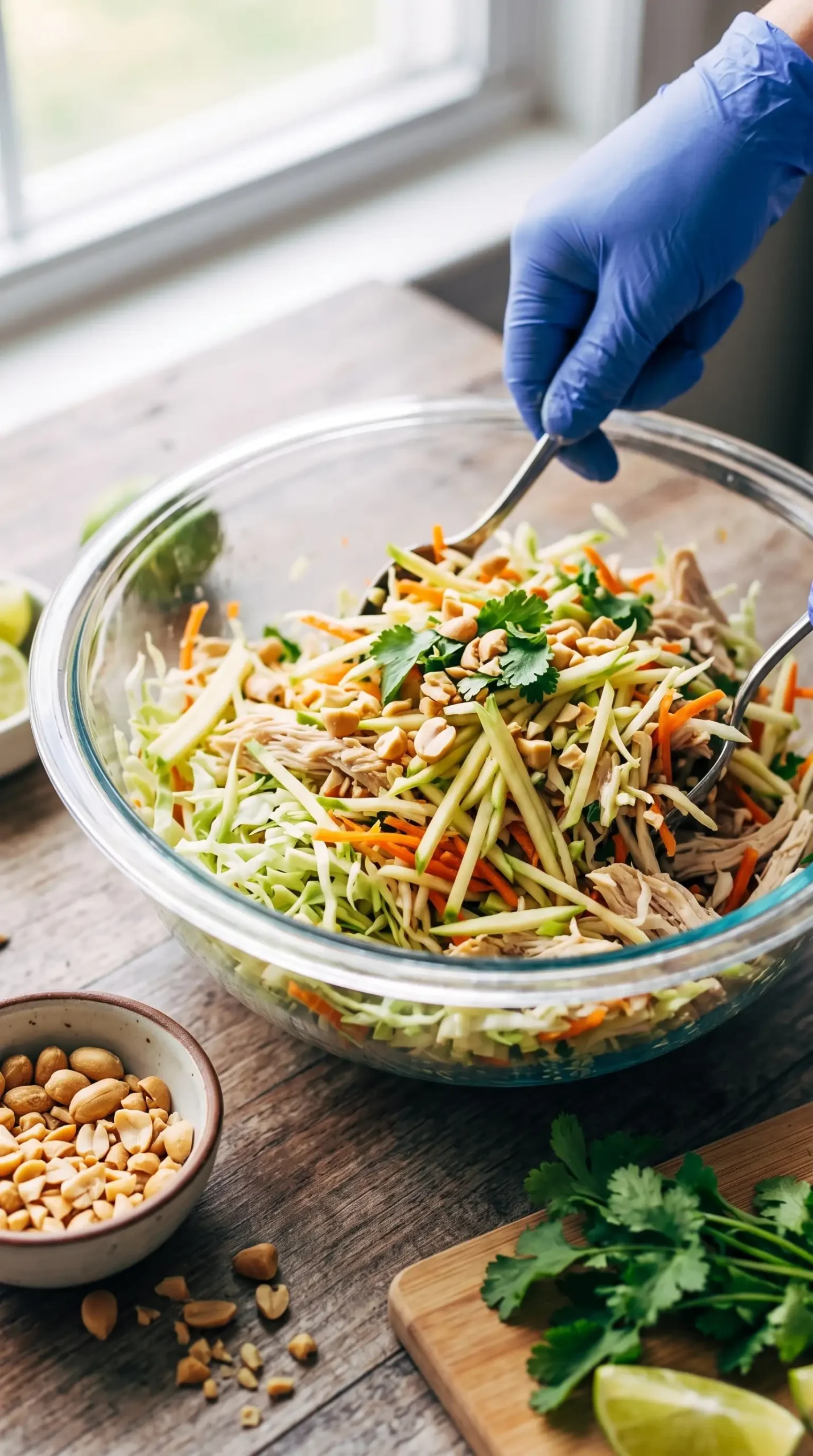
The way the vegetables are prepared has a major effect on the finished bowl. Thinly shredded cabbage creates delicate strands that mix evenly with chicken and dressing, and a chopped Thai salad depends on preparing vegetables into pieces that blend easily with the rest of the bowl. Large pieces can make the salad feel disconnected because the dressing does not coat each bite as easily.
Carrots and optional green papaya or mango should also be grated or finely shredded so they blend naturally into the mixture. Chopped peanuts add another layer of texture, giving the salad small crunchy pieces throughout instead of a single heavy topping.
Using fresh cilantro, sliced green onions, and serrano peppers helps create variety in every forkful. The ingredients are simple, but the preparation style allows the flavors to combine without one element overpowering the others.
| Ingredient choice | Preparation approach | Effect on salad |
|---|---|---|
| Green cabbage | Slice very thin | Creates a crisp, slaw-like base |
| Carrots | Grate into fine pieces | Adds sweetness and even distribution |
| Peanuts | Chop into smaller pieces | Adds crunchy contrast |
Peanut dressing choices that shape the dish
The dressing is the defining feature of thai chicken salad with peanut dressing. Peanut butter provides the creamy foundation, while sesame oil gives it a deeper flavor. Soy sauce, rice vinegar, sambal oelek, sugar, ginger, and garlic build the layers that make the dressing more complex than a simple sauce.
Adjusting the water changes how the dressing interacts with the vegetables. A thinner consistency spreads easily through the shredded cabbage, while a thicker texture creates a more concentrated coating. Small adjustments can help match the dressing to how finely the vegetables are prepared.
For a different version, the chicken can be replaced with tofu while keeping the same overall flavor direction. The salad structure remains focused on the peanut dressing, fresh vegetables, and herbs.
Cooking control for a well-coated chicken salad
The most important execution detail is controlling how the dressing meets the vegetables. The cabbage and other chopped ingredients should be tossed until everything is lightly coated, allowing the sauce to reach the chicken and vegetables evenly.
A food processor or blender makes the dressing easier to combine because the garlic, ginger, and chili components blend into the peanut butter mixture. Adjusting the consistency gradually helps prevent a dressing that is too thick to distribute.
Chicken preparation also affects the final texture. Shredded chicken works best because it catches the dressing between the strands. Pulled rotisserie chicken is a convenient option, while cooked chicken breasts should reach a 165°F internal temperature before they are shredded for the salad.
Common mistakes with chopped Thai chicken salad
Several small choices can affect how balanced the finished salad feels. These issues are easy to avoid when you pay attention to texture, dressing amount, and ingredient preparation.
- Overly thick cabbage pieces: Thin slicing helps the cabbage mix evenly with the chicken and dressing.
- Too little dressing distribution: Tossing thoroughly ensures the sauce reaches the shredded ingredients.
- Adding dressing too early for storage: Keeping the components separate helps maintain the best texture when saving leftovers.
- Ignoring seasoning adjustments: Salt and lime juice can be added at the end to brighten the finished salad.
A common mistake is treating the dressing as only a topping. The peanut sauce is designed to coat the salad, so uneven mixing can leave some bites bland and others overly concentrated.
Serving ideas for Thai-inspired chicken salad
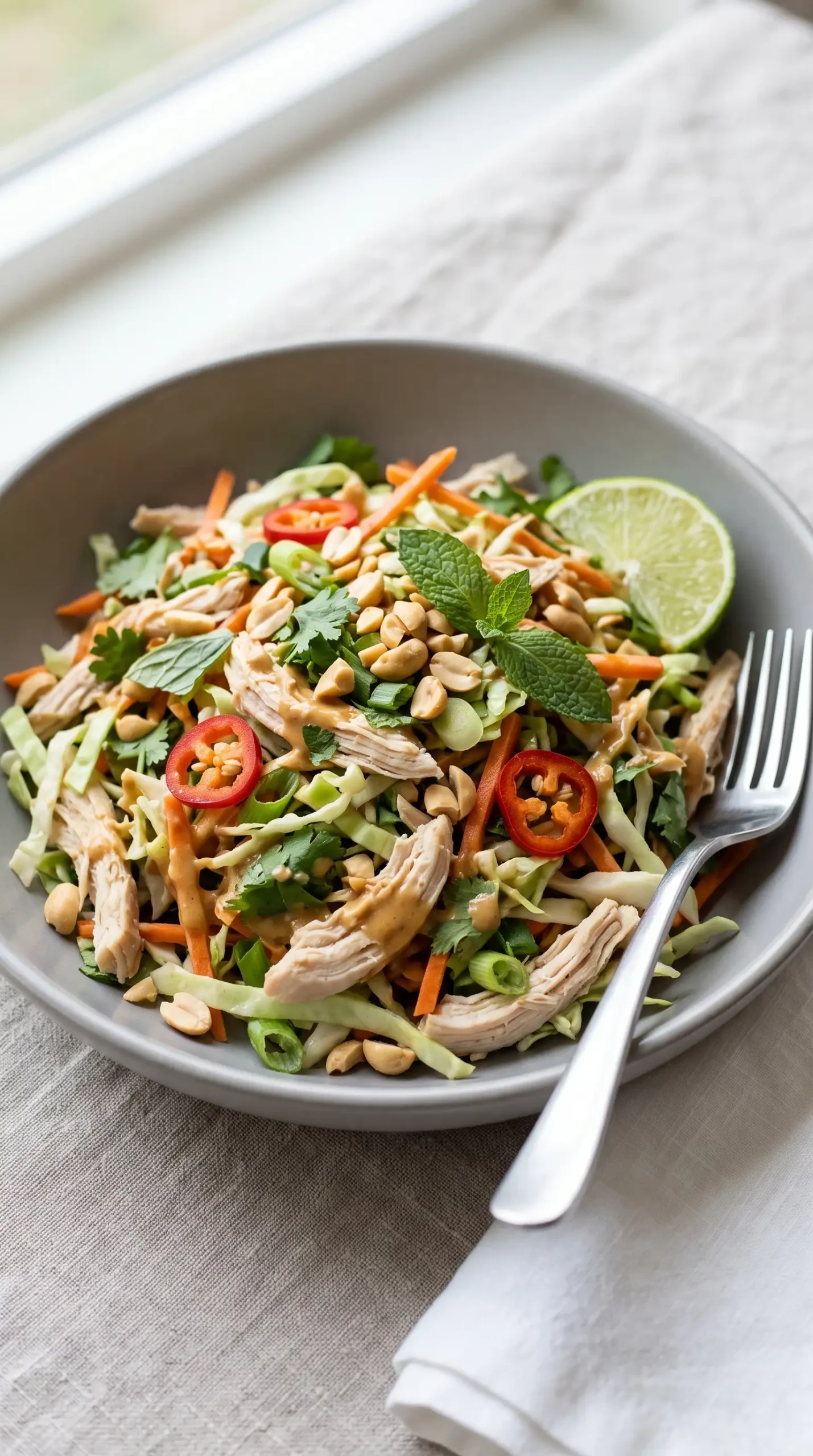
Thai inspired chicken salad works well as a complete meal because it combines protein, vegetables, nuts, and a flavorful dressing in one bowl. It can be served chilled and does not need complicated additions to feel satisfying.
The salad also fits easily into different occasions. It can be placed on a lunch table, served as a lighter dinner option, or prepared ahead for a gathering where guests can enjoy a fresh, crunchy dish.
- Lunch bowl: Serve the chilled salad on its own for a quick meal.
- Fresh plate: Add extra lime juice at serving for more brightness.
- Sharing dish: Keep the colorful vegetables visible for an appealing presentation.
Making the salad easier for different preferences
The structure of this dish allows for adjustments without changing its character. Chicken provides a familiar base, but tofu can replace it for a vegetarian version while keeping the peanut dressing and vegetable combination intact.
The optional green papaya or mango can also change the personality of the salad. Including one of these ingredients introduces a different fresh texture while keeping the crunchy vegetable focus.
Heat levels are flexible as well. Serrano peppers and sambal oelek bring spice, but the amount can be adjusted according to the level of heat you enjoy.
Keeping chopped Thai chicken salad fresh
The salad keeps its best texture when the dressing and vegetables are stored separately until serving. Once mixed, the cabbage and other ingredients gradually absorb the dressing, which changes the crisp texture over time.
If the salad has already been tossed, it can still be enjoyed later, especially when the ingredients were prepared with a fresh texture in mind. Separating portions before adding dressing is a practical way to preserve the crunch for future meals.
| Storage approach | Texture result | Best use |
|---|---|---|
| Dressing stored separately | Vegetables stay crisp | Preparing portions ahead |
| Fully mixed salad | Flavors combine more deeply | Serving soon after tossing |
| Separated chicken and vegetables | More flexibility | Customizing individual servings |
Why thin slicing matters in this cabbage salad
The cabbage texture is one of the defining details of the dish. Very thin slices allow the dressing to spread across more surface area, creating a cohesive salad instead of separate bites of chicken and vegetables.
A mandoline can help create consistent slices, but careful knife work can also produce the fine texture needed. The important factor is creating pieces that are easy to combine with shredded chicken and grated vegetables.
Preparing a reliable peanut dressing mixture
The dressing comes together through blending the ingredients into a smooth mixture that can be adjusted with water. The balance depends on personal preference, but the combination should remain flavorful enough to coat the salad without overwhelming the fresh ingredients.
Fresh ginger and garlic are important parts of the dressing because they provide sharp aromatic notes that balance the richness of peanut butter and sesame oil.
Thai chicken salad delivers fresh flavor through simple choices
Thinly shredded cabbage, balanced peanut dressing, and well-seasoned chicken create a salad where preparation choices matter as much as the ingredient list. The strongest results come from keeping the vegetables crisp, blending the dressing smoothly, and combining everything close to serving time.
Thai chicken salad works because its textures and flavors are intentionally balanced. Each component supports the others, creating a chilled dish with enough richness from the dressing and enough freshness from the vegetables to stay bright.
Chopped Thai chicken salad questions about storage and swaps
Can I use rotisserie chicken for this salad?
Yes. Pulled rotisserie chicken works well because the shredded texture allows the peanut dressing to coat the meat evenly throughout the salad.
Can I make this Thai chicken salad without chicken?
Tofu can replace the chicken while keeping the cabbage, vegetables, herbs, and peanut dressing combination. The dish remains centered on the same fresh flavors and textures.
How do I keep the cabbage from becoming too soft?
Store the dressing separately from the salad ingredients until you are ready to eat. Mixing everything shortly before serving helps preserve the cabbage’s crisp texture.
Can I adjust the spice level?
Yes. The serrano peppers and sambal oelek can be adjusted to create a milder or spicier version while keeping the other flavors balanced.
What makes the peanut dressing taste balanced?
The combination of peanut butter, soy sauce, sesame oil, vinegar, sugar, ginger, garlic, and chili creates a mixture with creamy, savory, sweet, tangy, and spicy notes.
Thai Chicken Salad with Peanut Dressing and Fresh Herbs
Ingredients
Method
- Combine the dressing ingredients in a food processor or blender and pulse until blended. Add water as needed to reach the desired consistency.
- Place the salad ingredients in a large bowl and toss with a drizzle of peanut dressing until evenly coated.
- Season the salad with salt and lime juice, then serve chilled.