
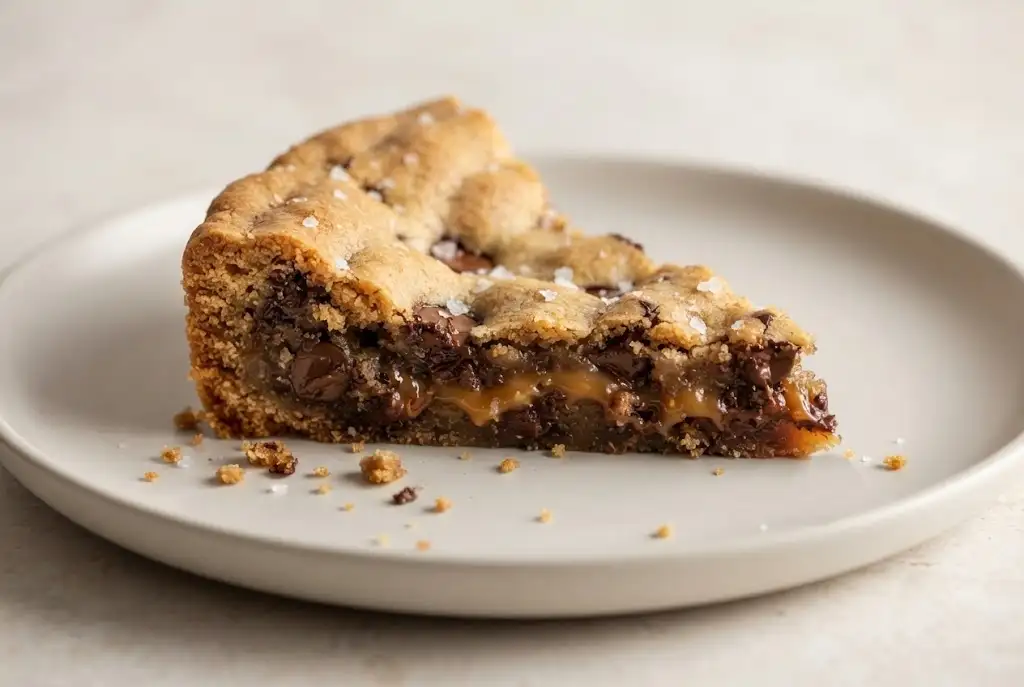
Deep Dish Chocolate Chip Cookie Creates a Thick Skillet Dessert With Caramel
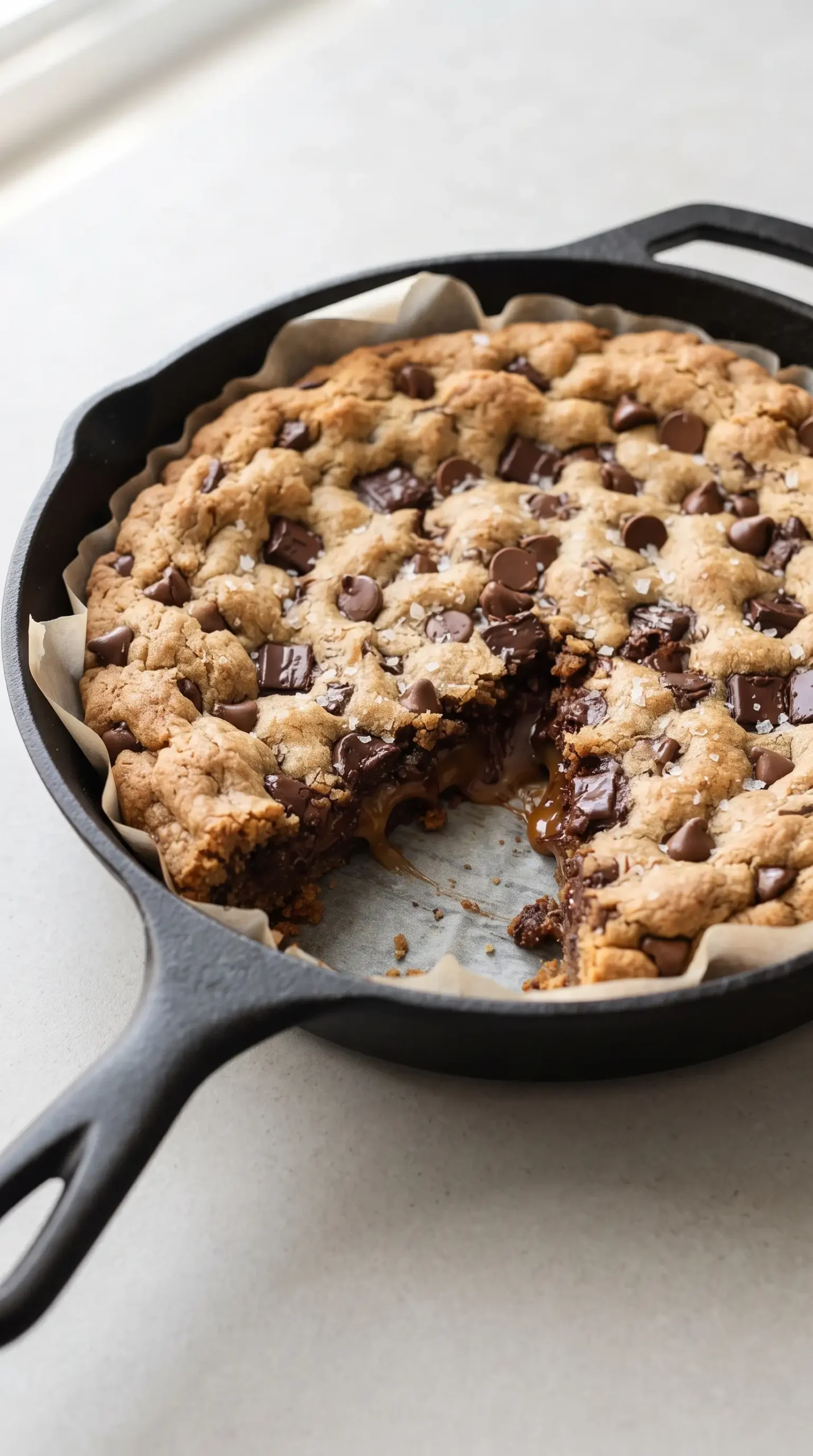
Deep dish chocolate chip cookie baking brings a thick, warm dessert format together with layers of chocolate, soft cookie dough, melted caramel, and a finishing sprinkle of coarse sea salt. The skillet approach creates a different experience from individual cookies because the dough stays together around the filling, allowing the caramel center to remain part of each slice.
Built with chocolate chunks, milk chocolate chips, and a caramel layer made with cream, this deep dish chocolate chip cookie balances rich sweetness with the slight contrast of sea salt. The combination depends on careful choices during mixing, baking, and cooling so the center develops the texture you want when served.
Caramel Layers Change the Skillet Cookie Experience
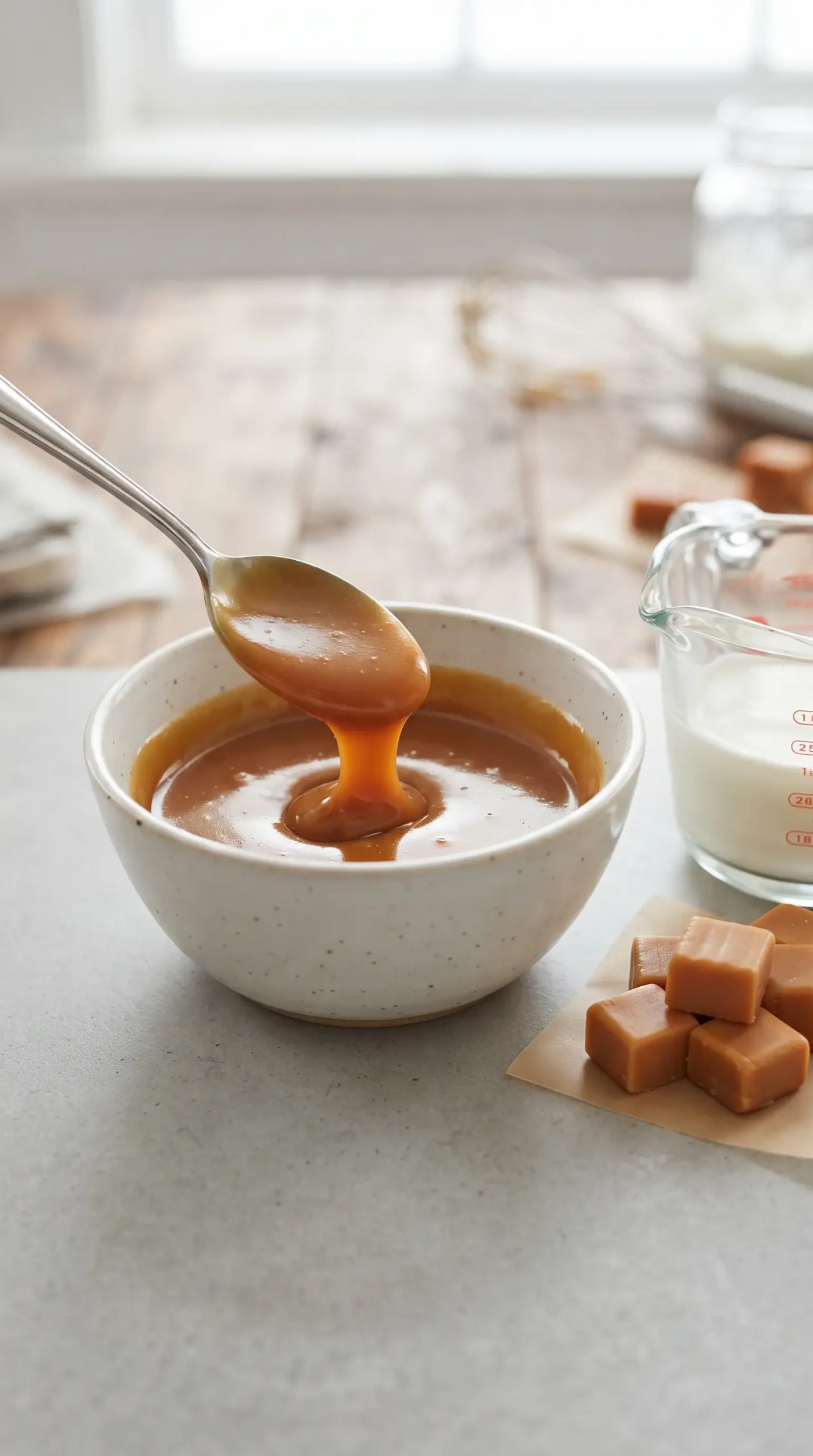
A caramel chocolate chip cookie depends on how the filling interacts with the surrounding dough. The caramel pieces are melted with heavy cream until smooth, creating a pourable layer that sits between two portions of cookie dough.
Chocolate Choices Shape the Cookie Center
Chocolate chunks and milk chocolate chips play different roles inside the cookie structure. Larger chopped chocolate pieces create pockets of melted chocolate, while smaller chips distribute sweetness throughout the dough.
Using a combination of chocolate sizes helps prevent every bite from having the same texture. A chopped chocolate bar can create irregular melted areas, while chips provide familiar chocolate pieces that remain visible after baking.
Sea salt added after baking provides contrast against the chocolate and caramel flavors. The coarse crystals are placed on the warm cookie surface, where they complement the sweetness without changing the dough itself.
| Chocolate element | How it appears in the cookie | Best handling choice |
|---|---|---|
| Chocolate chunks | Larger melted pockets | Chop chocolate into uneven pieces |
| Milk chocolate chips | Distributed chocolate bites | Stir evenly through the dough |
| Sea salt | Sweet and salty contrast | Add after baking |
Butter and Sugars Set the Dough Structure
Butter preparation affects how the dough comes together. A portion is softened until partially melted while the remaining butter is softened enough to combine smoothly with the sugars.
Baking Control Keeps the Skillet Chocolate Chip Cookie Balanced
Successful baking depends on recognizing that a skillet cookie has more thickness than a standard cookie sheet version. The center contains multiple layers of dough and caramel, so the baking approach changes how firm or soft each slice becomes.
Covering the skillet with foil during part of baking can help the center continue cooking while limiting additional browning on top. Leaving the cookie uncovered for a shorter bake keeps the middle softer for those who prefer an underbaked texture.
Texture decisions should be made before cutting. A warm skillet cookie can appear loose because the caramel is still fluid and the dough has not fully settled.
- Check the surface: Look for a baked top while considering how soft you want the center.
- Adjust the bake: Use additional covered baking time when a firmer middle is preferred.
- Wait before slicing: Allow the layers to stabilize so caramel stays between portions.
Avoid These Deep Dish Chocolate Chip Cookie Mistakes
Uneven dough layers can cause problems in a deep dish chocolate chip cookie because the caramel needs enough cookie dough above and below it to stay contained. Pressing the base and top portions evenly helps create a balanced slice.
Adding too little flour can leave the dough sticky and difficult to handle. The prepared dough should feel dry to the touch; extra flour can be mixed in gradually if the dough clings to your hands.
Cutting the cookie immediately after removing it from the oven can also affect the shape. The filling needs time to settle, and rushed slicing may allow caramel to spread instead of staying in the layers.
Cast Iron Handling Affects the Finished Slice
A parchment-lined cast iron skillet provides the baking surface for this dessert and helps with easier removal. Keeping the paper fitted under the cookie layer allows the finished cookie to be lifted and portioned more easily.
Resting Time Helps Caramel Chocolate Chip Cookie Pieces Hold
Cooling changes the structure of a caramel chocolate chip cookie because the warm filling begins to thicken as the cookie rests. This creates cleaner slices and keeps the caramel positioned between the dough layers.
Serving Ideas Highlight Sea Salt Chocolate Chip Cookie Flavor
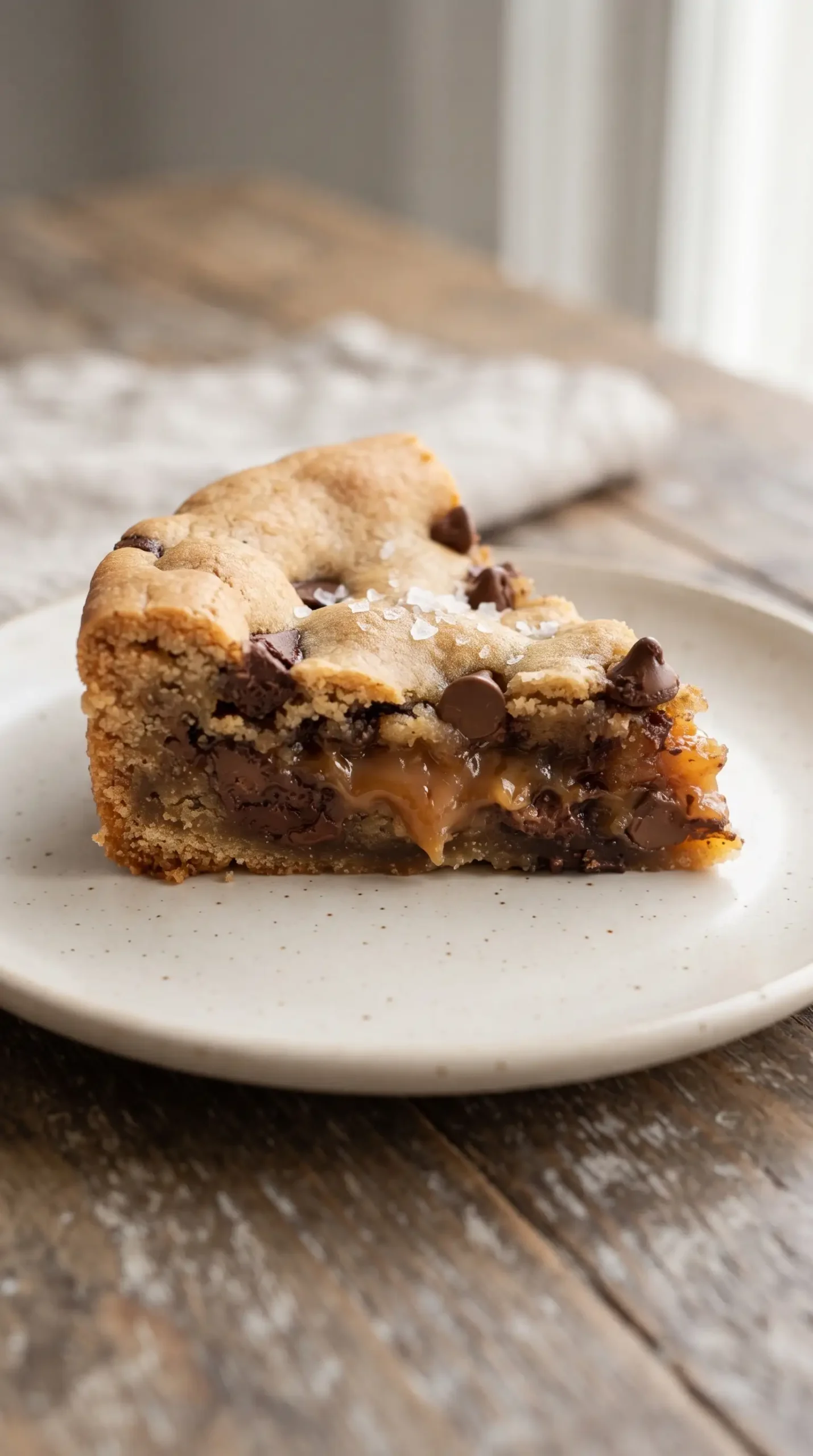
A sea salt chocolate chip cookie can be served in thick slices where the chocolate, caramel, and cookie layers remain visible. The skillet format makes each portion naturally substantial because the dessert is cut from one large baked cookie.
Warm slices can be paired with additional toppings according to preference, especially when the cookie is still slightly soft in the center. The salted surface works well with creamy additions because the salt balances the sweetness of the caramel and chocolate.
Smaller portions can also be served from the skillet for sharing, while larger slices showcase the layered interior. The texture changes depending on whether the center is served softer or allowed to become more set.
Storage Decisions Protect the Cookie Texture
Remaining slices should be protected from drying out by storing them in a covered container. The caramel layer and chocolate pieces help the cookie retain moisture, but exposure to air can change the texture over time.
Ingredient Decisions That Improve This Cookie’s Results
Small ingredient choices have a direct effect on the finished deep dish chocolate chip cookie. Using both granulated sugar and brown sugar creates the foundation for the cookie dough, while vanilla and maple syrup contribute additional flavor to the mixture.
The flour amount is especially important because the dough must support the caramel layer. A dough that feels too soft can be harder to press into the skillet and may not hold the filling as neatly.
Heavy cream changes the caramel pieces from solid candy into a smoother filling when melted together. This step creates a texture that can spread across the dough before the top layer is added.
Caramel Preparation Determines the Filling Texture
Heating caramel pieces with cream requires attention during melting because the mixture needs to become smooth before it is spread over the cookie dough. Stirring after heating helps combine the two ingredients into a consistent filling.
Cookie Dough Thickness Creates the Deep Dish Format
The defining feature of a deep dish chocolate chip cookie is the amount of dough surrounding the filling. Dividing the dough into a bottom layer and a top layer creates the enclosed center that separates this dessert from a regular flat cookie, while deep dish cookie bowls use portioned servings that keep the thick cookie texture easy to enjoy.
Pressing the dough gently into the skillet keeps the layers connected without compacting the cookie too firmly. The caramel remains surrounded by dough, while chocolate pieces stay distributed throughout the baked dessert.
The skillet size matters because the dough needs room to spread while maintaining its thickness. A larger skillet can create a thinner cookie layer, while a smaller one keeps the deep dish structure more pronounced.
| Choice | Texture result | Reader decision |
|---|---|---|
| Shorter uncovered baking | Softer center | Choose for a gooier cookie texture |
| Additional covered baking | More set middle | Choose for firmer slices |
| Longer resting after baking | Cleaner cuts | Choose when serving portions |
Deep Dish Chocolate Chip Cookie With Caramel and Sea Salt Delivers Its Best Texture
The deep dish chocolate chip cookie reaches its ideal texture when the dough, caramel, chocolate, and sea salt are balanced through baking and cooling choices. The skillet format depends on protecting the layered structure so each slice contains both the cookie base and the caramel center.
Careful control of dough consistency, caramel smoothness, and resting time determines whether the finished cookie stays soft, sliceable, or more firmly set. Those decisions shape how the chocolate and salted caramel appear in every portion.
Deep Dish Chocolate Chip Cookie Questions About Caramel, Baking, and Storage
Can the caramel filling be made thicker?
The caramel filling becomes thicker as it cools after baking. Keeping the cookie dough layers even and allowing the baked dessert to rest helps the caramel remain between the cookie portions.
How do I know when the cookie center is baked enough?
The center can be adjusted according to texture preference. A softer middle comes from less baking time, while additional covered baking creates a more set interior.
Can I use only chocolate chips instead of chocolate chunks?
Chocolate chips can replace the chunks, but the finished cookie will have a more uniform chocolate distribution. Larger chopped pieces create bigger melted chocolate areas inside the cookie.
Why does the cookie need to rest before slicing?
Resting allows the warm caramel and cookie layers to stabilize. Cutting too soon can make the filling move before the portions hold their shape.
What skillet works best for this dessert?
A cast iron skillet lined with parchment is used for the baking setup because it provides a sturdy surface for the thick cookie layers and helps with serving after baking.
Deep Dish Chocolate Chip Cookie with Caramel and Sea Salt
Ingredients
Method
- Preheat the oven to 350°F (177°C). Microwave 8 tablespoons of the butter for 30 seconds, or until partially melted. Microwave the remaining 8 tablespoons for 10 seconds, or until soft enough to indent with a finger.
- Beat the softened butter, granulated sugar, and brown sugar with an electric mixer until creamy. Mix in the vanilla and maple syrup until smooth.
- Add the eggs and beat on low speed until incorporated. Mix in the flour, baking soda, and salt, adding the flour in batches if needed, until a smooth dough forms. If the dough sticks to your hands, mix in a few additional tablespoons of flour until it feels dry to the touch.
- Stir the chocolate chunks and milk chocolate chips into the dough.
- Microwave the caramel pieces with the heavy whipping cream for 2 minutes, then stir until completely melted and smooth.
- Line a 9-inch or larger cast iron skillet with parchment paper. Press half of the cookie dough evenly into the skillet.
- Pour the melted caramel mixture over the dough and spread it evenly with a spoon. Cover the caramel with the remaining cookie dough.
- Bake for 15-25 minutes. For a softer, underbaked center, bake uncovered for 15 minutes. For a more fully baked center, cover with foil and continue baking for an additional 10-15 minutes.
- Remove the skillet from the oven and sprinkle the cookie with coarse sea salt. Let it rest for at least 1 hour before slicing so the pieces hold their shape.