
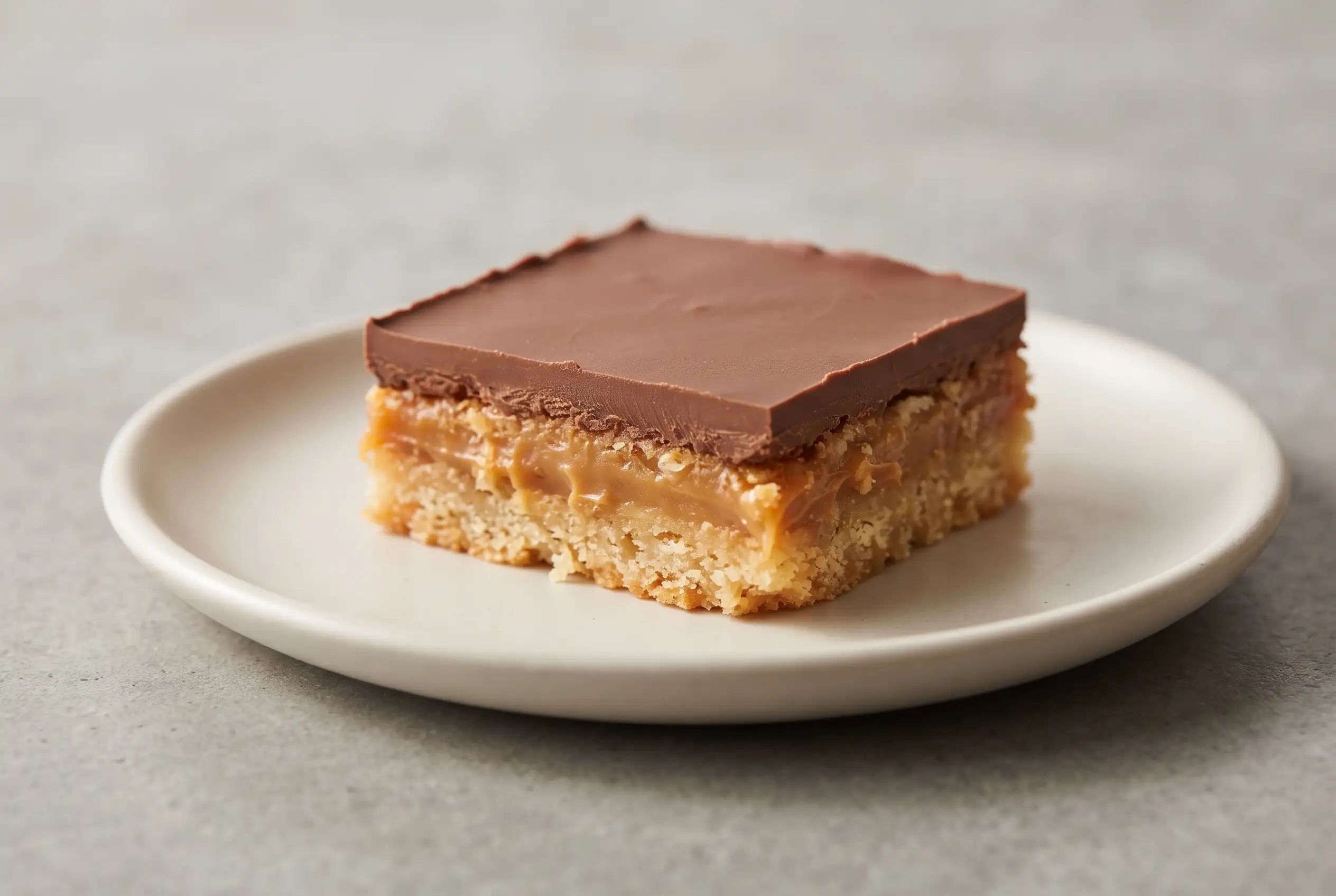
Dulce de Leche Bars Build a Layered Dessert with Contrast
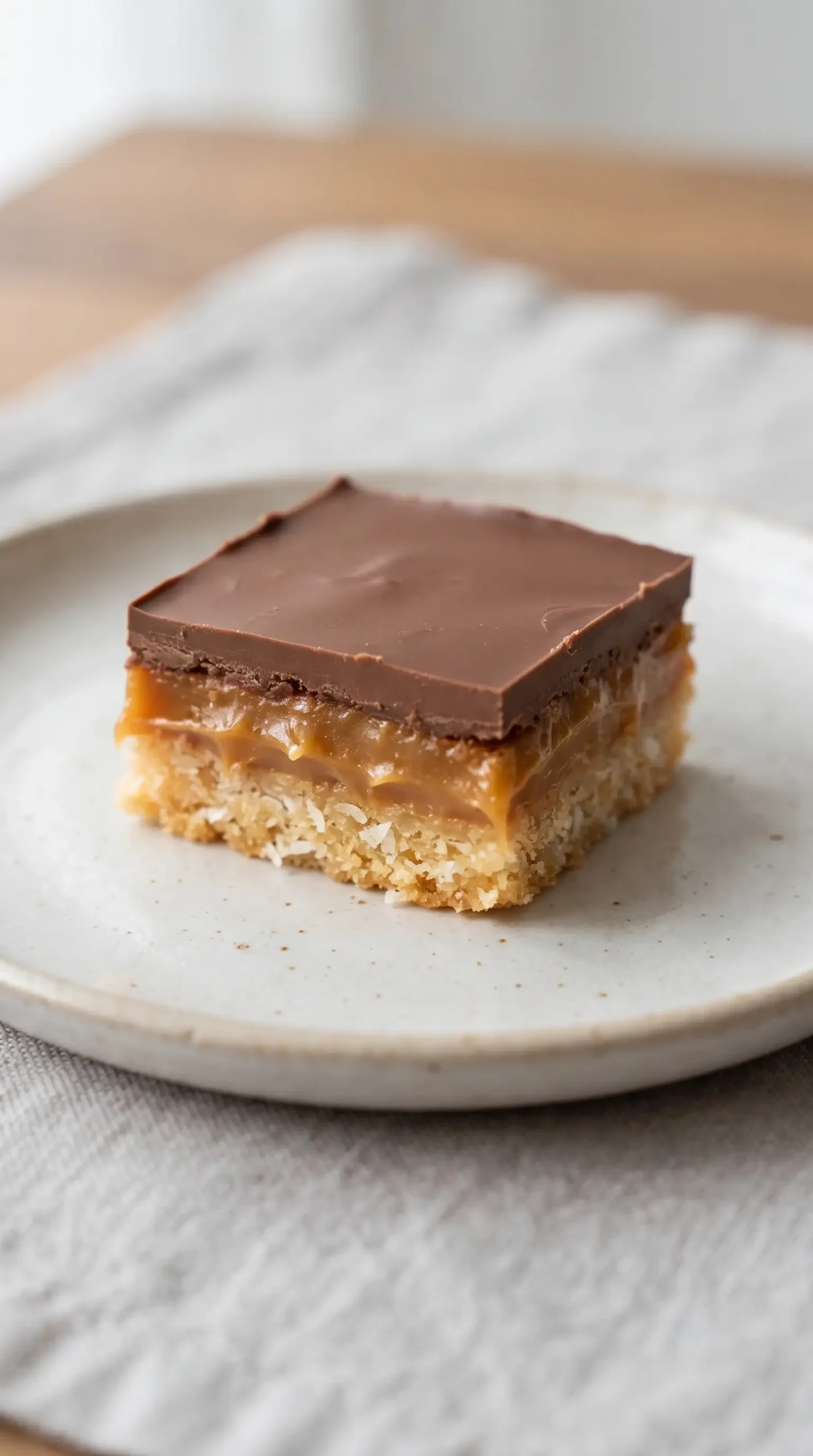
Dulce de leche bars bring together a buttery coconut crust, a caramel-colored filling, and a smooth milk chocolate topping in a dessert built around distinct textures. The crisp base supports the soft center, while the chocolate layer adds a familiar candy-like finish that makes each square feel rich without requiring complicated techniques.
Milk chocolate dulce de leche bars stand out because each layer has a separate role. The crust creates structure, the cooked condensed milk mixture develops a deeper flavor, and the melted chocolate forms a finished surface that sets the dessert apart from ordinary cookie bars.
Coconut Crust Creates the Right Base for Milk Chocolate Dulce de Leche Bars
The coconut crust determines how well the bars hold together after layering. Shredded coconut combines with flour, brown sugar, and melted butter to create a crumbly mixture that presses into a firm foundation once baked.
Brown sugar helps the crust develop a warm flavor that matches the caramel filling above it. The coconut also gives the base a slight chew, which creates a useful contrast against the softer dulce de leche layer and the smooth chocolate topping.
- Firm structure: A fully combined crumb mixture helps the crust bake into an even layer.
- Balanced sweetness: Brown sugar connects the toasted base with the caramel center.
- Texture contrast: Coconut adds a distinct bite beneath the creamy layers.
Cooling the crust before adding the caramel layer matters because the separate textures need time to stay defined. A warm base can make the filling spread differently and may affect the clean separation between layers.
Sweetened Condensed Milk Becomes a Smooth Caramel Center
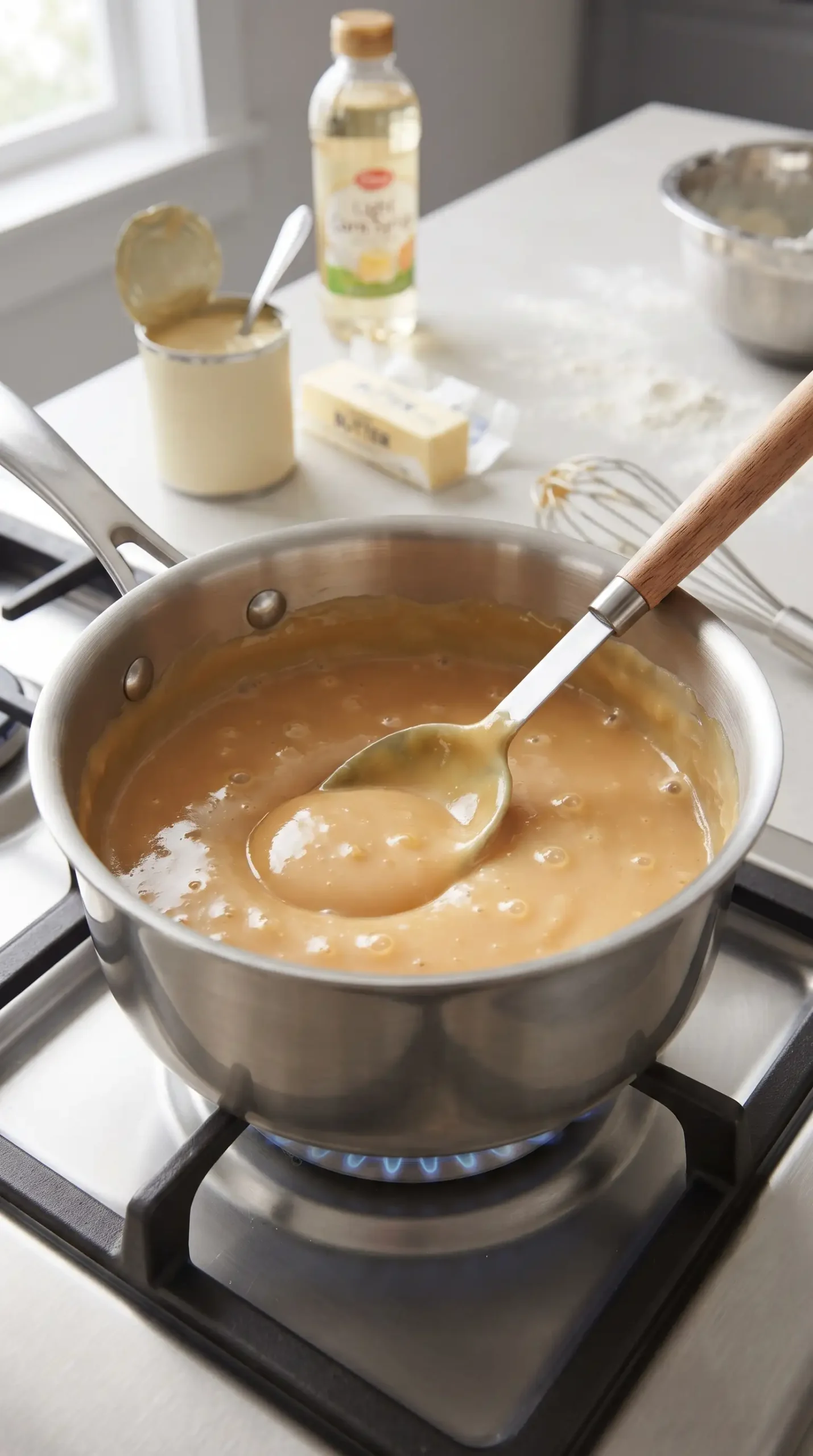
The caramel center in dulce de leche bars begins with sweetened condensed milk combined with softened butter and light corn syrup. Heating this mixture changes its color and consistency, creating the thick filling that sits between the crust and chocolate.
Dulce de leche is a caramel-like milk confection created as sugars develop deeper flavor during cooking, which explains why this filling changes from a pale condensed milk mixture into a richer caramel center. The process of how dulce de leche is made helps clarify the color and texture changes that happen before it reaches the bars.
Watching the appearance of the mixture provides useful guidance during cooking. A deeper beige color indicates that the caramel has developed beyond the original pale condensed milk appearance, while bubbling during baking shows the filling is actively setting.
Light corn syrup helps support a smoother caramel texture in the finished bars. The mixture should spread across the cooled crust evenly so every slice receives a consistent middle layer.
| Caramel stage | What to observe | Why it matters |
|---|---|---|
| Before heating | Pale, loose mixture | Ingredients are still separate |
| After stovetop cooking | Deeper beige color | Flavor and thickness begin developing |
| After baking | Light golden color with bubbles | Center has progressed toward a set filling |
Chilled Chocolate Topping Gives Bars Their Clean Finish
Milk chocolate chips create the top layer that completes these baked dulce de leche bars. Melting the chocolate gently allows it to spread into an even coating over the caramel without disturbing the layers underneath.
A smooth chocolate surface makes cutting and serving easier after the topping has had time to firm. The chocolate also adds a familiar candy-bar quality that pairs naturally with the caramel and coconut flavors.
Baking Choices That Shape Baked Dulce de Leche Bars
Small choices during baking influence the final texture of the dessert. The crust needs enough time to become lightly set and golden, while the caramel layer needs controlled heat so it can thicken without losing its smooth character.
Using a prepared 9×13 pan gives the layers room to spread evenly. Pressing the crust mixture consistently across the pan prevents thin spots that could make some pieces more fragile than others.
Several visual cues help guide the process:
- Look for a lightly golden crust before adding the caramel layer.
- Check that the caramel layer has changed color and developed bubbles during baking.
- Allow the chocolate topping to become firm before cutting clean squares.
Common Mistakes That Affect Dulce de Leche Bars
Uneven layers, rushed cooling, and temperature mistakes are the issues most likely to change the texture of dulce de leche bars. Each problem has a clear cause that can be corrected with a small adjustment.
| Problem | Possible cause | Better approach |
|---|---|---|
| Crumbly slices | Base is not pressed evenly | Create a consistent crust thickness before baking |
| Soft topping | Chocolate has not fully set | Give the topping enough time to firm |
| Uneven caramel layer | Filling was spread over a warm crust | Cool the base before layering |
Overheating the chocolate can also create a less smooth finish. Gentle melting keeps the topping easier to spread and helps preserve the polished appearance expected from coconut dulce de leche bars.
Cutting and Storing Coconut Dulce de Leche Bars Successfully
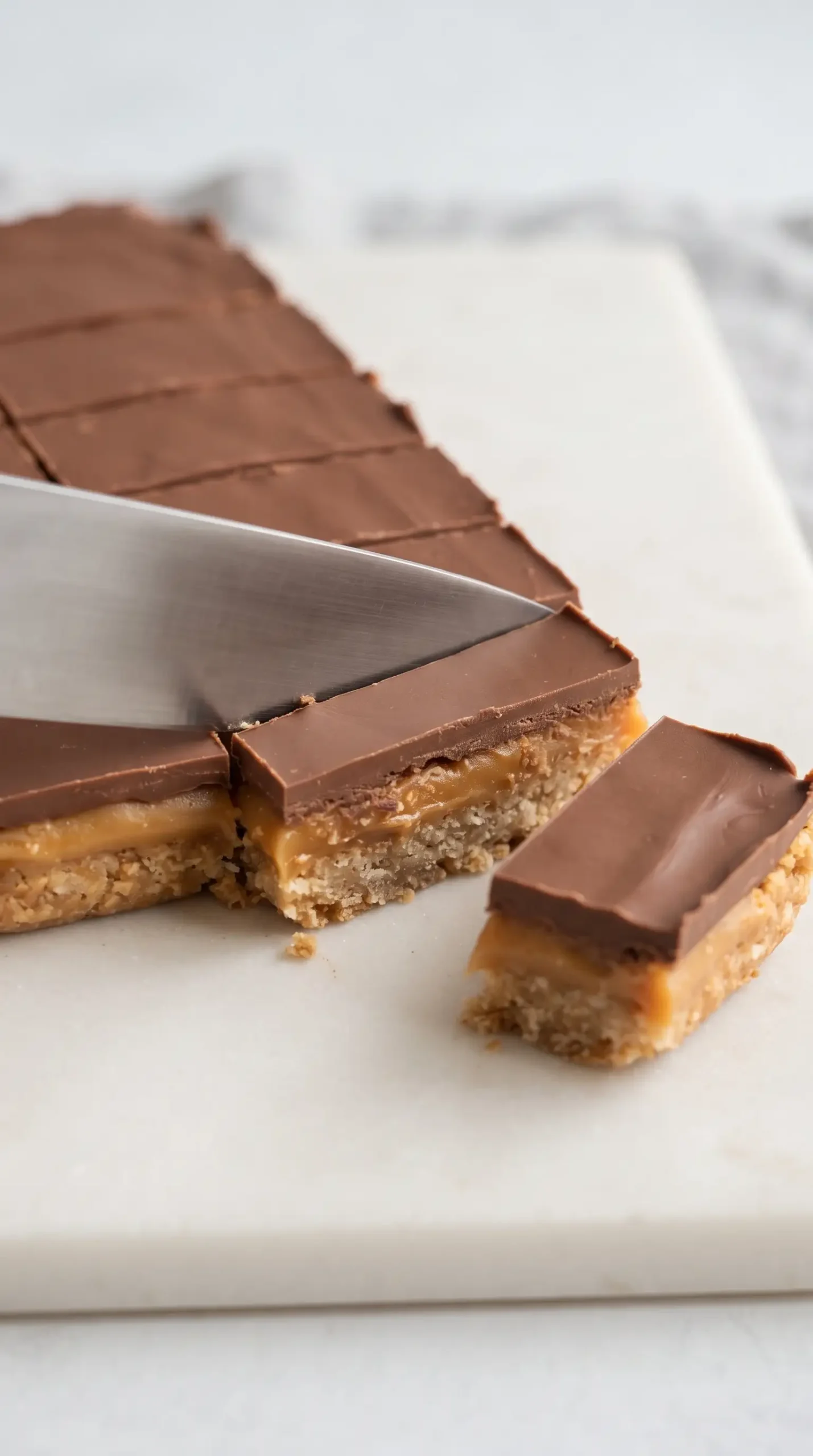
Cold storage can help the chocolate topping become firm enough for neat slicing. Once the layers have set, bringing the bars back toward room temperature makes them easier to serve with a softer texture.
For the cleanest pieces, use a sharp knife and allow the topping to settle before cutting. The three layers should remain visible, showing the coconut base, caramel center, and chocolate finish.
Layered desserts benefit from careful portioning after chilling because firm layers create cleaner edges when sliced. Bars with a structured base and chocolate finish, such as chocolate caramel oatmeal bars, can be cut into individual squares for dessert trays and make-ahead serving.
Serving Ideas That Highlight Milk Chocolate Dulce de Leche Bars
Milk chocolate dulce de leche bars work well when served as small squares because the layered richness makes each portion satisfying. Their combination of coconut, caramel, and chocolate also fits naturally on dessert trays or alongside coffee.
Extra toppings are not necessary, but simple serving choices can change the experience:
- Room-temperature serving: Creates a softer caramel texture.
- Cold serving: Provides firmer layers and sharper edges.
- Small portions: Let guests enjoy the concentrated flavors comfortably.
Ingredient Decisions That Improve the Dessert
The most important ingredient decisions for dulce de leche bars involve texture and balance. Sweetened shredded coconut, brown sugar, and milk chocolate each contribute a different kind of sweetness, so the layers feel connected instead of repetitive.
Unsalted butter gives control over the overall flavor because the sea salt amount can remain intentional. The small amount of salt in the crust helps keep the sweetness from overwhelming the other components.
Choosing milk chocolate for the topping keeps the dessert in a softer, sweeter flavor range. It complements the caramel center while maintaining the classic candy-inspired character of the bars.
Cooking Control Keeps the Caramel Layer Balanced
The cooking control that matters most in this dessert is temperature awareness. The caramel mixture needs enough heat to change color and thicken, but careful attention prevents the filling from becoming difficult to spread.
Chocolate preparation requires a similar focus. A gentle melting process creates a topping that can be poured and spread evenly, which protects the appearance of the finished bars.
These small observations are more useful than relying only on time because the visual changes in the caramel and chocolate reveal how the layers are progressing.
Texture Changes You Can Expect From Each Layer
Every layer of dulce de leche bars changes the way the dessert feels when eaten. The crust provides a crumbly foundation, the caramel offers a soft middle, and the chocolate adds a smooth surface.
The contrast is what makes the dessert memorable. A bar with only a sweet filling would lack the structure created by coconut and flour, while the chocolate topping adds a finishing texture that ties everything together.
Small Adjustments Keep the Layers Looking Their Best
Simple adjustments can help match the bars to different serving preferences without changing the character of the dessert. Allowing more time for chilling creates cleaner cuts, while serving at room temperature brings back a softer bite.
Storage conditions also influence presentation. Keeping the bars covered protects the chocolate surface, and returning them to a comfortable serving temperature helps the caramel layer feel more balanced.
Dulce de Leche Bars Depend on Layer Balance
Dulce de leche bars succeed when the crust, caramel center, and chocolate topping remain distinct while working together. The coconut base needs enough structure to support the filling, and the caramel needs careful cooking so it reaches the right texture before the chocolate seals the surface.
These layered dessert bars show how a few well-chosen components can create a finished treat with contrasting textures. Paying attention to cooling, spreading, and setting gives each layer the chance to contribute its intended flavor and feel.
Dulce de Leche Bars Questions About Texture and Storage
Why do dulce de leche bars need cooling before cutting?
Cooling allows the caramel and chocolate layers to become more stable, which helps the squares hold their shape. Cutting too early can smear the layers and make the pieces less defined.
Can the chocolate topping be changed on dulce de leche bars?
The milk chocolate topping provides the recipe’s intended sweetness and smooth finish, but another chocolate style could change the flavor balance. A different choice should still melt smoothly and spread evenly.
How should coconut dulce de leche bars be stored?
Store the bars covered so the chocolate surface stays protected. They can be served after chilling or allowed to soften before eating, depending on the preferred texture.
What makes the caramel layer set properly?
The caramel layer depends on heating the condensed milk mixture until it changes color and thickens, followed by baking until it develops the right finished texture.
Why does the crust matter so much in these bars?
The crust provides the structure that supports the softer layers above it. A well-formed coconut base keeps each bite balanced and makes the dessert easier to portion.
Dulce De Leche Bars with Milk Chocolate Topping and Coconut
Ingredients
Method
- Preheat the oven to 375°F (190°C). Grease a 9×13 pan.
- Combine coconut, flour, brown sugar, baking powder, and salt in a large bowl. Melt the butter in a saucepan over low heat, then pour it over the dry ingredients and mix until a crumbly dough forms.
- Press the crust mixture evenly into the 9×13 pan and bake for 15-18 minutes, until the crust is lightly set and golden. Allow the crust to cool completely.
- Heat sweetened condensed milk with 2 tablespoons butter and light corn syrup over medium-high heat for about 5 minutes, stirring until the mixture becomes a deeper beige color.
- Spread the caramel mixture over the cooled crust and bake for 12-14 minutes. Remove when the sauce is light golden brown with visible bubbles, then cool completely until the layer is firm enough for topping.
- Melt the chocolate chips in a double boiler.
- Pour the melted chocolate over the bars and spread it into an even layer.