
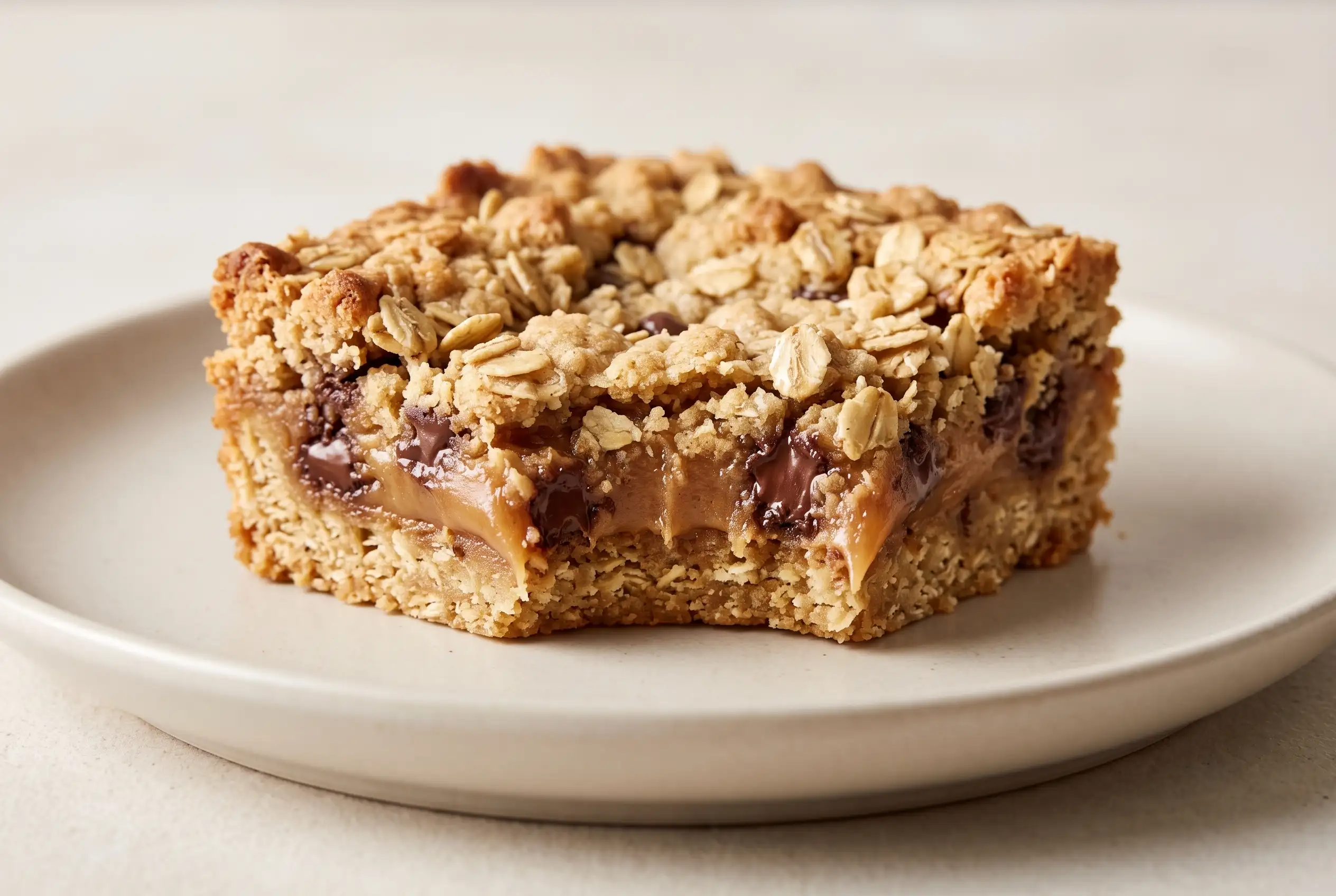
Chocolate caramel oatmeal bars bring together a buttery oat crumble, melted chocolate, and a soft caramel center in a layered dessert that balances texture and sweetness. The combination works because the sturdy oatmeal base supports a smooth filling while the chocolate chips create a rich contrast throughout each slice.
Built around simple pantry ingredients, chocolate caramel oatmeal bars rely on small preparation choices that affect the finished texture. The crumb mixture needs enough structure to hold the caramel, while the chocolate and caramel layers need careful handling so they remain distinct after baking.
Chocolate Caramel Oatmeal Bars Balance Chewy Layers and Rich Fillings
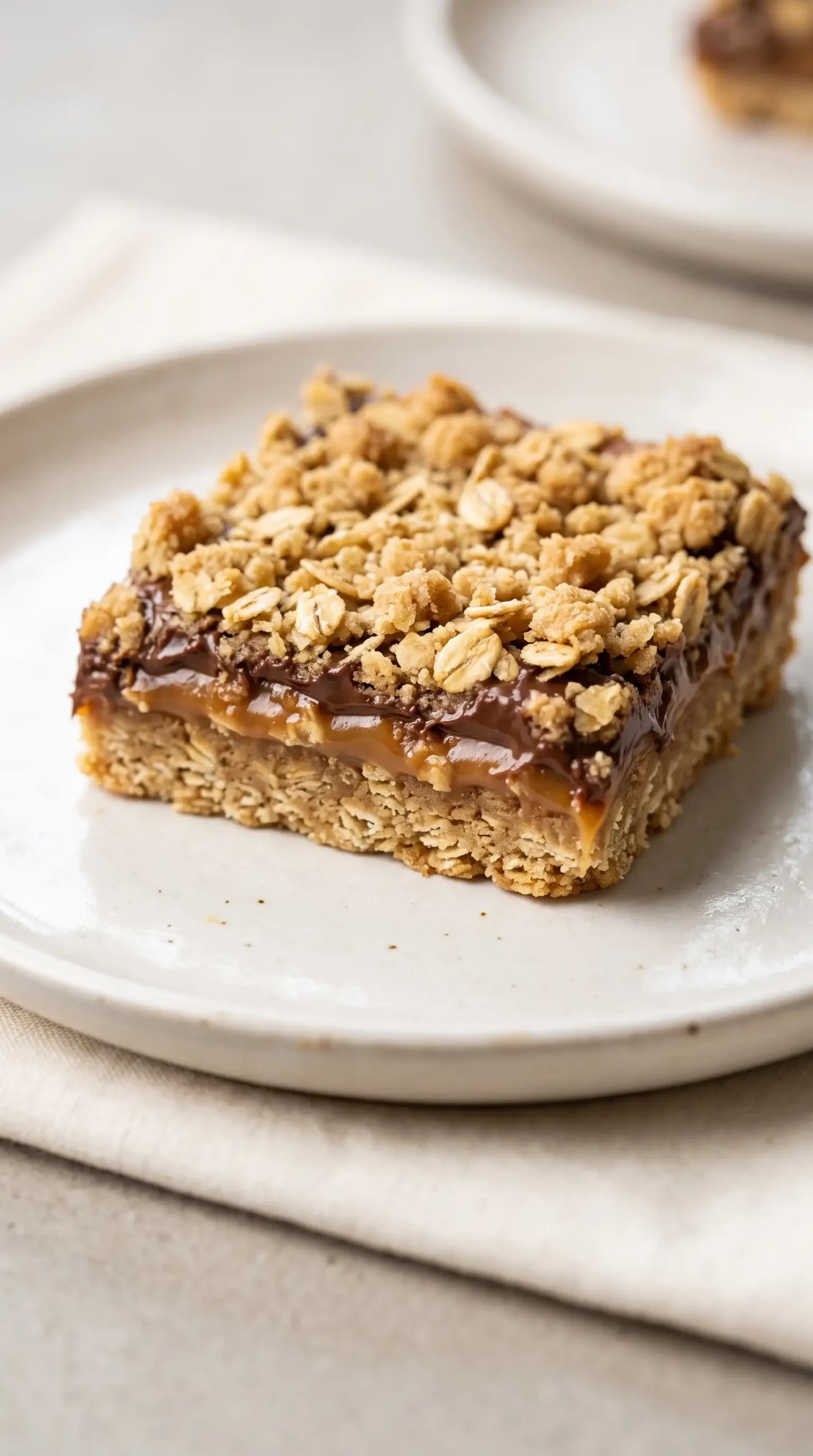
The appeal of caramel oatmeal bars comes from the contrast between the baked oat layers and the soft center. Rolled oats give the dessert a familiar texture, while the melted caramel creates a smooth section that changes the way each bite feels.
The crust mixture is designed to serve two purposes. Most of the dough forms the base, creating a firm foundation for the toppings, while the reserved portion becomes a crumbly layer that finishes the bars with a lightly textured surface.
Chocolate caramel oatmeal bars also depend on timing after baking. Allowing the caramel layer to cool helps the filling settle so the slices hold their shape when cut.
Rolled Oats Create the Structure Behind Chocolate Caramel Oatmeal Bars
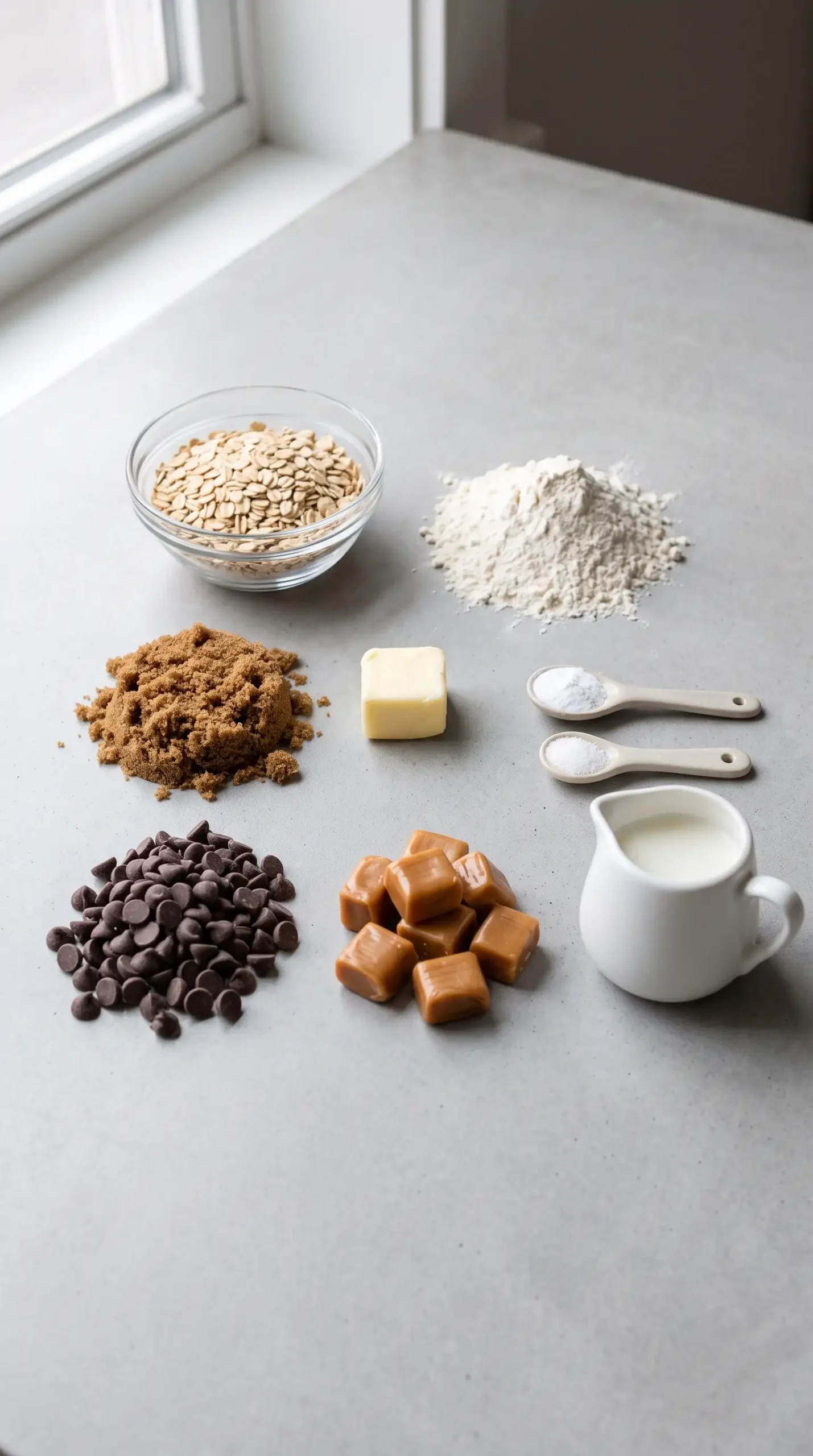
Rolled oats are one of the ingredients that gives these bars their recognizable character. Their larger flakes remain noticeable after baking and help create a contrast with the smoother chocolate and caramel layers.
The flour, oats, brown sugar, butter, baking soda, and salt form a dough that should feel slightly crumbly before pressing it into the pan. A mixture that is too wet can create a heavier base, while a properly balanced dough provides enough support for the filling.
- Rolled oats: Keep the texture hearty and help the crumb layer maintain shape.
- Brown sugar: Brings sweetness and moisture that works well with caramel.
- Salted butter: Connects the dry ingredients while adding richness to the baked layers.
Chocolate caramel oatmeal bars benefit from keeping the oat mixture recognizable instead of processing it into a fine texture. The visible oat pieces help separate this dessert from a standard cookie bar.
Caramel and Chocolate Define the Middle Layer Experience
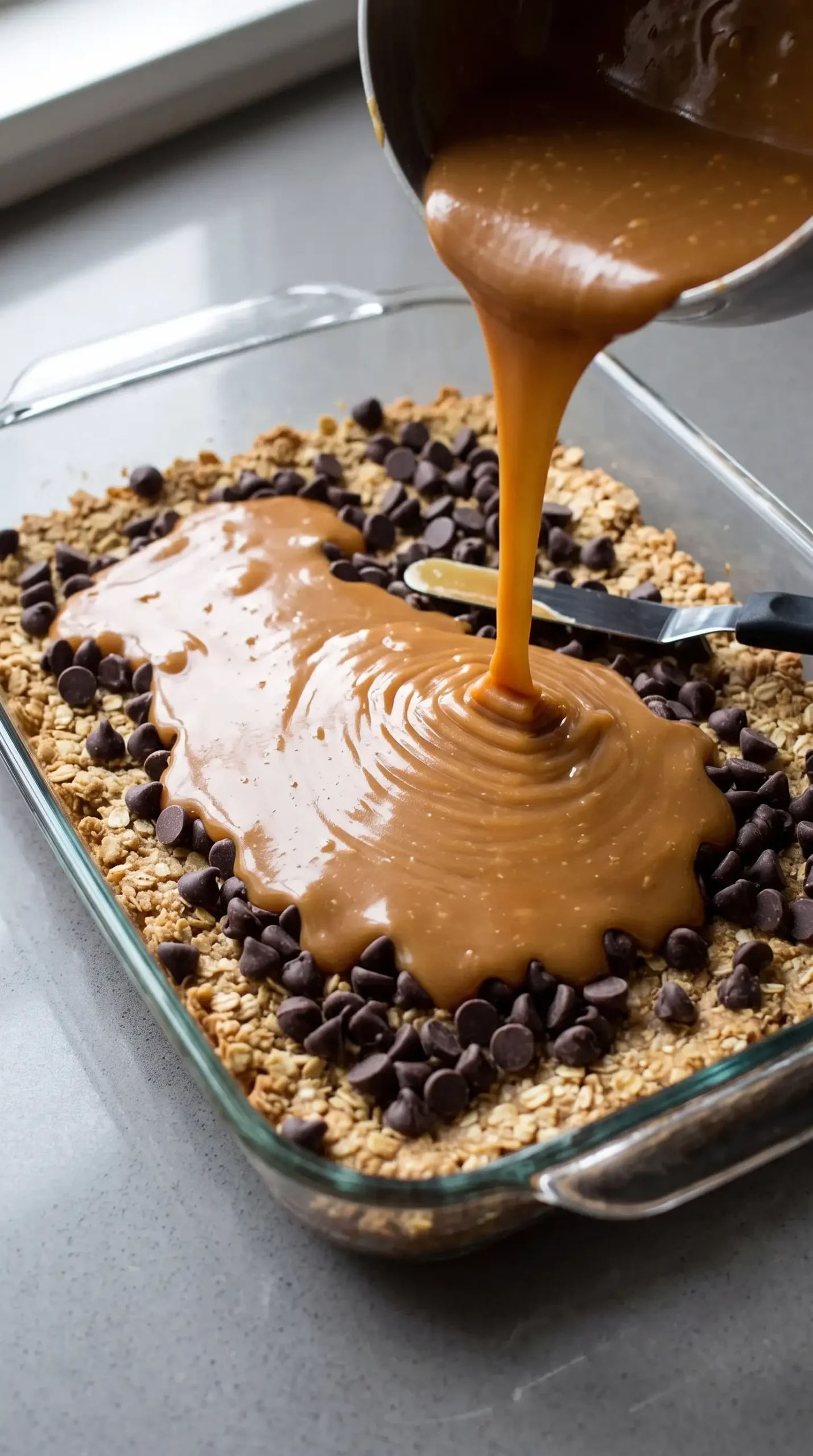
The center layer creates the signature identity of these chocolate oatmeal bars. Semisweet chocolate chips are added over the baked base, allowing the heat from the oven to soften them before the caramel mixture surrounds the chocolate.
Soft caramel candies provide a practical shortcut for creating the filling. A caramel-based filling with chocolate topping brings attention to the balance between a smooth center and rich chocolate layers, which is essential when preparing these bars.
Using cream creates a richer texture, while milk can produce a slightly lighter caramel consistency. The important detail is reaching a smooth, pourable filling before adding it to the bars.
| Layer | Main purpose | Texture contribution |
|---|---|---|
| Oat base | Supports the filling | Firm and lightly chewy |
| Chocolate chips | Adds richness | Soft melted chocolate pockets |
| Caramel center | Creates contrast | Smooth and creamy |
| Crumb topping | Finishes the surface | Tender baked texture |
Baking Control Shapes the Baked Oatmeal Caramel Bars Finish
Oven control matters because these bars contain multiple textures that need to come together. The first bake sets the crust before the chocolate and caramel layers are added, giving the base enough strength to support the filling.
The topping should become lightly golden while the caramel remains soft beneath it. Watching the surface color provides a useful visual cue because overbaking can change the texture of the crumb layer.
Cooling is also part of the cooking process. Cutting too soon can disturb the caramel layer, while waiting allows the filling to become easier to portion.
Common Chocolate Caramel Oatmeal Bars Mistakes That Affect Texture
Several small mistakes can change the balance of these bars. Most problems come from the dough consistency, caramel preparation, or cutting stage.
- Overworking the dough: Mixing excessively can make the crumb mixture less tender. Stir only until the ingredients come together.
- Skipping caramel smoothing: Lumps in the melted candy mixture can create uneven filling. Stir until the caramel is fully combined with the cream or milk.
- Cutting warm bars: The filling needs time to settle so each portion keeps its layers.
Chocolate caramel oatmeal bars are most successful when each layer keeps its intended texture. Paying attention to these details prevents a base that feels heavy or a filling that spreads too much.
Choosing the Right Ingredients for Chocolate Caramel Oatmeal Bars
The ingredients selected for this dessert work together because each one influences a different part of the finished bar. Rolled oats provide texture, semisweet chocolate chips bring depth, and soft caramel candies create the smooth center.
Semisweet chocolate is especially useful here because the caramel and brown sugar already provide sweetness. A very sweet chocolate could overpower the balance between the layers.
The butter should be melted and slightly cooled before mixing with the dry ingredients. This allows the dough to combine evenly without creating an overly warm mixture.
Serving Ideas Highlight Chocolate Oatmeal Bars at Their Best
Chocolate oatmeal bars can be served as a simple dessert after cooling, but the layered texture also makes them suitable for casual gatherings. Clean slices showcase the contrast between the oat crust, chocolate, and caramel.
Room temperature servings emphasize the soft filling, while chilled bars provide a firmer texture. The choice depends on whether a softer caramel center or a more structured bite is preferred.
Storing Caramel Oatmeal Bars Keeps Layers Ready to Enjoy
Proper storage helps preserve the relationship between the chewy oat layers and the caramel center. Keep the bars covered so the crumb topping stays protected from drying out.
Variations That Fit the Chocolate Caramel Oatmeal Bars Format
Small changes can adjust the flavor profile while keeping the same layered structure. The foundation of oats, chocolate, and caramel allows room for personal preferences without changing the core method.
- Chocolate choice: Semisweet chips can be adjusted with another chocolate style when a different sweetness level is desired.
- Caramel texture: The amount of cream or milk can influence how soft the filling feels.
- Crumb finish: A thicker topping creates more oat texture across the surface.
These adjustments should preserve the balance that makes chocolate caramel oatmeal bars recognizable. The layers work best when the filling remains distinct from the oat mixture.
Comparing Chocolate Layers and Caramel Options
The chocolate and caramel components can influence the dessert in different ways. Understanding those choices helps determine the final balance of sweetness, richness, and texture.
| Choice | Result | Best use |
|---|---|---|
| Semisweet chocolate chips | Balanced cocoa flavor | Classic layered bars |
| Milk-based caramel mixture | Softer sweetness | A lighter filling texture |
| Cream-based caramel mixture | Richer filling | A more indulgent center |
Crumb Topping Decisions Change the Bar Texture
The reserved dough portion has an important role beyond decoration. It creates a contrast against the smooth filling and helps complete the baked surface.
Keeping the topping crumbly allows small pieces to bake into a tender layer. If the mixture becomes too compact, the top can lose the texture that makes the bars distinctive.
Preparing the Pan Supports Even Chocolate Caramel Oatmeal Bars Slices
The baking dish shape affects how the layers spread and bake together. Pressing the bottom portion evenly helps create consistent slices with a similar amount of crust and filling.
Chocolate Caramel Oatmeal Bars Succeed Through Layer Control
Chocolate caramel oatmeal bars depend on the relationship between a sturdy oat base, a smooth caramel center, and a chocolate layer that softens into the dessert. Managing the texture of each part creates a finished bar that holds together while keeping the contrast that defines it.
The most important judgment comes from handling the layers with patience. A balanced dough, smooth caramel, and properly cooled finish allow every section of the dessert to contribute its own character.
Chocolate Caramel Oatmeal Bars Questions About Storage and Texture
How should chocolate caramel oatmeal bars be stored?
Store the bars covered at room temperature for short-term serving or in the refrigerator when a firmer texture is preferred. Keeping them protected helps maintain the soft caramel center and tender oat layers.
Can chocolate caramel oatmeal bars be cut before they cool completely?
Waiting until the caramel has settled makes cleaner slices possible. Cutting while the filling is still warm can cause the layers to shift and spread.
Why does the oat mixture need to stay slightly crumbly?
A slightly crumbly dough creates the right structure for the base and topping. A mixture that becomes too wet may bake into a heavier texture that does not separate the layers as clearly.
What makes the caramel filling smooth?
Melting the soft caramel candies with milk or cream and stirring until fully combined helps create a smoother filling that spreads evenly across the chocolate layer.
Can the chocolate layer be changed?
The chocolate layer can be adjusted to suit sweetness preferences, but choosing a chocolate that balances the caramel keeps the dessert from becoming overly sweet.
Chocolate Caramel Oatmeal Bars with Chocolate Chips
Ingredients
Method
- Preheat the oven to 350°F (177°C).
- Mix the flour, oats, brown sugar, baking soda, and salt together in a large bowl.
- Add the melted, slightly cooled butter to the dry mixture and stir until a soft dough forms with a slightly crumbly texture. If the dough is too wet and heavy, add a little more flour.
- Press 3/4 of the dough evenly into a 9×13 baking dish and set aside the remaining 1/4 for the topping.
- Bake the crust for about 13 minutes, until the surface is barely golden brown.
- While the crust bakes, unwrap the caramel candies and melt them with the milk or cream in the microwave. Stir until the caramel mixture is smooth and pourable.
- Sprinkle the chocolate chips over the baked crust, then pour the melted caramel mixture over the chocolate.
- Crumble the reserved dough over the top, adding a little more flour if needed to make it crumbly enough.
- Bake the assembled bars for another 15-20 minutes, until the topping is golden brown.
- Let the bars stand for several hours until the caramel has cooled before serving.