
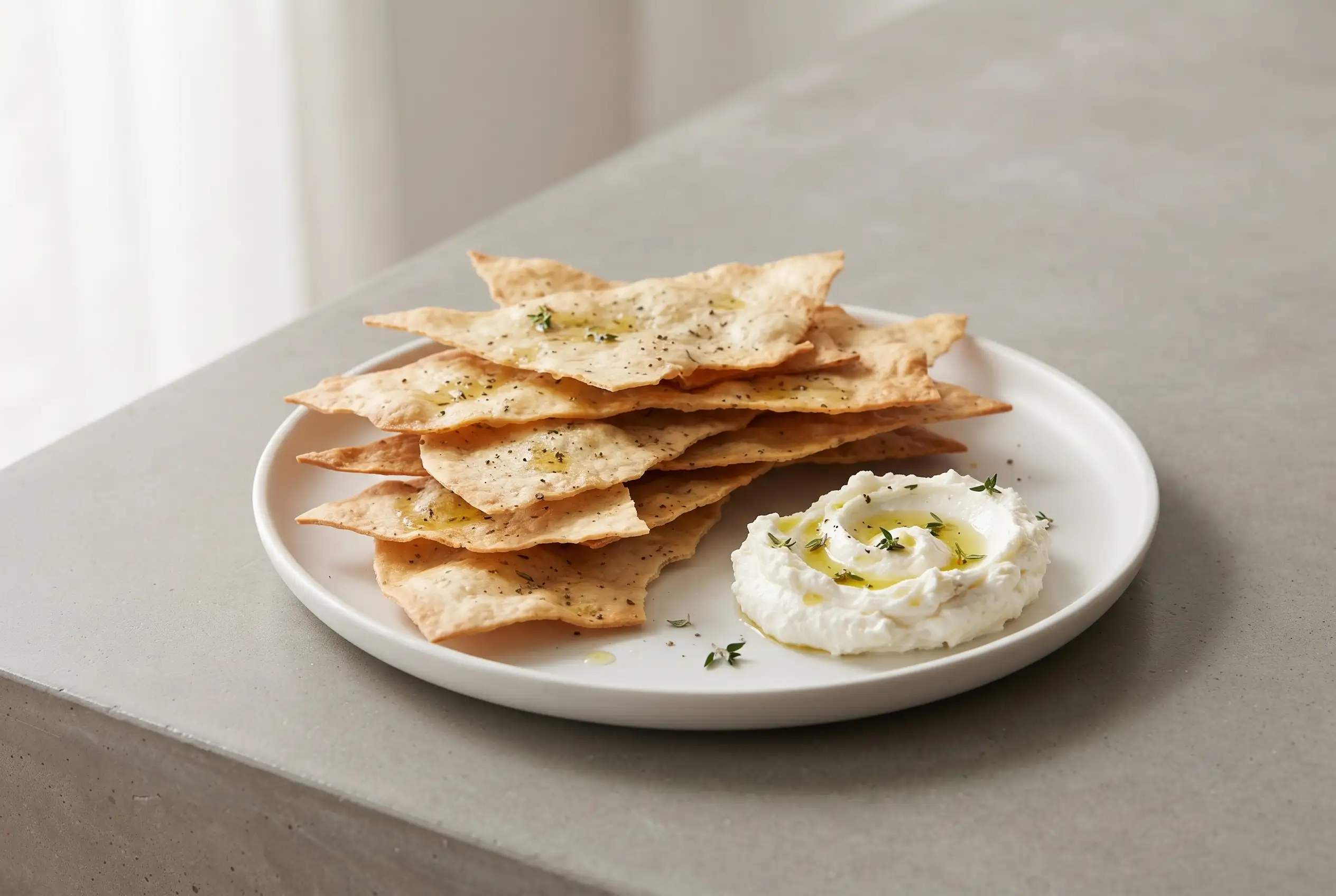
homemade flatbread crackers bring together a thin, crisp texture with fresh herbs, pepper, and olive oil in a snack that transforms a simple dough into a flavorful accompaniment. The combination works because the dough is rolled extremely thin, baked briefly, and dried slowly in the warm oven so each piece develops a delicate crunch. These homemade herb crackers fit naturally beside creamy spreads, cheeses, and casual drinks while keeping the focus on a few carefully balanced ingredients.
Simple techniques make these crackers distinct from thicker breads or baked snacks. The thin shape allows the seasoning to reach every bite, while the food processor helps distribute the herbs and spices evenly through the flour. Attention to rolling, resting, and drying creates the texture that defines a successful batch.
Thin Dough Defines Homemade Flatbread Crackers
Thin sheets create the signature character of flatbread crackers because the dough needs enough surface area to become crisp throughout. Rolling each portion as thin as possible changes the way heat moves through the dough, helping the crackers dry evenly while maintaining a light bite.
Careful handling during shaping matters because the dough is intentionally simple. A gentle touch keeps the texture pleasant, while overworking the dough can make the rolling process more difficult. When the dough begins pulling back after rolling, a short pause gives the gluten time to relax and makes it easier to continue creating a thin sheet.
Balanced seasoning stays important because these crackers have a large amount of exposed surface. Pepper, herbs, and salt are spread throughout the dough before baking, creating flavor in every broken piece instead of relying on a topping added afterward.
Finished pieces become especially appealing when they are dry enough to snap cleanly. The extended resting period in the turned-off oven removes remaining moisture and helps create the crisp texture expected from baked flatbread crackers with herbs.
Flour and Herbs Shape the Cracker Character
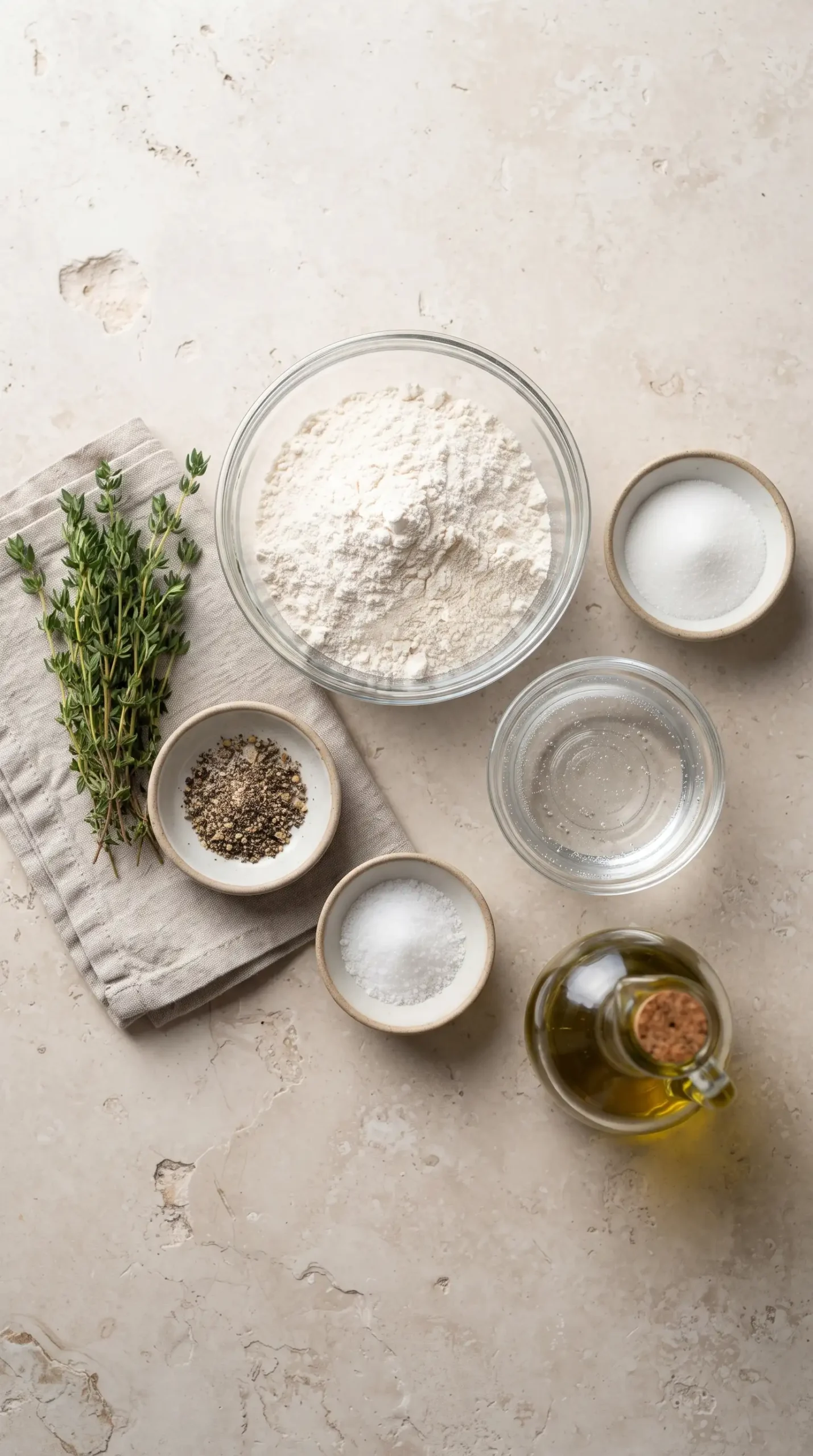
All-purpose flour provides the flexible base needed for a dough that can be rolled extremely thin, while fresh herbs create the aromatic quality that separates these crackers from plain baked dough. Thyme is one suitable choice, but other fresh herbs can change the flavor direction without changing the basic structure.
Food Processor Mixing Builds Even Texture
Uniform blending begins when the dry ingredients and olive oil are combined before water enters the mixture. The food processor distributes the herbs, pepper, salt, and sugar through the flour so seasoning does not collect in isolated areas.
Adding cold water at the right stage affects how the dough comes together. The mixture only needs enough processing for the ingredients to begin forming a cohesive dough, which keeps the texture manageable for shaping and rolling.
Kitchen equipment can influence the experience of preparing these crackers. A food processor reduces the effort needed to combine the ingredients evenly, but the dough still benefits from gentle hand shaping after it leaves the machine. Pressing the dough together creates a single workable piece without unnecessary handling.
Small dough portions improve control during rolling because each piece can be stretched thin individually. Dividing the dough also makes it easier to focus on consistent thickness, which directly affects how evenly the crackers bake.
Rolling Thickness Controls Flatbread Cracker Crispness
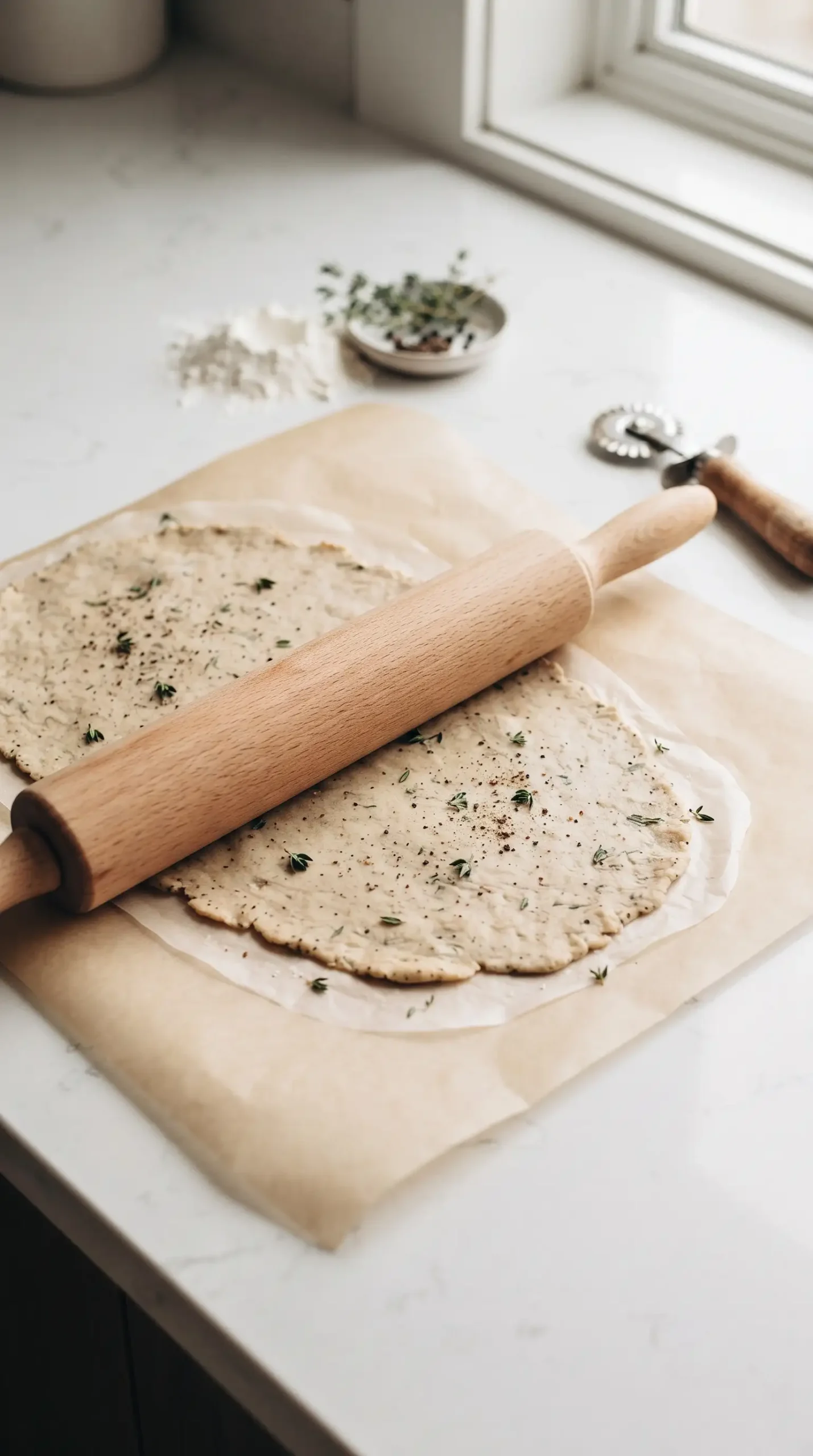
Extreme thinness is the main visual cue when preparing these crackers. The rolled dough should become very thin before it reaches the baking sheet because thicker areas may remain softer while thinner edges become crisp.
Rolling pressure changes the finished texture, so patience during shaping is valuable. If the dough resists spreading, allowing it to rest before continuing helps it relax naturally and reduces the tendency to spring back.
Parchment paper provides a practical surface for transferring the thin dough to the baking sheet. Once the dough is positioned, it can bake without needing extra flour during transfer, which helps preserve the intended texture.
| Rolling result | Likely texture | Helpful adjustment |
|---|---|---|
| Very thin sheet | Light and crisp | Continue careful rolling until the dough is evenly thin |
| Uneven thickness | Mixed crisp and softer areas | Spend extra time smoothing thicker sections |
| Dough pulling back | Harder shaping process | Let the dough rest before rolling again |
Visible consistency across the rolled pieces helps the entire batch finish at a similar texture. Thin, even dough is the clearest indicator that the crackers are ready for baking.
Oven Drying Creates the Signature Snap
Baking starts the crisping process, but the slow drying stage inside the turned-off oven completes the texture. This gentle finish allows moisture to escape gradually so the crackers become firm without relying on a longer high-heat bake.
Resting Time Prevents Dough Resistance
Short resting periods give the dough a chance to become easier to shape. When the rolled dough begins shrinking, another pause can help restore flexibility and make it possible to reach the thin texture needed for crisp crackers.
Avoid These Homemade Flatbread Crackers Mistakes
Common mistakes with homemade flatbread crackers usually come from changing the texture balance established by the thin dough and careful baking process. Recognizing the signs early makes it easier to correct the issue before serving.
- Thick rolling: Leaves some sections less crisp because the dough has more moisture to release.
- Excess handling: Makes shaping more difficult when the dough is already ready to form.
- Skipping drying: Prevents the crackers from reaching their intended brittle texture.
- Overbrowning: Can overpower the herbs and pepper with a darker baked flavor.
Overbaked edges are one visible warning sign during the first baking stage. Checking periodically and flipping the cracker pieces helps maintain a balanced color while allowing both sides to dry.
Uneven pieces can also create different textures in one batch. Taking time to roll consistently and divide the dough carefully improves the chance that each cracker reaches a similar level of crispness.
Fresh Herbs Create Distinct Flatbread Cracker Profiles
Herb selection gives these crackers room for variation while keeping the same basic dough structure. Fresh thyme creates the specific flavor described here, but cooks can choose other herbs that complement the serving style they prefer.
| Herb direction | Flavor impression | Serving match |
|---|---|---|
| Thyme | Earthy and aromatic | Creamy cheese spreads |
| Other fresh herbs | Different herbal character | Flexible snack pairings |
| More black pepper | Sharper spice notes | Bold savory accompaniments |
Storage Keeps Homemade Herb Crackers Ready
Crisp crackers are best protected from moisture after they cool. Keeping them in a dry, covered container helps preserve the texture created during baking and drying.
Serving Pairings Highlight the Finished Crackers
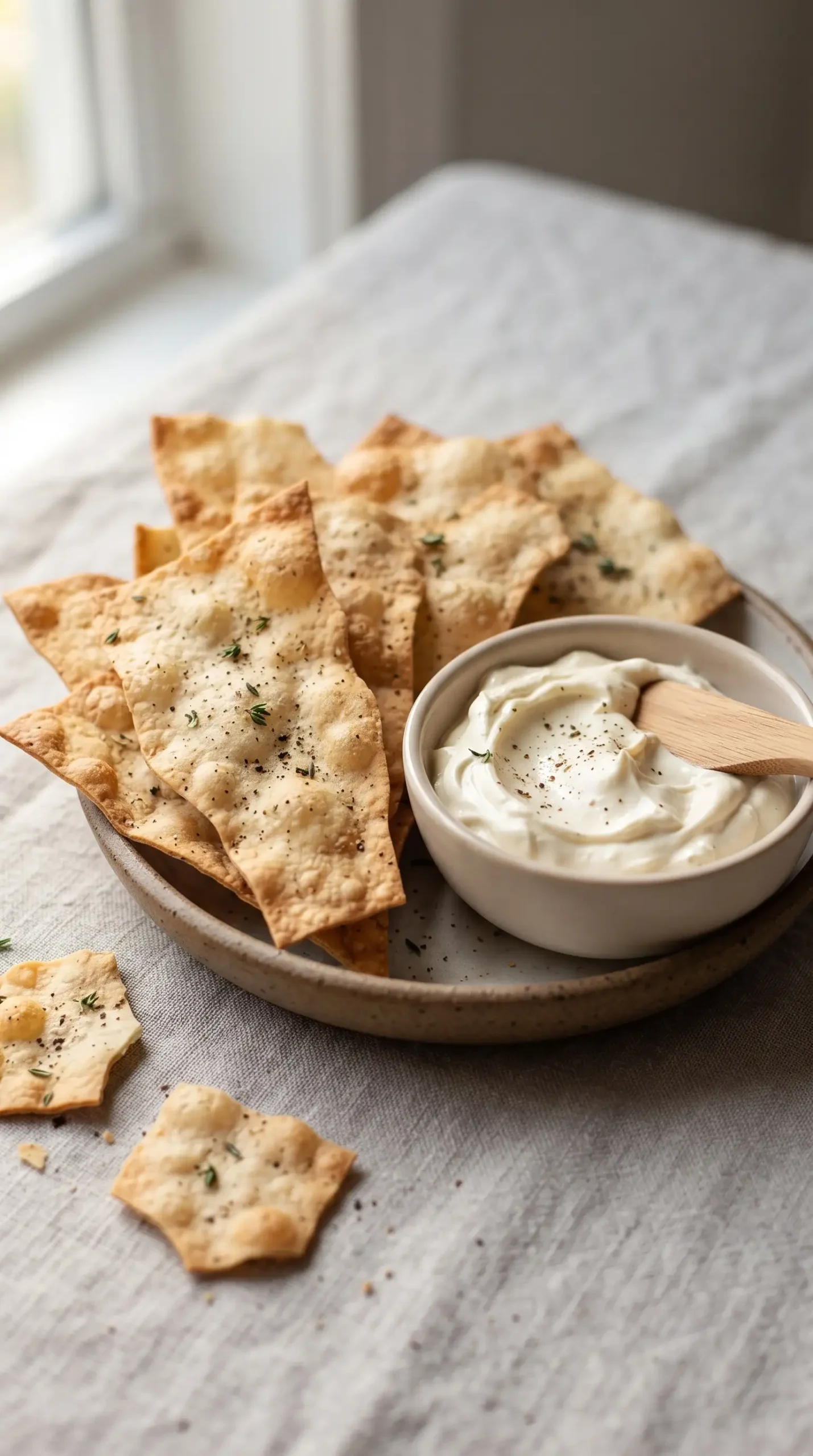
Cheese spreads make a natural partner for these crackers because the crisp texture contrasts with creamy toppings. A creamy basil dip adds fresh herb flavor and a smooth texture that complements the pepper, olive oil, and baked dough. Alouette Le Bon Dip or Le Petite Fromage provides another simple serving option that matches the savory herbs and pepper.
Ultra-Thin Dough Gives Homemade Flatbread Crackers Their Crisp Texture
Thin dough creates the defining result of homemade flatbread crackers by allowing herbs, pepper, and olive oil to remain present in every crisp piece. The combination of careful rolling and gradual drying determines whether the finished snack has the delicate texture that makes it especially enjoyable.
Successful preparation depends on observing the dough instead of rushing the process. A flexible dough, an even thin shape, and a patient drying stage work together to create crackers that hold their character alongside flavorful spreads and simple snack pairings.
Homemade Flatbread Crackers Questions About Crispness and Storage
How do I keep crackers crisp?
Store cooled crackers away from moisture in a covered container. Humidity can soften the texture, so keeping the pieces dry protects the crisp finish created during baking and drying.
Why does my dough shrink after rolling?
Dough that pulls back is showing resistance during shaping. Allowing it to rest before continuing gives the dough time to relax so it can be rolled thinner with less effort.
Can I use different fresh herbs?
Yes, fresh herbs can be changed to create a different flavor profile while keeping the same dough approach. Choose herbs that suit the spread or cheese served alongside the crackers.
How thin should flatbread cracker dough be?
The dough should be rolled as thin as possible because thickness directly affects crispness. More even, thinner sheets are more likely to bake into consistently crunchy pieces.
Why are my crackers not crunchy?
Crackers that lack crunch may still contain too much moisture. The drying stage in the turned-off oven is important because it continues removing moisture after the initial bake.
Homemade Flatbread Crackers with Fresh Herbs and Olive Oil
Ingredients
Method
- Preheat the oven to 450°F/232°C. Add flour, fresh herbs, black pepper, salt, sugar, and olive oil to a food processor and pulse until the ingredients are evenly combined.
- Pour in the cold water and pulse for about 10 seconds, just until the dough begins to come together. Transfer the dough to a work surface, gently press it into one ball, divide it into four pieces, and allow the dough to rest for about 10 minutes.
- Roll each dough portion as thin as possible. If the dough pulls back while rolling, let it rest a little longer before continuing.
- Place each thinly rolled dough piece on parchment paper and transfer to a baking sheet.
- Bake for 4-5 minutes, checking periodically to prevent excessive browning. Flip each cracker piece and bake for another 4-5 minutes.
- Turn off the oven and leave the crackers inside for 1-2 hours to dry further and become crisp.
- Break the crackers into pieces and serve with cheese dip or soft cheese spread.