
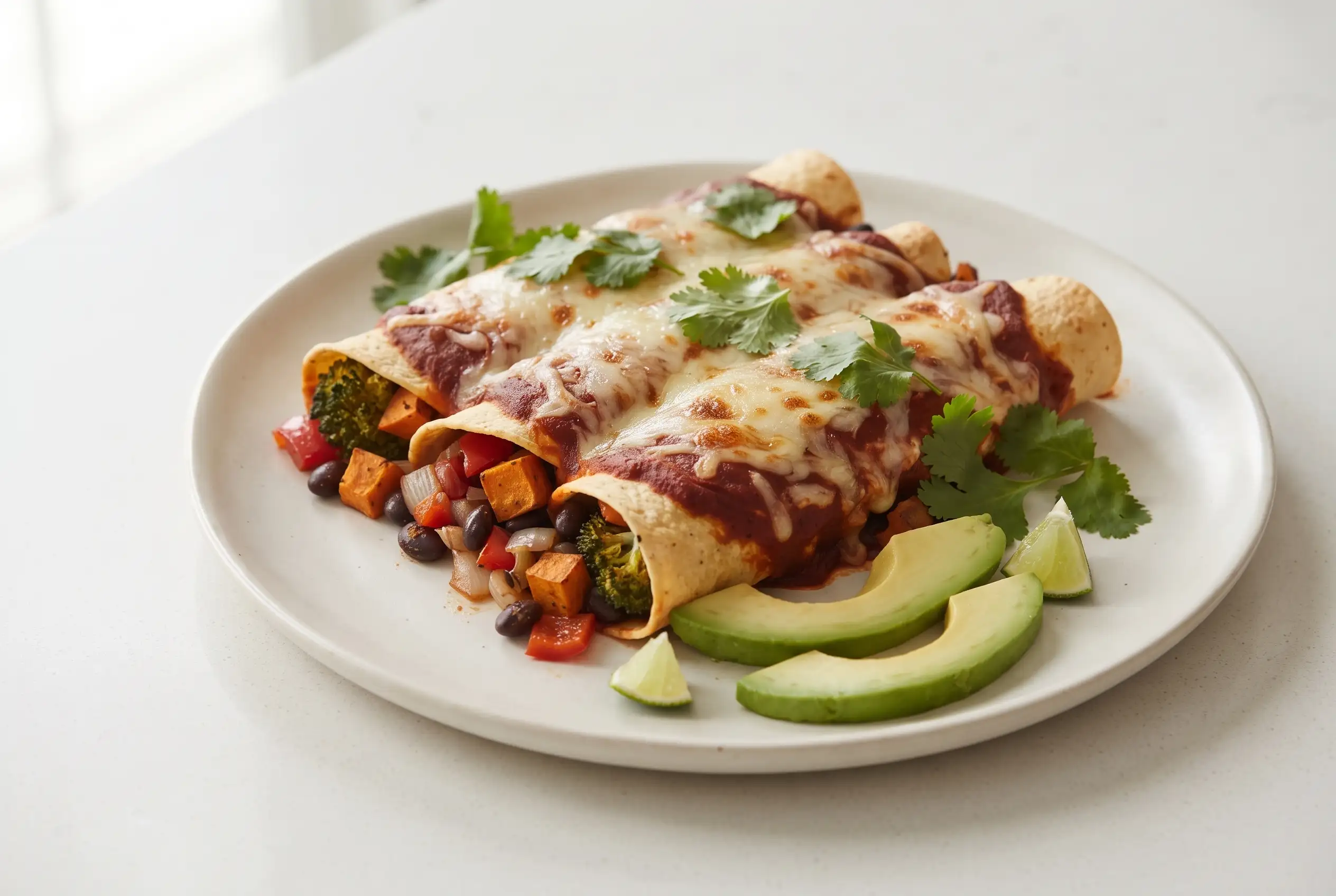
Veggie enchiladas bring roasted vegetables, black beans, melted cheese, and flavorful sauce together in a comforting baked meal that works for weeknight dinners and relaxed gatherings. The combination of sweet potato, broccoli, bell pepper, onion, corn tortillas, and enchilada sauce creates a filling that feels hearty while keeping the focus on colorful vegetables.
These easy veggie enchiladas recipe ideas start with one important choice: building flavor before the tortillas are filled. Roasting the vegetables develops their natural sweetness and creates a chunky texture that holds up when combined with beans, cheese, and sauce. The result is a pan of enchiladas with layers of texture in every serving.
Roasted vegetables shape veggie enchiladas filling
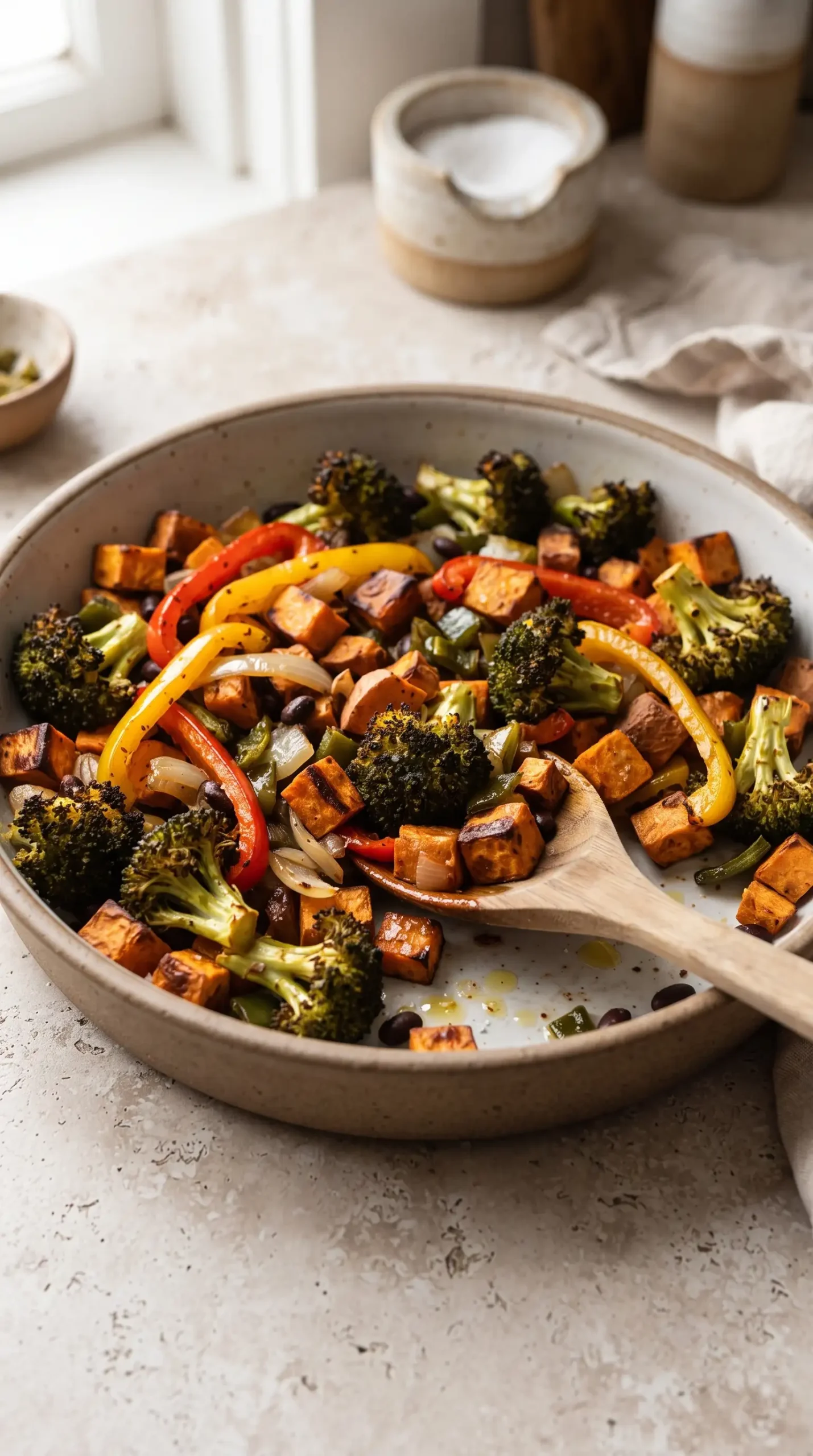
Roasted vegetables are the defining feature of veggie enchiladas because the filling depends on a balance of texture and flavor. Broccoli, sweet potato, bell pepper, and onion each respond differently to oven heat, creating a mixture that is more interesting than a single soft vegetable base.
Sweet potato brings a creamy bite after roasting, while broccoli provides structure and small browned edges. Bell pepper and onion contribute moisture and a savory sweetness that helps connect the vegetables with the enchilada sauce.
Combining the roasted vegetables with black beans, cheese, and sauce creates a chunky filling instead of a smooth mixture. A gentle mash helps some pieces blend together while leaving enough texture for each bite.
- Sweet potato: Adds a substantial roasted element that helps make the filling satisfying.
- Broccoli florets: Provide vegetable texture and smaller pieces that distribute throughout the tortillas.
- Peppers and onion: Bring color and savory flavor after roasting.
Corn tortillas carry the enchilada structure
Corn tortillas provide the classic base for these enchiladas, creating a soft wrapper for the roasted vegetable filling. Spreading sauce beneath the tortillas helps keep the bottom layer connected to the rest of the dish.
Black beans balance roasted vegetable enchiladas
Black beans add another layer of texture and make the filling more substantial alongside the roasted vegetables. Their creamy interior works well with the chunkier pieces of broccoli, sweet potato, and pepper, while black bean tacos with cilantro lime sauce showcase how seasoned beans can create a satisfying centerpiece in a vegetarian meal.
Rinsed and drained beans are ready to combine with the vegetables without adding extra liquid to the filling. This helps the tortillas hold their shape once assembled and baked.
| Filling element | Texture contribution | Role in the enchiladas |
|---|---|---|
| Roasted sweet potato | Soft and hearty | Creates a satisfying vegetable base |
| Black beans | Creamy and firm | Adds balance to roasted vegetables |
| Quesadilla cheese | Melted and rich | Connects the filling with the sauce |
Roasting control keeps the filling ready for baking
The oven-roasted vegetables need enough color and tenderness to blend into the filling without becoming difficult to handle. Cutting the vegetables into manageable pieces helps them cook evenly on the sheet pan.
Spacing and seasoning decisions affect the finished texture. Vegetables coated with olive oil and salt can develop browned edges while still maintaining enough structure to roll into tortillas later.
Once roasted, the vegetables should be cool enough to combine comfortably with the beans, cheese, and sauce. The filling works best when it stays thick and scoopable instead of becoming loose.
Easy veggie enchiladas assembly choices prevent cracks
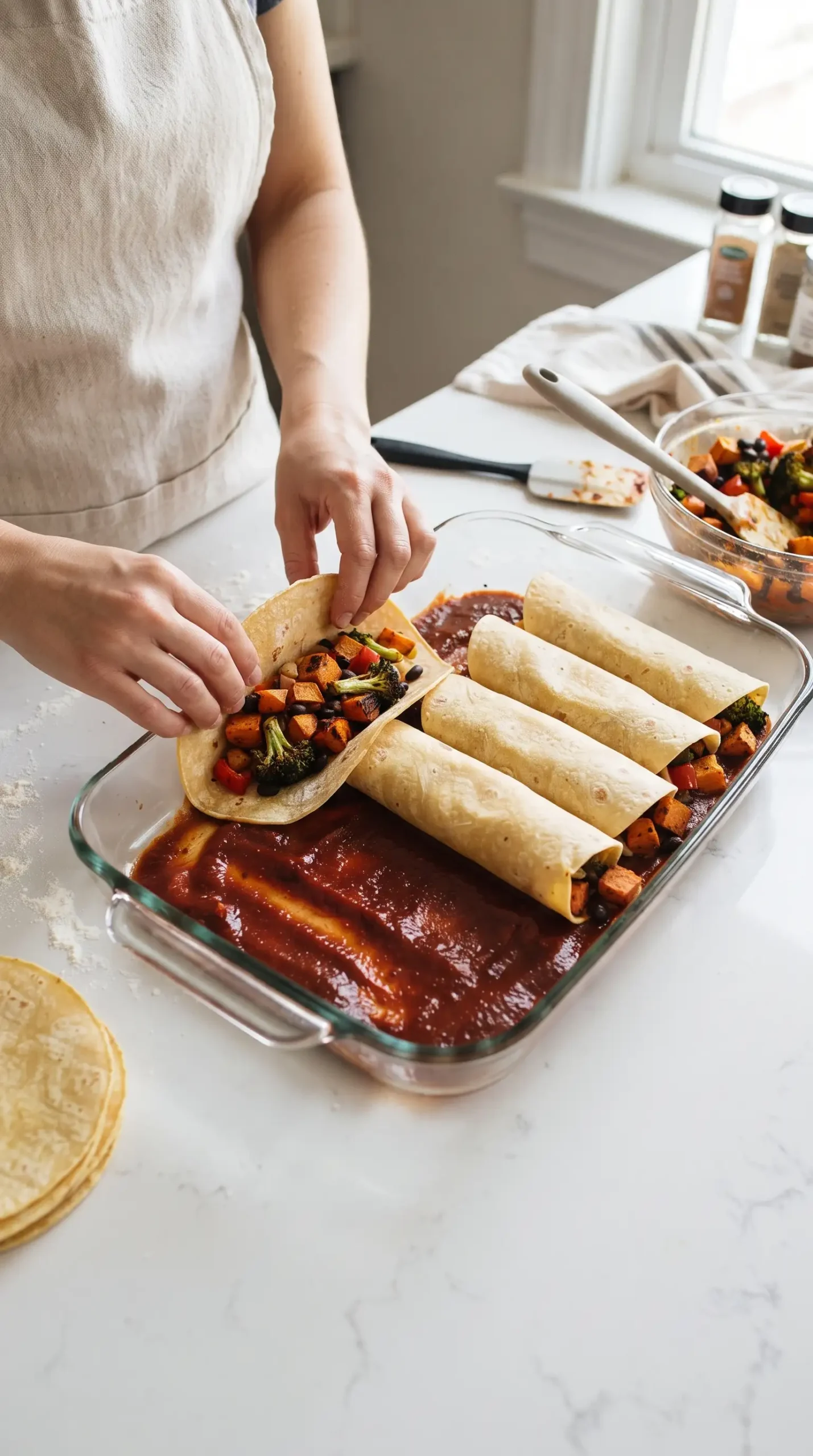
Building enchiladas is easier when the filling, tortillas, and sauce are prepared for the same purpose. The tortillas need enough flexibility to wrap around the filling, while the sauce provides moisture throughout baking.
A small amount of sauce in the bottom of the baking dish creates a base before the rolled tortillas are added. Keeping the filled tortillas seam-side down helps them stay closed while they bake.
Covering the assembled enchiladas with additional sauce and cheese creates the melted topping that ties the dish together. The covered bake allows the ingredients to heat through while the cheese becomes bubbly.
- Prepare the base: Add sauce to the baking dish before arranging filled tortillas.
- Place carefully: Keep each tortilla seam-side down after rolling.
- Finish the top: Add remaining sauce and cheese before baking.
Common mistakes in veggie enchiladas that cause soggy results
Veggie enchiladas can lose their texture when the filling or sauce balance changes. Paying attention to a few common issues helps keep the finished dish sturdy and flavorful.
- Overly wet filling: Extra moisture can make tortillas difficult to handle, so keep the roasted vegetable mixture chunky and well combined.
- Skipping vegetable roasting: Using the vegetables without roasting removes the concentrated flavor and texture created in the oven.
- Uneven filling amounts: Too much filling can make tortillas harder to roll, while too little leaves the dish less satisfying.
Another common problem comes from treating the vegetables and beans as separate layers instead of creating one cohesive filling. Combining them with cheese and sauce before rolling helps distribute flavors throughout the pan.
Sauce coverage changes the finished enchilada texture
Enchilada sauce serves more than a topping role because it helps bring moisture and flavor to the tortillas during baking. A layer underneath and a coating over the top create a consistent saucy texture.
Serving ideas highlight black bean veggie enchiladas
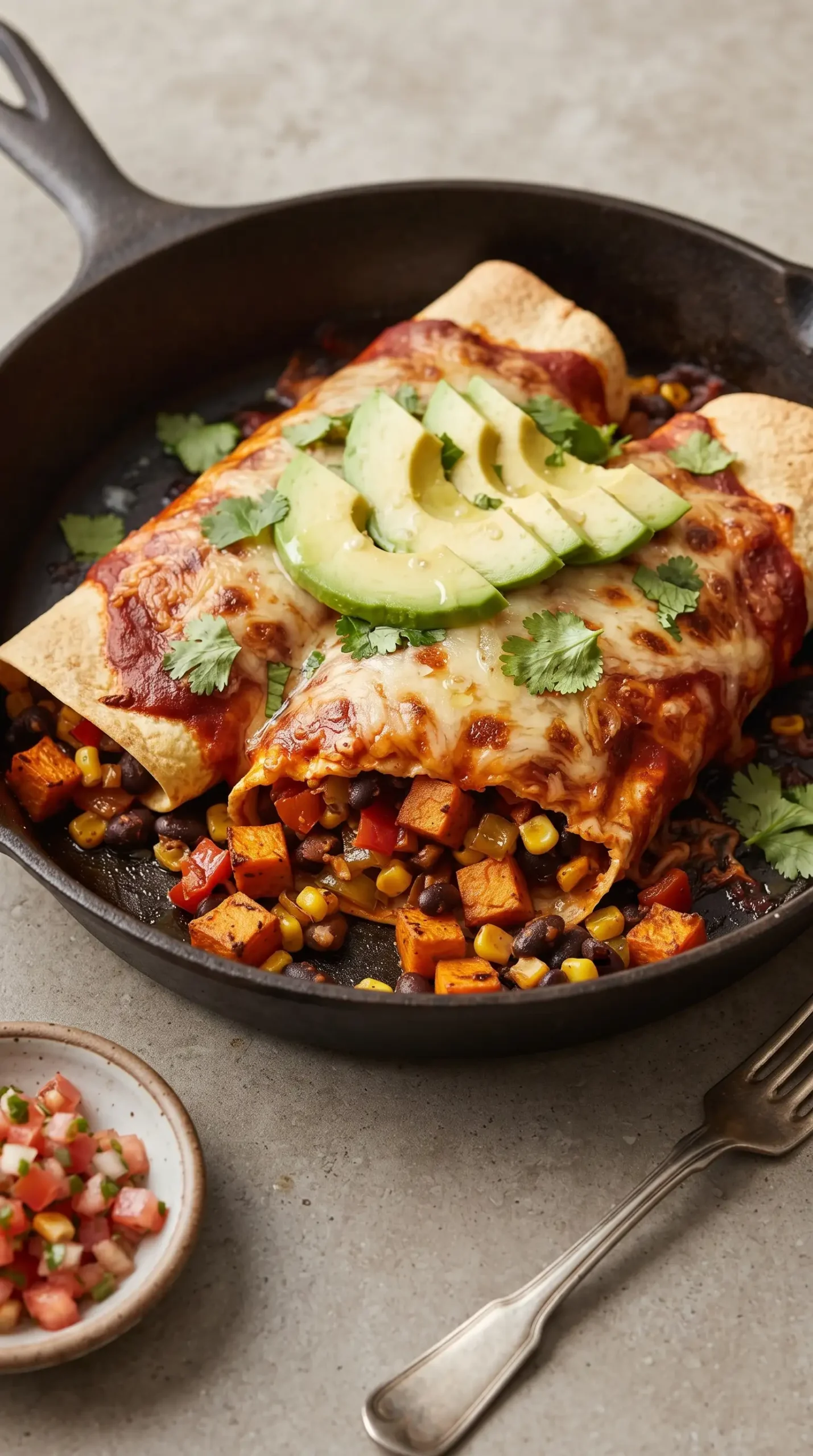
Fresh toppings create contrast with the warm baked enchiladas. Avocado slices, cilantro, and lime add brightness after the dish comes out of the oven.
Serving accompaniments can be kept simple because the filling already combines vegetables, beans, cheese, and sauce. Fresh toppings provide a lighter finish that complements the richer baked ingredients.
Additional garnishes should support the flavors already present instead of covering them. A squeeze of lime can add a fresh note, while cilantro reinforces the vegetable-forward character of the meal.
Storage and reheating keep leftovers enjoyable
Leftover veggie enchiladas can be kept as a convenient meal option when stored properly. Reheating works best when the dish is warmed gradually so the tortillas, filling, sauce, and cheese heat together.
For safe storage, cooked enchiladas should be refrigerated within two hours and kept chilled until they are ready to be reheated and served again.
Veggie enchiladas succeed when filling stays balanced
The roasted vegetables, black beans, cheese, and sauce create the strongest version of veggie enchiladas when each part keeps its own texture while working together. Roasting builds the foundation, and careful assembly protects that balance through baking.
A well-balanced filling makes the difference between a pan of separate ingredients and a cohesive enchilada dish. The combination of roasted vegetables and beans gives every tortilla a satisfying center that pairs naturally with sauce and fresh toppings.
Veggie enchiladas questions about filling and baking
Can veggie enchiladas be made with different roasted vegetables?
Yes, the filling approach can work with other vegetables that roast well, as long as the mixture remains chunky enough to roll into tortillas and does not become overly watery.
How do I keep corn tortillas from breaking during assembly?
Handle the tortillas gently and make sure the filling is easy to spread before rolling. A balanced amount of sauce and filling helps the tortillas stay flexible in the finished dish.
Can I make the filling less chunky?
The filling can be mashed more if you prefer a softer texture, but keeping some vegetable pieces intact preserves the contrast between the roasted ingredients and beans.
What makes the roasted vegetable flavor stand out?
Roasting the broccoli, sweet potato, bell pepper, and onion before combining them with the other filling ingredients concentrates their flavors and creates a deeper taste in the baked enchiladas.
Veggie Enchiladas with Roasted Vegetables and Black Beans
Ingredients
Method
- Preheat the oven to 425°F (218°C). Spread the broccoli, sweet potato, bell pepper, and onion on a large sheet pan, then toss with the olive oil and salt.
- Roast the vegetables for 25-30 minutes.
- Transfer the roasted vegetables to a large bowl. Add the black beans, 1 cup quesadilla cheese, and 1 cup enchilada sauce.
- Stir and gently mash the mixture until it forms a chunky filling.
- Spread some enchilada sauce over the bottom of a 9×13-inch pan.
- Divide the filling among the tortillas, roll them up, and arrange them seam-side down in the pan.
- Cover the enchiladas with the remaining sauce and cheese.
- Cover the pan with foil and bake for 15-20 minutes, until the enchiladas are hot and bubbling.
- Serve with avocado slices, cilantro, and a squeeze of lime.