
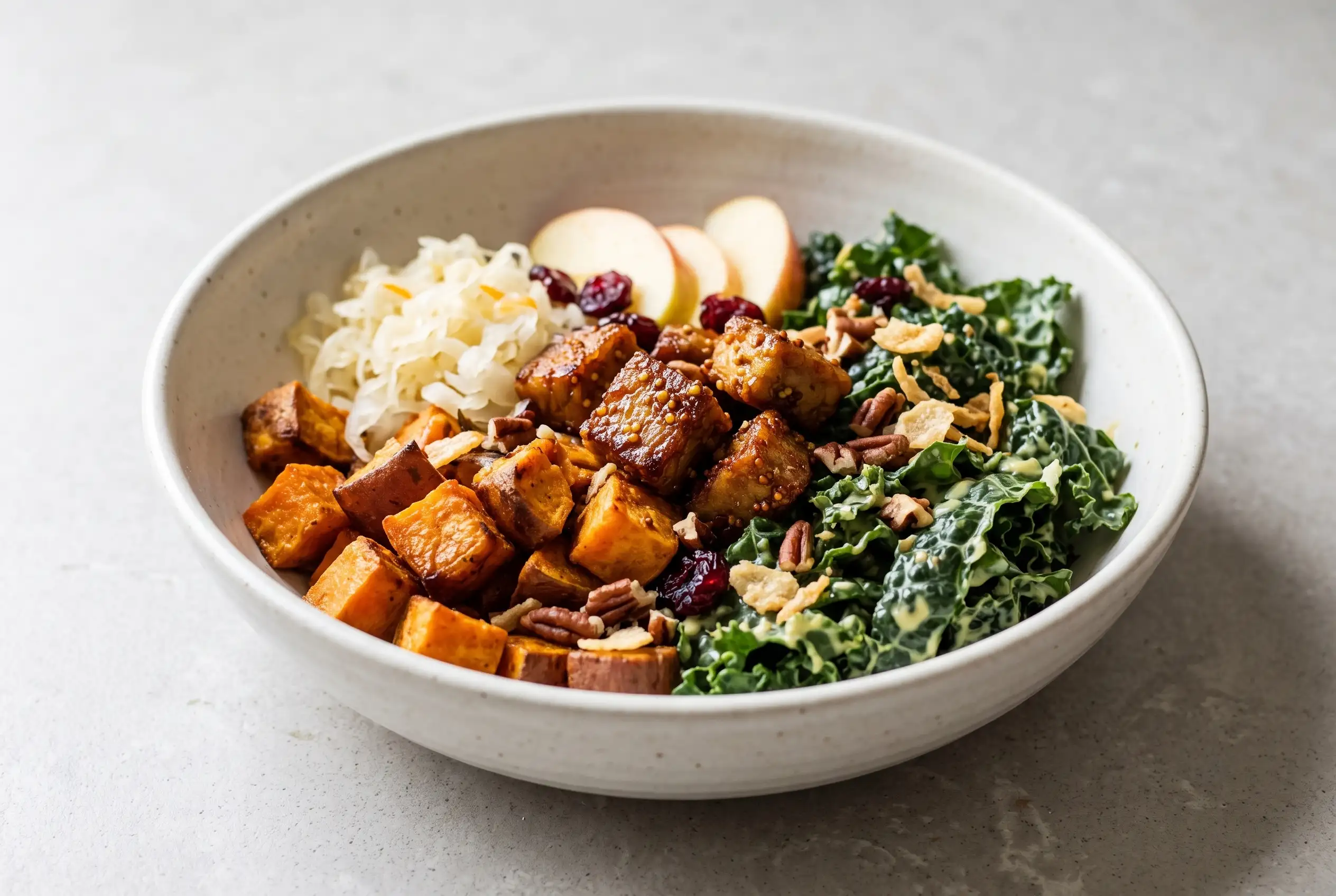
Maple mustard tempeh bowls bring together sweet roasted vegetables, savory plant-based protein, and a bright tangy dressing in a fall meal that feels hearty without becoming heavy. These maple mustard tempeh bowls use the contrast between caramelized sweet potatoes, crisp-edged tempeh, creamy avocado, and sharp sauerkraut to create a bowl with layers of flavor in every bite.
The combination works because each part has a clear purpose. Maple syrup softens the bold flavor of stone ground mustard, while roasted tempeh absorbs the glaze and develops deeper savory notes. The result is a flexible meal that fits weeknight dinners, meal preparation, or a seasonal lunch.
Why Maple Mustard Tempeh Bowls Work for Fall Meals
Cool-weather cooking often leans toward rich textures and warming flavors, and these bowls deliver that feeling through roasting instead of relying on heavy sauces. Sweet potatoes bring natural sweetness, tempeh provides a substantial bite, and kale adds a fresh contrast that keeps the bowl lively.
The maple mustard combination is especially effective because it balances several flavor directions at once. The sweetness rounds out the mustard’s sharpness, soy sauce adds depth, and olive oil helps the mixture coat the tempeh and vegetables evenly. That balance makes the maple mustard tempeh recipe feel complete without needing a long list of seasonings.
Many roasted tempeh bowls can be adapted with toppings, and this version welcomes seasonal additions. Quinoa, crispy onions, pecans, apples, and dried cranberries can each shift the personality of the bowl while keeping the central roasted, savory-sweet character intact.
Maple Mustard Glaze Shapes the Roasted Tempeh
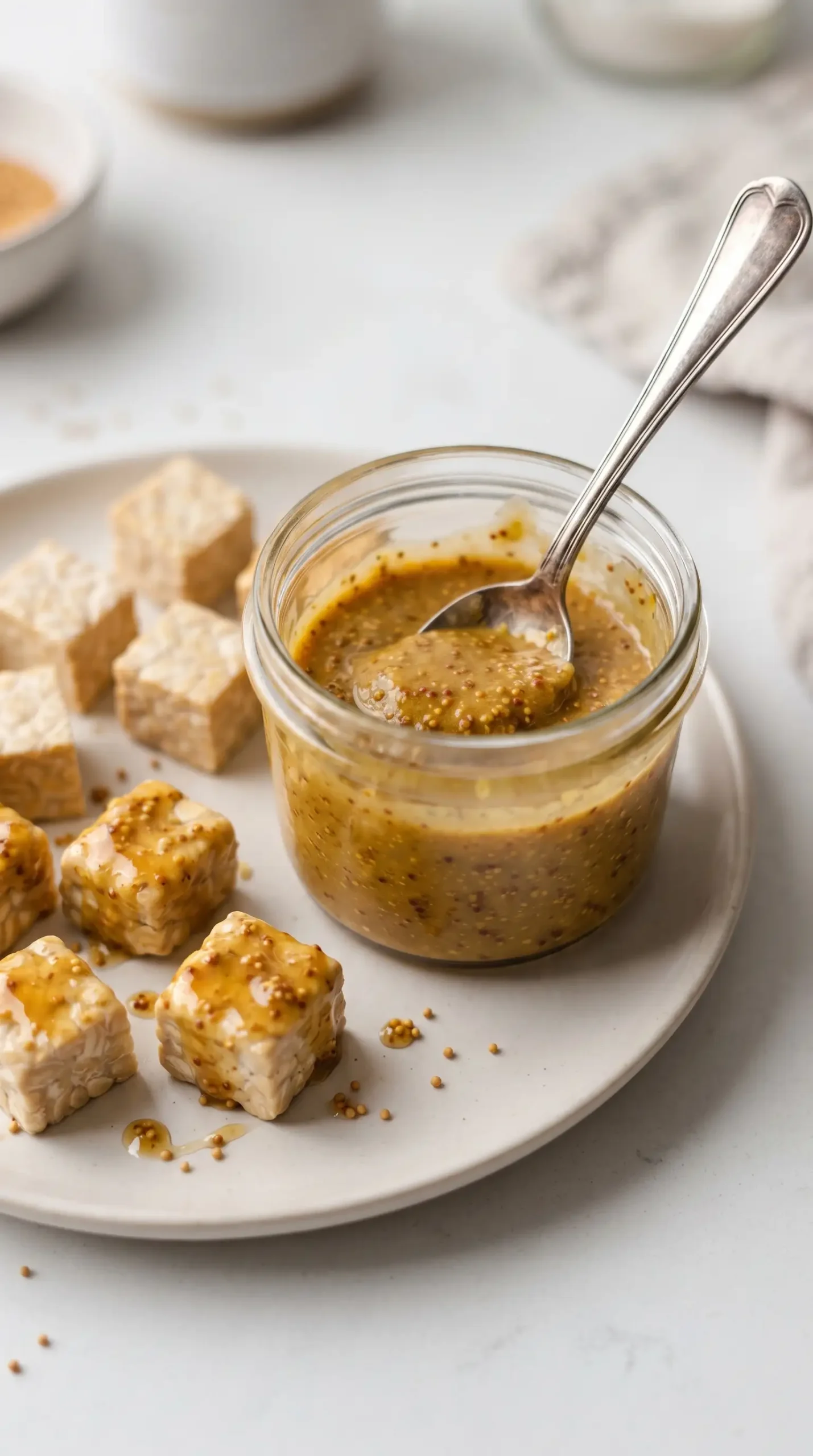
The dressing is more than a finishing sauce because it works in stages throughout the cooking process. Using part of the maple mustard mixture to marinate the tempeh gives the cubes time to absorb flavor, while adding more after roasting refreshes the glaze and keeps the finished bites juicy and bold.
Sweet Potato and Kale Choices Change the Bowl Balance
Sweet potatoes are the foundation that gives these sweet potato tempeh bowls their autumn character. Cutting them into evenly sized pieces helps them roast at the same pace as the tempeh, creating browned edges that complement the softer centers.
Kale brings a different kind of texture. Instead of serving it as a raw pile of greens, massaging it with avocado and leftover dressing softens the leaves and helps them blend into the rest of the bowl. The creamy avocado creates a simple coating that ties the ingredients together.
Sauerkraut adds a sharp, fermented contrast that prevents the bowl from becoming one-note. The tangy topping works especially well alongside maple and roasted flavors, giving each forkful a mix of sweet, savory, creamy, and bright elements.
Building a More Satisfying Tempeh Bowl Texture
Texture is what makes these bowls memorable. A successful serving combines browned tempeh, tender roasted sweet potato, silky avocado-coated kale, and a crisp or tangy topping so every component contributes something different.
The Ingredient Decisions Behind Maple Mustard Tempeh Bowls
Choosing ingredients with complementary roles makes a noticeable difference in the finished bowl. Tempeh has a naturally firm texture that holds up well during roasting, allowing it to carry the maple mustard coating without disappearing among the vegetables.
Tempeh is a fermented soybean food with a firm structure that makes it especially useful for roasting, slicing, or cubing into bowls like this one.
| Component | Texture contribution | Flavor role |
|---|---|---|
| Tempeh | Firm roasted bite | Savory base for the glaze |
| Sweet potato | Soft interior with browned edges | Natural sweetness |
| Kale and avocado | Tender, creamy greens | Freshness and richness |
| Sauerkraut | Crunchy, juicy contrast | Tangy finish |
Stone ground mustard deserves attention because its texture and flavor define the dressing. Its bold character is softened by maple syrup, creating a sauce that feels familiar but more layered than a simple sweet topping.
Additional toppings should support the existing balance. Pecans add crunch, apples emphasize the fall theme, and dried cranberries reinforce the sweet-tart profile. Adding Quinoa salads with apples and walnuts as a grain component can make the bowl more filling while keeping the seasonal flavors connected to the roasted ingredients.
Roasting Control Keeps Maple Mustard Tempeh Bowls Balanced
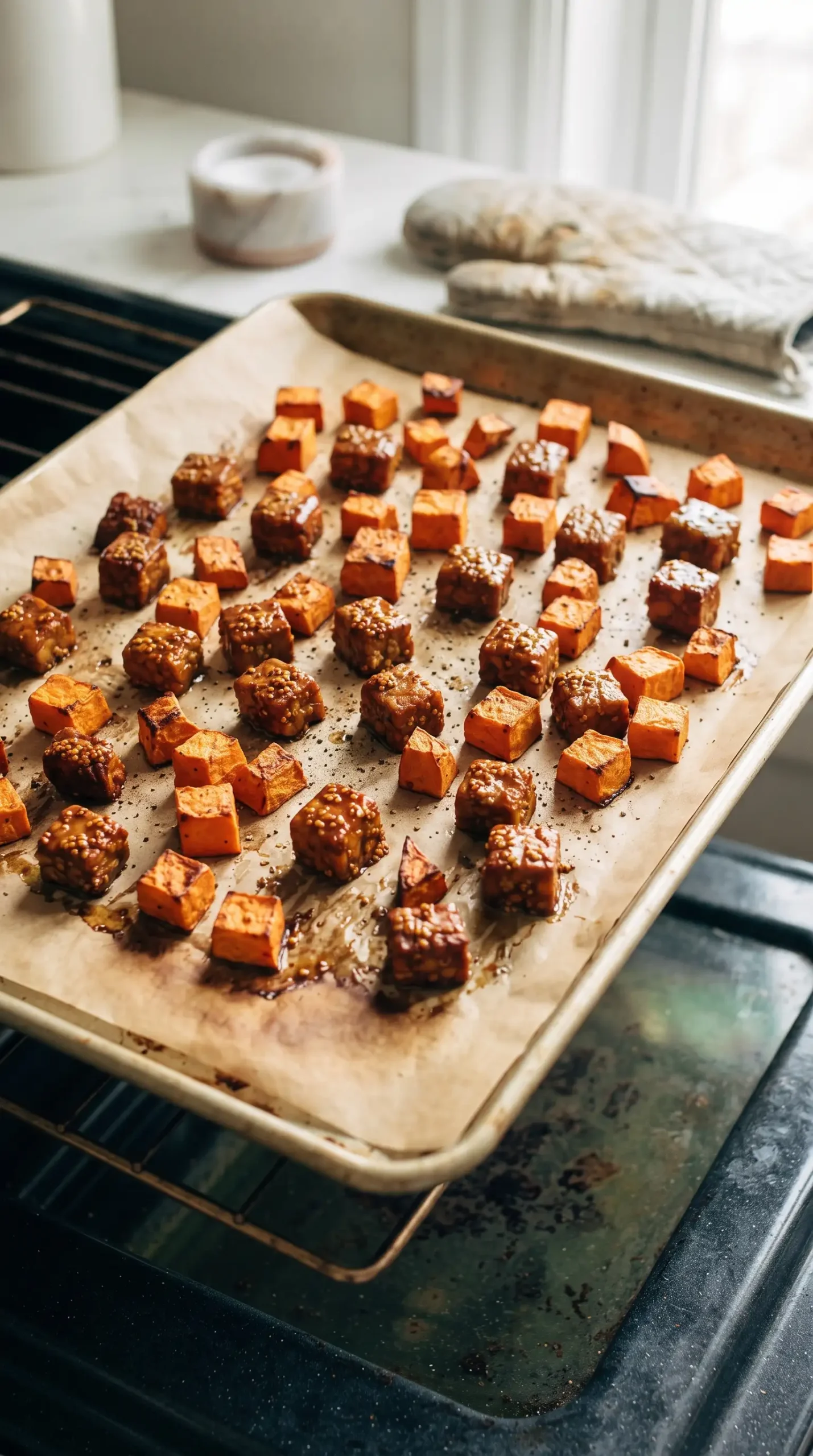
The oven stage is where the main flavor development happens. A hot roasting environment helps the tempeh and sweet potatoes develop browned surfaces, which adds depth to the maple mustard coating.
Spacing matters during roasting because crowded ingredients release moisture that can slow browning. Keeping the tempeh and sweet potatoes arranged in a way that allows heat circulation helps maintain the contrast between caramelized edges and tender centers.
Small adjustments during roasting can change the final texture. Watching for visible browning and checking the tenderness of the sweet potatoes gives better results than relying only on appearance, since different ovens and cuts can behave differently.
Mistakes That Can Flatten Maple Mustard Tempeh Bowls
Common problems with maple mustard tempeh bowls usually come from losing the contrast that makes the dish work. Avoid leaving the tempeh under-coated, because the roasted pieces rely on the glaze for their signature flavor; avoid skipping the kale massage, because the greens need the avocado and dressing to become tender; and avoid adding every topping at once, since too many extras can hide the maple mustard balance. Keeping the focus on a few strong textures creates a cleaner, more satisfying bowl.
Ways to Customize the Fall Bowl Without Losing Its Shape
Customization works best when additions keep the sweet, savory, and tangy balance intact. Try one or two extra toppings at a time so the roasted tempeh, sweet potato, and kale remain easy to taste.
- Crunch additions: Use pecans or crispy onions for contrast against the roasted ingredients.
- Fruit accents: Add apples or dried cranberries for a brighter seasonal note.
- Grain options: Spoon in quinoa when a grain base fits the meal.
Serving Ideas for Roasted Tempeh Bowls
Roasted tempeh bowls are naturally suited to flexible serving styles. They can be assembled in one large bowl for sharing or divided into individual portions with toppings arranged separately for different preferences.
The maple mustard dressing also makes the bowl easy to refresh after preparation. A small extra drizzle before serving can bring back the bold flavor of the roasted tempeh and vegetables, especially when the ingredients have been chilled.
For a seasonal spread, pair the bowls with simple sides that echo their flavors. A crisp salad with apples, a handful of toasted nuts, or a light vegetable dish can complement the warmth of the roasted components without competing with them.
Storing Components for Better Next-Day Bowls
Keeping the roasted ingredients, greens, and toppings separate when possible helps preserve their individual textures. Warmed tempeh and sweet potatoes can be combined with freshly prepared kale and toppings when serving again.
Pairings That Highlight the Maple Mustard Tempeh Recipe
The maple mustard tempeh recipe fits naturally with ingredients that share either its autumn sweetness or its savory depth. Apples, cranberries, and pecans emphasize the seasonal side, while quinoa and extra greens create a more substantial meal.
A simple approach is to choose additions based on the texture missing from the bowl. If the serving needs more crunch, nuts or crispy onions help. If it needs more brightness, fruit or a tangy topping can bring balance.
- Start with the base: Keep roasted tempeh and sweet potatoes as the anchor.
- Choose one contrast: Add something crisp, creamy, or tangy.
- Finish with flavor: Use a little extra dressing or a seasonal topping.
The best pairings leave room for the maple mustard flavor to remain recognizable. Supporting ingredients should enhance the bowl’s personality instead of turning it into a collection of unrelated toppings.
Extra Details That Make Sweet Potato Tempeh Bowls Memorable
Small preparation choices create the biggest improvements. Saving some dressing for the roasted tempeh after it comes from the oven, using the marinating bowl for the kale, and balancing rich toppings with tangy sauerkraut all help the finished bowl feel intentional.
Roasted Tempeh and Sweet Potatoes Create a Complete Fall Bowl
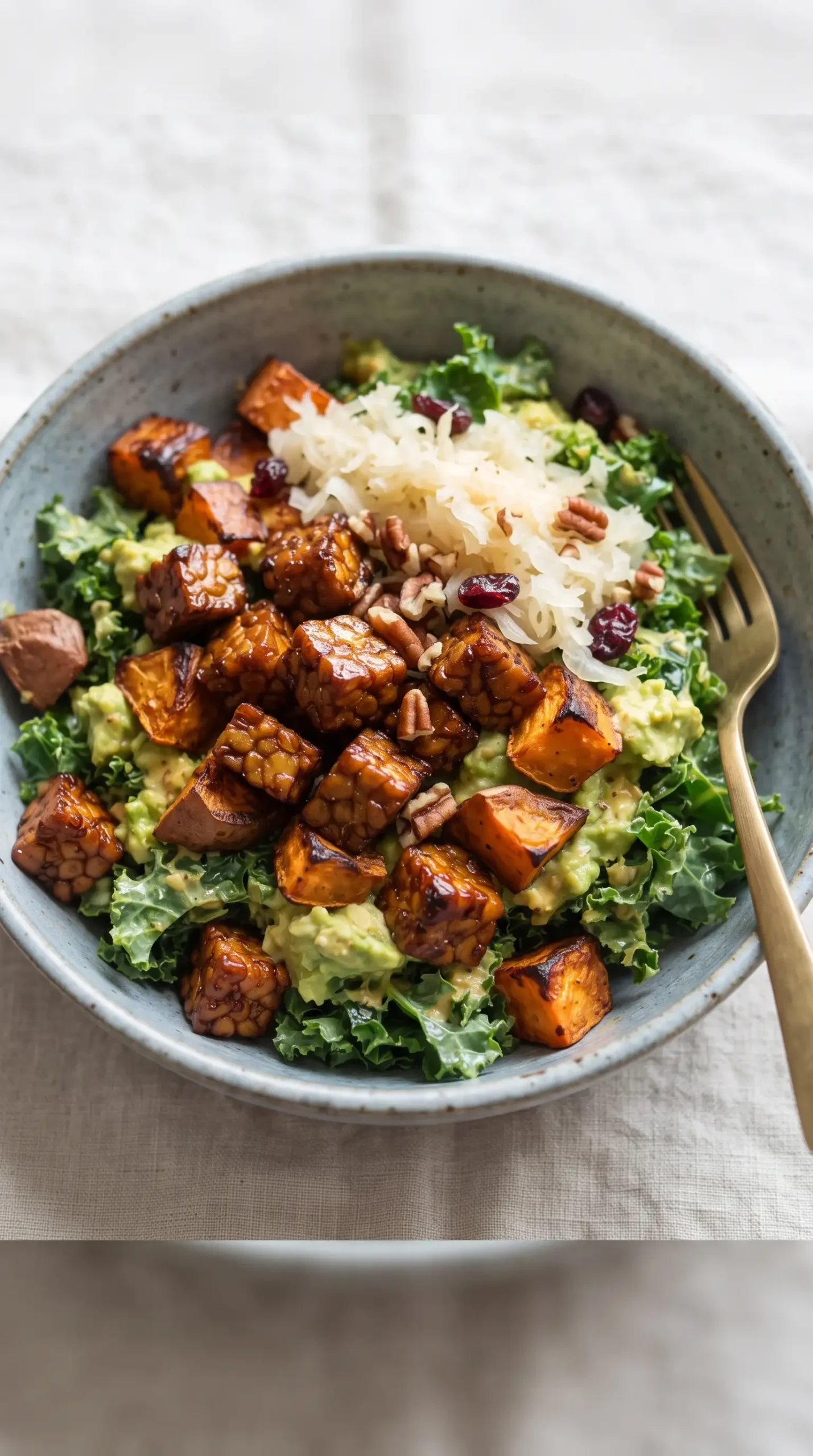
Roasted tempeh and sweet potatoes create the core experience of maple mustard tempeh bowls by combining caramelized flavor with satisfying texture. The glaze, tender greens, avocado, and sauerkraut each support that foundation, turning a simple collection of ingredients into a balanced seasonal meal.
The strongest results come from protecting the contrasts: browned tempeh against creamy avocado, sweet vegetables against tangy sauerkraut, and a bold mustard dressing softened with maple. Those choices keep every part of the bowl recognizable while allowing the flavors to work together.
Questions About Maple Mustard Tempeh Bowls and Common Concerns
Can maple mustard tempeh bowls be made with a different protein?
Yes, the maple mustard flavor works well with other hearty plant-based proteins, but the cooking approach may need adjustment. Tempeh is especially suited because it stays firm during roasting and absorbs the glaze effectively.
How can I make the roasted tempeh more flavorful?
Allowing the tempeh to sit with the maple mustard mixture before roasting gives the flavor more time to develop. Adding a little extra dressing after roasting also helps coat the warm pieces with fresh flavor.
What toppings pair best with sweet potato tempeh bowls?
Pecans, apples, dried cranberries, quinoa, and crispy onions are strong options because they add either crunch, sweetness, or extra substance without overpowering the main ingredients.
Can I prepare the maple mustard dressing ahead of time?
The dressing can be prepared in advance and kept ready for assembling bowls. Having extra dressing available is useful when you want to refresh leftovers or add more flavor at serving time.
Why massage kale for these bowls?
Massaging kale helps soften its texture and allows the avocado and dressing to coat the leaves more evenly. The result is a greener component that blends smoothly with the roasted tempeh and sweet potatoes.
Maple Mustard Tempeh Bowls with Roasted Sweet Potatoes
Ingredients
Method
- Preheat the oven to 425°F (220°C). Combine the maple syrup, mustard, soy sauce, and olive oil in a jar and shake until blended.
- Coat the tempeh with about half of the dressing and allow it to marinate for about 30 minutes, or while the oven preheats.
- Arrange the marinated tempeh with its marinade on one side of a baking sheet and place the sweet potatoes on the other side. Drizzle the sweet potatoes with oil, season with salt, and roast for 25-30 minutes.
- Once the tempeh and sweet potatoes are browned and roasted, coat the tempeh with additional dressing.
- Add the kale to the bowl used for the marinated tempeh. Massage the kale with additional dressing and the avocado until the leaves soften and become lightly coated.
- Combine the roasted tempeh, sweet potatoes, kale, sauerkraut, and any desired toppings or add-ins in a large bowl before serving.