
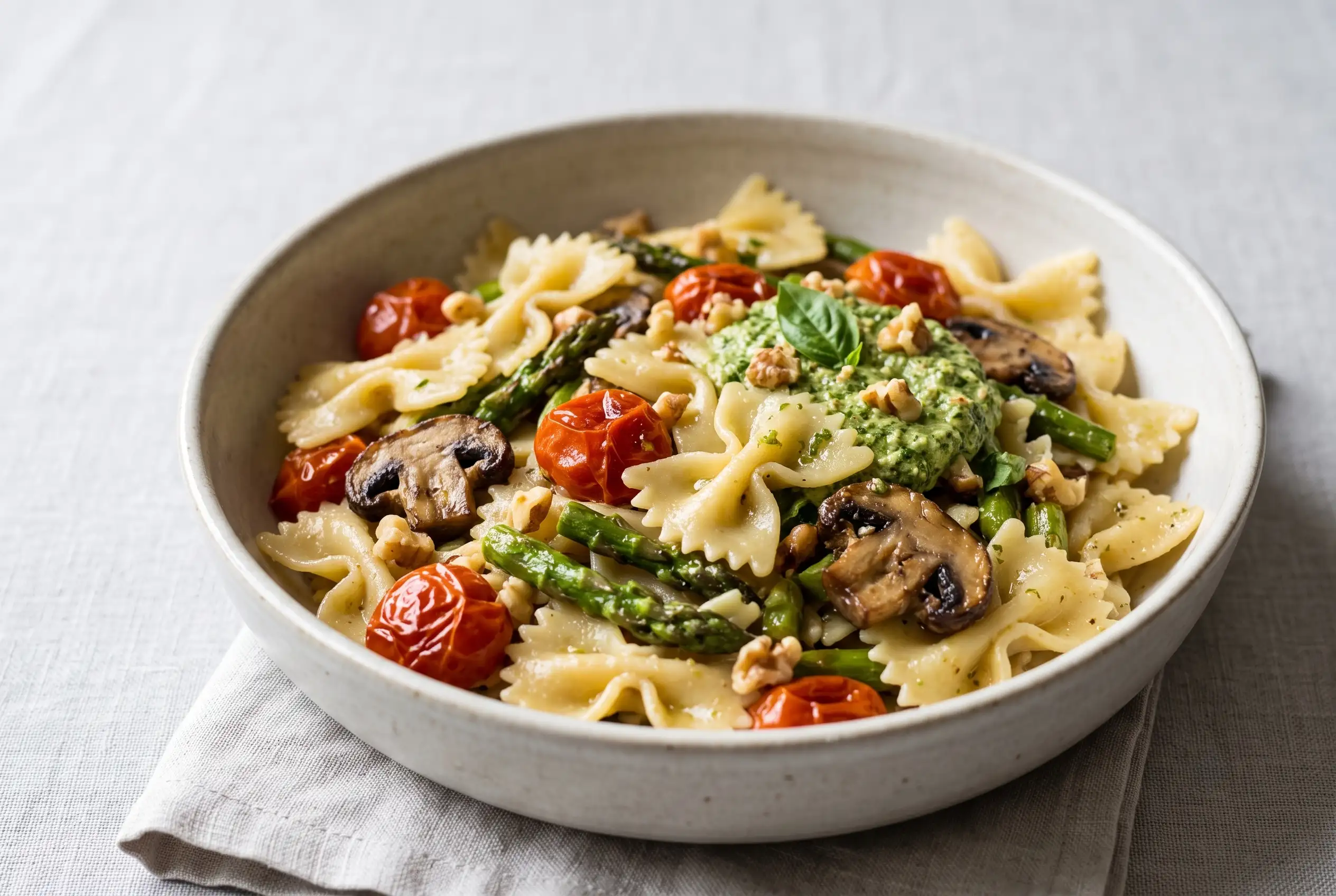
Farmers market pasta brings roasted vegetables and walnut pesto together
Farmers market pasta turns a collection of seasonal vegetables, tender noodles, and bright walnut pesto into a flexible meal built around fresh produce. The combination works because roasted vegetables develop deeper flavors while the pesto adds a fresh, nutty finish that keeps every bite lively.
Unlike heavier pasta dishes that depend on a rich sauce covering every element, farmers market pasta lets the vegetables remain visible and important. Roasting creates caramelized edges, while roasted garlic blends into the noodles to create a savory base that connects the pasta and produce.
Walnut pesto pasta adds a fresh finish
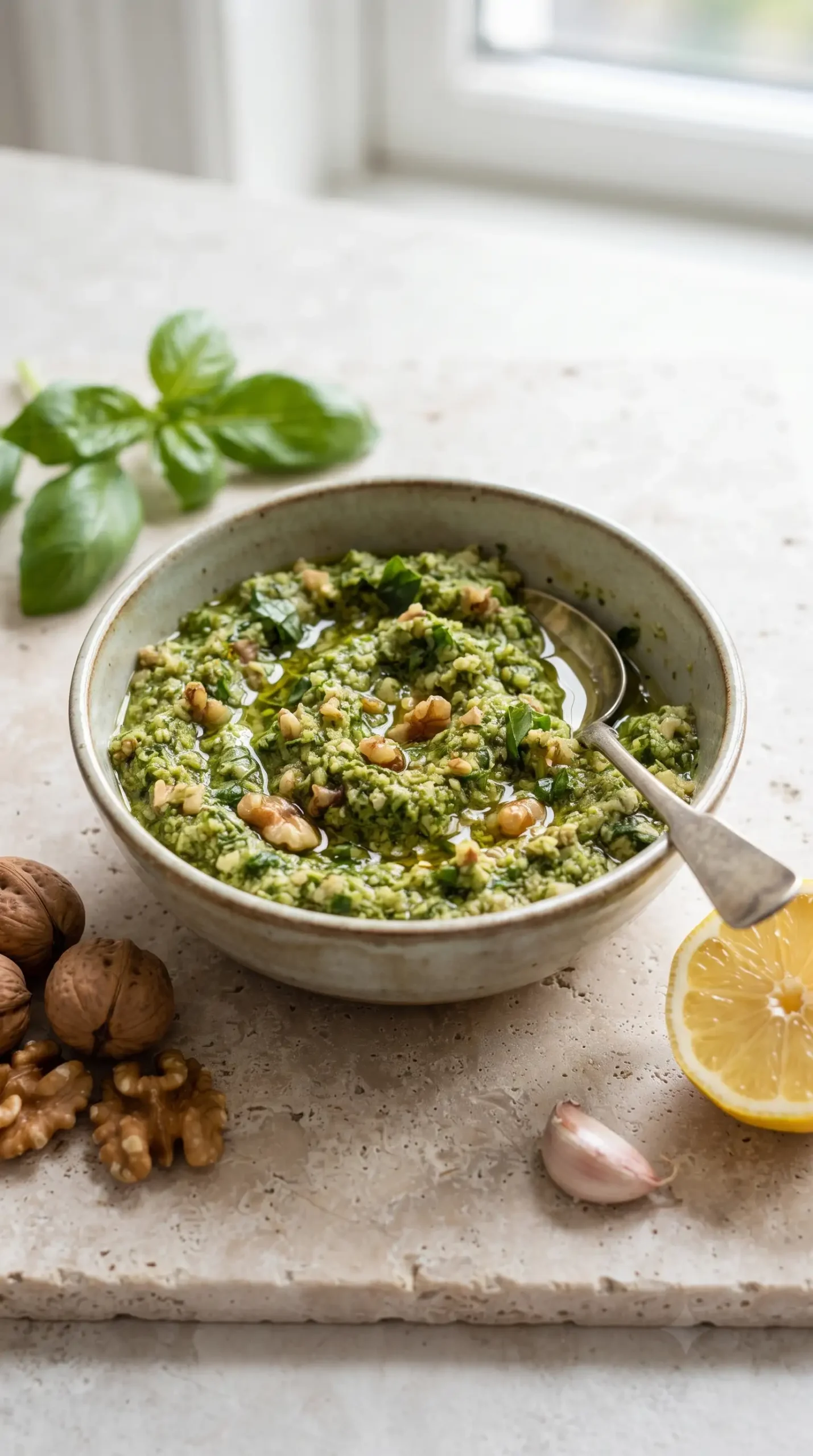
Walnut pesto pasta gets its character from a simple blend of walnuts, basil, lemon, olive oil, and garlic. The pesto is served with the roasted vegetables and noodles, allowing each person to mix in as much herbaceous flavor as they prefer while keeping the texture varied. Fresh greens remain a flexible part of pesto preparation, and dishes like Creamy Kale Pasta with Fresh Herb Pesto Sauce show how leafy ingredients can become part of a flavorful pasta meal.
Seasonal vegetables define the farmers market vegetable pasta
The vegetables chosen for farmers market vegetable pasta can shift with the market season, which makes this dish especially adaptable. The important choice is selecting produce that can roast well together and develop enough texture to stand beside cooked pasta.
A combination of cherry tomatoes, asparagus, and mushrooms creates a balanced mix of juicy, tender, and earthy elements. Tomatoes soften and release their flavor, asparagus brings a fresh bite, and mushrooms provide a deeper roasted quality after spending time in the oven.
Different vegetables may need different roasting attention, so observing their texture matters more than following a rigid formula. Pieces that are similar in size will cook more evenly, while vegetables with more moisture may need extra time to lose excess liquid and gain concentrated flavor.
| Vegetable choice | Texture after roasting | Cooking consideration |
|---|---|---|
| Cherry tomatoes | Soft and juicy with concentrated flavor | Keep pieces intact so they do not disappear into the pasta |
| Asparagus | Tender with lightly browned edges | Cut into manageable pieces for even roasting |
| Mushrooms | Earthy and tender with roasted edges | Avoid overcrowding so moisture can escape |
Ingredient choices improve every farmers market pasta bite
Walnuts are a key part of the pesto because they create a rich texture without overpowering the fresh basil. Their mild flavor pairs naturally with lemon and olive oil, creating a sauce that complements roasted vegetables instead of hiding them.
Basil gives the pesto its familiar green character, but other greens can fill in when basil is limited. The important consideration is maintaining the fresh, leafy quality that balances the roasted flavors throughout the dish.
Pasta shape also affects the experience. Farfalle, rigatoni, and penne all work because their shapes can hold pieces of roasted vegetables and catch spoonfuls of pesto. A slightly softer noodle texture fits the overall comfort of this vegetable-focused pasta.
- Walnut texture: Pulse until the pesto has a pleasant consistency without turning into a completely smooth paste.
- Fresh greens: Use basil or suitable leafy substitutions to maintain the bright pesto flavor.
- Lemon balance: Adjust the citrus amount when needed so the pesto stays lively without becoming sharp.
Roasting control shapes the roasted vegetable pasta texture
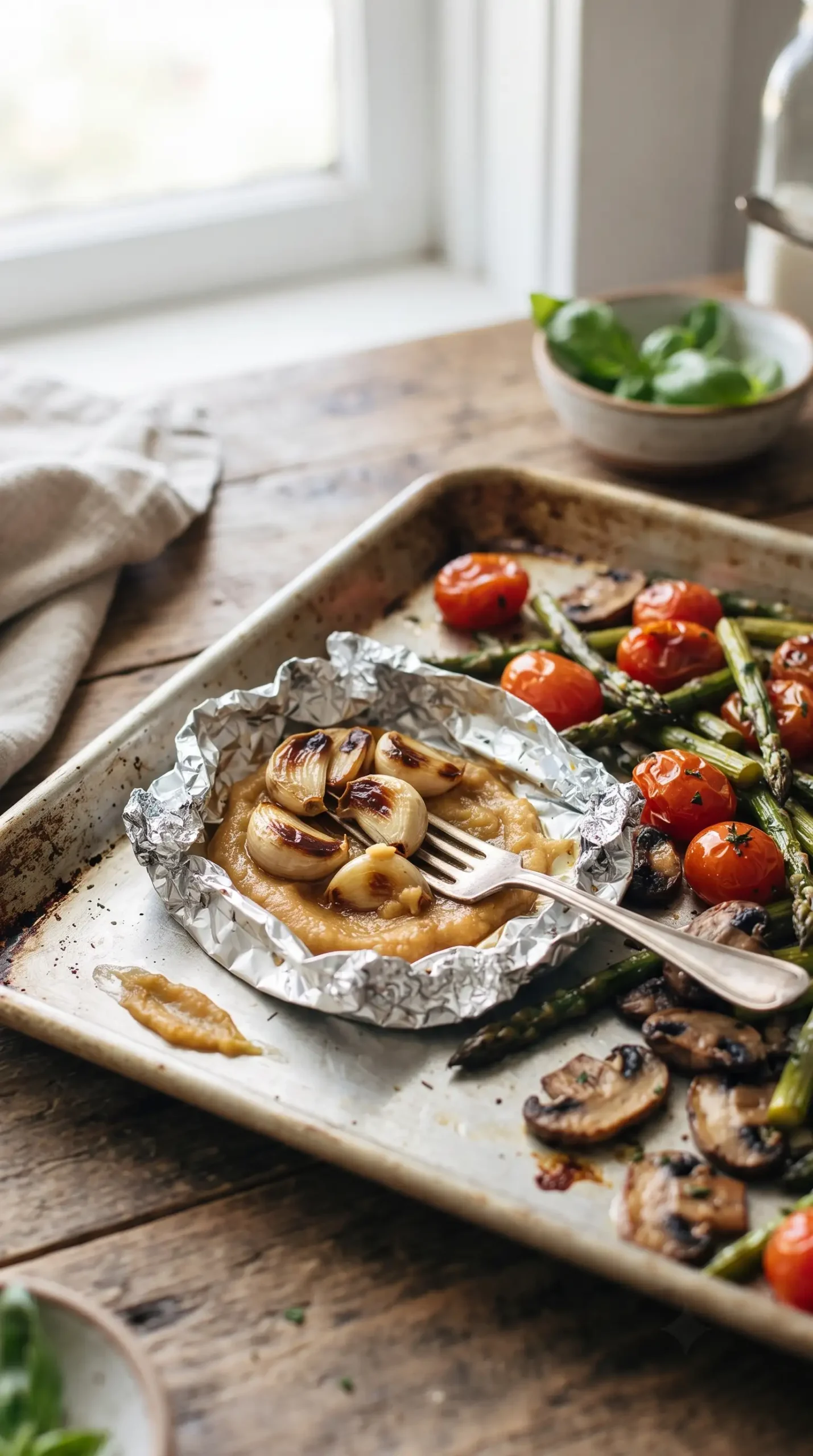
Roasted vegetable pasta depends on controlling heat, spacing, and timing during the vegetable stage. A crowded baking pan can trap moisture, while properly arranged vegetables have more opportunity to brown and develop concentrated flavors.
The roasted garlic step is another important control point. roasting garlic in foil helps the cloves soften into a mashable paste that can coat the noodles and distribute savory flavor throughout the dish.
Cooking the pasta while the vegetables roast keeps the components ready at the same time. Tossing the noodles with oil after draining helps prevent sticking while the vegetables and pesto are prepared for combining.
Farmers market pasta mistakes that weaken the finished dish
Several small choices can affect the balance of farmers market pasta. Avoiding these common issues helps preserve the contrast between fresh pesto, roasted produce, and satisfying noodles.
Overloading the pan with too many vegetables at once can prevent browning and leave the vegetables soft instead of roasted. Giving the produce enough room helps the edges develop color and keeps the flavors concentrated.
Skipping the roasted garlic mash can leave the pasta without the savory layer that ties everything together. The softened garlic is meant to become part of the noodle mixture, not remain as separate roasted pieces.
Adding all the pesto before serving can make it harder to control the final flavor. Keeping the pesto available for tossing and adjusting allows the walnut and basil notes to stay fresh.
Pasta texture guides this seasonal vegetable dish
The pasta texture influences how the roasted vegetables and pesto come together. A softer, well-cooked noodle works particularly well because it absorbs the roasted garlic and carries the pesto into each serving without competing with the vegetables.
Walnut pesto pasta keeps preparation flexible
Walnut pesto pasta can move between warm and chilled serving styles, making it useful for different meals. The roasted vegetables provide enough flavor to enjoy the dish immediately, while the pesto keeps the flavors bright when served later.
Greens, vegetables, and pasta shapes can change based on what is available. Farmers market pasta is designed around the idea that seasonal ingredients can guide the meal while the pesto provides a consistent finishing element.
Storing roasted vegetable pasta preserves its flavors
Roasted vegetable pasta can be stored after combining the components, but keeping extra pesto separate can help maintain the freshest herb flavor when enjoying leftovers.
Serving ideas highlight the farmers market pasta experience
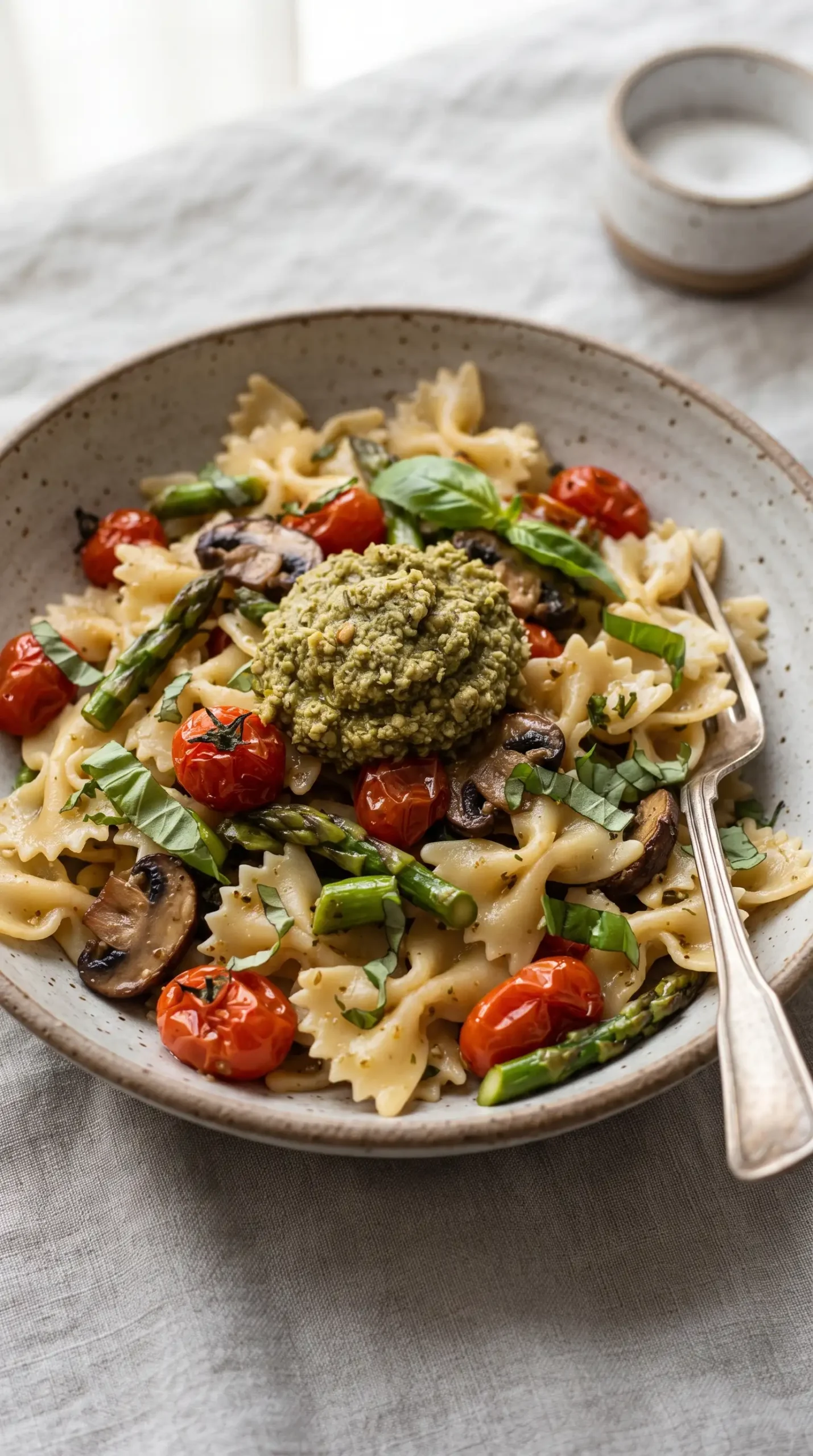
Farmers market pasta works well as a simple main dish because it already includes noodles, vegetables, and a flavorful sauce. A scoop of walnut pesto can be added directly before eating, allowing the roasted vegetables to remain distinct.
Serving the pasta warm emphasizes the roasted flavors, while a cooler serving temperature highlights the lemon and basil notes in the pesto. Both approaches allow the seasonal vegetables to remain central.
Simple finishing touches can change the presentation without changing the character of the dish. Extra herbs, a drizzle of olive oil, or an additional spoonful of pesto can adjust the final balance according to preference.
| Serving approach | Best feature | Pesto handling |
|---|---|---|
| Warm pasta | Highlights roasted vegetable flavor | Mix pesto in while serving |
| Room-temperature pasta | Shows bright lemon and herb notes | Add pesto gradually |
| Chilled pasta | Works well for make-ahead meals | Refresh with extra pesto if needed |
Simple adjustments create new farmers market pasta variations
Small changes can create new versions of farmers market pasta while keeping the same roasted vegetable and walnut pesto foundation. The dish welcomes seasonal swaps because the cooking approach remains the same.
Roasted vegetables and walnut pesto make this pasta complete
Roasted vegetables bring concentrated flavor to farmers market pasta, while walnut pesto adds freshness that keeps the dish balanced. The strongest results come from paying attention to vegetable texture, pasta tenderness, and the moment when pesto joins the finished bowl.
The combination works because each part has a clear role: roasted garlic builds depth, seasonal vegetables provide variety, noodles create comfort, and walnut pesto delivers a bright finish that ties everything together.
Farmers market pasta questions about storage and preparation
Can farmers market pasta be made ahead?
Yes, the roasted vegetables, pasta, and pesto can be prepared ahead and combined when ready to serve. Keeping the pesto separate until serving can help preserve its fresh basil and lemon character.
What vegetables work best for farmers market pasta?
Vegetables that roast well and maintain their texture are strong choices. Cherry tomatoes, asparagus, and mushrooms are a reliable combination, but other seasonal vegetables can work when their roasting needs are considered.
Why does the pesto taste different from traditional basil pesto?
Walnuts create a slightly richer, earthier flavor compared with pesto made with other nuts. The lemon and basil still provide freshness, but the walnut base gives the sauce a distinct character.
How can I keep the roasted vegetables from becoming soggy?
Arrange vegetables with enough space on the baking pan so moisture can escape during roasting. Cutting pieces evenly also helps them cook at a similar rate and develop better texture.
Can I use another pasta shape?
Yes, shapes with curves, ridges, or openings are useful because they catch pesto and small pieces of vegetables. Farfalle, rigatoni, and penne are all suitable options.
Farmers' Market Pasta with Walnut Pesto and Roasted Garlic
Ingredients
Method
- Preheat the oven to 425°F (220°C). Spread the vegetables on a rimmed baking pan, then coat them with a small amount of olive oil and salt.
- Remove the garlic cloves from their skins. Place them in the center of a small foil piece, add a drizzle of oil, and seal the foil around them. Set the wrapped garlic on the baking pan.
- Roast the vegetables and wrapped garlic for 20-30 minutes, depending on the vegetables used. Once softened, mash the roasted garlic into a paste.
- While the vegetables roast, blend the pesto ingredients in a food processor.
- Cook the pasta according to the package directions. Drain, toss with oil, and keep aside.
- Combine the pasta with the roasted garlic and vegetables. Serve with a scoop of walnut pesto and enjoy warm or cold.