
Edit
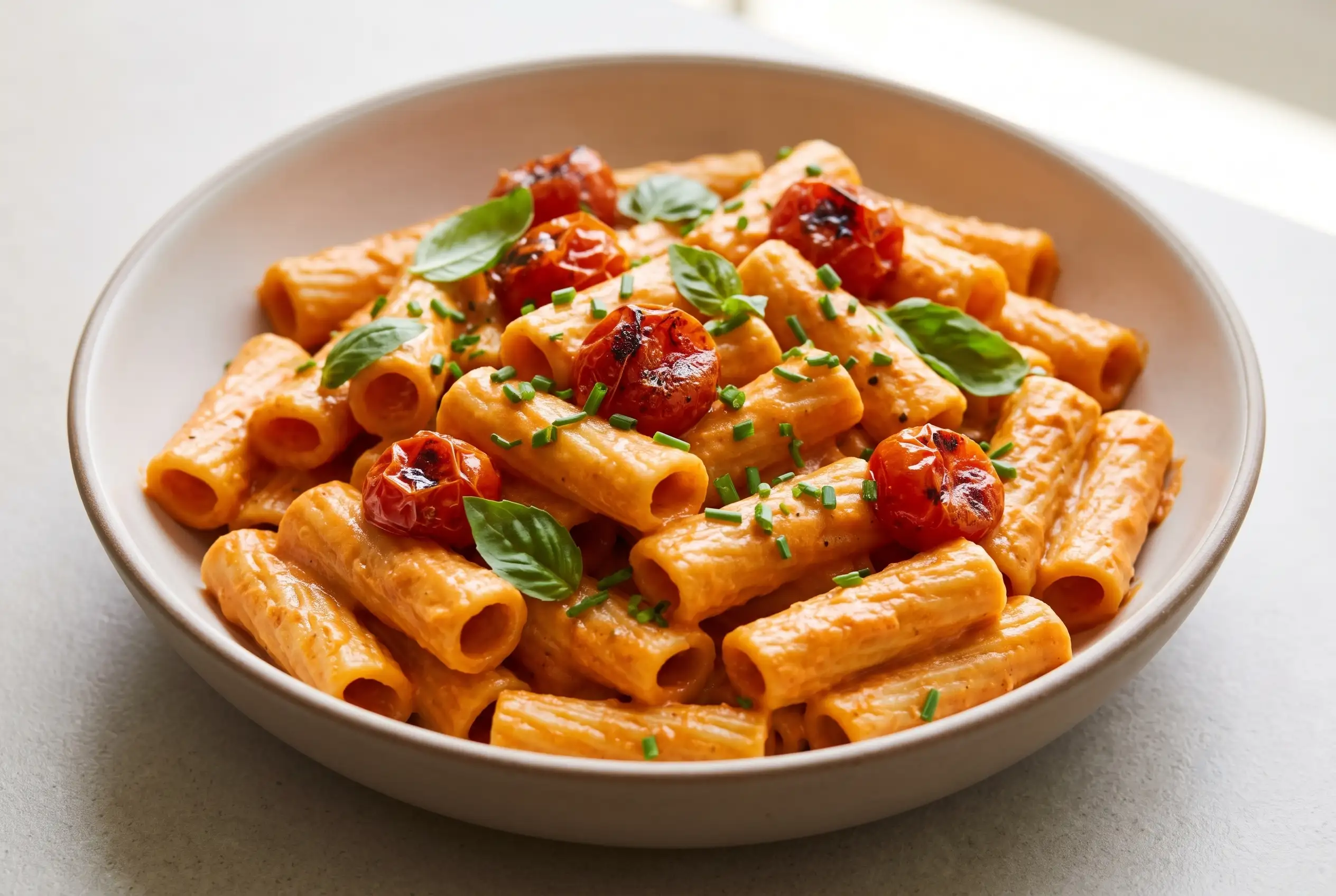
Vegan red pepper pasta brings together roasted red pepper, cashews, rigatoni, and blistered tomatoes in a creamy plant-based dinner built around a smooth sauce and bright roasted flavors. The dish works because the sauce relies on blended ingredients to create a rich coating for pasta while the tomatoes add a concentrated burst of sweetness and acidity on top.
The combination of a cashew sauce and roasted pepper creates a texture that feels substantial without dairy. Each part has a specific role: the blended base carries the pasta, the broiled tomatoes provide contrast, and fresh herbs bring a lighter finish.
Creamy Vegan Red Pepper Pasta Creates a Silky Cashew Base
The creamy texture of vegan red pepper pasta comes from blending cashews, water, roasted red pepper, garlic, and optional nutritional yeast until the mixture becomes very smooth. Plant-based pasta dishes such as creamy kale pasta bowls can use blended ingredients to create a rich coating that stays connected to the noodles, and a high-powered blender helps this sauce move evenly through the rigatoni.
Cashews are especially useful in this style of pasta because they create body after blending. The resulting sauce has enough thickness to cling to the pasta while still remaining easy to stir. Adding the sauce while the pasta is hot helps the ingredients combine into a cohesive finish.
The roasted red pepper gives the sauce its signature color and flavor. Using one large roasted pepper keeps the balance focused, allowing the cashews to provide creaminess while the pepper contributes a savory, slightly sweet character.
Cashews and Roasted Peppers Define the Sauce Texture
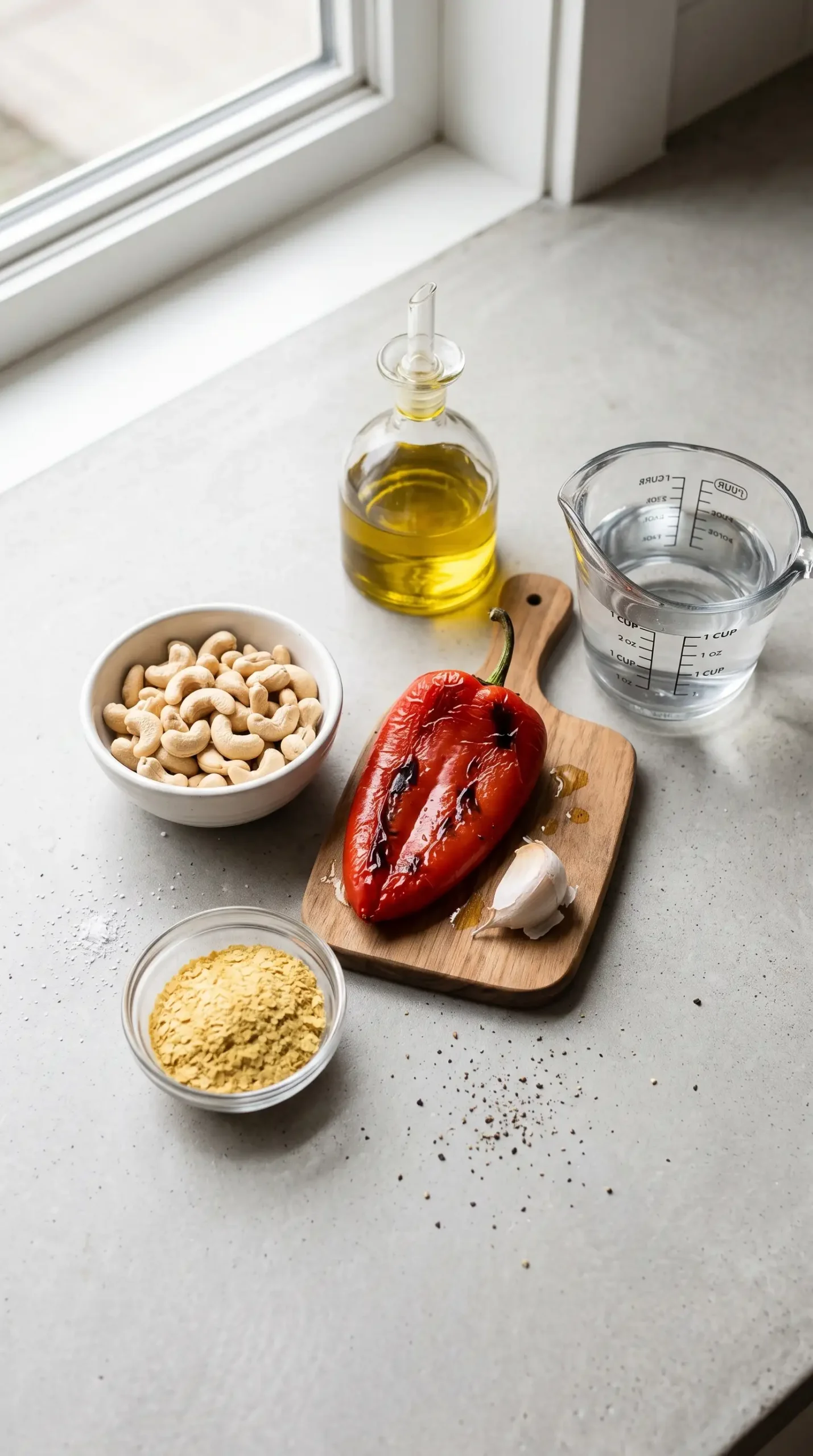
The most important ingredient choice for red pepper pasta with cashew sauce is selecting components that blend smoothly together. Soaking is not required in the supplied method, so careful blending becomes the key step for achieving a creamy consistency.
| Component | Texture contribution | Flavor role |
|---|---|---|
| Cashews | Creates a smooth, thick sauce | Provides a mild creamy base |
| Roasted red pepper | Keeps the sauce fluid and colorful | Adds roasted sweetness |
| Nutritional yeast | Supports the blended texture | Adds optional savory depth |
Choosing a roasted pepper with a soft texture helps the blender create a uniform sauce. The garlic and seasoning should become fully incorporated instead of leaving noticeable pieces throughout the pasta.
Blistered Tomatoes Add Contrast to the Pasta Finish
Broiled cherry tomatoes change the character of vegan red pepper pasta by introducing concentrated flavor and a different texture. The high heat softens the tomatoes while encouraging their surfaces to become deeply roasted.
Keeping the tomatoes separate from the blended sauce preserves their texture. When spooned over the pasta, they create small pockets of acidity that balance the creamy red pepper base.
- Roasty surfaces: Broiling develops deeper tomato flavor before serving.
- Fresh herbs: Chives and basil add a bright finish after the rich sauce is added.
- Seasoning control: Extra salt and pepper can be adjusted at the table.
Rigatoni Holds the Creamy Red Pepper Sauce
Rigatoni is a strong match for this pasta because its shape provides space for the thick sauce to collect. The ridges and hollow center help the creamy coating remain part of each bite instead of settling only at the bottom of the bowl.
Other pasta shapes can work, but the relationship between shape and sauce matters. A larger noodle gives the cashew-based sauce more surface area to cling to, creating the satisfying texture expected from creamy vegan red pepper pasta.
Blending Technique Controls the Pasta Sauce Consistency
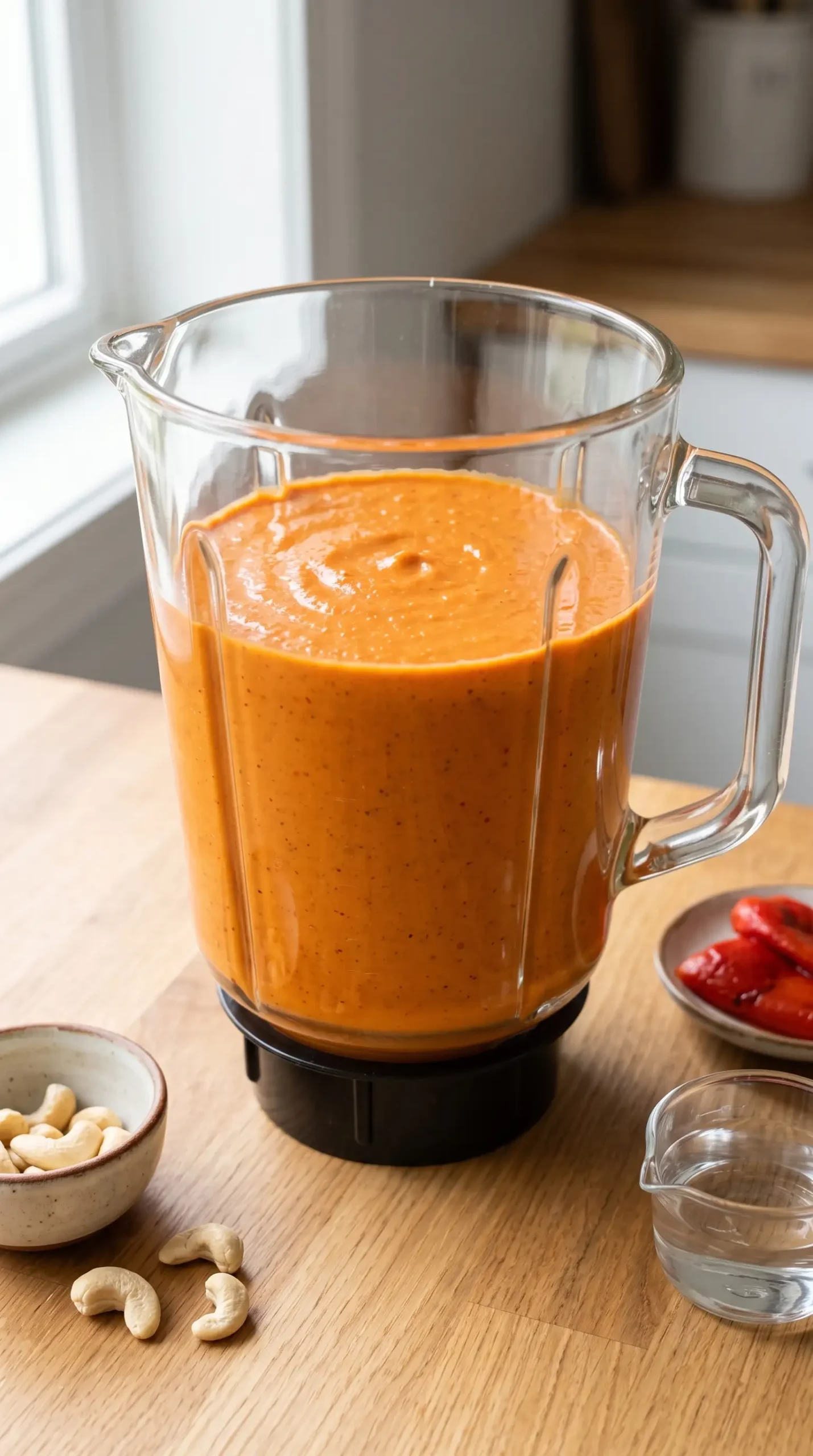
The cooking control point for vegan red pepper pasta is the texture of the blended sauce. Because cashews create a thick creamy base when blended with water, the mixture needs to become very smooth before it meets the pasta so it coats the noodles evenly.
A blender should run long enough for the cashews to break down completely. The sauce can be adjusted with additional water if it becomes thicker than desired after blending or during reheating.
Hot pasta provides the best environment for combining the sauce. Stirring off the heat keeps the creamy mixture attached to the rigatoni without continuing to cook the blended ingredients.
Common Vegan Red Pepper Pasta Mistakes to Avoid
Several issues can affect the finished texture and flavor of vegan red pepper pasta. Most problems come from sauce consistency, tomato preparation, or blending rather than from the ingredient combination itself.
- Under-blended sauce: A rough texture means the cashews have not been fully incorporated. Continue blending until the mixture becomes smooth.
- Overcrowded tomatoes: Tomatoes need exposure to heat on the baking sheet so they can roast effectively.
- Over-thickened leftovers: The sauce can become thicker after reheating, so loosening it with water helps restore a smoother texture.
Red Pepper Pasta with Blistered Tomatoes Balances Rich and Bright Flavors
The combination of creamy sauce and roasted tomatoes gives red pepper pasta with blistered tomatoes its appeal. The sauce carries the deeper flavors while the tomatoes prevent the dish from feeling one-dimensional.
Fresh herbs are added after cooking because their lighter flavor works best as a finishing element. Chives and basil create contrast against the roasted pepper and cashew foundation.
Plant-Based Pasta Preparation Benefits from Simple Timing
Vegan red pepper pasta depends on coordinating separate textures. The tomatoes need enough heat to develop roasted character, while the sauce needs enough blending time to become smooth.
Preparing the sauce while the pasta cooks keeps the components ready to combine at the right moment. The finished dish benefits from bringing together warm pasta, creamy sauce, and roasted toppings while each element still has its intended texture.
Storage Changes the Texture of the Cashew Sauce
Leftover creamy vegan red pepper pasta may become thicker because the cashew-based sauce continues to firm as it sits. Adding a small amount of water while reheating helps loosen the sauce and return it to a smoother consistency.
The pasta and sauce remain best when reheated gently and stirred thoroughly. This allows the added water to distribute through the sauce instead of creating separate thin areas.
Roasted Pepper Choices Shape the Finished Pasta Flavor
The roasted pepper is the main flavor decision in this dish. A single large roasted pepper creates the foundation for the sauce, while sliced roasted peppers can also be measured into the blend when a prepared option is used.
The pepper should complement the cashews instead of overpowering them. Keeping the amount controlled allows the sauce to stay creamy and balanced.
Vegan Red Pepper Pasta Serves as a Flexible Dinner Center
The finished pasta works well as a complete plant-based meal because the sauce, pasta, tomatoes, and herbs already create contrasting textures. The dish can also pair with simple vegetable sides that do not compete with the roasted pepper flavor.
Small finishing adjustments, such as additional herbs or seasoning, allow each serving to match personal preference while keeping the main sauce character intact.
Vegan Red Pepper Pasta Brings Together Creamy Sauce and Roasted Texture
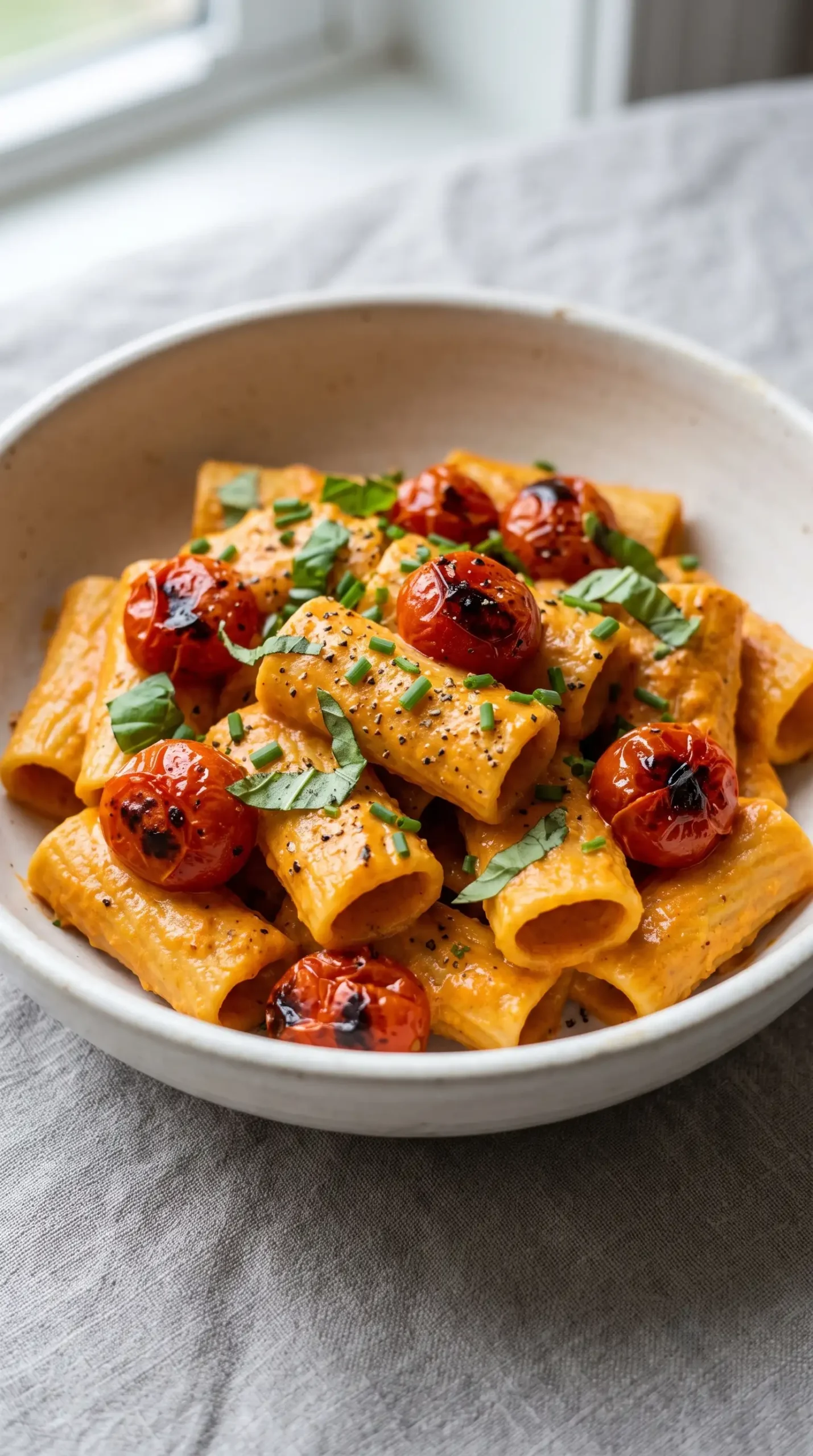
The blended cashew sauce creates the central texture of vegan red pepper pasta, while blistered tomatoes provide the roasted contrast that keeps every serving balanced. The strongest results come from focusing on sauce smoothness and preserving the separate character of the tomato topping.
Rigatoni coated with the creamy pepper sauce and finished with roasted tomatoes shows how a few carefully handled ingredients can create a complete plant-based pasta experience.
Vegan Red Pepper Pasta Questions About Sauce Texture and Storage
Can the cashew sauce be made smoother?
A smoother sauce comes from blending the cashews and other sauce ingredients until the mixture has a completely creamy appearance. Extra blending time is the most important adjustment when the texture feels uneven.
Why do the tomatoes stay separate from the sauce?
The blistered tomatoes add roasted flavor and texture that would be lost if they were blended into the sauce. Keeping them as a topping creates contrast with the creamy pasta.
Can another pasta shape replace rigatoni?
Other pasta shapes can work if they have enough surface area to hold the thick sauce. Shapes with ridges or openings are especially suitable for carrying the creamy coating.
How can leftover vegan red pepper pasta be reheated?
Reheat the pasta while stirring in small amounts of water until the sauce becomes smooth again. The added liquid helps counter the natural thickening of the cashew sauce.
Vegan Red Pepper Pasta with Creamy Sauce and Tomatoes
Ingredients
Method
- Cook the pasta according to the package directions.
- Preheat the broiler. Place the cherry tomatoes on a baking sheet and toss with olive oil, salt, and pepper. Broil for 10-15 minutes until the tomatoes are deeply roasted.
- While the tomatoes cook, blend the cashews, water, roasted red pepper, garlic, nutritional yeast, olive oil, and salt until the sauce is very smooth and creamy.
- Combine the blended sauce with the hot cooked pasta after removing it from the heat, stirring until the pasta is evenly coated.
- Top the pasta with the roasted tomatoes, chives, basil, and additional salt and pepper as desired before serving.