
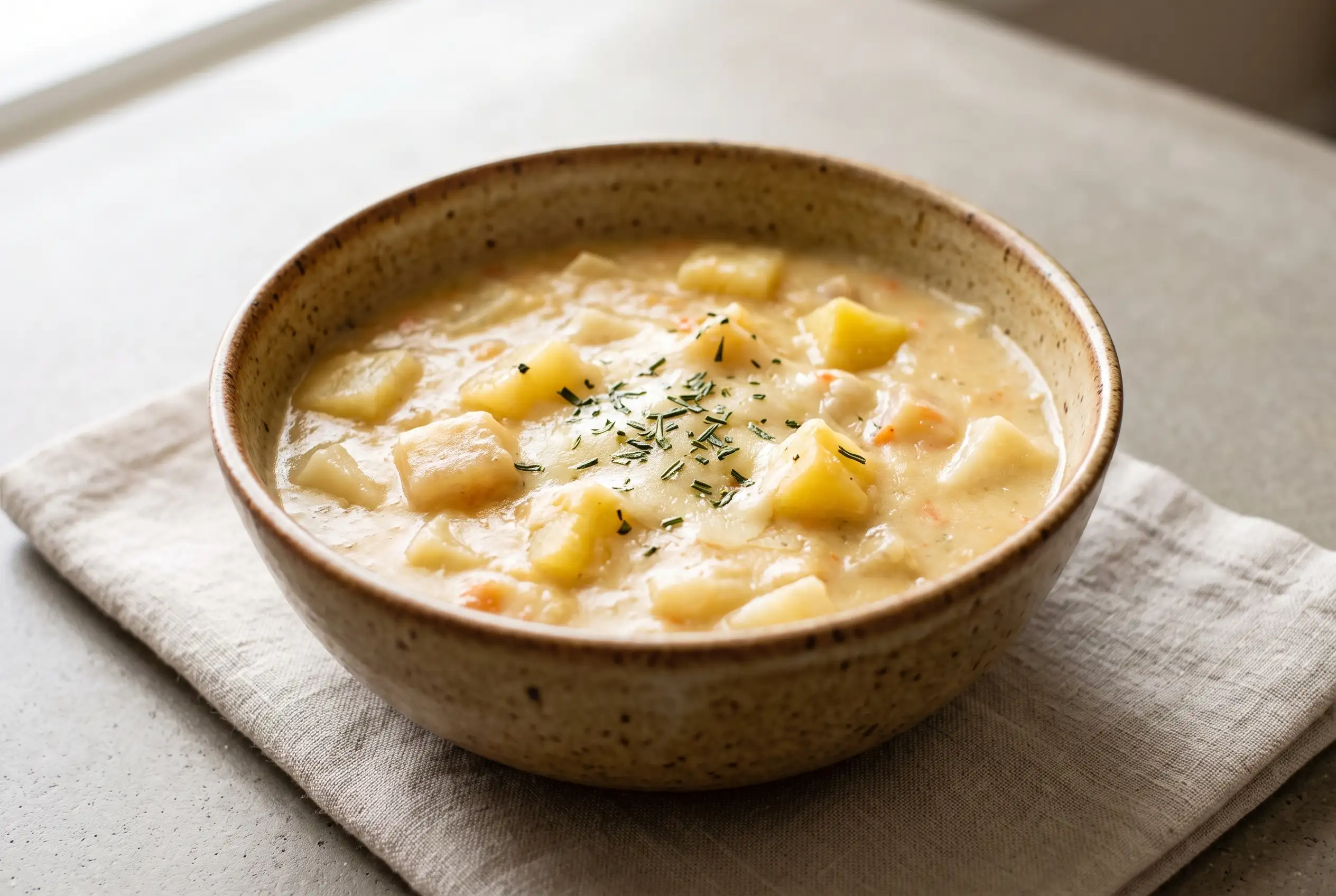
Root vegetable stew brings together potatoes, rutabaga, turnips, parsnips, and rosemary in a creamy bowl where blended vegetables create a smooth texture while keeping the earthy character of the ingredients visible. The combination works because the vegetables are cooked until tender, then a portion is transformed into a silky base that surrounds the remaining pieces.
Root Vegetable Stew Builds Creaminess From Blended Vegetables
Unlike a stew that relies only on a thickened broth, this root vegetable stew creates body by blending part of the cooked vegetable mixture back into the pot. The technique changes the texture without removing the individual character of the vegetables that remain whole.
Careful blending also helps the flavors connect. The potatoes, rutabaga, turnips, and parsnips have different levels of sweetness and earthiness, but the smooth portion allows those flavors to move through each spoonful.
Creating a creamy root vegetable stew depends on choosing the right amount of vegetables to puree. Blending a portion keeps the bowl hearty while avoiding a completely uniform texture that would hide the natural structure of the root vegetables.
Yukon Gold Potato and Rutabaga Shape the Stew Base
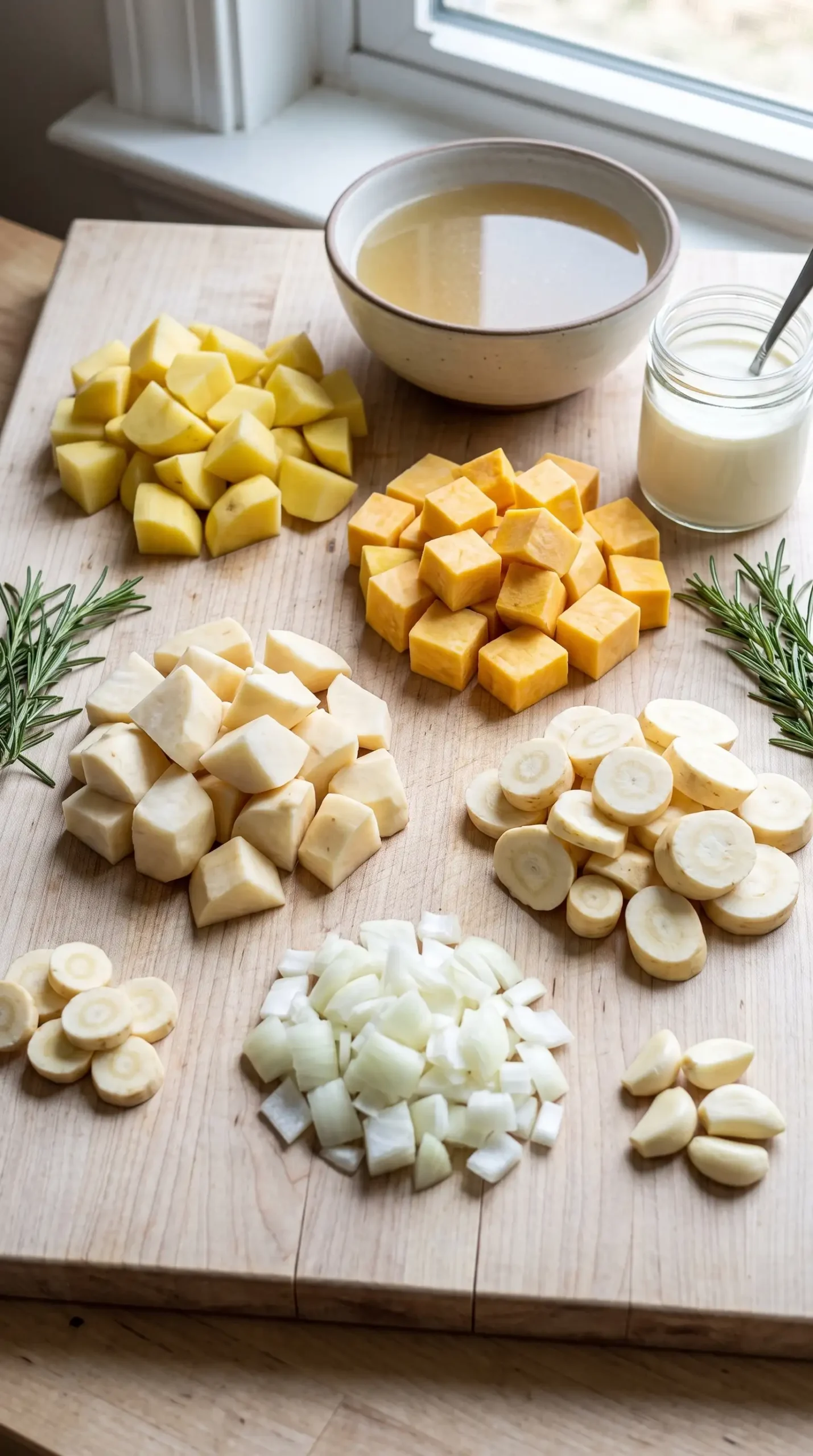
Yukon gold potatoes and rutabaga establish the foundation of the vegetable stew with potatoes and rutabaga because both vegetables soften well during simmering and contribute to the thick, comforting texture created after blending. Potato-based bowls such as creamy potato soup rely on the natural starch of potatoes to create a smooth, satisfying finish.
Rosemary Defines the Savory Character of the Bowl
Fresh rosemary gives the root vegetable stew with rosemary its distinctive herbal direction. Adding the herb while the garlic cooks allows its aroma to spread through the oil and vegetable base before liquid is introduced.
Garlic and rosemary work together early in the cooking process because their flavors become part of the broth instead of sitting only on the surface. The short cooking period keeps the herbal notes noticeable without making them dominate the vegetables.
Parsnips or carrots can influence the overall balance of the stew. Parsnips contribute a deeper earthy sweetness, while carrots provide a familiar sweetness that fits naturally with the same creamy vegetable base.
Blended Portions Control the Stew Texture
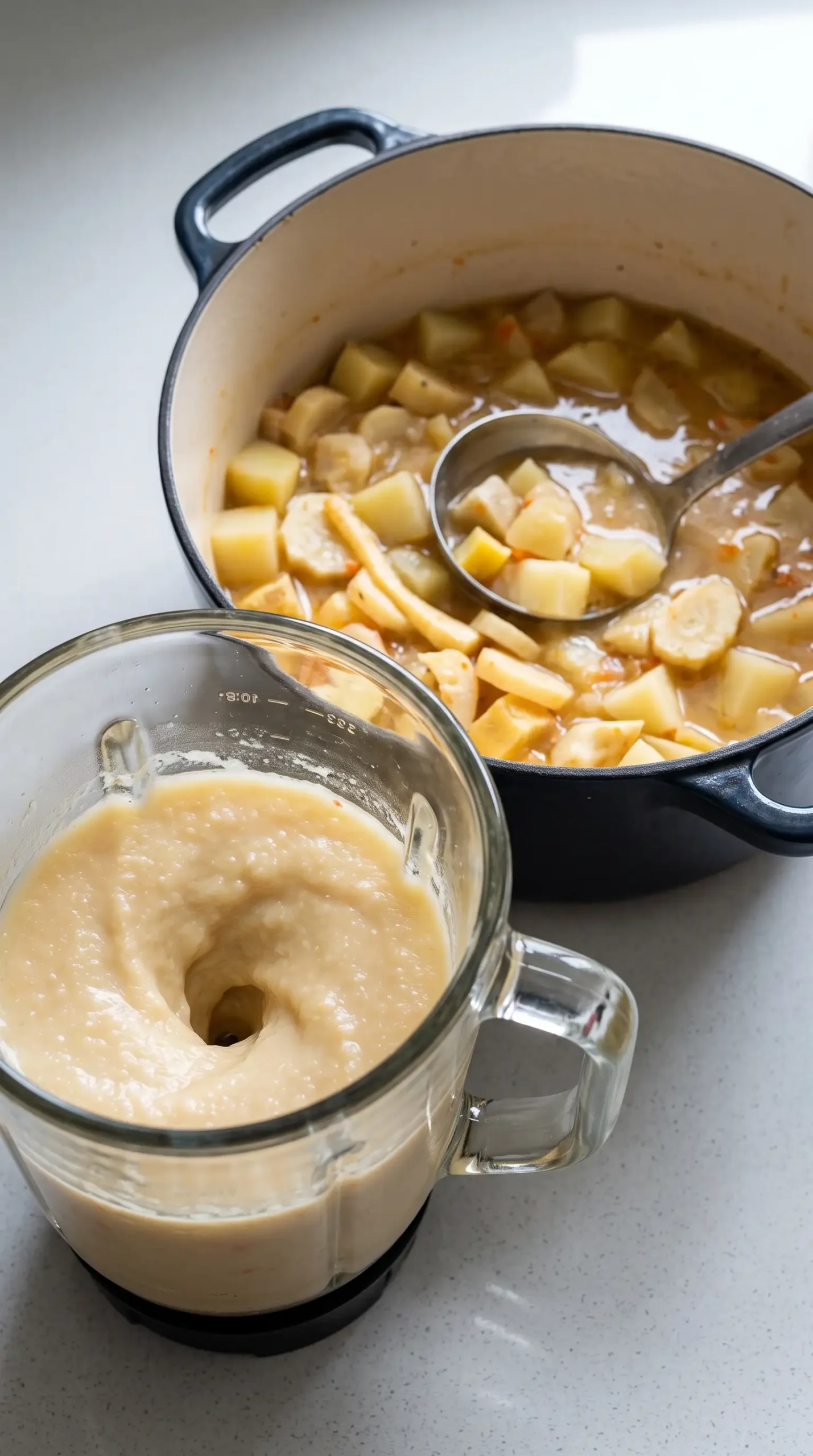
Blending only part of the cooked mixture creates contrast between smooth spoonfuls and tender vegetable pieces, giving the stew a richer mouthfeel while preserving its rustic structure.
Broth Balance Keeps the Creamy Vegetable Base Focused
Vegetable broth and water provide enough liquid for the roots to cook evenly while allowing their flavors to remain concentrated. The liquid becomes more substantial after the blended vegetables return to the Dutch oven.
Adding heavy cream near the end changes the finish of the root vegetable stew by smoothing the sharper vegetable notes and creating a softer texture. A small amount is enough to complement the vegetables without replacing their flavor.
Seasoning decisions become clearer after blending because the smooth base carries salt and pepper differently than separate chunks of vegetables. Adjusting the seasoning after the puree returns to the pot helps the entire bowl taste balanced.
Cheese Creates a Melty Finish Above the Stew

A layer of sliced cheese adds a contrasting finish when melted under the broiler. The warm, soft topping introduces richness that pairs with the creamy vegetable base while keeping the focus on the stew underneath.
Different cheeses can change the final character. Swiss cheese provides a mild, nutty quality, while another melting cheese can create a different level of flavor intensity depending on the choice.
Avoid These Creamy Root Vegetable Stew Mistakes
Common mistakes with creamy root vegetable stew usually involve texture control. Cutting the vegetables into uneven pieces can leave some pieces firm while others become overly soft, and blending too much can remove the contrast that makes the dish satisfying. Keeping the pieces consistent and pureeing only a portion protects the intended balance.
Cooking Control Determines the Stew’s Smooth Consistency
Temperature and timing influence how the root vegetables behave during cooking. A gentle simmer allows potatoes, rutabaga, turnips, and parsnips to soften gradually so they can contribute flavor to the broth while becoming easy to blend.
Blender handling matters when transforming hot vegetables into a smooth mixture. Leaving space for steam to escape and using care around hot liquids helps create a smoother puree while keeping the process controlled.
Returning the blended vegetables to the Dutch oven is the point where texture comes together. The puree thickens the surrounding liquid, and the remaining vegetable pieces provide the structure that keeps each serving from becoming flat.
Simple Changes Adapt the Root Vegetable Combination
Ingredient swaps can adjust the personality of the stew while keeping the same cooking approach. Carrots can replace parsnips, and the vegetable balance can shift depending on which root vegetables are available.
Several choices can personalize the finished bowl:
- Vegetable swap: Replace parsnips with carrots for a sweeter, familiar flavor.
- Herb adjustment: Change the amount of rosemary to make the herbal character softer or stronger.
- Cheese selection: Use a preferred melting cheese to alter the broiled topping.
Serving Ideas Highlight the Stew’s Creamy Layers
The creamy root vegetable stew pairs naturally with simple accompaniments that allow the vegetable flavors to remain central. A slice of crusty bread can complement the smooth texture, while fresh toppings can provide contrast.
Creamy Root Vegetable Stew Stores Well With Care
Storage works best when the stew is cooled and placed in a covered container. The blended vegetable base may continue to thicken after chilling, so a small adjustment with liquid can help restore a smoother consistency when reheating.
For the best food safety practices, refrigerate leftovers within two hours of serving and keep the stew in a covered container until it is ready to be reheated.
Reheating should be gentle to maintain the creamy texture. Stirring as the stew warms helps distribute the thicker blended portions evenly throughout the bowl.
Texture Changes Reveal the Best Stew Preparation
Texture is the main decision point in this root vegetable stew because every cooking choice affects how the vegetables feel in the finished bowl. The difference between a chunky vegetable soup and a creamy stew comes from how much of the mixture is blended.
Keeping some pieces intact allows the diner to notice the individual vegetables. The smooth portion provides comfort and richness, while the remaining pieces maintain the identity of the root vegetable combination.
Tender Vegetables Create the Complete Root Vegetable Stew Experience
Tender vegetables, balanced seasoning, and a carefully blended portion define the success of this root vegetable stew. The most important judgment comes from preserving both sides of the dish: a smooth base created from cooked roots and enough texture to recognize the vegetables that shaped it.
When the potatoes, rutabaga, turnips, and parsnips reach the right softness, the stew develops a natural creaminess that works with rosemary, garlic, and a melted cheese finish. The result depends less on adding richness and more on controlling how the vegetables transform during cooking.
Creamy Root Vegetable Stew Questions and Answers About Storage and Texture
Can creamy root vegetable stew be made thicker?
Yes, the texture can become thicker by blending a larger portion of the cooked vegetables into the broth. The change should be gradual because keeping some vegetable pieces intact preserves the stew’s contrast.
How should leftover root vegetable stew be reheated?
Leftovers should be warmed slowly while stirring occasionally. If the chilled stew becomes too thick, adding a small amount of liquid can help return it to a smoother consistency.
Can carrots replace parsnips in this stew?
Carrots can replace parsnips and will create a slightly sweeter flavor profile. The overall cooking approach remains the same because both vegetables soften well alongside the other root vegetables.
Why blend only part of the vegetable mixture?
Partial blending creates two textures at once. The puree gives the broth a creamy structure, while the unblended pieces keep the vegetables recognizable in each serving.
What cheese works well on top of the stew?
A cheese that melts smoothly works well for the broiled topping. Swiss cheese is one option, but other melting varieties can provide different flavors while creating the same soft finish.
Root Vegetable Stew with Potatoes, Rutabaga and Turnips
Ingredients
Method
- Warm olive oil in a Dutch oven over medium heat. Add onion and cook for 5 minutes, stirring occasionally, until softened.
- Add garlic and 2 teaspoons rosemary to the pot and cook for 1 minute while stirring.
- Add the potato, rutabaga, turnip, parsnip, vegetable broth, and water. Bring the mixture to a simmer, cover, and cook for 20 minutes until the vegetables are tender.
- Transfer 3 cups of the vegetable mixture to a blender. Remove the blender lid center piece, secure the lid, cover the opening with a clean towel, and blend until smooth.
- Pour the blended mixture back into the Dutch oven. Stir in the cream, black pepper, and salt.
- Preheat the broiler. Add cheese on top of the stew and broil until the cheese is soft and melted.