

Creamy potato soup brings together tender russet potatoes, a rich milk-based broth, savory vegetables, and crisp bacon for a comforting bowl built around simple cooking decisions. The appeal comes from how the ingredients transform during preparation: softened mirepoix creates the flavor foundation, flour helps the soup hold its body, and simmered potatoes develop the texture that makes every spoonful satisfying.
Creamy Potato Soup Starts With a Silky Vegetable Base
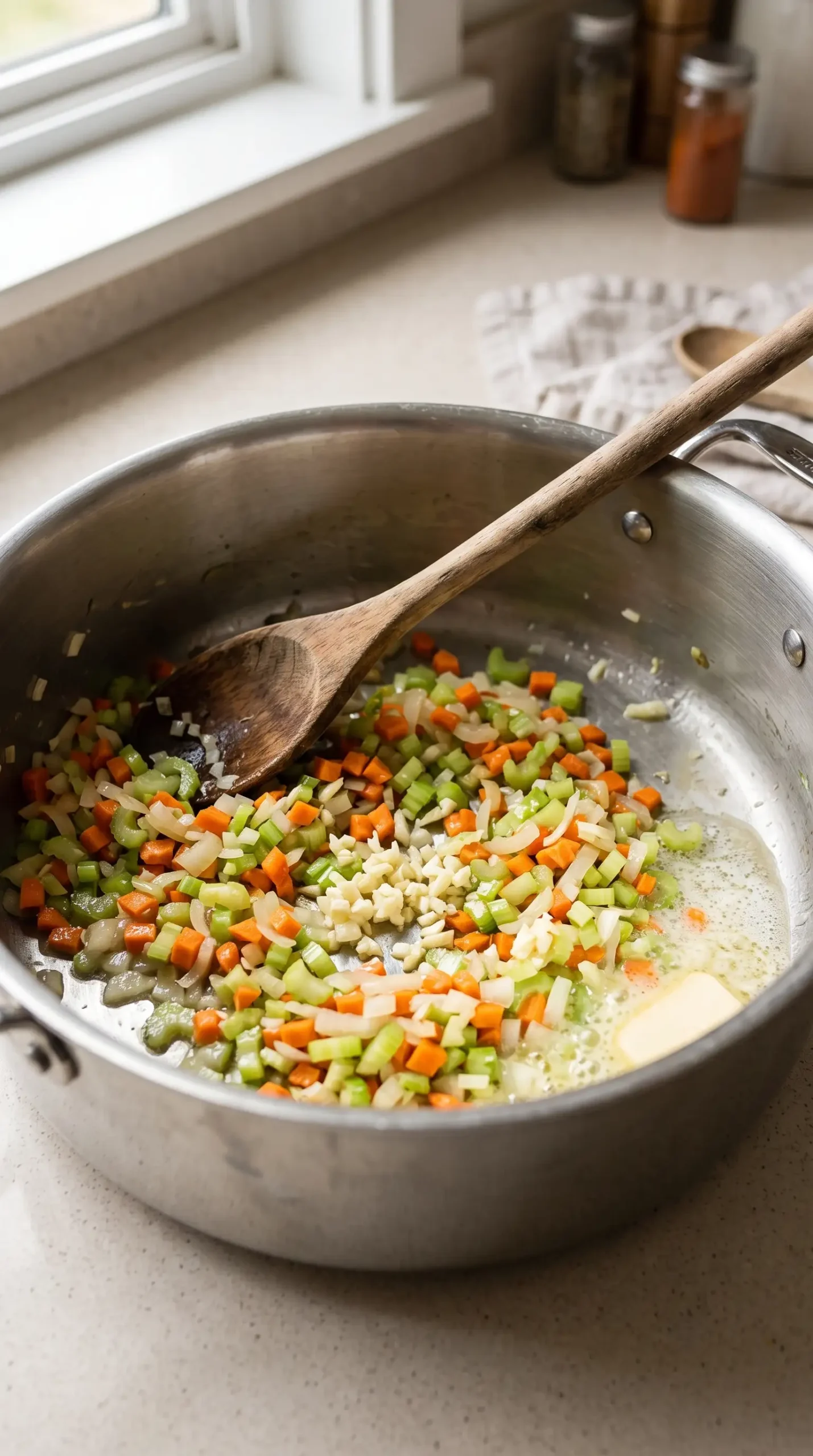
Smooth vegetables create the first layer of flavor before the potatoes ever soften. The minced celery, carrots, and onions are cooked in butter until their texture changes and their natural sweetness becomes part of the soup’s foundation.
Proper sautéing matters because the vegetables need time to become tender without taking on dark browning. Gentle cooking keeps the base balanced so the milk, broth, and seasonings can remain noticeable after they are added.
Building the soup from this softened mixture helps create an easy creamy potato soup recipe that feels developed without requiring a long ingredient list. The vegetables provide structure while the potatoes later contribute the hearty texture associated with a classic bowl.
Bacon Potato Soup Gains Depth From Crisp Finishing Pieces

Bacon pieces bring a salty, smoky contrast to the creamy base. Baking the strips separately allows the pieces to become crisp before they are crumbled and stirred into the finished soup, keeping their texture distinct.
Crispy bacon also gives this bacon potato soup its recognizable finish because the rich dairy texture benefits from a savory element that remains slightly firm. Adding the bacon near serving time keeps the flavor clear instead of allowing it to disappear into the broth.
| Bacon preparation choice | Result in soup | Best use |
|---|---|---|
| Crisped separately | Firm pieces with stronger contrast | Adding during serving |
| Stirred in earlier | More blended smoky flavor | When a softer texture is preferred |
| Reserved topping | Fresh savory crunch | Finishing individual bowls |
Russet Potatoes Control Creamy Potato Soup Texture
Russet potatoes are especially useful here because their starch helps create a naturally thick texture as they simmer. The cubes soften gradually, and their edges become tender enough to contribute body to the broth.
Potato cubes should reach the point where they are very tender but still recognizable. Waiting until the potatoes are almost melting allows the soup to develop a comforting consistency without needing additional thickeners beyond the flour already used in the base.
Cooking time also affects how the potatoes interact with the liquid. As the soup rests after heating, the starch continues influencing the texture, which is why a freshly finished pot and a slightly cooled bowl can feel different.
Combining potatoes with sturdy vegetables creates a hearty texture that depends on gentle cooking and careful timing. A dish like root vegetable stew uses slow simmering to soften ingredients while preserving their comforting structure.
Flour and Milk Create the Soup’s Smooth Structure
Flour technique determines how smoothly the dairy base comes together. Stirring the flour with the softened vegetables and butter gives it time to combine with the fat before liquid is introduced.
Gradual milk additions help prevent uneven texture because each small amount can blend into the flour mixture before more liquid enters the pot. The result is a creamy foundation that supports the potatoes instead of leaving a thin broth around them.
Whole milk contributes richness while chicken broth adjusts the final consistency. The balance between these liquids can be changed depending on whether a thicker or lighter bowl is desired.
Seasoning Choices Shape Homemade Potato Soup Flavor
Seasoning blends influence the personality of homemade potato soup because herbs such as thyme, rosemary, and oregano complement the savory vegetables and bacon. A prepared chicken seasoning mix can work well, but salt levels should be considered if the blend already contains sodium.
- Garlic timing: Add minced garlic with the vegetables so it softens and spreads through the base.
- Salt awareness: Adjust seasoning when using mixes that already include salt.
- Herb balance: Choose blends that support the creamy broth without covering the potato flavor.
Creamy Potato Soup Benefits From Careful Simmering Control
Simmering control shapes the finished texture more than any single ingredient choice. The soup needs enough gentle heat for the potatoes to soften and the flavors to combine, while aggressive boiling can disturb the smooth dairy structure.
Gentle heat allows the broth to thicken naturally as the potatoes release starch. Watching the consistency during cooking helps determine when additional broth is useful and when the existing liquid level is enough.
Careful observation also helps capture the ideal stopping point. A bowl with softened potato edges and a cohesive broth provides the signature texture expected from creamy potato soup.
Common Creamy Potato Soup Mistakes to Avoid
Common mistakes usually come from rushing the texture-building stages or overlooking how the ingredients interact. Avoiding these issues keeps the soup balanced and prevents small preparation choices from affecting the final bowl.
Overloading the pot with liquid too early can leave the soup thinner than intended because the potatoes have not yet released their starch. Additions should be made with attention to the consistency that develops during simmering.
Skipping the flour cooking stage can leave an unwanted floury taste because the thickener needs time to combine with the butter and vegetables. Allowing that mixture to cook briefly supports a smoother result.
Adding bacon too soon can reduce its contrast because the crisp pieces absorb moisture over time. Keeping some bacon texture until serving preserves the savory finish that makes this version distinctive.
Adjusting Thickness After the Soup Cools
Thickness changes naturally after cooking because the starch from the potatoes continues affecting the broth as the temperature drops. A bowl that seems loose while hot may become more substantial after resting.
Cooling soup can reveal whether the liquid balance matches your preference. Warm broth can be stirred in to loosen a thicker consistency, while additional simmering can help concentrate a thinner pot.
Serving Ideas That Highlight Bacon Potato Soup
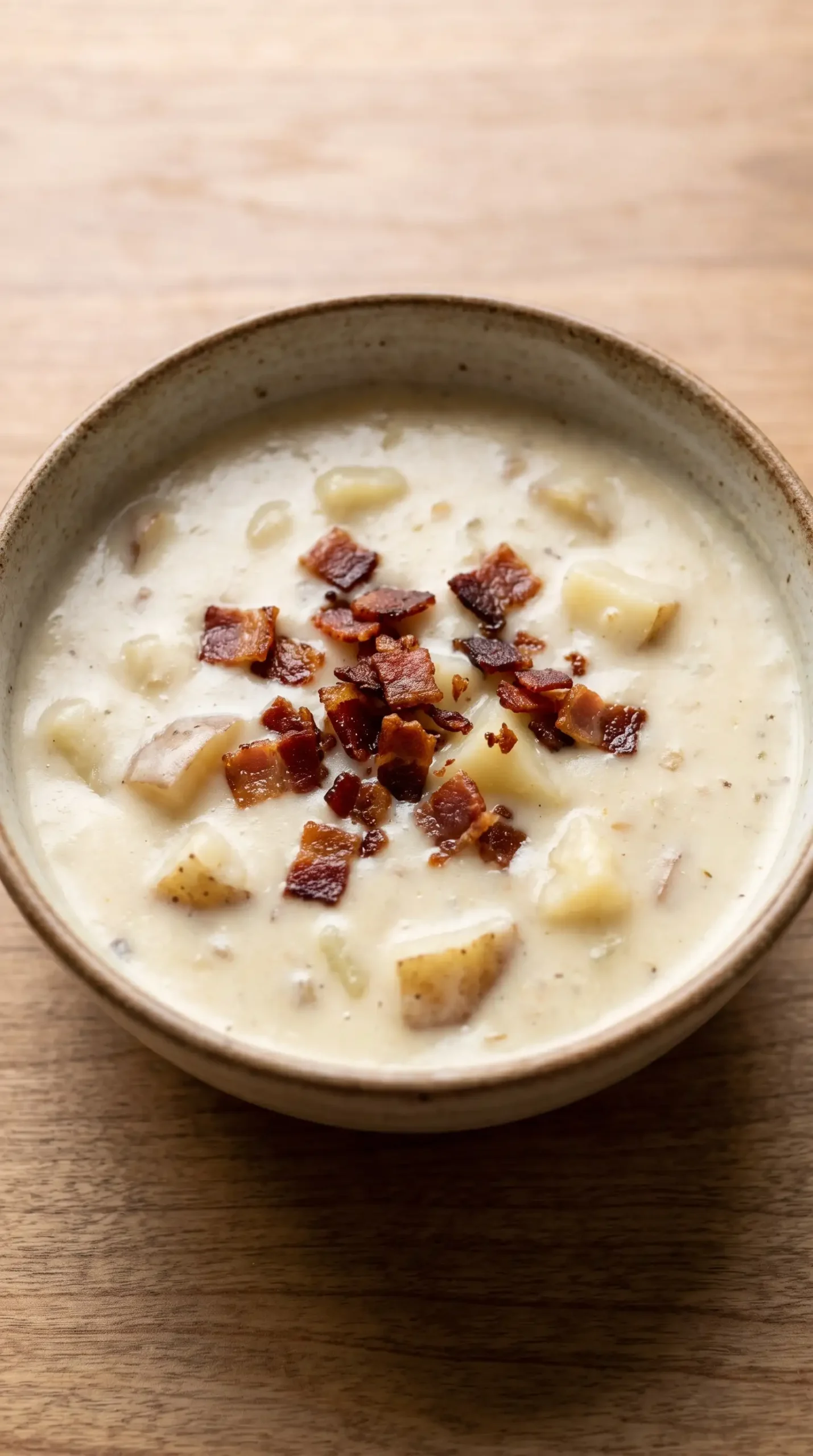
Serving bowls benefit from simple finishes that emphasize the contrast between creamy soup and crisp toppings. Extra bacon pieces can provide texture, while a thoughtful portion of seasoning keeps the flavors lively.
Topping options should support the soup’s existing character instead of distracting from the potato and dairy base. The bacon finish works especially well because it introduces a different texture without changing the core structure.
Storing Creamy Potato Soup Without Losing Texture
Storage containers help protect the soup’s texture after cooking. Keeping portions covered limits moisture loss and makes reheating easier when enjoying leftovers.
Refrigerated portions may become thicker as they sit because potato starch continues affecting the consistency. Gentle reheating with attention to texture can bring the soup back to a comfortable serving state.
After cooking, soup leftovers can be refrigerated for 3 to 4 days when stored properly, helping you plan servings while keeping this creamy potato soup ready for reheating.
Making Easy Creamy Potato Soup Recipe Decisions
Recipe choices become easier when each adjustment has a clear purpose. The soup can be customized by focusing on texture, seasoning strength, and the balance between creamy liquid and tender potatoes.
Custom additions should fit the existing structure instead of competing with it. Extra herbs, toppings, or liquid adjustments work best when they preserve the smooth character that defines the dish.
Choosing a Potatoes-and-Broth Balance for Comfort
Ingredient balance determines whether the finished bowl feels hearty or light. Potatoes provide the main substance, while broth creates movement through the soup and milk contributes the creamy quality.
Broth amounts should be guided by the texture you want at the table. A thicker style keeps the potato flavor concentrated, while a looser consistency allows the soup to feel lighter without losing its richness.
Creamy Potato Soup Becomes Complete Through Gentle Cooking
Potato texture defines the success of creamy potato soup because the softened cubes, seasoned vegetables, and smooth dairy base must come together as one balanced bowl. The most important cooking judgment is recognizing when the potatoes have contributed enough starch and tenderness to create the desired consistency.
Gentle simmering, thoughtful seasoning, and a crisp bacon finish turn simple ingredients into a comforting homemade potato soup where every element supports the final texture.
Creamy Potato Soup Questions About Texture and Storage
How can I make the soup thicker?
Extra thickness comes from allowing the potatoes to simmer until their edges soften and their starch contributes to the broth. If the soup still feels thinner than desired, additional gentle simmering can help concentrate the texture.
Why does the soup become thicker after cooling?
Potato starch continues affecting the consistency as the soup temperature decreases. A thicker cooled portion can be adjusted with a small amount of warm broth while reheating.
Can I freeze creamy potato soup?
Freezing can change the texture of dairy-based soups, so the consistency may need attention after thawing and reheating. Stirring carefully and adjusting with warm liquid can help restore a smoother texture.
When should bacon be added for the best texture?
Bacon is best added close to serving when you want crisp pieces to remain noticeable. Stirring it in earlier creates a more blended smoky flavor but reduces the contrast of the topping.
Creamy Potato Soup with Bacon, Vegetables and Milk
Ingredients
Method
- Bake the bacon on a parchment-lined baking sheet at 400°F (204°C) for 20 minutes. Crumble or cut the cooked bacon into pieces.
- Melt the butter in a soup pot, then cook the mirepoix, garlic, salt, and seasoning until the vegetables become soft.
- Stir the flour into the vegetables and butter, cooking for a few minutes to remove the raw flour flavor.
- Add the milk gradually, mixing after each addition until the mixture becomes smooth and creamy.
- Add the potatoes and enough chicken broth to reach the preferred consistency.
- Simmer the soup for 30-40 minutes until the potatoes are very tender and the soup has thickened.
- Stir the bacon pieces into the soup when ready to serve.