
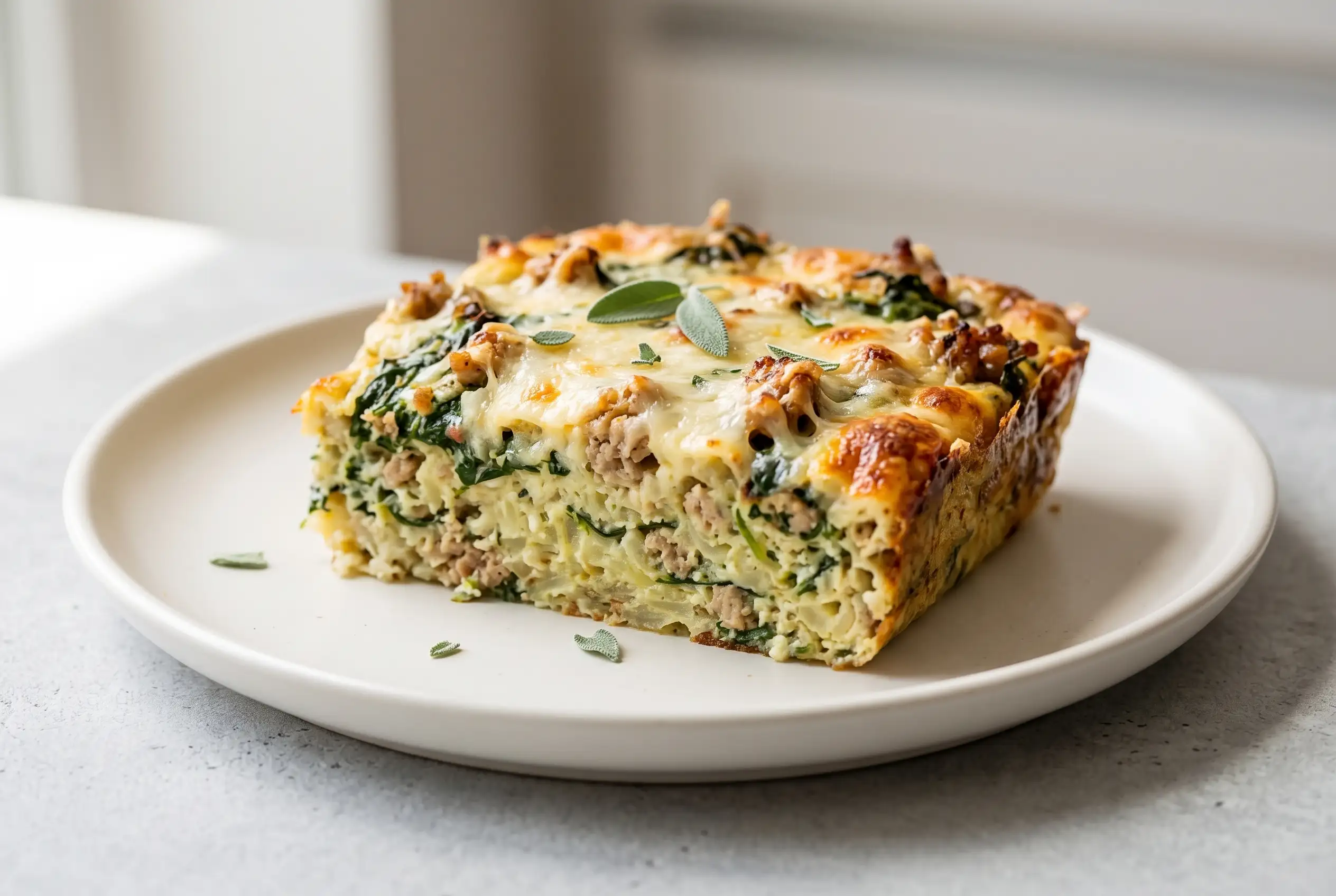
Spinach potato casserole brings together leafy greens, grated potatoes, seasoned turkey, and melted cheese in a baked breakfast dish designed around balanced texture and savory flavor. The combination creates a spinach breakfast casserole that feels substantial because each layer contributes a different quality: tender vegetables, protein-rich filling, and a golden cheese topping.
Morning meals often benefit from a dish that can hold its structure after baking, and this spinach potato casserole achieves that through careful handling of moisture. The raw potato, wilted spinach, eggs, and milk come together into a cohesive center while the browned turkey adds a hearty element that keeps the casserole satisfying.
Spinach Potato Casserole Builds Flavor Through Balanced Layers
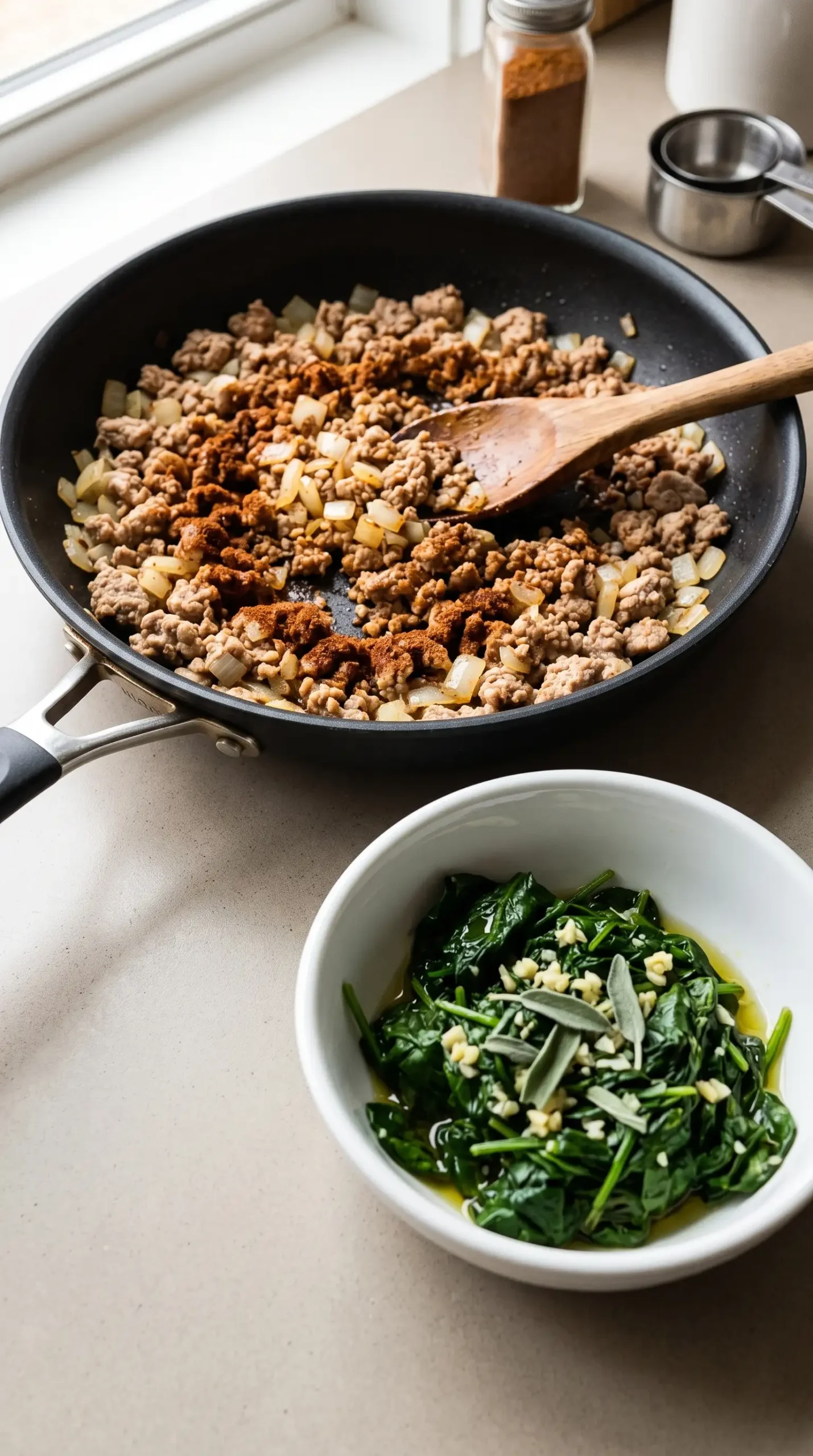
Spinach potato casserole depends on how the ingredients interact before they reach the oven. The turkey is cooked separately with chili powder and onion powder, allowing the seasoning to coat the meat while excess moisture is reduced. That step creates a filling with a deeper savory profile instead of a plain egg-based center.
Fresh spinach changes character when it is briefly wilted with garlic and sage. Reducing the volume of the leaves before baking helps the greens distribute throughout the mixture, creating consistent bites without large pockets of moisture. The herbs also connect the vegetables with the seasoned turkey.
The egg mixture acts as the structure that brings everything together. Once combined with the potatoes, cheese, turkey, and spinach, the casserole develops a firm texture that still remains tender after baking. A well-balanced mixture allows the baked spinach potato casserole to hold its shape while keeping the vegetables noticeable.
Fresh Spinach and Raw Potato Shape the Casserole Base
The most important ingredient decisions for spinach potato casserole involve moisture control and texture. Raw grated potatoes provide a delicate foundation that absorbs some of the egg mixture while adding a soft, comforting bite, and fresh spinach contributes color and a vegetable-forward character after being gently wilted.
Turkey Seasoning Creates a Savory Breakfast Filling
Ground turkey gives this dish a lighter protein component while still providing a substantial center. Browning the turkey until it is fully cooked and crumbled allows the chili powder and onion powder to spread throughout the meat, preventing isolated areas of seasoning.
A turkey spinach potato casserole benefits from treating the meat as part of the overall mixture instead of a separate topping. The small pieces blend with the eggs and vegetables, so each serving contains a combination of flavors rather than distinct sections.
Careful heat management during browning also influences the finished texture. Cooking the turkey before combining it with the other ingredients means the oven can focus on setting the egg mixture and creating the golden surface instead of completing the meat preparation.
Oven Heat Controls the Baked Spinach Potato Casserole Finish
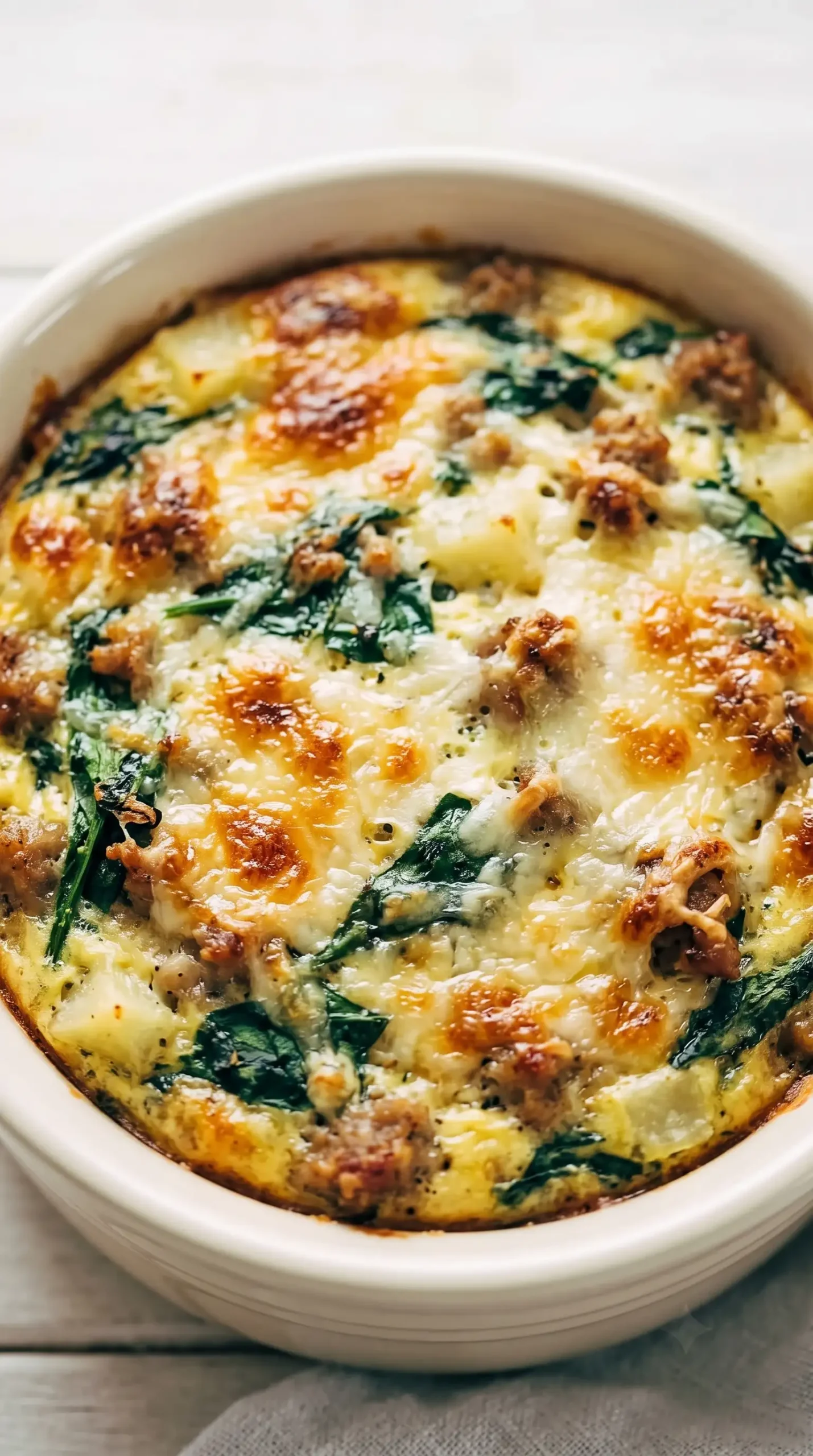
Consistent baking depends on a prepared dish, an evenly combined mixture, and attention to visual cues. A golden top and a casserole that springs back when touched indicate that the eggs have set while the interior remains tender.
Grated Potatoes Add Texture Without Overpowering the Filling
Potatoes play a quiet but important role in spinach potato casserole because their texture changes during baking. Finely grated raw potatoes integrate into the egg mixture and create small pockets of softness throughout the dish.
Unlike larger potato pieces that create separate layers, grated potatoes distribute more evenly and allow the turkey, spinach, and cheese flavors to remain connected. Removing the skin before grating keeps the texture smooth and consistent.
Kitchen timing matters when potatoes are added to an egg-based dish. The grated pieces need enough contact with the surrounding mixture to soften as the casserole bakes, while the other ingredients provide moisture and richness around them.
Mistakes That Affect Spinach Potato Casserole Texture
Several small preparation choices can change the result of spinach potato casserole. Avoiding these common issues helps preserve the balance between a firm slice and a tender interior.
- Overlooking spinach moisture: Wilt the leaves before combining them so extra liquid does not weaken the baked structure.
- Skipping turkey browning: Fully cooking and crumbling the turkey helps the seasoning spread evenly through the filling.
- Uneven mixing: Combine the eggs, vegetables, meat, potatoes, and cheese thoroughly so each portion has similar texture.
- Ignoring the surface: Watch for a golden top and a set center instead of relying only on time.
Another common issue comes from adding ingredients before they are ready. The spinach should be reduced in volume, and the turkey should already be cooked before the casserole mixture enters the oven. These steps protect the final texture.
Small corrections can improve a batch that needs adjustment. If the mixture seems uneven before baking, gently stir again to redistribute the potatoes and vegetables. Avoid excessive handling once the casserole begins baking because the structure forms as the eggs set.
Mozzarella and Parmesan Shape the Golden Casserole Top
Cheese contributes both texture and flavor to the finished spinach potato casserole. Low moisture mozzarella melts into the filling and creates a familiar creamy element, while Parmesan on top develops a savory browned finish that highlights the herbs and vegetables.
Breakfast Portions Pair Well With Simple Additions
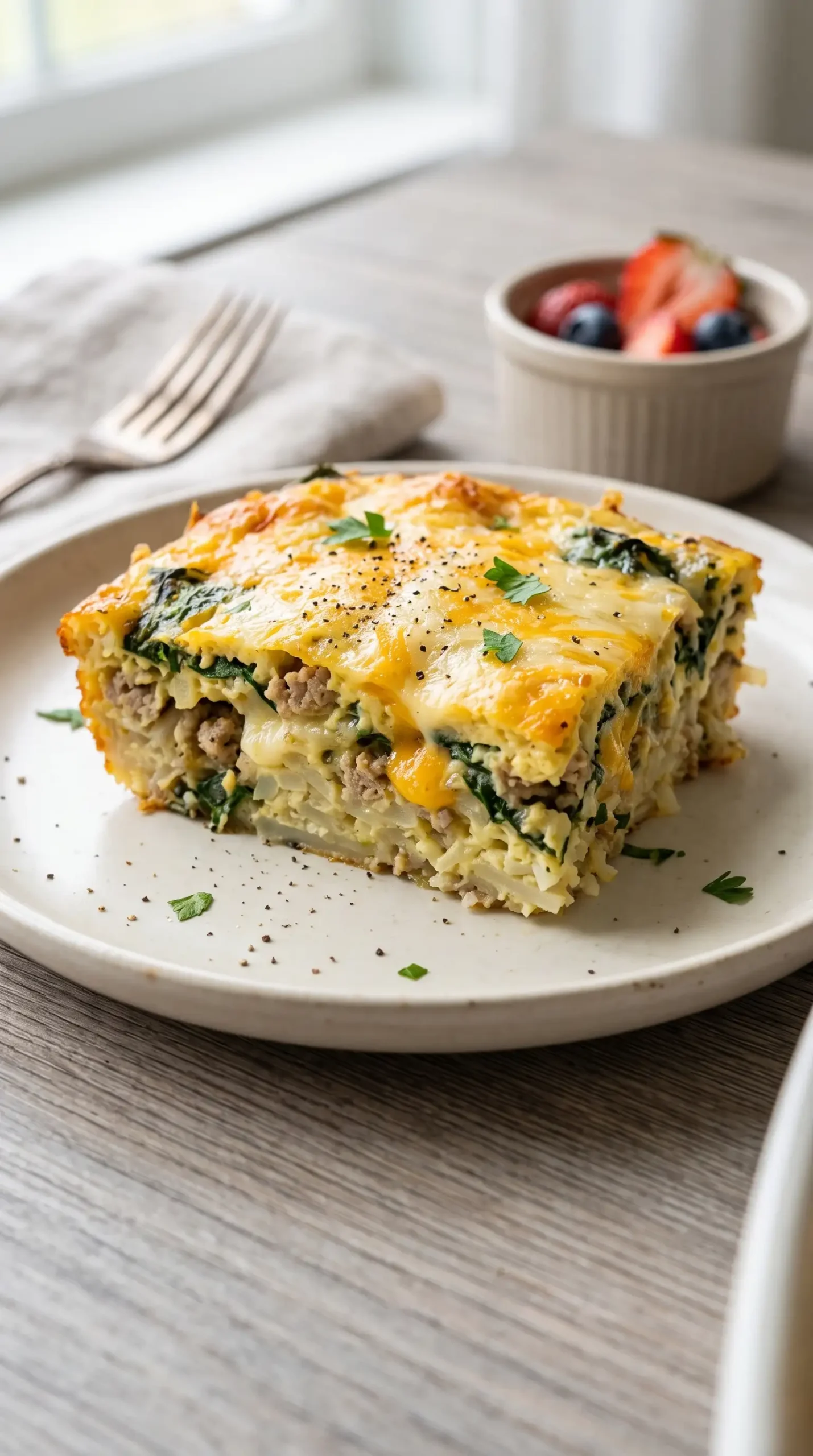
The combination of turkey, spinach, potatoes, and eggs makes this casserole suitable for a variety of breakfast settings. Its savory profile works well with fresh sides that add contrast without competing with the baked filling.
Serving choices can change how the dish feels at the table. Consider options such as:
- Fresh fruit: Adds a bright contrast to the savory cheese and turkey flavors.
- Simple greens: Provides a lighter companion for the rich baked center.
- Warm beverages: Complements the comforting style of a baked morning meal.
The spinach potato casserole also fits into meal planning because the flavors remain balanced after the ingredients have settled together. The combination of vegetables, protein, and eggs creates a complete breakfast option without requiring many additional toppings.
Storage Choices Preserve the Casserole Structure
Proper handling after baking helps maintain the texture of the spinach breakfast casserole. Allowing the dish to cool appropriately before covering it prevents unnecessary moisture from affecting the surface and keeps the cheese topping from becoming overly soft.
For the best quality and safe storage, refrigerate leftover spinach potato casserole promptly and use it within the recommended window for cooked egg dishes, which includes casseroles made with eggs and other perishable ingredients.
| Storage approach | Best use | Texture consideration |
|---|---|---|
| Covered refrigerator storage | Enjoying remaining portions later | Keeps the egg filling firm when reheated gently |
| Individual portions | Quick breakfast serving | Helps warm only what is needed |
| Careful reheating | Restoring a baked texture | Reduces the chance of drying the eggs |
Simple Variations Keep Spinach Potato Casserole Flexible
Spinach potato casserole can adapt to different preferences while maintaining its core structure. The main balance to protect is the relationship between the egg mixture, vegetables, protein, and cheese.
Possible adjustments include changing the seasoning profile or using a different cooking vessel. Keeping the ingredient proportions similar helps preserve the texture created by the original combination of potatoes, eggs, and spinach.
Variations work best when they respect moisture levels. Adding ingredients with significant liquid can change how the casserole sets, while dry additions may require attention to the overall balance of the filling.
Egg Mixture Consistency Determines Every Slice
The eggs and milk create the framework that holds spinach potato casserole together after baking. Whisking them evenly before adding the other components allows the liquid mixture to coat the turkey, vegetables, potatoes, and cheese throughout the dish.
Morning Meal Planning Benefits From a Protein-Rich Bake
A breakfast casserole can simplify busy mornings because it combines several familiar breakfast elements into one dish. The turkey provides a savory center, while spinach and potatoes bring vegetables and texture into the same serving. A dish such as an egg and croissant bake follows a similarly satisfying baked breakfast format with eggs, greens, and cheese.
Families and small groups can adjust serving styles around the baked dish. It can be presented as a centerpiece alongside lighter foods, or portions can be paired with simple sides depending on the occasion.
Meal planning becomes easier when the preparation focuses on dependable textures. The spinach potato casserole keeps its identity through the contrast of tender vegetables, seasoned meat, and a structured egg base.
Sage and Garlic Create a Distinct Vegetable Finish
Garlic and fresh sage give the spinach portion a more developed flavor before it meets the other ingredients. Briefly cooking the aromatics releases their character and helps them blend with the wilted greens.
Spinach Potato Casserole Reaches Its Best Texture Through Controlled Preparation
The baked spinach potato casserole succeeds because each preparation choice supports the next one. Cooked turkey creates a seasoned foundation, softened spinach manages moisture, grated potatoes add body, and the egg mixture binds everything into a sliceable breakfast dish.
Attention to texture remains the key judgment throughout preparation. When the ingredients are combined evenly and baked until the center is set, the casserole delivers a balanced result where vegetables, protein, and cheese remain distinct while working together.
Spinach Potato Casserole Questions About Storage and Preparation
Can spinach potato casserole be prepared ahead of baking?
The mixture can be assembled in advance when the ingredients are handled carefully. Keeping the prepared dish chilled before baking may change the timing needed in the oven, so check that the center is fully set before serving.
Why should spinach be wilted before adding it?
Wilted spinach takes up less space and releases some moisture before it joins the egg mixture. This helps maintain a balanced filling and prevents excess liquid from affecting the baked texture.
Can I use another type of cheese instead of mozzarella?
Another melting cheese can work if it provides a similar texture and flavor balance. The important consideration is choosing a cheese that complements the turkey, spinach, and potato combination without overwhelming the dish.
How do I know when the casserole is ready?
The surface should appear golden, and the center should have a set texture that springs back when touched. These signs show that the egg mixture has cooked through while maintaining tenderness.
Spinach Potato Casserole with Turkey and Cheese Topping
Ingredients
Method
- Heat the oven to 400°F/205°C. Coat a small 3-cup casserole dish or ovenproof skillet with nonstick spray.
- Warm 1/2 tablespoon olive oil in a nonstick skillet over medium-high heat. Cook the onions for 5 minutes until softened, then add the turkey, chili powder, and onion powder. Cook until the turkey is fully browned and crumbled, then transfer to a bowl.
- Add the remaining 1 tablespoon olive oil to the skillet and lower the heat to medium-low. Cook the garlic and sage for 2-3 minutes, then add the spinach and stir until wilted, about 2 minutes. Transfer the spinach mixture to a bowl.
- Whisk the eggs and milk together in a mixing bowl. Add the cooked turkey, spinach, potatoes, and Mozzarella cheese, then stir until evenly combined.
- Move the mixture into the prepared casserole dish and sprinkle the Parmesan cheese over the top.
- Bake for 20-25 minutes until the top is golden brown and the casserole springs back when touched. Season with salt and pepper to taste.