

Egg and croissant bake brings together buttery pastry, savory ham, tender spinach, and a rich egg custard in a brunch centerpiece that feels special without requiring complicated techniques. The combination works because each layer has a specific role: croissants create structure, caramelized onions bring sweetness, and the baked eggs tie everything into a sliceable casserole.
Morning gatherings often call for dishes that can move easily from preparation to the table, and a baked egg croissant casserole fits that need. The pastry absorbs some of the seasoned egg mixture while still keeping enough texture to make each serving interesting.
Brunch Bake Brings Comfort to the Table

Family-style breakfasts benefit from dishes that can be portioned cleanly and shared. The egg and croissant bake offers that quality through a combination of familiar breakfast ingredients arranged in a format that works for relaxed weekends, holidays, or casual entertaining.
Balanced flavors matter in a dish with several rich elements. The buttery pastry, salty ham, creamy cheese, and eggs are supported by spinach and deeply browned onions, creating contrast throughout the casserole instead of one dominant flavor.
Croissants Create the Right Breakfast Texture
Buttery croissants are the defining feature of this brunch bake because their flaky layers respond differently from standard bread. Torn pieces allow the egg mixture to reach multiple surfaces, creating soft areas alongside lightly toasted edges.
Using smaller pieces helps the pastry settle into the casserole dish without leaving large dry pockets. Larger croissant sections can also work, but the arrangement should allow the custard to surround the pastry for a consistent texture.
Caramelized Onions Shape the Savory Layers
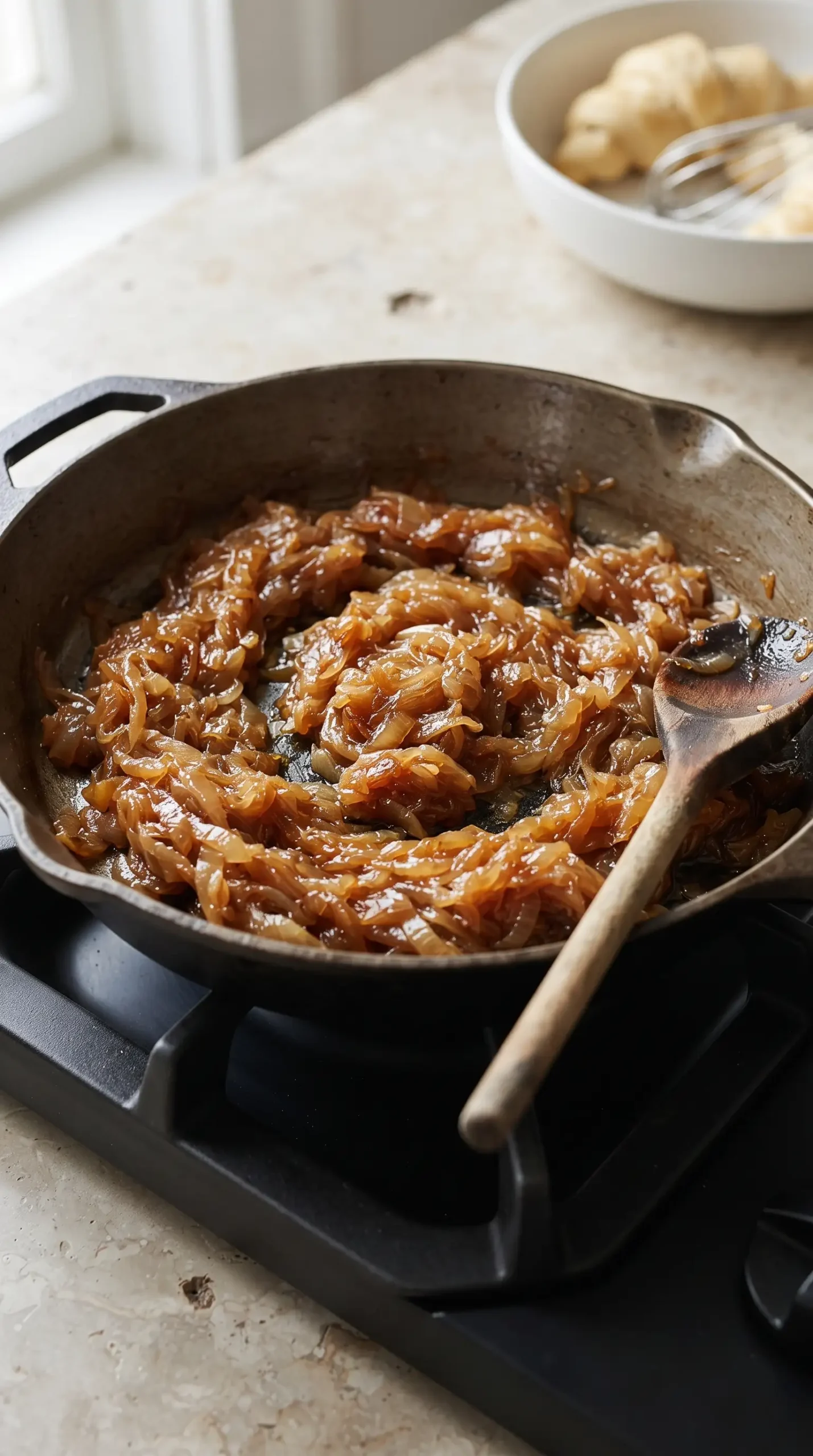
Slowly cooked onions provide one of the most important flavor decisions in the dish. Thin slices become deeply golden and soft when cooked patiently, developing a sweetness that balances the salty ham and savory cheese.
Patience during onion cooking creates a noticeable difference because quick browning does not produce the same jammy texture. Keeping the heat moderate allows the onions to soften fully while their natural sugars concentrate.
Freshly prepared onions also make the casserole easier to customize. Their mellow flavor blends into the egg mixture, so each serving receives the savory depth without large pieces overpowering the pastry.
Ham and Spinach Croissant Bake Builds Flavor Balance
Ham and spinach croissant bake describes the combination that makes this dish especially satisfying. The ham brings a savory, hearty element, while spinach adds freshness and color after being gently wilted.
Cooked ham benefits from a brief pan-fry before assembly because the edges can develop extra flavor. The spinach should only need enough heat to soften, keeping it integrated without adding unnecessary moisture.
Layered breakfasts with cooked greens benefit from removing excess moisture before baking; a spinach potato casserole pairs prepared spinach with cheese and a sturdy base for a cohesive texture.
| Component | Preparation Focus | Reason It Matters |
|---|---|---|
| Ham | Lightly browned before layering | Builds savory flavor and texture |
| Spinach | Wilted before assembly | Helps maintain a balanced casserole texture |
| Cheese | Divided between layers and topping | Creates flavor throughout the bake |
Ingredient Choices Improve Croissant Bake Results
Swiss or Gruyere-style cheese works especially well because its nutty flavor complements the buttery pastry and savory fillings. The cheese placement also matters, since distributing some inside the layers and some on top creates a more complete bite.
Eggs form the custard foundation, and the milk, Dijon mustard, salt, and pepper season that base before baking. The mustard does not make the casserole taste like a sauce; it provides a subtle savory note that supports the other ingredients.
- Croissant size: Smaller pieces suit even layering, while larger pieces create more noticeable pastry sections.
- Cheese style: Nutty melting cheeses pair naturally with ham and buttery croissants.
- Vegetable texture: Cooked spinach should be tender before it joins the casserole layers.
Layering Decisions Protect the Egg Custard

Careful assembly influences how evenly the baked egg croissant casserole cooks. Placing the fillings beneath the egg mixture allows the flavors to blend while the croissant pieces on top can develop a lightly golden finish.
Cheese distribution is another useful decision during preparation. A portion beneath the eggs creates richness inside the casserole, while the finishing layer adds a browned surface that highlights the pastry.
Cooking Control Keeps the Bake Tender
Temperature management is the main factor that separates a creamy casserole from an overdone one. The eggs need enough heat to set throughout, and egg dishes should reach 160°F (71°C) for a reliable finishing point before serving. Excessive baking can still make the texture firm and dry.
Visual cues are especially helpful near the end of baking. A slight puffing appearance and a center that is almost firm during a gentle jiggle test indicate that the custard is close to ready.
Covering the casserole during the first stage of baking helps the interior cook steadily before the surface is exposed for additional browning. Removing the cover at the right point gives the croissants and cheese a more finished appearance.
Smaller Mistakes Ruin Egg and Croissant Bake Texture
Common errors in an egg and croissant bake usually involve moisture, timing, or preparation choices that affect the final texture. Avoiding these problems starts with understanding how the pastry and custard interact.
- Overbaking: Leaving the casserole in heat too long can make the eggs lose their soft texture.
- Skipping onion patience: Rushing the onions prevents the deep flavor and soft consistency they provide.
- Over-soaking croissants: Letting pastry absorb egg mixture for too long can reduce the contrast between tender and flaky areas.
Another frequent issue comes from adding ingredients without preparing them first. Wilted spinach and lightly browned ham fit the casserole better because they enter the dish with the textures and flavors already developed.
Make Ahead Croissant Breakfast Bake Fits Busy Mornings
Planning ahead makes this dish useful for occasions when breakfast needs to be organized before guests arrive. A make ahead croissant breakfast bake can include several prepared components waiting for final assembly.
Even when preparing ahead, croissant timing deserves attention. Keeping the pastry separate until closer to baking helps preserve its texture instead of allowing it to absorb all the egg mixture for an extended period.
- Prepare the cooked filling elements ahead when convenient.
- Assemble the casserole closer to baking time for better pastry texture.
- Check the center carefully during baking to avoid overcooking.
Serving Ideas Complete the Brunch Bake
Fresh accompaniments can balance the richness of the casserole without competing with its main flavors. A simple fruit dish, a crisp salad, or a light beverage can make the meal feel more complete.
Individual slices hold their shape best after the casserole has had a moment to settle. Cutting clean portions also helps show the layers of pastry, filling, and egg throughout each serving.
Leftover Storage Keeps Croissant Bake Ready
Extra portions can be useful for quick breakfasts when stored properly. The combination of eggs and pastry is best enjoyed after gentle reheating that warms the center without aggressively drying the croissants.
Cold storage works best when leftovers are covered and protected from excess air. Reheating smaller portions can make it easier to maintain the softer custard texture.
Croissant Variations Expand the Breakfast Bake
Small adjustments can change the character of the casserole while keeping its basic structure. Different cheeses, additional vegetables, or alternative breakfast meats can create new versions suited to different preferences.
Flavor changes should still respect the balance between pastry, filling, and egg custard. Ingredients with high moisture levels may need preparation before joining the layers so the casserole remains cohesive.
Gentle Baking Keeps the Egg and Croissant Bake Balanced
The egg and croissant bake succeeds when the pastry stays recognizable, the custard remains tender, and the savory fillings are evenly distributed. The most important judgment comes during baking, when the center needs enough time to set without losing its soft texture.
Golden croissant pieces, deeply cooked onions, and carefully prepared fillings create a casserole where every layer contributes to the finished slice. The result depends on restraint: thoughtful preparation and gentle heat allow the ingredients to work together.
Questions About Texture and Timing
Can the croissants become soggy in the casserole?
Croissants can soften as they absorb the egg mixture, but keeping the pieces properly arranged and avoiding an overly long soak helps preserve some flaky texture. The top pieces receive more direct heat, which helps maintain contrast.
How can the center of the egg and croissant bake stay tender?
The center stays tender when baking stops once the eggs are nearly firm. Watching for slight puffing and using the gentle jiggle test helps prevent taking the casserole too far.
Can I prepare the croissant breakfast bake with different fillings?
Yes, the structure works with other compatible breakfast fillings, but replacements should match the moisture and cooking needs of the original ingredients. Pre-cooking vegetables that release liquid helps maintain the right consistency.
What makes caramelized onions worth the extra time?
Caramelized onions add concentrated sweetness and a soft texture that contrasts with the ham, cheese, and pastry. Their deeper flavor is one of the elements that gives the casserole a more developed taste.
Egg and Croissant Bake with Ham, Spinach and Cheese
Ingredients
Method
- Heat olive oil in a large heavy pan over medium-low heat. Add sliced onions and cook, stirring occasionally, for about 30 minutes until they become deeply browned, soft, and jammy.
- Add ham to a skillet with a small drizzle of olive oil. Cook until the edges are browned and some fat has rendered, then add spinach and stir until wilted. Remove from heat.
- Whisk together eggs, milk, Dijon mustard, salt, and pepper until combined.
- Preheat the oven to 350°F (177°C). Grease a 9×13 baking dish.
- Spread the ham, spinach, and onions in the bottom of the baking dish. Add half of the shredded cheese, pour the egg mixture over the fillings, arrange croissant pieces on top, and finish with the remaining cheese.
- Cover the baking dish with foil and bake for 30 minutes, depending on oven and pan size.
- Remove the foil and continue baking for another 5-10 minutes until the center is almost completely firm when gently jiggled and the casserole is beginning to puff.
- Slice the bake into portions and serve.