
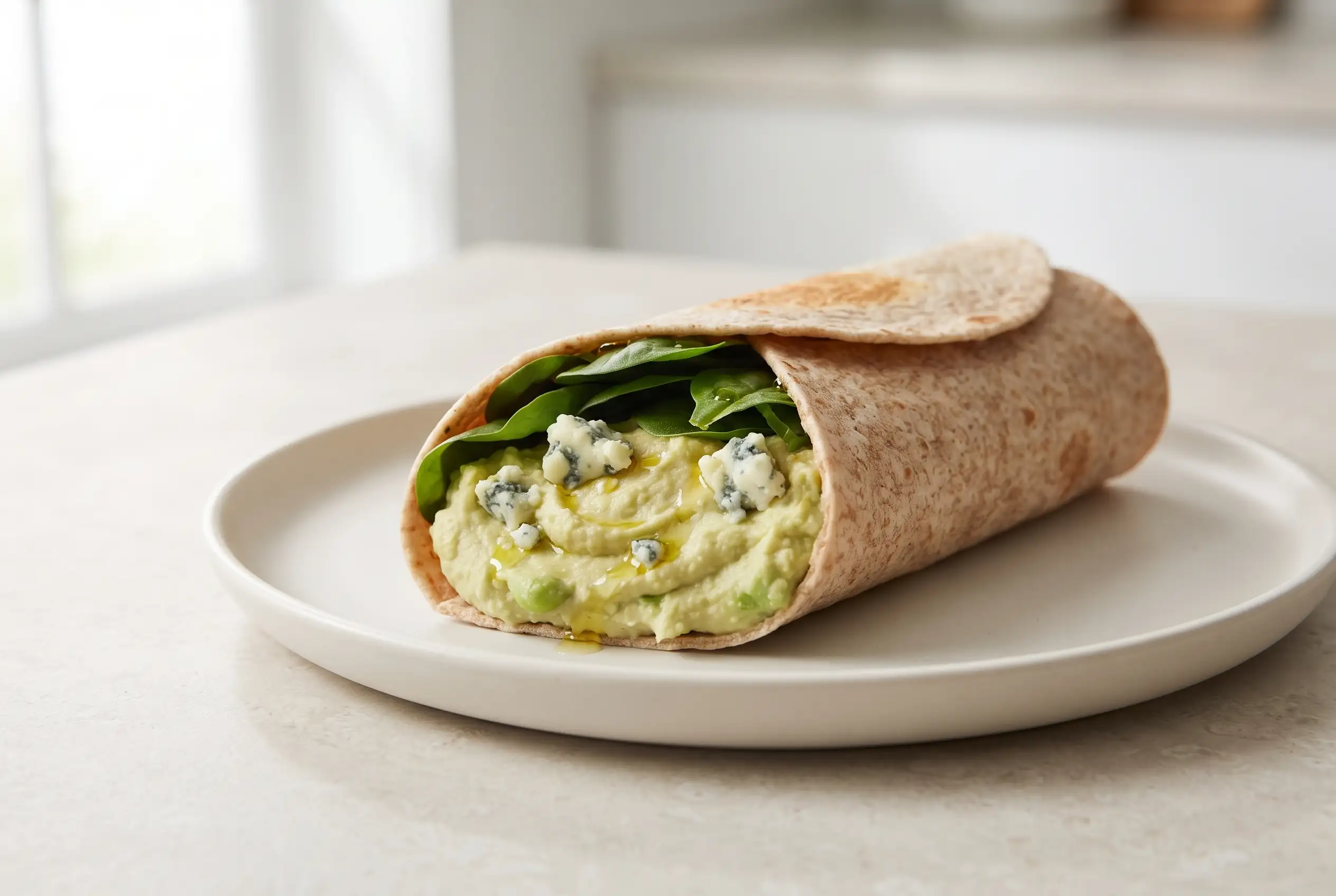
Edamame hummus wrap combines a creamy homemade spread with fresh spinach, crumbled blue cheese, and flexible toppings for a simple handheld meal. This edamame hummus wrap uses cooked edamame as the base for a hummus-style filling that can be adjusted with tahini, garlic, olive oil, and water until the texture fits your serving style.
Edamame Hummus Wrap Brings a Fresh Spin to Classic Hummus
Traditional hummus is often built around chickpeas, but an edamame hummus recipe takes a different route by using cooked edamame to create a smooth, green-tinted spread. The texture is shaped in the food processor, where the beans, oil, tahini, and seasonings become a creamy filling that works well inside a wrap.
The wrap format makes the spread easier to use beyond a dip. A layer of edamame hummus can support leafy greens, cheese, and optional toppings without requiring complicated preparation. The combination of creamy filling and crisp additions creates contrast in each bite.
Blue cheese adds a salty, tangy element to balance the mild edamame base, while spinach keeps the filling fresh. Optional bacon and an extra drizzle of olive oil allow the wrap to move between lighter and richer serving styles.
Cooked Edamame Creates the Right Hummus Texture
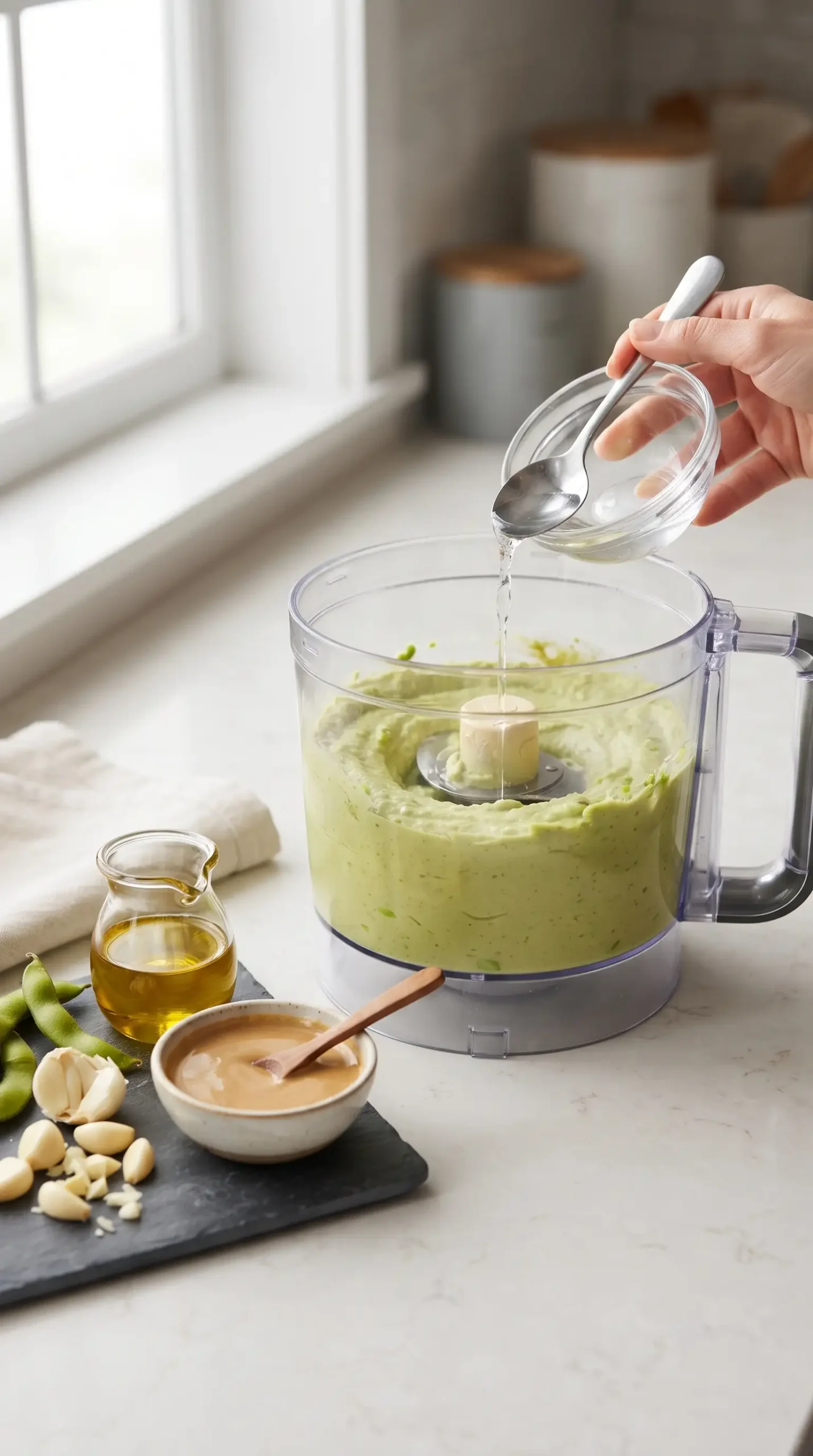
The texture of the edamame hummus recipe depends on starting with cooked edamame that blends smoothly. Using shelled edamame keeps the preparation practical because the beans can go directly into the food processor.
Tahini contributes a familiar hummus character, while olive oil helps create a smoother consistency. Water is the adjustment tool that lets the spread become thinner or thicker depending on whether it will be used as a dip or as a wrap filling.
Garlic and salt shape the overall flavor without requiring a long ingredient list. Since the base is simple, small changes in seasoning or consistency can noticeably change the finished wrap.
Ingredient Choices Shape This Edamame Hummus Wrap
Choosing the right ingredients helps control how the spread behaves. The most important decision is selecting cooked edamame without pods, because the beans need to blend into a smooth mixture that can be spread easily.
- Edamame texture: Cooked beans should be ready to blend without leaving a difficult-to-spread mixture.
- Tahini amount: The sesame paste can be reduced or omitted if a different flavor direction is preferred.
- Added flavor: Lemon or other seasonings can be included when adjusting the hummus-style base.
- Wrap toppings: Spinach, blue cheese, and optional bacon change the balance of freshness, richness, and saltiness.
Blending Control Improves the Edamame Hummus Recipe
The food processor does the main work, but attention during blending determines the final spread. A mixture that becomes too thick can be loosened gradually by adding water by the spoonful until it reaches the desired texture.
Stopping to check consistency prevents over-adjusting the mixture. A wrap filling should be easy to spread, while a thicker version may work better when used as a dip or paired with vegetables.
Common Edamame Hummus Wrap Mistakes to Avoid
Several problems can affect the finished wrap, and most come from texture or balance choices. Avoiding these issues keeps the filling easier to use and prevents toppings from overwhelming the base.
| Issue | What happens | Adjustment |
|---|---|---|
| Too much thickness | The hummus is difficult to spread inside the wrap. | Add water gradually until the consistency loosens. |
| Using edamame with pods | The mixture will not match the intended smooth base. | Use shelled cooked edamame. |
| Heavy toppings | The hummus flavor becomes harder to notice. | Balance richer additions with spinach or a lighter topping amount. |
Spinach and Blue Cheese Balance the Wrap Filling
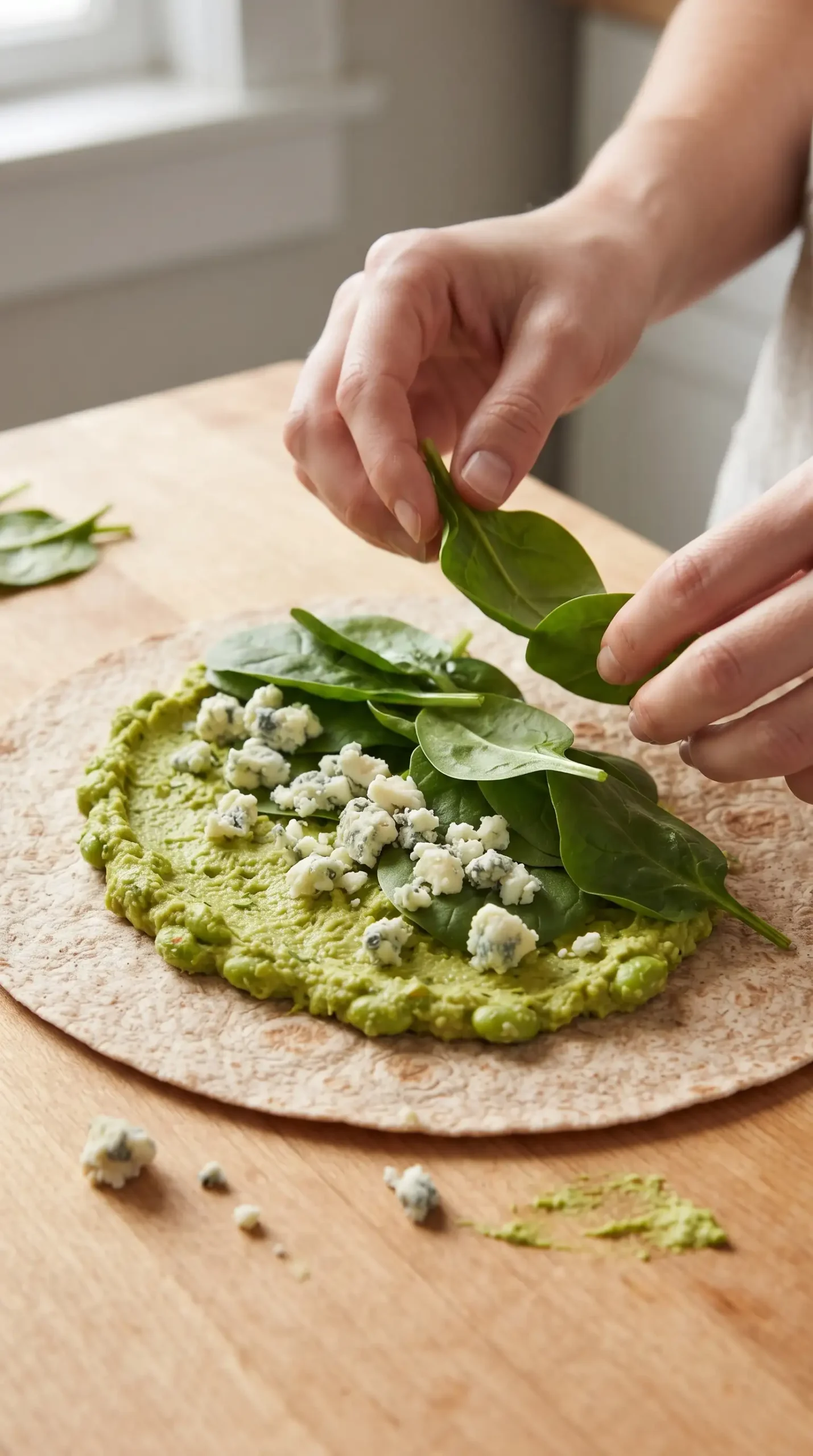
Spinach provides a fresh element that works against the creamy hummus texture. Adding it after spreading the hummus keeps the leafy texture noticeable instead of blending it into the filling.
Crumbled blue cheese brings a strong flavor, so it works best as a finishing ingredient. The cheese does not need to cover the wrap because a smaller amount can add enough salty contrast to the mild edamame base.
Serving Options Expand the Hummus Wrap Recipe
The hummus wrap recipe format allows simple changes without rebuilding the main filling. The same edamame spread can be used with different toppings depending on available ingredients and preferred flavors.
| Serving approach | Added element | Effect on the wrap |
|---|---|---|
| Fresh version | Spinach | Keeps the filling lighter and adds leafy texture. |
| Rich version | Bacon pieces | Adds a savory, salty topping. |
| Simple spread | Extra olive oil drizzle | Adds richness without changing the main filling. |
Edamame Wrap with Hummus Fits Flexible Meal Planning
An edamame wrap with hummus works well when a prepared spread needs to serve more than one purpose. The creamy mixture can move between wraps, snacks, and other serving ideas without requiring a separate preparation process.
Adjusting the Hummus Consistency for Wraps
Wrap fillings need a texture that spreads smoothly but still stays substantial enough to hold toppings. Adding water slowly gives more control than making a large adjustment all at once.
Simple Flavor Changes Keep Edamame Hummus Wraps Adaptable
The base can be customized by changing small details. Tahini may be omitted, and lemon or other additions can be used when a different flavor profile suits the meal.
Preparing Toppings Around the Creamy Edamame Base
Building the wrap is easier when the toppings are ready before assembly. The hummus provides the creamy layer, while spinach and crumbled toppings add the contrasting textures that make the wrap complete.
Extra olive oil can be used as a finishing touch, and bacon can be included when a richer version is desired. Keeping toppings separate until serving helps preserve their individual textures.
Storing and Using Extra Edamame Hummus
Extra hummus can be kept useful beyond one meal by serving it as a spread or dip. A creamy basil dip can be prepared when you want a different topping style for vegetables, crackers, or snack plates. Adjusting the texture with water before serving can help restore a smoother consistency if needed.
Edamame Hummus Wrap Preparation Details That Matter
The most important decisions happen before the wrap is assembled. Smooth blending, careful water additions, and balanced toppings determine whether the filling works as intended.
Edamame Hummus Wrap Brings Together Creamy and Fresh Elements
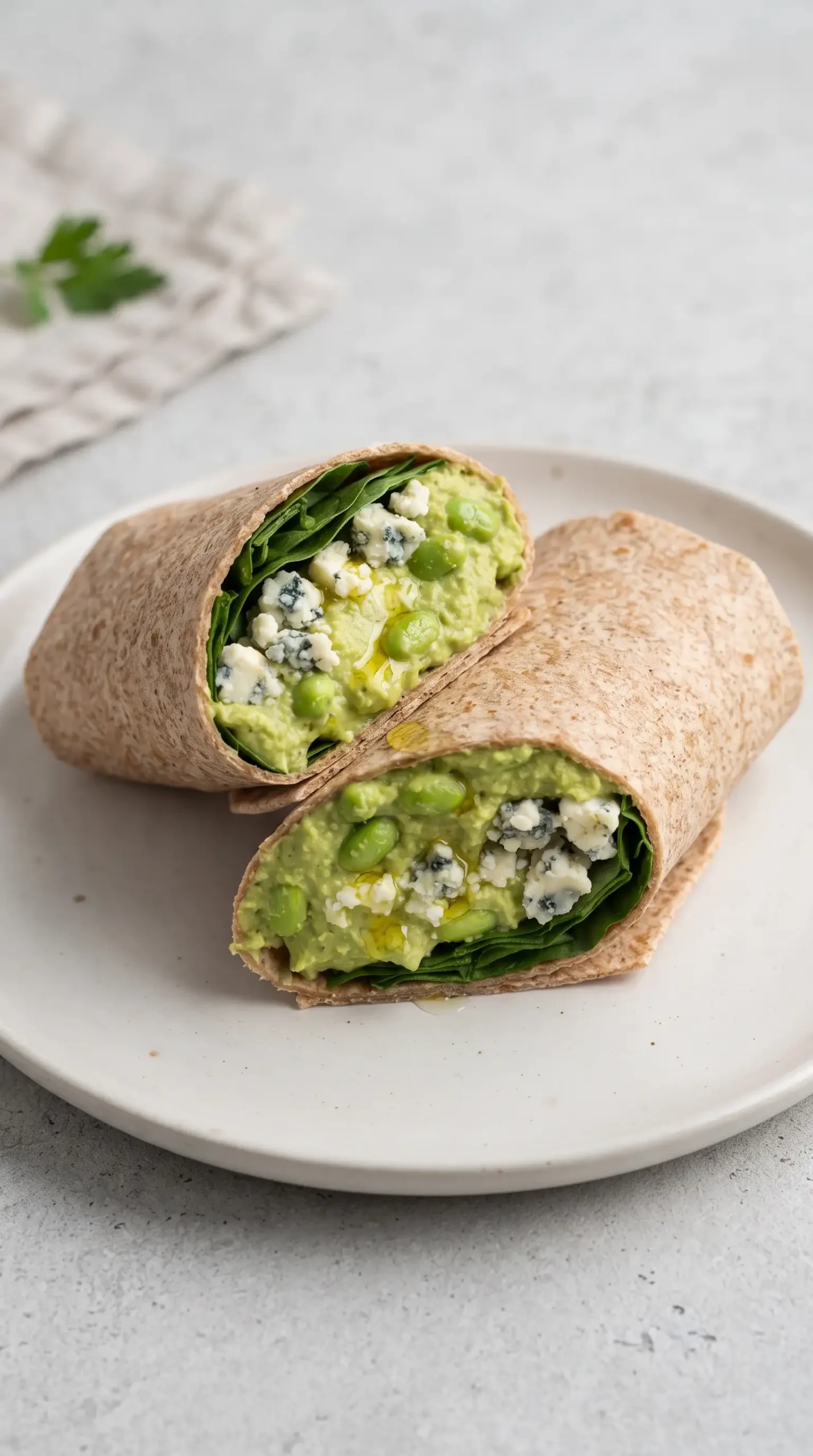
The edamame hummus wrap succeeds because its core filling stays adaptable while the toppings provide contrast. A smooth edamame base gives the wrap structure, and spinach, cheese, or optional additions allow the serving style to change without replacing the main preparation.
Edamame Hummus Wrap Questions About Texture and Storage
Can I make the edamame hummus recipe without tahini?
Yes. Tahini can be omitted when you prefer a simpler bean-based spread. The texture can still be adjusted with olive oil and water until it works for the wrap.
How can I make the wrap filling smoother?
Continue blending in the food processor and add water gradually by the spoonful. Small additions make it easier to reach the consistency you want without making the spread too thin.
What toppings work with an edamame hummus wrap?
Spinach and blue cheese are the listed toppings, while extra olive oil and crumbled bacon are optional additions that change the richness of the finished wrap.
Can I add lemon to the hummus?
Yes. Lemon is a suitable variation for the hummus-style mixture when you want additional brightness in the flavor.
Edamame Hummus Wrap with Blue Cheese and Spinach Recipe
Ingredients
Method
- Add all ingredients to a food processor and blend until combined into a smooth hummus-style mixture.
- If the mixture is too thick, add water gradually by the spoonful while blending until the desired consistency is reached.
- Spread the hummus filling in a wrap, then add spinach and sprinkle with crumbled blue cheese.
- Finish with a 1/2 teaspoon drizzle of olive oil and add crumbled bacon if desired.