
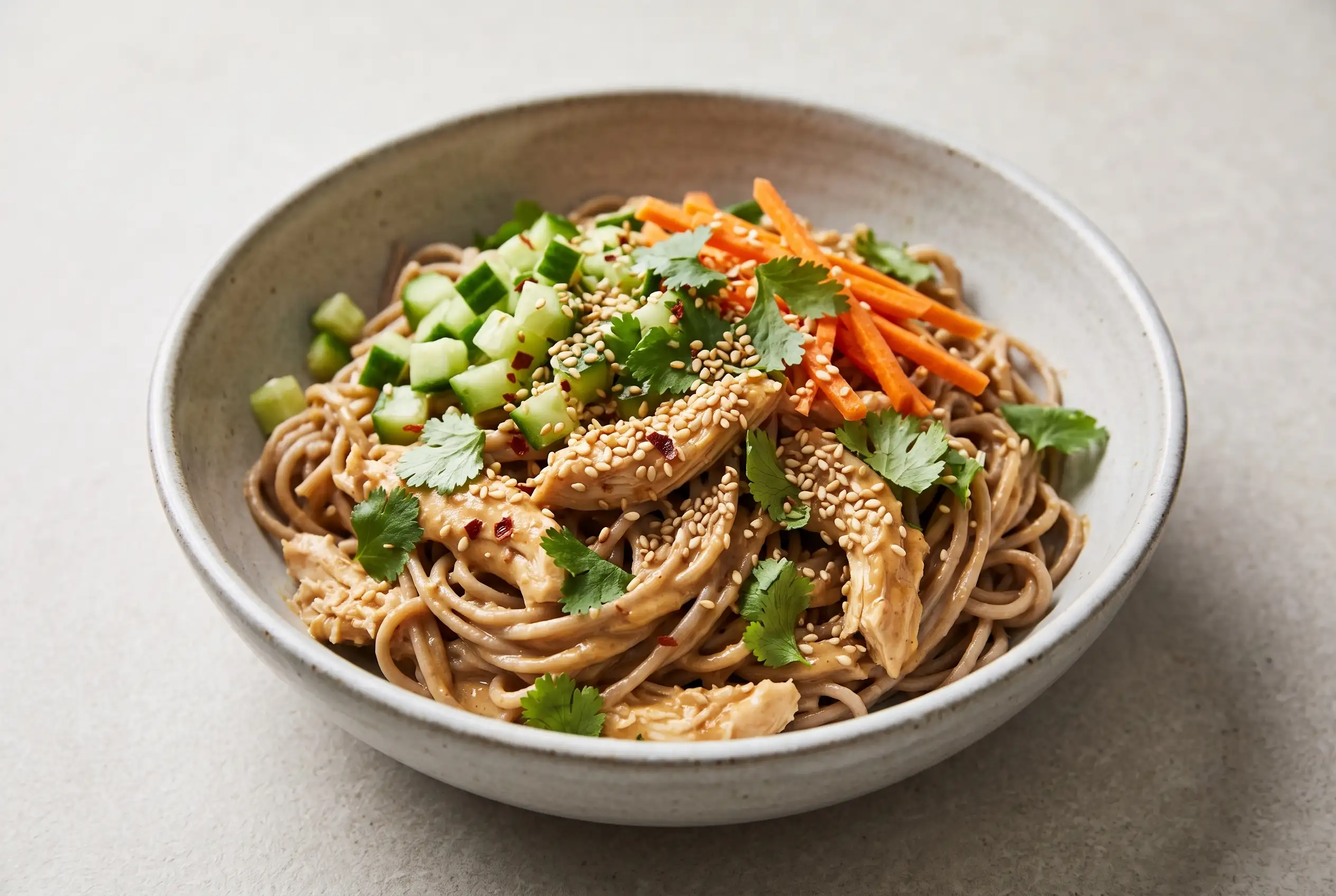
Sesame noodle bowls bring together tender shredded chicken, chewy soba noodles, crisp vegetables, and a creamy peanut sesame sauce in a meal that works at many temperatures. These sesame noodle bowls are built around contrast: savory chicken, nutty sauce, fresh vegetables, and a gentle kick from red pepper flakes create a layered dish that feels satisfying without requiring complicated techniques.
Sesame Noodle Bowls Bring Balance to Every Bite
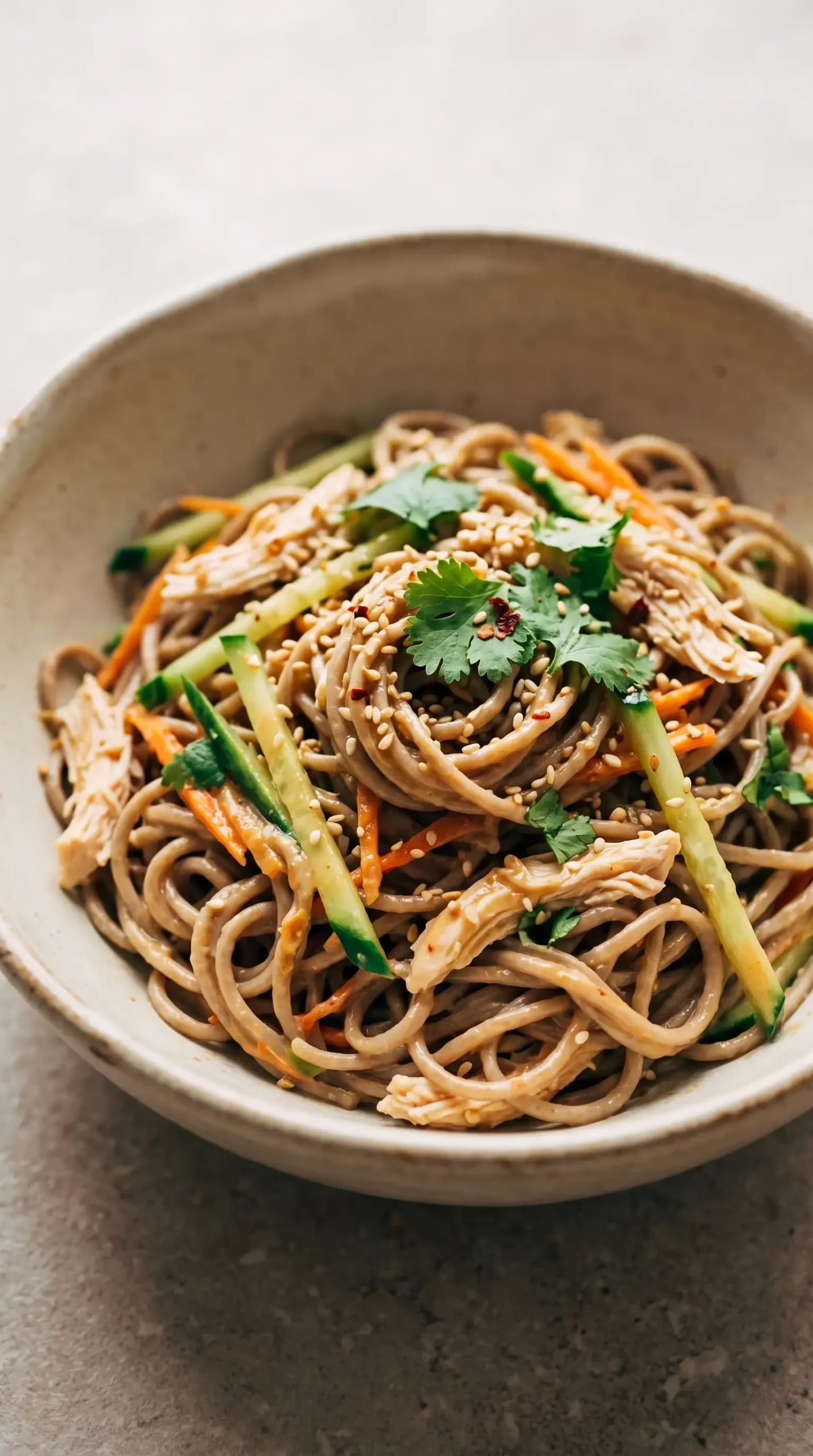
The combination of noodles, chicken, and finely chopped vegetables gives the dish a texture that changes with every forkful. The sauce coats the soba noodles while also clinging to the shredded chicken, creating a consistent flavor throughout the bowl instead of leaving separate components competing for attention.
Peanut Sesame Sauce Needs Careful Balance
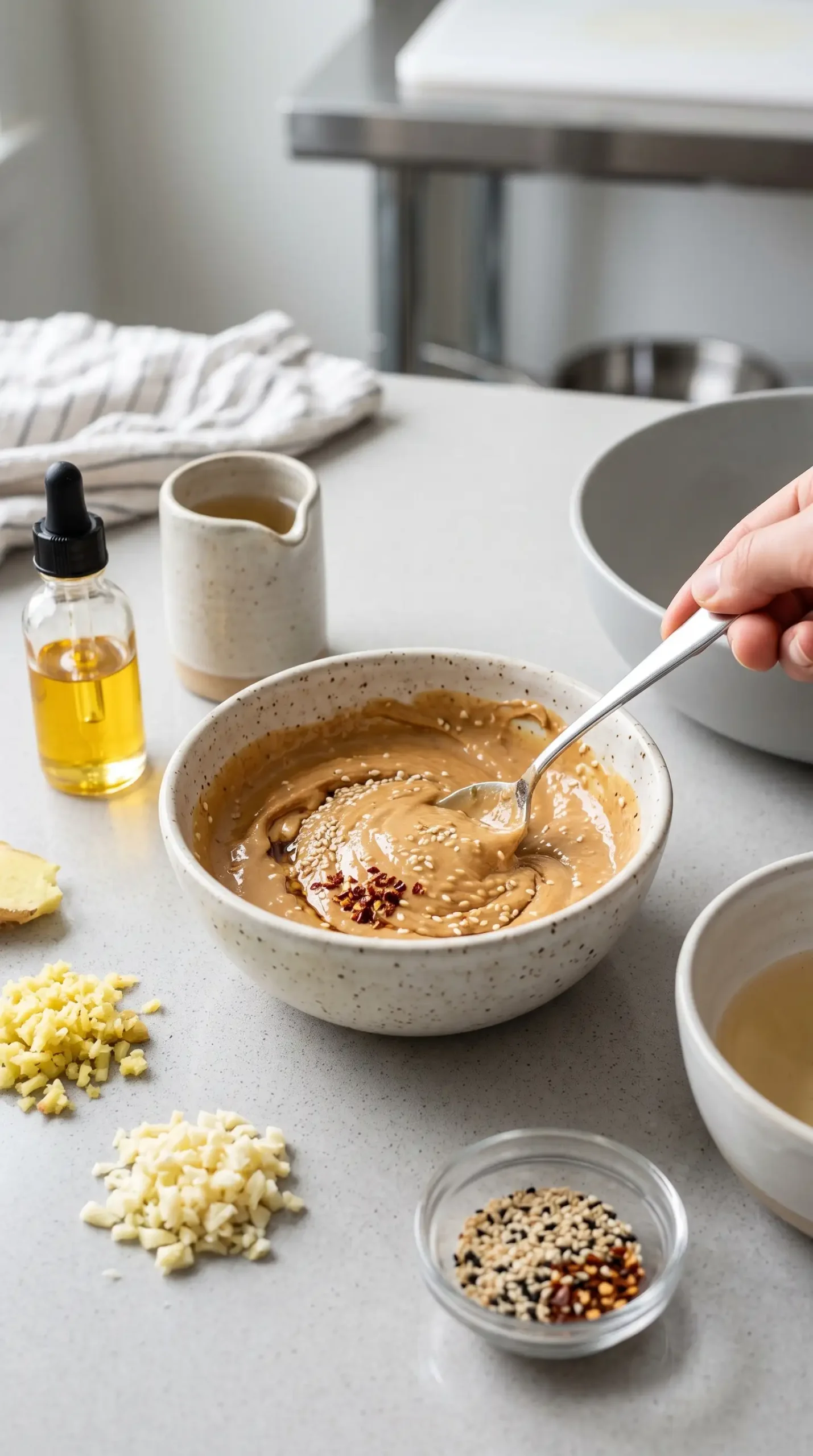
The sauce is the defining element of these chicken sesame noodle bowls because its creamy texture comes from peanut butter combined with sesame oil, rice vinegar, garlic, ginger, and water. Each part has a practical role during mixing, and adjusting the consistency helps the sauce move smoothly through the noodles and chicken.
Fresh ginger and garlic provide a sharp aromatic foundation, while rice vinegar keeps the richness of the peanut butter and sesame oil from feeling heavy. The red pepper flakes and sesame seeds are stirred in after blending so their texture and flavor remain noticeable.
A small change in vinegar choice can also affect the finished flavor. A version made with white distilled vinegar can work for cooks looking for a completely sugar-free variation, while rice vinegar provides the familiar balance that pairs naturally with the other flavors in the bowl.
| Component | Texture contribution | Flavor role |
|---|---|---|
| Peanut butter sauce | Creamy coating | Nutty and savory base |
| Soba noodles | Chewy foundation | Earthy noodle flavor |
| Chopped vegetables | Fresh crunch | Light contrast |
| Chicken | Tender shredded pieces | Hearty protein element |
Soba Noodle Bowls with Chicken Start with Texture
Soba noodle bowls with chicken depend on choosing and preparing each texture carefully. Soba noodles should stay pleasantly chewy after cooking, because overly soft noodles can make the finished dish feel dense once they are combined with sauce.
Soba noodles are traditionally made with buckwheat flour, and the proportion of buckwheat can influence both their flavor and texture. That variation helps explain why different soba products may feel more delicate, springy, or chewy after cooking.
Cooling the cooked noodles briefly before tossing helps them hold their shape and makes it easier for the sesame sauce to distribute evenly. The noodles provide a sturdy base that can support the creamy sauce and finely chopped vegetables.
Shredded chicken adds another layer because small pieces capture the sauce in a way larger chunks cannot. Finishing the chicken in a portion of the sauce before shredding helps create flavorful pieces throughout the bowl.
Fresh Vegetable Prep Keeps Chopped Bowls Lively
The cucumber, carrots, and cilantro are prepared very finely so they blend naturally with the noodles instead of sitting separately on top. Removing excess moisture from the vegetables helps prevent the sauce from becoming diluted after everything is tossed together. Finely cut vegetables can bring freshness and structure to meals such as a chopped vegetable salad, where texture is an important part of each bite.
Chicken Texture Depends on Gentle Finishing
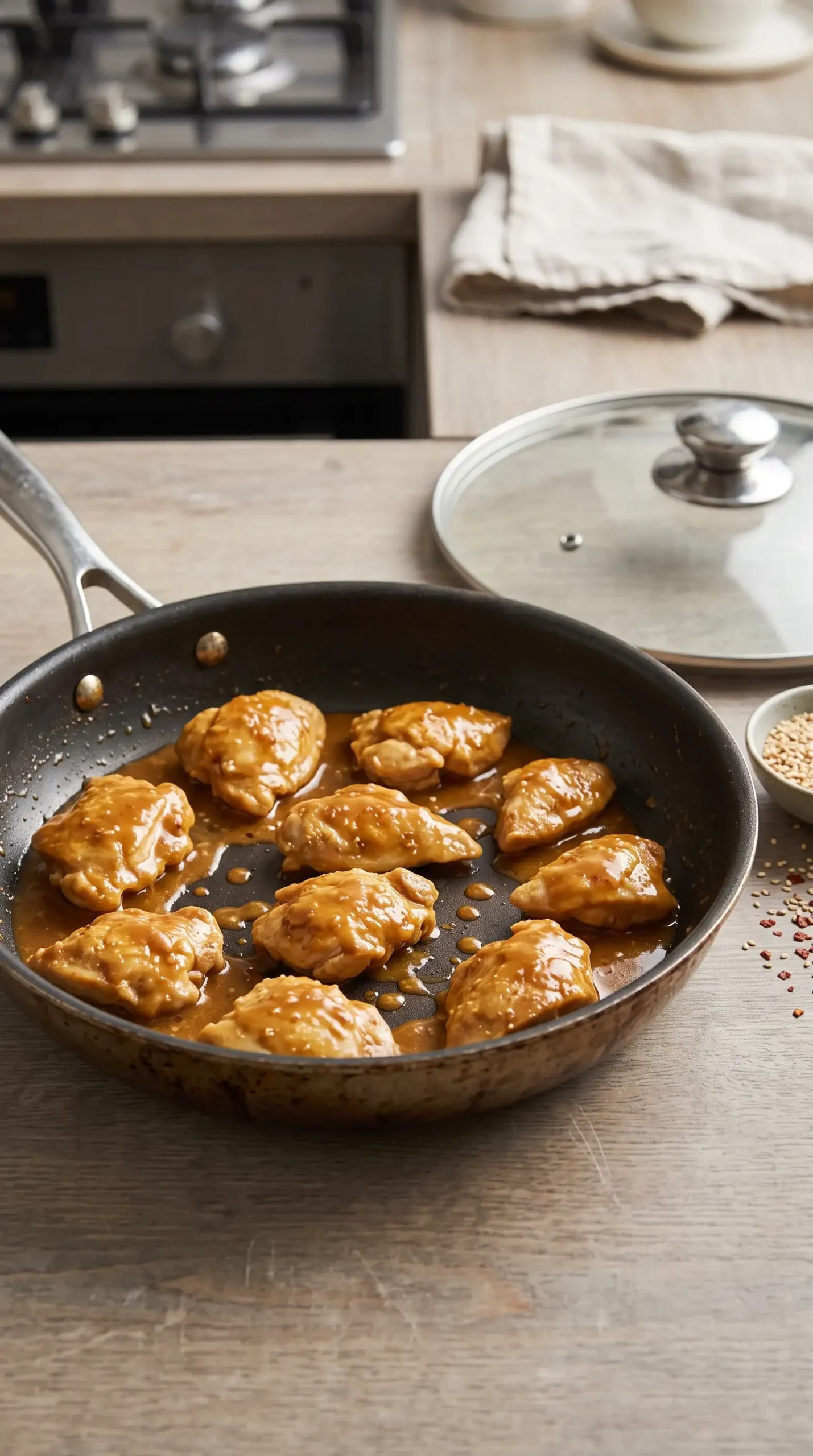
Chicken breast can become dry if it is pushed too far during cooking, especially after it is shredded into smaller pieces. Keeping the skillet heat controlled after the sauce is added gives the chicken time to finish cooking while absorbing additional flavor.
A short rest before shredding also makes the chicken easier to handle and helps preserve its texture. Smaller shredded pieces distribute throughout the noodles, allowing each serving to include a balanced amount of chicken and sauce.
For cooks preparing these peanut sesame noodle bowls ahead of serving, keeping the chicken separate until closer to mealtime can help maintain the best texture. The sauce can be adjusted later with a little water if needed after refrigeration.
Cooking Control Protects the Sauce and Noodles
Successful preparation depends on controlling moisture and heat at key moments. The sauce should remain smooth enough to coat the noodles, while the chicken should cook through without creating a dry texture or overly reduced coating.
Several details help maintain control during cooking:
- Skillet heat: Lower the heat after adding sauce to the chicken to reduce splattering and encourage gentle finishing.
- Noodle texture: Follow package cooking directions so the soba noodles keep their structure.
- Vegetable moisture: Drain excess liquid from finely chopped vegetables before combining.
Chopped Chicken Sesame Noodle Bowls Avoid Common Mistakes
One common mistake with chopped chicken sesame noodle bowls is allowing too much water from the vegetables to enter the mixture. Watery vegetables can thin the sauce and make the noodles lose their creamy coating. Finely chopping is helpful, but draining moisture is equally important.
Another issue occurs when the sauce is added to chicken over high heat. The mixture can splatter, and the sauce may not cling properly if the chicken is not given time to finish gently. Reducing the heat creates a smoother finish.
Overcooking the noodles can also change the entire bowl. Soft noodles absorb sauce differently and may become difficult to separate after tossing. Keeping the soba noodles firm enough to hold their shape preserves the contrast that makes the dish enjoyable.
Serving Choices Change the Bowl Experience
These bowls can be served warm after combining the cooked ingredients, or they can be enjoyed chilled when the flavors have had time to settle together. The finely chopped vegetables make the dish flexible for different serving styles.
Storage Keeps Sesame Noodle Bowls Ready for Later
Storage works best when moisture is managed carefully. Keeping portions in sealed containers helps maintain freshness, and separating components can make it easier to adjust the texture before eating.
Refrigerated noodles may absorb more sauce over time, so a small amount of water can loosen the mixture if needed. The vegetables may soften slightly after sitting, which changes the texture but still allows the flavors to remain together.
Simple Variations Fit the Sesame Noodle Bowl Base
The vegetable mixture can be adapted with other crunchy options when a different texture is desired. The recipe already supports swapping the cucumber or carrots for other vegetables, making the bowl a useful foundation for using available produce.
Cooks can also adjust the spice level by changing the amount of red pepper flakes. Keeping the sesame, peanut, garlic, and ginger foundation consistent preserves the recognizable character of the dish.
| Adjustment | Change to expect | Best use |
|---|---|---|
| More water in sauce | Looser coating | Refreshing chilled bowls |
| Extra red pepper flakes | More heat | Spice-focused servings |
| Different vegetables | New crunch and color | Flexible meal preparation |
Chopped Chicken Sesame Noodle Bowls Create a Complete Flavor Balance
The shredded chicken, soba noodles, vegetables, and sesame sauce work best when each element keeps its own texture while sharing the same flavor direction. A smooth sauce, properly cooked noodles, and carefully prepared vegetables turn simple ingredients into a cohesive bowl.
Small cooking decisions make the biggest difference here. Managing moisture, protecting noodle texture, and finishing the chicken gently allow every serving to keep the balance between creamy, fresh, savory, and slightly spicy flavors.
Sesame Noodle Bowl Questions About Texture and Preparation
Can sesame noodle bowls be served cold?
Yes, sesame noodle bowls can be served cold after the cooked ingredients have been combined. The soba noodles, vegetables, and sauce make the dish suitable for a chilled serving style, especially when a fresh, crisp texture is preferred.
How can the sauce coat the noodles better?
Ensuring the sauce has a smooth consistency before tossing helps it spread across the noodles. Adding small amounts of water to adjust the texture can help the peanut sesame sauce move more evenly through the bowl.
Can another noodle type replace soba noodles?
Other noodles may work, but soba noodles provide the texture and flavor intended for the bowl. A substitute should be chosen based on whether it can hold the creamy sauce and chopped vegetables without becoming too soft.
Why should the vegetables be chopped finely?
Finely chopped vegetables distribute more evenly with the noodles and chicken. Smaller pieces create a more balanced bite and prevent large vegetable pieces from overpowering the other parts of the bowl.
Sesame Noodle Bowls with Chicken and Peanut Sesame Sauce
Ingredients
Method
- Add the sesame oil, rice vinegar, garlic, fresh ginger, salt, peanut butter, and water to a food processor. Blend until mostly smooth, then mix in the sesame seeds and red pepper flakes.
- Cook the soba noodles according to the package directions. Drain and set aside.
- Warm a large skillet with a small amount of oil over medium heat. If the chicken breasts are large, cut them in half. Add the chicken, season with salt and pepper, and cook until lightly browned on the outside.
- Add about one-third of the sesame sauce to the chicken with a little water to thin it. Reduce the heat, cover as needed to prevent splattering, and cook the chicken in the sauce for a few minutes until finished.
- Remove the chicken from the heat, allow it to cool slightly, and shred it.
- Finely chop the cucumber, carrots, and cilantro, or process them until minced. Remove any excess moisture from the vegetables.
- Combine the noodles, chicken, vegetables, and remaining sauce. Toss until evenly coated and serve warm or cold.