
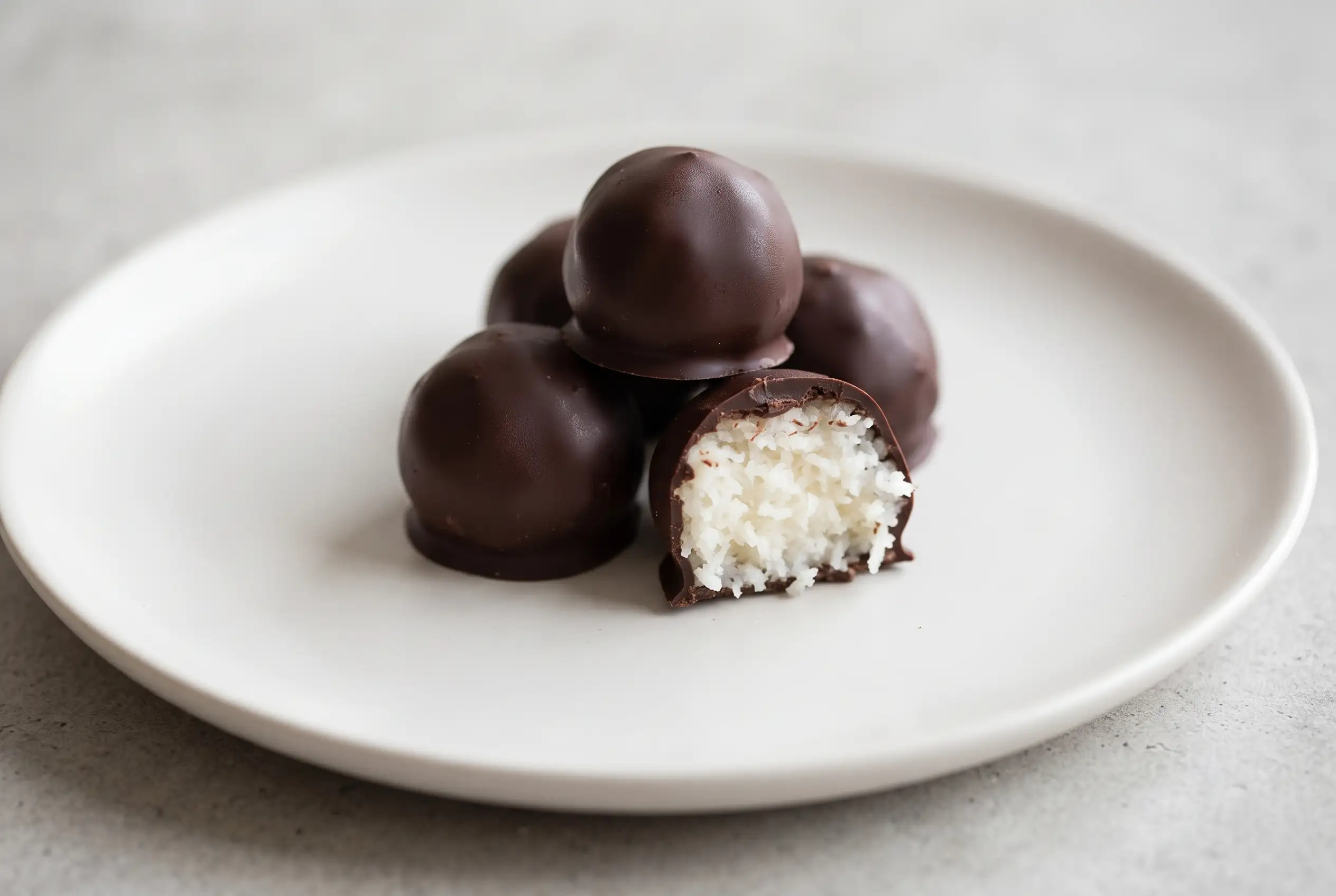
Dark chocolate coconut bites bring together a simple coconut center and a smooth chocolate shell for a treat that feels special without requiring a complicated dessert process. The combination of finely processed coconut, coconut oil, vanilla, and dark chocolate creates a rich bite with a soft interior and a firm coating.
These chocolate treats depend on a few small decisions that affect the final texture. Understanding how the coconut mixture comes together, why coconut oil matters, and how chilling changes the shape will help create consistent dark chocolate coconut bites every time.
Coconut Texture Shapes These Bites
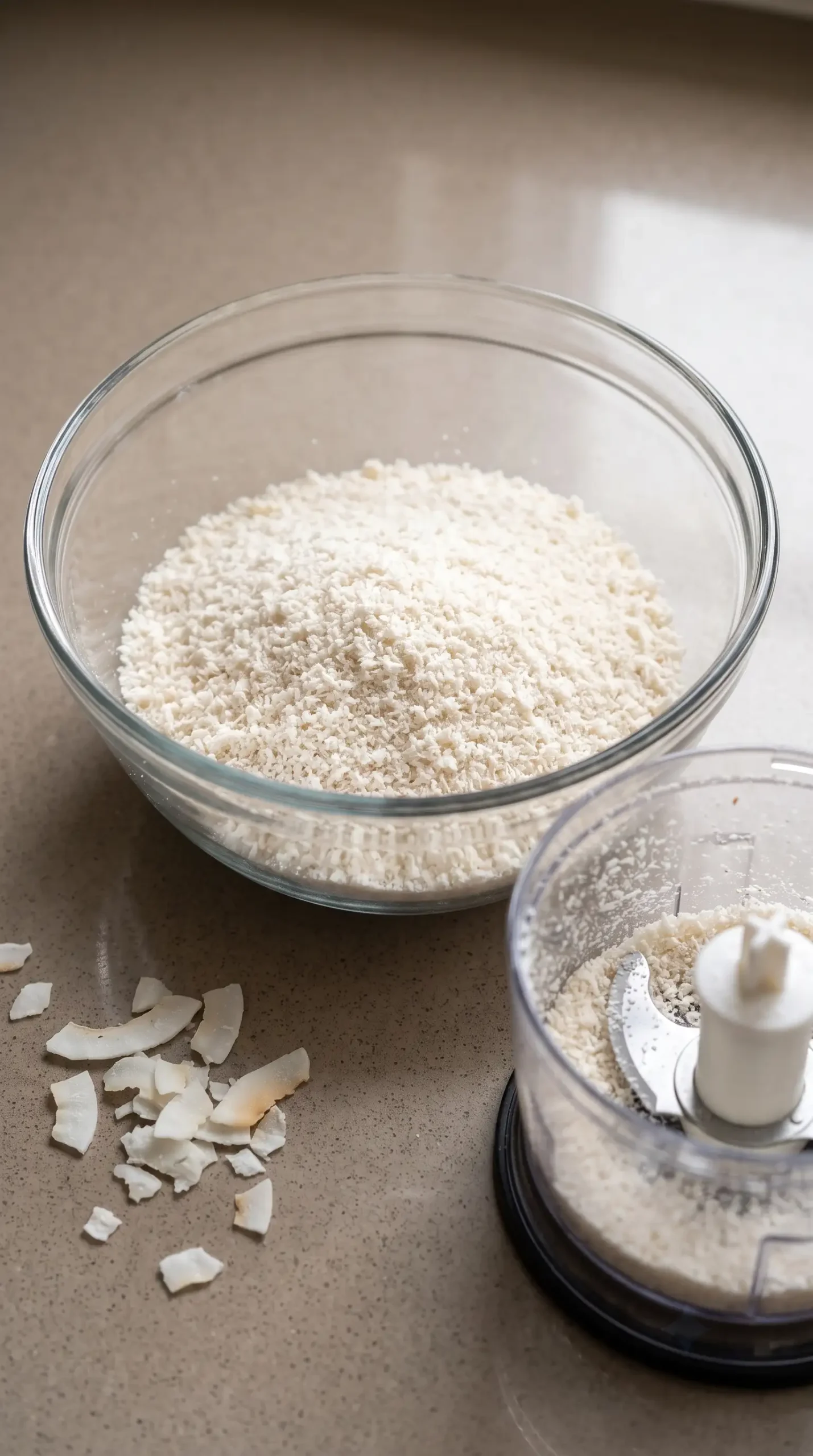
Desiccated coconut provides the structure that makes these bites possible, but its texture needs a little adjustment before it can become a smooth filling. Pulsing the coconut into a thick flour-like texture creates smaller pieces that blend more easily with the other ingredients and helps the mixture hold together.
The processed coconut should still have enough character to create a pleasant bite. Turning it into a finer texture does not mean removing everything that makes coconut recognizable; it simply makes the pieces small enough to combine with the coconut oil and sweetener into a workable paste.
When preparing dark chocolate coconut bites, the texture of the coconut mixture matters during shaping. A mixture that has been evenly processed is easier to compress with your hands, while larger coconut pieces can make the center more difficult to form into neat rounds.
Sweetness and Flavor Balance Meet in the Center
The combination of honey or maple syrup with vanilla gives the coconut filling its sweetness and aroma. Both sweeteners work with the natural flavor of coconut, allowing the dark chocolate coating to remain the strongest finishing note.
- Honey option: Adds a familiar sweetness and works directly with the coconut mixture.
- Maple option: Provides a different sweet flavor while keeping the mixture simple.
- Vanilla addition: Brings a warmer dessert-like character to the coconut center.
Because the chocolate coating adds another layer of flavor, the inside does not need to be overly sweet. The contrast between the coconut filling and dark chocolate creates the appeal of chocolate covered coconut bites.
Coconut Oil Creates the Right Firmness
Coconut oil is one of the most important ingredients in this preparation because it changes from liquid to firm as it cools. That quality helps the coconut mixture hold its shape after refrigeration and gives the bites a stable texture.
Using a different oil can change the result because many other oils will stay liquid and will not provide the same structure. For coconut oil coconut bites, the choice of fat is directly connected to how easily the centers can be shaped and how well they keep their form.
Chocolate Coating Decisions for Coconut Centers
The dark chocolate layer creates the finished appearance and adds a crisp shell around the softer coconut interior. Melting the chocolate gently helps keep it smooth and spreadable so each bite can be coated evenly.
Keeping the chocolate and tools free from moisture is also important during melting because even small amounts of water can cause texture problems. This helps with preventing chocolate from seizing and keeps the coating smooth enough for dipping.
A simple chocolate covering process works best when the coconut centers are already firm. Cold centers are easier to handle during dipping because they are less likely to lose their shape while they come into contact with the melted chocolate.
These dark chocolate coconut bites can be coated completely for a classic candy-style finish. Using forks allows excess chocolate to drip away before the coated pieces are placed onto wax paper to set.
Shaping Dark Chocolate Coconut Bites Without Frustration
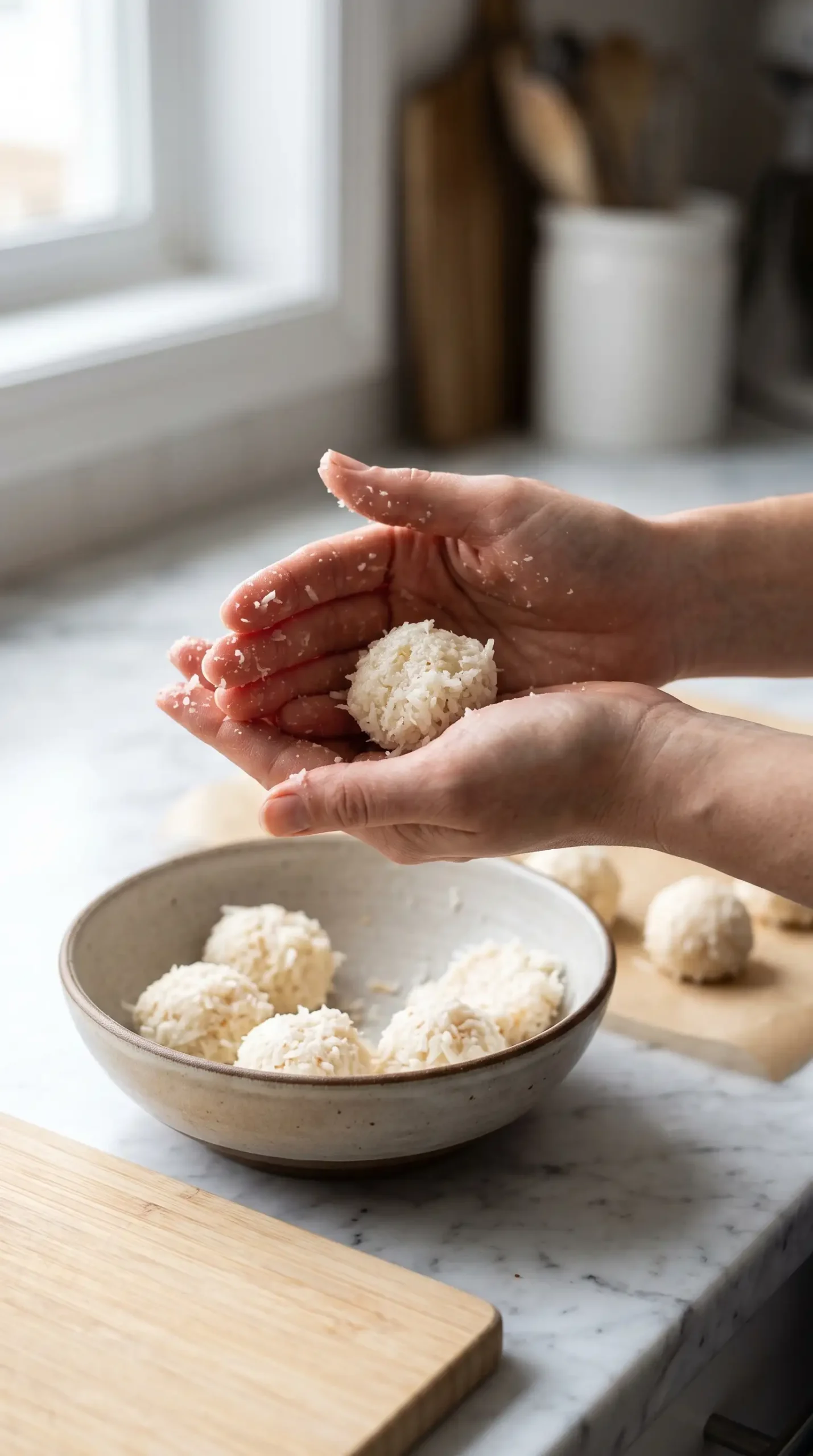
The coconut mixture may not behave like a traditional cookie dough, so squeezing is more effective than trying to roll it immediately. Compressing the mixture in your palm helps the ingredients bind together before shaping the outside into a round form.
Cooling Controls for a Clean Chocolate Finish
Chilling plays an important role before and after the chocolate coating. The cold temperature helps the coconut oil firm up inside the center, making the pieces easier to dip and handle.
During preparation, look for signs that the coconut centers have become firm enough to coat. A small ring of solidified coconut oil around the base can indicate that the mixture has cooled and set.
After dipping, the chocolate needs time to harden so the coating becomes stable. Placing the finished pieces on wax paper prevents the chocolate from sticking and gives the shell a clean surface as it sets.
| Stage | What to Notice | Helpful Action |
|---|---|---|
| Coconut mixture | Thick paste texture | Compress firmly when shaping |
| Shaped center | Holds a rounded form | Chill until firm before coating |
| Chocolate coating | Smooth, spreadable surface | Allow extra chocolate to drip away |
Dark Chocolate Coconut Bites Mistakes That Affect Texture
Small preparation choices can change the way these treats hold together. Avoiding a few common problems makes the shaping and coating process much easier.
- Loose centers: Mixture that has not been compressed enough may struggle to hold a round shape. Squeeze the mixture together before gently shaping it.
- Soft coconut filling: Skipping the cooling stage can leave the centers difficult to dip. Let the coconut oil firm before adding chocolate.
- Incorrect oil choice: Replacing coconut oil with another oil can prevent the filling from developing the same firmness.
These issues are connected to the structure of the ingredients, not complicated techniques. Paying attention to texture at each stage keeps the process predictable.
Chocolate Texture Depends on Gentle Melting
Dark chocolate needs careful handling when it is melted for coating. Slow, gentle heating helps create a smooth texture that spreads over the coconut centers without becoming difficult to work with.
A stainless steel bowl placed in a warm oven can be used when a microwave is not available. The important part is maintaining a smooth melted consistency that allows each coconut ball to be fully covered.
Variations That Keep Coconut Bites Simple
The basic combination of coconut, sweetener, coconut oil, vanilla, and dark chocolate leaves room for small personal adjustments while keeping the same structure. Choosing honey or maple syrup changes the flavor slightly without changing the overall approach.
Dark chocolate coconut balls can also be shaped with a slightly different finish depending on how carefully the coating is applied. A thicker layer of chocolate creates a more candy-like exterior, while a lighter coating keeps more focus on the coconut center.
Serving Ideas for Chocolate Covered Coconut Bites
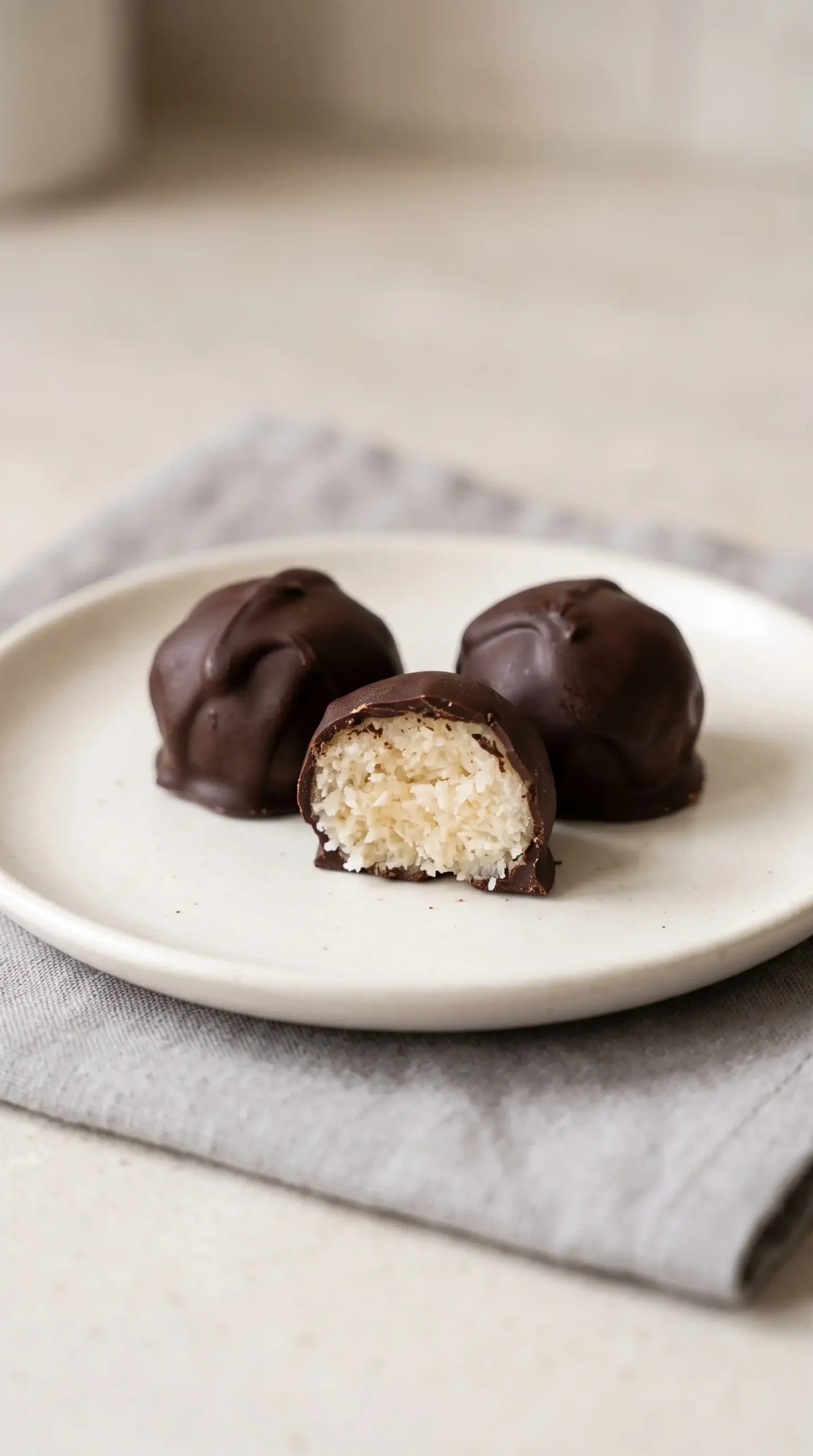
Chocolate covered coconut bites fit naturally on dessert trays, snack plates, or alongside coffee and tea. Their small size makes them easy to share, and coconut and chocolate energy bites can add another chilled treat with a soft texture that complements the firm chocolate shell.
They can also be prepared ahead for gatherings because the finished chocolate shell helps protect the soft coconut interior. Keeping them chilled preserves the firm texture created by the coconut oil.
Storing Coconut Bites with Their Best Texture
Refrigeration is the best way to maintain the firmness of these bites. Since coconut oil changes texture as it warms and cools, storing them cold helps the centers and chocolate coating remain stable.
When serving, allow the bites to sit briefly if a softer texture is preferred. The coconut center will still benefit from the structure created during chilling.
Coconut Bite Texture Choices at a Glance
The way these treats are handled changes their texture and appearance. The table below highlights the choices that have the biggest impact during preparation.
| Choice | Texture Result | Best Use |
|---|---|---|
| Finer coconut processing | Smoother filling | Easier shaping |
| Firm chilled centers | More stable pieces | Cleaner chocolate dipping |
| Complete chocolate coating | Stronger candy shell | Classic finished look |
Dark Chocolate Coconut Bites Hold Their Shape Through Balance
Dark chocolate coconut bites succeed because the coconut mixture, coconut oil, and chocolate coating each handle a different part of the texture. The coconut creates the body, the coconut oil provides firmness, and the chocolate creates the finished exterior.
Careful shaping and cooling turn a simple mixture into a dessert with a distinct contrast between a tender coconut center and a set chocolate shell. The most important choice is keeping the structure intact from mixing through storage.
Dark Chocolate Coconut Bites Questions About Texture and Storage
Why are my coconut bites difficult to shape?
The mixture may need more compression before it forms a ball. Squeezing the coconut mixture firmly in your palm helps the ingredients come together before you shape the outside.
Can I use another oil instead of coconut oil?
Coconut oil is important because it firms when chilled and helps hold the bites together. Other oils may not create the same stable texture.
How do I know when the coconut centers are ready for chocolate?
The centers should feel firm enough to handle without losing their shape. A visible sign can be a small ring of solidified coconut oil around the base after chilling.
Can I make dark chocolate coconut bites without fully coating them?
Yes, the chocolate coating is the finishing layer, while the coconut center provides the main structure. Leaving some of the coconut mixture visible will change the appearance but keeps the same core flavors.
What makes the chocolate coating smooth?
Gentle melting creates a spreadable chocolate texture that is easier to use for coating. Keeping the melted chocolate smooth helps it cover each bite evenly.
Dark Chocolate Coconut Bites with Dark Chocolate Shell
Ingredients
Method
- Process the coconut in a blender or food processor until it reaches a thick flour-like consistency. Move the coconut to a bowl, then mix in the honey or maple syrup, coconut oil, and vanilla until a thick paste forms.
- Shape the mixture into about 18 small balls by firmly compressing portions in your hands before gently rounding them. Place the coconut balls in the refrigerator for about 30 minutes or until firm.
- Melt the chocolate slowly and gently until it becomes smooth and spreadable. If not using a microwave, melt it in a stainless steel bowl placed in a hot oven for about 10 minutes.
- Place a sheet of wax paper on a work surface. Coat each chilled coconut ball completely with melted chocolate using two forks, allowing excess chocolate to drip away before transferring the coated bites to the wax paper. Chill until the chocolate has hardened, then store in the refrigerator.