
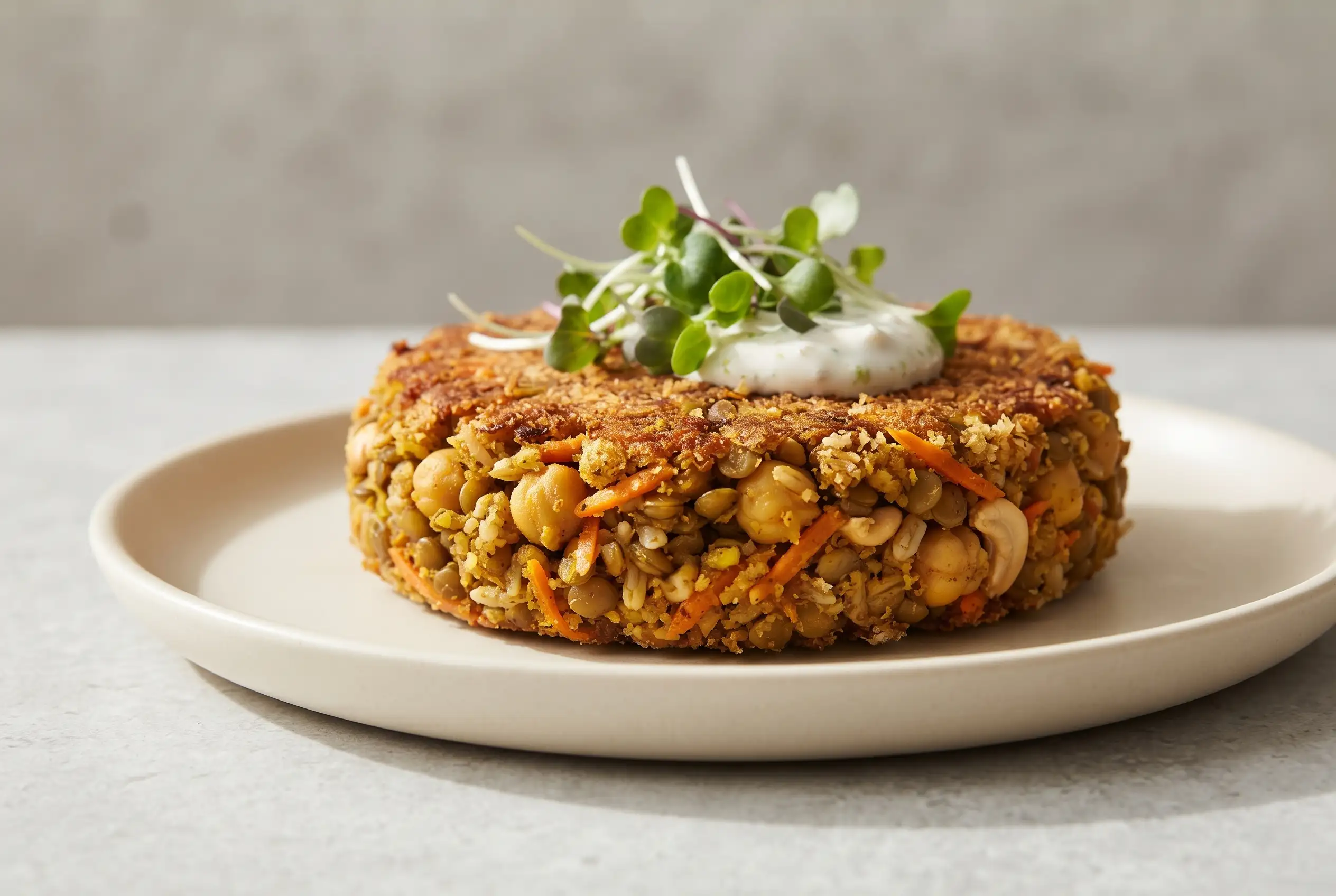
Curried veggie burgers bring together hearty legumes, toasted nuts, vegetables, warm spices, and crisp coatings for a plant-based meal with satisfying texture. The combination of chickpeas, lentils, carrots, brown rice, and curry seasoning creates patties that hold their shape while offering layers of savory flavor. These burgers are a useful option when you want a meatless centerpiece that feels substantial and works well with a variety of toppings and sides.
Curried veggie burgers create a hearty plant-based meal
The appeal of veggie burgers comes from their ability to balance structure and flavor without relying on meat. A successful patty needs enough moisture to stay tender, enough binding power to hold together, and enough texture to avoid becoming flat or mushy. The mixture of cooked grains, legumes, vegetables, and panko in these curried patties supports all three needs.
Toasted cashews and lentils shape the burger texture
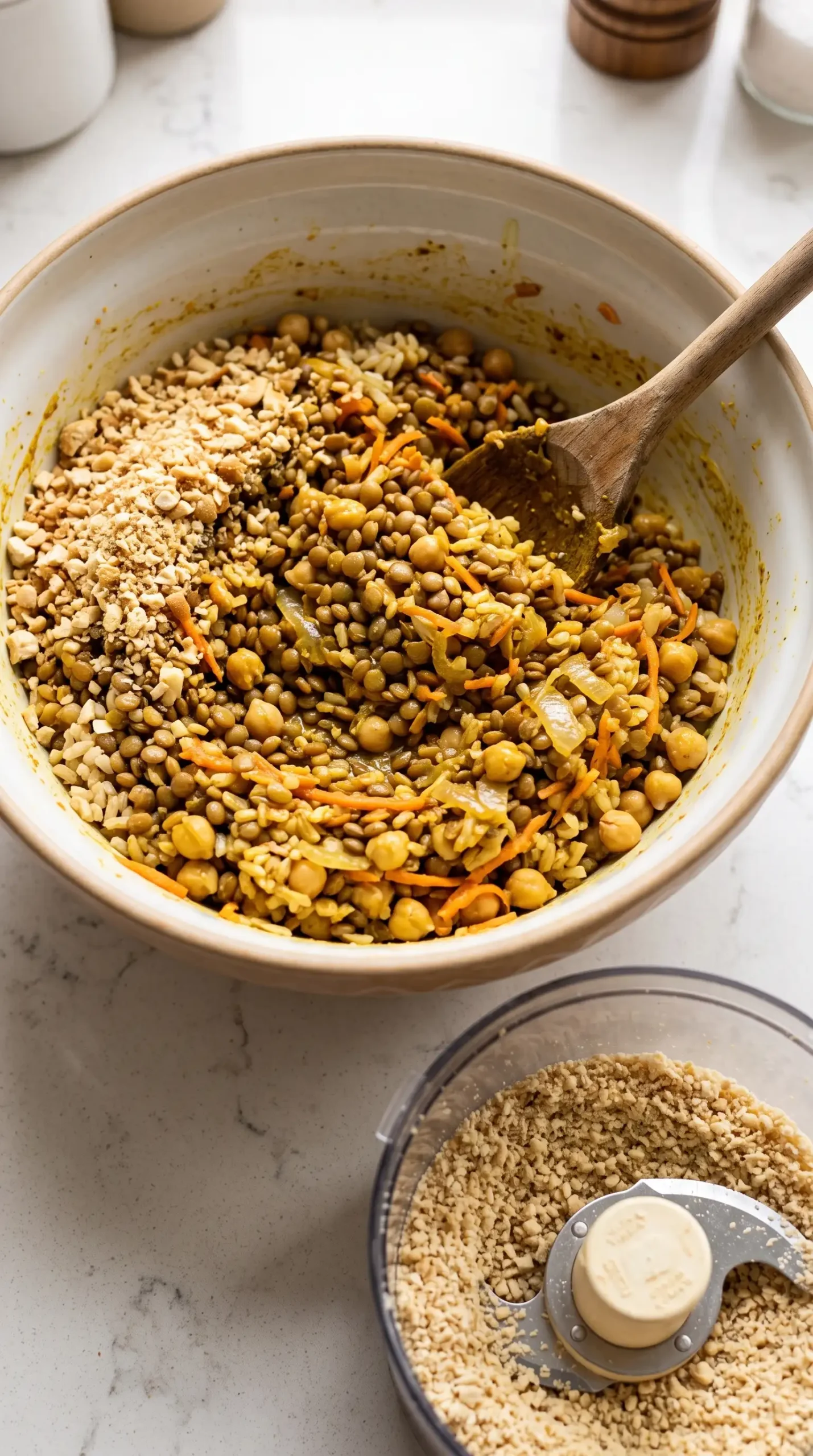
Cashews play an important role in the texture of curried veggie burgers because they are processed into fine crumbs that become part of the patty structure. Toasting them first develops a deeper nutty flavor and removes the raw taste that can appear when nuts are used without any preparation. Their richness also helps create a satisfying bite alongside the lighter vegetables.
Lentils and chickpeas provide the foundation for these patties. The lentils create a soft, cohesive interior, while chickpeas contribute a slightly firmer texture and familiar savory quality. Together, they make these curried veggie burgers different from patties that depend only on vegetables or grains for substance.
Brown rice adds another layer of structure by giving the mixture small pockets of chewiness. Keeping some texture during processing is useful because a completely smooth blend can produce a dense patty. A few pulses in the food processor allow the ingredients to combine while preserving enough character in each bite.
Balanced curry seasoning defines the flavor profile
Curry powder and turmeric give the patties their warm color and aromatic character. The spices work best when they are mixed throughout the dough so every burger carries the same savory flavor. Garlic, onions, and carrots support the spice blend with sweetness and depth.
Cooking control keeps veggie burgers firm or crisp
The cooking approach has a major effect on the finished texture of veggie burgers. Baking helps the patties become firmer as heat gradually removes some moisture and allows the exterior to set. This method is useful when you want burgers that are easier to handle.
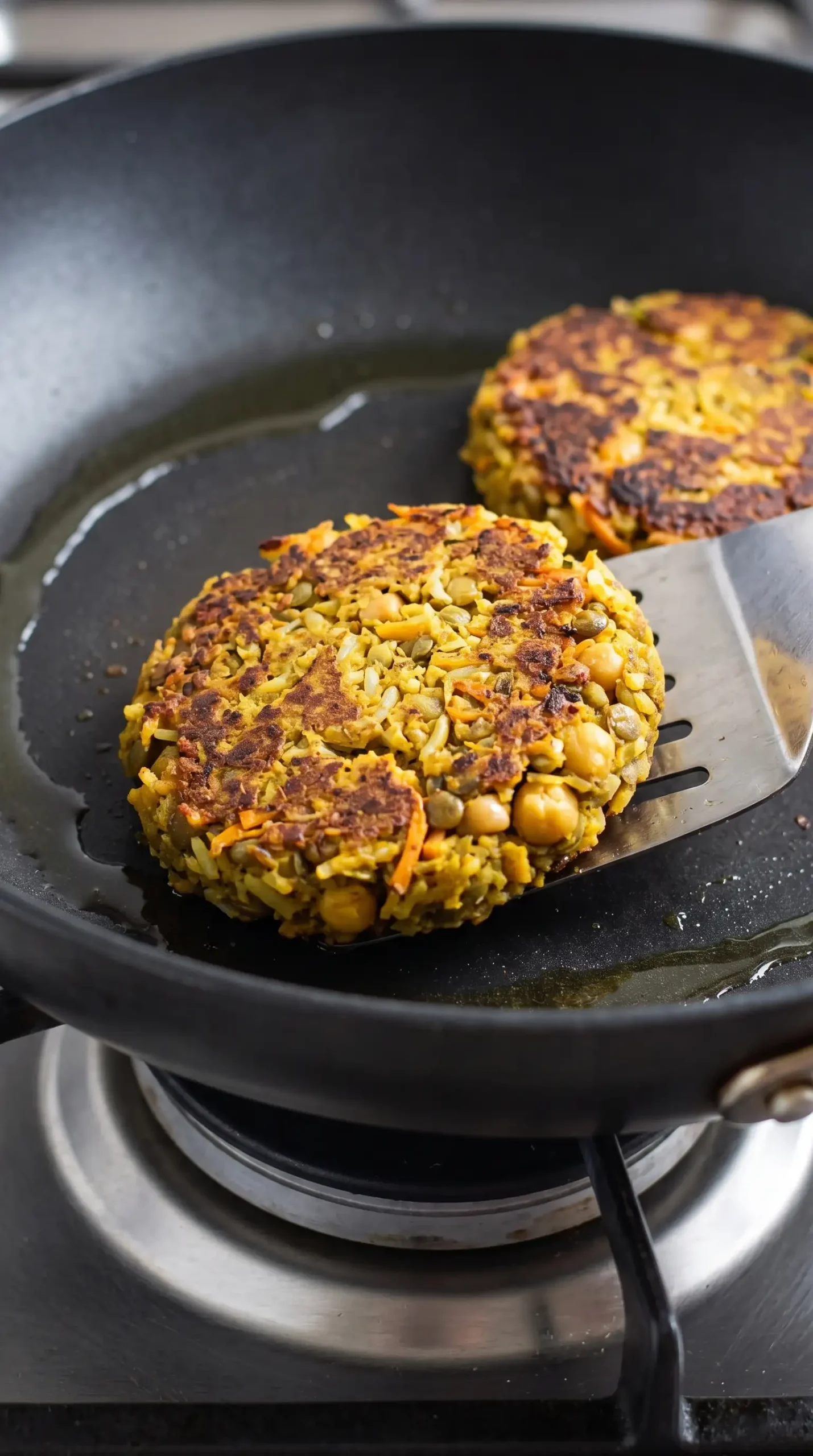
Pan frying creates a contrasting exterior with a browned, crisp surface. The patties remain softer inside, so careful flipping and gentle handling help preserve their shape. Using a nonstick skillet can make the process easier because the surface releases the patties more cleanly.
A combination of cooking methods can also change the eating experience. Starting with a firmer texture and adding a browned exterior creates a balance between stability and crispness. The choice depends on whether you prefer a sturdier burger for sandwiches or a softer patty for bowls and plates.
Mistakes that weaken curried veggie burgers
Several issues can affect the final texture of curried veggie burgers. Understanding the signs before cooking makes it easier to adjust the mixture and avoid disappointing results.
- Over-processing: Blending the mixture until completely smooth can remove the texture that makes the patties satisfying. Stop when a dough-like mixture forms with some visible texture remaining.
- Skipping cashew toasting: Untoasted cashews can give the patties a flatter flavor. Toasting builds a richer base before the nuts are incorporated.
- Adding too much liquid: Vegetable broth should only help the mixture move during processing. Excess moisture can make shaping and cooking more difficult.
- Handling too aggressively: Soft patties need gentle shaping so they remain intact when transferred to the cooking surface.
Another common problem is expecting the same texture from every cooking method. A baked patty and a skillet-cooked patty naturally develop different surfaces, so choosing the cooking style based on your preferred finish leads to better results.
The panko crumbs also matter because they panko bread crumbs help bind veggie patties while absorbing excess moisture and supporting the shape of the burgers. Adding them after processing allows the mixture to stay cohesive without turning the entire patty into a dry, uniform mass.
Topping choices complete chickpea veggie burgers
Chickpea veggie burgers pair well with fresh toppings that contrast with the warm curry flavors. Crisp greens, sliced vegetables, sauces, and toasted buns can highlight the spices while adding freshness and moisture.
Storage decisions protect the lentil veggie burgers
Cooked lentil veggie burgers are convenient for preparing ahead because their texture holds up well after chilling. Allowing cooked patties to cool before storing helps prevent trapped moisture from softening the exterior too quickly.
When reheating, choose a method that restores some surface texture. A skillet or oven can help revive the browned outside, while gentle heating keeps the center from becoming dry. The patties can also be served in different formats after preparation.
Leftover patties work beyond traditional buns. They can be broken into pieces for grain bowls, paired with salads, or served with sauces for a quick meal. Their seasoning makes them flexible enough to fit several serving styles without needing major changes.
Simple variations keep curried veggie burgers fresh
Small adjustments can change the personality of these burgers while keeping the same foundation. Different curry blends can shift the spice character, and additional herbs or sauces can introduce new accents. Keeping the mixture balanced is the key when making changes.
Serving ideas highlight the warm curry notes
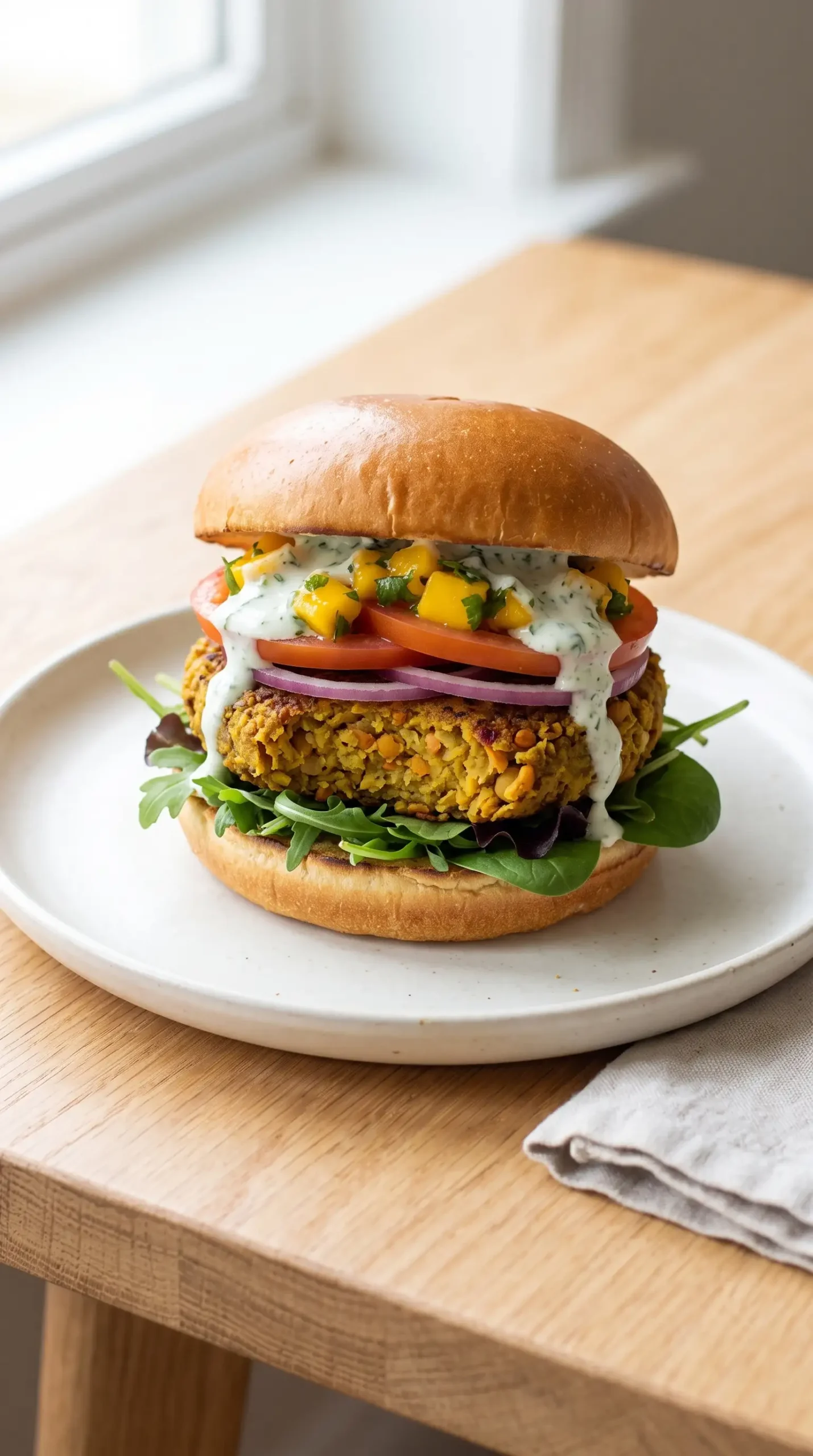
These veggie burgers benefit from sides that add contrast. Fresh salads, roasted vegetables, or cooling sauces can balance the aromatic spices and create a complete plate.
Ingredient swaps require texture awareness
Changes to the main ingredients can influence how well the patties hold together. Replacing a major component may require adjusting the amount of moisture or dry ingredients because each element contributes differently to the final structure.
| Adjustment | What changes | Best consideration |
|---|---|---|
| Different cooked legumes | Flavor and firmness | Choose beans or lentils with a texture that blends well into a patty |
| Alternative nuts | Richness and crumb texture | Use a nut that can be finely processed without excess moisture |
| Different grains | Chewiness and binding | Select cooked grains that complement the mixture’s moisture level |
Curried veggie burgers fit many plant-based meals
Veggie burgers made with legumes and grains can serve as more than a sandwich filling. Their combination of spices and hearty ingredients makes them suitable for casual dinners, meal preparation, and creative serving ideas.
A few simple presentation choices can make the same patties feel completely different. A bun creates a classic burger experience, while a plate with vegetables and sauces highlights the curry seasoning more directly.
Curried veggie burgers succeed through texture control
The mixture of lentils, chickpeas, cashews, vegetables, rice, and spices works because each part contributes to a specific cooking result. The most important judgment is maintaining enough texture during preparation while choosing a cooking method that matches the desired finish. Chickpea and grain-based veggie burgers benefit from the same focus on creating a cohesive patty with satisfying structure.
Curried veggie burgers become especially enjoyable when the patties stay cohesive without losing their hearty character. Careful processing, thoughtful moisture control, and attention to browning create a balanced plant-based meal with a satisfying bite.
Questions about curried veggie burgers and texture
Why do my veggie burgers fall apart when cooking?
Veggie burgers can break apart when the mixture has too much moisture, has not been blended enough to create cohesion, or is handled too roughly during shaping. Keeping the mixture doughy and using the panko crumbs as a structural element helps the patties stay together.
Can I make these curried veggie burgers without chickpeas?
Yes, another cooked legume can work if it provides a similar balance of softness and structure. The replacement should blend well with the lentils and other ingredients so the patties maintain their shape.
How can I make lentil veggie burgers taste more flavorful?
Flavor develops from the combination of toasted cashews, sautéed aromatics, curry powder, turmeric, and seasoning throughout the mixture. Adjusting the spice balance or serving the patties with flavorful toppings can further enhance the finished dish.
What is the best way to reheat leftover veggie burgers?
Reheating with a dry-heat method such as a skillet or oven helps restore some exterior texture. Gentle warming is useful for keeping the interior tender while avoiding a dried-out result.
Can I serve chickpea veggie burgers without a bun?
Yes, chickpea veggie burgers work well as part of bowls, plates, or salads. Serving them without a bun allows the curry seasoning and hearty ingredients to become the main focus of the meal.
Curried Veggie Burgers with Chickpeas, Lentils and Rice
Ingredients
Method
- Place the rinsed chickpeas and lentils in a large mixing bowl. Start cooking the brown rice.
- Warm a large dry skillet over medium-high heat and toast the cashews until browned. Process the cashews in a food processor or blender until they become fine crumbs, then add them to the bowl.
- Add the olive oil to the skillet. Cook the onion and garlic over low heat for 10 minutes until softened and fragrant. Add the shredded carrots and stir-fry for 3-5 minutes until tender, adding more oil if needed. Transfer the vegetables to the mixing bowl.
- Stir the curry powder, salt, turmeric, and cooked rice into the bowl with the other ingredients until combined.
- Process the mixture in a food processor or blender until a dough-like texture forms, adding a few tablespoons of vegetable broth as needed to help it blend. Keep some texture in the mixture rather than making it completely smooth.
- Mix in the panko bread crumbs, then shape the mixture into patties.
- For a firmer texture, arrange the patties on an oiled cookie sheet and bake at 400°F (204°C) for 15 minutes. Flip the burgers and continue baking for another 15 minutes, or until they reach the desired color and texture.
- For a softer interior with a crisp exterior, brush the patties with olive oil and cook them in a nonstick skillet over medium-high heat, flipping after a few minutes.
- For the preferred combination of firmness and browning, bake the patties as directed and then finish them in a skillet as described above.