
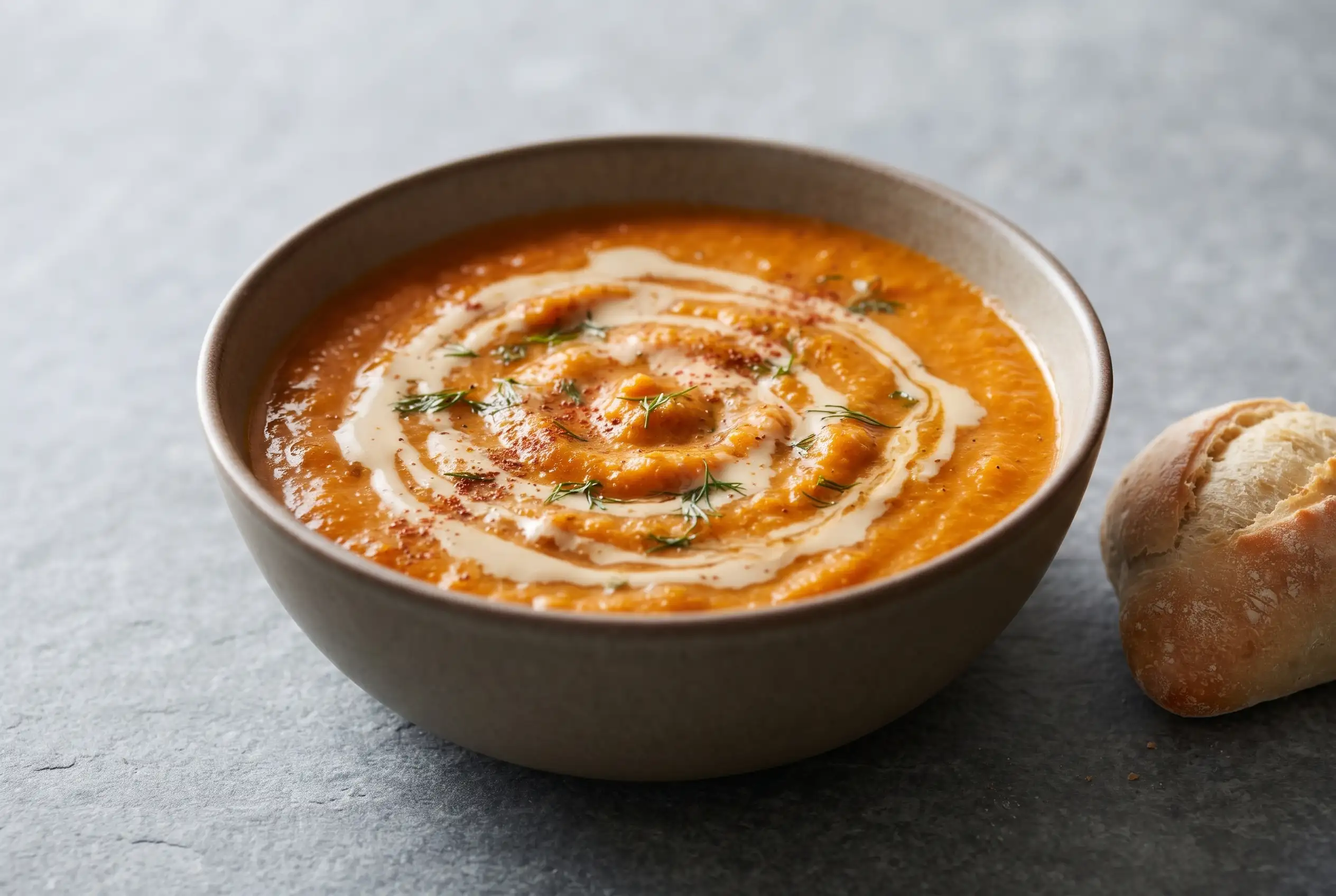
Curry eggplant soup brings together deeply roasted vegetables, warm spices, and a creamy tahini finish for a bowl that feels both comforting and vibrant. The combination of eggplant, red peppers, curry, garam masala, and a nutty swirl creates a roasted red pepper eggplant soup with layers of flavor that come from simple cooking choices.
Roasting gives the vegetables a concentrated character before they meet the broth, while the blended texture allows every spice and savory note to come through. A few small decisions during preparation, from browning the onion to balancing the tahini, shape the final bowl.
Roasted vegetables define the curry eggplant soup flavor
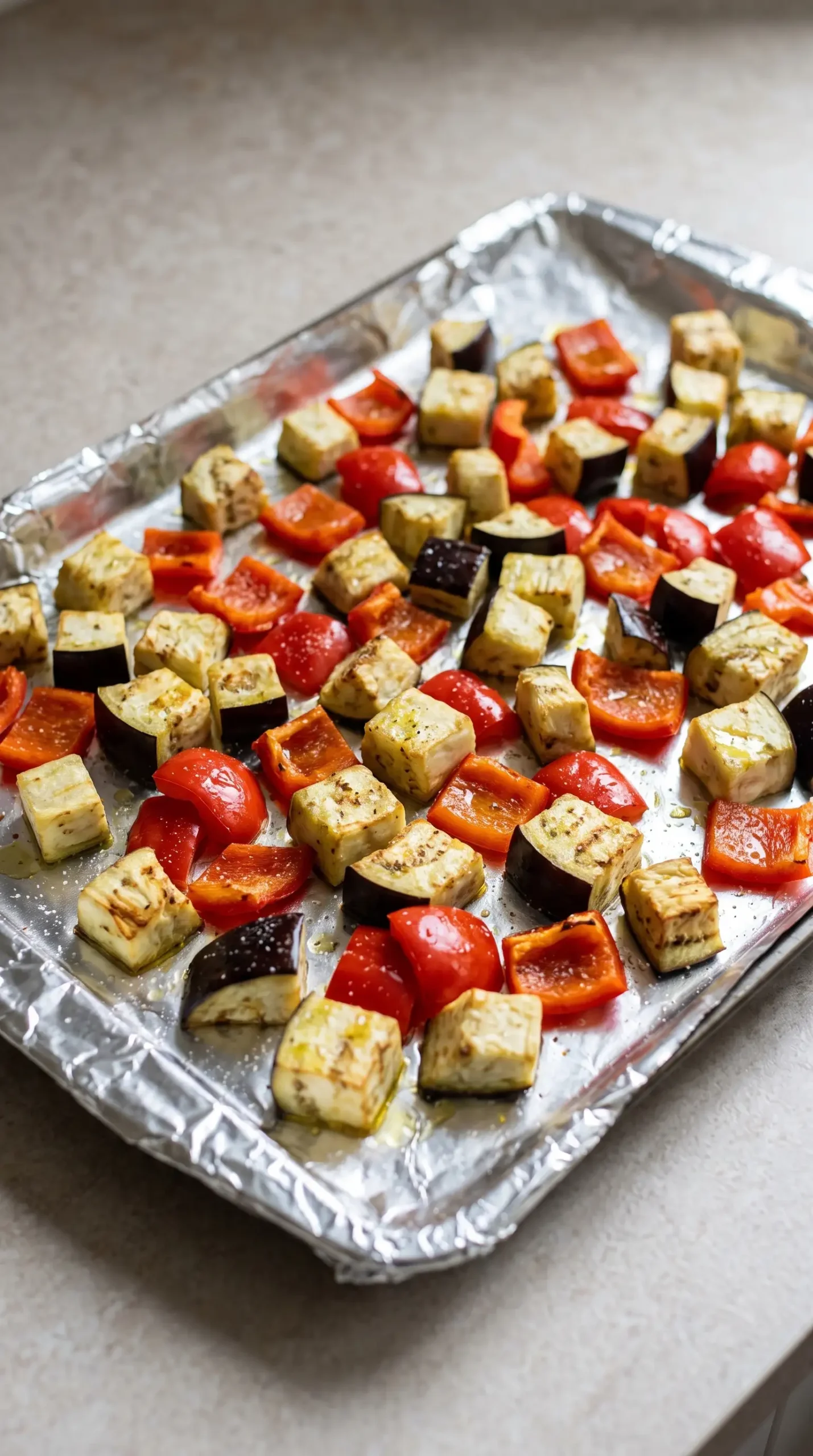
Eggplant and red peppers become richer when exposed to high heat because roasting encourages natural sweetness and adds a lightly smoky edge. That transformation is especially important for a blended soup, where the vegetables provide the main structure instead of relying on heavy additions. Roasting eggplant and red peppers creates concentrated flavor before blending, and a bowl of roasted tomato soup centers on deeply cooked vegetables and a smooth blended finish.
Chopped eggplant absorbs surrounding flavors easily, making it an ideal partner for curry and garam masala. The red peppers contribute a gentle sweetness that keeps the spices rounded, creating a balanced eggplant and red pepper soup.
Freshly roasted vegetables also help the soup avoid a flat flavor profile. Their caramelized edges bring depth that would be difficult to achieve by only simmering raw vegetables in broth.
Red peppers and eggplant create the soup foundation
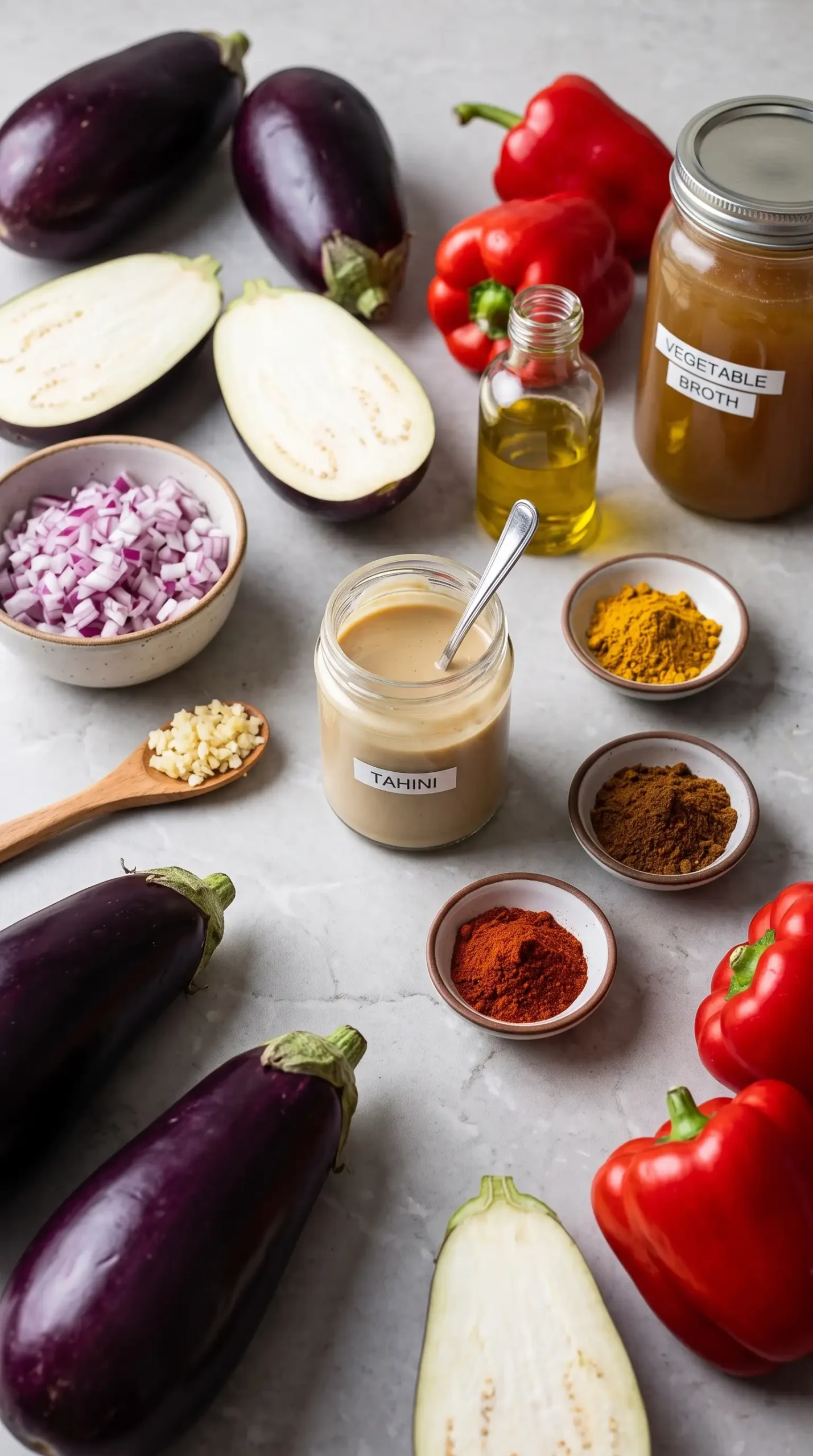
The vegetable pairing in this curry roasted vegetable soup works because each ingredient fills a different role. Eggplant supplies body and a naturally creamy consistency after blending, while red peppers add color, sweetness, and a bright roasted quality.
| Component | Contribution | Cooking effect |
|---|---|---|
| Eggplant | Soft texture and body | Becomes silky after roasting and blending |
| Red peppers | Sweet roasted flavor | Develops deeper notes with oven heat |
| Red onion | Savory foundation | Adds sweetness when softened |
Careful chopping helps the vegetables roast evenly. Similar-sized pieces cook at a similar pace, which means the finished soup receives consistent roasted flavor throughout.
Tahini and spices bring depth beyond the vegetables
The tahini or natural peanut butter is one of the most important flavor-building choices in curry eggplant soup. Its richness gives the blended vegetables a smoother finish and creates a subtle nutty contrast against the spices.
Warm spice blends need supporting flavors to shine. Curry powder and garam masala provide aromatic complexity, while chili powder adds gentle heat and reinforces the roasted character of the vegetables.
- Tahini balance: Creates richness while helping the soup feel smooth and cohesive.
- Curry blend: Adds aromatic warmth that connects the vegetables with the creamy base.
- Lemon finish: Brightens the bowl when a small amount is stirred in at the end.
Small finishing adjustments can change the personality of the soup. A little lemon juice lifts the spices, while cayenne creates a sharper heat for those who enjoy extra intensity.
Blended texture makes this eggplant soup especially satisfying
Pureeing the roasted vegetables creates the signature texture of the soup. The eggplant naturally helps produce a velvety consistency, allowing the broth, spices, and tahini to combine into one unified flavor.
Some cooks prefer a completely smooth curry eggplant soup, while others enjoy leaving a little texture behind. The blending time can be adjusted depending on whether the desired result is silky or slightly rustic.
Adding cream after blending is an optional way to make the soup feel softer and more rounded. The tahini already provides richness, so the extra dairy element can remain a finishing choice instead of a requirement.
Warm spices shape the curry roasted vegetable soup character
Spices are most effective when they support the roasted ingredients instead of hiding them. Curry powder and garam masala create warmth, but the sweetness of the peppers and the earthy eggplant should remain recognizable.
Because blended soups distribute spices throughout the entire bowl, seasoning choices have a noticeable effect. Adding spices with the broth allows them to mingle with the roasted vegetables during the short simmer before blending.
Cooking control keeps the curry eggplant soup balanced
The roasting stage determines much of the soup’s personality. Vegetables need enough heat exposure to soften and develop roasted edges without losing their ability to blend smoothly.
The deeper flavor comes from the way roasting changes the vegetables at the surface, where high-heat roasting creates browning and develops more complex roasted notes before the soup is blended.
During the stovetop portion, gently softening the onion and briefly cooking the garlic builds a savory base. Garlic needs only a short time before the broth and spices are added because prolonged high heat can overpower its delicate flavor.
Blending requires attention to consistency. The broth amount, roasted vegetable texture, and tahini quantity all influence thickness, so gradual adjustments help create the preferred result.
- Check softness: Roasted vegetables should blend easily without firm pieces.
- Assess thickness: Adjust the texture after pureeing if a thinner bowl is preferred.
- Taste at the end: Add lemon, cayenne, or other finishing touches after blending.
Common curry eggplant soup mistakes to avoid
Overlooking the roasting stage can leave the soup tasting less developed. Eggplant and peppers need enough time in the oven to build the concentrated flavor that makes this dish distinctive.
Uneven vegetable pieces can create inconsistent roasting. Larger chunks may stay firm while smaller pieces soften too quickly, making the blending process less predictable.
Heavy seasoning too early can also create imbalance. Curry, garam masala, and chili powder become more noticeable after blending, so tasting before adding extra heat helps protect the vegetable flavors.
Simple pairings complete the eggplant and red pepper soup
Warm bread is a natural companion for this soup because it complements the creamy texture and provides a way to enjoy every spoonful. The mild richness of the tahini base pairs especially well with a crisp or chewy bread.
Additional toppings can be chosen according to the mood of the meal. A sprinkle of cayenne adds heat, while fresh herbs or a small drizzle of oil can provide contrast.
| Serving idea | Why it works | Best use |
|---|---|---|
| Warm bread | Balances creamy texture | Simple lunch or dinner pairing |
| Lemon finish | Adds brightness | When flavors feel rich |
| Cayenne sprinkle | Creates extra heat | For a spicier bowl |
Flexible changes fit this curry eggplant soup
Different kitchens may prefer slightly different finishes. Natural peanut butter can replace tahini for a similar creamy effect, while cream can be included or skipped depending on the desired richness.
The spice level can also be adjusted without changing the soup’s structure. Cayenne can be added at serving time, allowing each bowl to match individual preferences.
Vegetable broth keeps the soup aligned with its plant-based foundation, while the roasted vegetables remain the focus. Small ingredient swaps work best when they preserve the balance between savory, sweet, creamy, and spicy notes.
Storage keeps the roasted pepper soup ready later
Once cooled, blended soup can be stored for another meal while maintaining its creamy texture. Gentle reheating helps protect the smooth consistency created by the roasted vegetables and tahini.
When reheating, stirring occasionally helps distribute the thicker ingredients evenly. A small splash of broth can loosen the soup if it becomes more concentrated after chilling.
Roasting choices improve every bowl of curry eggplant soup
The most important decisions happen before the blender is turned on. Choosing well-roasted vegetables, balancing the spices, and adjusting the texture at the end creates a more satisfying soup experience.
Curry eggplant soup delivers roasted depth in every spoonful
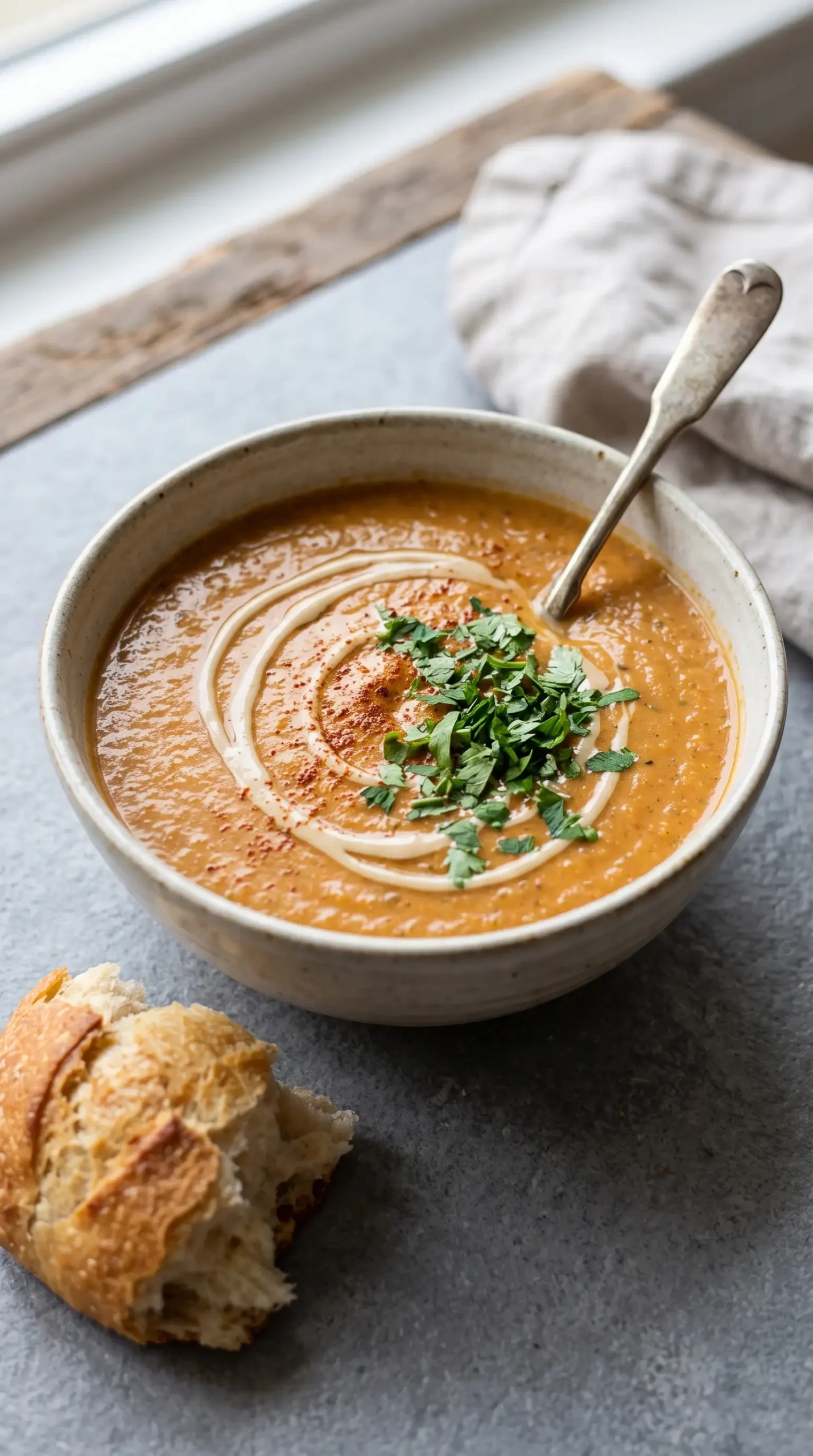
The roasted vegetables create the foundation of curry eggplant soup, with eggplant providing creaminess and red peppers adding a naturally sweet, smoky quality. The tahini, curry, and garam masala bring those flavors together into a smooth bowl where each element has a clear purpose.
Balanced roasting and thoughtful finishing touches make the soup stand out. The result is a comforting dish built around vegetables, warmth, and a texture that feels rich without requiring complicated techniques.
Questions about texture, storage, and curry eggplant soup
Can curry eggplant soup be made without tahini?
Yes, natural peanut butter can be used instead of tahini, creating a similarly creamy texture with a slightly different nutty flavor. The swap keeps the soup rich while changing the overall taste slightly.
How can the soup become smoother after blending?
A longer blending time usually creates a silkier texture. If the soup is thicker than desired, adding a small amount of broth while blending or reheating can help loosen it.
Can roasted red pepper eggplant soup be served cold?
The soup is designed around warm roasted flavors, but it can also be chilled and served cold if a cooler preparation is preferred. The spices may taste softer when chilled, so seasoning can be adjusted before serving.
What bread works best with curry eggplant soup?
Warm bread with enough structure to dip into the soup pairs well because it contrasts with the smooth texture. Choose a bread style that can hold up to the creamy consistency.
Curry Eggplant Soup with Roasted Red Peppers and Tahini
Ingredients
Method
- Preheat oven to 450°F (232°C). Chop the red peppers and eggplant.
- Line a baking sheet with foil and coat with nonstick spray. Arrange the vegetables on the sheet, sprinkle with salt, and roast for 25-30 minutes.
- Cook the chopped onion with olive oil in a pot until softened and translucent.
- Add the garlic and cook for 30 seconds.
- Stir in the vegetable broth, tahini, and spices, then add the roasted vegetables. Simmer for 5 minutes.
- Remove the soup from the heat and transfer it to a blender. Puree until the desired consistency is reached.
- Mix in cream and/or lemon juice, then finish with a sprinkle of cayenne before serving with warm bread.