
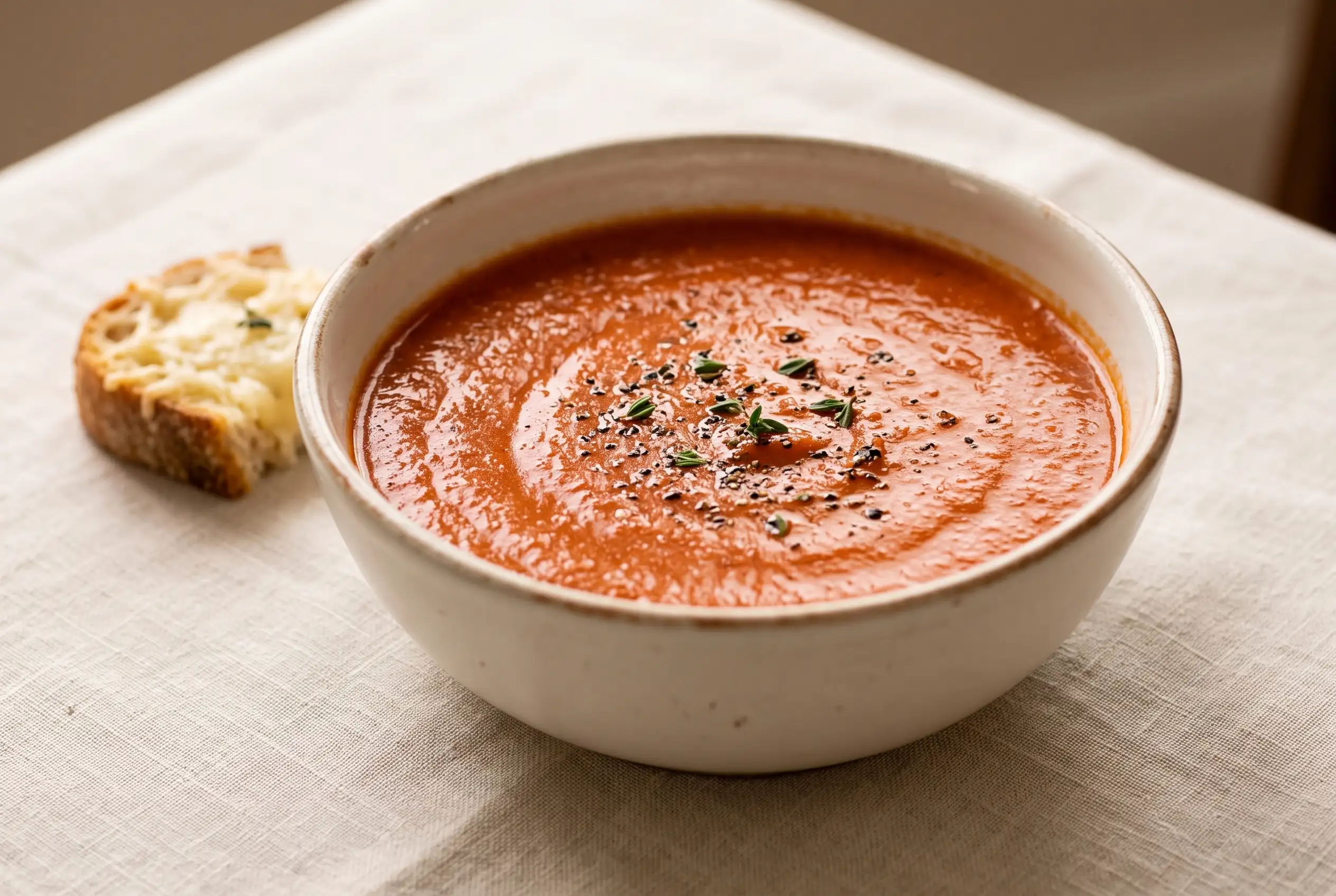
Tomato balsamic soup brings together roasted tomatoes, caramelized aromatics, and a sweet-tangy balsamic broth into a smooth bowl built around deep flavor. The combination of baked tomatoes, garlic, onion, and a creamy finish creates a tomato balsamic soup that feels rich while keeping the tomato character at the center.
Tomato Balsamic Soup Builds Sweetness Through Roasted Tomatoes
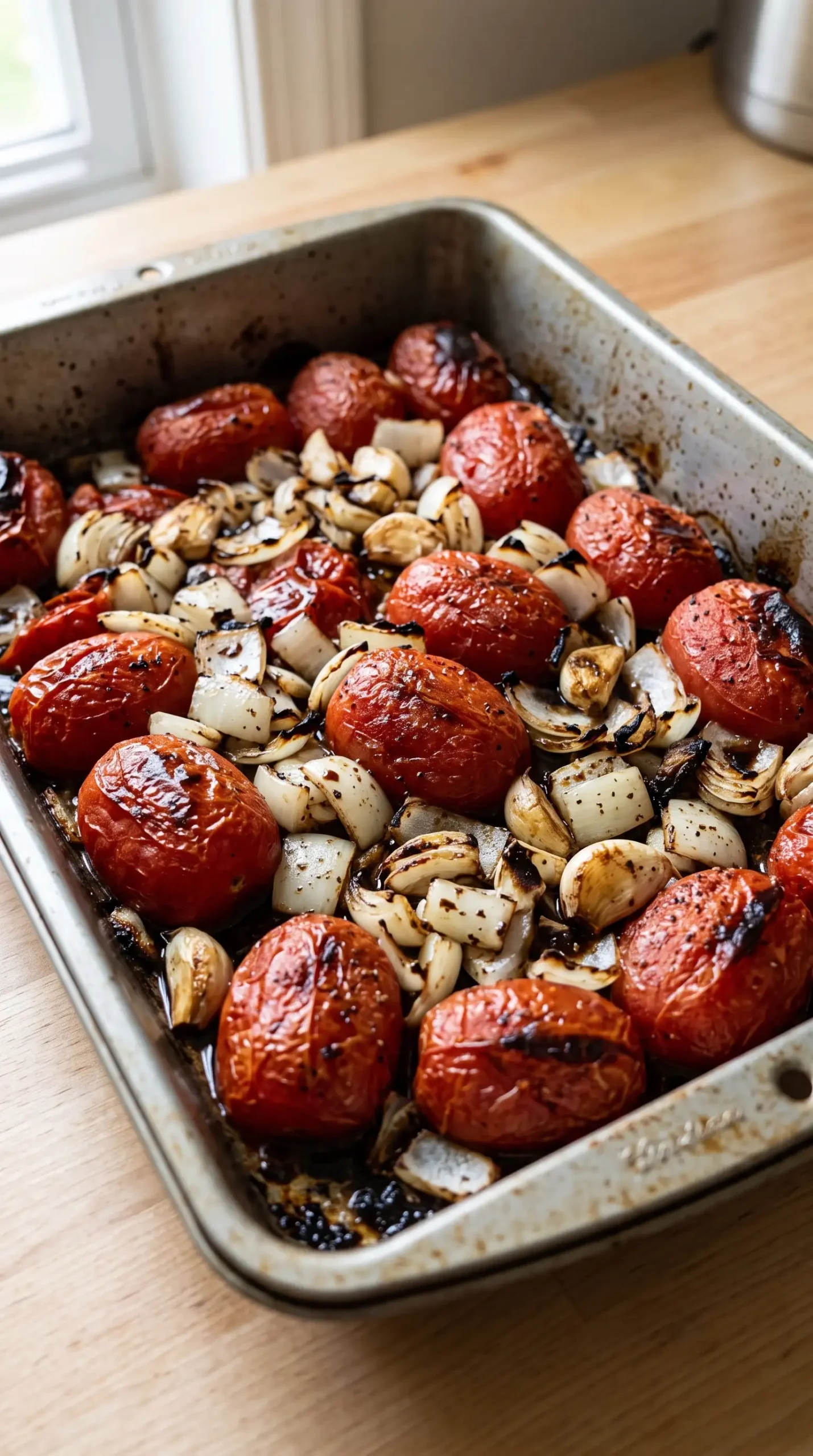
Roasting changes the personality of tomatoes by concentrating their natural flavors and encouraging light browning around the edges. The oven step creates a deeper base because the tomatoes, onion, and garlic absorb the balsamic mixture while they cook together.
High heat is especially important for developing the roasted tomato balsamic soup profile. The vegetables need enough exposure to heat for their surfaces to become lightly browned, which adds complexity that cannot come from blending raw tomatoes alone.
After roasting, the tomato mixture becomes the foundation for a smooth soup with layers of sweetness, acidity, and savory notes. The blended texture allows the roasted flavors to spread evenly through every serving.
Balsamic Vinegar Shapes the Soup’s Savory Balance
Balsamic vinegar gives tomato balsamic soup its defining contrast by adding brightness alongside the sweetness of roasted tomatoes and brown sugar. The vinegar works with soy sauce and broth to create a balanced flavor base that avoids tasting one-dimensional.
Whole Tomatoes Create the Right Base for Creamy Tomato Balsamic Soup
Whole tomatoes are especially useful in this preparation because they provide a concentrated tomato foundation after draining and roasting. Their structure allows the oven heat to intensify flavor before the tomatoes are transformed into a smooth soup.
The choice of canned whole tomatoes also supports consistency throughout the year. Fresh tomatoes can vary widely in sweetness and water content, while whole canned tomatoes provide a dependable starting point for a creamy tomato balsamic soup.
Garlic and onion become part of the tomato base during roasting instead of being added as separate finishing flavors. Their softened texture makes them easy to incorporate during blending and helps create a unified taste.
| Ingredient choice | Role in the soup | Cook-facing consideration |
|---|---|---|
| Whole tomatoes | Primary tomato foundation | Drain before roasting to concentrate flavor |
| Balsamic vinegar | Sweet-tart balance | Combine with other liquids before baking |
| Half-and-half or heavy cream | Creamy finishing texture | Blend in after roasting |
Browning Controls the Flavor of Roasted Tomato Balsamic Soup
Visible browning on the roasted vegetables is a useful indicator that the soup base has developed deeper flavor because roasting creates browning and flavor as vegetables cook. The vegetables should become lightly browned without losing the balance created by the balsamic mixture.
Tomato Balsamic Soup Texture Depends on Blending Choices
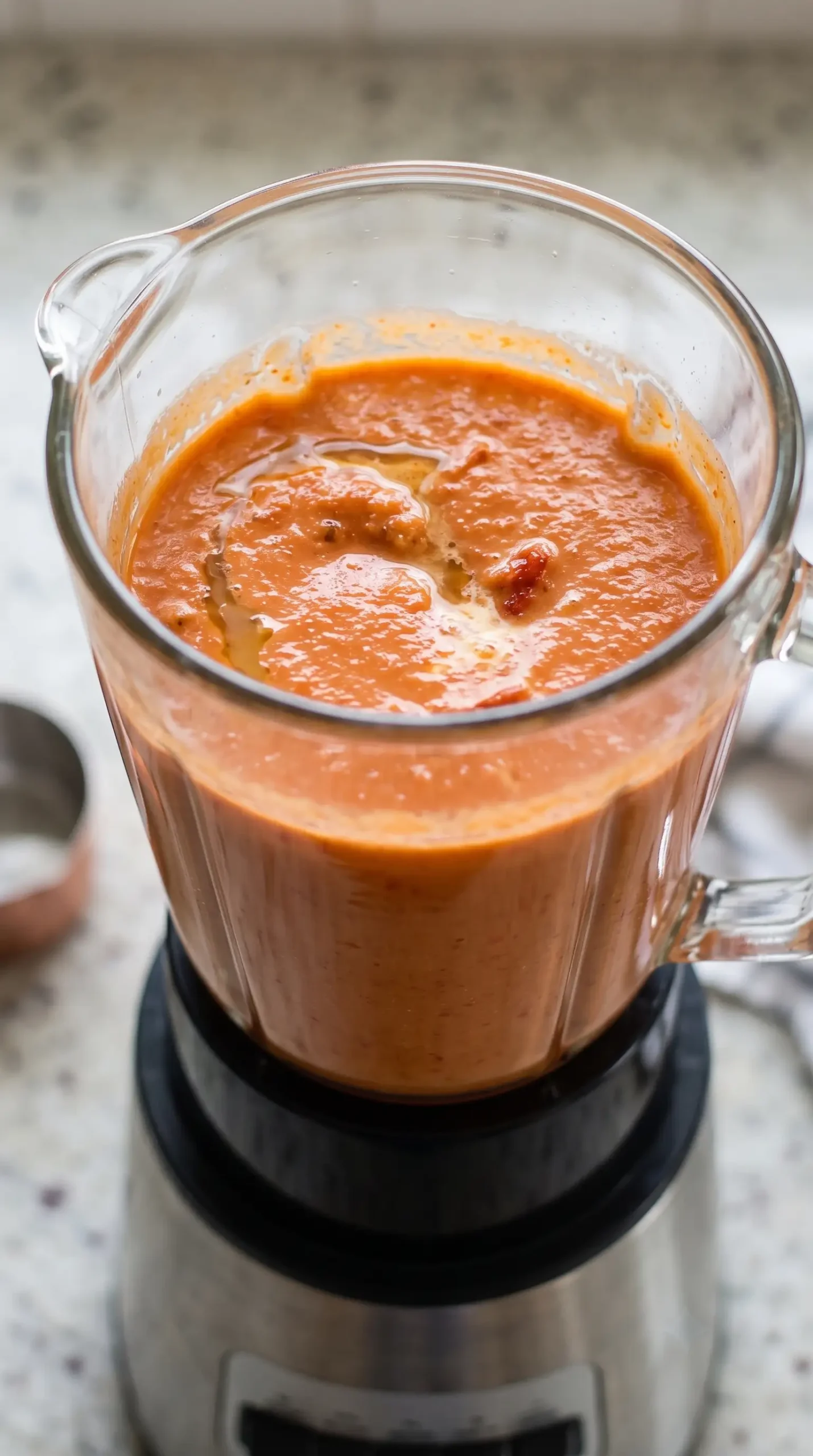
Blending determines how polished the finished soup feels. Processing the roasted tomato mixture with broth and cream creates the smooth consistency expected from a creamy tomato soup while keeping the roasted flavors evenly distributed. A creamy blended soup can use careful texture control to create a velvety finish without losing the character of its main ingredients.
Straining the blended soup removes remaining solids and creates a more refined texture. This step is particularly useful when serving the soup as a smooth first course or pairing it with crisp bread and cheese.
Texture adjustments should happen after blending because the roasted ingredients already contain concentrated flavor. Small changes in liquid balance can influence whether the soup feels thick and velvety or lighter and easier to sip.
Common Tomato Balsamic Soup Mistakes That Flatten Flavor
Several preparation choices can reduce the impact of tomato balsamic soup. Paying attention to the roasting stage and blending process helps preserve the qualities that make the dish distinctive.
- Skipping browning: Removing the roasted vegetables too early can leave the soup with less depth because the tomatoes have not developed their concentrated roasted flavor.
- Overlooking balance: Adding the balsamic mixture without considering the sweetness and saltiness already present can make the finished flavor feel uneven.
- Keeping too many solids: Blending without straining creates a thicker, less refined texture that may not match the intended smooth finish.
Another common issue is adding the cream before the roasted flavors have been fully developed. The creamy element works best as part of the blended finish, allowing the tomato and balsamic notes to remain clear.
Careful handling of the ingredients prevents the soup from becoming overly sweet or too sharp. The roasted vegetables, broth, vinegar, and cream need to remain connected so that no single flavor dominates.
Baking Heat Requires Careful Tomato Soup Decisions
The cooking control in this baked tomato soup centers on managing high heat and watching for visual changes. The roasting environment creates flavor, but the vegetables still need attention so their browned surfaces remain balanced.
A few practical observations can guide the process:
- Color check: Look for lightly browned vegetables as a sign that roasting has progressed enough.
- Liquid coverage: Keep the balsamic broth mixture distributed across the tomato mixture so flavors develop together.
- Blending stage: Combine the roasted mixture with the remaining broth and cream only after baking has completed.
The roasting pan serves as the place where flavor concentration happens. Blending is the stage where those concentrated ingredients become a unified soup instead of separate roasted components.
Serving Ideas Keep the Soup’s Finish Balanced
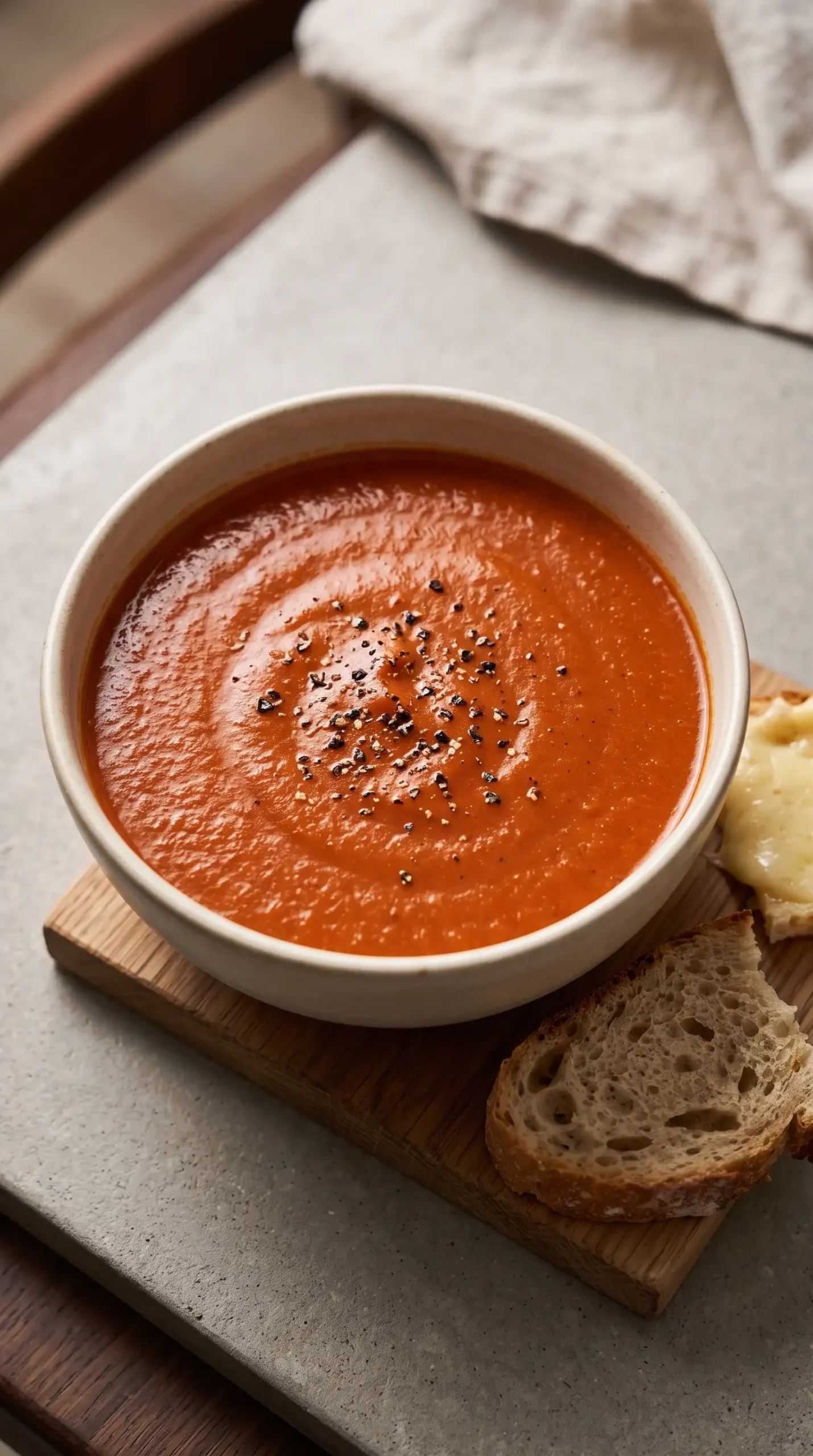
Tomato balsamic soup pairs naturally with bread and cheese because the creamy texture benefits from contrasting bites. A simple accompaniment can highlight the soup’s smooth consistency while adding another layer of texture.
Storage Choices Protect the Soup’s Texture
Cooling and reheating practices influence how a creamy soup maintains its texture. Gentle reheating helps preserve the blended consistency and keeps the creamy finish integrated.
Adjustments That Change the Soup Experience
Small changes can shift the character of creamy tomato balsamic soup while keeping the core flavors intact. The recipe provides flexibility through the choice of cream and the amount of cracked pepper used at serving.
Using heavy cream creates a richer mouthfeel, while half-and-half keeps the creamy element lighter. Both options support the roasted tomato base without changing the central balsamic flavor.
Additional adjustments should respect the balance already created by the tomatoes, vinegar, sugar, and soy sauce. Simple changes are often enough to personalize the bowl without hiding the roasted tomato flavor.
Pairings Highlight the Soup’s Sweet Savory Character
Bread and cheese complement the soup because they provide a straightforward contrast to the smooth texture and concentrated tomato flavor. These pairings allow the sweet, tangy, and savory notes to remain noticeable.
Cracked Pepper Completes the Tomato Balsamic Soup Finish
Cracked black pepper adds a final savory accent that sharpens the creamy tomato balsamic soup without overwhelming the roasted base. A small amount at serving helps connect the richer cream element with the brighter balsamic notes.
Roasted Tomato Balsamic Soup Depends on Flavor Concentration Before Creaminess
Roasted tomatoes create the foundation that makes tomato balsamic soup successful. Allowing the vegetables to develop flavor before blending ensures that the creamy finish supports the soup instead of covering the roasted character.
The strongest results come from treating roasting, blending, and balancing as connected decisions. Each stage affects how the tomatoes, balsamic vinegar, and cream work together in the finished bowl.
Tomato Balsamic Soup Questions About Texture and Flavor
Can tomato balsamic soup be made smoother?
Yes. Straining the blended soup removes remaining vegetable solids and creates a more refined texture. This step is useful when a silky consistency is preferred.
Why roast the tomatoes before blending them?
Roasting concentrates the tomato flavor and encourages browning, which adds depth before the ingredients are combined into soup. The baked tomato soup character comes from this concentration step.
Can half-and-half be replaced with heavy cream?
Yes. Heavy cream can be used when a richer texture is desired, while half-and-half provides a lighter creamy finish that still blends smoothly with the roasted tomato base.
What makes the balsamic flavor noticeable in the soup?
The balsamic vinegar is combined with broth, brown sugar, and soy sauce before roasting, allowing its sweet-tart qualities to become part of the overall flavor instead of appearing only as a finishing note.
What should be served with tomato balsamic soup?
Bread and cheese are natural choices because they add texture and complement the soup’s creamy consistency. They also provide a simple contrast to the concentrated roasted flavors.
Tomato Balsamic Soup with Roasted Tomatoes and Garlic
Ingredients
Method
- Combine 1 cup of the broth with the brown sugar, balsamic vinegar, and soy sauce in a small bowl.
- Coat a 13 x 9-inch baking pan with cooking spray, then add the onion, garlic, and drained tomatoes. Pour the broth mixture over the vegetables and tomatoes.
- Bake the tomato mixture at 500°F (260°C) for 50 minutes, or until the vegetables are lightly browned.
- Transfer the roasted tomato mixture to a blender. Add the remaining 1 cup broth and the half-and-half, then blend until smooth.
- Strain the blended soup through a sieve into a bowl and discard the solids.
- Garnish the soup with cracked black pepper and serve with bread and cheese.