
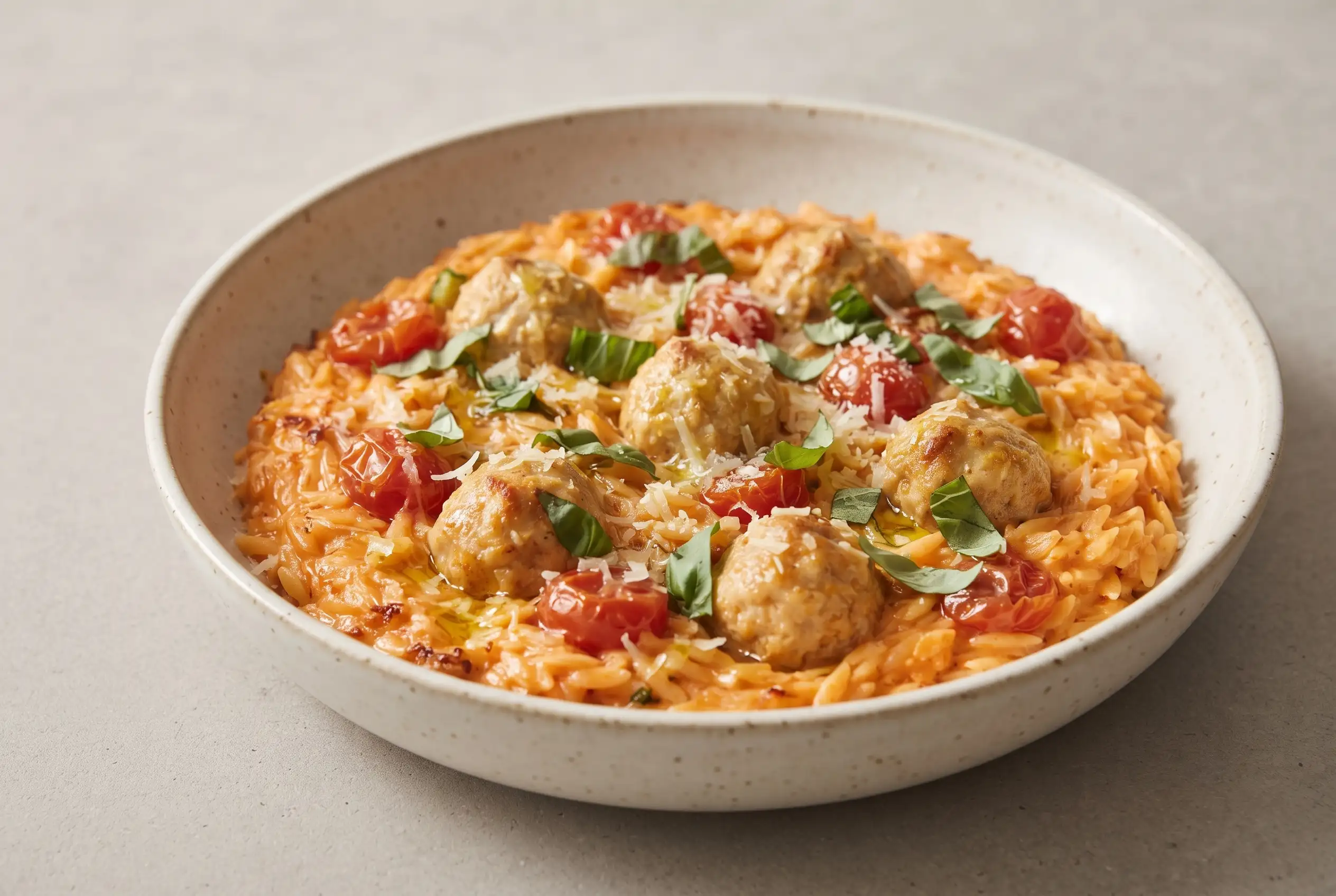
Creamy baked orzo brings together tender pasta, tomato flavor, juicy meatballs, and a comforting baked texture in one simple casserole-style meal. The combination works because the orzo cooks directly with broth and tomato soup, allowing the pasta to absorb savory flavor while the meatballs warm alongside the other ingredients. A baked orzo with meatballs dinner offers the cozy feel of a slow-simmered meal with a streamlined preparation style.
Why creamy baked orzo makes a complete comfort meal
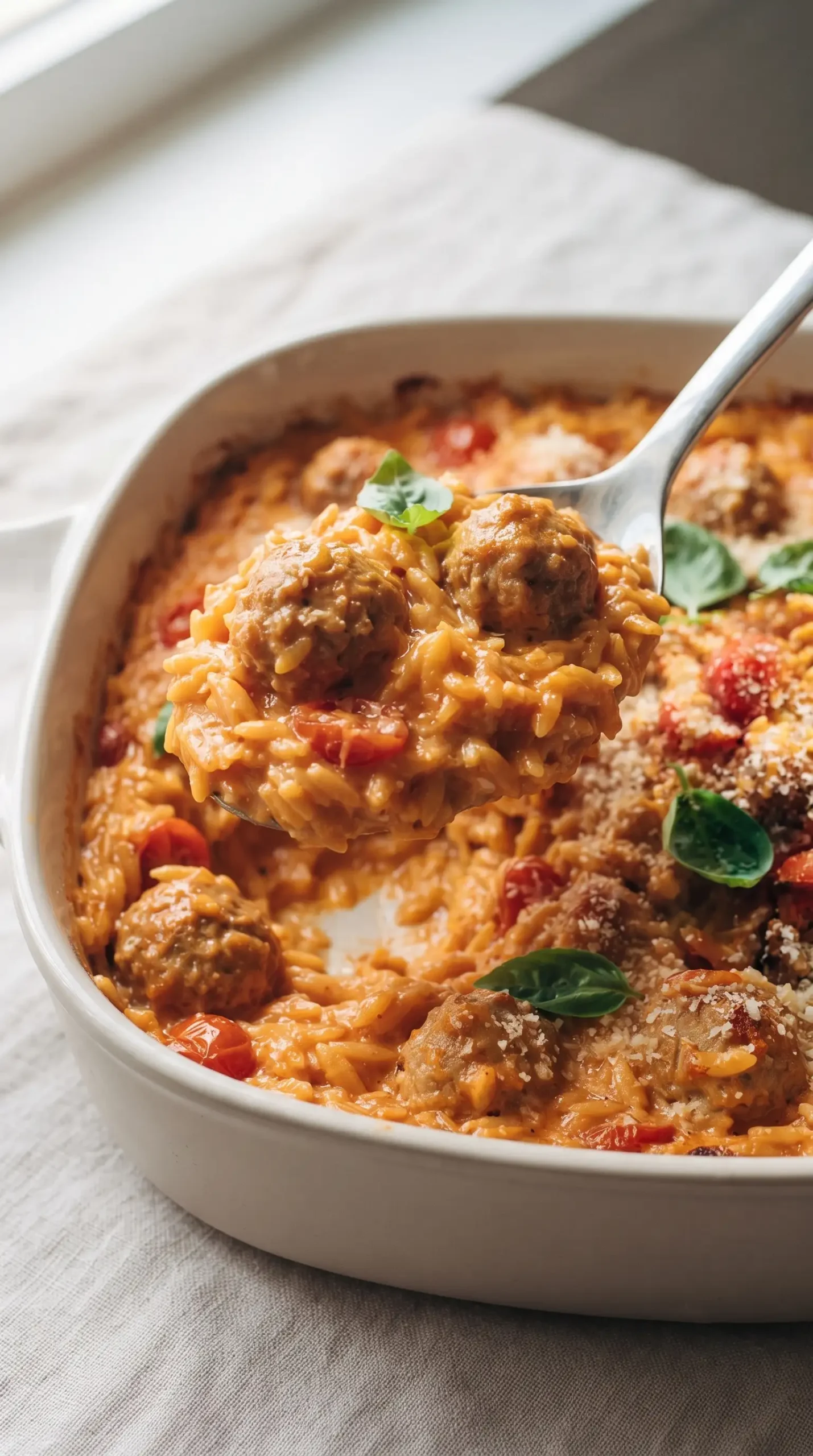
Small pasta shapes like orzo create a texture that feels different from traditional baked pasta dishes. The grains become soft and creamy as they absorb the surrounding liquid, creating a spoonable dish that holds together without needing layers or a separate sauce preparation.
Chicken meatballs add substance while fitting naturally into the tomato-based bake. Their mild flavor allows the Parmesan, basil, garlic, and tomato elements to remain noticeable, while their shape makes every serving easy to portion.
Fresh cherry tomatoes bring another layer of texture because they soften during baking and release their juices into the surrounding orzo. Those juices help enrich the mixture as the pasta continues cooking and settling after it comes out of the oven.
Families often look for meals that can move from preparation to serving without multiple pans or complicated finishing steps. Creamy orzo bake recipes like this one are especially useful because the oven handles the main cooking process while the finishing ingredients create a fresh, flavorful finish.
Tomato soup and orzo choices shape the creamy texture
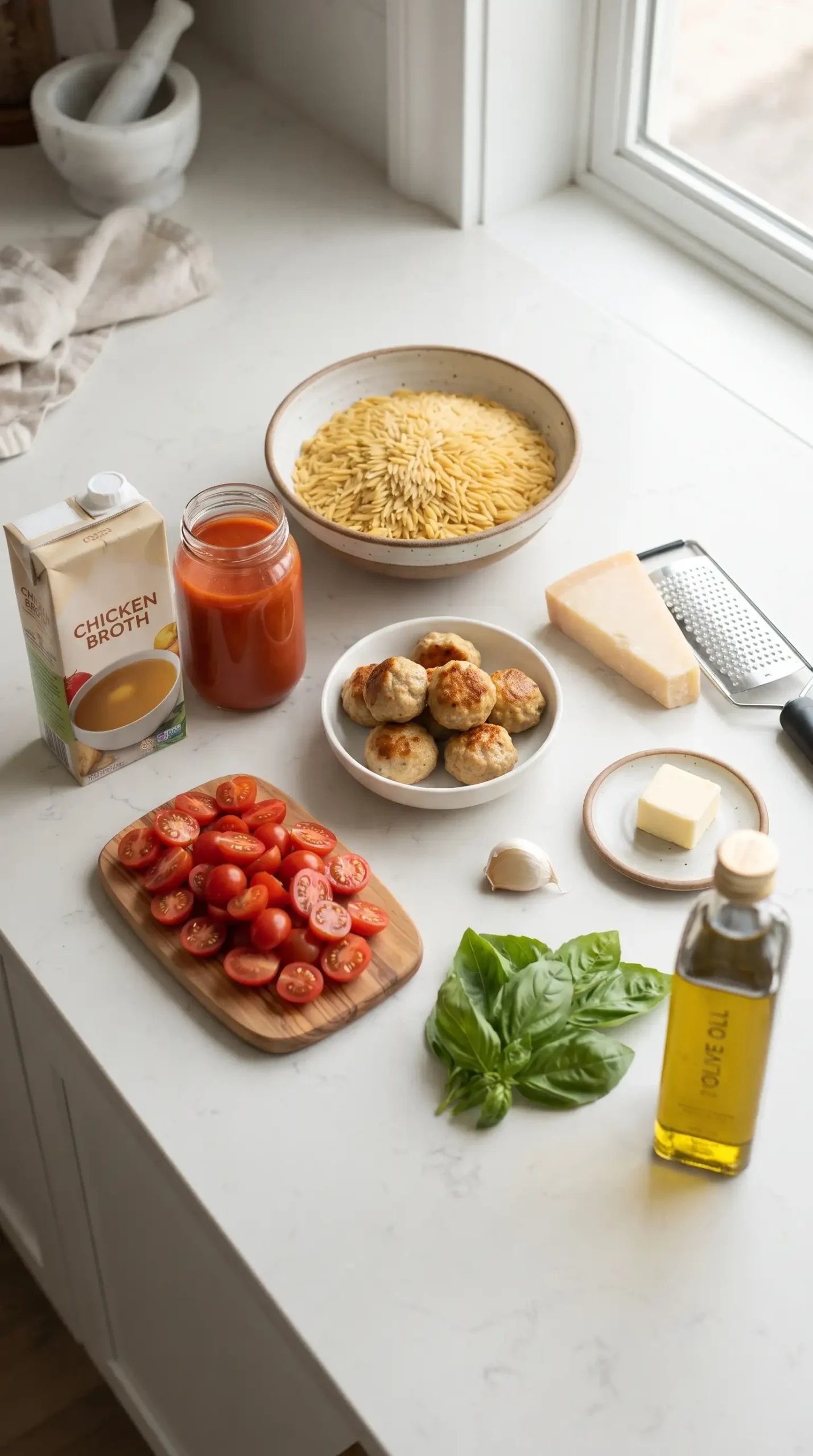
The most important ingredient decisions for baked orzo with meatballs involve how the pasta absorbs flavor and how the liquid supports that process. Orzo needs enough moisture to become tender, while the tomato soup adds richness and a smooth consistency throughout the dish.
- Orzo quality: A dependable pasta brand helps the small grains cook evenly and maintain a pleasant texture.
- Liquid balance: Broth and tomato soup create the cooking environment needed for the pasta to soften inside the baking dish.
- Tomato freshness: Cherry tomatoes contribute moisture and a bright flavor as they soften during baking.
Parmesan, butter, and garlic are stirred in after baking so their flavors remain distinct. Adding these ingredients at the finishing stage helps create the creamy texture associated with this dish without requiring a separate cream sauce.
Chicken meatballs and tomatoes bring balance to each serving
Orzo with chicken meatballs succeeds because each component fills a different role. The pasta carries the sauce-like mixture, the meatballs provide a hearty bite, and the tomatoes keep the dish from feeling one-dimensional.
Prepared chicken meatballs make the dish convenient, while homemade versions can also fit the same approach if they are already cooked and ready to use. The key consideration is choosing meatballs that can warm through while baking with the orzo mixture.
Baking control keeps creamy baked orzo from drying out
Successful baking depends on watching how the orzo absorbs liquid during its time in the oven. Pasta continues taking in moisture as it cooks and even after it leaves the heat, so texture checks matter when deciding whether more liquid is needed.
Several signs help determine whether the dish has reached the right consistency:
- Early texture check: Stir the orzo after the initial baking period to see whether the pasta has softened and whether liquid remains around the edges.
- Moisture adjustment: Add more tomato soup or broth if the pasta needs additional softness or a looser texture.
- Resting awareness: Remember that the orzo will continue absorbing surrounding liquid as it sits.
A 9×13 baking dish provides space for the ingredients to cook together while allowing the top layer to heat evenly. Stirring also helps redistribute the softened tomatoes, pasta, and sauce-like mixture before serving.
Oven temperature matters because the dish needs enough heat to cook the orzo while gently warming the meatballs and tomatoes. Excessive cooking can lead to pasta that absorbs too much liquid, while insufficient cooking can leave the grains firmer than intended.
| Texture concern | What you may notice | Useful adjustment |
|---|---|---|
| Orzo feels firm | Pasta has not absorbed enough moisture | Continue baking and check liquid levels |
| Orzo seems thick | Mixture continues tightening as it sits | Stir in additional broth or tomato soup |
| Edges look dry | Liquid has concentrated around the pan | Redistribute the mixture while stirring |
Creamy orzo bake texture improves with finishing touches
The ingredients added after baking are small but important. Parmesan melts into the warm orzo, butter creates a smoother finish, and garlic adds a savory note that spreads through the pasta.
The finishing step can be adjusted by balancing garlic intensity with Parmesan and butter so the pasta keeps a smooth, savory character. A garlic-focused preparation such as creamy garlic pasta uses these flavors in a sauce-centered dish where the garlic and cheese remain central.
Common mistakes can affect creamy baked orzo with meatballs
Several problems with creamy baked orzo come from changes in moisture, timing, or finishing steps. Keeping the original balance of pasta, liquid, and additions helps prevent the most common issues.
- Skipping the texture check: Removing the dish without checking the pasta can leave the orzo either too firm or too thick.
- Ignoring continued absorption: Letting the dish sit means the pasta may become firmer as it takes in more liquid.
- Adding finishing ingredients too early: Parmesan, butter, and garlic are intended to blend into the hot cooked mixture after baking.
Another common mistake is treating the dish like a dry casserole. The creamy quality comes from the interaction between the cooked orzo and its surrounding liquid, so preserving that moisture is essential.
Overlooking the tomatoes can also change the result. Their released juices become part of the sauce-like texture, so stirring them into the orzo after baking helps distribute their flavor and moisture.
Fresh basil and olive oil brighten the baked orzo finish
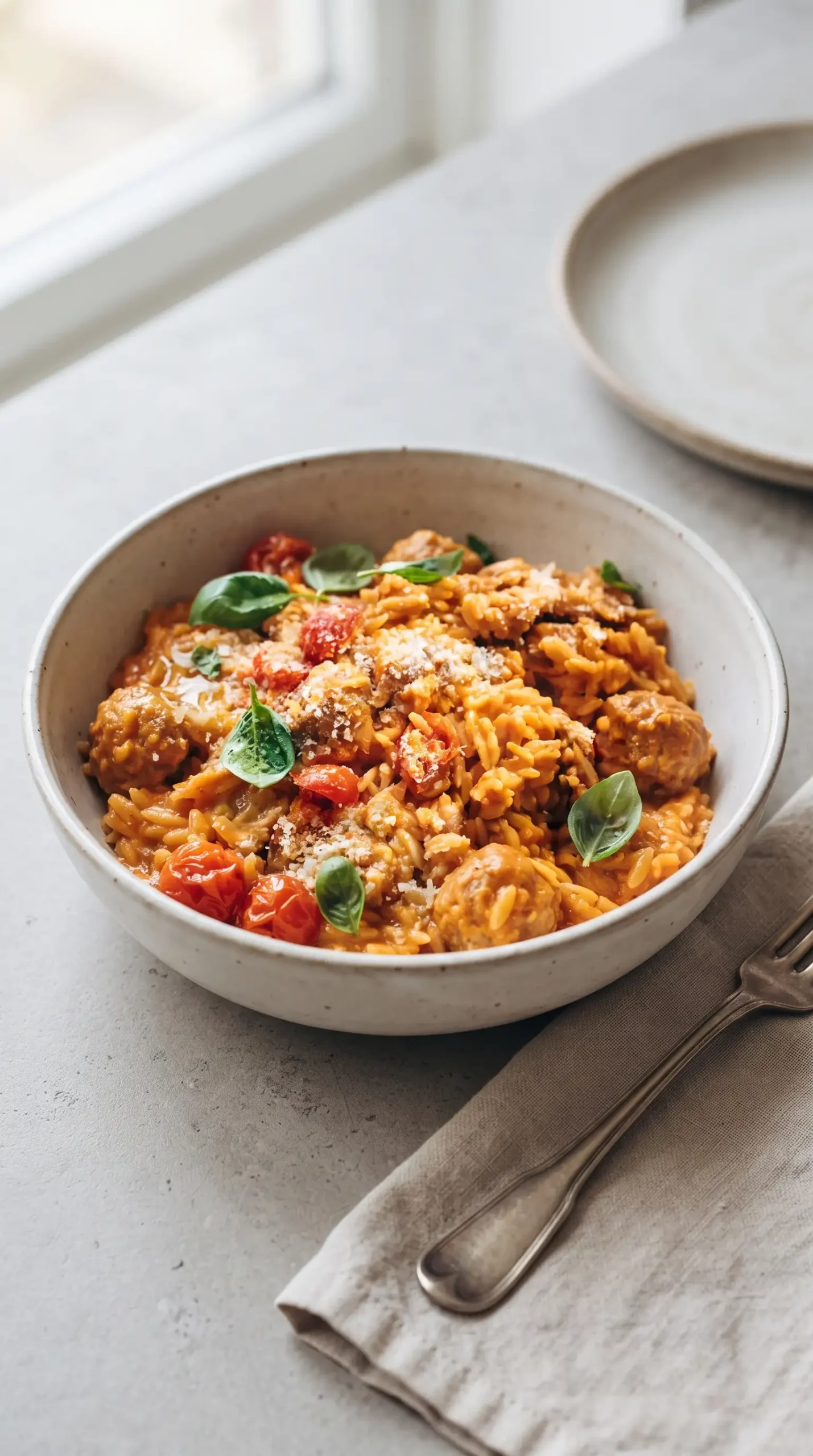
Fresh basil and olive oil provide contrast to the warm, rich flavors of the baked pasta. Basil adds a fresh herbal note, while a drizzle of olive oil creates a smooth surface finish that complements the Parmesan.
Simple variations keep orzo with chicken meatballs flexible
The basic structure of orzo with chicken meatballs allows for small adjustments while keeping the same comforting style. Changes work best when they support the balance of pasta, liquid, and toppings.
Different broth choices can slightly shift the flavor profile. Vegetable broth keeps the dish suitable for a wider range of meals, while chicken broth adds another savory layer that pairs naturally with chicken meatballs.
Serving options can also change the experience without altering the bake itself. A fresh salad or roasted vegetables can provide contrast alongside the creamy pasta, while additional basil can emphasize the tomato flavors.
Because the ingredients are simple and familiar, the dish works well for casual dinners, family meals, and occasions when a warm baked meal is preferred.
Leftover handling preserves baked orzo quality
Cooked orzo continues changing in texture after cooling because the pasta keeps absorbing moisture. Storing leftovers with attention to moisture helps maintain a satisfying consistency when reheated.
For safer storage, refrigerate cooked leftovers promptly and keep perishable dishes like this baked orzo within two hours of serving.
Serving choices highlight this tomato meatball orzo bake
A spoonful of this bake already contains pasta, meatballs, tomatoes, and a savory finish, making it naturally filling. Simple additions work best because they should complement the creamy texture without overwhelming it.
Consider serving it with:
- Crisp greens: A fresh salad can add a lighter contrast.
- Extra herbs: Basil can reinforce the tomato and Parmesan flavors.
- Warm bread: Bread can pair well with the flavorful sauce-like mixture.
Creamy baked orzo becomes a balanced one-pan dinner
Creamy baked orzo delivers its best texture when the pasta, tomatoes, meatballs, and finishing ingredients remain in balance. The dish depends on careful attention to moisture and timing, creating a meal where simple ingredients combine into a rich and satisfying result.
Creamy baked orzo questions about texture and storage
Can I use homemade chicken meatballs in baked orzo?
Yes, homemade chicken meatballs can work well as long as they are prepared and ready to warm with the other ingredients. Their size and seasoning may slightly change the finished dish, but the baked orzo structure remains the same.
Why does my orzo continue getting thicker after baking?
Orzo continues absorbing liquid even after it comes out of the oven. If the pasta becomes thicker than desired, stirring in additional broth or tomato soup can help restore a softer consistency.
Can creamy baked orzo be made with vegetable broth?
Vegetable broth is a suitable option for this dish and works with the tomato soup base. It changes the savory background slightly while still providing the liquid needed for the orzo to cook.
How can I keep the tomatoes noticeable in every serving?
Stirring after baking helps distribute the softened cherry tomatoes and their released juices throughout the pasta. This spreads their flavor into more of the dish instead of leaving them concentrated in certain areas.
What should I do if the baked orzo seems too dry?
Add a small amount of broth or tomato soup and stir gently to loosen the pasta. Since orzo absorbs moisture over time, a little added liquid can help bring back the creamy consistency.
Creamy Baked Orzo with Meatballs and Cherry Tomatoes
Ingredients
Method
- Preheat the oven to 425°F (218°C). Add the orzo, vegetable broth, tomato soup, meatballs, and cherry tomatoes to a 9×13 baking dish. Stir until the ingredients are evenly combined.
- Bake for 25 minutes. Stir the mixture and check the orzo texture. If the pasta needs more time, continue baking for another 10 minutes so it can absorb the remaining liquid.
- Fluff the orzo with a fork and stir in any liquid around the edges. Add more tomato soup or broth as desired while remembering the pasta will continue absorbing moisture as it rests.
- Stir in the Parmesan, garlic, and butter until incorporated. Finish with fresh basil, olive oil, salt, and pepper before serving.