
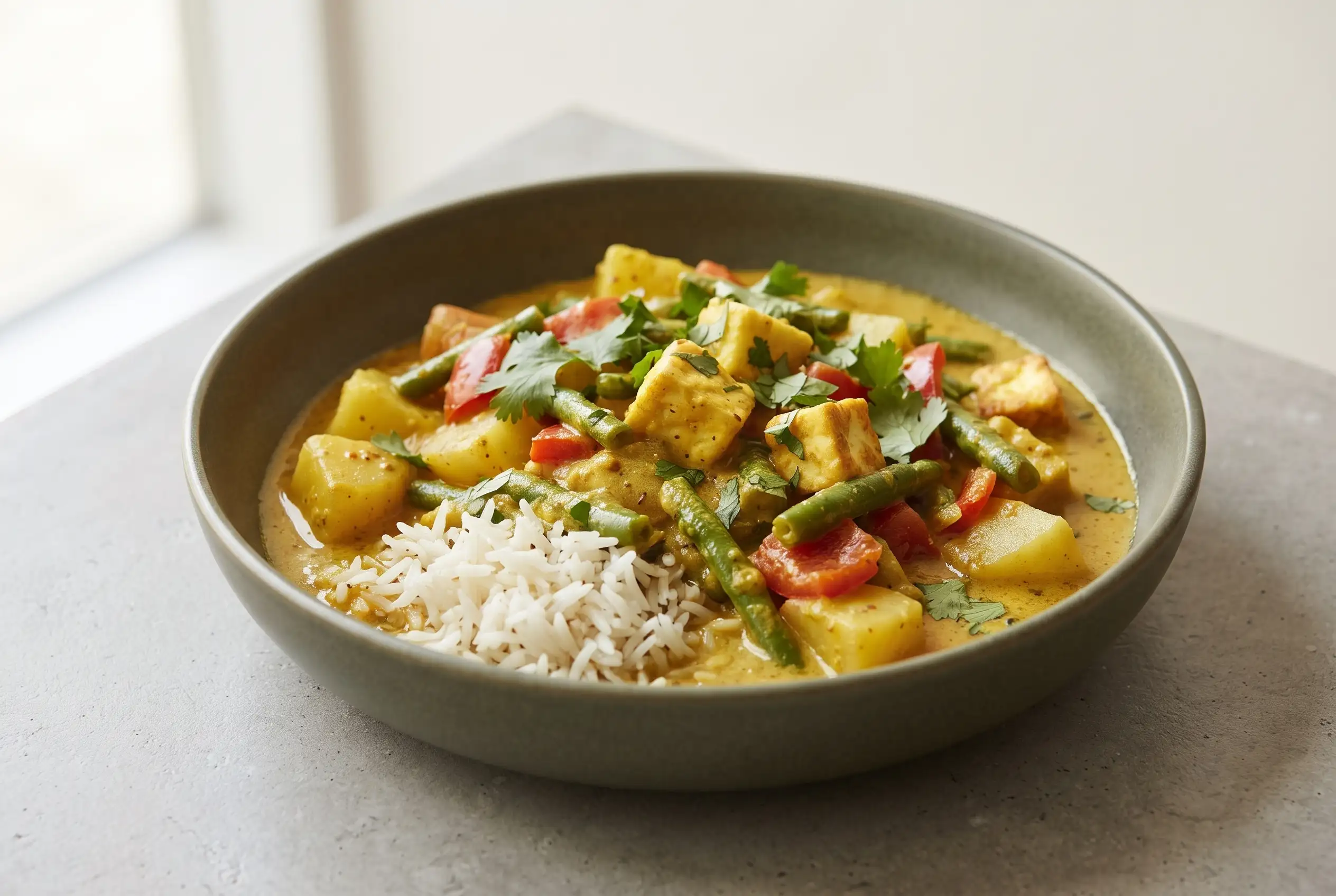
Veggie korma brings together tender vegetables, aromatic spices, paneer, and a creamy sauce in a comforting Indian-inspired meal built around gentle layers of flavor. The combination of potatoes, green beans, bell peppers, yogurt, cream, and warming spices creates a cozy vegetable korma that feels rich while keeping the vegetables at the center of the plate.
Veggie korma creates a creamy vegetable centerpiece
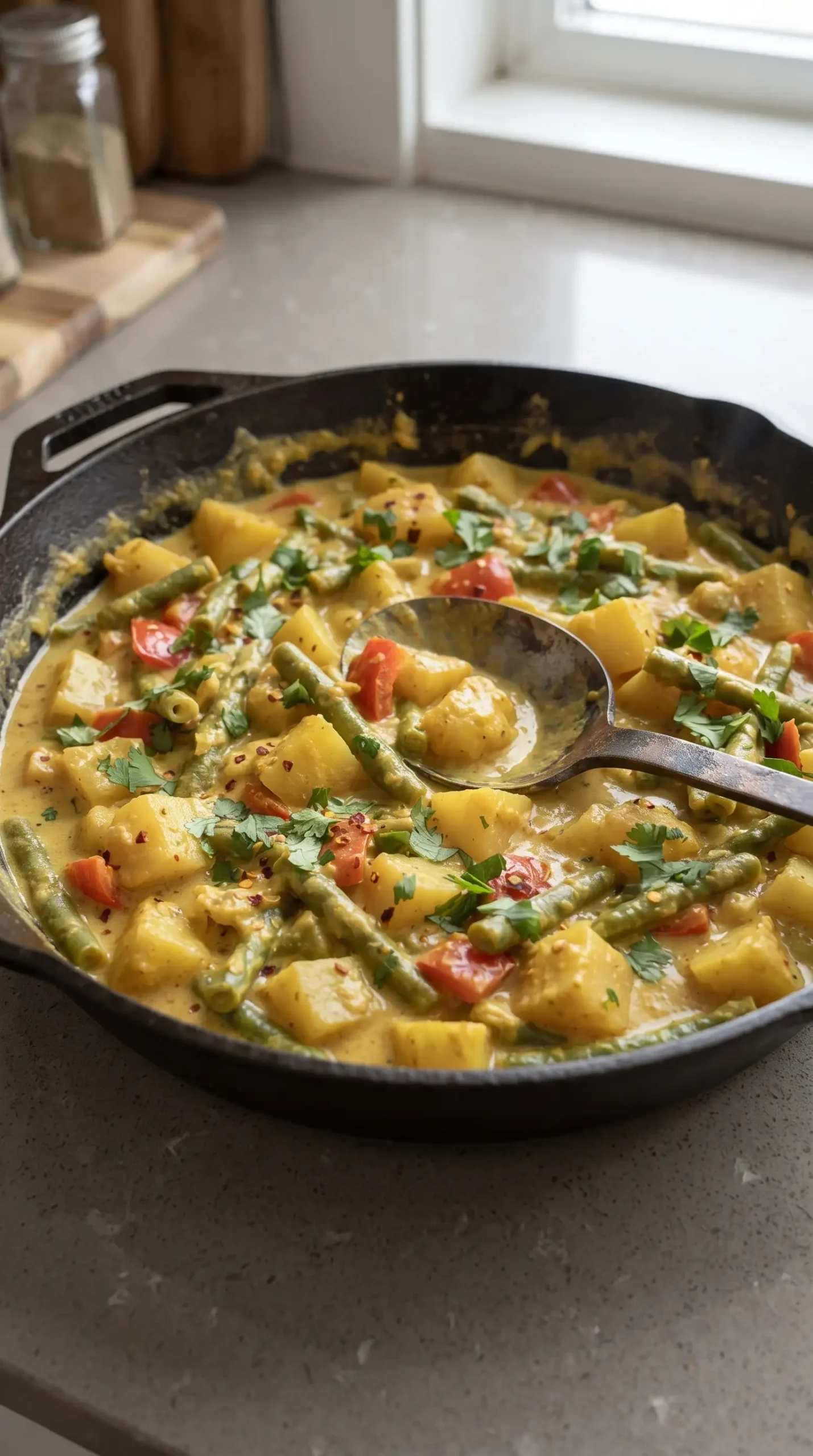
Balanced cooking gives veggie korma its distinctive character. The vegetables are softened enough to absorb the fragrant sauce while still maintaining their individual textures. Potatoes provide a hearty base, while green beans and peppers keep the dish bright and colorful.
Spices become more rounded when they are warmed in butter before the liquid ingredients enter the pan. Cardamom, coriander, turmeric, cumin, cinnamon, and red pepper flakes develop a deeper aroma through this brief cooking stage, creating a sauce with warmth and complexity.
Cream and yogurt finish the dish with a smooth consistency that coats every vegetable piece. Keeping the heat gentle during this stage helps preserve the creamy texture and allows the dairy ingredients to blend into the spiced sauce.
Rice pairings highlight the korma sauce
Steamed rice provides a simple foundation for vegetable korma with paneer because the grains absorb the creamy sauce and carry the spices throughout each serving. Plain basmati rice works beautifully, while lightly seasoned grains can add another layer of fragrance without competing with the korma.
Paneer and vegetables balance texture in every bite
Paneer adds a satisfying contrast to the softer vegetables and creamy sauce. The mild cheese cubes hold their shape during cooking and provide a rich element that complements the spices without overpowering them.
Vegetable choices in korma influence the final texture of the dish. Potatoes need enough time to become tender, while green beans and bell peppers benefit from shorter cooking so they maintain some structure.
Fresh cilantro added before serving introduces a herbal note that lifts the richness of the sauce. The garnish works alongside the spices by adding freshness to the finished bowl.
Spices shape the character of a cozy veggie korma
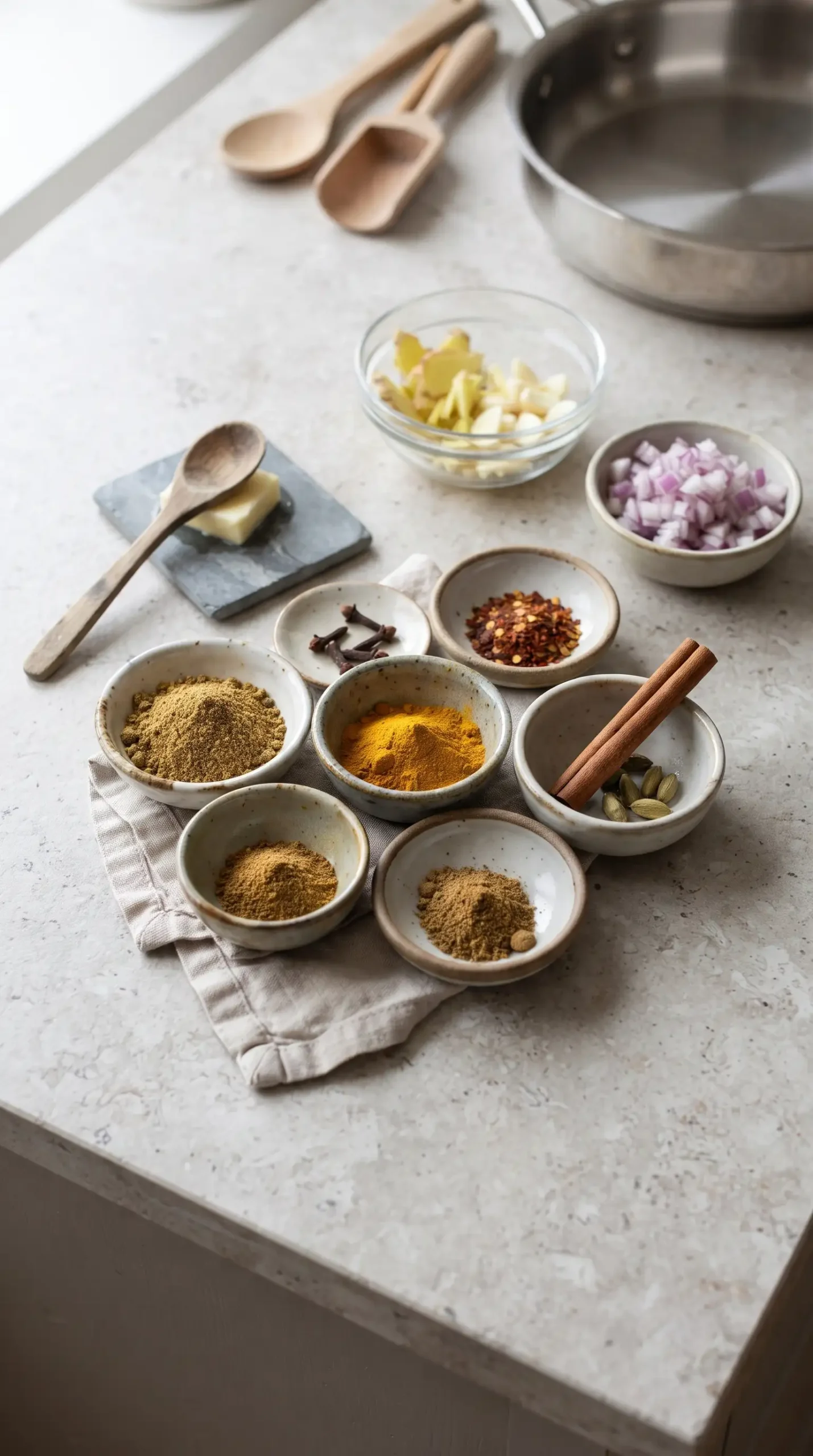
The spice blend in this dish depends on harmony instead of a single dominant flavor. Ground coriander contributes a warm, earthy quality, turmeric gives the sauce its golden appearance, and cumin brings a savory depth that supports the vegetables.
Choosing ingredients improves veggie korma results
Small ingredient decisions have a noticeable impact on the texture and flavor of a creamy vegetable korma. Full-fat yogurt and cream create the smooth finish expected from this style of dish, while sturdy vegetables help the sauce feel substantial.
| Ingredient choice | Cooking purpose | Result in korma |
|---|---|---|
| Gold potatoes | Provide body and absorb sauce | A hearty, tender texture |
| Fresh green beans | Add contrast after simmering | A brighter vegetable bite |
| Paneer cubes | Add optional richness | A mild, satisfying finish |
| Full-fat yogurt | Creates a creamy sauce element | A smoother consistency |
Quality aromatics also matter because onion, garlic, and ginger create the foundation beneath the spices. Slicing them thinly helps them soften evenly and blend into the sauce instead of remaining separate pieces.
Vegetable preparation decisions keep textures distinct
Cutting vegetables into similar-sized pieces helps them cook more evenly and allows each serving to contain a balanced mix of potatoes, beans, and peppers. Larger pieces may remain firm while smaller pieces soften too quickly.
Gentle heat protects the creamy korma sauce
Temperature control is the most important execution detail once dairy enters the pan. After the vegetables and spices have developed their flavor, lowering the heat before adding cream and yogurt helps prevent a broken or grainy sauce by avoiding issues like yogurt curdling when heated.
Cooling the mixture slightly before incorporating dairy gives the yogurt a smoother transition into the warm sauce. Stirring steadily allows the ingredients to combine without creating sudden temperature changes.
Adjusting the consistency at the end keeps the sauce suitable for serving with rice. A small amount of water can loosen the korma if the sauce becomes thicker than desired while preserving its creamy character.
Common veggie korma mistakes that affect creamy texture
Several simple errors can change the texture and balance of veggie korma. Paying attention to timing, heat, and ingredient handling helps maintain the intended creamy finish.
- High heat with dairy: Adding yogurt or cream while the pan is too hot can cause the sauce to lose its smooth texture. Reduce the heat first and combine gently.
- Overcooked vegetables: Cooking all vegetables for the same length of time may leave peppers and beans too soft. Add quicker-cooking vegetables after the potatoes have started becoming tender.
- Unbalanced spices: Skipping the brief spice-warming stage can leave the flavors less developed. Allow the spices to become fragrant before adding liquid.
Correcting these issues is usually straightforward. A sauce that thickens too much can be loosened with water, while vegetables that need more tenderness can continue cooking before the dairy is added.
Simple variations expand an easy veggie korma recipe
Veggie korma can be adapted while keeping its creamy, spiced foundation. Paneer may be included for a richer meal, or the vegetable focus can remain the main feature by leaving it out.
Different vegetables can change the character of the dish when they cook well with the existing sauce. Firm vegetables that can hold their shape are especially suitable because they complement the creamy texture.
Serving adjustments also create variety. A bowl served with rice offers a classic presentation, while additional fresh herbs can brighten the flavors at the table.
Serving choices make veggie korma a complete meal
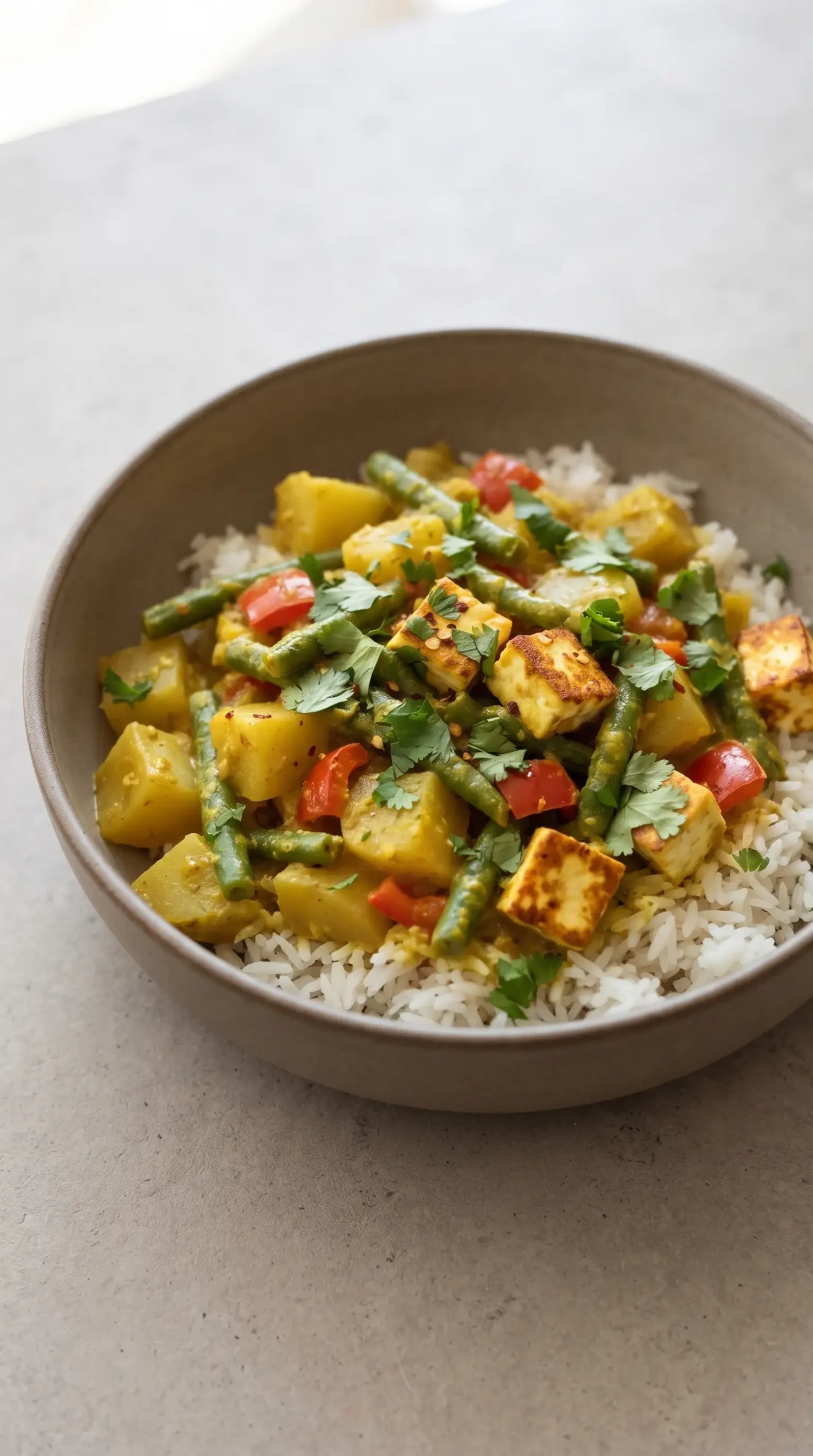
Presentation influences how the flavors come together. Spoonfuls of creamy sauce over rice create a balanced plate where the vegetables, spices, and optional paneer remain easy to enjoy.
Veggie korma stores well with careful reheating
Once cooled, leftover veggie korma can be kept refrigerated in a covered container. Gentle reheating is helpful because the creamy sauce benefits from gradual warming instead of aggressive heat.
Extra sauce may thicken after chilling because the dairy and vegetables continue to absorb moisture. A small splash of water stirred in during reheating can help restore a smoother serving texture.
Fresh cilantro added after reheating can refresh the flavors and bring back the contrast that makes the dish feel balanced.
Veggie korma success comes from a gentle creamy finish
Veggie korma reaches its best texture when tender vegetables, toasted spices, and dairy ingredients come together with careful heat control. The creamy sauce depends on preserving the smooth connection between yogurt, cream, and the aromatic spice base.
When potatoes, beans, peppers, and optional paneer are handled with attention, the finished dish offers a comforting combination of richness and freshness that works naturally with rice.
Veggie korma questions about texture, dairy, and preparation
Can veggie korma be made without paneer?
Yes, paneer can be omitted while keeping the vegetable and creamy sauce elements intact. The potatoes, beans, and peppers provide plenty of substance, and the sauce remains the defining feature of the dish.
How can I keep the yogurt from curdling in korma?
Lower the heat before adding yogurt and allow the mixture to cool slightly so the dairy blends smoothly into the sauce. Gentle stirring helps maintain the creamy consistency.
Can I prepare veggie korma ahead of serving?
Veggie korma can be prepared in advance and reheated carefully. Warm it slowly and adjust the sauce with a little water if it has thickened during storage.
What type of rice works best with vegetable korma?
Basmati rice is a natural pairing because its light texture allows it to absorb the creamy sauce while its fragrance complements the spices in the korma.
Veggie Korma with Paneer and Creamy Yogurt Sauce
Ingredients
Method
- Slice the onion, garlic, and ginger, and prepare the vegetables by peeling and cubing the potatoes and cutting the green beans and bell pepper into pieces.
- Melt the butter in a large soup pot or skillet over medium heat. Add the onion, garlic, and ginger, then cook for 5-7 minutes until softened.
- Stir in the cardamom, coriander, turmeric, cumin, red pepper flakes, and cinnamon. Cook for 2-3 minutes until the spices become fragrant.
- Add the potatoes and water, cover, and simmer for 8-10 minutes. Add the green beans and bell peppers, then continue cooking uncovered for 3-5 minutes until the vegetables are tender. Stir in the paneer if using.
- Reduce the heat to prevent curdling. Allow the mixture to cool slightly, then add the cream, yogurt, salt, and garam masala. Add the extra water if needed to adjust the consistency.
- Season with salt and pepper, serve over rice, and finish with cilantro.