
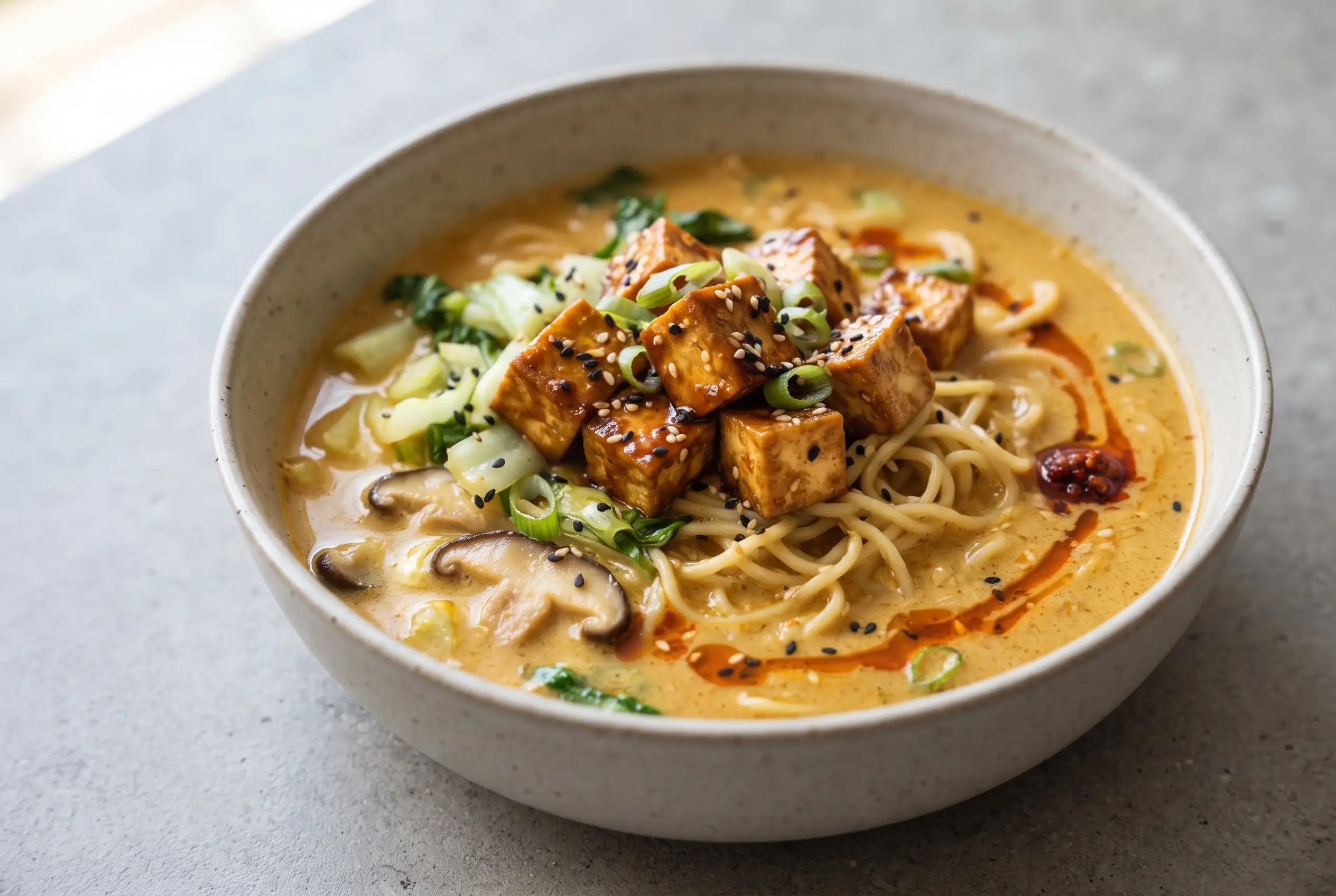
Coconut curry ramen brings together creamy coconut milk, warming curry seasoning, crisp tofu, and springy noodles in a bowl that balances richness with fresh vegetables. The combination works because each cooking choice affects the finished texture, from preparing the tofu surface to timing the noodles so they remain satisfying in the broth.
Built around plant-based ingredients, coconut curry ramen offers layers of flavor without relying on the seasoning packet found in many instant noodle dishes. Garlic, ginger, shiitake mushrooms, bok choy, lime, sesame oil, and chili paste create a broth with depth while the toppings provide contrast.
Coconut Curry Ramen Creates a Creamy Spiced Bowl
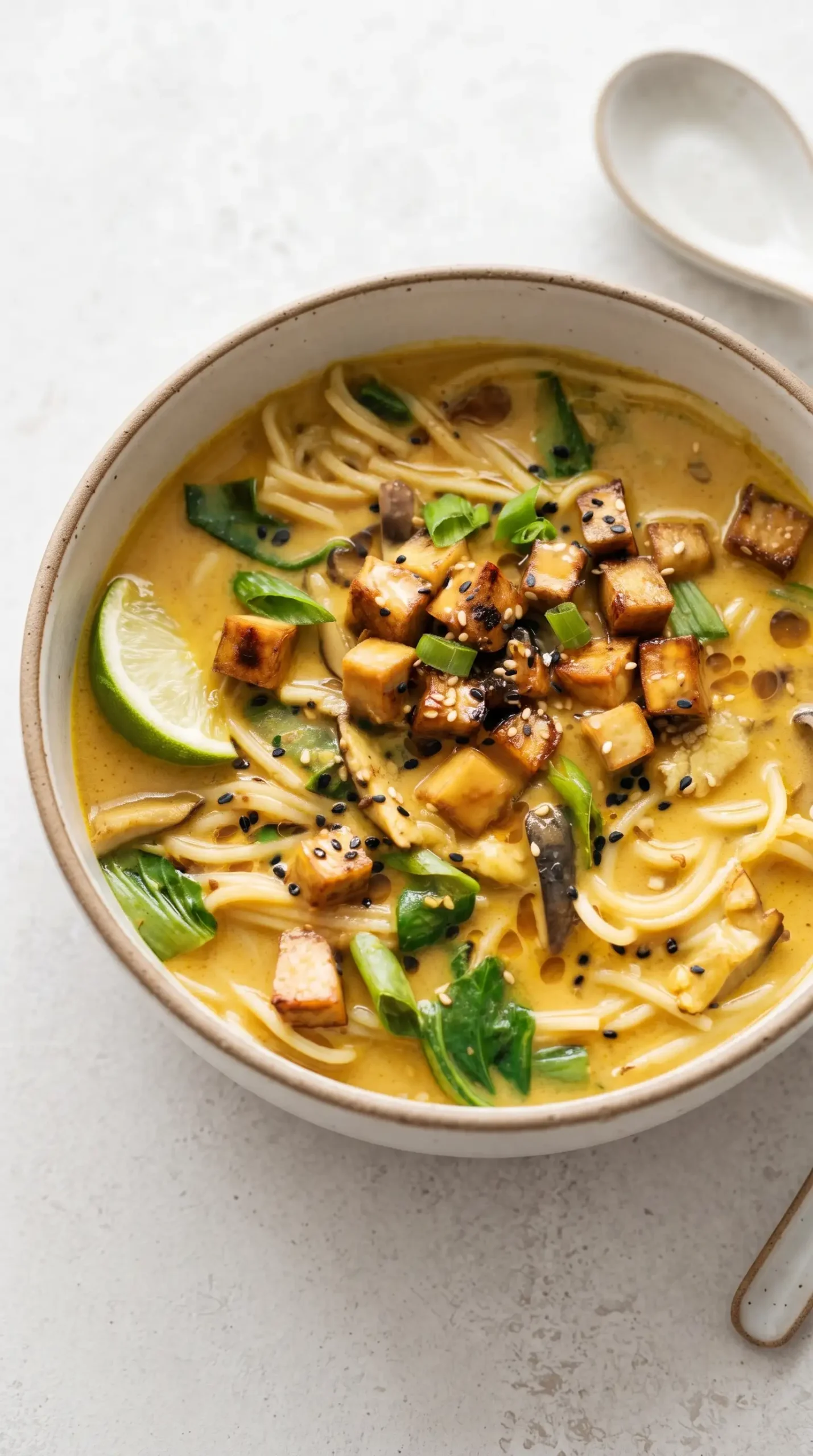
Rich broth defines the character of coconut curry ramen, but the texture comes from how the individual parts are handled. Coconut milk softens the sharper flavors of curry powder, sambal oelek, and aromatics while vegetable broth keeps the soup light enough to highlight the noodles and toppings.
Balanced bowls depend on contrast. The tofu offers a crisp surface after baking, the vegetables contribute freshness, and the ramen absorbs the seasoned liquid. A squeeze of lime at the end helps keep the creamy broth lively instead of heavy.
Tofu Coconut Curry Ramen Gets Crisp Contrast From Baked Tofu

Crisped tofu changes the eating experience by adding a firm topping that stands apart from the soft noodles and broth. Coating the cubes with cornstarch before baking helps create a surface that can hold onto the hoisin finish, and crisp tofu preparation can be adjusted through moisture removal and browning time to keep the exterior textured when added to the bowl.
Shiitake and Bok Choy Shape the Ramen Base
Shiitake mushrooms provide the main vegetable depth in the broth, bringing an earthy quality that pairs naturally with coconut milk and curry seasoning. Their flavor develops during the sautéing stage before the liquid ingredients are added.
Fresh bok choy creates a different type of balance by adding a tender vegetable element without competing with the spices. Chopping the greens into manageable pieces allows them to blend into the bowl while still providing texture.
Ingredient choices can influence the finished bowl in simple ways. Shiitake mushrooms are especially suited to this combination, while button mushrooms can work when a more familiar mushroom flavor is preferred. Bok choy can also be replaced with spinach or another green when needed.
Coconut Milk Ramen with Tofu Depends on Balanced Seasoning
Seasoning coconut milk ramen with tofu requires attention to the relationship between savory, spicy, creamy, and bright flavors. Soy sauce, hoisin sauce, sesame oil, chili paste, and lime each play a different role, creating a broth that feels layered instead of one-dimensional.
Ramen Noodle Choices Change the Bowl Texture
Noodle selection has a noticeable effect because ramen absorbs the surrounding broth as it sits. Classic packaged noodles work well when the seasoning packet is left out, allowing the coconut curry flavors to remain the focus.
Different noodle amounts can also shift the balance of the meal. More noodles create a heartier bowl, while fewer noodles leave more room for vegetables, tofu, and broth in each serving.
Careful handling after cooking matters because noodles continue soaking up liquid after they reach the bowl. If leftovers become thicker because the noodles absorb the broth, adding extra water or broth can help restore a smoother consistency.
Cooking Control Keeps Coconut Curry Ramen Components Distinct
Successful coconut curry ramen depends on timing each component so the textures stay recognizable. The tofu needs enough heat to develop its golden exterior, while the broth requires gentle simmering so the coconut milk blends smoothly with the other flavors.
Proper attention during sautéing builds the foundation of the soup. Softening the mushrooms and bok choy before adding the garlic, ginger, and curry powder allows the aromatics to become fragrant and prepares the base for the broth.
Noodle timing is another important control point. Ramen cooks quickly once added to simmering liquid, so watching the texture prevents noodles from becoming overly soft before the toppings are added.
Mistakes That Weaken Coconut Curry Ramen Flavor
Several small mistakes can change the balance of coconut curry ramen. Avoiding these problems helps preserve the contrast between the creamy broth, crisp tofu, and fresh vegetables.
- Skipping tofu preparation: Wet tofu may not develop the same crisp exterior, so pressing out excess water and using cornstarch supports better browning.
- Overloading noodles: Too many noodles can absorb more broth and reduce the balance between vegetables, tofu, and soup.
- Adding noodles too early: Extended cooking can soften ramen beyond the preferred texture.
Vegetable Swaps Fit the Coconut Curry Ramen Framework
Flexible vegetables make coconut curry ramen adaptable while keeping the original flavor direction intact. Spinach can replace bok choy, and button mushrooms can stand in for shiitake mushrooms when those options are easier to find.
Serving Details Bring Out Sesame and Chili Notes
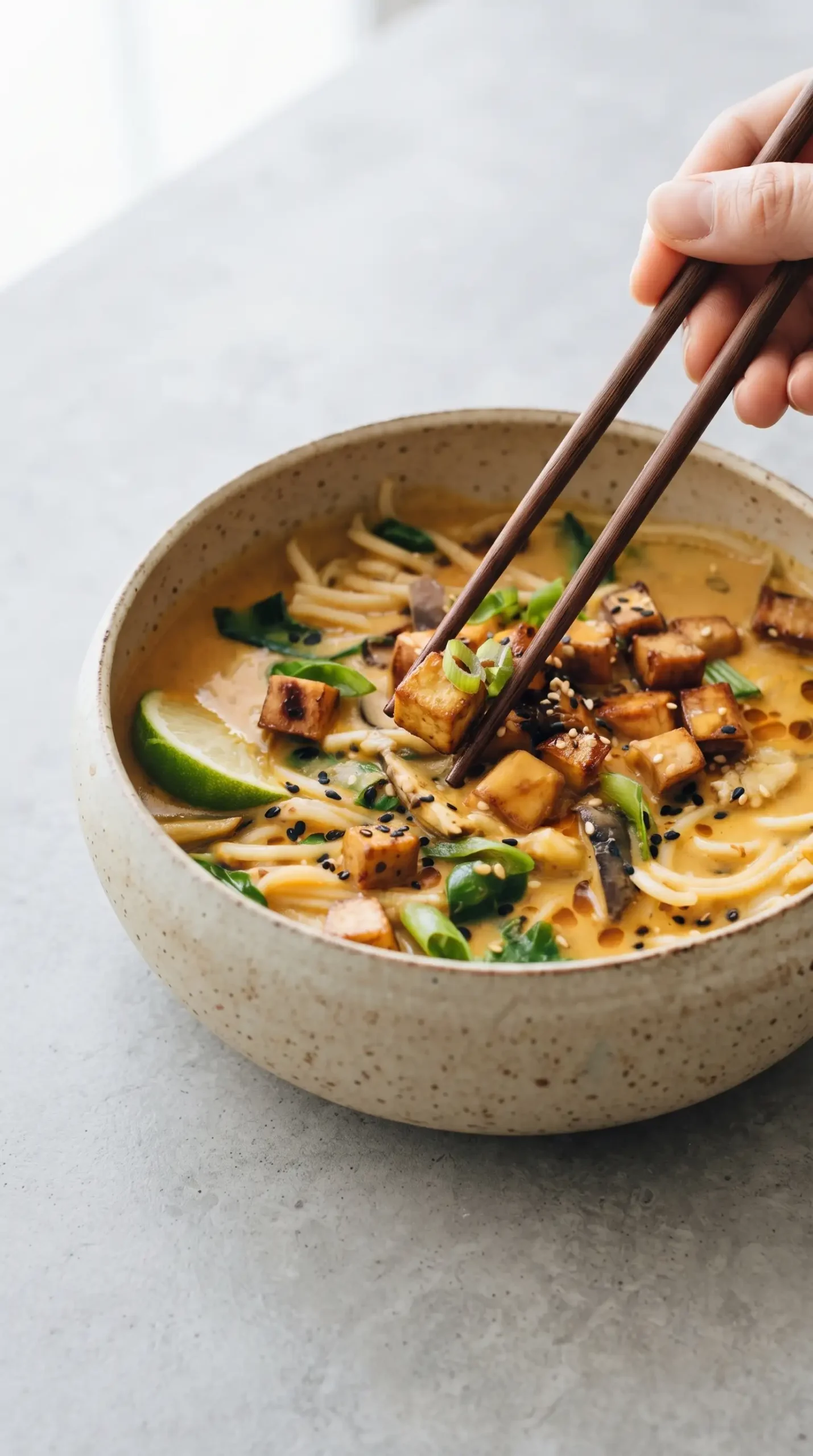
Finishing touches have a strong effect on the bowl because toppings remain distinct from the creamy soup. Green onion adds freshness, sesame seeds provide a light crunch, and sesame oil contributes a nutty aroma that ties the flavors together.
Presentation also influences how the textures come together. Adding the tofu on top allows the crisp edges to remain noticeable instead of immediately absorbing all the broth.
Simple toppings work best when they support the main flavors. A careful finish with chili paste, lime, and sesame elements keeps each spoonful balanced between richness and brightness.
| Component | Texture Contribution | Flavor Role |
|---|---|---|
| Crispy tofu | Firm and crunchy topping | Holds hoisin and savory notes |
| Ramen noodles | Soft, springy bite | Carries the coconut curry broth |
| Vegetables | Tender contrast | Adds freshness and earthy depth |
Spicy Elements Define the Vegetarian Curry Ramen Experience
Vegetarian curry ramen gains its personality from the interaction between curry powder, sambal oelek, ginger, garlic, and coconut milk. The spices create warmth, while the creamy base keeps the heat rounded and approachable.
Adjusting the chili component changes the character of the bowl without requiring major recipe changes. The sambal oelek can be viewed as a finishing flavor that contributes both spice and savory depth.
Coconut Curry Ramen Storage Requires Texture Awareness
Stored portions remain flavorful, but the noodles naturally continue absorbing liquid after cooking. Keeping this texture change in mind makes reheating easier because additional broth or water may be useful when warming leftovers.
Coconut Curry Ramen Brings Together Texture and Flavor Control
Coconut curry ramen succeeds when the creamy broth, crisp tofu, vegetables, and noodles maintain their individual qualities. The most important decisions happen during preparation: building flavor in the broth, protecting noodle texture, and creating contrast with the tofu topping.
The finished bowl reflects careful balance. Coconut milk provides richness, lime adds brightness, and the combination of vegetables and toppings keeps the meal satisfying from the first bite to the last.
Coconut Curry Ramen Questions About Noodles, Tofu, and Storage
Can coconut curry ramen use different noodles?
Yes, different ramen noodles can work well as long as they are cooked without a separate seasoning packet that would compete with the coconut curry broth. The key consideration is how much liquid the noodles absorb after cooking.
How can tofu stay crisp in the bowl?
Tofu stays more textured when excess moisture is removed before coating and baking. Adding the browned tofu as a topping near serving time helps preserve its contrast with the broth.
Can the vegetables in coconut curry ramen be changed?
Yes, spinach can replace bok choy, and button mushrooms can replace shiitake mushrooms. These swaps maintain the vegetable component while slightly changing the flavor and texture.
Why does leftover ramen become thicker?
The noodles continue absorbing broth after cooking, which can leave the soup more concentrated over time. Adding a little water or broth when reheating can loosen the consistency again.
Coconut Curry Ramen with Crisp Tofu and Vegetables
Ingredients
Method
- Heat the oven to 375 degrees Fahrenheit (190 degrees Celsius). Line a baking sheet with parchment paper.
- Press out some or most of the water from the tofu, then cut it into cubes. Coat the tofu with cornstarch in a bowl, then add a drizzle of oil and soy sauce.
- Place the tofu on the prepared baking sheet and bake for 30-40 minutes, until golden and crisp. Toss the baked tofu with a little hoisin sauce.
- While the tofu cooks, prepare the vegetables.
- Warm the oil in a large deep pot over medium heat. Add the mushrooms and bok choy and cook for 3-5 minutes until softened.
- Add the garlic, ginger, and curry powder to the pot. Cook for 3-5 minutes until fragrant.
- Pour in the broth and bring the mixture to a simmer. Add the ramen noodles and cook until tender, usually 3-4 minutes.
- Stir in the coconut milk, then season with salt and lime juice.
- Divide the ramen and broth into bowls. Top with the crisp tofu, sesame oil, sesame seeds, and sliced green onions before serving.