
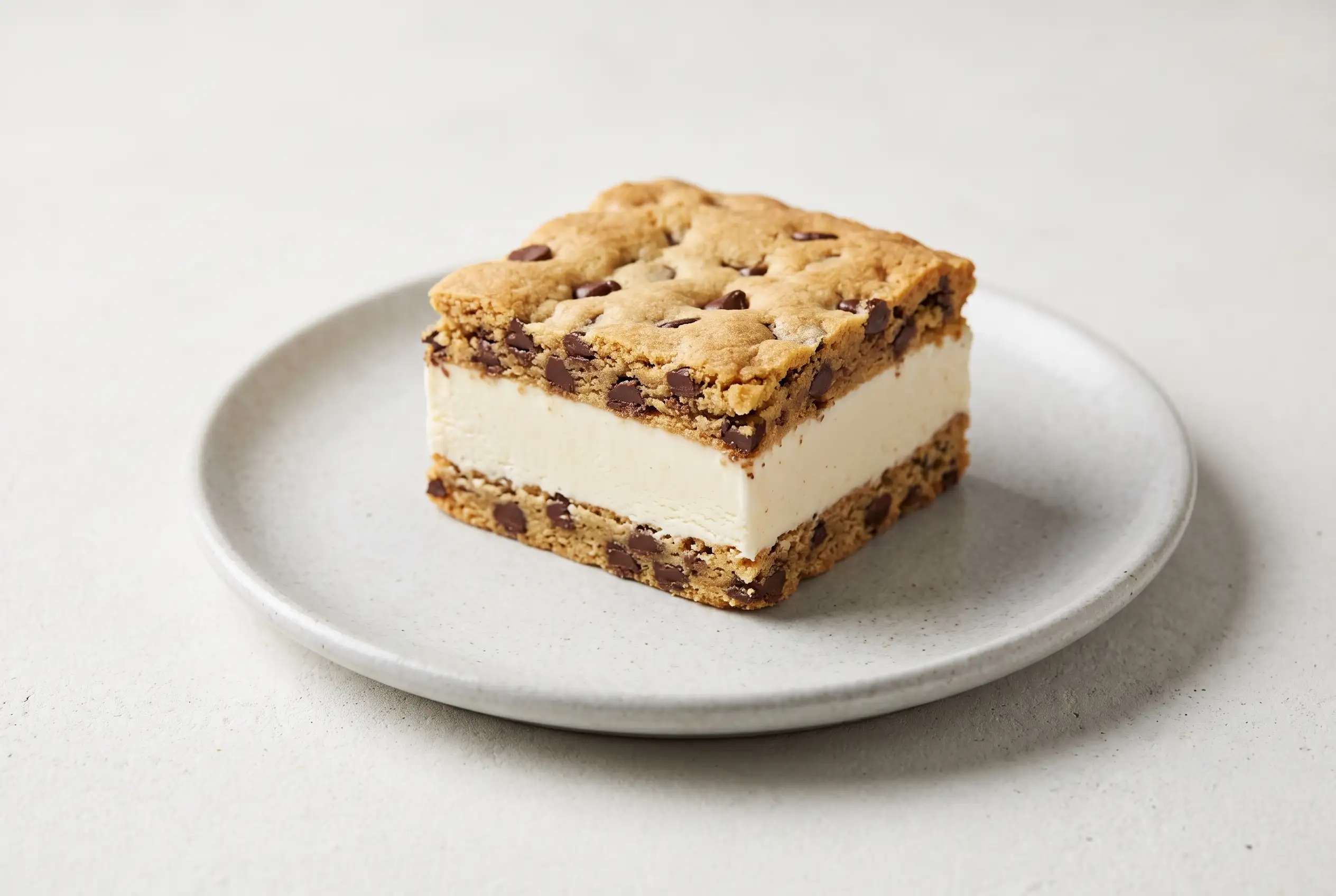
Cookie ice cream bars bring together soft baked cookie layers and a cold vanilla center for a dessert that combines familiar chocolate chip cookie flavor with the appeal of an ice cream treat. The contrast between a tender cookie base and a firm frozen middle creates a dessert that depends on careful timing, thoughtful assembly, and attention to texture.
Cookie Ice Cream Bars Create a Classic Dessert Contrast
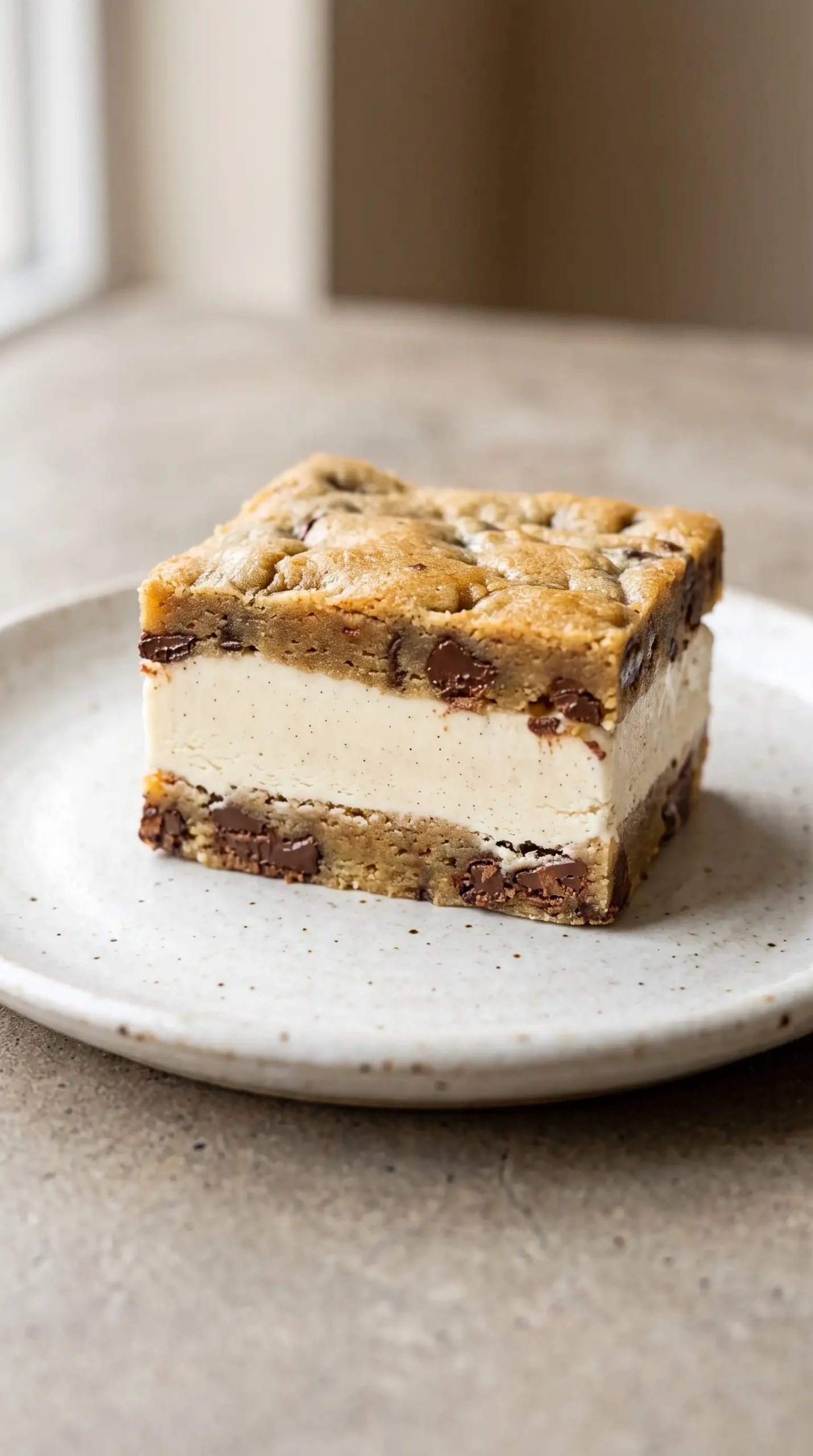
Few desserts combine two recognizable favorites as directly as cookie ice cream bars. The baked cookie portions provide structure and a chewy bite, while the ice cream introduces a smooth, creamy element that changes the way the dessert feels with every serving.
Unlike a simple cookie served alongside ice cream, chocolate chip cookie ice cream bars are built as a single layered dessert. The frozen center becomes part of the structure, which means the cookie layers need enough strength to hold their shape without becoming overly firm.
Balanced textures make these bars especially appealing for gatherings, celebrations, or make-ahead desserts. The preparation relies on familiar ingredients, but the order of cooling, layering, and freezing determines whether the finished bars are easy to cut and enjoy.
The Cookie Layers Shape the Texture of Chocolate Chip Cookie Ice Cream Bars
Cookie layers determine the foundation of the dessert because they surround the ice cream and create the main contrast in every bite. A cookie layer that stays tender provides a pleasant difference against the frozen filling, while an overly crisp layer can become harder to eat after freezing.
Freshly baked cookie portions need time to cool before they meet the ice cream. Warm layers can soften the frozen center too quickly, affecting the clean separation between cookie and ice cream. Cooling also helps the cookie hold its shape during assembly.
Chocolate chip cookie texture can vary with thickness and serving style; a thicker cookie base, including deep dish chocolate chip cookies with ice cream topping, can create a more substantial bite when paired with frozen desserts. The layers should be firm enough to support the filling while still offering the soft texture expected from a chocolate chip cookie.
| Layer component | Purpose in the dessert | Key handling decision |
|---|---|---|
| Bottom cookie layer | Creates the foundation for the ice cream | Cool completely before adding filling |
| Vanilla ice cream center | Adds creamy frozen contrast | Press into an even layer |
| Top cookie layer | Completes the sandwich structure | Place carefully to maintain shape |
Vanilla Ice Cream Placement Keeps Each Layer Balanced
The ice cream layer affects both flavor balance and serving texture. Vanilla ice cream provides a neutral creamy base that allows the chocolate chip cookie flavor to remain noticeable without competing with the baked layers.
Choosing Cookie Dough for Baked Cookie Ice Cream Bars
Prepared cookie dough and homemade cookie dough can both create the cookie foundation needed for baked cookie ice cream bars. The important choice is selecting a dough that can bake into layers with enough tenderness and stability for freezing.
Using prepared dough offers convenience and consistent shaping, while homemade dough allows control over the cookie texture. Either option can work when the baked layers are handled carefully after leaving the oven.
Several decisions can help during preparation:
- Dough thickness: Spread the dough evenly so the finished layers match in size and support the ice cream consistently.
- Baking texture: Keep the cookie portions tender enough to remain enjoyable after freezing.
- Cooling time: Allow baked layers to cool fully before building the dessert.
Cooling Decisions Protect Cookie Ice Cream Bars During Assembly
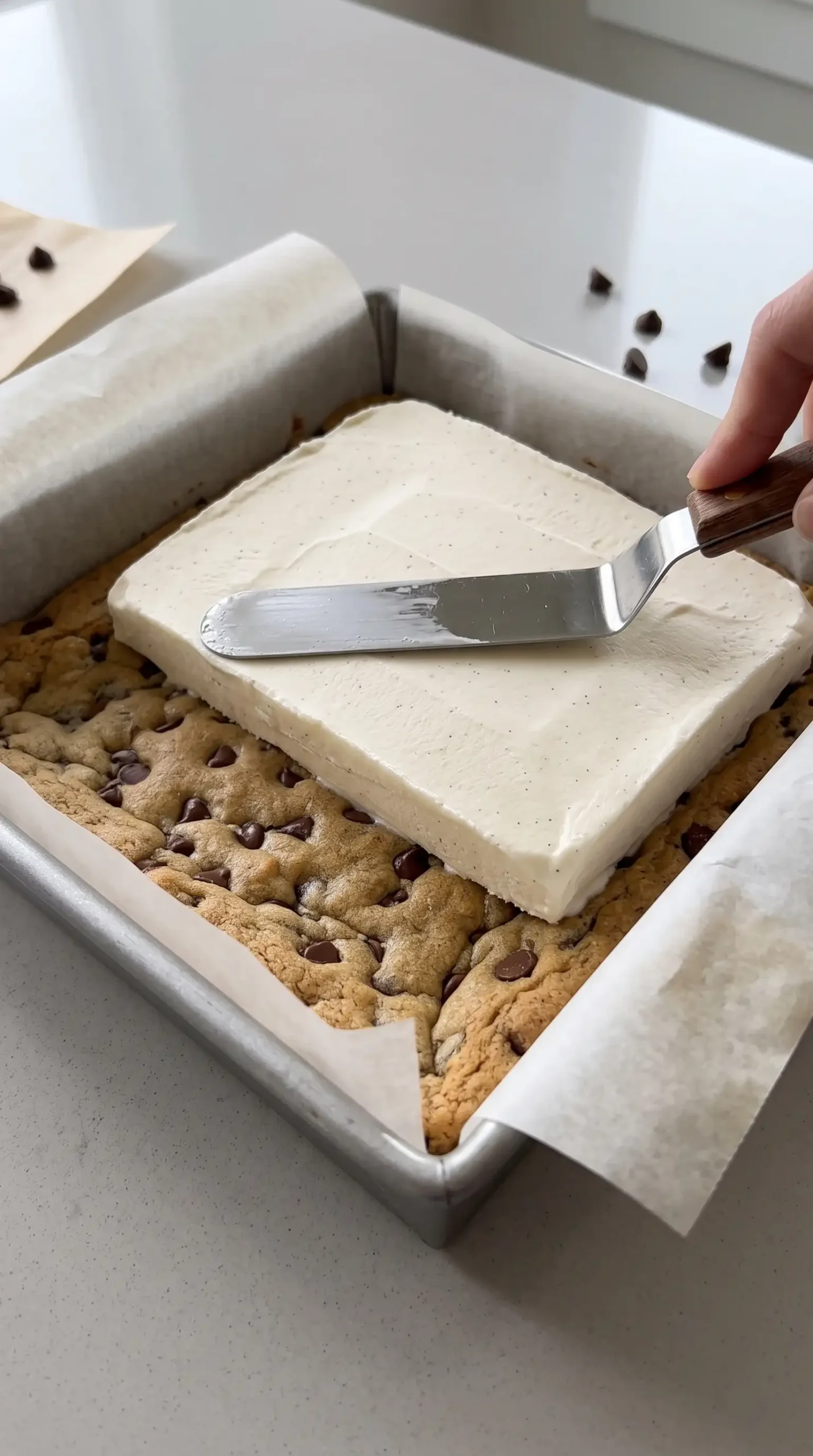
Temperature control is the most important execution factor for cookie ice cream bars. The cookie layers need to cool before contact with ice cream because a warm surface can soften the filling and make assembly more difficult.
Assembly works best when each component is ready for its specific role. The cookie layers should be stable, while the ice cream should be firm enough to spread and press into an even layer without immediately losing its shape.
Careful handling during this stage also improves the final appearance. Pressing the layers together gently helps create a compact dessert that can be sliced more cleanly after freezing.
Common Chocolate Chip Cookie Ice Cream Bars Mistakes to Avoid
Chocolate chip cookie ice cream bars can become difficult to serve when small preparation choices create texture problems. Most issues come from combining components before they are ready or changing the balance between cookie and ice cream layers.
- Warm cookies: Adding ice cream before the cookie layers cool can soften the filling and weaken the structure.
- Overbaked layers: Very firm cookie pieces may become harder to bite after freezing.
- Loose assembly: Failing to press the layers together can leave gaps that make slicing less consistent.
- Waiting too long after serving: Extended thawing can make the ice cream lose its firm layered texture.
Recognizing these problems early makes corrections easier. A dessert assembled with fully cooled cookie layers and a secure ice cream center will have a more dependable texture.
Serving Choices Change the Way Cookie Ice Cream Bars Are Enjoyed
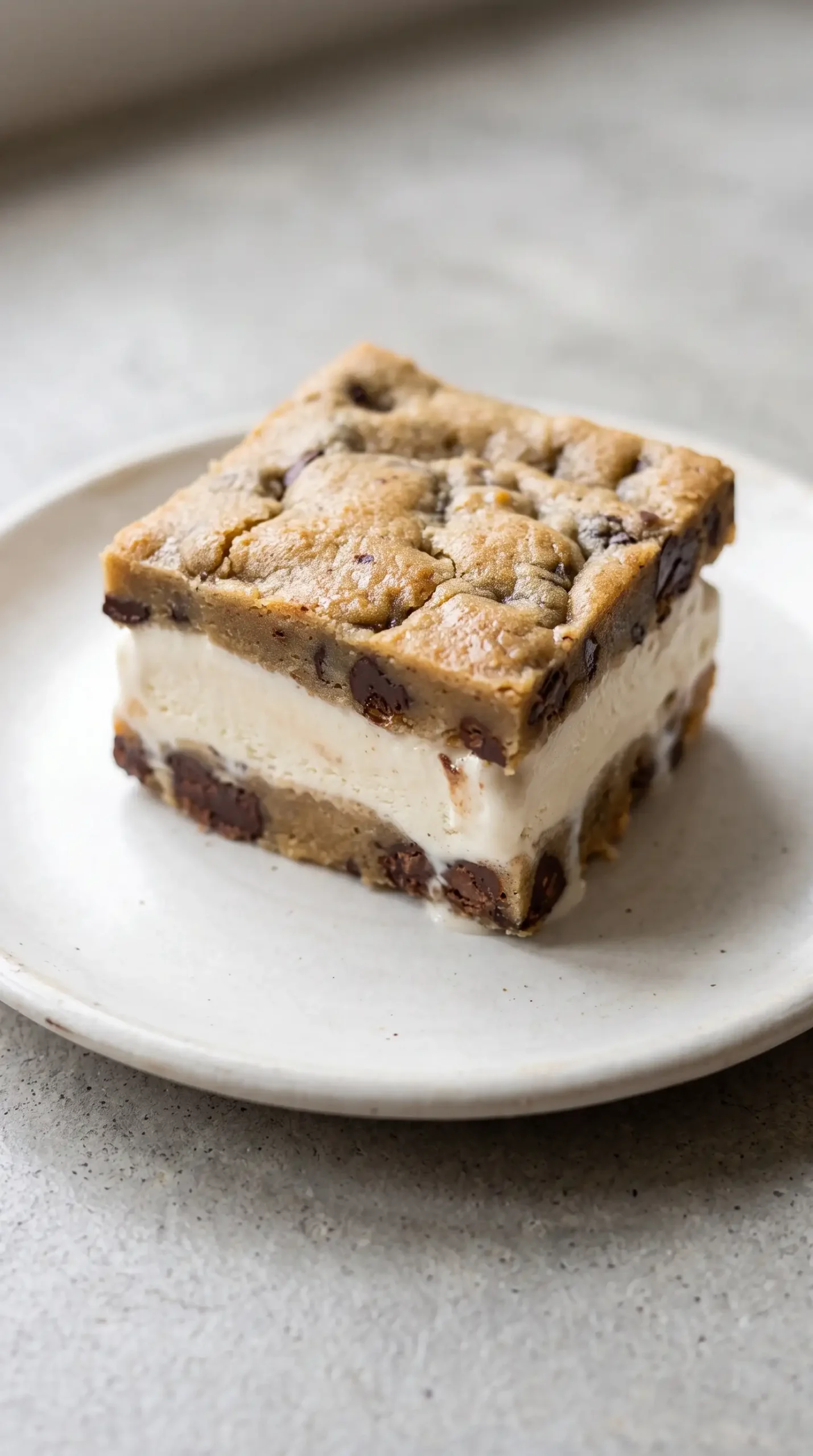
Serving style can influence whether the dessert feels like a firm frozen bar or a softer bowl dessert. A brief thaw before eating can make the cookie layers easier to bite while keeping the ice cream center recognizable.
For a softer presentation, the dessert can also be enjoyed in a bowl after a short warming period. This approach changes the texture experience while keeping the same cookie and ice cream combination.
Freezing Techniques Preserve the Cookie Ice Cream Bars Structure
Freezing completes the transformation from separate ingredients into a unified dessert. The cold environment allows the ice cream to firm around the cookie layers, creating the sandwich-like structure associated with cookie ice cream bars.
Storage position matters because the cookie layers need support while the ice cream sets. Keeping the dessert intact during freezing helps preserve the clean relationship between the cookie portions and the center layer.
Longer storage works best when the frozen dessert is kept protected from conditions that affect texture over time. protecting ice cream from air exposure helps reduce the surface changes associated with freezer burn while the bars remain frozen.
Small Adjustments Make Homemade Cookie Ice Cream Bars Easier to Handle
Simple changes can make homemade cookie ice cream bars more convenient without changing the character of the dessert. One option is freezing only the bottom cookie layer with the ice cream and adding the top cookie layer closer to serving time.
Another adjustment is serving the dessert in a slightly softened state. This can make the cookie portions easier to eat while maintaining the contrast between baked cookie and frozen filling.
Flexible handling is useful because the dessert can be adapted to different preferences. Some people may prefer a firmer frozen bar, while others may enjoy a softer texture with the same ingredients.
The Best Occasions for Cookie Ice Cream Bars
Cookie ice cream bars are naturally suited for occasions where a prepared dessert can be stored and served later. The layered format makes individual portions easy to share once the dessert has been chilled and set.
Chocolate Chip Cookie Ice Cream Bars Fit Flexible Dessert Plans
Planning ahead becomes easier with layered frozen desserts because the major assembly work happens before serving. The dessert can be prepared in advance, allowing the cookie layers and ice cream to become a cohesive combination.
Seasonal gatherings, family meals, and casual celebrations can all benefit from a dessert that combines a familiar baked flavor with a frozen finish. The simple ingredient list keeps the focus on texture and presentation.
Cookie Layers and Ice Cream Unite When Timing Controls the Finish
Cookie layers create the defining character of cookie ice cream bars by providing the baked texture needed to balance the creamy frozen center. When the layers are cooled properly and assembled with care, the dessert maintains the contrast that makes chocolate chip cookie ice cream bars memorable.
Successful preparation depends less on complicated techniques and more on recognizing when each component is ready. The cookie portions need stability, the ice cream needs careful placement, and the finished dessert needs enough freezing time to hold its shape.
Cookie Ice Cream Bars Troubleshooting Questions and Answers
Why are my cookie layers too hard after freezing?
Cookie layers can feel firmer after freezing because cold temperatures change the texture of baked dough. Keeping the cookie portions tender before assembly and allowing the bars to soften slightly before eating can improve the bite.
How can I keep cookie ice cream bars from becoming messy?
Firm assembly helps reduce mess. Pressing the ice cream into an even layer and keeping the cookie pieces aligned creates a more stable dessert that is easier to portion.
Can I use homemade cookie dough for these bars?
Homemade cookie dough can be used as the cookie foundation when it is baked into layers that are sturdy enough to support the ice cream center. The important consideration is achieving a texture that remains pleasant after freezing.
Why should the cookie layers cool before adding ice cream?
Cooling prevents the warm cookie surface from affecting the frozen filling during assembly. It also helps the cookie layers maintain their shape when pressed together.
How do I make the bars easier to eat?
Allowing the dessert to soften briefly before serving can make the cookie layers easier to cut and bite. A short warming period can also create a softer bowl-style dessert texture if preferred.
Chocolate Chip Cookie Ice Cream Bars with Vanilla Ice Cream
Ingredients
Method
- Press half of the cookie dough into a parchment-lined 8×8 pan and bake at 350°F (177°C) for about 25 minutes, or follow the temperature specified for your dough, until the edges and top are golden. For a softer texture, avoid overbaking. Remove the cookie layer from the pan and allow it to cool completely. Bake the remaining dough in the same way, or bake both layers at once if using two matching pans.
- Allow both baked cookie layers to cool for several hours before assembly.
- Keep one cookie layer in the pan, add the ice cream on top, and press it into a firm, even layer. Place the second cookie layer over the ice cream and press gently to secure the layers.
- Freeze the assembled bars until ready to serve, then allow them to thaw briefly before eating.