
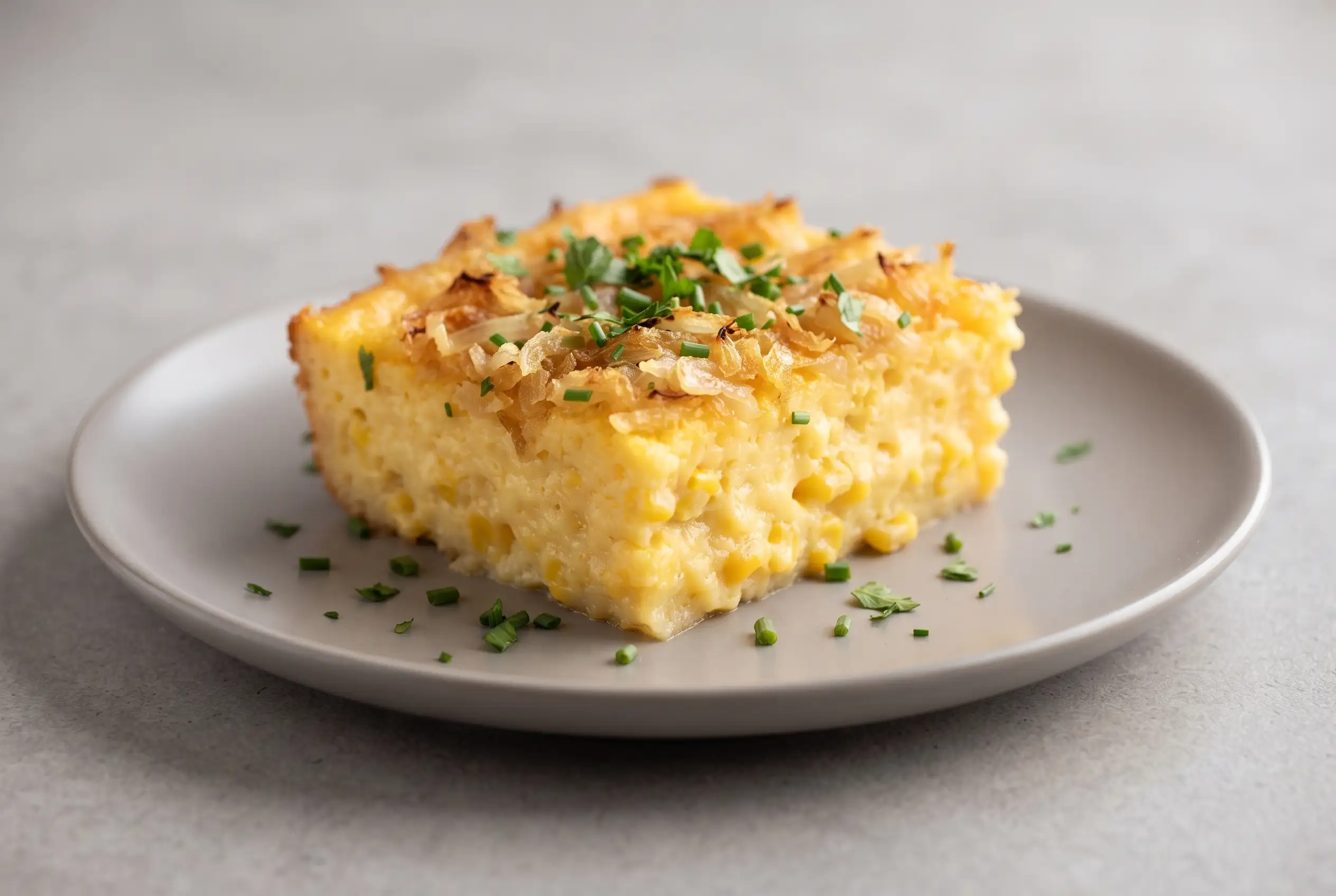
Corn pudding brings together the comforting sweetness of corn, a tender baked texture, and a crisp savory topping in a way that feels both familiar and special. Creamy corn pudding recipe ideas often focus on balancing richness with the natural flavor of corn, and this version adds extra character with crispy onions and fresh herbs. The combination creates a side dish that can sit confidently beside a holiday meal, a casual dinner, or a seasonal spread.
The appeal of this corn pudding comes from the contrast between the soft interior and the crunchy finish. A mixture of cornmeal, flour, creamy dairy, and two forms of corn creates a sturdy base that stays moist while baking. The topping added near the end of baking protects the delicate texture while giving the surface a golden, flavorful layer.
Creamy Corn Pudding Starts with the Right Texture Balance
The best corn pudding has a texture that falls between a custard-like casserole and a tender cornbread. The batter should be thick enough to hold the corn throughout the dish but loose enough to bake into a soft, spoonable side. The combination of cornmeal and flour provides structure, while the dairy ingredients help keep every serving rich.
Keeping the mixture gently combined is important because the texture depends on preserving the balance between the wet and dry ingredients. Once the batter comes together, additional stirring does not improve the finished dish. A light hand helps maintain the tender quality that makes corn pudding different from a firmer cornbread.
The sweetness from a small amount of sugar supports the corn flavor without turning the dish into a dessert. The savory elements, including salt, butter, crispy onions, and herbs, create a balanced profile that works well alongside roasted meats, vegetables, and other hearty sides.
Cornmeal and Creamed Corn Shape the Dish’s Character
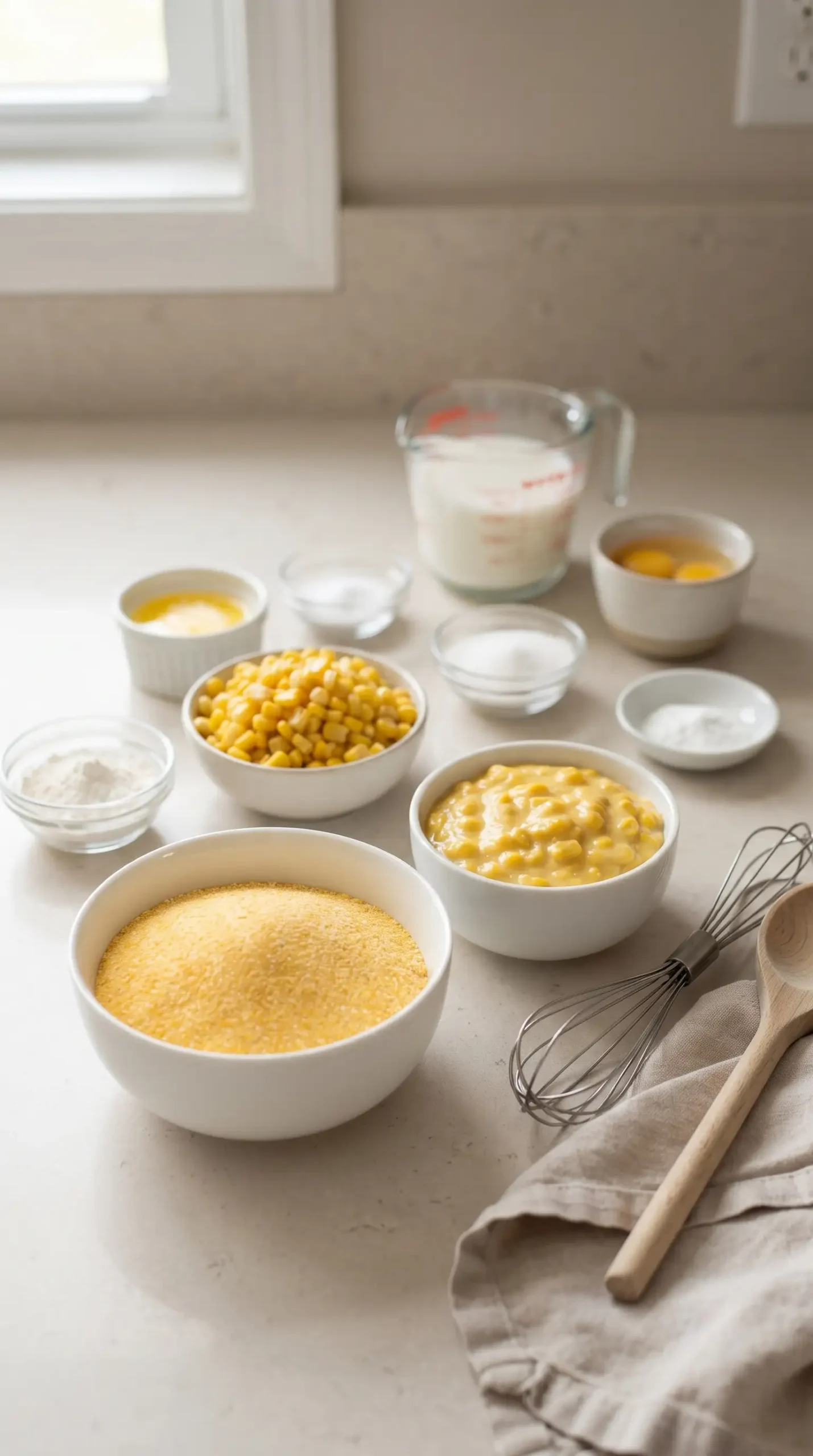
The ingredients with the greatest influence on the finished texture are the cornmeal, flour, and corn components. Cornmeal gives the pudding its recognizable grain-based foundation, while flour adds enough support for the creamy mixture to hold together after baking. The canned corn and cream-style corn bring different qualities that make each bite more interesting.
Regular corn contributes pieces of texture throughout the pudding, while cream-style corn blends into the batter and helps create the soft consistency associated with this dish. The dairy mixture of sour cream or Greek yogurt with melted butter adds richness and helps the corn flavors feel rounded.
| Component | Role in corn pudding | What to notice during preparation |
|---|---|---|
| Cornmeal | Creates a tender, lightly textured base | Combine evenly to avoid dry pockets |
| Cream-style corn | Adds moisture and creamy corn flavor | Blend thoroughly into the batter |
| Crispy onions | Provide a crunchy savory topping | Add near the end of baking |
A creamy corn pudding recipe benefits from respecting the purpose of each ingredient instead of treating the mixture like a standard quick bread. The goal is a dish where every element supports the final texture, from the creamy center to the crisp surface. A side dish such as creamy baked corn casserole uses corn-focused ingredients to create a comforting baked texture that fits alongside hearty meals.
Crispy Onions Turn the Top into a Savory Finish
Crispy onions provide a contrast that changes the entire experience of the dish. Adding them after the pudding has baked for most of its time allows the topping to warm and crisp without losing its texture completely. Fresh chopped herbs scattered over the top add color and a fresh finish that balances the richness.
Baking Control Keeps Corn Pudding Soft and Set
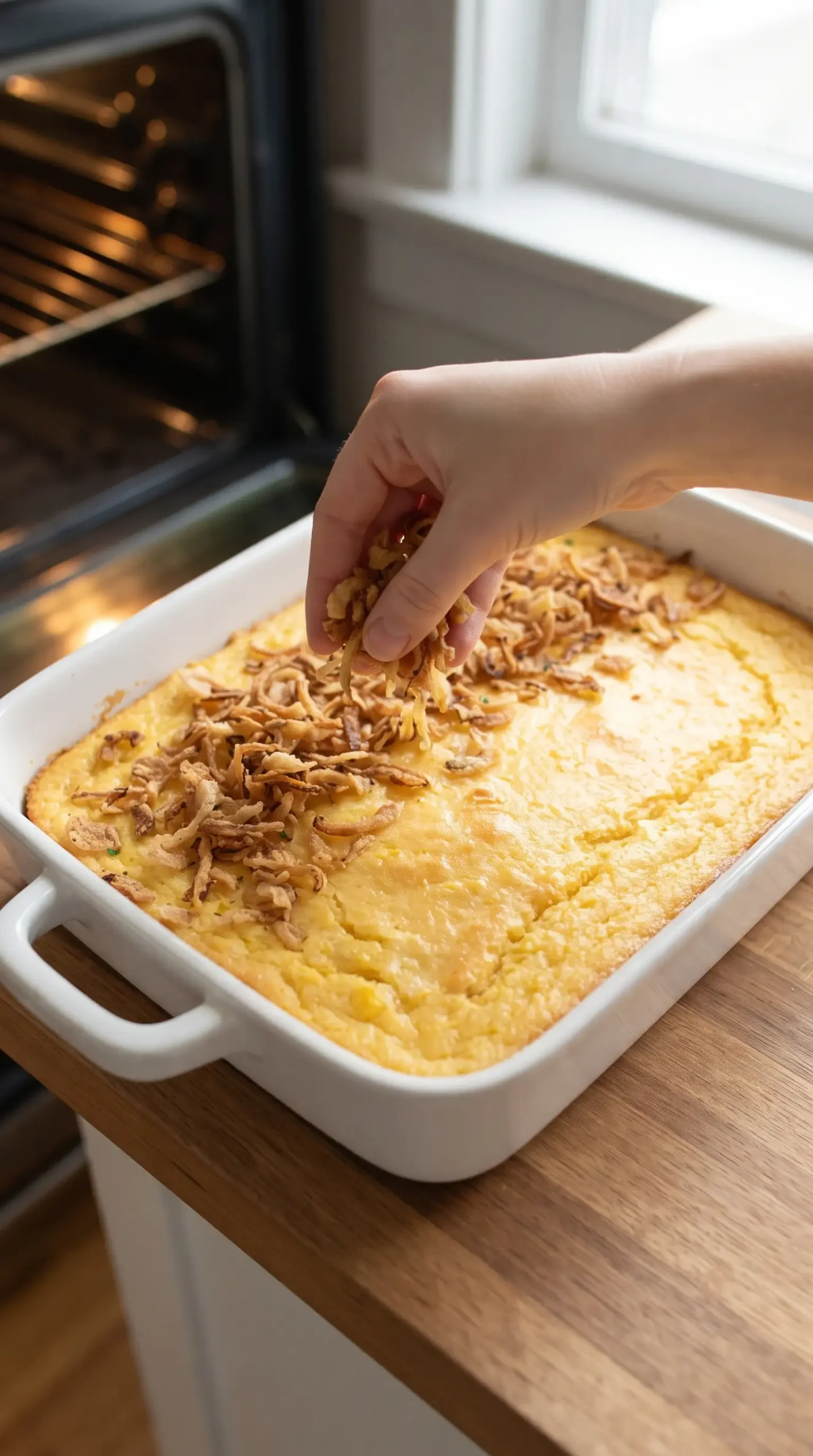
The baking process requires attention to texture instead of appearance alone. The oven temperature allows the center to cook gradually while the edges become set. Checking the consistency after baking helps determine when the pudding has reached the right balance of softness and structure.
Corn pudding has a texture similar to other custard-style dishes because the center continues to set as it cools. Learning how custard-style dishes set helps explain why the pudding should finish baking with a soft center rather than being judged only by a firm surface.
The topping timing is one of the most important details from the method. Adding crispy onions too early can expose them to more heat than needed, while adding them after the initial bake keeps their crunchy quality noticeable. The short return to the oven warms the topping while finishing the surface.
Allowing the baked dish to stand briefly before serving gives the structure time to settle. This small pause helps portions hold their shape while keeping the interior creamy. A baked corn pudding with crispy onions is best when the spoon reveals a soft center beneath the textured topping.
Serving Ideas for Corn Pudding with Herbs

Fresh parsley or another herb of choice brings brightness to the finished dish. The herbs are most effective when added after baking because their fresh flavor and color remain distinct. Serve the pudding warm as a side that complements both simple weeknight meals and larger gatherings.
Common Mistakes That Affect Corn Pudding with Crispy Onions
Several small choices can change the final texture of corn pudding. Using too much mixing after combining the wet and dry ingredients can make the baked result less tender. Stir only until the ingredients are incorporated so the pudding keeps its soft character.
Another common issue is adding the crispy onions before the pudding has developed enough structure. The topping needs a shorter exposure to oven heat, which is why it belongs near the end of baking. If the onions lose their crunch, the contrast between the creamy interior and topping becomes less noticeable.
- Overmixing: Stop stirring once the batter is combined to protect the tender texture.
- Early topping: Wait until the initial baking stage is complete before adding crispy onions.
- Skipping the resting time: Let the baked pudding settle so servings remain easier to scoop.
Simple Adjustments for Different Tables
Corn pudding can adapt to different meals by changing the finishing details. Parsley works well as a fresh topping, but other herbs can be used when they match the rest of the menu. The creamy base also makes the dish suitable for both traditional and modern side-dish selections.
Storage and Reheating Corn Pudding Properly
Leftover corn pudding should be stored in a covered container to protect its moisture and flavor. The creamy texture makes careful reheating important because high heat for too long can dry the interior. Gentle warming helps preserve the soft consistency that makes the dish appealing.
The crispy onion topping may soften after storage because moisture from the pudding moves upward. If a crunchy finish is important, adding a fresh portion of crispy onions before serving can restore some of the original contrast.
Keeping the herbs separate when preparing leftovers can also help maintain freshness. A small sprinkle added after reheating brings back the bright finish that balances the richer baked base.
Why Corn Pudding Works for Gatherings
The combination of familiar ingredients and an elevated topping makes corn pudding a reliable choice when a meal needs a comforting side. It offers the warmth of a baked casserole while bringing enough texture contrast to stand apart from simpler vegetable dishes.
Pairings That Highlight the Corn Flavor
The mild sweetness of corn pairs naturally with savory dishes that have roasted, smoky, or herb-filled flavors. The creamy texture provides a pleasant contrast beside crisp vegetables, grilled proteins, or other baked favorites. Crispy onions add enough savory depth to keep the side from feeling too sweet.
A corn pudding with herbs also fits well on a table with dishes that need a softer companion. The creamy center can balance stronger flavors while the topping adds a little extra interest to each serving. Because the dish is versatile, it can move between casual dinners and special occasions.
Consider the rest of the meal when choosing the finishing herbs. Parsley offers a clean, fresh note, while other herbs can bring different accents without changing the structure of the pudding itself.
Preparing Ahead Without Losing the Texture
Planning ahead works best when the creamy base and topping are handled with care. Keeping the crispy onions and herbs separate until serving helps protect the textures that make this dish memorable. Final touches are most effective when added close to the time of eating.
Corn Pudding’s Crispy Onion Layer Defines Its Best Texture
Corn pudding succeeds when the creamy interior remains tender and the topping delivers a contrasting crunch. The careful timing of the crispy onions, along with gentle mixing and proper baking, creates the texture that defines the dish. Each element has a clear role in making the finished side balanced and satisfying.
The combination of sweet corn flavor, rich dairy, and fresh herbs creates a baked side that feels complete without needing complicated additions. Keeping the focus on texture allows the creamy base and crisp finish to work together in every serving.
Crispy Onion Timing Questions About Corn Pudding
Can crispy onions be added earlier to corn pudding?
Crispy onions are best added near the end of baking because their texture can soften if exposed to oven heat for too long. Waiting until the pudding has mostly set helps preserve the crunchy topping.
Can Greek yogurt replace sour cream in corn pudding?
Greek yogurt can be used as part of the creamy mixture. The recipe supports using light sour cream or Greek yogurt, including a combination of both, to create the rich texture needed for the baked pudding.
How do herbs change the flavor of corn pudding?
Fresh herbs add a bright contrast to the buttery and creamy elements of the dish. Adding chopped herbs after baking keeps their flavor fresher and their color more noticeable.
Why does corn pudding need time to rest after baking?
A short resting period allows the baked structure to settle so the pudding becomes easier to serve. The interior remains soft while portions become more stable on the plate.
Can corn pudding be served with different meals?
Yes, the mild corn flavor and creamy texture allow it to pair with many savory meals. It works especially well when the menu includes roasted, grilled, or herb-seasoned dishes that benefit from a comforting side.
Creamy Corn Pudding with Crispy Onions and Fresh Herbs
Ingredients
Method
- Preheat the oven to 350°F (177°C). In a bowl, combine the cornmeal, flour, sugar, baking powder, salt, and oil, mixing with a fork until the dry mixture is evenly combined.
- In another bowl, whisk the Greek yogurt, sour cream, melted butter, and egg until smooth. Add the regular corn, cream style corn, and dry mixture, then stir just until everything is incorporated.
- Transfer the batter to a greased 9×13 baking dish and bake for 30 minutes.
- Remove the dish from the oven, spread the crispy onions over the top, and bake for an additional 5 minutes.
- Let the corn pudding stand for 10 minutes, then finish with fresh herbs before serving.