
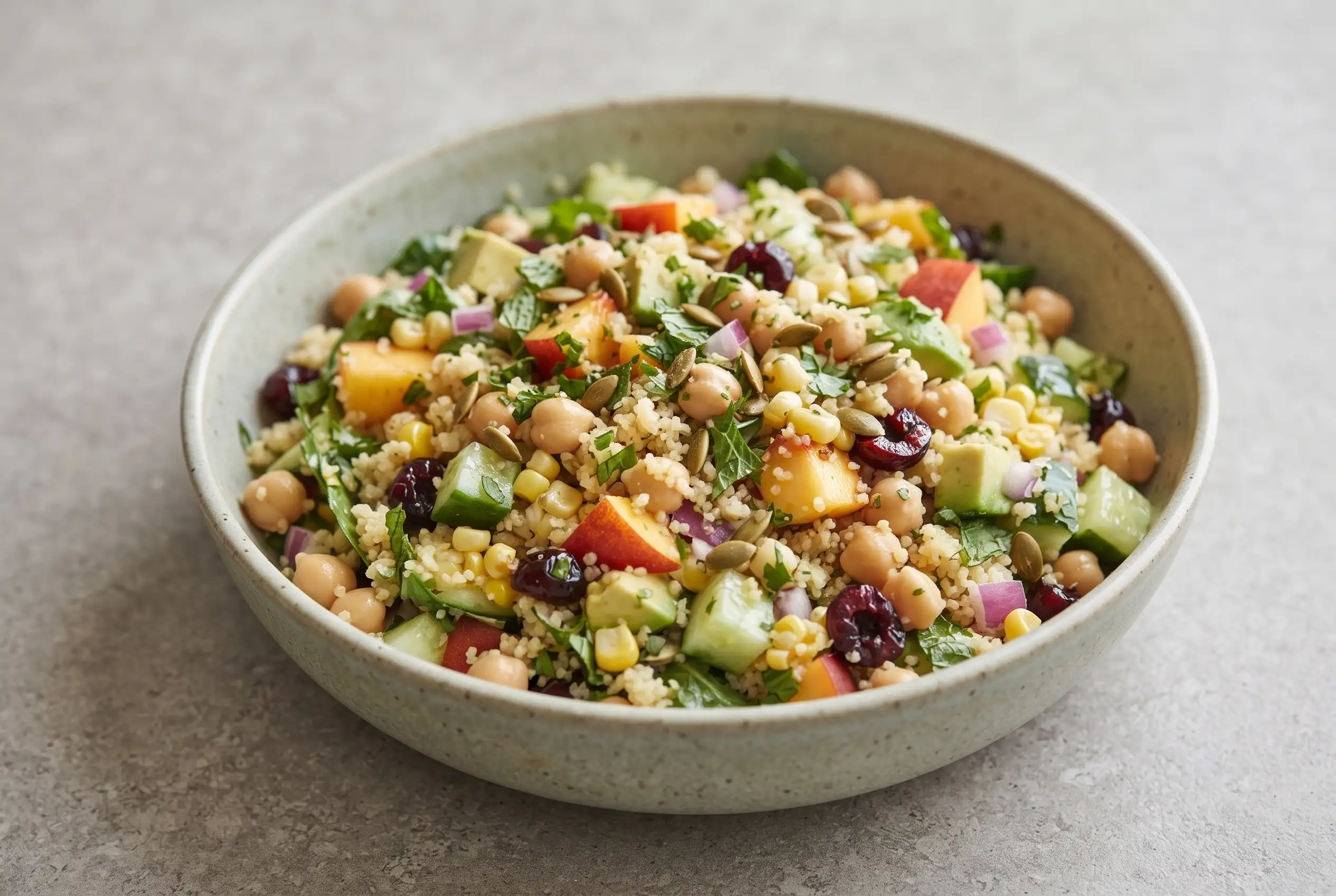
Couscous salad combines tender grains, sweet summer produce, chickpeas, herbs, and a bright lemon dressing into a colorful dish built around contrast. The combination of warm spices, juicy fruit, crisp vegetables, and crunchy toppings creates a meal that feels light while still offering satisfying texture and substance.
The appeal of this summer couscous salad comes from how each preparation choice affects the finished bowl. Fragrant couscous absorbs seasoned broth, fresh produce brings seasonal character, and the dressing ties together flavors that range from earthy cumin to sweet stone fruit.
Balanced portions of grains, vegetables, fruit, and greens allow a chickpea couscous salad to work as a lunch, side dish, or gathering option. Careful handling keeps the ingredients distinct so every serving includes different textures and flavors.
Fruit and Herbs Shape Couscous Salad Flavor
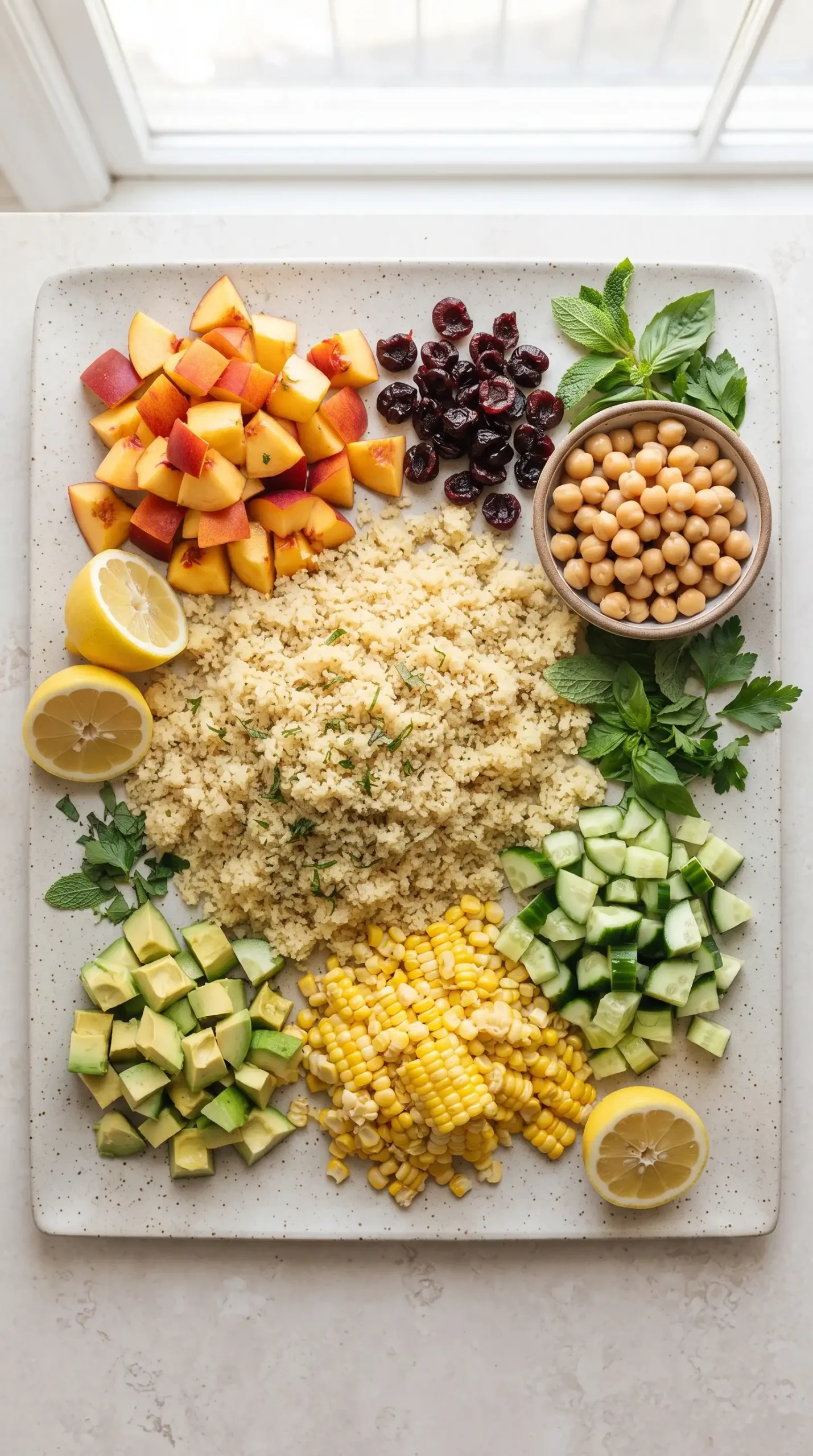
Peaches or nectarines create a naturally sweet contrast against savory chickpeas, spiced couscous, and fresh greens. Parsley, mint, or basil can shift the character of the dish while keeping the overall profile bright and fresh, as shown in this couscous salad with lime basil vinaigrette featuring a herb-forward dressing balance.
Broth Infusion Builds Better Couscous Texture
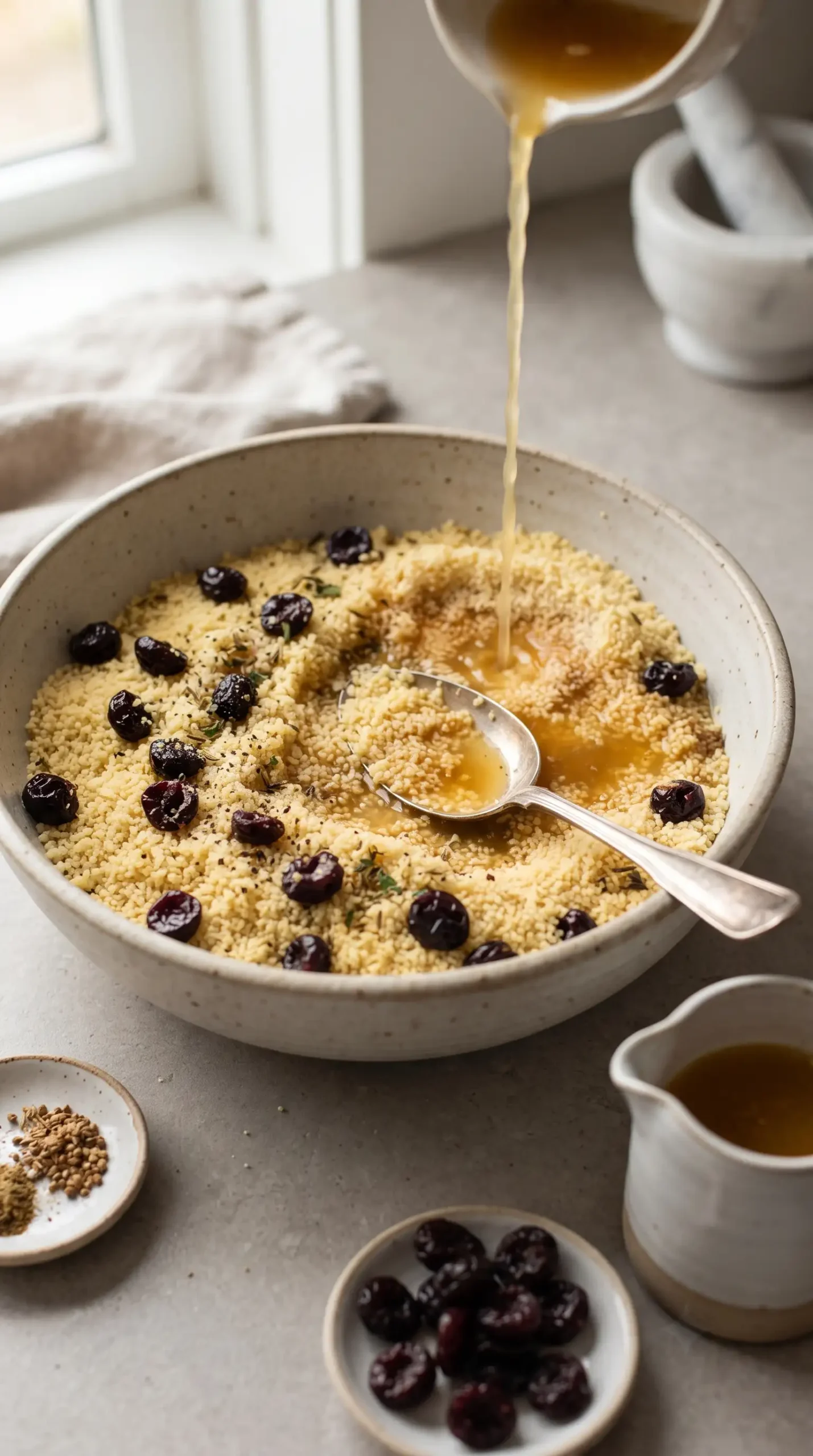
Couscous absorbs the flavor of the liquid used during preparation, which makes the warming stage an important opportunity to build depth. The couscous preparation method relies on adding hot liquid and allowing the small pasta pieces to soften before fluffing. Combining the couscous with broth, cumin, coriander, dried cherries, and seasoning allows those flavors to settle into the couscous itself.
Warm broth helps the couscous soften evenly while maintaining the small, delicate texture expected from the grain. Allowing the cooked couscous to cool before combining the remaining ingredients also helps protect the freshness of delicate additions like avocado, cucumber, and greens.
Cooking control depends on avoiding unnecessary handling once the couscous has absorbed the liquid. Gentle fluffing and careful mixing preserve the separate textures that make the finished salad appealing.
Crunchy Additions Keep Couscous Salad Balanced
Pepitas, sunflower seeds, or another crunchy topping provide a contrasting element that keeps the soft grains, fruit, and vegetables from blending into one texture. The choice of topping can be adjusted based on the preferred nutty flavor or available ingredients.
- Pepitas: bring a roasted, seed-based crunch that pairs well with herbs and fruit.
- Sunflower seeds: offer a mild texture boost without competing with the dressing.
- Fresh greens: add a crisp layer when mixed with arugula or spinach.
Ingredient Choices That Improve Couscous Salad
The most important ingredient decisions focus on balance between moisture, flavor, and texture. Couscous creates the foundation, but the supporting ingredients determine whether the bowl feels bright and cohesive.
Ripe nectarines or peaches should be firm enough to hold their shape after dicing. Cucumber contributes freshness, while avocado provides a creamy element that connects the grains with the dressing.
Chickpeas make the salad more substantial, and the combination of lemon juice, honey, and olive oil creates a dressing that complements both sweet and savory ingredients. The following guide highlights how each group functions during assembly.
| Ingredient group | Recipe role | Handling choice |
|---|---|---|
| Couscous and broth | Creates the seasoned grain base | Allow the grains to absorb flavor before mixing |
| Fruit and vegetables | Add freshness and contrast | Cut into pieces that distribute easily |
| Seeds and greens | Provide texture and brightness | Add carefully to maintain their character |
Couscous Salad Cooking Control Protects Texture
Successful preparation depends on controlling when ingredients meet. The couscous needs time to absorb the seasoned broth, while produce with high water content benefits from being added after the grain has cooled.
Mixing the dressing throughout the salad requires a gentle approach because avocado and diced fruit can lose their shape if handled too aggressively. Folding ingredients together helps maintain visible pieces and creates a more appealing serving texture.
Seasoning adjustments should happen after the salad is combined because the chickpeas, greens, fruit, and couscous all influence how the flavors are perceived. A final taste allows the lemon, honey, salt, and pepper balance to be refined.
Common Couscous Salad Mistakes To Avoid
Couscous salad mistakes often come from overlooking the relationship between moisture and texture. The dish relies on separate ingredients working together, so small preparation choices can affect the final result.
One common issue is mixing warm couscous with ingredients that are better suited for a cooled grain base. Adding avocado, cucumber, or greens too early can make the mixture feel less fresh and reduce the contrast between components.
Another mistake is overloading the bowl with dressing before tasting. The lemon, honey, and olive oil mixture should enhance the ingredients without hiding the flavors of the herbs, fruit, and spices. Adjusting gradually keeps the balance intact.
Serving Ideas for a Summer Couscous Salad
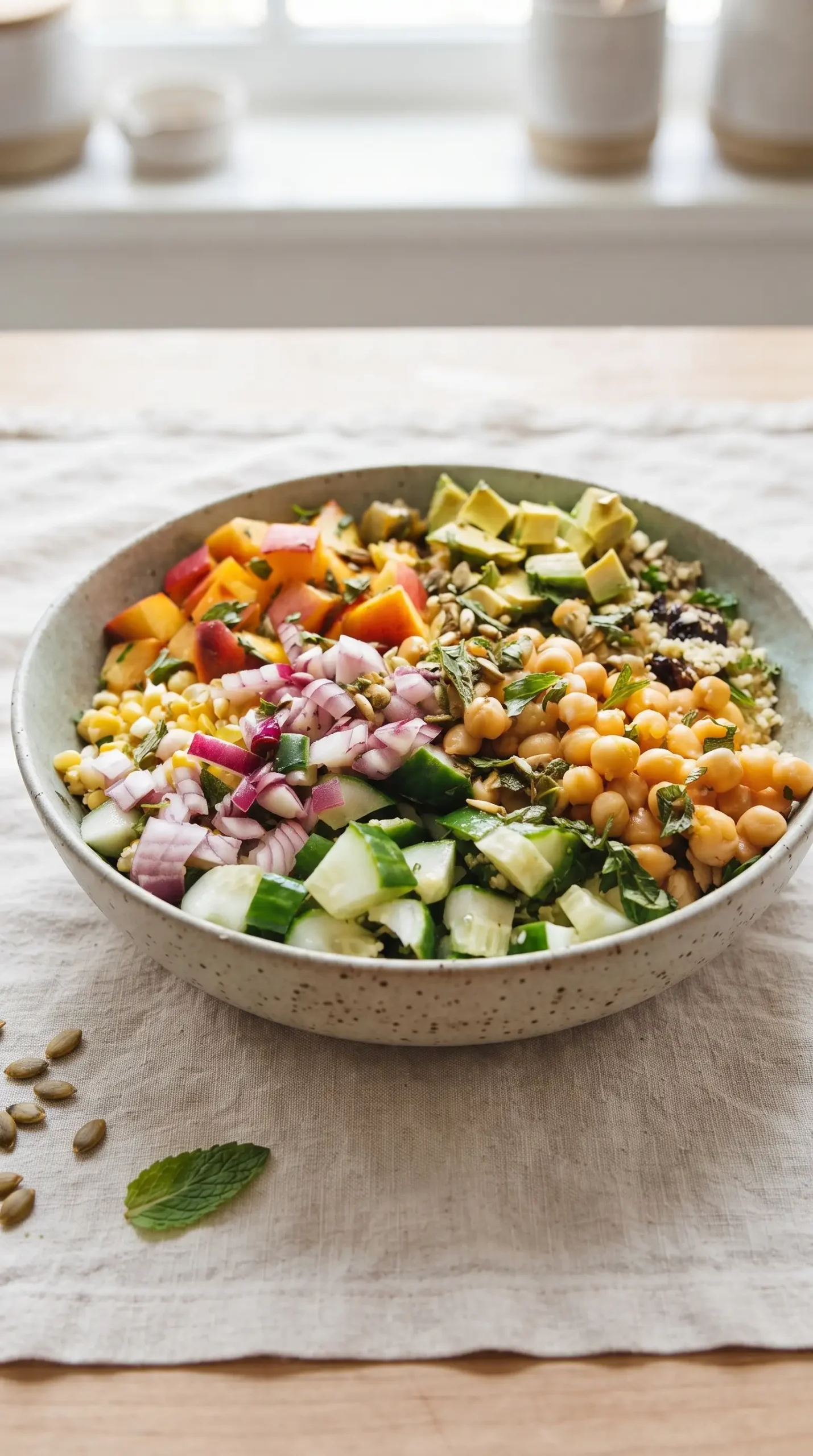
A couscous salad with peaches fits naturally into warm-weather meals because it combines filling grains with seasonal produce and fresh herbs. It can be served alongside other dishes or enjoyed as a standalone bowl when a lighter meal is preferred.
Preparing Components for Easier Sharing
Preparing individual elements separately can help maintain the intended texture when the salad is being made ahead. Couscous, chickpeas, produce, greens, toppings, and dressing can remain distinct until closer to serving time.
Advance preparation works especially well when preserving freshness is the priority. Keeping the components apart helps prevent softer ingredients from absorbing extra moisture before they are needed.
Simple organization also makes customization easier. Different herbs, crunchy toppings, or fruit choices can be adjusted at assembly without changing the foundation of the dish.
Couscous Salad Storage Decisions Preserve Freshness
Leftover couscous salad becomes softer as the ingredients continue to share moisture. For the best texture, prepare only the portions needed for immediate serving or store components separately when planning ahead.
Couscous Salad With Balanced Freshness and Texture
Fresh fruit, seasoned couscous, chickpeas, and herbs create a combination where texture determines the overall experience. Keeping the grain flavorful, the produce distinct, and the dressing balanced allows each part of the salad to remain noticeable.
The strongest results come from thoughtful timing: build flavor into the couscous, protect delicate ingredients, and combine everything with care. That approach keeps the salad vibrant from the first serving while preserving the contrasts that define it.
Couscous Salad Storage Questions and Answers
How can I prevent couscous from becoming soft?
Keeping prepared couscous, vegetables, dressing, and delicate toppings separate until serving helps reduce excess moisture. Adding the components together closer to mealtime preserves more of the original texture.
Can couscous salad with peaches use other fruit?
Nectarines and peaches can be exchanged with other seasonal fruit choices that provide a similar fresh and sweet character. The replacement should complement the herbs, chickpeas, and lemon-based dressing.
Why does the broth matter in couscous preparation?
The broth seasons the couscous from the inside as the grains absorb the liquid. Using flavored liquid with cumin and coriander helps create a stronger foundation before the fresh ingredients are added.
What makes this salad different from a basic grain bowl?
The combination of dried cherries, stone fruit, herbs, chickpeas, crunchy seeds, and spiced couscous creates a mix of sweet, savory, and fresh elements that gives the dish its distinctive character.
Couscous Summer Salad with Chickpeas and Fresh Herbs
Ingredients
Method
- Add couscous, dried cherries, cumin, coriander, and salt and pepper to a bowl.
- Pour the warm broth over the couscous mixture and allow it to stand until the couscous is cooked, about 5 minutes. Let the couscous cool.
- Combine the couscous mixture with chickpeas, corn, nectarines or peaches, cucumber, avocado, red onion, crunchy topping, greens, and herbs.
- Add lemon juice, honey, and olive oil for dressing, then toss everything together and adjust seasoning to taste.