
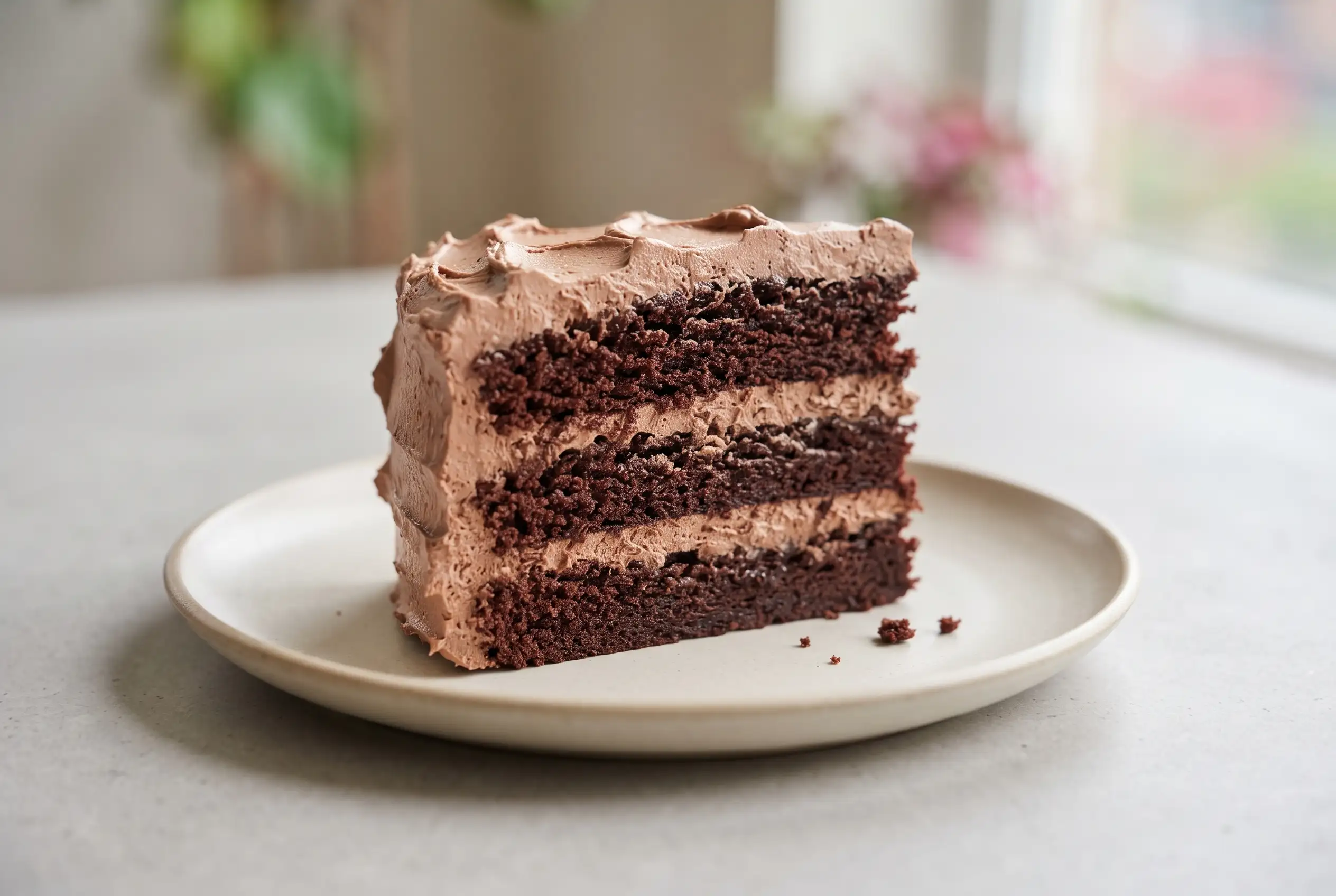
Double chocolate cake brings together rich cocoa flavor, moist layers, and a smooth chocolate buttercream frosting in a classic dessert built for celebrations and special gatherings. The combination of cocoa in the batter and cocoa in the frosting creates a deeper chocolate experience while the three-layer format gives every slice a generous balance of cake and frosting.
A chocolate cake with buttercream frosting depends on small choices that affect texture, structure, and finish. The way the batter is mixed, the timing of cooling, and the consistency of the frosting all influence how the finished dessert comes together.
Double Chocolate Cake Batter Builds Deep Cocoa Flavor
The batter for a double chocolate cake starts with a careful balance of dry ingredients and rich additions that create a strong chocolate base. Cocoa powder provides the main chocolate character, while sugar balances the natural bitterness and helps the finished layers stay tender.
Mixing the dry ingredients before adding liquids allows the cocoa, flour, leavening agents, and salt to distribute evenly. This helps prevent areas with uneven flavor or inconsistent rising during baking.
The addition of hot coffee is an important detail because warm liquid helps blend the cocoa into the batter smoothly. Coffee can deepen chocolate notes without changing the dessert into a coffee-flavored cake, allowing the cocoa flavor to remain the focus.
Cocoa And Coffee Shape The Chocolate Cake Foundation
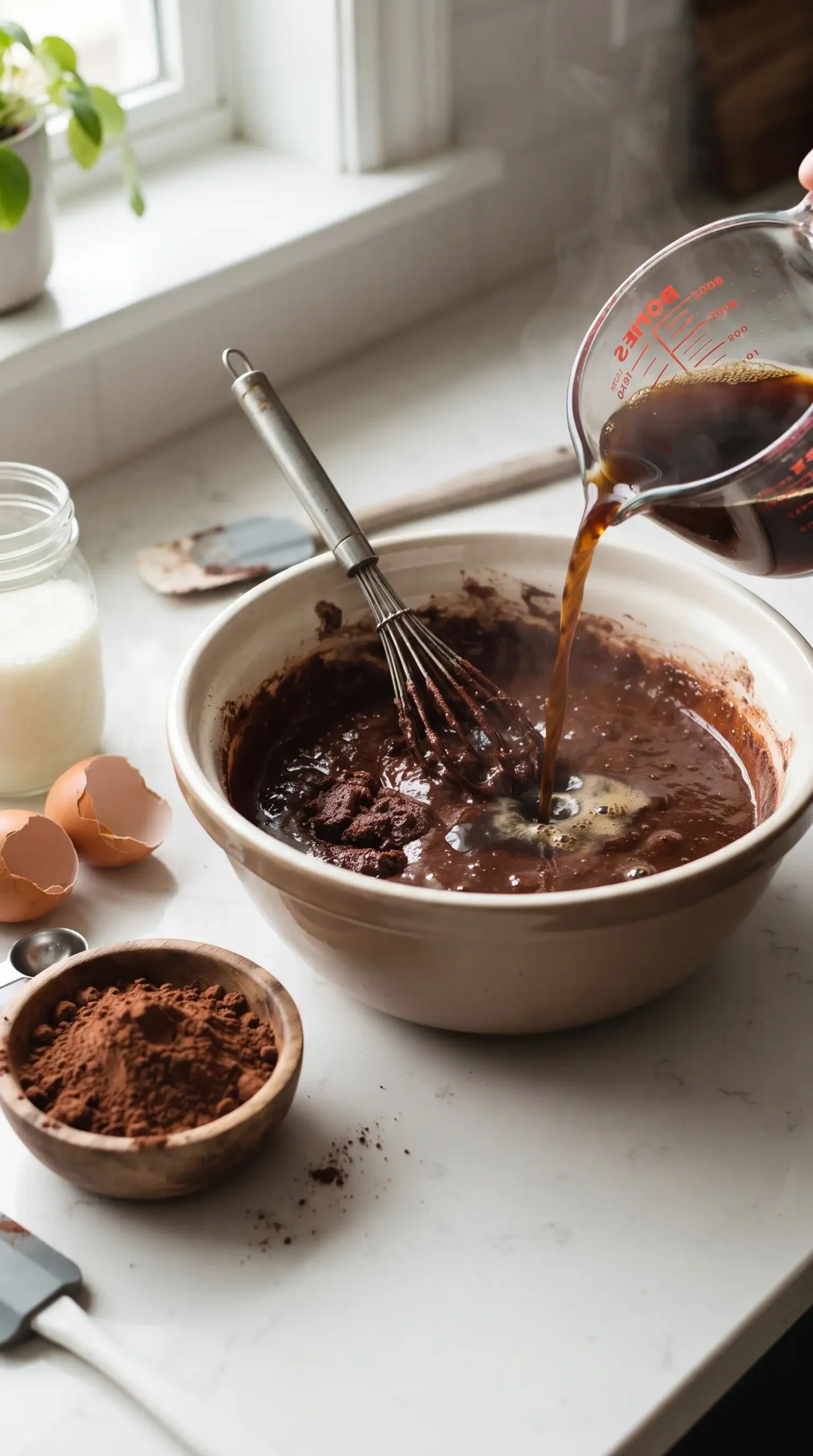
The cocoa and hot coffee combination creates the defining flavor profile of the cake layers. Unsweetened cocoa powder gives the batter its dark chocolate character, while the hot liquid helps the powder dissolve into the mixture for a smoother texture.
Buttermilk Keeps The Cake Layers Tender
Buttermilk works with the baking soda in the batter to create a soft crumb and a balanced texture. Its slight tang complements the cocoa while helping the layers avoid a heavy, dense bite.
Three Pans Create Balanced Double Chocolate Layers
Baking the batter across three round pans changes how the dessert is assembled and served. Multiple thin layers allow frosting to be spread between each section, creating more contrast between moist cake and creamy topping in every slice.
Evenly dividing the batter helps the layers bake at a similar rate. A consistent thickness makes cooling and stacking easier because one layer is less likely to sit higher or lower than another.
| Layer choice | Result | Best use |
|---|---|---|
| Three thin cake layers | More frosting between sections | Classic layered presentation |
| Two thicker layers | A taller cake slice | Simple stacking style |
| Single baked layer | Less assembly | Casual serving approach |
Cooling the cakes completely before adding frosting protects the texture of the buttercream. Warm layers can soften the frosting and make it difficult to create clean, defined edges.
Frosting Technique Creates Smooth Chocolate Buttercream Frosting
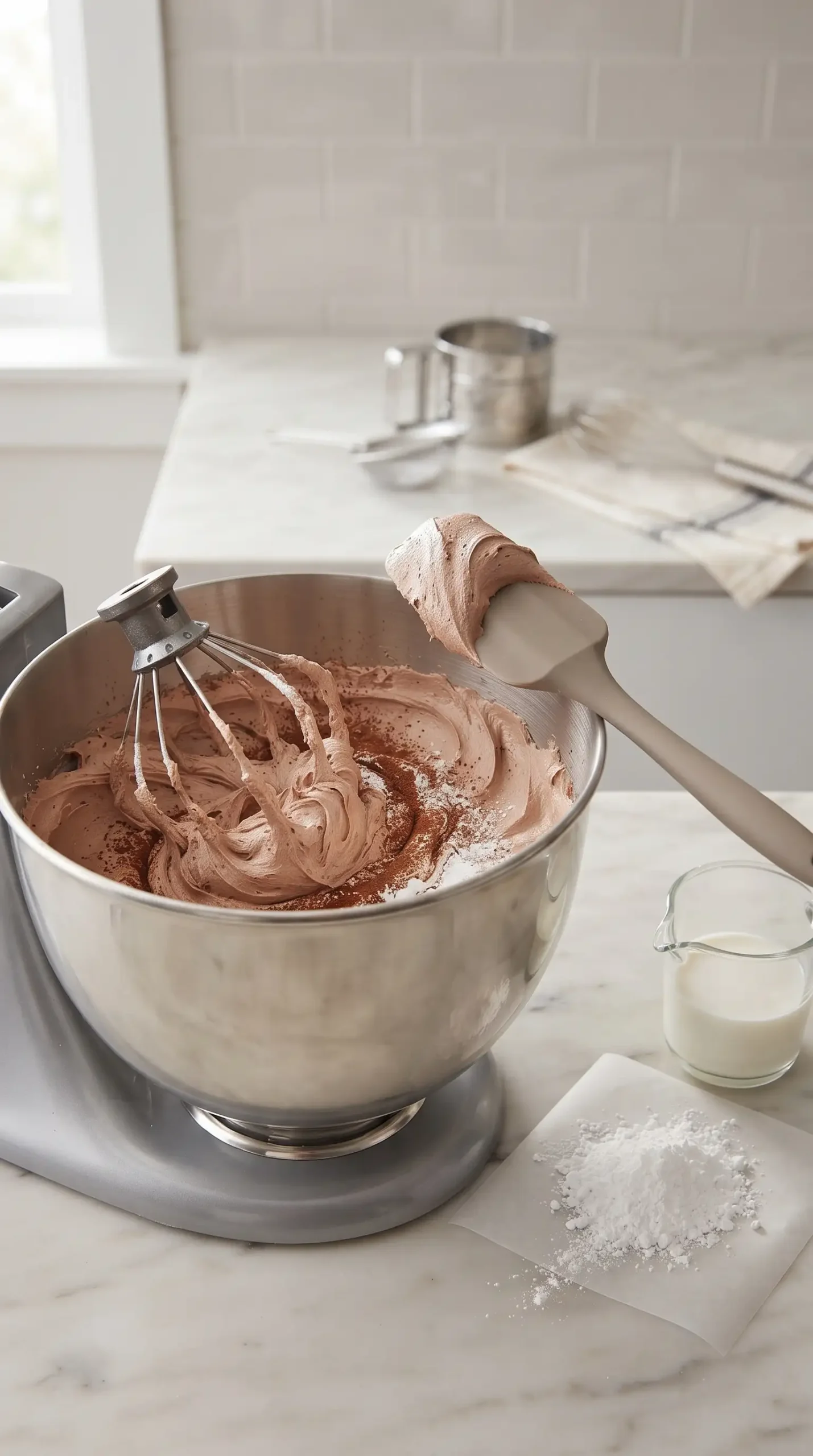
The chocolate buttercream frosting depends on properly incorporating each addition into the whipped butter. Starting with room-temperature butter allows the mixture to become light and easier to spread across the cake layers.
Cocoa powder should be added gradually so it blends evenly with the butter. Adding powdered sugar slowly and alternating with milk helps control the thickness while keeping the frosting smooth.
After the ingredients come together, additional mixing creates a lighter texture. The finished frosting should hold its shape while remaining easy to spread over the sides and top of the double chocolate layer cake.
Butter Temperature Determines Frosting Texture
Room-temperature butter gives chocolate buttercream frosting the workable consistency needed for filling and decorating. Butter that is too cold can leave the frosting stiff, while overly soft butter may make the mixture difficult to control.
Double Chocolate Cake Mistakes That Affect The Finished Layers
Several common mistakes can change the appearance and texture of a double chocolate cake. Paying attention to mixing, cooling, and frosting consistency helps prevent problems before assembly begins.
- Overmixed batter: Excessive mixing after the wet ingredients are added can affect the tenderness of the cake crumb.
- Warm layers: Frosting cakes before they cool completely can create a soft or uneven coating.
- Thin frosting: Too much milk or too little powdered sugar can make the frosting difficult to spread.
Uneven baking can also affect stacking. Dividing the batter carefully and checking that the layers are fully cooled creates a stronger foundation for the finished dessert.
If frosting becomes too soft during preparation, adding more powdered sugar can improve the consistency. If it becomes too thick, small additions of milk can help create a smoother texture.
Layer Assembly Keeps Chocolate Cake With Buttercream Frosting Stable
Stacking the layers carefully gives a chocolate cake with buttercream frosting its finished structure. A smooth layer of frosting between cakes helps hold the stack together while creating a consistent chocolate-to-frosting ratio.
The middle filling is an opportunity to create an even appearance when the cake is sliced. Spreading frosting close to the edges without overflowing keeps the sides cleaner during assembly.
The outer frosting layer also protects the cake surface and provides the recognizable finished look of a decorated layer cake. Gentle spreading prevents crumbs from mixing throughout the frosting.
Serving Choices Highlight A Double Chocolate Layer Cake
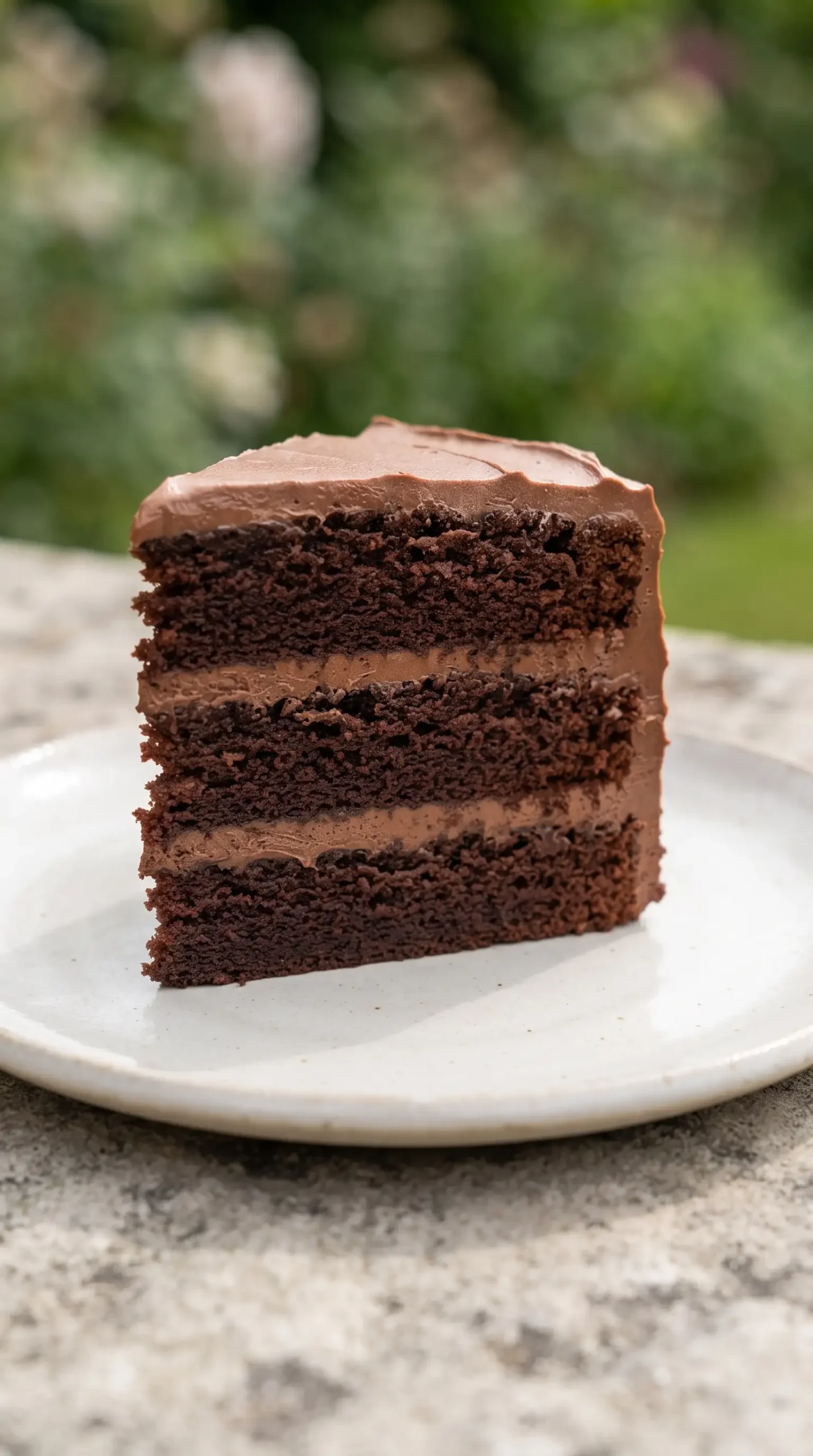
A double chocolate layer cake works well when served in slices that show the contrast between dark cake and lighter chocolate frosting. Clean cuts reveal the separate layers and make the dessert presentation more appealing.
Storage Decisions Protect The Chocolate Finish
Proper storage helps maintain the soft crumb and creamy frosting texture after the cake is assembled. Keeping the dessert covered protects the surface from drying while preserving the balance between cake and frosting.
The frosting also benefits from careful handling because its texture changes with temperature. Allowing chilled cake to sit before serving can make the buttercream easier to enjoy.
Individual slices can be portioned for easier serving while maintaining the layered appearance. A covered container helps protect exposed cake edges after cutting.
Cocoa Adjustments Create Personal Double Chocolate Cake Variations
Adjusting the cocoa level in the frosting allows the chocolate intensity to match personal preference. Additional cocoa powder can create a darker flavor, while keeping the balance with powdered sugar maintains a smooth finish.
Adding complementary flavors can change the character of a chocolate dessert without losing the richness of cocoa. A chocolate peanut butter cake variation brings together chocolate, fruit, and nutty notes while keeping the focus on a moist baked cake structure.
Cake Texture Decisions Guide Successful Baking
The texture of double chocolate cake comes from balancing moisture, structure, and mixing. The combination of buttermilk, melted butter, eggs, and hot coffee creates a batter designed for soft layers that still support frosting.
Double Chocolate Cake With Buttercream Frosting Delivers Balanced Layers
Double chocolate cake succeeds when the tender cocoa layers and creamy frosting are handled with equal attention. The batter creates the foundation through balanced moisture and chocolate flavor, while the buttercream provides the smooth finish that completes each slice.
The strongest results come from protecting the texture at every stage: evenly baked layers, completely cooled cakes, and frosting with the right consistency. Those choices create a dessert where every layer remains distinct while working together.
Questions About Chocolate Cake Texture And Frosting
How can I keep chocolate cake layers moist?
Keeping the batter balanced with buttermilk, eggs, melted butter, and hot coffee helps create a soft crumb. Cooling the layers completely and storing the finished cake covered also helps maintain moisture after baking.
Can I make the chocolate buttercream frosting darker?
Yes, increasing the amount of unsweetened cocoa powder in the frosting can create a deeper chocolate flavor. Adjusting the powdered sugar and milk as needed keeps the frosting at a spreadable consistency.
Why does my frosting become difficult to spread?
Frosting that is too thick usually needs a small adjustment with milk or additional mixing. If the butter was too cold at the start, allowing the frosting to warm slightly can also improve the texture.
How do I stack the cake layers neatly?
Completely cooled layers provide the best surface for stacking. Applying an even amount of frosting between layers and spreading the outside coating gently helps maintain a stable shape.
Double Chocolate Cake with Chocolate Buttercream Frosting
Ingredients
Method
- Preheat oven to 350°F (177°C). Grease three round baking pans and set them aside.
- Combine sugar, flour, cocoa, baking powder, baking soda, and salt in a large bowl.
- Add eggs, buttermilk, melted butter, and vanilla extract, then beat on medium speed for 2 minutes.
- Mix in the hot coffee until the batter is combined.
- Divide the batter evenly among the three prepared pans.
- Bake on the middle rack for 30 to 35 minutes, until a toothpick inserted into the center comes out clean.
- Transfer the cakes to wire racks and allow them to cool completely before frosting.
- Beat the room-temperature butter on medium speed until smooth.
- Reduce the mixer speed to low and gradually add the cocoa powder by spoonfuls until fully blended.
- Slowly add the powdered sugar one spoonful at a time, alternating with the milk, until the desired consistency and taste are reached.
- Increase the speed to medium and beat the frosting for another 3-5 minutes until light and fluffy.
- Add more sugar if the frosting is too thin.