
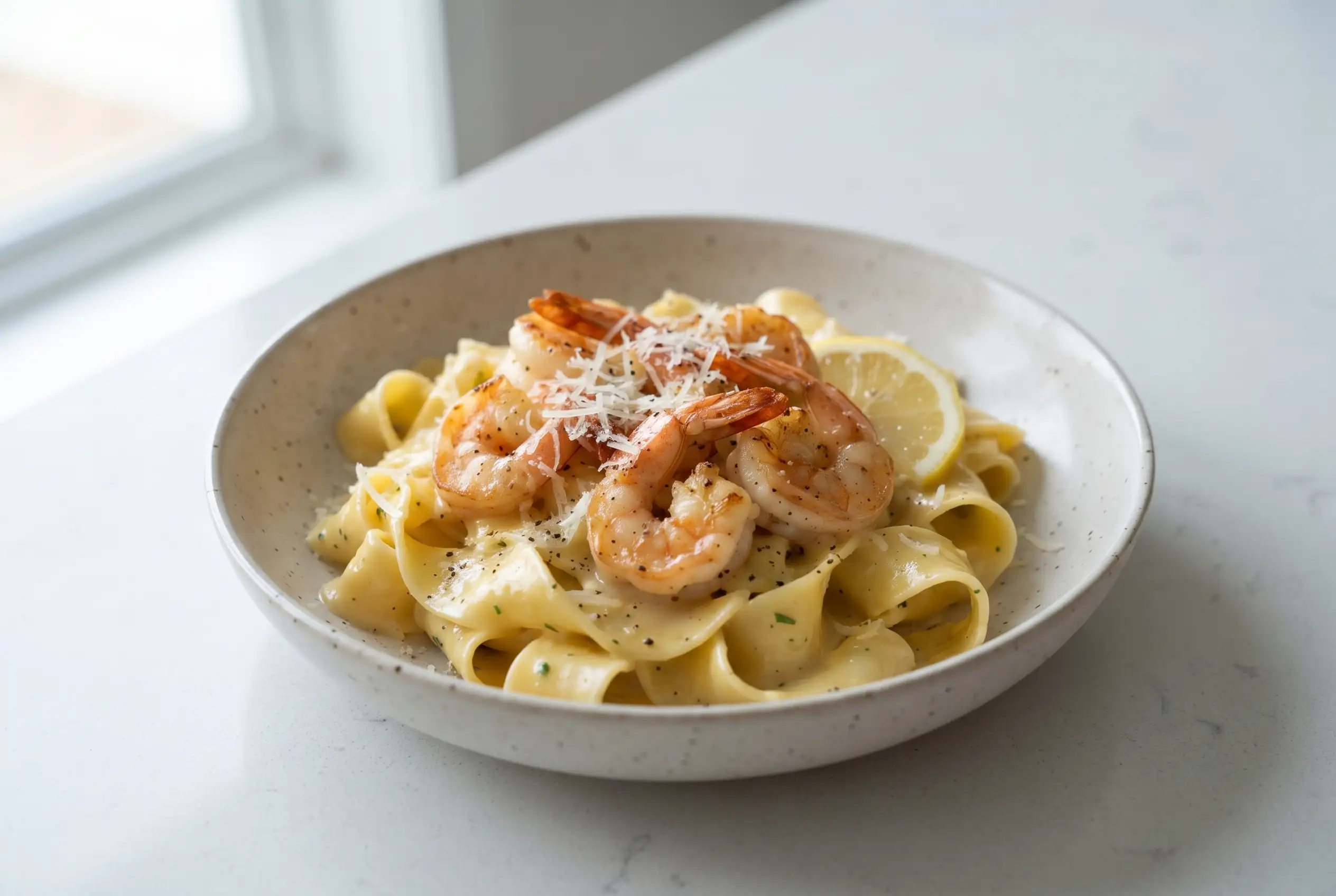
Lemon shrimp pasta brings together silky noodles, bright citrus, tender seafood, and a cream sauce that feels both elegant and approachable. Date Night Lemon Pappardelle with Shrimp creates that restaurant-style experience through a few carefully balanced choices: wide egg pasta, gently cooked shrimp, fresh lemon juice, and a sauce that stays smooth without overpowering the delicate flavors.
The combination works because every part of the plate has a clear purpose. The pasta carries the creamy sauce, the shrimp adds a buttery savory finish, and the lemon keeps the richness lively. Whether served for a special evening or a simple dinner that feels elevated, lemon shrimp pasta depends on attention to texture and timing.
Why Lemon Shrimp Pasta Feels Special
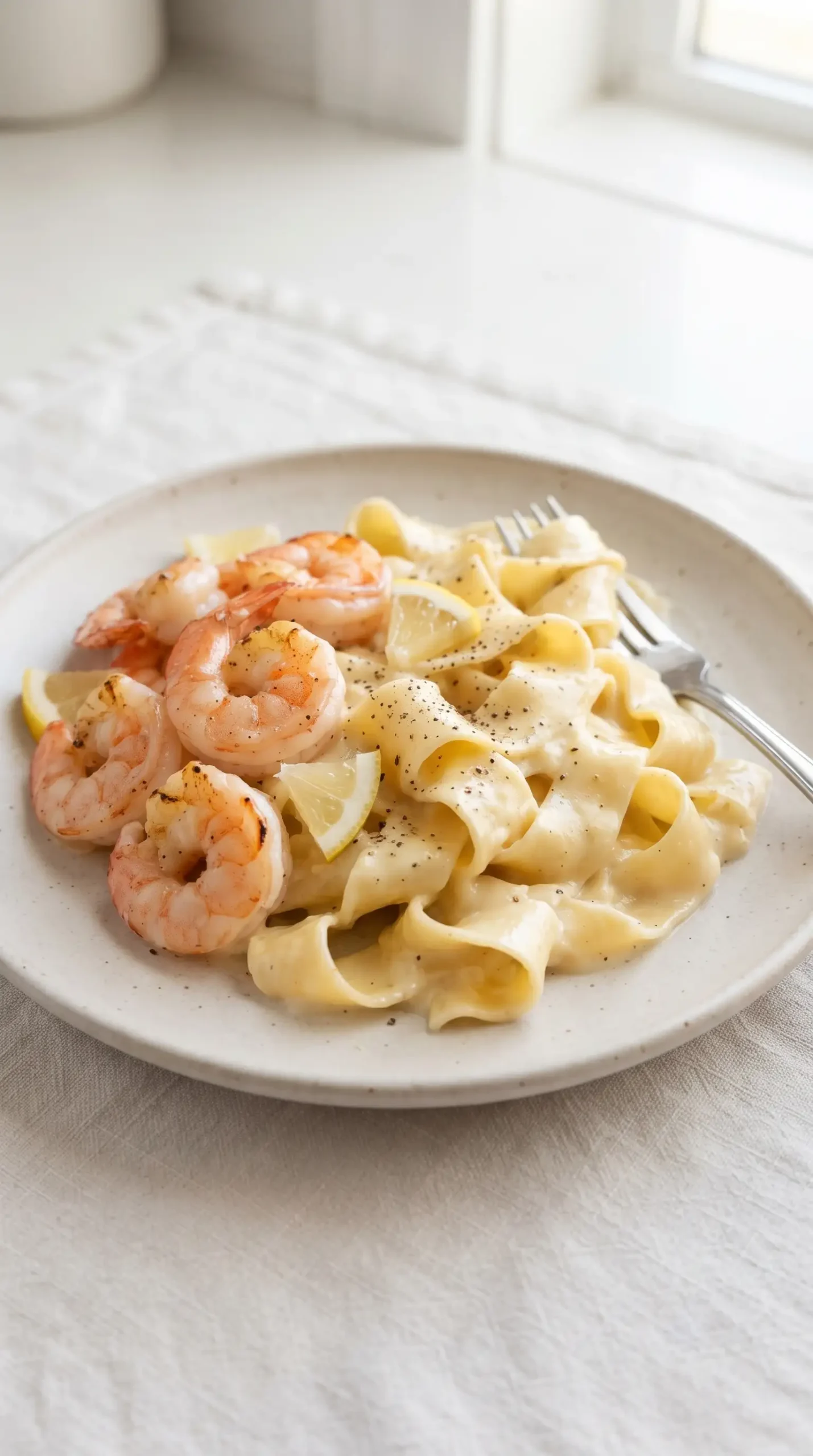
Wide ribbons of pappardelle make the dish feel luxurious because they hold onto the cream sauce in every fold. Fettuccini can create a similar result, but the broader shape gives each bite a satisfying balance of pasta, sauce, and shrimp.
Fresh lemon juice changes the character of the sauce by cutting through the cream and butter. The result is a creamy lemon shrimp pasta that stays bright instead of becoming heavy, especially when finished with freshly grated black pepper and small lemon wedges at the table.
Choosing Pappardelle and Shrimp for Better Balance
Large shrimp work especially well here because they remain noticeable alongside wide pasta strands. Tail-off or tail-on shrimp can both be used, depending on whether you prefer easier eating or a more traditional seafood presentation. Creamy seafood pasta benefits from balancing the sauce with the main ingredients, and Creamy Shrimp Pasta with Corn and Tomatoes in Cream Sauce brings together shrimp, pasta, and a rich sauce with added vegetables.
The Ingredients That Shape Lemon Shrimp Pappardelle
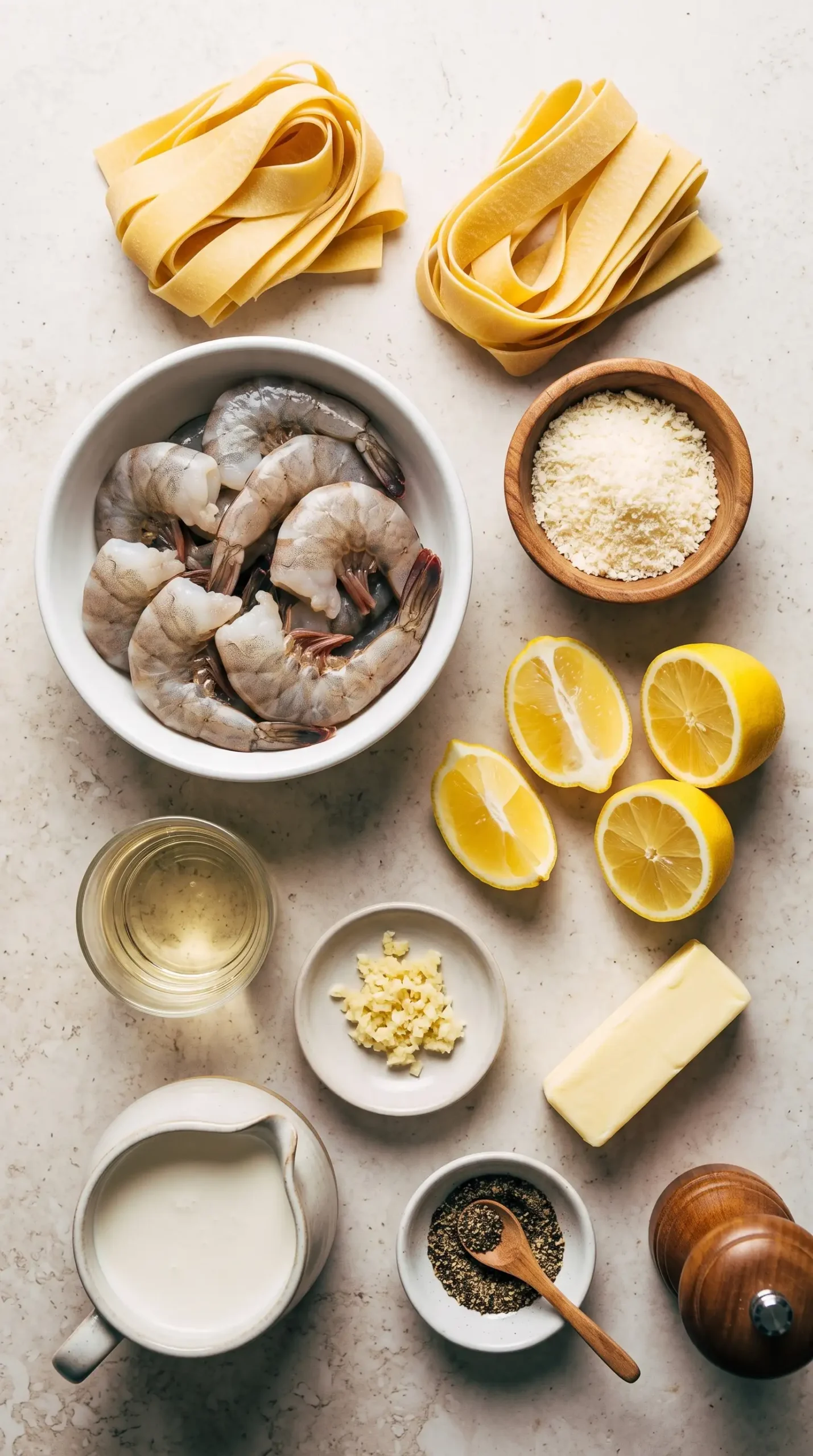
The most important ingredient decisions come from the relationship between the pasta, sauce, and shrimp. Egg pasta varieties bring a tender texture that matches the creamy sauce, while fresh lemon juice provides the sharp contrast needed to keep the dish balanced.
Butter appears in both the sauce and the shrimp cooking process, creating a connected flavor throughout the plate. The garlic is kept subtle, with just enough presence to support the seafood without covering the lemon or cream.
White wine adds another layer of flavor as it cooks into the sauce, while Parmesan remains optional for cooks who want a slightly deeper savory finish. Since the dish already includes cream and butter, a small amount of cheese is enough to complement the other flavors.
| Ingredient choice | Effect on the dish | Best handling approach |
|---|---|---|
| Pappardelle or fettuccini | Creates a wide surface for sauce | Cook until tender and avoid letting pasta sit dry |
| Large shrimp | Adds a hearty seafood bite | Cook briefly until pink and tender |
| Fresh lemon juice | Brightens cream sauce | Add near the end to preserve freshness |
A Creamy Sauce Depends on Simple Timing Choices
The sauce develops its best texture when the cream gently simmers and the lemon is added after the richer ingredients have come together. Keeping the heat controlled helps maintain a smooth finish.
Lemon Shrimp Pasta Cooking Controls for Better Texture
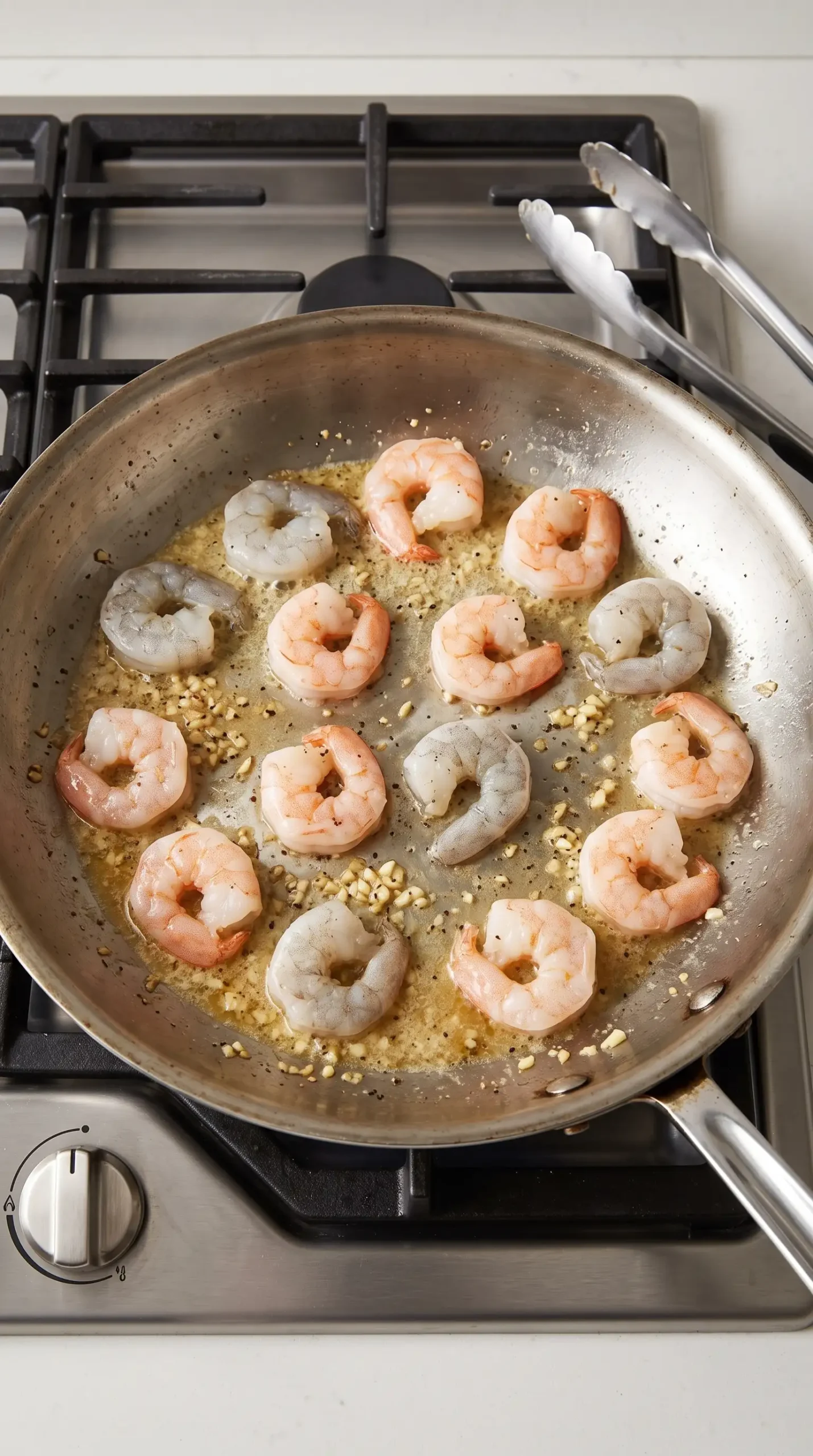
Cooking control matters most when several delicate elements meet in one pan. Shrimp can become firm quickly if left over heat too long, while cream sauces can lose their smooth texture when rushed.
Patting the shrimp dry before cooking helps the surface make better contact with the skillet. Once the shrimp changes color and becomes pink, removing it from direct heat preserves its tenderness while the pasta and sauce finish coming together.
Shrimp responds quickly to heat, so careful timing helps protect its texture. shrimp cooking timing matters because removing it once it is just firm helps prevent the tougher texture that comes from overcooking.
Pasta texture also depends on preparation choices made before combining everything. A well-salted cooking water gives the noodles more flavor, and reserved pasta water can help adjust the sauce if it needs a looser consistency after tossing.
- Shrimp texture: Watch for the color change and avoid extended cooking after the shrimp turns pink.
- Sauce consistency: Use small amounts of pasta water when needed to keep the coating smooth.
- Pasta handling: Toss noodles with care so the wide strands remain intact.
Lemon Shrimp Pasta Mistakes That Ruin the Finish
Several common mistakes can take away from the delicate balance of lemon shrimp pasta. The biggest issue is overcooking the shrimp, which changes the tender seafood texture into something firmer and less pleasant.
Another problem happens when garlic is browned heavily before the wine and cream are added. The directions call for a gentle sauté because the garlic should blend into the sauce instead of becoming the strongest flavor on the plate.
Adding too much lemon too early can also overwhelm the cream base. Small amounts of fresh juice allow the citrus flavor to brighten the sauce while keeping the butter, cream, and Parmesan in harmony.
Wine, Cream, and Lemon Adjustments for the Sauce
The sauce can be adjusted according to personal preference while staying close to the original style. More wine creates a lighter flavor before the cream is added, while a little extra lemon gives a sharper finish at serving time.
Serving Details That Complete the Plate
A bowl of lemon shrimp pasta benefits from simple finishing touches that highlight its fresh flavors. Freshly cracked black pepper adds contrast, and lemon wedges allow each person to adjust the brightness of their portion.
The shrimp can be arranged alongside the pasta or placed over the top for a more dramatic presentation. Keeping the shrimp visible makes the seafood feel like an important part of the meal instead of an ingredient hidden in the sauce.
| Serving addition | What it contributes | When to add it |
|---|---|---|
| Fresh black pepper | Warm, aromatic finish | Right before serving |
| Lemon wedges | Extra brightness | At the table |
| Parmesan cheese | Additional savory flavor | During sauce preparation or finishing |
Pasta Water and Texture Decisions
Reserved pasta water is a useful tool because the starch helps the sauce cling to the noodles. Adding a little at a time allows the texture to stay creamy without becoming thin.
Lemon Shrimp Pappardelle Variations That Stay Close
The dish can shift slightly while keeping the same flavor direction. Pappardelle can be swapped with fettuccini, and cooks can choose tail-off shrimp for convenience or tail-on shrimp for presentation.
Keeping Leftovers Pleasant After Cooking
Cream-based pasta is best enjoyed fresh, but leftover portions can still be handled carefully. Gentle reheating helps protect the sauce texture and keeps the shrimp from becoming overly firm.
When warming leftovers, low heat is useful because high temperatures can separate creamy sauces. Adding a small splash of liquid while reheating may help loosen the pasta if it has thickened after chilling.
Extra portions should be stored promptly and reheated only as needed. Separating the shrimp and pasta before reheating can also help maintain better seafood texture if you are saving portions for another meal.
Lemon Shrimp Pasta Success Comes From Gentle Sauce Control
Shrimp stays tender when it is cooked briefly, and the creamy lemon sauce stays balanced when each flavor is added with restraint. Wide pasta ribbons, bright citrus, and a smooth sauce create a finished plate where no single element overwhelms the others.
Lemon shrimp pasta reaches its best texture when the noodles are coated while warm and the shrimp is brought back together with the sauce at serving time. Those small choices keep the dish elegant, fresh, and satisfying.
Lemon Shrimp Pasta Questions About Sauce and Preparation
Can I use fettuccini instead of pappardelle?
Yes. Fettuccini works well because it has a similar wide shape that pairs with creamy sauces. The main difference is that pappardelle creates broader ribbons with a slightly more dramatic presentation.
How do I keep shrimp tender in lemon shrimp pasta?
Cook shrimp only until it turns pink and remove it from direct heat once it reaches that point. Brief cooking helps preserve the soft texture that works best with the creamy sauce.
Can I make the sauce without white wine?
Yes. The wine contributes flavor, but the sauce can still be made with butter, cream, lemon juice, and the other listed ingredients. Adjusting the lemon at the end can help maintain the bright finish.
Why does my cream sauce become too thick?
Cream sauces naturally thicken as they cool and combine with pasta. A small amount of reserved pasta water can loosen the sauce and help it coat the noodles evenly again.
What makes shrimp pasta with lemon cream sauce taste fresh?
Fresh lemon juice and black pepper provide the contrast that keeps the creamy base lively. Adding those finishing touches at the right time helps the seafood and sauce remain balanced.
Lemon Shrimp Pasta with Pappardelle and Cream Sauce
Ingredients
Method
- Cook the pasta according to the package directions, adding a big pinch of salt to the water. Drain the pasta, reserving some pasta water, then toss with olive oil to prevent sticking.
- Melt 2-3 tablespoons of butter in a pan over medium heat. Add the garlic and cook for 1-2 minutes without browning it.
- Pour in the wine and allow it to cook down for a few minutes. Add the cream and bring the mixture to a simmer.
- Stir in the lemon juice, salt, and optional Parmesan cheese. Reduce the heat to low.
- Pat the shrimp dry with paper towels. Heat the remaining one tablespoon of butter in a large skillet over medium heat.
- Add the shrimp to the skillet, season with salt, and cook until pink, flipping after 1-2 minutes per side. Cover with foil and set aside.
- Toss the warm pasta with the sauce. Serve with the buttery shrimp, freshly cracked black pepper, and small lemon wedges.