
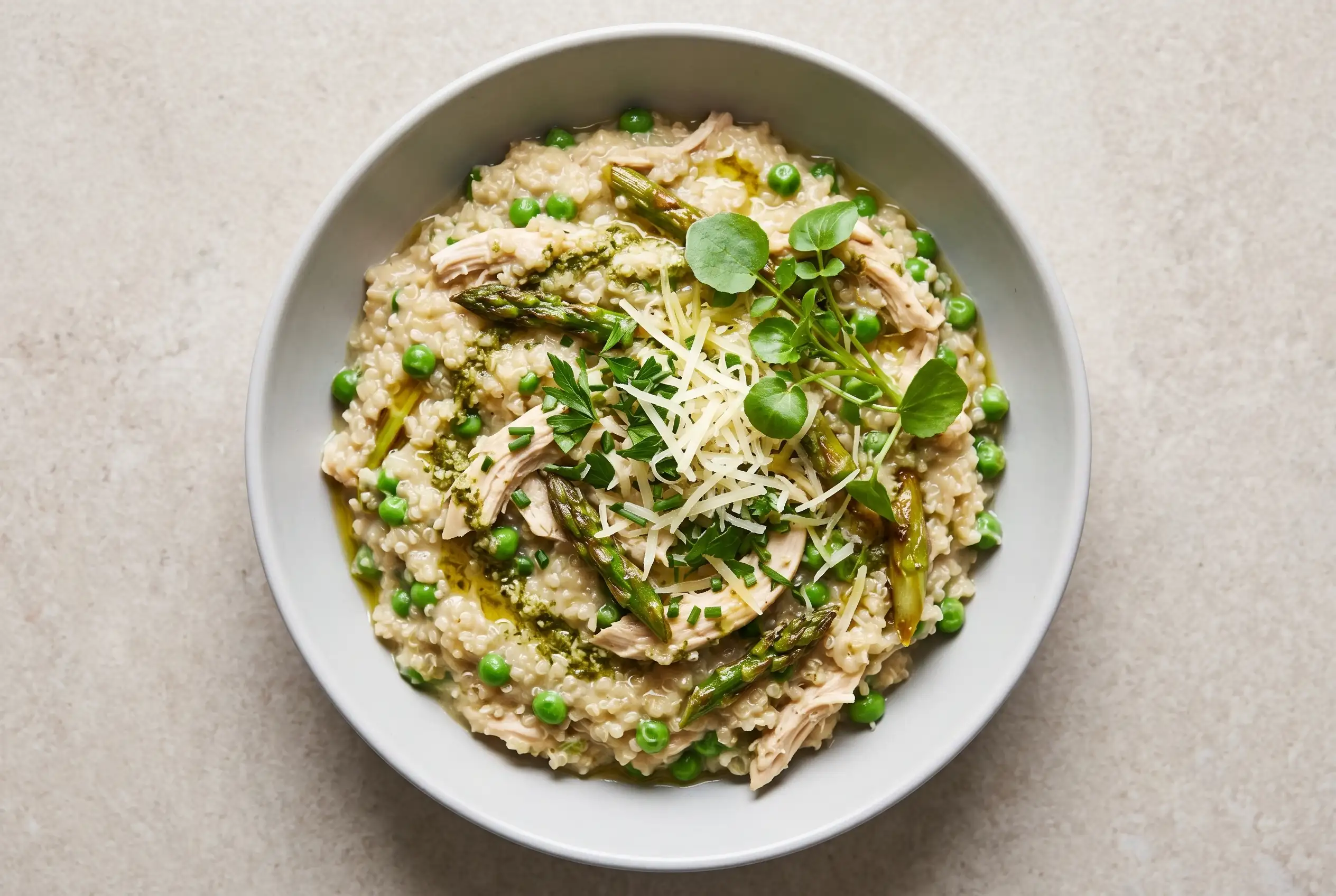
Quinoa chicken primavera combines tender chicken, creamy quinoa, pesto, asparagus, and peas into a slow-cooked meal that brings fresh spring flavors to a comforting crockpot dinner. The combination works because the quinoa absorbs savory broth while the vegetables and herbs keep the finished dish bright and balanced.
Built around the idea of a vegetable-forward pasta primavera, this quinoa chicken primavera recipe uses the slow cooker to create a hearty texture without requiring constant attention. The result sits somewhere between a creamy casserole and a risotto-inspired bowl, with flexible finishing touches that let each serving feel fresh.
Crockpot Quinoa Chicken Primavera Creates Creamy Slow Cooker Comfort
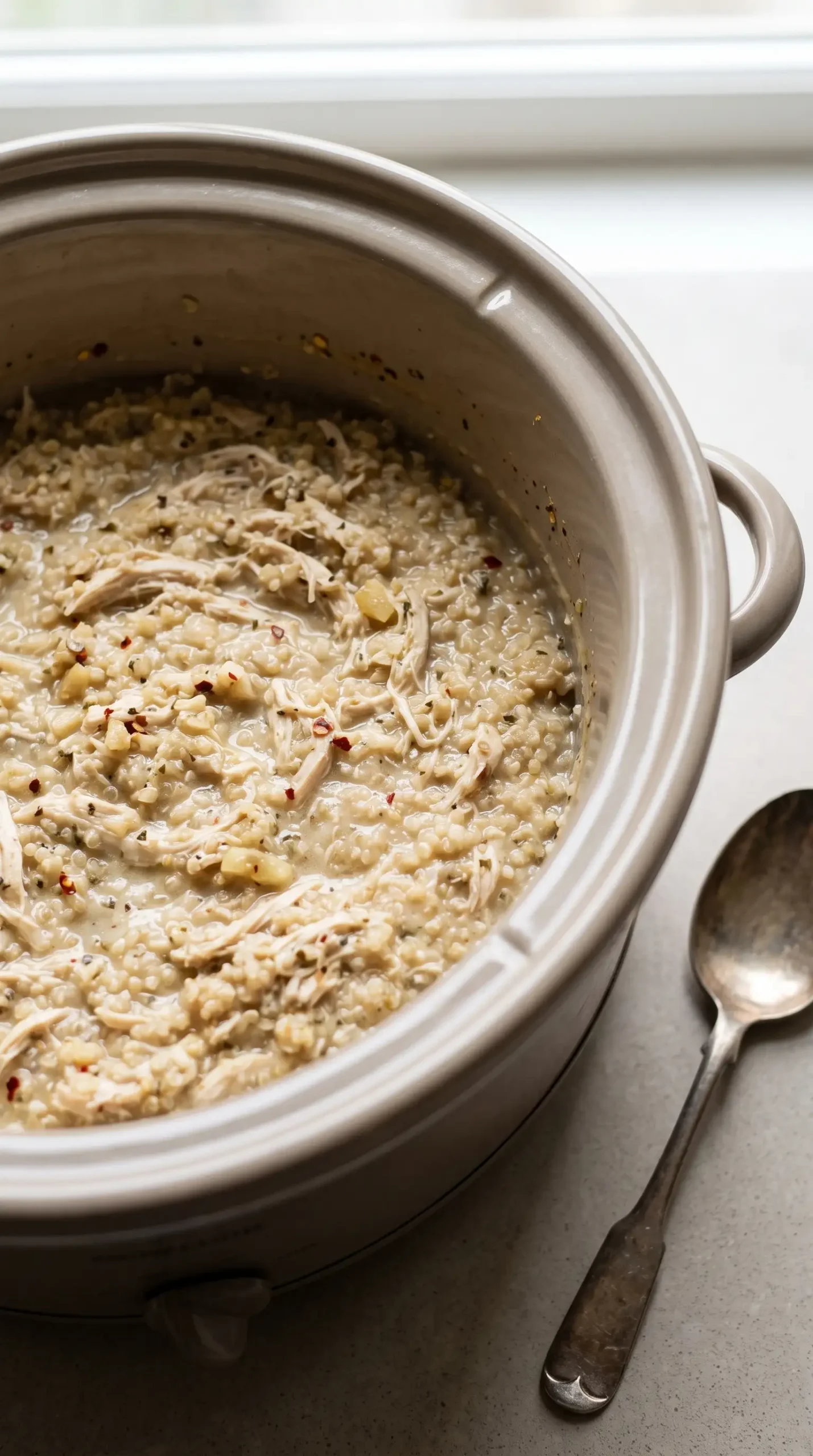
Slow cooking changes the way quinoa and chicken come together. The grains gradually soften in seasoned broth, allowing the chicken to cook gently while the surrounding flavors develop. That process creates the thick base that makes this meal feel substantial.
Unlike many quick quinoa dishes, crockpot quinoa chicken gives the ingredients time to share their flavors. Garlic, herbs, and broth become part of the quinoa itself, while the chicken contributes richness throughout the cooking process.
Fresh additions at the end keep the dish from feeling too heavy. Pesto, peas, lemon juice, and sautéed asparagus introduce color and contrast after the slow-cooked foundation has formed.
Quinoa Texture Depends on Early Cooking Choices
Rinsing quinoa before cooking helps remove surface compounds called quinoa saponins that can affect its flavor and gives the grains a cleaner finish. The amount of liquid added at the beginning also shapes the texture, since quinoa absorbs broth as it cooks.
| Cooking choice | Effect on the finished dish | What to watch for |
|---|---|---|
| Rinsed quinoa | Cleaner flavor and more pleasant texture | Drain well before adding to the slow cooker |
| Whole chicken breasts | Easy shredding after cooking | Allow enough time for the center to become tender |
| Cut chicken pieces | Faster distribution through the quinoa | Pieces should stay evenly sized |
Cooked quinoa should become soft and cohesive without losing all of its structure. The thick consistency that appears after the first cooking stage is useful because additional broth can be blended in gradually until the preferred creaminess is reached.
Pesto and Vegetables Shape the Primavera Finish
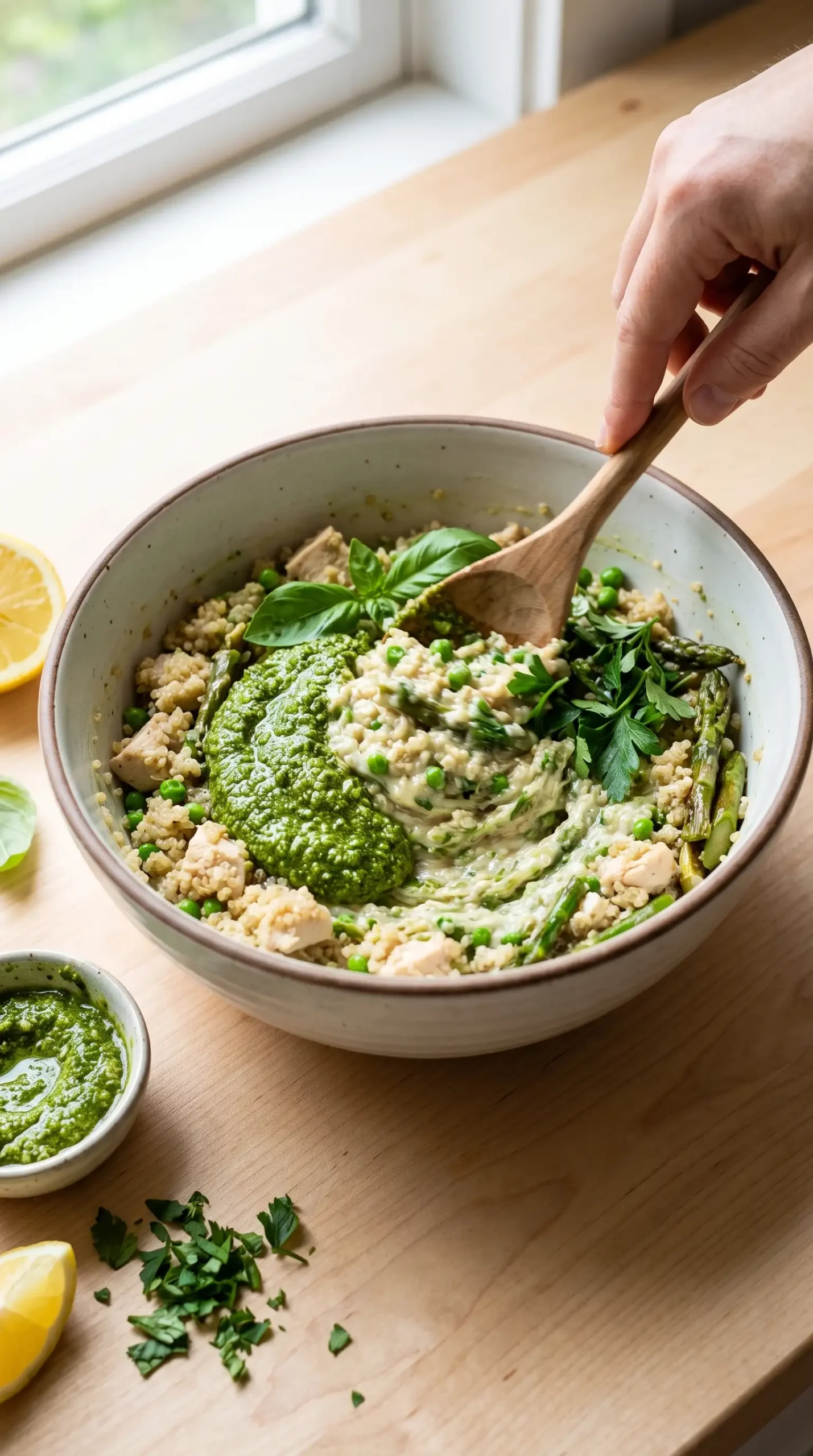
Pesto is the ingredient that gives quinoa chicken primavera its recognizable primavera character. Because pesto varieties differ in intensity, adding it gradually allows the flavor to stay balanced with the broth, chicken, and vegetables.
Green vegetables provide more than color in this dish. Peas bring sweetness and a soft texture, while asparagus contributes a lightly browned, tender-crisp bite after it is cooked separately and folded back into the quinoa.
Lemon juice and fresh herbs work as finishing elements that lift the richer flavors. Watercress, parsley, or chives can add freshness, while Parmesan or Asiago creates a savory topping that complements the pesto.
Chicken Preparation Changes the Crockpot Quinoa Experience
Chicken breasts can be added whole and shredded later, or they can be cut into smaller pieces before cooking. The choice affects how the chicken appears in each serving but keeps the overall flavor direction the same.
- Whole breasts: Useful when you want larger pieces that can be pulled apart after cooking.
- Smaller pieces: Helpful when you prefer chicken distributed throughout every scoop.
- Seasoning placement: Adding garlic, herbs, salt, and pepper early allows those flavors to cook with the quinoa.
Slow Cooker Control Keeps Quinoa Chicken Primavera Balanced
Successful slow cooker quinoa chicken depends on observing the texture during the cooking process instead of relying only on a fixed liquid amount. Quinoa absorbs broth differently depending on the cooking environment, and the finished mixture may need additional liquid stirred in afterward.
Cooking low and steady helps the quinoa become soft while the chicken reaches a tender texture. The thick mixture that develops is not a problem; it creates the base for the creamy consistency that comes after the finishing ingredients are added.
Careful additions matter once the main cooking stage is complete. Extra broth or water should be incorporated gradually, with stirring between additions, so the quinoa reaches a creamy casserole-like texture without becoming loose.
Liquid Adjustments Prevent a Heavy Quinoa Chicken Primavera Texture
Liquid management is one of the most important decisions in a quinoa chicken primavera recipe. Some batches become very thick after cooking, while others may need less adjustment before the pesto and vegetables are added.
A gradual approach makes it easier to control the finished meal. Add a small amount of extra liquid, stir thoroughly, and check the consistency before continuing.
Common Crockpot Quinoa Chicken Primavera Mistakes to Avoid
Several issues can change the texture and flavor of crockpot quinoa chicken if they are not considered during preparation. Most problems come from texture decisions rather than complicated techniques.
- Adding all liquid immediately: The quinoa may not need every extra addition after cooking, so adjust gradually.
- Overloading with pesto: Different pestos vary in strength, making small additions easier to balance.
- Skipping the asparagus finish: Cooking asparagus separately preserves its firmer texture and prevents it from disappearing into the creamy base.
- Ignoring consistency: The dish should be adjusted while warm because the quinoa continues to influence the texture.
Asparagus Adds Contrast After the Quinoa Cooks
Sautéed asparagus creates a useful contrast against the creamy quinoa mixture. Browning the pieces briefly develops deeper flavor while keeping a pleasant bite that stands apart from the softer grains.
Serving Ideas Highlight Fresh Toppings and Cheese
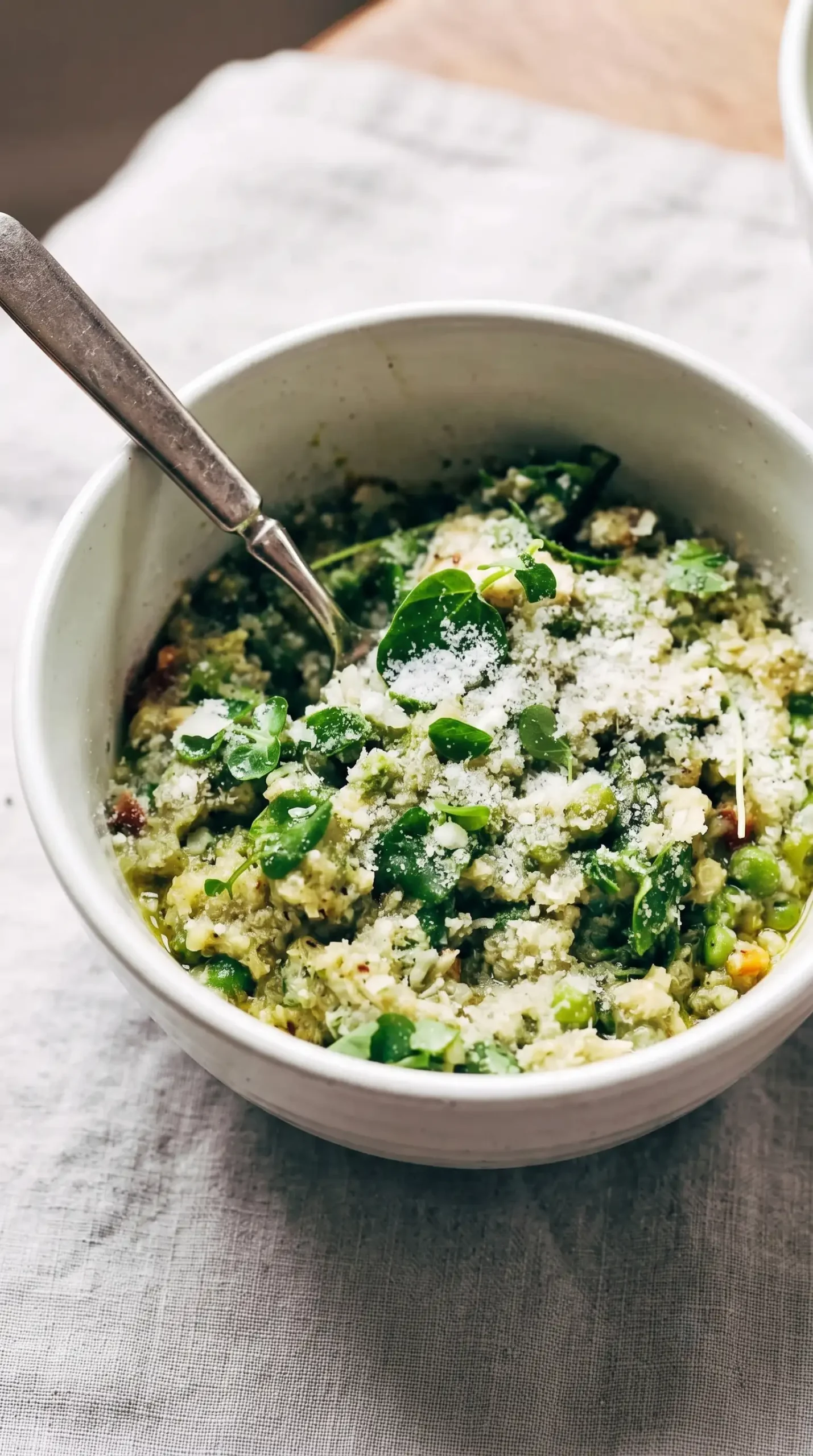
Fresh toppings allow each bowl of quinoa chicken primavera to be customized after cooking. Herbs, greens, shredded cheese, and a drizzle of olive oil can all change the way the creamy base tastes without altering the preparation.
Serving choices can also shift the overall style of the meal. A generous cheese topping creates a richer finish, while extra herbs and lemon emphasize the lighter vegetable flavors.
Leftover Handling Keeps the Primavera Meal Useful
Stored portions of slow cooker quinoa chicken can be refreshed with a small amount of liquid when reheated because quinoa naturally continues absorbing moisture. Stirring gently helps restore a softer texture.
Ingredient Swaps Fit the Quinoa Chicken Primavera Framework
The structure of quinoa chicken primavera allows for small adjustments while keeping the main idea intact. Different pesto brands, herb combinations, or topping choices can change the personality of the dish.
Bacon is also a flavorful addition that works with the creamy quinoa base and savory chicken. It can bring a smoky element that contrasts with the fresh vegetables and pesto.
Fresh Finishes Define the Slow Cooker Quinoa Chicken Primavera Bowl
The last additions have an important role because they introduce textures and flavors that cannot develop during slow cooking alone. Pesto, lemon, vegetables, and toppings create the finishing balance that makes the meal feel complete.
Thoughtful finishing choices keep slow cooker quinoa chicken from becoming one-dimensional. The creamy quinoa foundation provides comfort, while fresh elements create movement from bite to bite.
Quinoa Chicken Primavera Gains Its Best Texture Through Gradual Balance
Quinoa chicken primavera succeeds when the creamy cooked grains, tender chicken, and fresh vegetables meet at the right consistency. The most important judgment comes after the slow cooking stage, when liquid, pesto, and toppings are adjusted to create the desired finish. A creamy chicken quinoa casserole follows a comparable comfort-focused structure where texture depends on keeping the grains tender and the ingredients balanced.
The dish works because each part has a distinct moment: quinoa builds the base, chicken provides substance, and vegetables plus herbs bring brightness. Small adjustments during finishing allow the meal to remain creamy without losing the contrast that makes primavera-inspired flavors appealing.
Quinoa Chicken Primavera Questions About Texture and Preparation
Can quinoa chicken primavera be made with pre-cooked quinoa?
Pre-cooked quinoa changes the cooking process because it will not absorb broth in the same way as uncooked quinoa. The slow cooker method is designed around uncooked grains, so using prepared quinoa would require adjusting the liquid and cooking approach.
Why does my quinoa chicken primavera become very thick?
The quinoa absorbs the cooking liquid as it softens, which can create a dense mixture before the finishing liquid is added. Stirring in broth or water gradually helps reach a creamier consistency that suits the dish.
Can I use a different vegetable with the asparagus?
Vegetables with similar quick-cooking qualities can work as alternatives, especially when they can be added near the end to preserve texture. The key is maintaining a fresh element that contrasts with the creamy quinoa.
When should pesto be added to quinoa chicken primavera?
Pesto is best stirred in after the quinoa and chicken have finished their main cooking stage. Adding it at the end preserves its fresh flavor and makes it easier to adjust the amount based on the pesto being used.
Crockpot Quinoa Chicken Primavera with Pesto and Peas
Ingredients
Method
- Rinse the quinoa. Prepare the chicken by either cutting it into smaller pieces for faster cooking or leaving the breasts whole to shred after cooking.
- Add the quinoa, chicken, 4 cups broth, garlic, salt, pepper, and desired seasonings to the crockpot. Cover and cook on low for 3-4 hours.
- Once the quinoa and chicken are cooked, stir in the remaining 3 cups broth or water as needed until the mixture reaches a creamy risotto or casserole-like consistency.
- Mix in the pesto, peas, and lemon juice, then cover the crockpot to warm the peas through.
- While the peas heat, warm the olive oil in a skillet. Add the asparagus and sauté for 5-10 minutes until lightly browned and tender-crisp.
- Stir the cooked asparagus into the crockpot mixture until combined.
- Serve topped with fresh herbs, shredded cheese, watercress, olive oil, or other desired toppings.