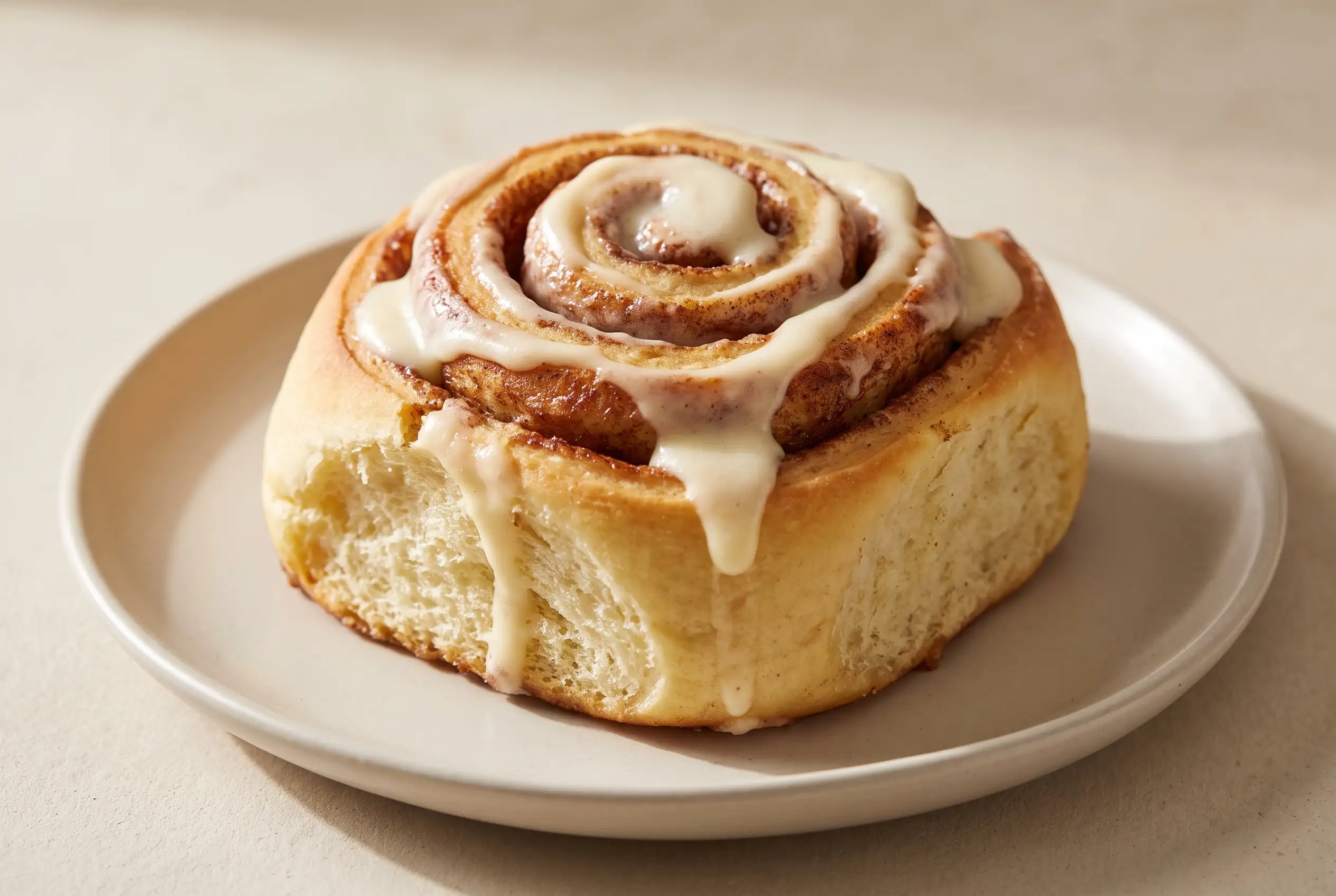
Ingredients
Method
Preparation
- Combine the water and yeast in a bowl. Melt the butter, then whisk in the honey, egg, and salt before adding this mixture to the bowl. Add the flour and stir with a wooden spoon until combined. The dough should remain loose, sticky, and soft.
- Cover the bowl loosely with plastic wrap or a damp towel and leave the dough at room temperature for 1-2 hours, until it has puffed and roughly doubled in size.
- Gently pull the dough away from the sides of the bowl to release some air. Cover the bowl and refrigerate the dough for at least 3 hours so it chills and becomes easier to handle. The dough can remain refrigerated for up to 5 days.
Filling and Shaping
- Remove the chilled dough and lightly coat the outside with flour. Roll it into an approximately 9x13 rectangle, handling the dough gently and avoiding excess flour.
- Brush the dough rectangle with melted butter, then cover evenly with the sugars and cinnamon, pressing the filling lightly into the surface.
- Roll the dough from the short side into a log. Trim uneven ends with floss or a sharp knife, then cut the log into 8 equal rolls.
- Place the rolls in a 9-10 inch round baking dish or pie plate.
Baking
- Preheat the oven to 200°F (93°C), then turn it off. Cover the pan loosely with plastic wrap or a damp towel and place the rolls in the turned-off oven for 45 minutes, until they have expanded and fit more closely together.
- Remove the rolls and preheat the oven to 350°F (177°C). Bake the rolls for 20-22 minutes.
Frosting
- Beat the cream cheese and butter with an electric mixer until smooth and creamy.
- Add the powdered sugar, vanilla, and milk gradually until a smooth glaze forms, then continue mixing until the frosting becomes light and fluffy.
Serving
- Allow the baked rolls to cool briefly, then brush or spoon the frosting over them so it covers the surface and fills the crevices. Add another layer of frosting after they cool slightly if desired.
Notes
Previous Version: A previous version included extra dough for 3 batches of cinnamon rolls; the updated recipe makes ONE batch of cinnamon rolls. The video still shows the older method of dividing the dough into 3 portions, which can be ignored until it is updated. Sample Timing – for less work in the morning: Make the dough the morning before; let it rise from 8-10am. Refrigerate it. Shape the rolls in the afternoon or evening, cover, and refrigerate again. Take the rolls out the next morning, let them rise from 7-8am, bake and be ready to eat by 8:30am. Sample Timing – for last-minute preparation: Make the dough the night before; let it rise from 8-10pm. Refrigerate it. Shape the rolls the next morning from 7:30-8, let them rise from 8-9am, bake and be ready to eat by 9:30am. Fridge Time: This dough can stay refrigerated for up to 5 days. Avoid leaving the pre-rolled rolls refrigerated longer than overnight because the filling may begin to seep out. Freezing: Freezing is not part of the routine for this recipe because the rich, buttery dough can make it difficult to achieve a strong second rise. The dough can instead be used within the 5-day refrigerated window. If your dough is not rising: This may happen due to room temperature differences or ingredient temperatures. If the yeast is active and the dough has a sweet yeasty aroma, it may need more warmth, time, and moisture. Covering it with a damp towel and placing it near a warm oven for an extra 30-60 minutes can help. You can also try the boiling water / oven method from the referenced post.