
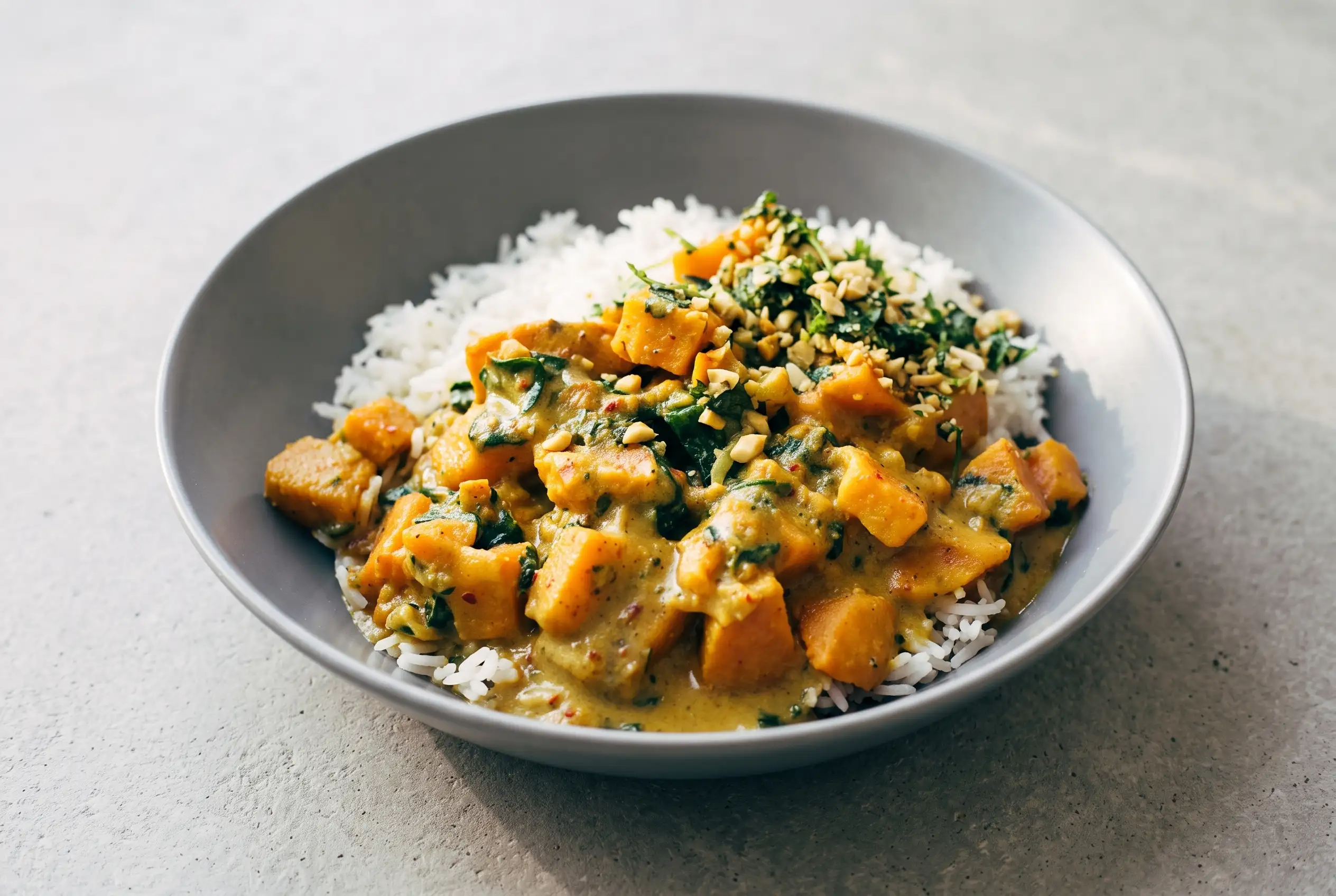
Sweet potato curry brings together tender sweet potatoes, aromatic curry paste, coconut milk, and fresh spinach in a comforting meal built around contrasting textures and layered flavors. The creamy sauce develops its character from the combination of curry paste, coconut milk, and broth, while peanuts and cilantro add a fresh finish that keeps every serving lively.
A Thai sweet potato curry approach works especially well because the natural sweetness of the vegetables can balance the warmth of curry paste and the richness of coconut milk. Small choices during cooking, such as how the curry paste is handled and when the spinach is added, influence the texture and flavor of the finished bowl.
Sweet Potato Curry Creates a Creamy Thai-Inspired Base
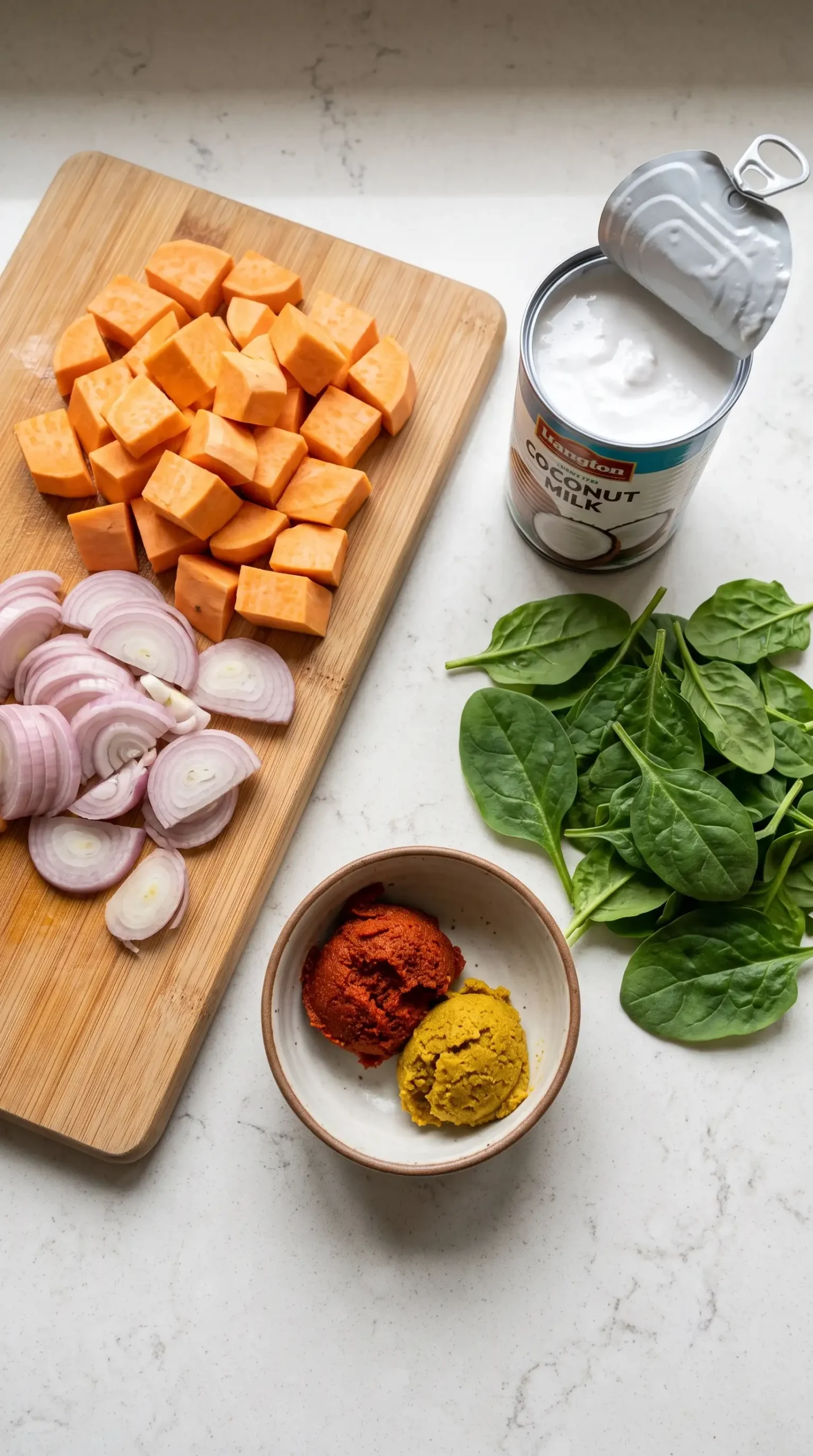
Sweet potato curry succeeds because the main components work together before any finishing touches are added. The sweet potatoes provide a soft, substantial texture that pairs with the smooth coconut sauce, creating a dish that feels complete when served with rice.
The curry paste determines much of the personality of the sauce. A blend of red and yellow curry pastes can create a balanced flavor, while using one style of paste keeps the profile focused. The paste needs enough time in the pan with the aromatics and sweet potatoes so its flavors become integrated.
Adding coconut milk and broth creates a sauce that surrounds the vegetables without hiding their texture. The simmering process allows the sweet potatoes to become tender while the liquid thickens into a coating consistency. That balance is what makes this coconut sweet potato curry different from a simple vegetable dish with sauce added afterward.
Curry Paste Choices Shape the Flavor Direction
The curry paste selection is the ingredient decision that most changes the identity of sweet potato curry. red and yellow curry paste styles can create different flavor directions, while combining them offers another way to build complexity. Homemade paste can also be prepared and kept available for future batches when a stronger fresh flavor is desired.
Coconut Milk and Sweet Potatoes Need Balanced Handling
Coconut milk creates the creamy foundation of the sauce, but its richness depends on how it is combined with the other liquids. Adding broth or water gives the sauce room to move around the vegetables and prevents the finished dish from feeling overly heavy.
Sweet potatoes require attention because their texture changes as they simmer. Cubed pieces should become tender enough to absorb the surrounding flavors while still maintaining enough structure for serving. Stirring gently helps keep the pieces intact as the sauce develops.
The combination of sweet potatoes and coconut milk also allows seasoning adjustments near the end of cooking. A small amount of fish sauce, or a compliant vegan alternative, can deepen the savory character of the curry without replacing the main flavors from the curry paste and vegetables.
Spinach and Toppings Complete the Curry Finish
Fresh baby spinach changes the curry near the end of cooking by adding color and a lighter texture. Stirring it into the warm sauce allows the leaves to wilt while keeping the vegetable presence noticeable alongside the sweet potatoes.
Rice Pairings Change the Serving Experience
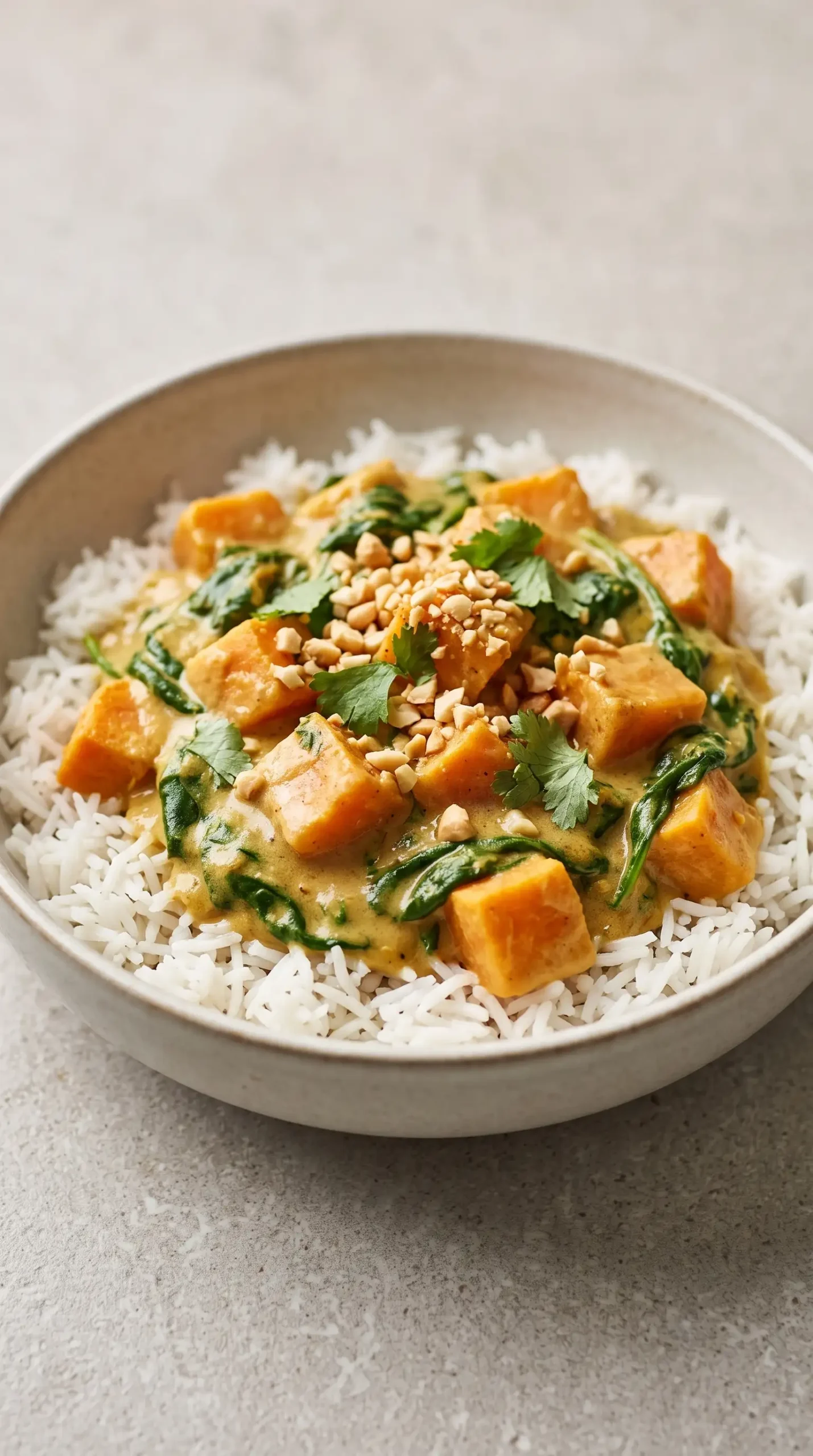
Rice provides a practical companion for sweet potato curry because it catches the creamy sauce and creates a balanced bite. The mild flavor of rice allows the curry paste, coconut milk, and toppings to remain the focus without competing for attention.
The serving style can also influence how the sauce feels on the plate. A generous layer of rice creates a comforting bowl, while a smaller portion allows the thick curry sauce and vegetable pieces to stand out more clearly.
Peanuts and cilantro add another texture contrast when scattered over the finished curry. The chopped topping brings crunch and freshness, especially when some is stirred into the curry and some is saved for the surface.
| Serving choice | Texture effect | Flavor emphasis |
|---|---|---|
| Rice base | Soft and absorbent | Highlights the creamy sauce |
| Extra peanut topping | Adds crunch | Brings nutty contrast |
| Additional cilantro finish | Adds freshness | Balances the rich coconut notes |
Sweet Potato Curry Cooking Control Keeps Texture Intact
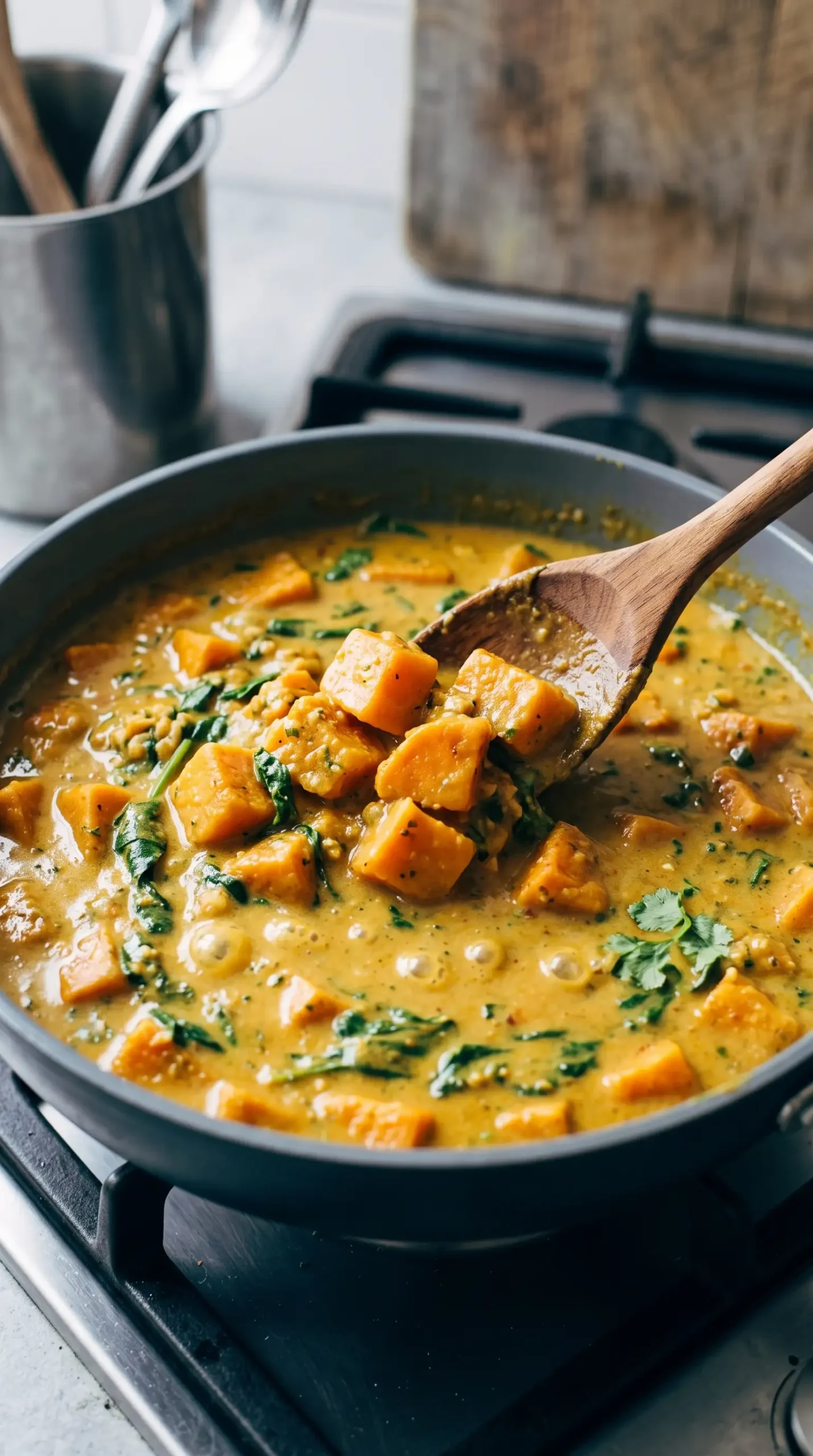
Cooking control comes from managing heat and timing during the simmer. Keeping the curry at a gentle level allows the coconut milk, broth, and curry paste to combine while giving the sweet potatoes time to soften evenly.
Mistakes That Affect Sweet Potato Curry Results
One common sweet potato curry mistake is rushing the curry paste step. If the paste is not properly combined with the shallots and sweet potatoes, the sauce can lack the unified flavor that makes the dish satisfying. Allowing the paste to coat the vegetables creates a stronger foundation.
Another issue is adding spinach too early. Extended cooking can reduce the fresh appearance of the leaves, so stirring them in near the end keeps their contribution distinct. The same attention applies to the peanut and cilantro topping, which works best when some remains reserved.
Over-adjusting the liquid can also change the texture. Adding too much broth or water may thin the sauce beyond the creamy consistency expected from the coconut milk base. Small additions make it easier to maintain the desired thickness.
- Paste balance: Combine curry paste thoroughly with the vegetables before adding liquids.
- Spinach timing: Add greens late so they keep their fresh character.
- Topping placement: Reserve part of the peanut and cilantro mixture for contrast.
Homemade Curry Paste Builds Fresh Flavor Options
Homemade curry paste gives sweet potato curry another level of customization because garlic, shallots, ginger, chili peppers, spices, lemongrass paste, and cilantro can be blended together into a personal flavor base. Preparing homemade yellow curry paste with fresh aromatics can add depth to the sauce while keeping prepared paste available for quick curry meals.
Leftover Curry Uses Benefit From Gentle Reheating
Stored curry can continue to be useful after the initial meal because the flavors remain well suited to reheating. Warming it gently helps preserve the creamy texture created by the coconut milk while keeping the sweet potatoes from becoming overly soft.
Extra servings can be paired with fresh rice or used as the center of another simple meal. Adding fresh toppings after reheating restores some of the contrast that comes from the original combination of creamy sauce, vegetables, peanuts, and cilantro.
When adapting leftovers, consider the thickness of the sauce before adding more liquid. Coconut-based curries can change texture as they sit, so small adjustments help maintain the consistency that makes the dish enjoyable.
Sweet Potato Curry Variations Fit Different Tables
The basic structure of sweet potato curry allows small changes while keeping its main identity. Different curry paste choices, topping amounts, and serving styles can shift the dish toward a milder or more pronounced flavor without changing the core combination of sweet potatoes and coconut milk.
Vegan Adjustments Preserve Thai Sweet Potato Curry Character
A vegan version of Thai sweet potato curry depends on checking that the curry paste fits a plant-based approach and replacing fish sauce with a suitable alternative or leaving it out. These changes allow the coconut milk, vegetables, and curry paste to remain the central flavors.
The richness of the sauce does not rely on fish sauce alone. Sweet potatoes, coconut milk, and curry paste already create a layered base, while peanuts and cilantro contribute texture and brightness at serving time.
Vegetarian and vegan adaptations work best when attention stays on the seasoning balance. Adjusting the savory notes carefully helps maintain the harmony between sweet vegetables, aromatic paste, and creamy sauce.
Sweet Potato Curry Brings Balance Through Sauce and Texture
Sweet potato curry reaches its strongest expression when the creamy coconut sauce, tender vegetables, and fresh toppings remain distinct parts of the same dish. The curry paste establishes depth, the sweet potatoes provide substance, and the spinach and toppings prevent the bowl from feeling one-dimensional.
Careful control of texture makes the difference between a simple simmered meal and a memorable curry. Keeping the sauce balanced and preserving the contrast between creamy, soft, and crunchy elements creates a serving experience built around thoughtful choices.
Common Questions About Curry Paste and Sweet Potato Curry
Can sweet potato curry use only red or yellow curry paste?
Yes. Red curry paste and yellow curry paste each work well on their own, and the choice depends on the flavor direction you prefer. Combining both is another option when you want characteristics from each style.
How can I make sweet potato curry less spicy?
You can adjust the amount of curry paste used and choose a paste with a milder heat level. Serving the curry with rice and creamy coconut sauce also helps balance the overall intensity.
Can I freeze leftover sweet potato spinach curry?
The curry can be prepared ahead and frozen, especially if you keep the sauce and vegetables together in a suitable container. Thawing and reheating gently helps maintain the creamy texture.
What can I serve with coconut sweet potato curry besides rice?
Rice is a natural pairing, but other mild grain-based sides can also work well because they allow the coconut sauce and curry flavors to remain prominent.
Why add peanuts and cilantro at the end?
The topping adds a fresh and crunchy contrast to the soft vegetables and creamy sauce. Reserving some for serving keeps that texture noticeable in each portion.
Sweet Potato Curry with Coconut Milk and Fresh Spinach
Ingredients
Method
- Start rice separately if serving the curry over rice.
- Prepare homemade curry paste according to your preferred recipe by roasting garlic, shallots, and ginger, hydrating chili peppers, and blending with spices, lemongrass paste, and cilantro.
- Heat the oil over medium-high heat. Add the shallots and cook until softened and fragrant.
- Add the sweet potatoes and toss to coat with the oil. Stir in the curry paste until evenly combined with the vegetables.
- Pour in the coconut milk and broth, then simmer over low heat for 10-15 minutes until the sauce thickens.
- Add the spinach and stir until wilted.
- Mix in half of the peanut and cilantro mixture, keeping the remaining portion aside for topping.
- Season the curry with a splash of fish sauce or vegan fish sauce to taste.
- Serve the curry over rice and finish with the reserved peanut and cilantro topping.