
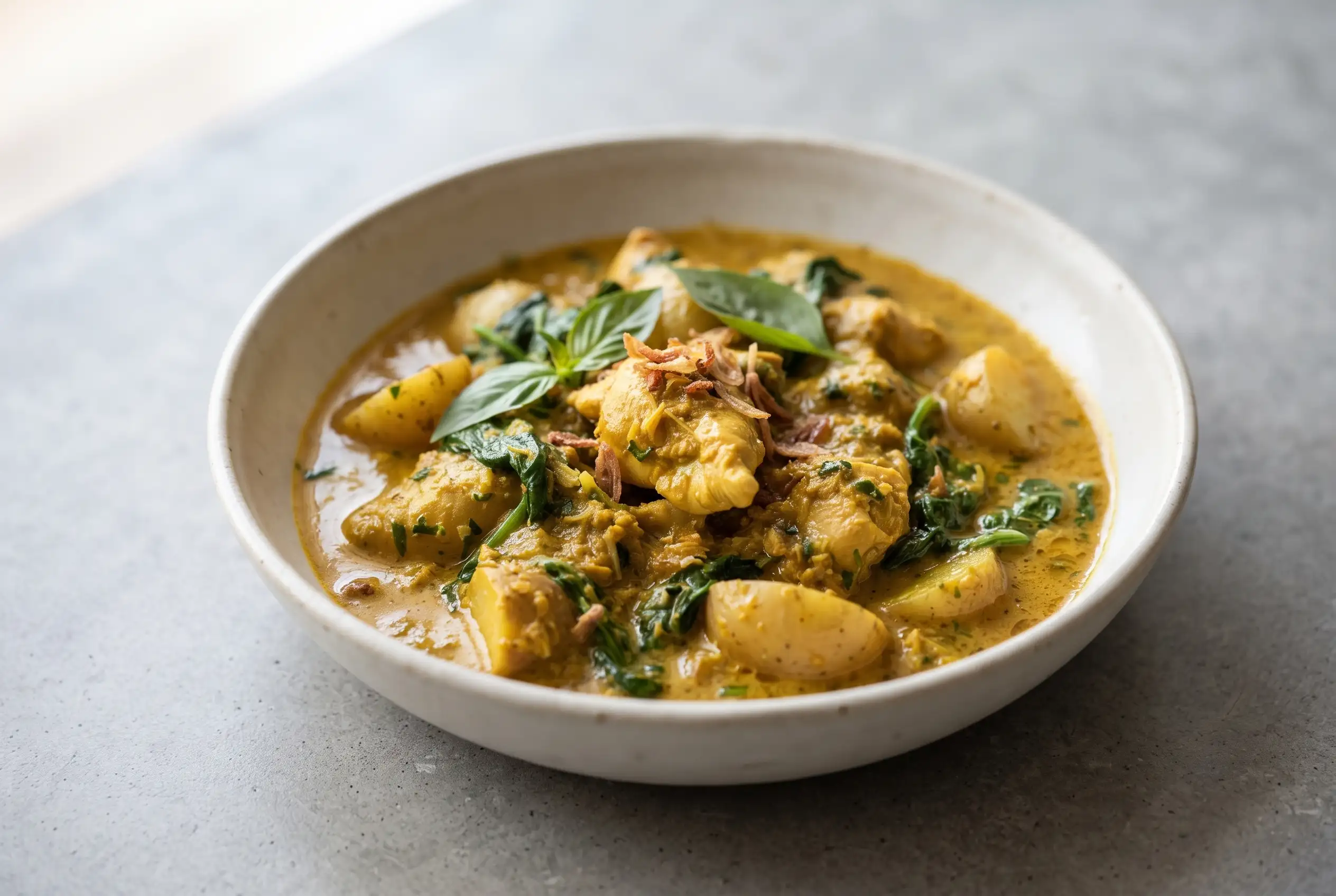
Thai yellow curry paste brings roasted aromatics, dried chilies, turmeric, and fresh herbs together into a concentrated foundation for homemade curry. This homemade blend creates a deeper flavor profile because the shallots, garlic, and ginger are softened before they are combined with the spices and other ingredients. The result is an easy Thai yellow curry paste that gives finished curry dishes a warm color, fragrant aroma, and balanced savory character.
Roasted Aromatics Define Thai Yellow Curry Paste
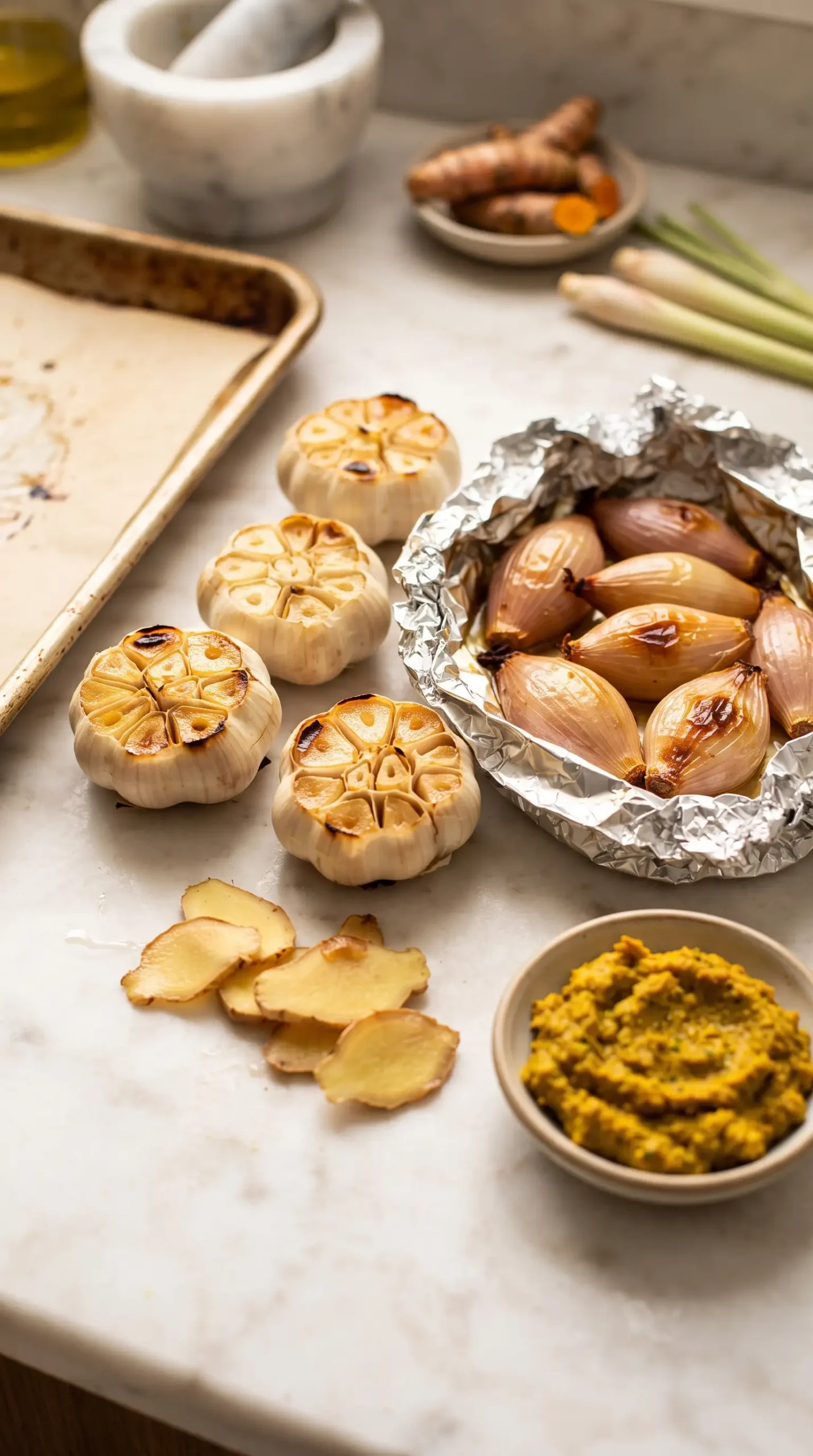
Roasted shallots, garlic, and ginger provide the backbone of the paste’s flavor. The gentle oven process changes these ingredients from sharp and raw into softer elements that blend smoothly with turmeric, curry powder, and coriander. Garlic heads are especially important because roasting the exposed cloves creates a mellow flavor that supports the other aromatics.
Fresh ginger contributes brightness after it has softened, allowing it to blend into the paste without creating harsh pieces. Removing the ginger after the first stage of roasting keeps its texture suited for blending while allowing the shallots and garlic to continue developing deeper roasted notes.
Combining roasted components with rehydrated chilies creates a concentrated mixture that works well in curry recipes. The aromatics do not simply season the finished dish; they form the base that carries the spices, oil, and herbal notes throughout each batch of curry paste.
Shallots Garlic and Ginger Shape Roasted Depth
Large aromatics determine how the roasted Thai yellow curry paste develops its distinctive foundation. Keeping the garlic in full heads during roasting protects the cloves while they soften, and the wrapped shallots and ginger maintain moisture as their flavors become more rounded.
Dried Chilies Control Homemade Yellow Curry Paste Heat
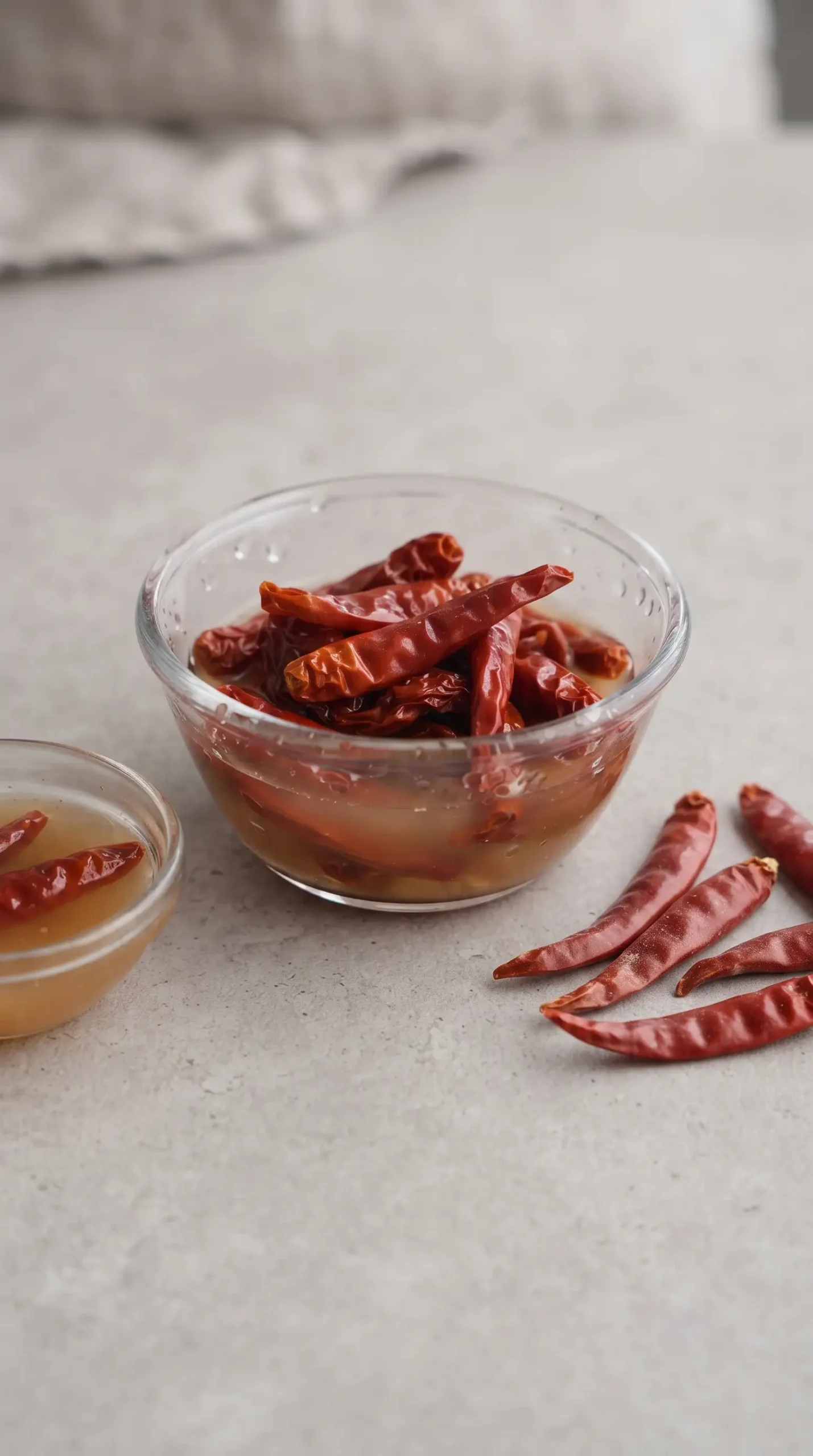
Dried Thai chili peppers allow cooks to decide how much heat enters the finished paste. Because the peppers are small, a small change in quantity can noticeably shift the intensity, making the amount used an important personal preference.
Soaking the chilies before blending changes their texture and helps them incorporate into the paste more evenly. The softened peppers combine with the roasted ingredients to create a smoother mixture without leaving dry pieces throughout the finished curry base.
Heat adjustment remains simple because the peppers are handled separately from the roasted aromatics. A milder batch can use fewer chilies, while a stronger version can include more of the same ingredient without changing the overall structure of the paste.
Blending Choices Create Curry Paste Texture
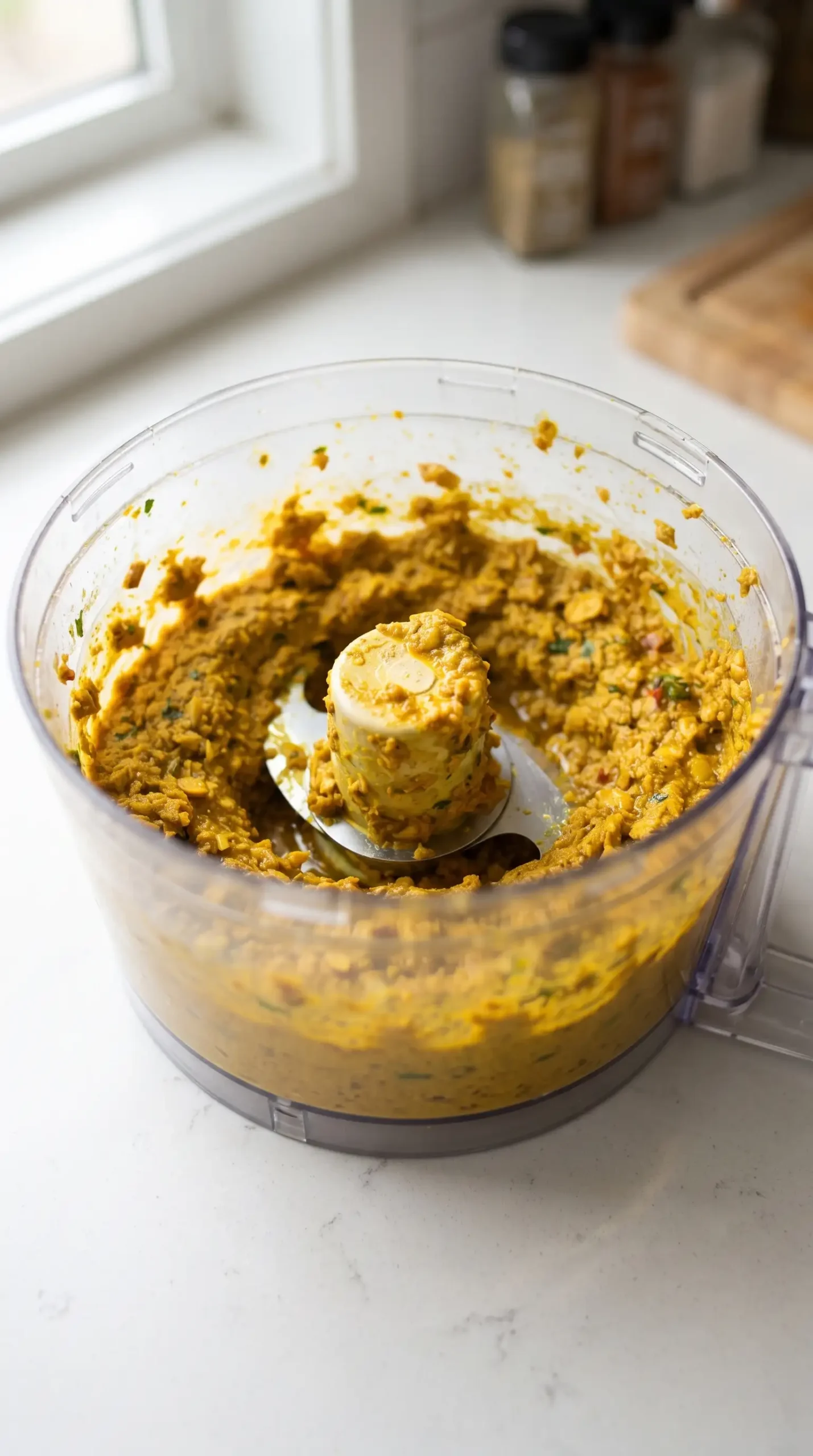
The texture of Thai yellow curry paste depends on the power of the blending equipment and the amount of processing time used. A strong blender or food processor can create a smoother paste, while shorter pulsing leaves more visible texture from the aromatics and spices.
Curry Spices Guide Thai Yellow Curry Paste Character
Turmeric gives the paste its recognizable golden appearance, and the spice’s coloring compounds help explain turmeric’s golden color in finished dishes. Mild curry powder reinforces the warm spice profile, while roasted ground coriander adds another layer of flavor that connects the earthy spices with the fresh aromatics and herbs.
Balanced seasoning matters because the paste is concentrated and later combined with other curry ingredients. Salt supports the spice blend, while lemongrass paste and cilantro leaves provide fresh notes that prevent the roasted ingredients from feeling too heavy.
| Ingredient group | Main role in the paste | Cook-facing choice |
|---|---|---|
| Turmeric and curry powder | Warm spice foundation | Adjust within the suggested range for preferred intensity |
| Dried Thai chilies | Heat and pepper flavor | Increase or reduce quantity to shape spice level |
| Lemongrass paste and cilantro | Fresh aromatic balance | Blend thoroughly for an even finished texture |
Several ingredients work together to create a paste that can be used across multiple curry preparations. The combination of roasted vegetables, spices, and herbs is what makes homemade yellow curry paste distinct from simply mixing dry seasonings into a sauce.
Common Thai Yellow Curry Paste Mistakes to Avoid
Rushing the roasting stage can leave the paste with sharper flavors because the garlic and shallots have not had enough time to soften. Wrapped packets help protect the aromatics while they cook, so keeping them intact during roasting supports the intended texture.
Overlooking chili preparation is another common mistake with Thai yellow curry paste. Dry peppers need to be softened before blending, and skipping that step can make it harder for the peppers to disappear into the smooth consistency expected from a curry base.
Uneven blending can also affect the final curry experience. Large pieces of garlic, ginger, or chili may create isolated bursts of flavor instead of the unified seasoning that makes the paste useful for building a complete curry dish.
- Roasted aromatics: Look for softened shallots and golden, fragrant garlic before blending.
- Chili texture: Rehydrated peppers should combine smoothly with the other ingredients.
- Paste consistency: Process until the texture fits how the curry will be prepared.
Roasting Control Improves Curry Paste Results
Temperature changes during roasting influence the way the aromatics develop. Removing the ginger once softened prevents it from becoming over-roasted while the garlic and shallots continue until their deeper flavor is established.
Storing Homemade Curry Paste Preserves Future Meals
Homemade yellow curry paste works well as a prepared flavor base because it can be kept chilled for later curry dishes or frozen for longer storage. Dividing portions before freezing makes it easier to use only the amount needed for a future meal.
Adjusting Yellow Curry Paste for Different Curry Dishes
Different curry dishes can highlight different parts of the paste’s flavor. A preparation that needs a stronger spice presence can use more paste, while a milder curry can rely on a smaller amount alongside other ingredients.
Flexible use is one reason a homemade blend is valuable in the kitchen. The roasted Thai yellow curry paste can become the aromatic base for finished meals such as Sweet Potato Curry with Coconut Milk and Fresh Spinach, where the concentrated spices are balanced with vegetables and a creamy curry sauce.
Serving Ideas Highlight the Paste’s Savory Flavor
Thai yellow curry paste is designed to become part of a finished curry instead of being served alone. Its concentrated mixture of roasted ingredients, spices, and herbs gives a strong starting point that can be expanded with other curry components.
Simple preparation choices can showcase the paste’s character. Keeping the seasoning balance intact allows the golden color, roasted aroma, and chili warmth to remain noticeable after the curry is completed.
Roasted Thai Yellow Curry Paste Creates a Reliable Curry Foundation
Roasted Thai yellow curry paste succeeds when the aromatics, chilies, and spices reach a balanced texture and flavor before they are combined. The softened garlic and shallots provide depth, while the turmeric, curry powder, coriander, and herbs create the recognizable yellow curry profile.
A carefully prepared paste turns individual ingredients into a practical cooking foundation. Once blended, the concentrated flavor can move into curry dishes where its roasted character continues to shape the finished meal.
Thai Yellow Curry Paste Questions About Heat Storage and Use
How spicy is Thai yellow curry paste?
The heat level depends mostly on the number of dried Thai chili peppers included. Using fewer peppers creates a gentler paste, while adding more increases the chili presence without changing the other flavors.
Can Thai yellow curry paste be frozen?
Yes, the blended paste freezes well. Portioning it before freezing makes it easier to add the needed amount directly to future curry dishes without thawing the entire batch.
Why roast the garlic for curry paste?
Roasting softens the garlic and changes its flavor from sharp to mellow. The roasted cloves blend more naturally with the shallots, ginger, and spices to create a smoother curry base.
Can dried Thai chilies be adjusted in homemade yellow curry paste?
The quantity of dried Thai chilies can be changed according to personal heat preference. Since the peppers are added separately from the roasted aromatics, adjusting them is a straightforward way to customize the paste.
What makes homemade yellow curry paste different from a spice blend?
Homemade yellow curry paste combines roasted aromatics, hydrated chilies, fresh herbs, oil, and spices into one concentrated mixture. A dry spice blend does not provide the same roasted texture or integrated flavor foundation.
Thai Yellow Curry Paste with Roasted Aromatics and Garlic
Ingredients
Method
- Preheat the oven to 350°F (177°C).
- Peel the shallots, drizzle them with 2 tablespoons of oil, and wrap them in foil. Peel the ginger, slice it thinly, arrange it in a single layer, coat with 2 tablespoons of oil, and wrap in foil.
- Remove the outer paper from the garlic heads. Slice off the pointed tops to expose the cloves, drizzle with the remaining 2 tablespoons of oil, and wrap each head in foil.
- Place all foil-wrapped aromatics on a baking sheet. Bake for 15 minutes.
- Remove the ginger once softened. Raise the oven temperature to 400°F (205°C) and continue roasting the shallots and garlic for 30 minutes, until browned and fragrant.
- Allow the roasted aromatics to cool, then squeeze the garlic cloves from their skins.
- Pour boiling water over the dried Thai chili peppers and soak for 15 minutes. Drain the water.
- Add the roasted aromatics, rehydrated chilies, salt, turmeric, curry powder, coriander, lemongrass paste, and cilantro to a food processor or powerful blender.
- Pulse or blend until the curry paste reaches the desired consistency.
- Use the finished paste as needed for curry recipes.