
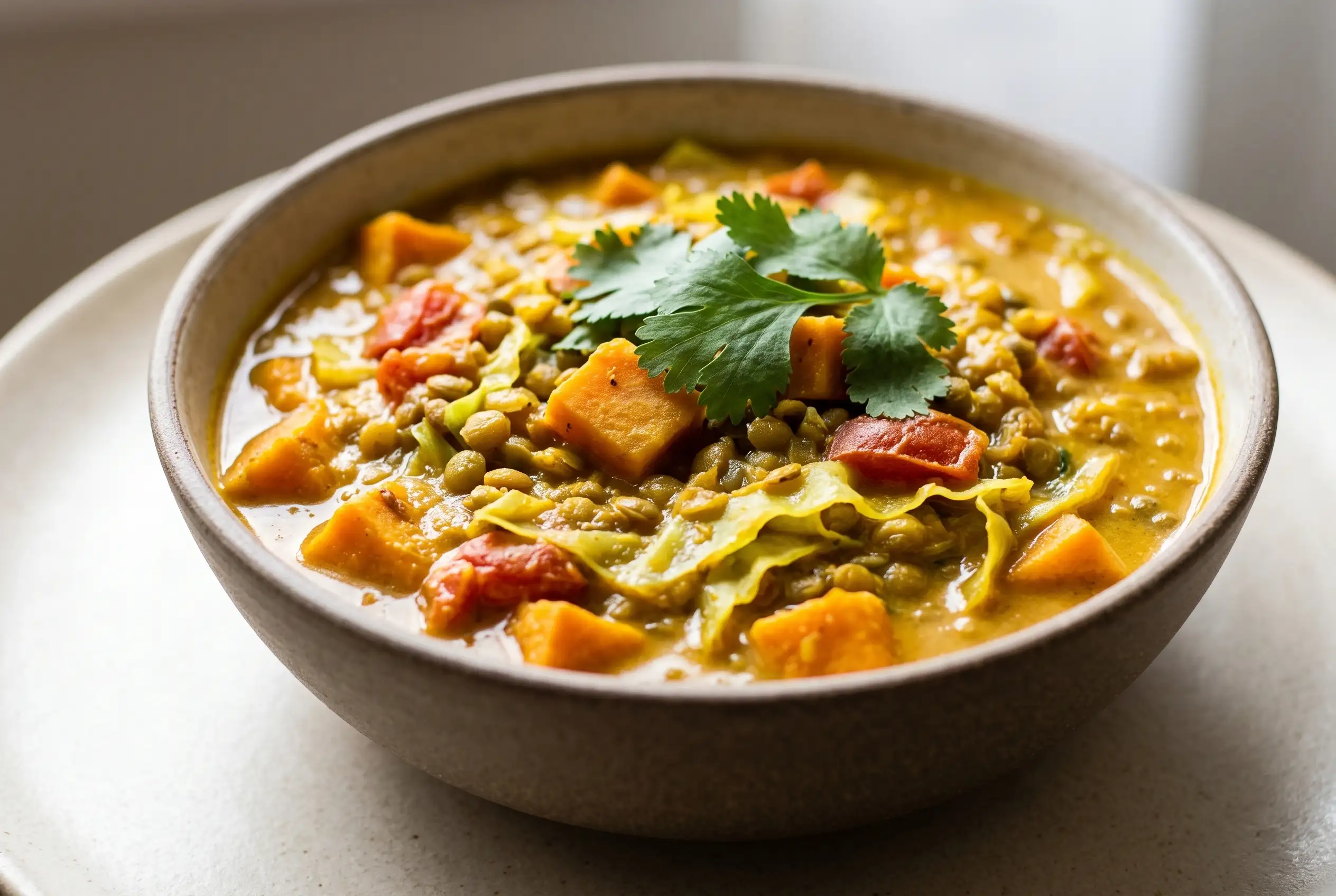
Thai sweet potatoes bring together tender sweet potatoes, earthy lentils, warming spices, and a creamy coconut finish in a bowl built around contrasting textures. The combination works because each element has a clear role: lentils create a hearty base, sweet potatoes add natural sweetness and softness, and sautéed cabbage introduces a savory vegetable layer.
The appeal of creamy Thai sweet potato lentils comes from how the ingredients change during cooking. The lentils and sweet potatoes simmer together until their textures become cohesive, while the skillet vegetables are cooked separately so their flavor remains noticeable after being folded into the pot.
Thai Sweet Potatoes Build Their Texture Around Lentils
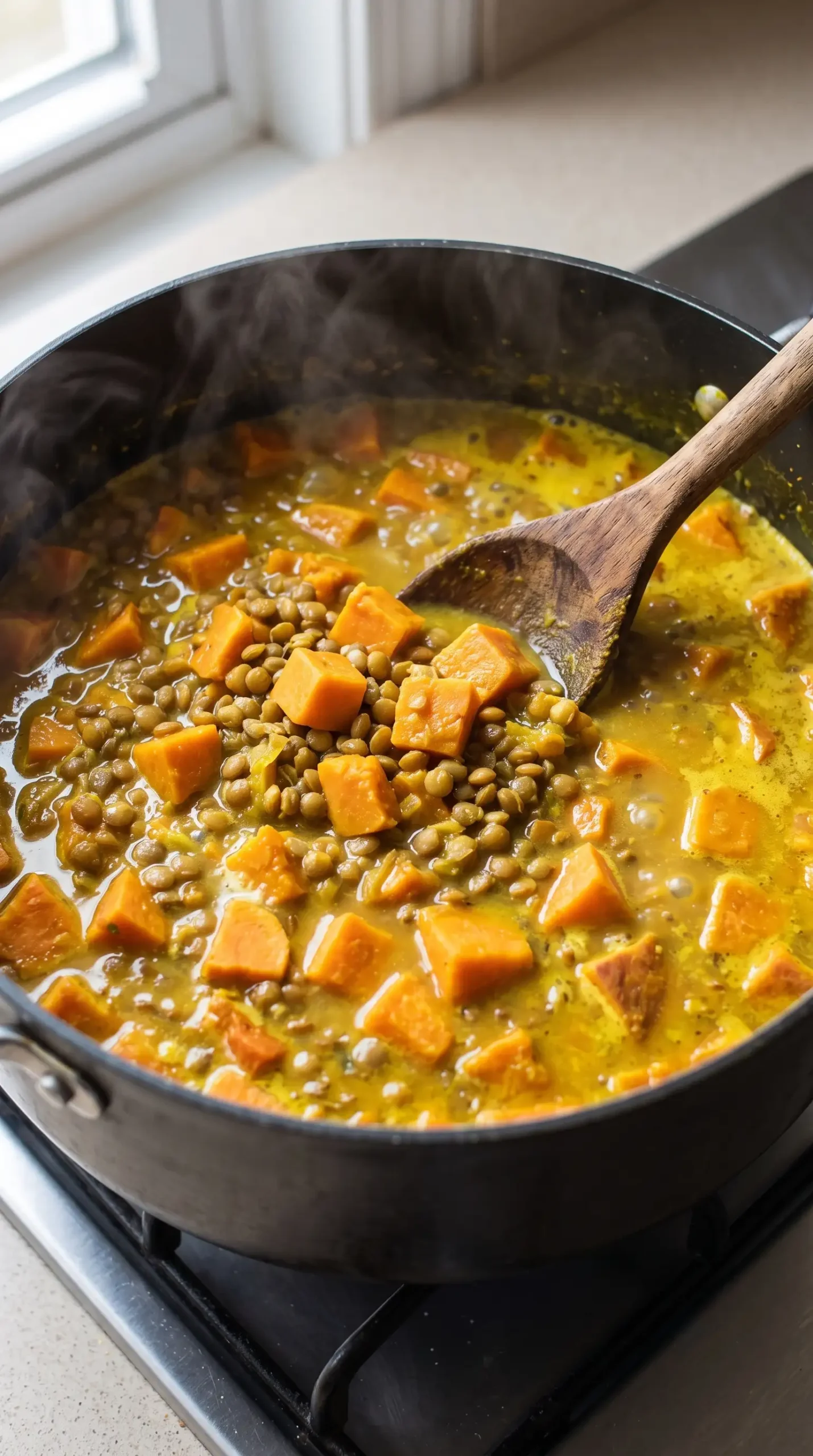
Thai sweet potatoes depend on careful texture balance because the dish contains ingredients that soften at different rates. The lentils need enough time in broth to become tender, while the diced sweet potatoes should become soft enough to blend into the creamy base without disappearing completely.
Cooking the lentils and sweet potatoes together allows their flavors to combine early. The broth carries the earthy taste of the lentils through the pot, while the sweet potatoes release their natural sweetness into the surrounding liquid. That creates the foundation for a sweet potato lentil curry with a rich, spoonable consistency.
Choosing when to stop cooking matters for the finished bowl. When the sweet potatoes are just tender, they provide small pieces that hold their shape while also contributing to the creamy texture created by the coconut milk added later.
Sweet Potato Choices Shape the Curry Base
Sweet potatoes with firm flesh work well here because they need to simmer alongside lentils without breaking apart too quickly. Keeping the skins on during preparation adds convenience and preserves the rustic character of the dish, while evenly sized pieces help the pot cook more consistently.
Turmeric Keeps Thai Sweet Potatoes Bright and Balanced
Turmeric plays an important role in Thai sweet potatoes because it contributes both flavor and the bright yellow color that defines the appearance of the finished dish. Without it, the curry base can look noticeably duller even though the other ingredients remain flavorful.
Coconut Milk Softens the Lentil Curry Finish
Coconut milk changes the character of the curry after the lentils, sweet potatoes, tomatoes, and vegetables have developed their flavors. The creamy addition smooths the sharper notes from tomatoes, ginger, and jalapeños while creating the texture expected from creamy Thai sweet potato lentils. A bowl of coconut milk lentil curry can highlight how legumes and coconut-based sauces create a satisfying texture when balanced with aromatic ingredients.
Regular coconut milk provides enough richness to coat the vegetables and lentils without requiring additional thickening because coconut milk’s looser texture works well in savory dishes like brothy curries. Stirring it in after the cabbage mixture joins the pot helps maintain the distinction between the creamy base and the cooked vegetables.
Fresh toppings also influence the finished bowl. Cilantro adds a fresh contrast against the warm spices and coconut richness, giving each serving a lighter finish alongside the deeper flavors in the curry.
| Ingredient component | Texture contribution | Flavor role |
|---|---|---|
| Lentils | Hearty, tender base | Earthy richness |
| Sweet potatoes | Soft pieces and creamy body | Natural sweetness |
| Cabbage mixture | Cooked vegetable contrast | Savory, aromatic depth |
Cabbage Creates Contrast in Thai Lentil Sweet Potato Recipe
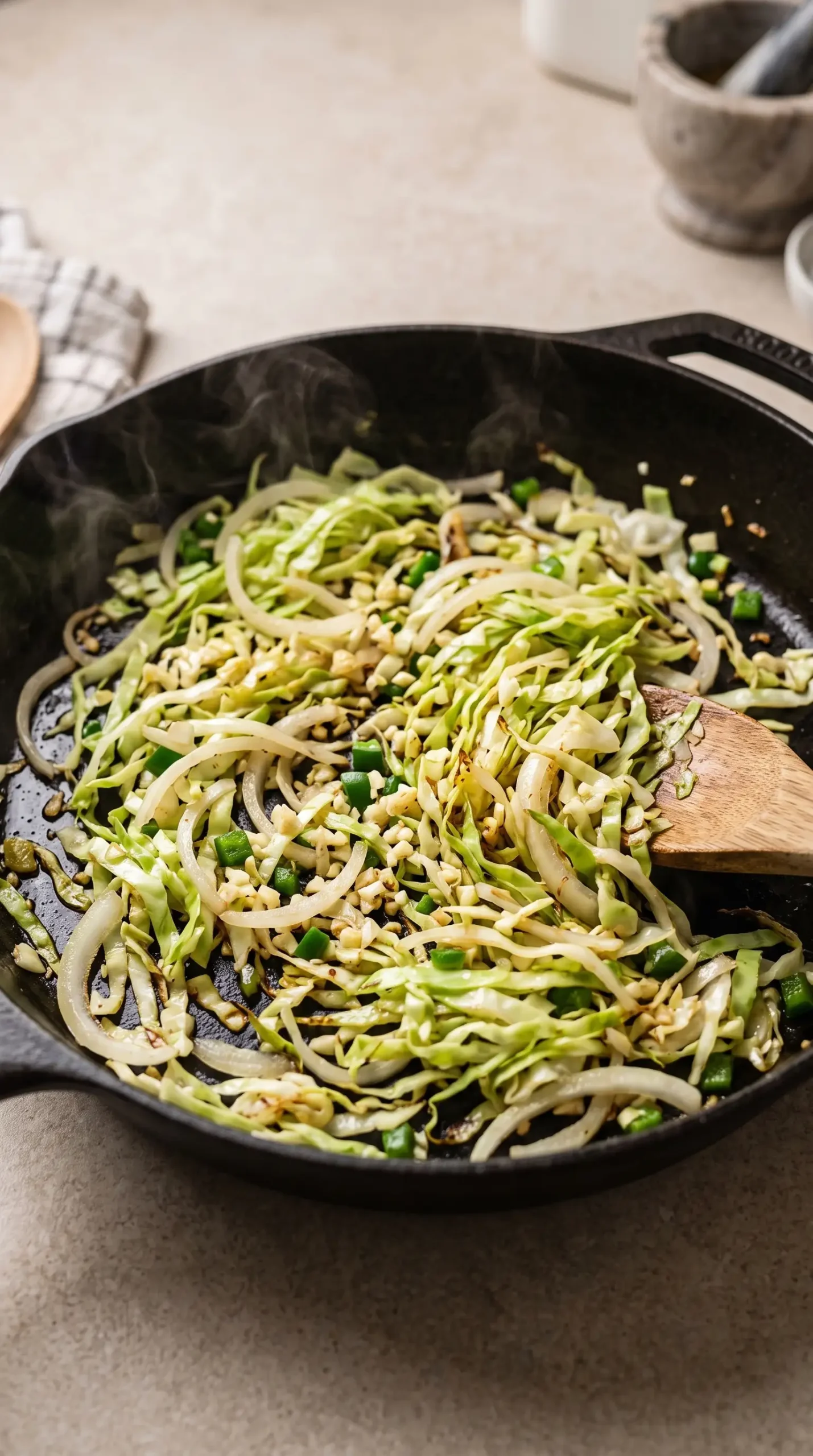
Cabbage gives this Thai lentil sweet potato recipe a different texture from the simmered ingredients. Cooking it with garlic, onion, jalapeños, oil, and butter allows it to become tender while keeping a vegetable presence that stands apart from the lentil mixture.
Cooking Control Protects Sweet Potato Lentil Curry Texture
Successful sweet potato lentil curry depends on controlling when each group of ingredients enters the dish. The lentils and sweet potatoes need simmering time to soften, but the cabbage and aromatics deserve separate attention so their flavors remain distinct.
Temperature choices also affect the result. A gentle simmer helps the lentils cook evenly and allows the sweet potatoes to soften without excessive agitation. A hot skillet, meanwhile, helps the garlic, onion, and jalapeños release their aroma before the cabbage is added.
Several visual cues help guide cooking decisions:
- Lentil texture: The lentils should become tender enough to blend naturally with the broth.
- Sweet potato pieces: The cubes should be soft but still recognizable in the bowl.
- Cabbage finish: The shredded vegetables should become cooked through before being stirred into the curry.
Thai Sweet Potatoes Avoid These Common Mistakes
Thai sweet potatoes can lose their appeal when the textures are not protected during cooking. Adding all vegetables at the same stage can make the cabbage too soft before the lentils and sweet potatoes are ready, leaving less contrast in the finished meal.
Another common mistake is skipping turmeric. The flavor profile changes without this spice, and the bright color associated with the dish becomes muted. Using the measured turmeric amount helps maintain the balance between appearance and taste.
Overcooking the sweet potatoes can also change the bowl significantly. If the pieces completely dissolve, the curry may become thicker but lose the small pieces that make each serving more interesting.
Fire Roasted Tomatoes Deepen the Curry Flavor
Fire roasted tomatoes add a smoky tomato note that complements the coconut milk and spices. Their flavor becomes integrated after simmering with the lentils and sweet potatoes, creating a deeper base for the Thai lentil sweet potato recipe.
Serving Ideas Highlight Creamy Thai Sweet Potato Lentils
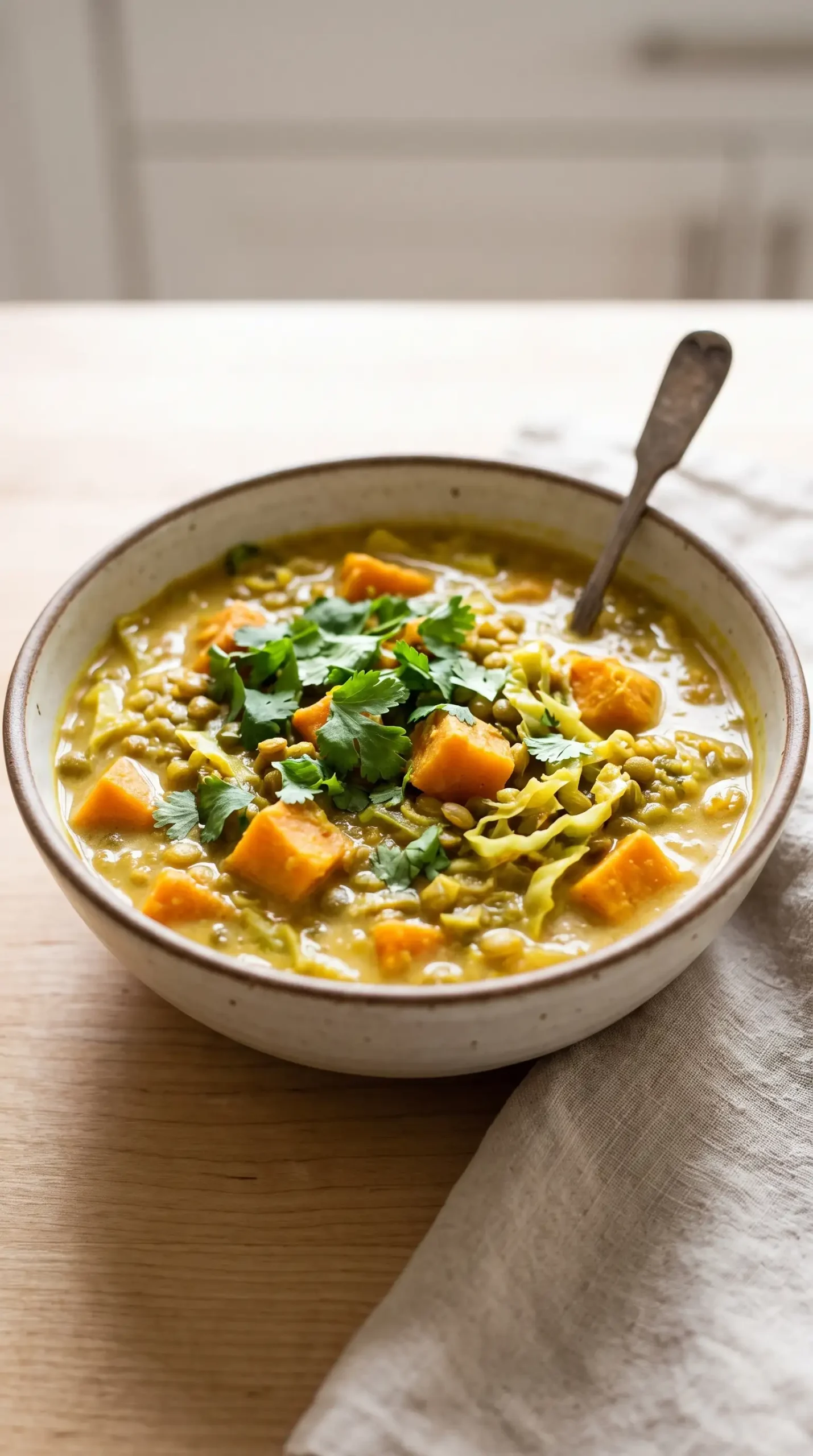
Creamy Thai sweet potato lentils can be served as a complete bowl because the combination of lentils, vegetables, and coconut milk creates a satisfying texture. Cilantro on top adds freshness and keeps the rich curry base from feeling heavy.
Rice can be a natural pairing when a larger meal is desired because it provides a simple surface for the creamy curry to sit alongside. The soft grains complement the tender sweet potatoes while allowing the flavors of the broth and vegetables to remain prominent.
Additional serving choices should focus on maintaining the balance already built into the dish. A topping or side that adds freshness works especially well with the warm spices and coconut finish.
Storage Decisions Preserve the Lentil Texture
Stored portions of the curry can continue to develop flavor as the lentils, sweet potatoes, and spices sit together. Gentle reheating helps maintain the creamy consistency while keeping the vegetables intact.
Variations Keep the Curry Flexible
Small adjustments can change the character of the dish while keeping its core structure. Different levels of jalapeño can change the heat, and extra cilantro can increase the fresh herbal finish without altering the creamy lentil base.
Lentil and Sweet Potato Balance Defines the Bowl
The relationship between lentils and sweet potatoes determines the identity of the dish. Lentils provide a savory foundation, while sweet potatoes bring a naturally sweet element that works with turmeric, tomatoes, and coconut milk.
Many vegetarian curry dishes rely on one dominant texture, but this preparation creates several layers through separate cooking choices. The simmered ingredients create creaminess, while the cabbage mixture adds a softer vegetable bite and the cilantro brings brightness.
The thai lentil sweet potato recipe approach works because the ingredients are combined at the right moments. Each component contributes something different, and the finished bowl keeps those differences visible instead of blending everything into one uniform texture.
Cilantro Finishes the Warm Curry Profile
Cilantro provides the fresh finishing note that completes the curry. Added after cooking, it contrasts with the coconut milk, turmeric, and roasted tomato flavors while highlighting the vegetables underneath.
Thai Sweet Potatoes Create a Balanced Comforting Curry
Thai sweet potatoes become most successful when their natural sweetness is matched with savory lentils, aromatic vegetables, and a creamy coconut finish. The cooking decisions throughout the dish support that balance, from preserving sweet potato pieces to separately developing the cabbage mixture.
The curry’s strongest quality comes from the way texture and flavor meet in one bowl. Tender lentils, soft sweet potatoes, and fresh cilantro create a dish where every element remains recognizable while contributing to a cohesive meal.
Common Questions About Creamy Thai Sweet Potato Lentils
Can I use another type of lentil?
The recipe works best with lentils that soften during simmering because their texture helps create the hearty base. Other varieties may change the cooking time and the final consistency, so the texture should guide any substitution.
Should sweet potatoes be peeled before cooking?
The sweet potatoes can be cooked with the peel left on as written. The skin adds a rustic texture, but peeling is also an option if a smoother presentation is preferred.
How can I adjust the heat level?
The jalapeños control much of the heat in the dish. Removing more of the pepper’s interior or using less jalapeño can create a milder curry while keeping the other flavors unchanged.
Why does turmeric matter in this curry?
Turmeric contributes a distinct warm flavor and helps create the bright yellow color that makes the curry visually appealing. Leaving it out changes both the appearance and part of the seasoning balance.
What makes the curry creamy without blending?
The creamy texture comes from the combination of tender lentils, softened sweet potatoes, and coconut milk stirred into the finished mixture. The ingredients naturally create body as they cook together.
Thai Sweet Potatoes and Lentils with Creamy Coconut
Ingredients
Method
- Add the lentils, vegetable broth, and diced sweet potatoes to a large pot. Bring the mixture to a boil, then reduce the heat and simmer for 30-45 minutes until the lentils and sweet potatoes are just tender.
- Stir the turmeric, fire roasted tomatoes, and ginger into the pot. Continue cooking for another 10 minutes.
- Warm the oil and butter in a large skillet. Add the garlic, onion, and jalapenos, then sauté for 2-3 minutes.
- Add the shredded cabbage to the skillet and cook for 10 minutes until the cabbage is cooked through.
- Transfer the cabbage mixture into the lentil and sweet potato pot. Stir in the coconut milk and finish with cilantro on top.