
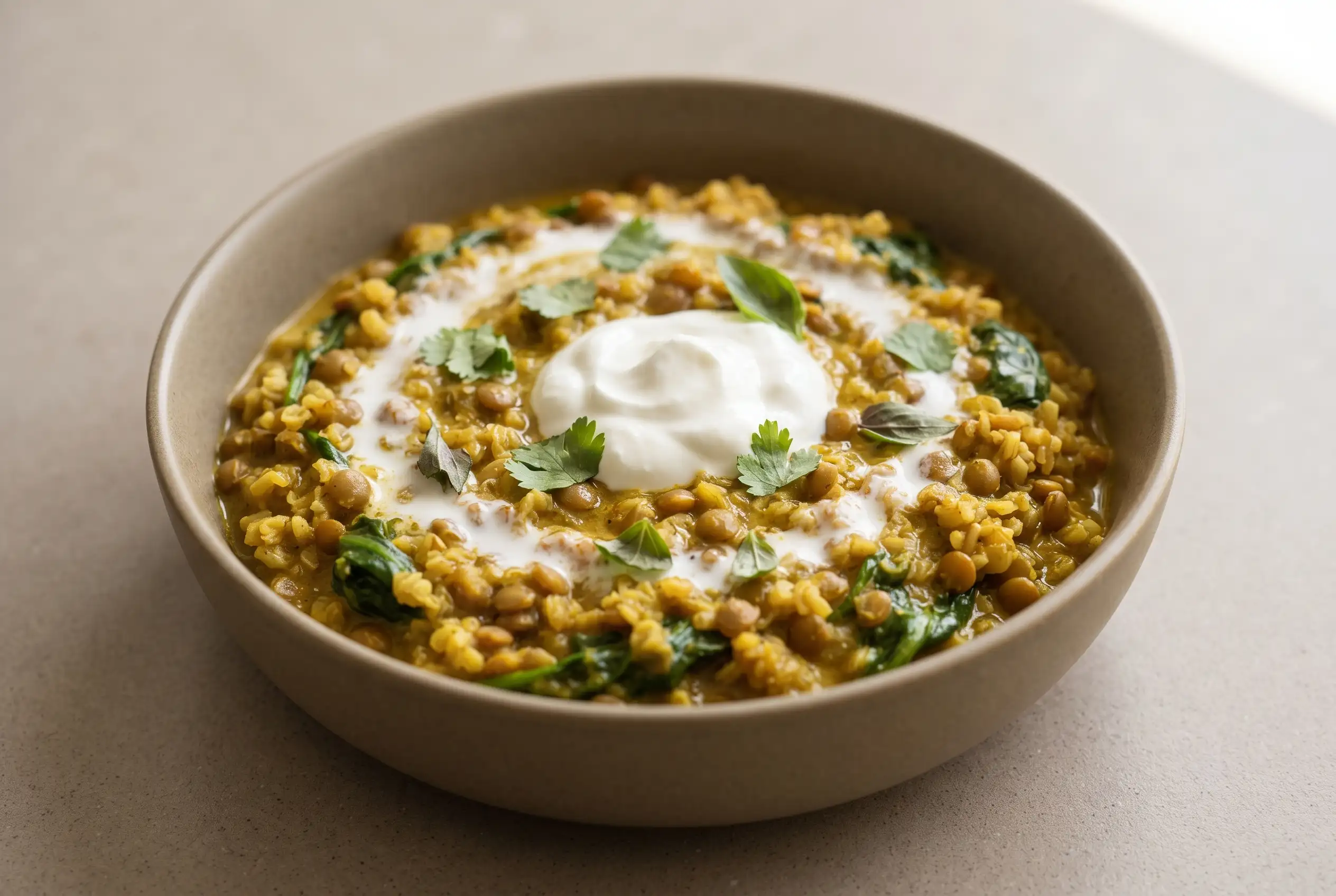
Coconut Green Curry Lentils Create a Creamy Grain-and-Legume Balance
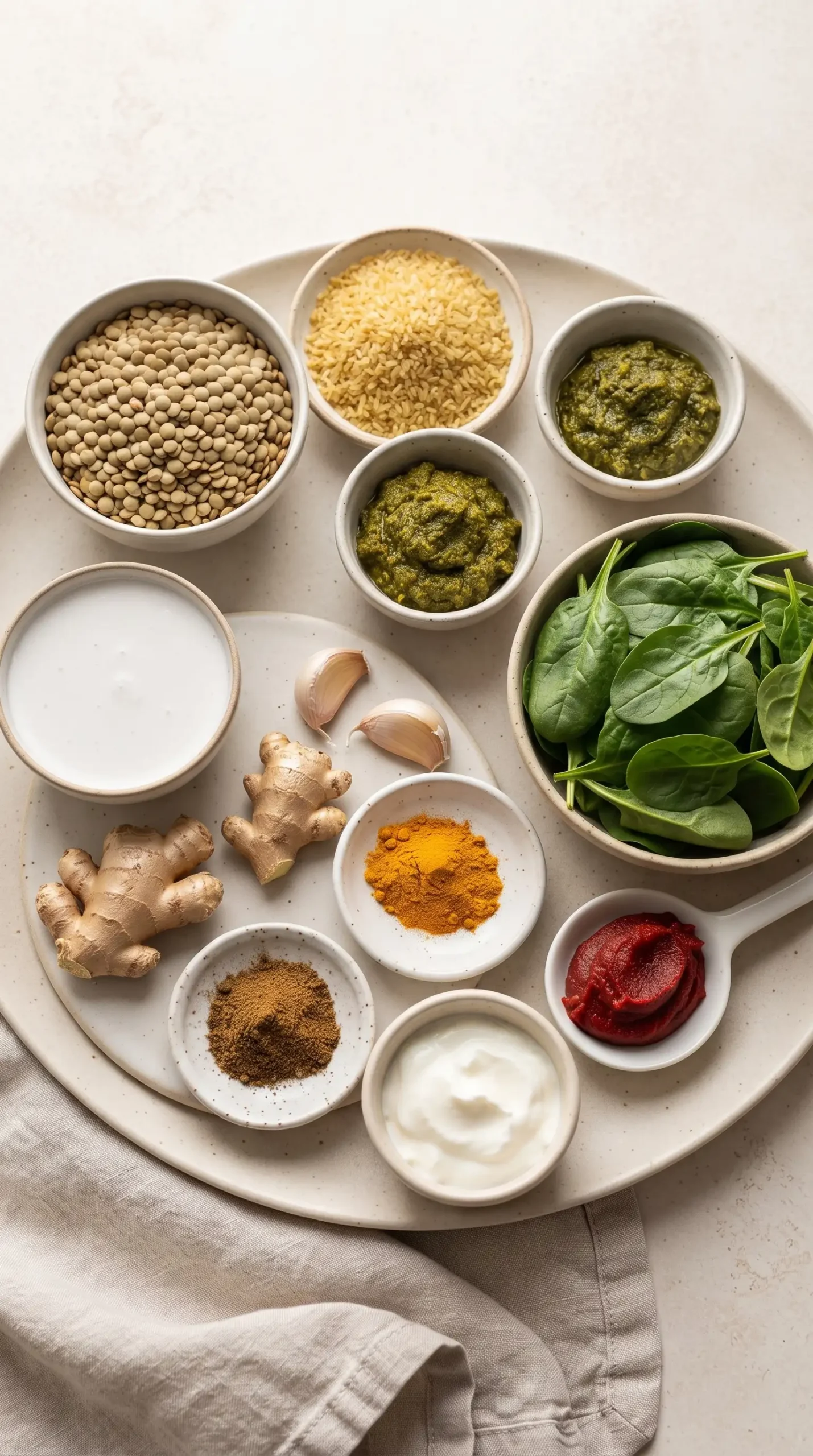
Coconut green curry lentils combine tender lentils, bulgur, coconut milk, and aromatic curry flavors into a hearty bowl that feels satisfying while staying centered on simple pantry ingredients. The combination works because the lentils provide structure, the bulgur adds a distinct texture, and the creamy curry base ties everything together without requiring a long ingredient list.
Unlike many lentil dishes that rely on a single dominant flavor, this version develops layers through green curry paste, turmeric, garam masala, garlic, and ginger. Each element is introduced at a different stage, allowing the dish to move from a savory, spiced base into a smooth finish with coconut richness.
Green curry lentils with coconut milk also show how grains and legumes can work together in one saucepan. Bulgur absorbs the surrounding flavors while helping create a thicker consistency, making each serving feel more substantial than a simple lentil preparation.
Green Curry Paste and Coconut Milk Shape the Dish’s Core Flavor
The most important ingredient decisions in coconut green curry lentils come from balancing the curry paste, coconut milk, and supporting seasonings. Green curry paste brings the recognizable curry character, while turmeric and garam masala deepen the flavor profile without changing the dish’s creamy texture. Vegetable-based curries such as sweet potato curry with coconut milk show how coconut milk can support a rich sauce while keeping the main ingredients prominent.
Coconut milk enters after the lentils and bulgur have absorbed most of their cooking liquid. This timing allows the coconut flavor to remain noticeable while creating the thick consistency that defines the finished dish. Adding it during the later stage also helps the creamy element blend with the tomato paste and butter mixture.
Tomato paste plays a small but important role by adding concentrated savory flavor and helping the mixture become slightly thicker. Garlic, ginger, and spices work around these ingredients, creating a balanced base that supports the curry paste instead of overwhelming it.
| Ingredient choice | Role in the dish | Cooking consideration |
|---|---|---|
| Green curry paste | Provides curry flavor and seasoning | Stir it into the cooking liquid early so it coats the lentils and bulgur |
| Coconut milk | Adds creaminess and richness | Add after the grains and lentils have absorbed most liquid |
| Tomato paste | Builds savory depth and thickness | Cook briefly into the mixture before adding coconut milk |
Bulgur Changes the Texture of Coconut Green Curry Lentils
Bulgur gives coconut green curry lentils a texture that sits between a traditional lentil stew and a grain bowl. The small grains absorb the seasoned liquid while maintaining enough structure to keep the dish from becoming one-dimensional.
Rinsed lentils and bulgur cook together, which allows both ingredients to develop a unified flavor. Watching the liquid level during this stage matters because the mixture should become thick as the grains and legumes absorb moisture.
- Lentil texture: Aim for beans that are tender but still recognizable within the creamy sauce.
- Bulgur texture: Look for grains that have absorbed flavor while contributing gentle chewiness.
- Final consistency: The mixture should be thick enough to hold together while remaining easy to spoon.
Spinach and Ginger Bring Freshness at the Finish
Fresh spinach and minced ginger are added after the creamy curry base has developed, creating a bright finish that contrasts with the deeper flavors of coconut milk and spices. The spinach can be stirred in until barely wilted or added fresh when serving.
Cooking Control Keeps Coconut Green Curry Lentils Thick and Creamy
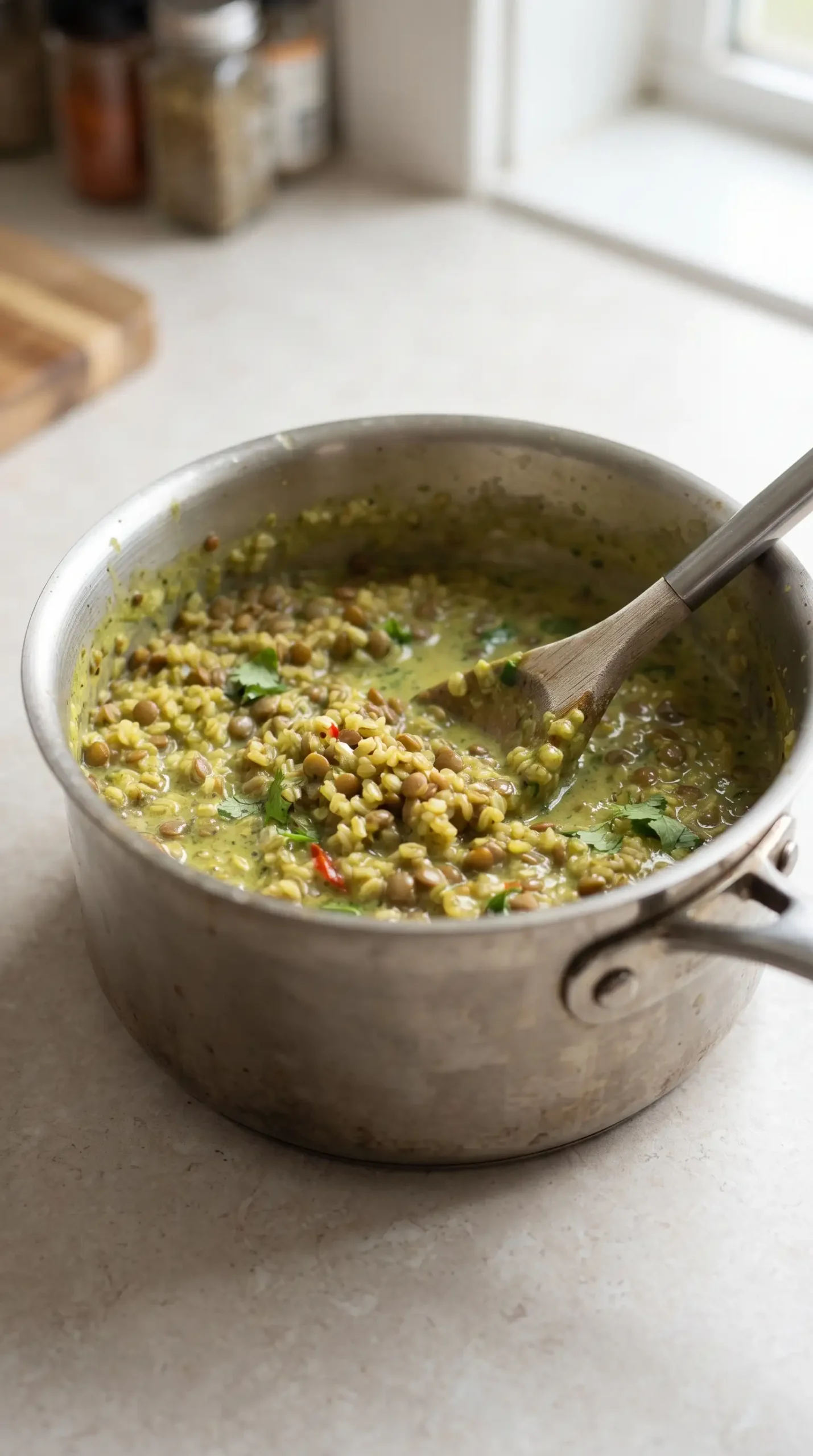
The biggest execution choice for coconut green curry lentils is managing moisture throughout cooking. Lentils and bulgur need enough liquid to soften, but the finished dish depends on allowing that liquid to be absorbed before the creamy ingredients are fully incorporated.
Maintaining moderate heat after the initial simmer helps the ingredients cook evenly. If the mixture absorbs the available liquid before the lentils are tender, additional water or broth can be incorporated during cooking to keep the texture on track.
Once the lentils and bulgur are mostly cooked, the focus shifts from hydration to texture. Stirring in tomato paste, butter, garlic, and garam masala allows those flavors to combine before coconut milk creates the smooth sauce.
Several visual cues help guide the process:
- Early simmer: The lentils and bulgur should gradually soften while absorbing the curry-seasoned liquid.
- Middle stage: The mixture should become thicker as the grains take on moisture.
- Finishing stage: Coconut milk should create a creamy consistency without leaving excess liquid.
Serving Choices Highlight the Curry’s Comforting Texture
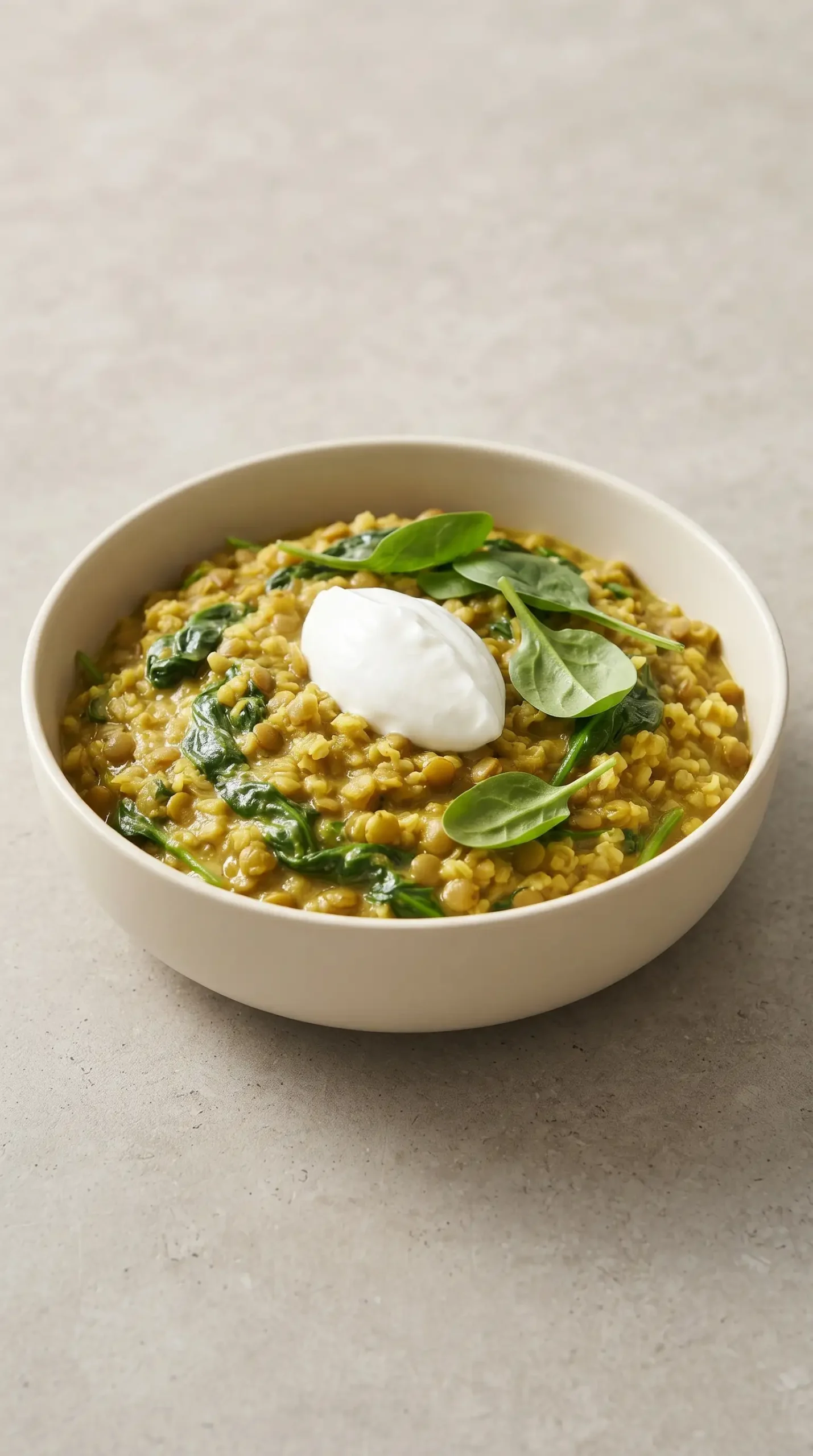
Coconut green curry lentils work well as a complete bowl topped with Greek yogurt, but the texture also makes the dish adaptable for different serving styles. A spoonful of yogurt adds contrast to the warm curry flavors, while fresh spinach can create a brighter presentation.
Vegan Coconut Green Curry Lentils Adapt Easily Without Dairy
The dish can become vegan coconut green curry lentils by omitting the butter and Greek yogurt. The coconut milk still provides the creamy element, allowing the curry flavors and lentil texture to remain central.
Coconut Green Curry Lentils Mistakes That Affect Texture and Flavor
Small preparation choices can change the final result of coconut green curry lentils. Understanding common problems helps protect the creamy consistency and balanced flavor created by the ingredients.
One common issue is adding coconut milk before the lentils and bulgur have absorbed enough cooking liquid. The mixture may become creamy, but the grains and legumes may not reach the intended tenderness if the earlier cooking stage is rushed.
Another mistake is skipping the brief cooking time after tomato paste, butter, garlic, and garam masala are added. Those ingredients need a chance to combine with the cooked lentils before the coconut milk creates the finishing texture.
Other avoidable problems include:
- Overlooking liquid levels: Add the remaining cooking liquid when the mixture absorbs it too quickly during simmering.
- Adding spinach too early: Stir spinach in near the end so it keeps a fresher texture.
- Ignoring thickness: Continue cooking gently if the mixture has not reached a creamy consistency.
Storage and Reheating Keep the Lentil Texture Balanced
Cooked coconut green curry lentils can be stored and reheated while keeping their hearty texture. Because lentils and bulgur continue to absorb moisture over time, a gentle reheating approach helps restore the creamy consistency.
When reheating leftovers, stir thoroughly and adjust the texture if needed with a small amount of water or broth. This helps loosen the mixture while keeping the curry flavors concentrated.
The dish is also well suited to preparing ahead because the flavors continue to blend after cooking. Fresh toppings such as Greek yogurt or spinach can be added separately when serving again.
Pairings That Complete a Coconut Curry Lentil Meal
Simple additions can make coconut green curry lentils feel like a more complete meal. Fresh greens, cooling toppings, or additional vegetables can complement the warm curry base without competing with its creamy texture.
Coconut Green Curry Lentils Fit Flexible Meal Styles
Beyond a single serving approach, coconut green curry lentils can be used as a filling centerpiece for vegetarian meals. The combination of legumes, grains, and coconut milk creates a naturally substantial dish that does not depend on meat for texture.
Coconut Green Curry Lentils Become a Reliable Weeknight Bowl
The balanced combination of lentils, bulgur, curry paste, and coconut milk makes this dish a practical choice when a flavorful meal needs to come together from familiar ingredients.
Coconut Green Curry Lentils Deliver Creamy Flavor Through Careful Timing
Coconut green curry lentils succeed because each cooking stage protects a different quality: the lentils and bulgur need time to absorb flavor, the spices need a moment to blend, and the coconut milk needs space to create the creamy finish. Keeping those transitions in mind creates a dish with structure, warmth, and a balanced texture.
Coconut Green Curry Lentils Questions About Texture and Variations
Can coconut green curry lentils be made without butter?
Yes. Removing the butter creates a vegan version while leaving the coconut milk, curry paste, spices, lentils, bulgur, and vegetables as the foundation of the dish.
How can I make the lentils less thick after cooking?
Stir in a small amount of water or broth while reheating or warming the dish until the consistency becomes easier to spoon.
What topping works best with coconut green curry lentils?
Greek yogurt provides a cool contrast to the warm curry flavors, while fresh spinach added at serving time can bring extra color and freshness.
Can I use broth instead of water for cooking the lentils?
Yes. Vegetable broth can be used as the cooking liquid and may add additional savory flavor while the lentils and bulgur soften.
Why does coconut milk get added later in the cooking process?
Coconut milk is added later so the lentils and bulgur can first absorb their cooking liquid and reach the desired texture before the creamy finishing stage begins.
Coconut Green Curry Lentils with Bulgur and Coconut Milk
Ingredients
Method
- Combine lentils, bulgur, 2 cups water, curry paste, and turmeric in a medium saucepan. Bring the mixture to a boil, then simmer for 15-20 minutes until the lentils are mostly tender. Add the remaining 1/2 cup water during cooking if the grains and lentils absorb all the liquid before they finish cooking.
- Keep the saucepan over medium or low heat and mix in the tomato paste until the mixture thickens slightly. Stir in butter, garlic, and garam masala until the butter has melted and the ingredients are combined.
- Pour in the coconut milk and simmer for another 5-10 minutes until the mixture becomes thick and creamy.
- Remove the saucepan from the heat and stir in the ginger and spinach until the spinach is just wilted. Serve with fresh spinach added just before serving if desired.