
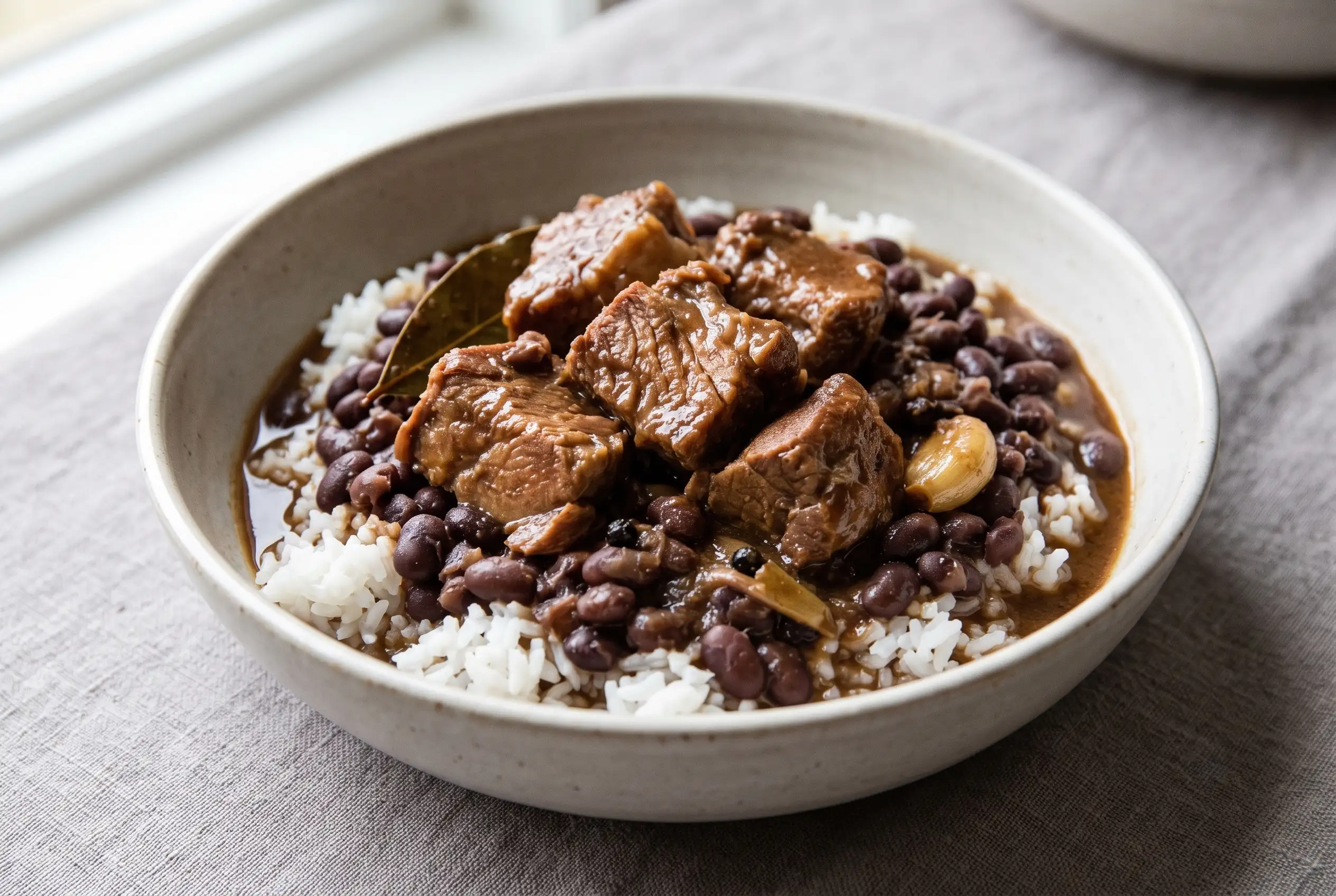
Pork adobo brings together tender pork, savory Filipino soy sauce, garlic, vinegar, and slow-cooked beans in a crockpot pork adobo that turns simple ingredients into a deeply seasoned meal. Pork adobo with black beans works because the long cooking time gives the pork shoulder a chance to soften while the beans absorb the surrounding sauce and aromatics. The result is a saucy dish with a balance of salty, tangy, and gently sweet flavors that pairs naturally with rice.
Crockpot Pork Adobo Builds Deep Flavor Around Slow Cooking
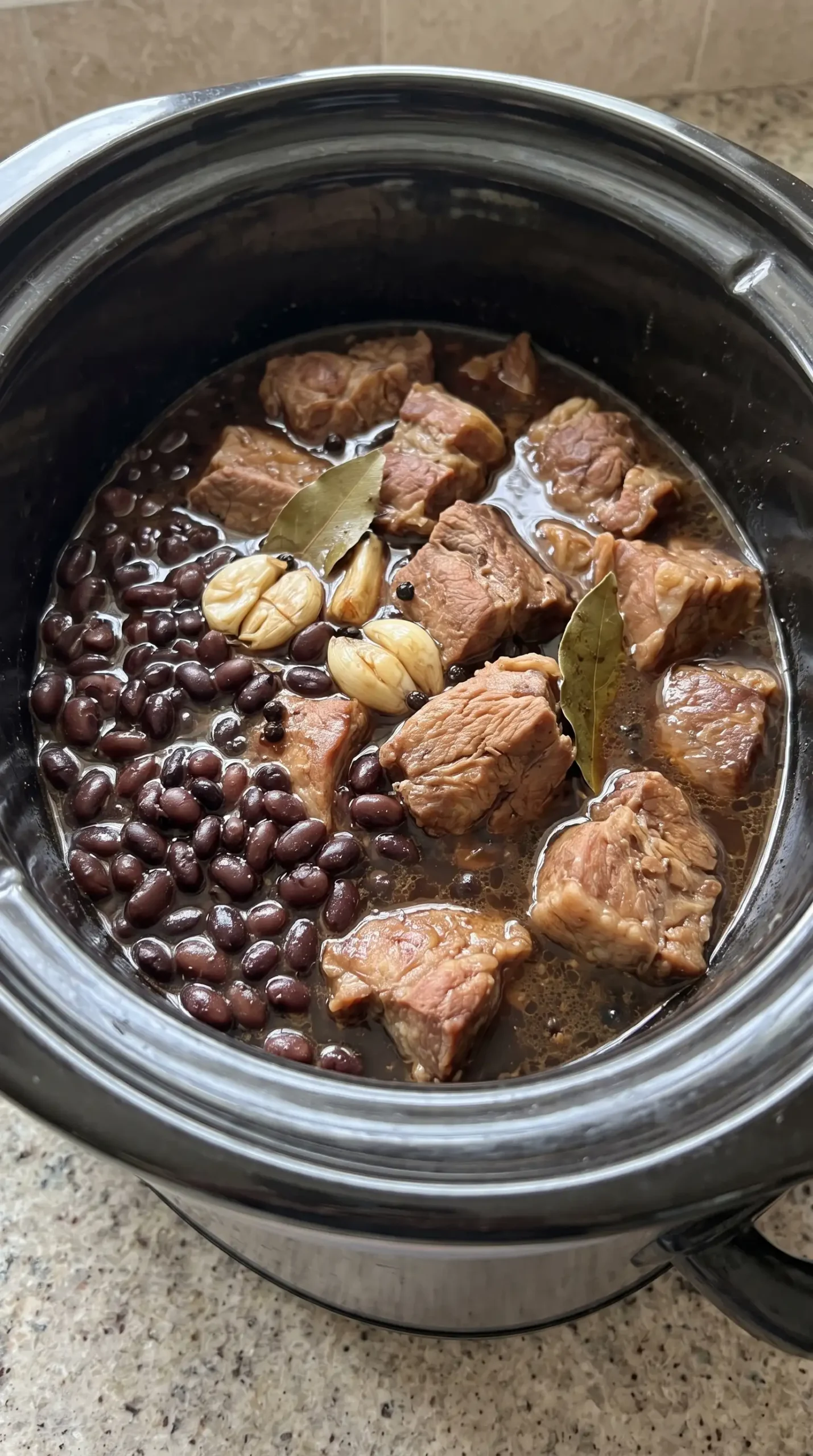
The slow cooker changes the texture of pork adobo by allowing the pork shoulder to gradually release richness into the cooking liquid. As the meat softens, the sauce becomes more rounded, carrying the flavors of soy sauce, garlic, bay leaves, and peppercorns through the entire dish.
Unlike quick stovetop preparations, crockpot pork adobo gives the beans and pork time to share the same seasoned environment. The black beans become tender while absorbing the savory liquid, creating a hearty texture that makes each serving feel complete.
The combination of pork and beans also creates a practical meal structure. The pork provides a tender centerpiece, while the beans help stretch the dish and create a satisfying base for spooning over rice or enjoying as a bowl.
Filipino Soy Sauce Shapes the Character of Pork Adobo
The soy sauce choice has a major effect on pork adobo because the seasoning needs to support the vinegar, garlic, and slow-cooked pork without overpowering them. A Filipino soy sauce such as Silver Swan provides the style of flavor intended for this dish, while heavier soy sauces can make the finished sauce feel too intense.
Black Beans and Pork Create a Balanced Adobo Texture
Dry black beans contribute more than bulk to pork adobo with black beans. Their texture changes during slow cooking, moving from firm soaked beans into a soft, creamy element that blends with the pork and sauce.
Soaking the beans before cooking helps them hydrate evenly and allows them to reach a tender texture during the slow cooker process. Rinsing and soaking also prepares the beans to absorb the seasoned liquid surrounding them.
The pork shoulder brings another layer of texture because its natural richness works with the beans instead of competing with them. Cutting the cooked pork into smaller pieces before serving allows the sauce and beans to coat more surface area.
Marinating Choices Set Up Tender Pork Adobo
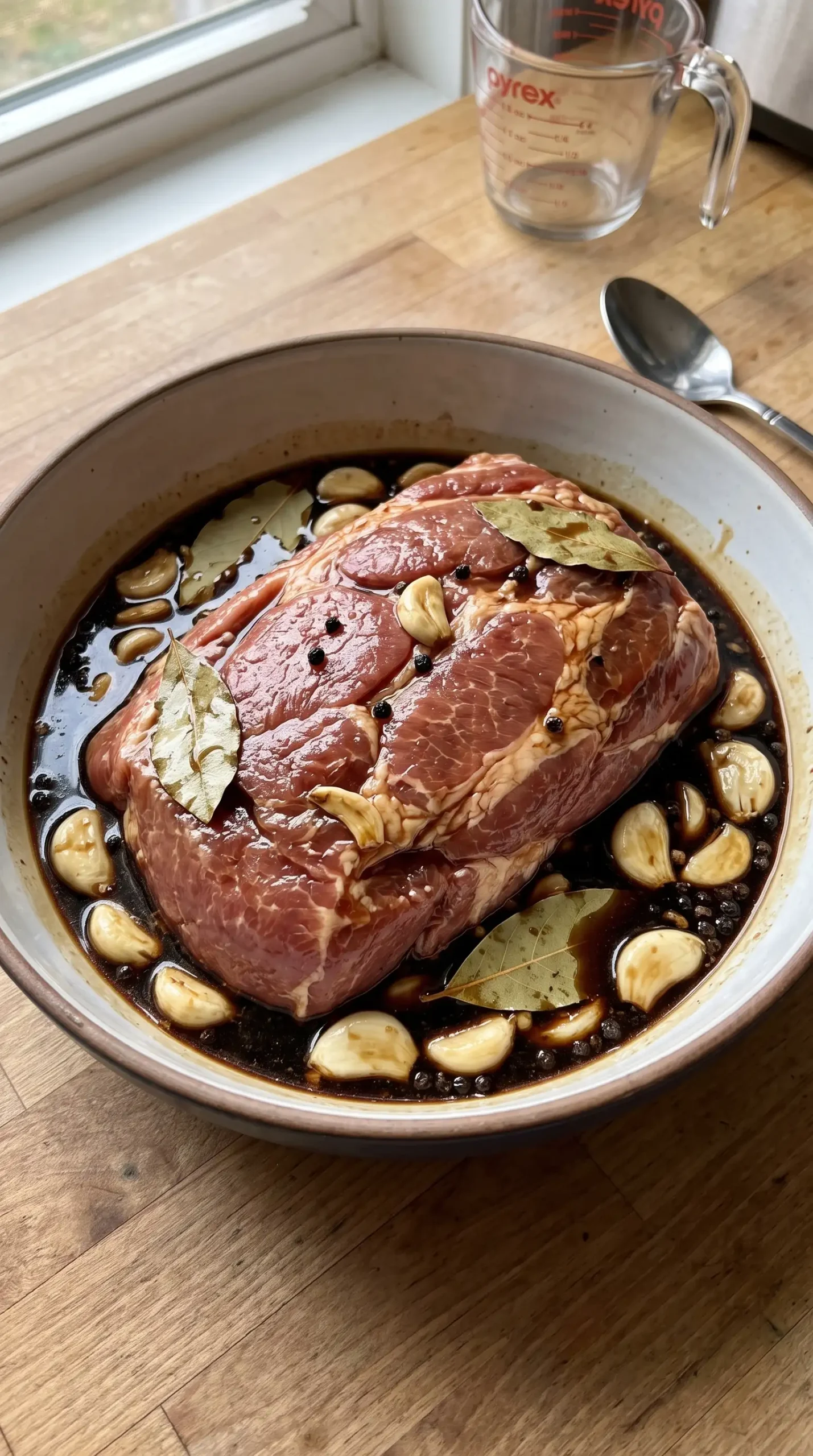
The overnight marinade creates an early flavor foundation for the pork before it reaches the crockpot. Keeping the pork whole during marinating can help maintain moisture, while cutting it into pieces afterward allows the slow cooker liquid to surround the meat more completely.
Crockpot Control Keeps the Sauce Rich and the Pork Tender
Pork shoulder benefits from gentle, extended cooking because the cut has enough richness to become tender while maintaining a satisfying texture, a principle shown in Crockpot Carnitas with Pork Shoulder and Citrus Juices.
The cooking liquid is an important part of the finished dish. A saucy consistency is useful because the pork and beans continue to sit in that flavorful mixture, and the extra liquid can be spooned over rice when serving.
Several details help protect that balance:
- Liquid placement: Stir once after adding the cooking ingredients so the beans have enough contact with the seasoned mixture.
- Vinegar timing: Add the vinegar near the end of cooking so its bright acidity remains noticeable in the finished adobo.
- Resting period: Allowing the crockpot contents to cool briefly after cooking helps the flavors settle before serving.
Pork Adobo with Black Beans Mistakes That Ruin the Texture
Even a simple slow cooker meal can lose its balance when a few key choices are overlooked. Pork adobo with black beans depends on proper seasoning, bean preparation, and attention to the final sauce consistency.
One common mistake is using a soy sauce that overwhelms the other flavors. A very strong soy sauce can dominate the garlic, vinegar, and pork, making the finished dish taste heavier than intended. Choosing a Filipino-style soy sauce or a lighter alternative keeps the seasoning more balanced.
Another problem comes from skipping the bean soak when using dry beans. The beans may not reach the soft texture needed for the dish, leaving the pork tender while the surrounding mixture feels uneven.
Proper preparation matters because hydration affects how evenly dry beans soften during cooking. Rinsing and soaking dry beans before the crockpot process helps them cook more consistently and develop the tender texture needed for this adobo bowl.
Vinegar Timing Preserves the Adobo Finish
Vinegar gives filipino pork adobo its recognizable contrast by adding brightness to the rich pork and savory sauce. Adding it during the final stage keeps the tangy character clear while allowing the slow-cooked flavors to remain rounded.
Serving Ideas Highlight the Saucy Black Bean Mixture
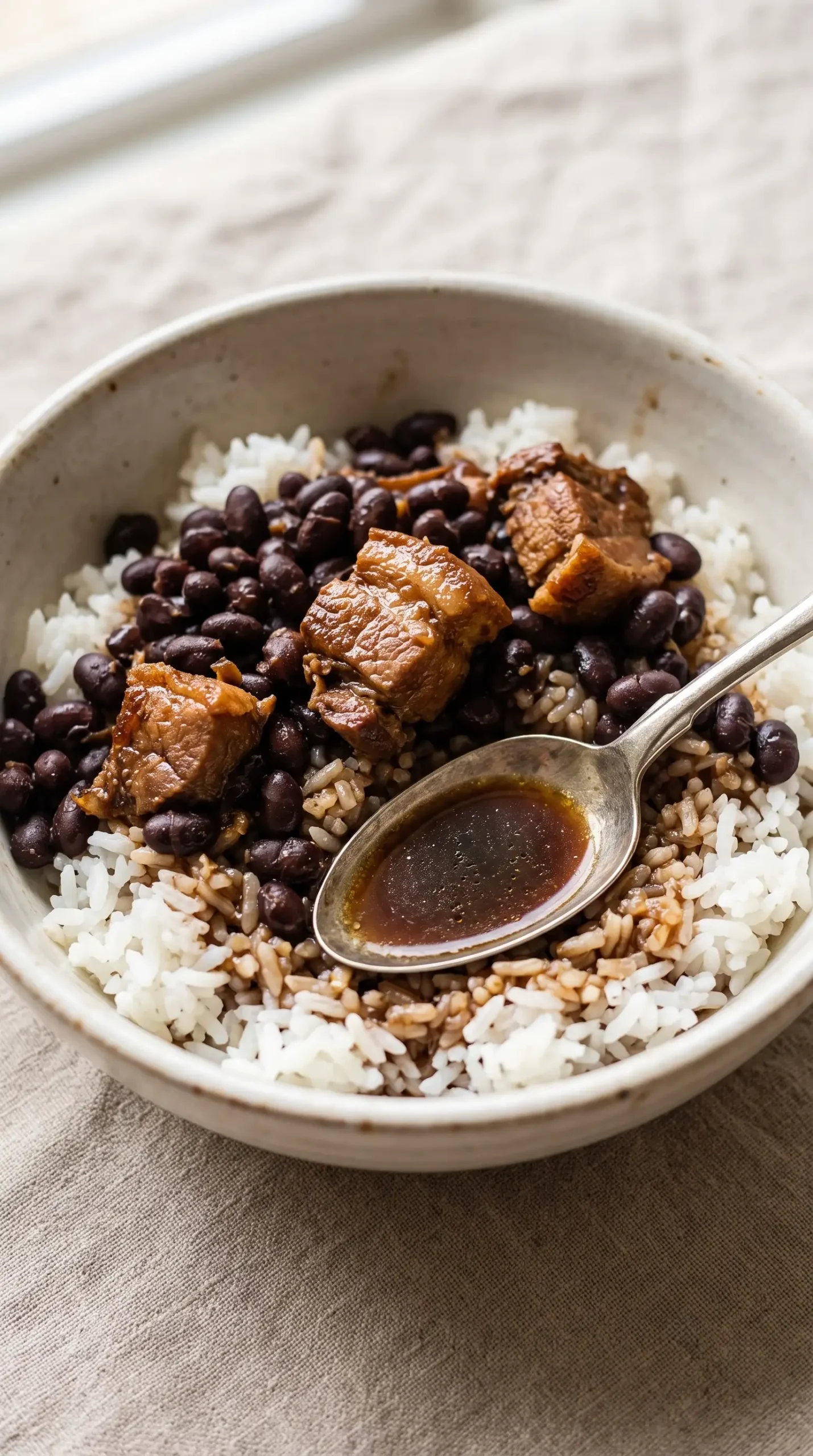
The rich sauce makes pork adobo especially suited for serving over warm rice, where the extra cooking liquid can be absorbed into every portion. The beans and pork create a filling combination that works well as a complete meal without needing many additions.
Leftover Handling Keeps Pork Adobo Ready for Later Meals
The saucy nature of pork adobo helps maintain its texture after cooking because the pork and beans remain surrounded by seasoned liquid. Keeping that sauce with the leftovers helps prevent the meat from becoming dry when reheated.
Stored portions can be used in different ways beyond the first serving. The pork and beans can be spooned over fresh rice, used as a hearty filling, or reheated gently when a quick meal is needed.
When reheating, warm the mixture gradually and include some of the reserved sauce with each portion. The liquid carries the seasoning and helps the pork remain tender as it heats.
Garlic, Bay Leaves, and Peppercorns Guide the Savory Base
The aromatics create the background flavor that defines this style of pork adobo. Whole smashed garlic cloves release flavor slowly throughout cooking, while bay leaves and peppercorns add a deeper savory character without requiring a complicated spice mixture.
Using whole aromatics also makes the final dish easier to manage. The flavors develop during the long cooking process, and the larger pieces can be identified and removed or left aside when serving.
The simplicity of these seasonings allows the pork, beans, and sauce to remain the focus. Each aromatic supports the dish’s traditional flavor direction while fitting naturally into the slow cooker format.
Slow-Cooked Pork Adobo with Black Beans Brings Everything Together
The tender pork, softened beans, and balanced sauce define what makes this crockpot pork adobo successful. The most important cooking judgment is keeping the flavors layered: savory soy sauce, gentle sweetness, rich pork, and late-added vinegar all need room to be recognized.
A well-prepared pork adobo with black beans finishes with a texture that is both hearty and saucy. The slow cooker creates the environment where the pork becomes tender, the beans absorb flavor, and the cooking liquid becomes the element that ties every serving together.
Pork Adobo Questions About Beans, Flavor, and Texture
Can pork adobo with black beans use canned beans?
Canned black beans can replace dry beans, but they should be added near the end of cooking so they do not become overly soft. Drained canned beans work best when combined with the cooked pork and vinegar during the finishing stage.
Why does pork adobo need vinegar added near the end?
Adding vinegar near the end keeps its bright acidity noticeable after the long slow cooking process. The timing allows the pork and soy-based sauce to develop depth while preserving the characteristic tang of adobo.
What type of pork works best for crockpot pork adobo?
Pork shoulder is well suited because it has the texture and richness needed for extended cooking. Its natural tenderness after slow cooking helps create the soft, flavorful pieces expected in adobo.
How can the sauce stay balanced instead of too salty?
Using the recommended style of Filipino soy sauce and keeping the cooking liquid proportions balanced helps prevent the sauce from becoming overly salty. The beans and pork also help distribute the seasoning throughout the dish.
Crockpot Pork Adobo with Black Beans and Rice Bowl
Ingredients
Method
- Rinse the black beans and soak them overnight to help them cook with a softer texture.
- Place the pork in a large bowl with 2 cups soy sauce, 2 tablespoons brown sugar, garlic, bay leaves, and peppercorns. Cover and refrigerate overnight. Keep the pork whole during marinating or cut it into pieces before marinating.
- Drain the beans. Discard the pork marinade while keeping the bay leaves, garlic, and peppercorns. Cut the pork into 2-inch pieces.
- Add the black beans to the crockpot and place the pork on top with the reserved garlic, bay leaves, and peppercorns.
- Pour 1 1/4 cup soy sauce, 3 cups water, and 2 tablespoons brown sugar over the mixture. Stir once to distribute the liquid around the beans.
- Cook in the crockpot on low for 8 hours or high for 5-6 hours.
- Check that the pork is very tender, some pieces may naturally separate, the beans are soft, and enough liquid remains for a saucy consistency.
- Add the vinegar and continue cooking for another 20-30 minutes.
- Turn off the crockpot and allow the mixture to cool briefly before serving.
- Serve the pork adobo mixture with rice, spooning the sauce over the pork and beans as desired.