
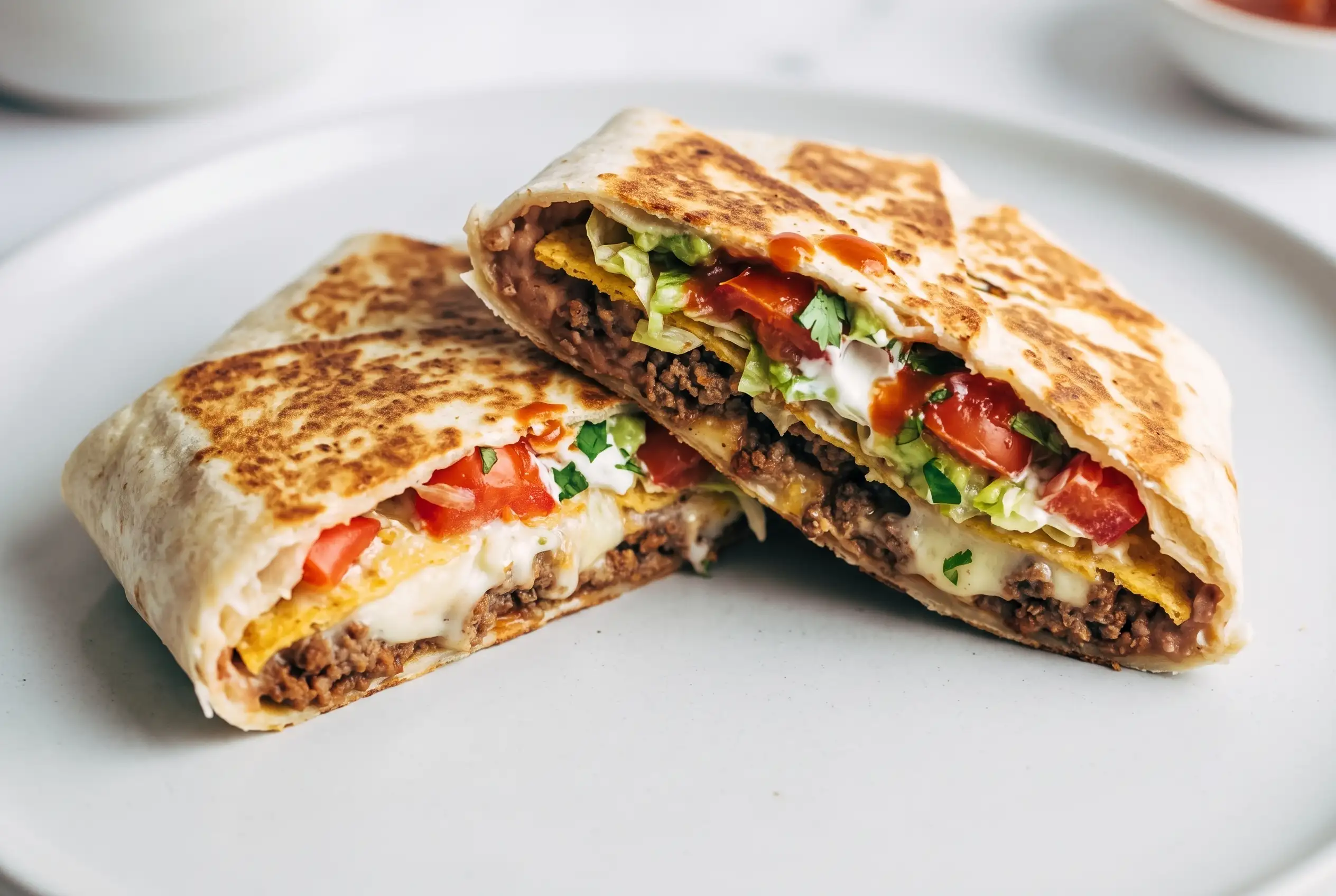
Crunchwrap Supreme brings a fast-food favorite into the home kitchen with a crisp tortilla shell, seasoned beef, creamy queso, and fresh toppings layered into one satisfying handheld meal. The homemade version works because each layer has a clear purpose: rich filling, melted cheese, contrasting crunch, and a sturdy fold that can survive a skillet sear.
Why Crunchwrap Supreme Works at Home
A homemade Crunchwrap Supreme succeeds when the textures stay distinct from the first bite to the last. The seasoned beef provides a savory center, while the cheese sauce creates a smooth layer that connects the fillings without making the tortilla feel overloaded.
Building the wrap at home also allows the balance of flavors to shift depending on personal preference. More salsa can add brightness, extra lettuce can lighten the filling, and mashed avocado or hot sauce can bring a fresh finishing note after cooking.
The appeal of a beef Crunchwrap Supreme comes from the contrast between warm cooked ingredients and cool toppings. The toasted exterior gives the meal its recognizable character, turning simple taco-inspired ingredients into something with a different eating experience.
The Tortilla Structure Keeps Crunchwrap Supreme Balanced
Large flour tortillas are essential because their flexibility allows the edges to fold inward around the fillings. A well-positioned center pile leaves enough tortilla surface available to create a sealed package that can brown evenly in the skillet.
Pepperjack Queso and Beef Build the Core Flavor
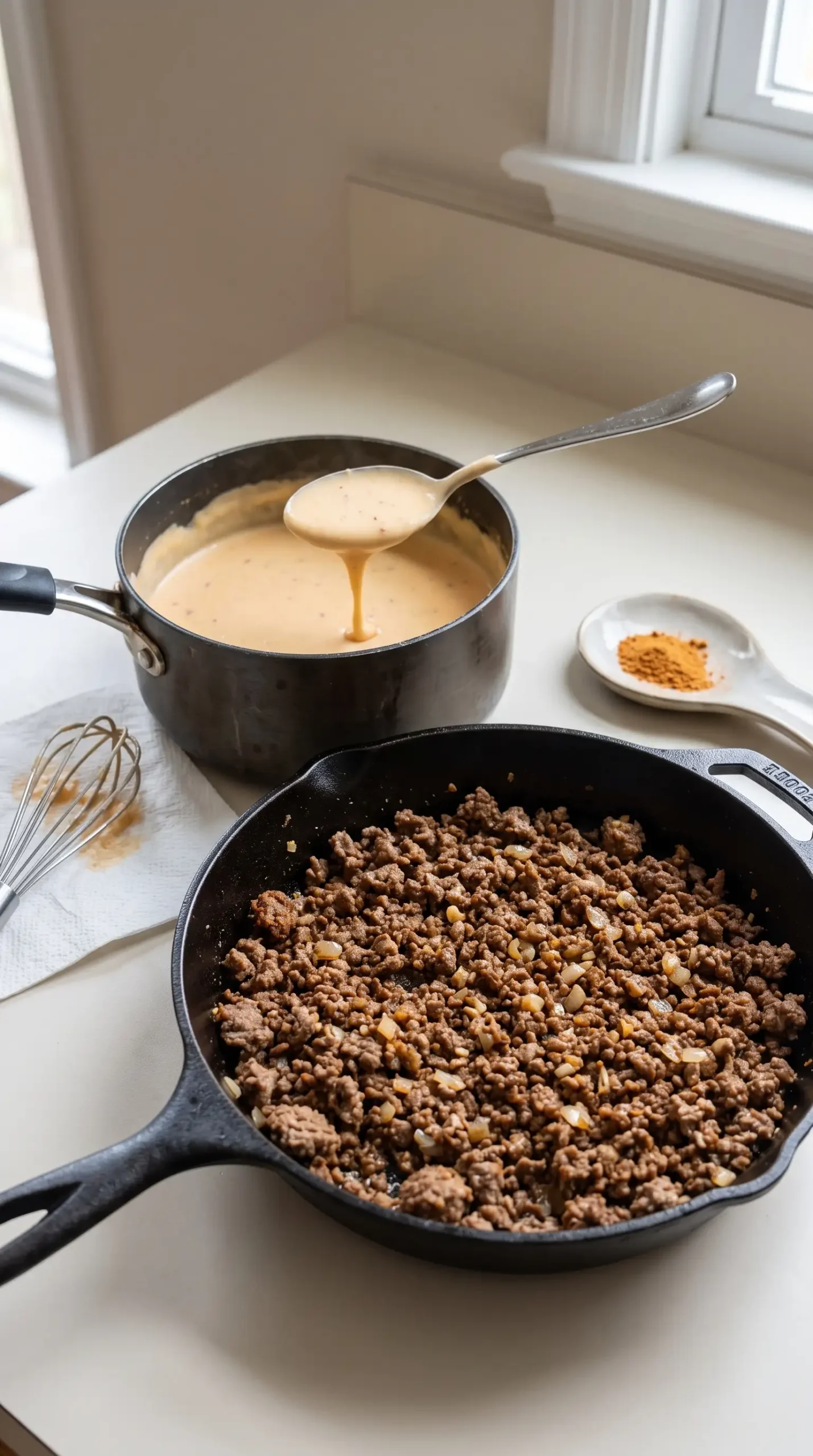
The seasoned ground beef creates the foundation of the filling, and cooking it with onion and garlic develops a deeper savory flavor before the taco seasoning is added. Breaking the beef apart during cooking helps distribute seasoning throughout each bite.
Pepperjack cheese is especially useful in the queso layer because it melts into a smooth sauce with a mild heat that complements the taco-seasoned filling. For a dairy-free variation on the creamy sauce element, chipotle cashew queso uses blended ingredients to create a rich texture that can be layered with the other Crunchwrap Supreme fillings.
Flour, butter, and milk create the base for the cheese sauce, allowing the shredded Pepperjack to melt into a creamy texture. Keeping the queso smooth matters because a thick, evenly spread layer is easier to contain inside the folded tortilla.
| Layer | Purpose | Important handling choice |
|---|---|---|
| Seasoned beef | Savory filling | Cook until fully browned and evenly seasoned |
| Pepperjack queso | Creamy connection | Spread smoothly so it stays inside the fold |
| Crunchy center | Texture contrast | Add close to assembly time for crispness |
| Fresh toppings | Brightness and balance | Use after the main layers are arranged |
Crunchy Layers Decide the Signature Bite
The crunchy middle layer is what separates a Crunchwrap Supreme from an ordinary tortilla wrap. A tostada shell is a classic choice, but tortilla chips or other crunchy options can provide the same textural contrast when placed carefully between softer fillings.
Homemade Crunchwrap Supreme Assembly Choices
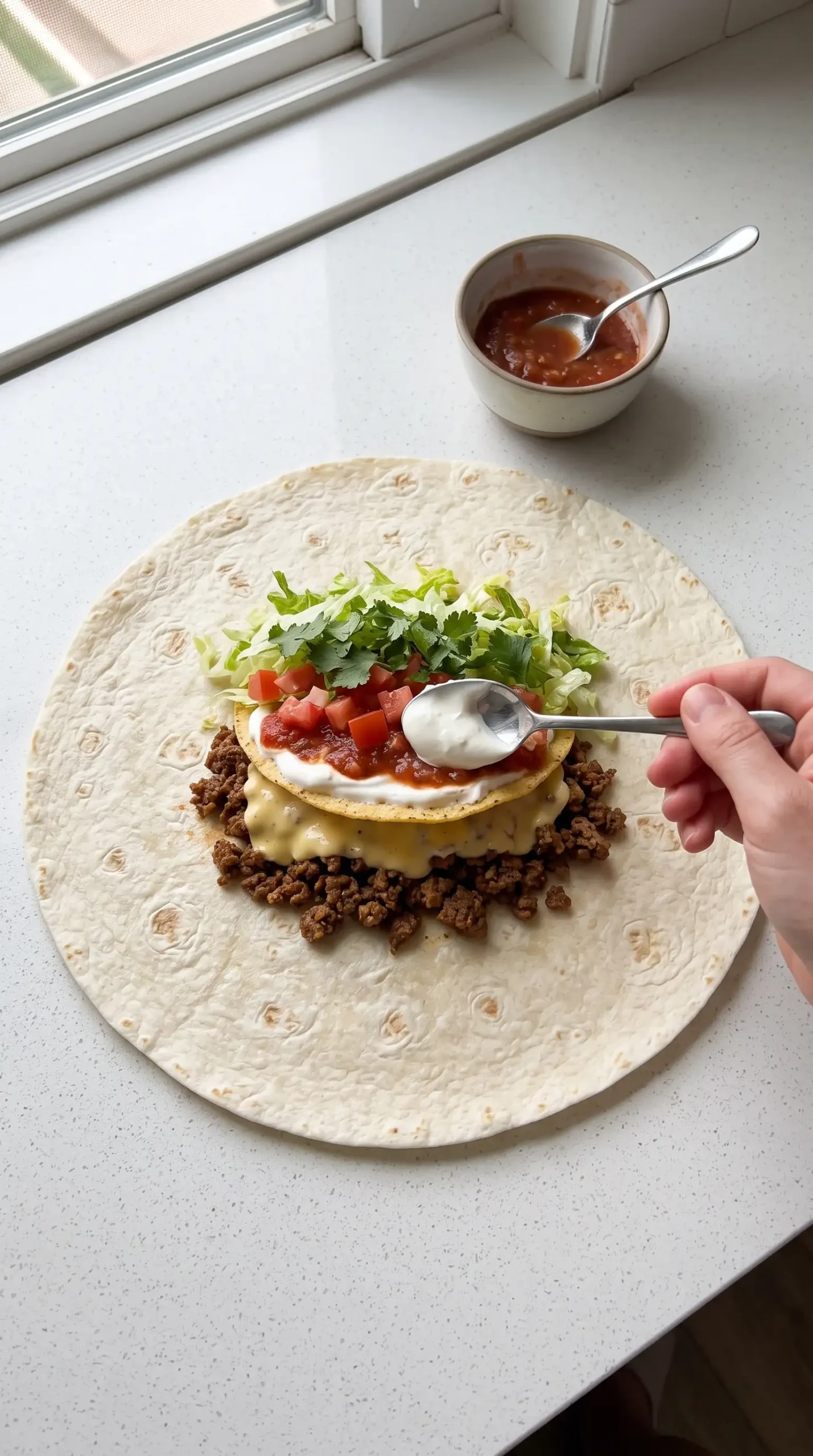
Assembly is where the individual ingredients become a complete meal. The filling order matters because the crunchy layer benefits from a protective position between creamy components and fresh toppings.
Arranging the beef, queso, crunchy element, sour cream, salsa, tomato, lettuce, and cilantro in a compact center keeps the tortilla easier to fold. Spreading ingredients too widely can make the edges difficult to bring together.
A few practical choices can change the finished result:
- Balanced filling: Keep the center generous but manageable so the tortilla can close securely.
- Fresh finish: Add cool toppings where they remain distinct from the warm cooked layers.
- Clean fold: Pull tortilla edges inward evenly to create a sealed shape before cooking.
Skillet Control Prevents a Soft Exterior
The skillet stage determines whether the tortilla develops the firm, golden exterior associated with a cheesy crunchwrap supreme. A properly heated, lightly oiled pan helps the outside toast while the inside warms through.
The final texture depends on how the tortilla responds to heat during cooking. Proper skillet contact encourages tortilla browning as moisture leaves the surface and firmer toasted areas develop.
Cooking the folded tortilla on both sides allows the seams to firm up and gives the wrap structure. Gentle pressure during cooking can help the layers settle together, but pressing too aggressively may push fillings toward the edges.
Observation matters more than rushing the browning process. The exterior should become crisp and golden while the folded edges stay closed enough to hold the fillings when the wrap is sliced.
Crunchwrap Supreme Mistakes That Ruin the Fold
Overfilling creates one of the most common Crunchwrap Supreme problems because excess filling leaves no room for the tortilla edges to overlap. A crowded center often leads to broken folds or ingredients escaping during skillet cooking.
Adding crunchy ingredients too early can also reduce the contrast that makes the dish enjoyable. Moist fillings and sauces can soften the crisp element if it sits too long before the wrap reaches the pan.
Uneven folding is another issue that affects cooking. When one side is thicker than another, the tortilla may brown unevenly, leaving some areas firm and others less toasted.
| Problem | Visible sign | Adjustment |
|---|---|---|
| Too much filling | Edges will not meet | Reduce the center pile before folding |
| Soft crunchy layer | Less texture contrast | Assemble the wrap closer to cooking time |
| Loose fold | Fillings escape in the skillet | Arrange ingredients centrally and fold evenly |
Toppings That Change the Finished Crunchwrap Supreme
Lettuce, tomato, cilantro, salsa, sour cream, guacamole, and hot sauce give the warm filling a fresher finish. These additions can be adjusted to create a brighter or richer version without changing the essential structure.
Serving Ideas for a Beef Crunchwrap Supreme Meal
The finished wrap is filling on its own, but simple additions can make it part of a larger meal. Fresh avocado, extra salsa, or a drizzle of hot sauce can be added after cooking to bring more contrast to the toasted exterior.
Serving the wrap soon after skillet cooking preserves the difference between crisp tortilla, creamy queso, and fresh toppings. Waiting too long can allow steam from the warm filling to affect the texture of the outer layer.
Different occasions call for different presentations. Sliced pieces can make sharing easier, while a whole wrap keeps the layered structure intact for a classic handheld meal.
Storing and Reheating Crunchwrap Supreme Leftovers
Leftover Crunchwrap Supreme portions are best handled carefully because the crisp exterior is the most delicate part. Cooling the wrap properly before storage and reheating it in a way that restores some exterior firmness can improve the next serving.
Customizing a Crunchwrap Supreme Without Losing Structure
Variations work best when they respect the balance between filling, crunch, and foldability. Swapping sauces or adjusting toppings is easier than dramatically increasing the amount of ingredients inside the tortilla.
Vegetable additions, extra spice, or different fresh toppings can personalize the wrap while keeping the same basic approach. The most important consideration is preserving enough tortilla space for a secure fold.
Choosing the Right Crunchwrap Supreme Texture Balance
The best version combines several textures in every bite: toasted tortilla, creamy cheese sauce, seasoned meat, crisp center, and fresh toppings. Each layer should remain recognizable instead of blending into one uniform filling.
How Crunchwrap Supreme Becomes a Reliable Weeknight Favorite
The combination of familiar taco flavors and a toasted tortilla makes the Crunchwrap Supreme approachable for many home cooks. Its structure encourages preparation decisions that are simple but meaningful, especially around filling amounts and skillet timing.
Once the folding technique becomes comfortable, the same approach can be adapted for different flavor preferences. The core idea remains consistent: build layers that complement one another and protect the crisp exterior.
The Toasted Fold Defines the Best Crunchwrap Supreme Result
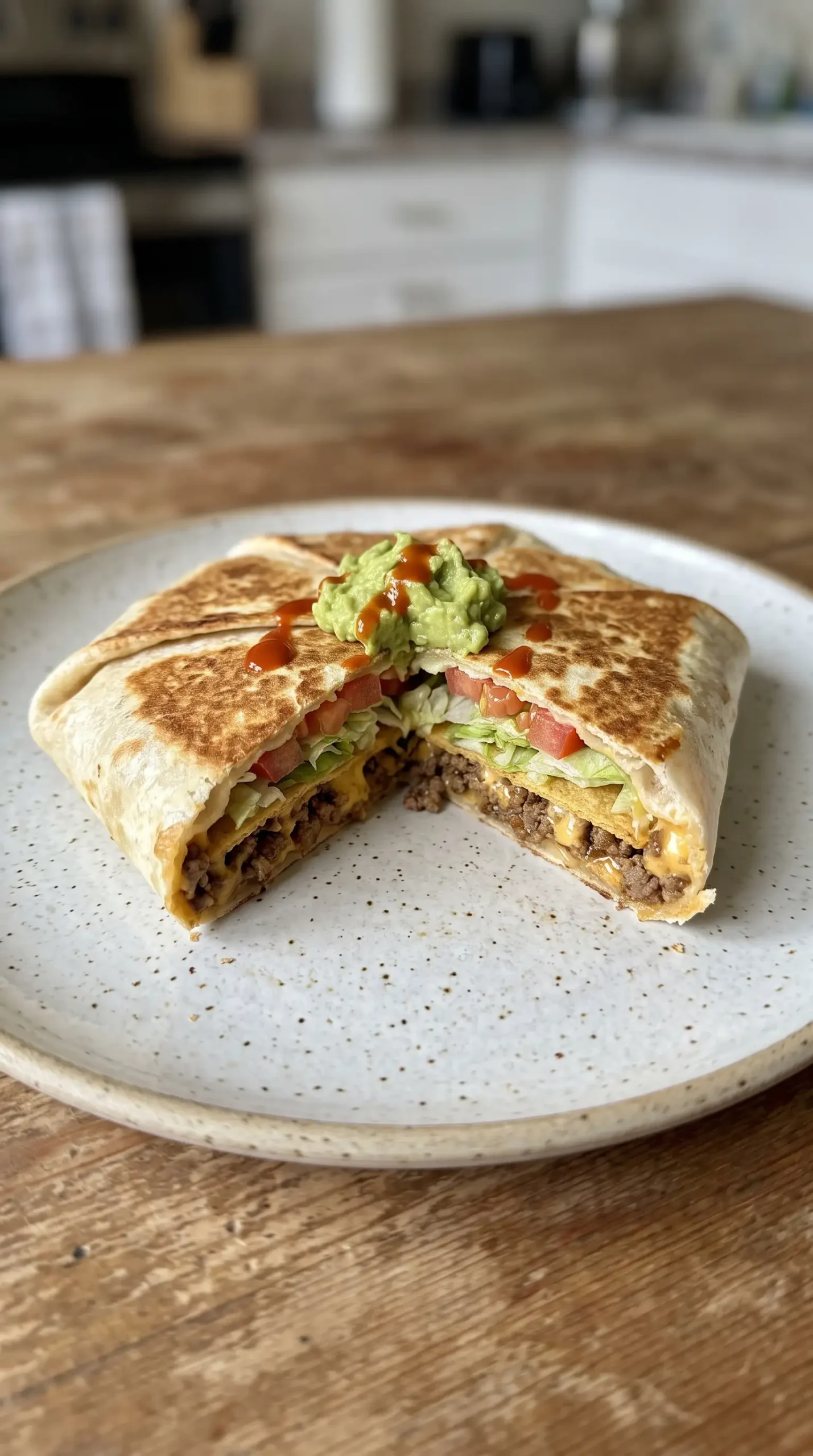
The toasted tortilla fold determines whether a Crunchwrap Supreme delivers the contrast that makes it memorable. A controlled amount of filling, smooth queso placement, and careful skillet browning create a wrap that holds together while keeping every texture noticeable.
A successful crunchwrap is less about adding more ingredients and more about arranging them with intention. When the layers have enough room and the exterior receives proper attention, the result is a sturdy handheld meal with the flavors of a taco and the comfort of a melted cheese wrap.
Crunchwrap Supreme Folding Questions and Answers
How do I keep the tortilla from opening?
Keeping the filling centered and leaving enough tortilla around the edges gives the folds space to overlap. A short skillet cook after folding helps the exterior firm up and supports the sealed shape.
Can I use something besides a tostada shell?
Yes. Tortilla chips or another crunchy option can work when placed between softer layers. The key is adding the crunchy element where it can still provide texture after the wrap is assembled.
Why does my Crunchwrap Supreme get soggy?
Excess moisture from sauces or toppings can soften the interior crunch. Keeping wet toppings controlled and cooking the folded tortilla promptly helps maintain a better texture.
Can I make the queso smoother?
A smoother queso comes from properly combining the butter and flour base with milk before adding the shredded cheese. Gradual whisking helps create an even sauce that spreads easily.
What makes a homemade Crunchwrap Supreme different from a restaurant version?
A homemade Crunchwrap Supreme allows control over seasoning, topping amounts, and texture. Adjusting those details lets the finished wrap match personal preferences while keeping the classic layered design.
Crunchwrap Supreme with Beef and Queso Sauce Fresh Toppings
Ingredients
Method
- Warm the oil in a large nonstick skillet over medium heat. Add the onion, garlic, and ground beef, then cook while breaking apart the meat until it is browned throughout. Stir in the taco seasoning and salt if needed.
- Melt the butter in a small saucepan. Whisk in the flour until smooth and cook for 1 to 2 minutes. Gradually add the milk, whisking with each addition. Once the sauce is smooth, remove it from the heat, mix in the cheese, and season to taste.
- Place a large flour tortilla on a flat surface. Add the beef, queso, crunchy layer, sour cream, salsa or hot sauce, tomato, lettuce, and cilantro in the center.
- Fold the tortilla edges inward around the filling. Transfer the folded wrap to a hot oiled skillet and cook for a few minutes on each side until the outside is firm, crisp, and golden brown.
- Slice the Crunchwrap Supreme and serve with mashed avocado and hot sauce on top if desired.