
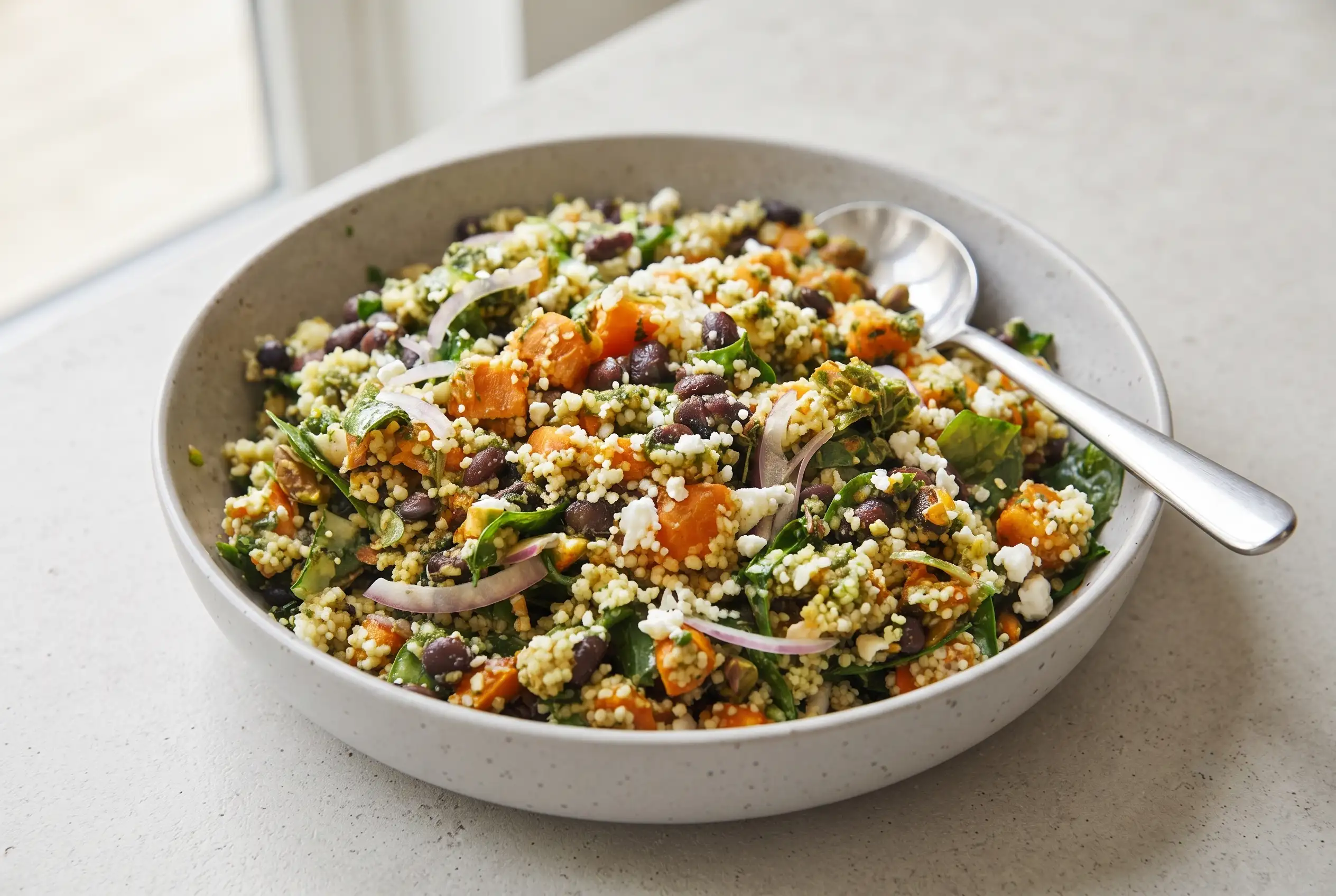
Couscous salad brings together tender grains, roasted sweet potatoes, black beans, fresh spinach, feta, pistachios, and a vibrant lime basil vinaigrette for a dish built around contrast. The combination works because each part contributes a different texture and flavor direction, creating a bowl that feels satisfying without becoming heavy.
The couscous salad with lime basil vinaigrette stands out through the relationship between creamy, earthy, bright, and spicy notes. A smooth basil dressing coats the grains, while lime juice and red pepper flakes keep the flavors lively. Sweet potatoes bring warmth, black beans add substance, and feta creates a salty finish that ties everything together.
Couscous Salad Builds Bright Mediterranean-Inspired Balance
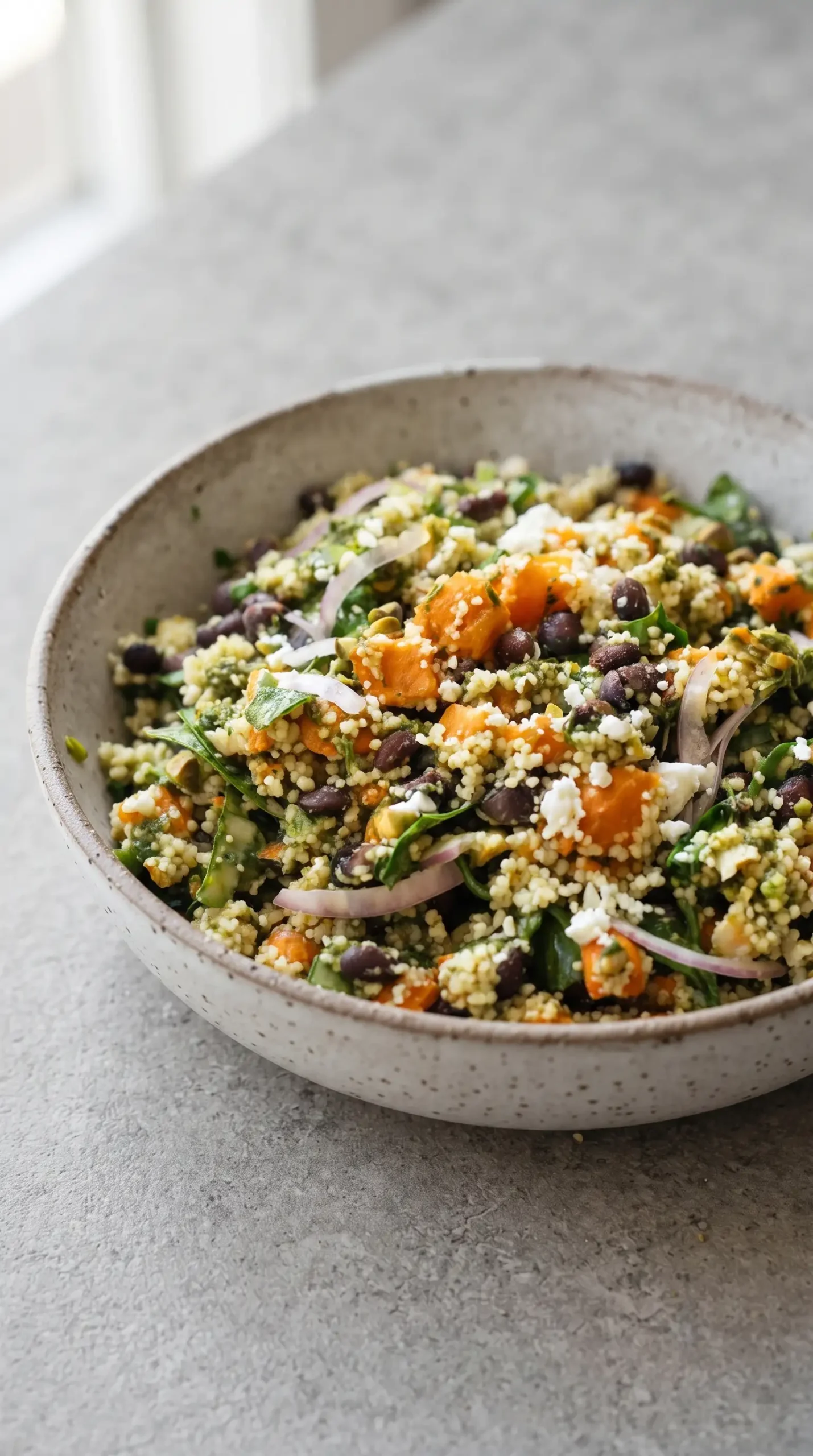
Fresh herbs and colorful vegetables give couscous salad its character. The basil-based dressing creates a green, aromatic foundation that moves through the couscous and vegetables, while the lime adds acidity that helps the richer elements feel balanced.
Warm components and fresh additions work together in this bowl. Roasted or air-fried sweet potatoes provide soft centers with caramelized edges, while spinach and red onion keep the texture crisp and fresh. The result is a meal where every serving contains different layers of flavor.
Black beans make the salad more substantial by adding a hearty element that pairs naturally with couscous. Feta and pistachios introduce additional texture, creating a combination that can serve as a complete lunch, a side dish, or a gathering option.
Lime Basil Vinaigrette Shapes the Salad’s Fresh Character
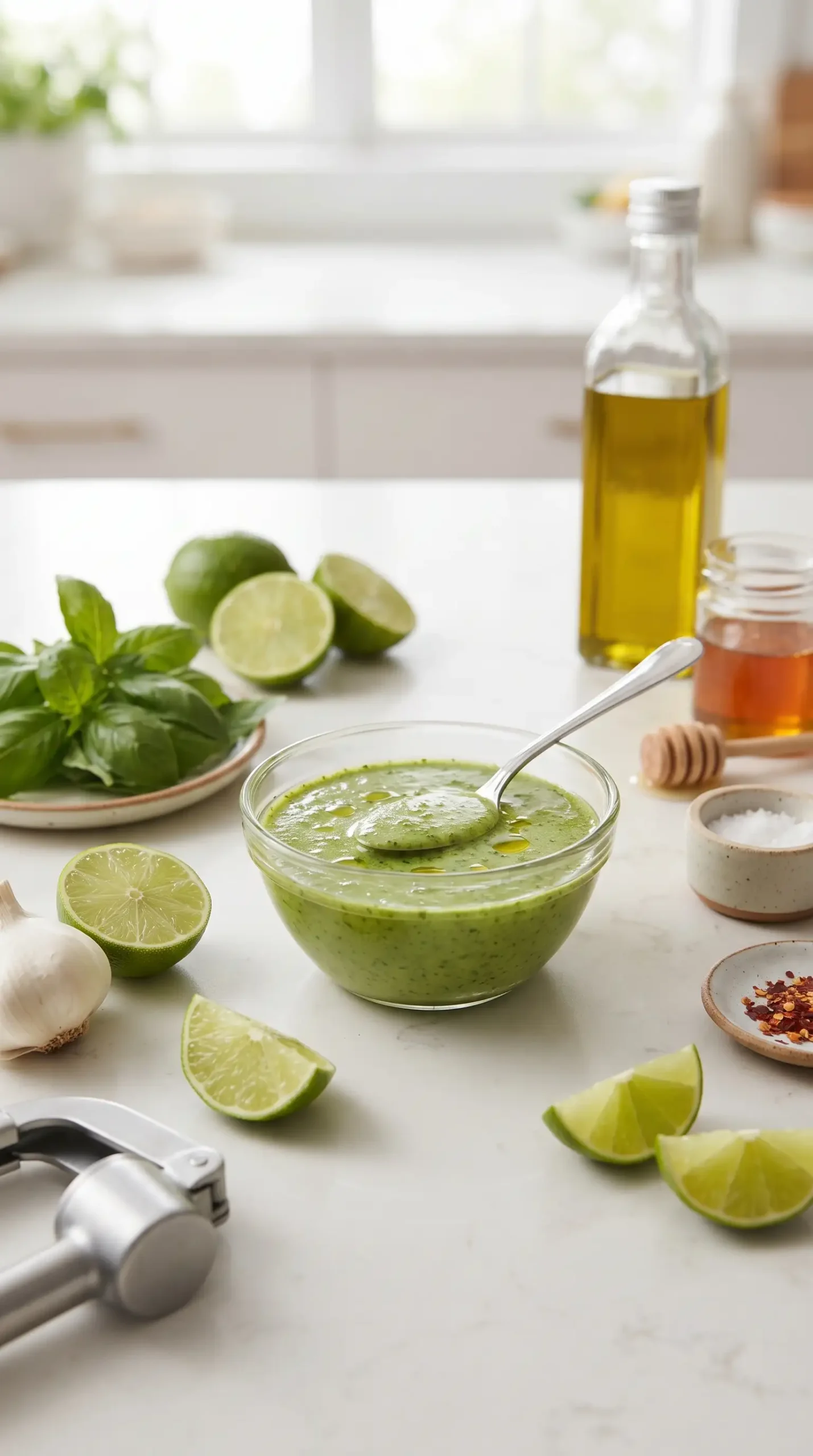
The basil dressing is the defining flavor element of couscous salad with basil dressing. Fresh basil leaves are blended with olive oil, lime juice, garlic, honey, salt, and red pepper flakes until the mixture becomes a fragrant sauce with small green flecks remaining.
The dressing’s texture comes from the way the oil and lime mixture is combined, creating a more cohesive coating through vinaigrette emulsification rather than leaving the ingredients completely separate.
Balancing the dressing depends on adjusting the lime and water carefully. Lime provides brightness, while honey softens the sharp edges and connects with the natural sweetness of the sweet potatoes. A small amount of water can loosen the texture if needed for easier coating.
- Herb freshness: Basil should remain noticeable after blending, giving the dressing its signature flavor.
- Acid balance: Lime juice should brighten the salad without overpowering the other ingredients.
- Texture control: A slightly fluid dressing spreads evenly across couscous and vegetables.
Sweet Potatoes and Black Beans Create Hearty Couscous Salad Structure
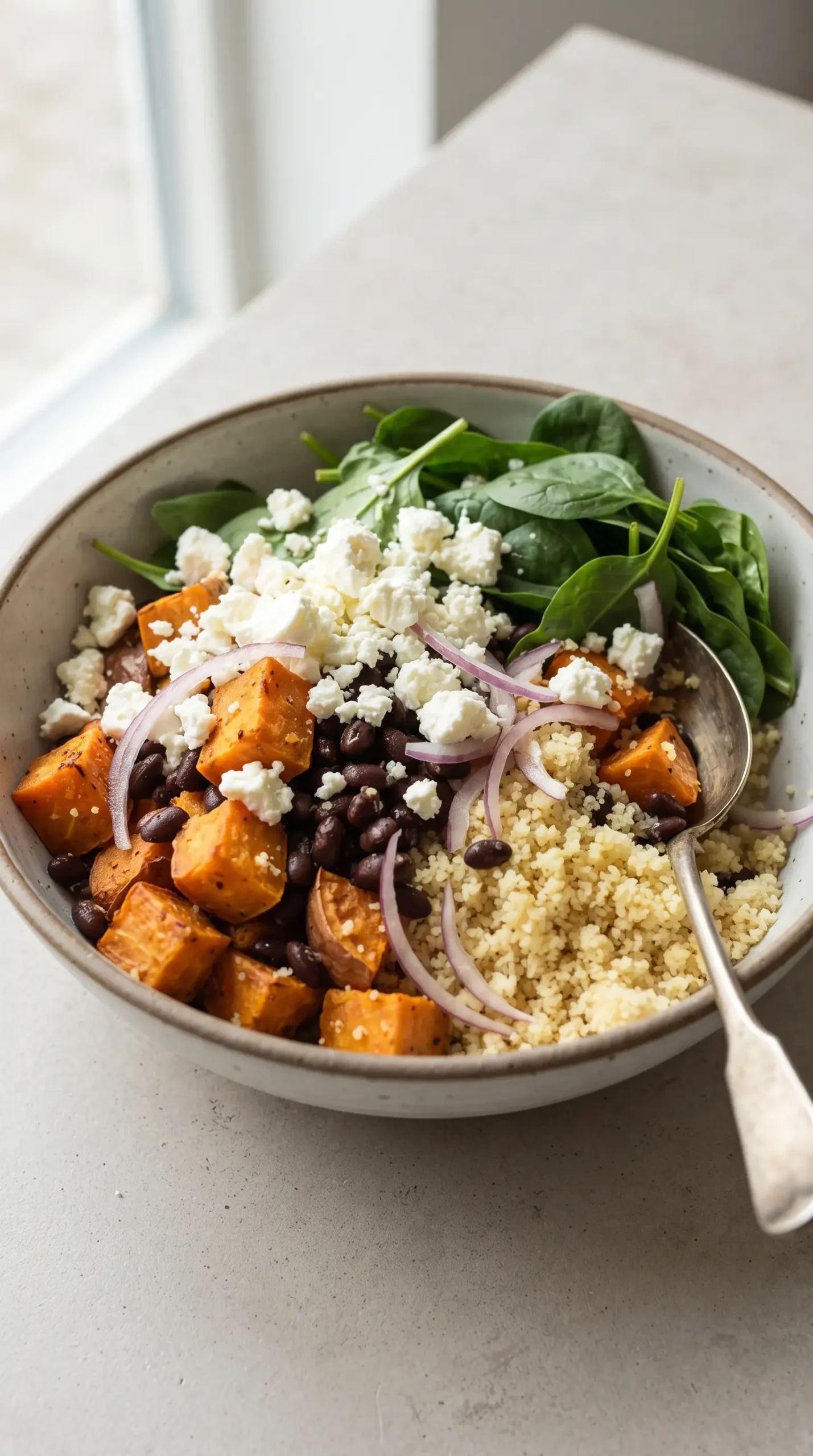
Sweet potatoes change the personality of the dish by adding a naturally sweet, tender component. Their cubes create a contrast against the small couscous grains and allow the salad to feel more substantial without relying on a heavy sauce.
Black beans provide a sturdy base that complements the softer vegetables. Their mild flavor absorbs the lime basil vinaigrette while maintaining enough texture to stand apart from the couscous.
Spinach, red onion, feta, and pistachios complete the structure by adding freshness, sharpness, creaminess, and crunch. Each addition serves a distinct purpose, preventing the bowl from becoming one-dimensional.
| Component | Texture contribution | Flavor role |
|---|---|---|
| Couscous | Soft, delicate grains | Neutral base for dressing |
| Sweet potatoes | Tender with roasted edges | Natural sweetness |
| Black beans | Firm and creamy | Earthy, hearty balance |
| Feta and pistachios | Creamy and crunchy contrast | Salty finishing notes |
Ingredient Choices That Improve Couscous Salad with Lime Basil Vinaigrette
The ingredients that most influence the finished dish are the ones that shape texture and balance. Fresh basil, quality olive oil, and properly cooked couscous determine how well the dressing integrates, while sweet potatoes and black beans establish the foundation.
Using packed basil leaves creates a stronger herb presence in the vinaigrette. The garlic and red pepper flakes should support the basil instead of covering it, allowing the dressing to remain bright and versatile.
Couscous Texture Depends on Cooling and Seasoning Control
Cooking couscous successfully depends on maintaining separate, fluffy grains. After preparation, fluffing with a fork helps prevent compact clumps and creates more surface area for the dressing to coat.
Cooling the couscous before combining it with the other ingredients helps preserve the individual textures in the salad. Warm grains can absorb dressing differently and may soften the spinach more quickly.
| Preparation stage | Useful observation | Reason it matters |
|---|---|---|
| Couscous cooling | Grains separate easily | Dressing distributes evenly |
| Sweet potato cooking | Edges develop color | Adds roasted flavor |
| Final seasoning | Flavors taste balanced | Brings ingredients together |
Common Couscous Salad Mistakes That Flatten Lime Basil Flavor
Couscous salad can lose its appeal when the balance between fresh, sweet, and savory elements is overlooked. Small preparation choices influence how clearly each ingredient appears in the finished bowl.
- Overdressing the grains: Adding too much dressing at once can hide the individual textures. Toss gradually so the couscous stays distinct.
- Skipping seasoning adjustments: Sweet potatoes, beans, and couscous need enough salt to highlight their flavors.
- Adding ingredients without cooling: Combining very warm components can reduce the contrast between fresh and roasted elements.
Careful assembly solves these common issues. Keeping the components recognizable allows the lime basil vinaigrette to connect the ingredients without overwhelming them.
Make Ahead Storage Keeps Salad Components Distinct
Preparing portions separately can make couscous salad convenient for future meals. Keeping couscous, vegetables, beans, and dressing apart preserves the textures until everything is ready to combine.
The basil vinaigrette can be prepared ahead and mixed with the salad when serving. This approach helps maintain the freshness of spinach and the crunch of optional pistachios.
Variations Fit the Couscous Salad Base Without Losing Balance
The couscous base allows flexible adjustments while keeping the lime basil vinaigrette as the connecting element. Using chickpeas, fresh herbs, and seasonal vegetables can create a lighter variation while preserving the contrast between tender grains, crisp produce, and a bright dressing.
Possible adjustments include choosing different crunchy toppings, changing the greens, or adapting the amount of spice in the vinaigrette. Any variation works best when it preserves the contrast between soft grains, fresh produce, and flavorful dressing.
Serving Ideas Highlight the Salad’s Contrasting Textures
Couscous salad works well when served at room temperature or chilled because its ingredients maintain their individual qualities. The combination of creamy feta, crisp onion, tender sweet potatoes, and fluffy grains creates interest in every bite.
Extra Toppings Bring New Layers to Couscous Salad
Optional toppings can emphasize different parts of the dish. Pistachios add crunch, while extra herbs or a little additional feta can increase the fresh and savory notes already present.
Serving portions with toppings added close to mealtime helps preserve their texture. Crunchy additions remain more noticeable when they are not mixed into the salad too far in advance.
Couscous Salad with Lime Basil Vinaigrette Delivers Balanced Simplicity
Couscous salad succeeds because the dressing, grains, vegetables, and toppings each maintain a clear role. The lime basil vinaigrette brings brightness, while sweet potatoes and black beans create a satisfying foundation that supports the fresh ingredients.
Balanced preparation keeps the salad appealing from the first serving to the last. When textures remain distinct and seasoning is adjusted thoughtfully, the combination of couscous, basil, lime, and vegetables creates a dependable dish with layers of flavor.
Lime Basil Vinaigrette Questions About Couscous Salad
Can couscous salad be prepared ahead of serving?
Yes. Preparing the couscous, vegetables, beans, and dressing separately allows the salad to maintain better texture. Combine the ingredients when you are ready to serve for the freshest result.
How can the lime basil vinaigrette taste more balanced?
Adjust the dressing by tasting the lime, honey, salt, and basil together. More lime can brighten the mixture, while honey can soften sharp acidity and create a smoother overall flavor.
Can another grain replace couscous in this salad?
Other grains with a similar serving purpose may work, but the texture will change. Couscous provides small tender grains that absorb the basil dressing especially well.
What keeps the sweet potatoes from becoming soft in the salad?
Cooking sweet potatoes until they develop some browned edges and allowing them to cool before mixing helps them maintain a pleasant texture alongside the other ingredients.
Couscous Salad with Lime Basil Vinaigrette and Feta
Ingredients
Method
- Add all dressing ingredients to a food processor and blend until mostly smooth while keeping some green flecks visible.
- Prepare couscous according to package directions, fluff with a fork, and allow it to cool.
- Coat the diced sweet potatoes with oil and salt, then air fry at 400°F (204°C) for 10-12 minutes, or roast at 425°F (218°C) for 25-30 minutes.
- Combine couscous, sweet potatoes, black beans, spinach, feta, red onion, and chopped pistachios with the dressing.
- Season the salad with salt and pepper, then serve.