
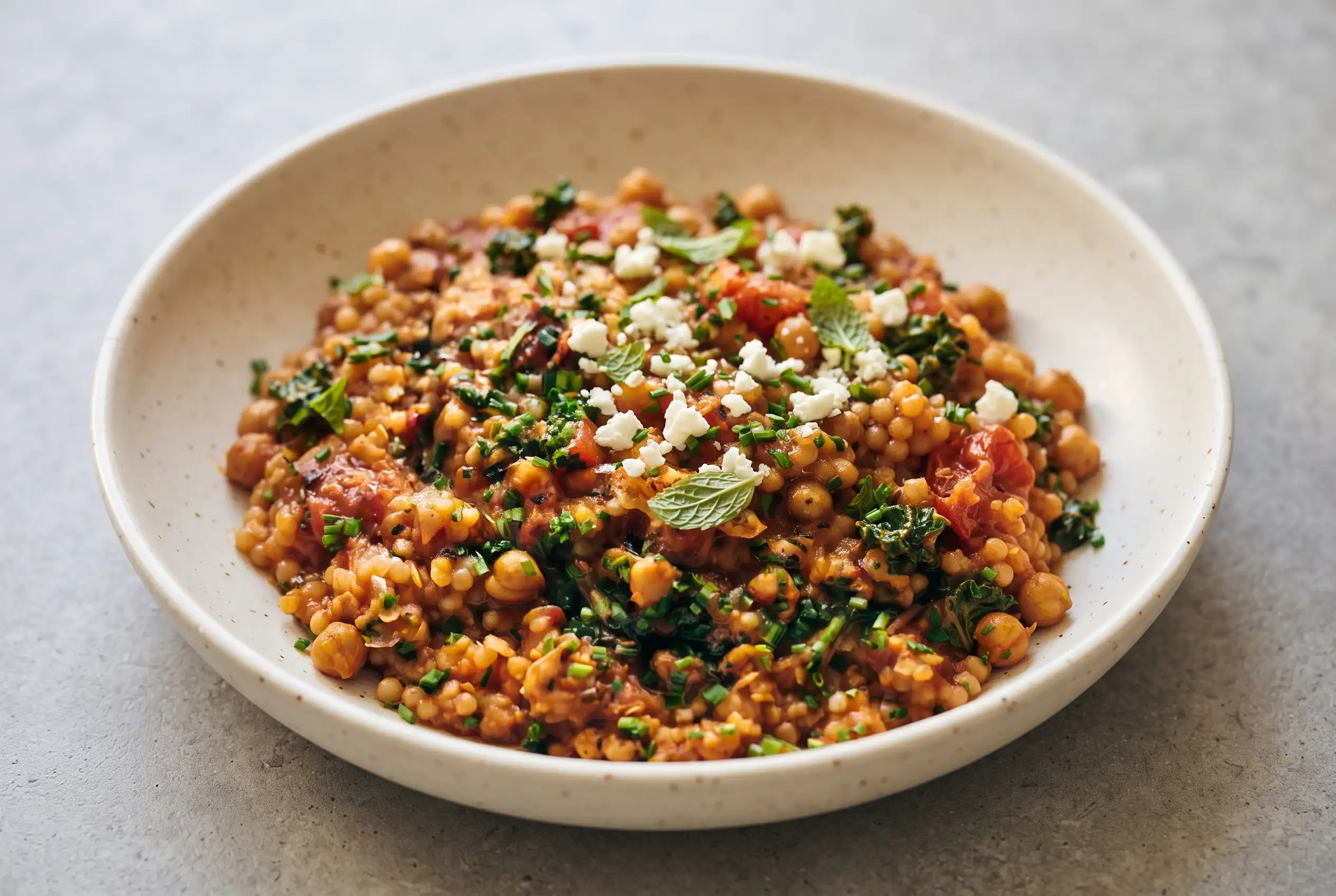
Pearl couscous skillet brings together tender grains, savory chickpeas, juicy tomatoes, and creamy feta in a one-pan meal built around contrast. The pearl couscous skillet approach creates a satisfying balance because the couscous absorbs the seasoned tomato broth while chickpeas add substance and kale brings a fresh finish. With its combination of chewy texture, bright herbs, and Mediterranean-inspired flavors, pearl couscous with chickpeas and feta works as a comforting lunch or a simple dinner centerpiece.
Tomato chickpea layers define the skillet flavor
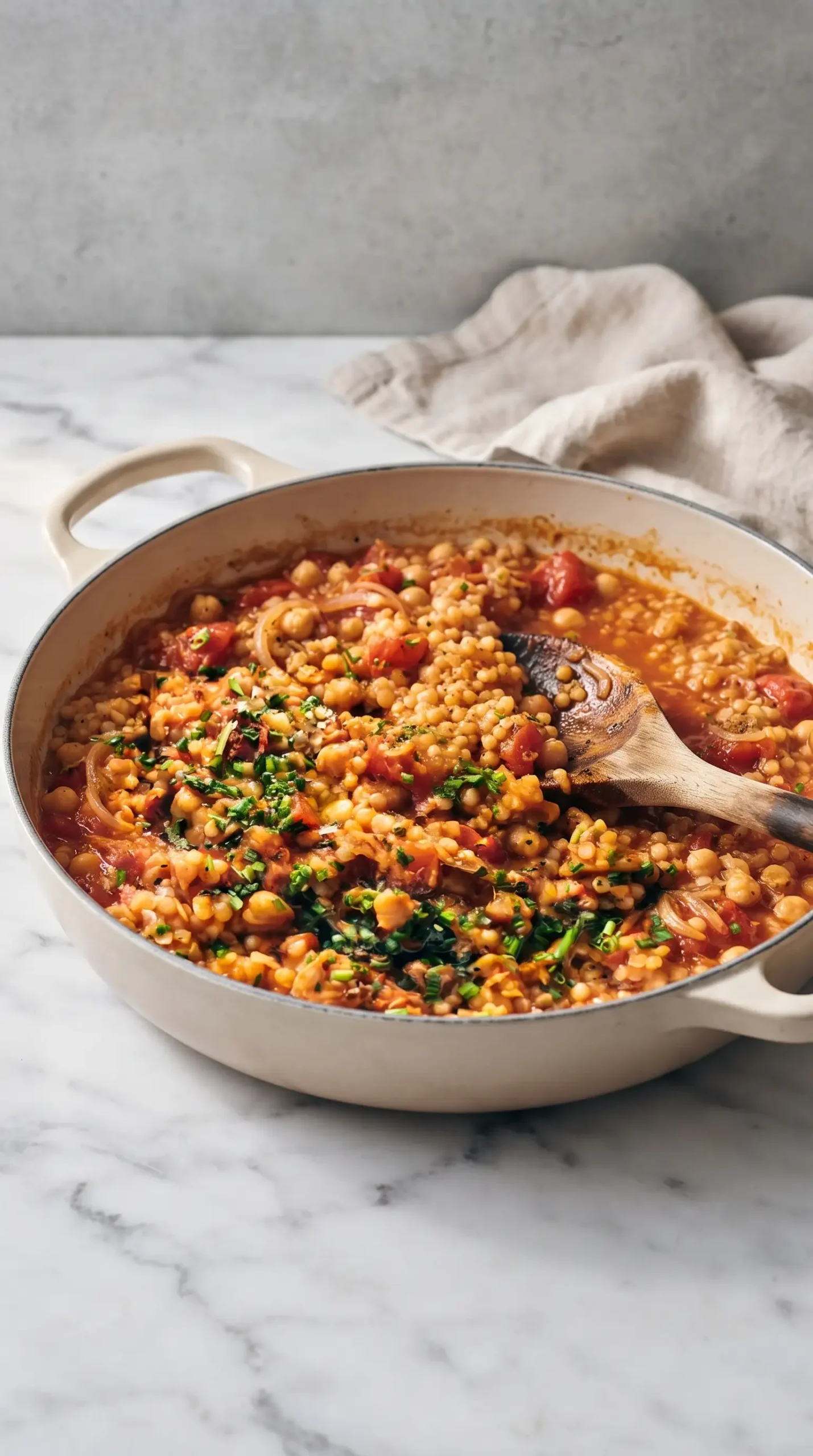
Tomatoes form the foundation of the sauce that surrounds the pearl couscous. Fire-roasted diced tomatoes are especially useful because their deeper flavor pairs well with the earthy cumin and sweet shallots cooked at the beginning. The liquid released from the tomatoes also helps create the environment needed for the couscous to soften and become tender.
Chickpeas contribute more than just bulk in this dish. Gently mashing a few against the skillet creates small creamy pieces that blend into the tomato mixture while leaving plenty of whole chickpeas for texture. That small adjustment helps the sauce feel more connected to the couscous instead of leaving separate layers of ingredients.
Fresh herbs change the character of the finished bowl. Chives bring a mild onion note throughout the couscous, while optional mint creates a cooler contrast against the warm tomato base. Crumbled feta adds a salty, creamy element that balances the sweetness of tomatoes and maple-kissed kale dressing.
Key ingredients sharpen pearl couscous texture
Pearl couscous needs careful attention because pearl couscous is a round semolina pasta rather than a traditional grain. The rounded pieces should become soft and pleasantly chewy while still holding their shape. The amount of liquid and the covered cooking environment influence how evenly each piece absorbs flavor.
| Ingredient choice | Effect in the skillet | Helpful handling detail |
|---|---|---|
| Pearl couscous | Creates a chewy, pasta-like base | Cook until tender with most liquid absorbed |
| Fire-roasted tomatoes | Add deeper tomato flavor | Use with their juices to build the sauce |
| Feta cheese | Provides creamy salty contrast | Add after serving so it stays distinct |
| Kale | Adds fresh color and texture | Massage until the leaves soften |
Kale and feta create the finishing contrast
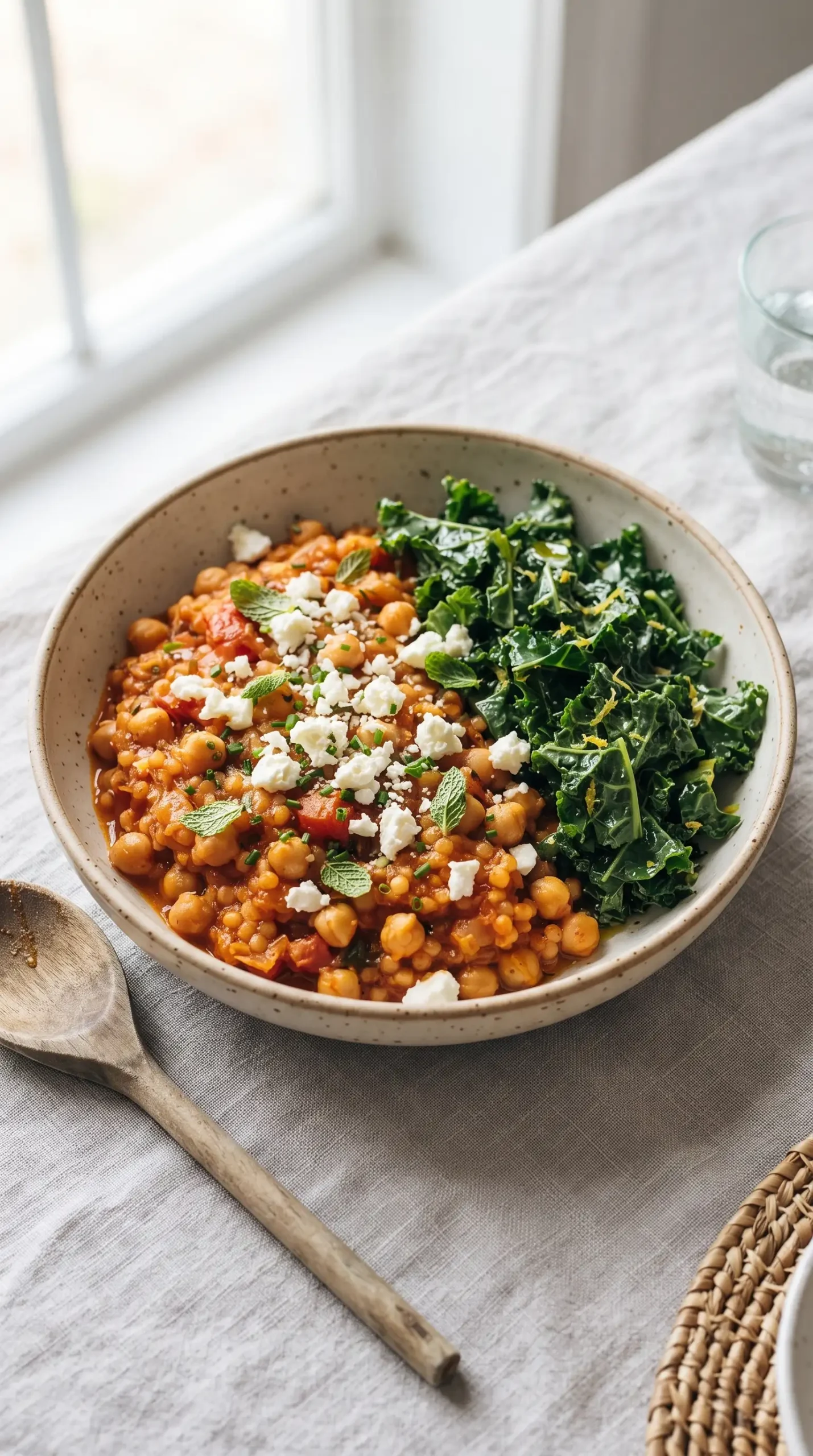
The dressed kale side gives the chickpea pearl couscous skillet a fresh element that keeps the warm tomato mixture from feeling too heavy. Massaging the leaves with olive oil, red wine vinegar, maple syrup, salt, and pepper softens their texture and allows the dressing to coat every bite.
Cooking control keeps couscous perfectly tender
Successful results depend on watching texture changes during cooking. Pearl couscous should absorb enough broth to become tender, but the skillet should not be left unattended once the liquid begins reducing. The pieces need enough moisture to soften without becoming overly soft.
Temperature management also shapes the sauce. A gentle simmer allows the tomatoes, chickpeas, and couscous to develop together, while excessive heat can cause the liquid to disappear before the couscous finishes cooking. Keeping the skillet covered helps maintain the moisture needed for even cooking.
Small adjustments at the end can improve the consistency. If the couscous becomes thicker after sitting, a splash of water can loosen the texture. Stirring in fresh herbs after cooking preserves their brighter flavor and keeps the dish from tasting flat.
- Liquid check: Watch for couscous that is tender while some moisture remains in the skillet.
- Texture check: Look for soft grains with a slight chew instead of a mushy consistency.
- Finish check: Add herbs and toppings after cooking so their flavors stay noticeable.
Pearl couscous skillet mistakes to avoid
Several small errors can affect the final texture of this tomato pearl couscous recipe. Adding toppings too early can make feta lose its distinct texture, while overcooking the couscous can remove the pleasant bite that makes pearl couscous different from softer grains.
Another common issue comes from skipping the kale preparation. Raw kale leaves can feel firm beside the warm couscous mixture, but a brief massage with the dressing changes their texture and helps the flavors blend. The leaves should become tender without losing their fresh character.
Storage timing also matters for leftovers. Pearl couscous continues absorbing liquid as it rests, so a serving that looks perfectly creamy at the table may become thicker later. Adding a little water while reheating helps restore a smoother consistency.
Simple serving ideas highlight Mediterranean flavors
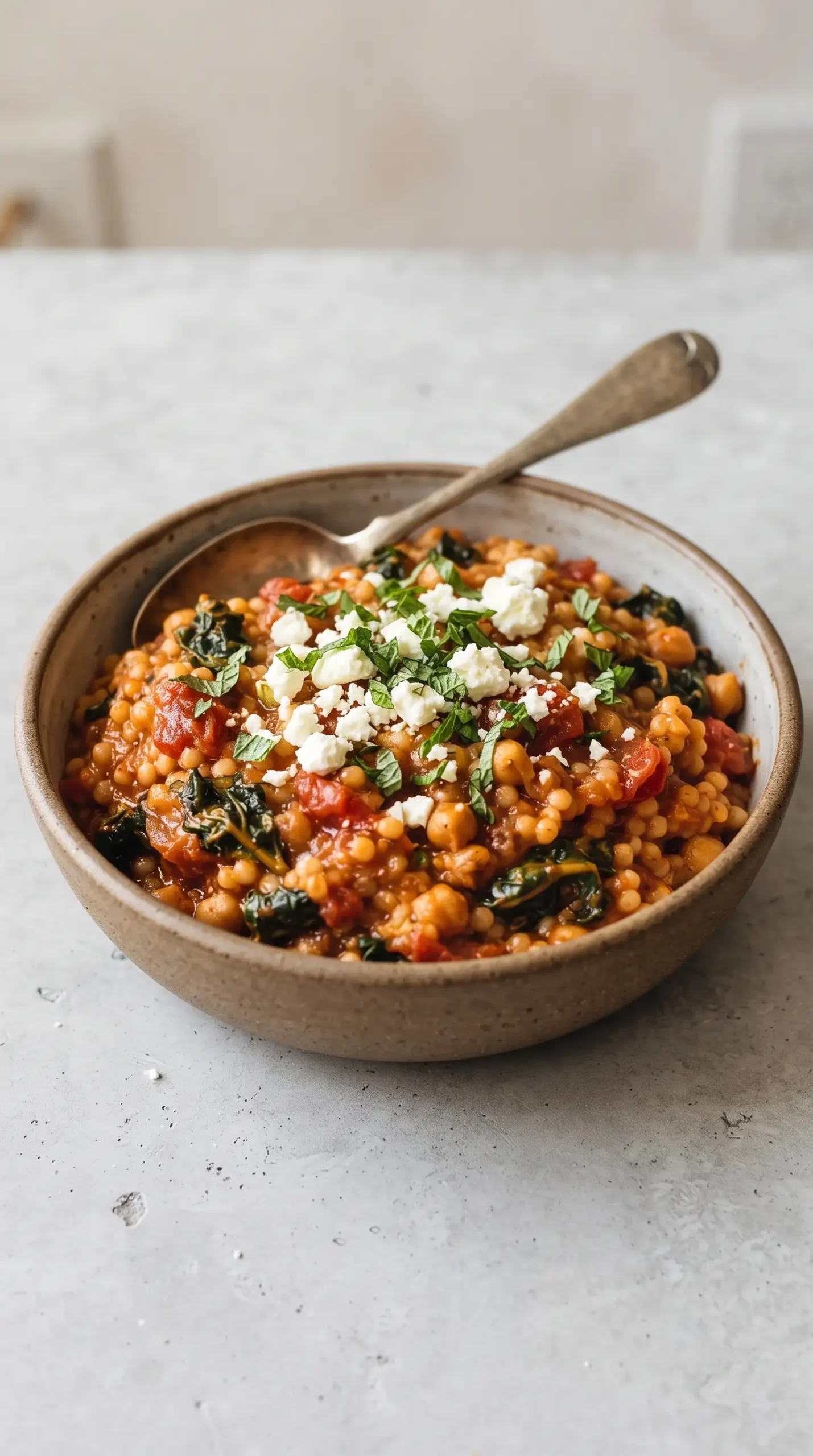
The skillet can stand on its own, but thoughtful serving choices emphasize its contrasting textures. A spoonful of feta and fresh mint on individual portions creates a more noticeable finish than mixing every topping throughout the pan.
Leftover handling preserves creamy couscous
Stored portions are best treated as a texture-sensitive dish because the couscous continues to absorb moisture after cooking. Keeping the leftovers covered helps protect the tomatoes and chickpeas from drying out while maintaining the flavors developed in the skillet.
Flexible additions expand the couscous bowl
Variations work best when they respect the balance between the chewy couscous, saucy tomatoes, and fresh toppings. The basic structure can support small changes without losing the identity of the dish.
Vegetable additions should complement the existing textures. Fresh herbs, legumes, and vegetables can maintain a balanced couscous dish; a chickpea couscous salad uses those ingredients in a fresh preparation.
Protein choices can also change the role of the meal. Chickpeas already provide a hearty base, but the skillet can be served alongside other Mediterranean-inspired dishes when a larger spread is needed. The couscous remains the central element that connects the flavors.
- Herb variation: Use different fresh herbs while keeping the finishing step after cooking.
- Vegetable pairing: Add produce that works with the tomato sauce and chewy couscous texture.
- Serving style: Present toppings separately when different textures are preferred.
Chickpea pearl couscous skillet fits everyday meals
The combination of pantry-friendly ingredients and fresh finishing touches makes this dish practical for many occasions. Tomatoes, chickpeas, and couscous create a reliable base, while feta and herbs provide the details that make each serving feel complete.
Balanced meals often depend on contrast, and the skillet achieves that through its mix of creamy chickpeas, chewy couscous, crisp-tender kale, and bright toppings. Each element has a distinct role without requiring a complicated preparation process.
Unlike heavier one-pan meals, the texture remains varied from the first bite to the last. The tomato sauce provides comfort, while herbs and vinegar keep the flavors lively enough for repeated enjoyment.
Pearl couscous choices improve every batch
Selecting the right couscous and handling it carefully creates the foundation for dependable results. Pearl couscous should be cooked until it reaches a soft but slightly chewy texture, allowing it to carry the tomato and chickpea flavors throughout the skillet.
Ingredient quality also influences the finished balance. A flavorful tomato base, fresh herbs, and good feta make simple components feel more complete. The dish relies on the interaction between these ingredients, so each choice has a noticeable effect.
Cooking with attention to moisture is especially important because the couscous absorbs the surrounding flavors. Adjusting the consistency at serving time keeps the dish creamy and prevents the sauce from becoming lost.
Conclusion: Pearl couscous texture brings the skillet together
Pearl couscous becomes the element that connects tomatoes, chickpeas, kale, and feta into one cohesive meal. When the couscous stays tender and the toppings remain fresh, the skillet delivers the contrast that makes it memorable: creamy chickpeas, savory tomato richness, chewy pasta-like pearls, and bright herbal notes.
The most important cooking judgment comes from protecting texture at every stage. Keeping enough moisture for the couscous, finishing with fresh toppings, and adjusting leftovers when needed allows the dish to remain satisfying beyond its first serving.
Questions about couscous texture and storage
Why does pearl couscous become thicker after sitting?
Pearl couscous continues absorbing moisture from the tomato mixture as it rests. A small amount of water stirred in during reheating can help bring back a softer, creamier consistency without changing the overall flavor.
Can the kale be mixed directly into the pearl couscous skillet?
The kale can be served alongside the couscous or combined gently after preparation. Keeping the dressed kale separate preserves its fresh texture and gives each serving a clearer contrast with the warm tomato base.
What makes pearl couscous different from regular couscous in this dish?
Pearl couscous has larger round pieces with a pasta-like chew, making it better suited for a skillet where it absorbs sauce while maintaining a noticeable texture. Regular couscous would create a softer, finer result.
How can the tomato flavor be made more noticeable?
Using fire-roasted tomatoes helps create a deeper tomato character, and allowing the tomatoes to simmer with chickpeas and spices before the couscous absorbs the liquid helps those flavors develop throughout the dish.
When should feta and mint be added?
Feta and mint are best added when serving because their fresh qualities stand out more clearly. Keeping them as finishing touches preserves their individual flavors and textures.
Pearl Couscous Skillet with Tomatoes, Chickpeas and Feta
Ingredients
Method
- Heat 2 tablespoons olive oil in a skillet over medium heat. Add the shallot and cumin, then cook until the shallot softens, about 5 minutes.
- Add the chickpeas and gently mash a few pieces in the skillet if desired to create a creamier texture.
- Stir in the diced tomatoes and bring the mixture to a simmer.
- Add the broth, salt, and pearl couscous. Bring back to a simmer, cover, and cook over low heat for 6-8 minutes until the couscous is soft and has absorbed most of the liquid.
- Stir in the chives once the couscous is finished cooking.
- Combine 3 tablespoons olive oil, red wine vinegar, maple syrup, salt, and pepper in a small bowl.
- Massage the kale with the dressing for a minute or two until the leaves become tender.
- Serve the couscous with the dressed kale alongside. Add mint leaves and feta cheese over individual portions as desired.