
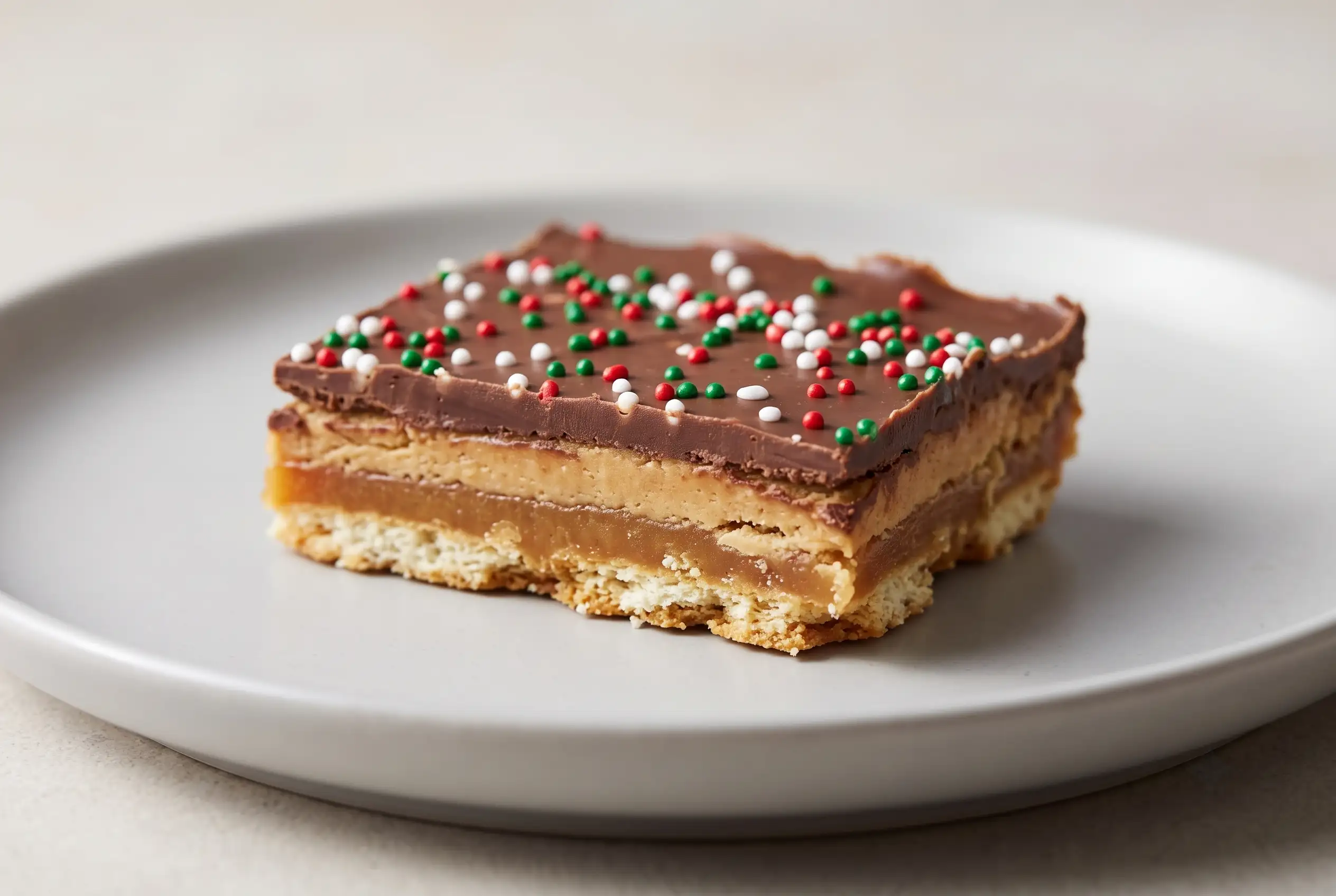
Saltine toffee turns a handful of pantry staples into a layered dessert with a crisp cracker base, caramel-like brown sugar butter coating, creamy peanut butter, and a smooth chocolate finish. The contrast between salty crackers and sweet toppings gives chocolate peanut butter saltine toffee its familiar appeal, while small choices during preparation determine whether each piece stays crisp, balanced, and easy to serve.
Simple construction makes this treat memorable. The crackers create the structure, the butter and sugar form the candy-like layer, and the toppings bring richness after baking. Although the ingredients are uncomplicated, the order of preparation and attention to texture shape the finished chocolate saltine toffee bars.
Saltine Toffee Builds Flavor Through Simple Layers
Classic candy-making ideas meet everyday ingredients in this dessert. Saltine crackers provide a thin, crunchy foundation that can carry the warm butter mixture before receiving the peanut butter and chocolate layers. Their mild flavor allows the sweeter components to stand out while adding a subtle salty note.
Balanced bites come from the way each layer interacts after chilling. The cracker remains the base, the cooked sugar mixture creates a firm coating, and the toppings soften into a unified surface. Breaking the chilled slab into pieces reveals a dessert where each portion contains multiple textures.
Peanut Butter Saltine Cracker Toffee Depends on Ingredient Choices
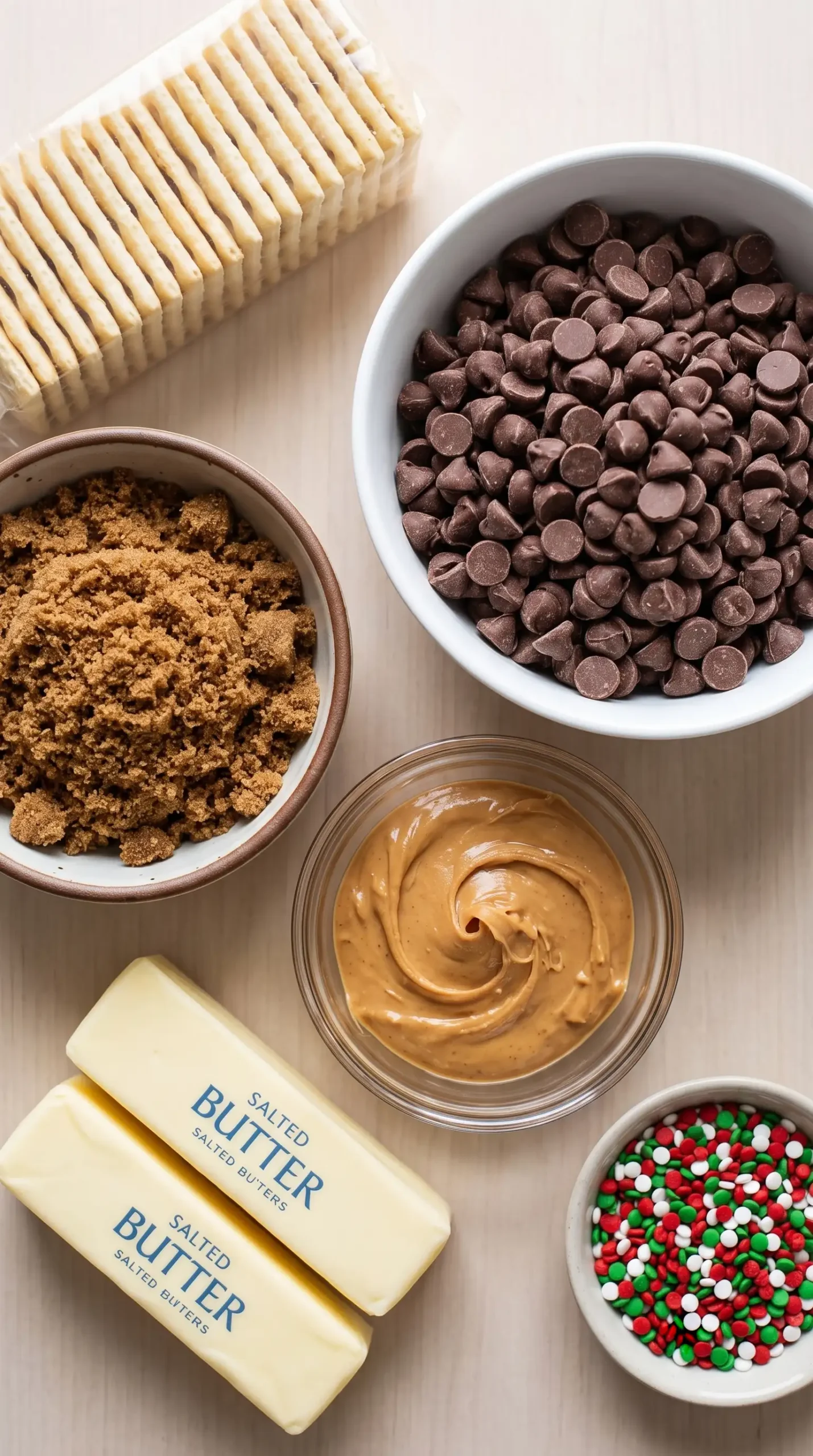
Ingredient selection has the greatest effect on the character of peanut butter saltine cracker toffee. Salted butter works alongside the crackers’ natural saltiness, creating a contrast that keeps the sweetness from becoming one-dimensional. Brown sugar contributes deeper caramel notes that pair naturally with both peanut butter and chocolate.
Chocolate chips should melt into a smooth layer that can spread across the surface after the short oven time. Peanut butter needs to soften enough to spread evenly over the warm toffee layer, allowing the chocolate topping to connect with the base beneath it.
- Cracker arrangement: A single layer creates consistent coverage and helps each piece break with a similar structure.
- Sugar mixture: Even heating creates the coating that holds the dessert together after cooling.
- Topping balance: Peanut butter, chocolate, and sprinkles provide richness, sweetness, and visual contrast.
Brown Sugar Butter Coating Creates the Toffee Character
Warm brown sugar and butter create the defining candy-like element of the dessert. When the mixture reaches a boil, the ingredients combine into a glossy coating that spreads across the crackers before baking. The brief bake helps the layer set around the cracker surface.
The texture of a toffee coating depends on reaching the right candy-making stage, where sugar concentration and heat influence how the finished layer sets after cooling.
| Component | Purpose in the dessert | Important handling point |
|---|---|---|
| Saltine crackers | Provide structure and crunch | Arrange in one even layer |
| Brown sugar and butter | Create the cooked toffee coating | Heat until the mixture reaches a boil |
| Chocolate chips | Form the smooth top layer | Spread after melting |
Careful attention during this stage prevents uneven coverage. A well-distributed coating reaches across the crackers so the finished pieces do not have sections that lack the signature toffee texture.
Chocolate Peanut Butter Saltine Toffee Gets Its Finishing Texture
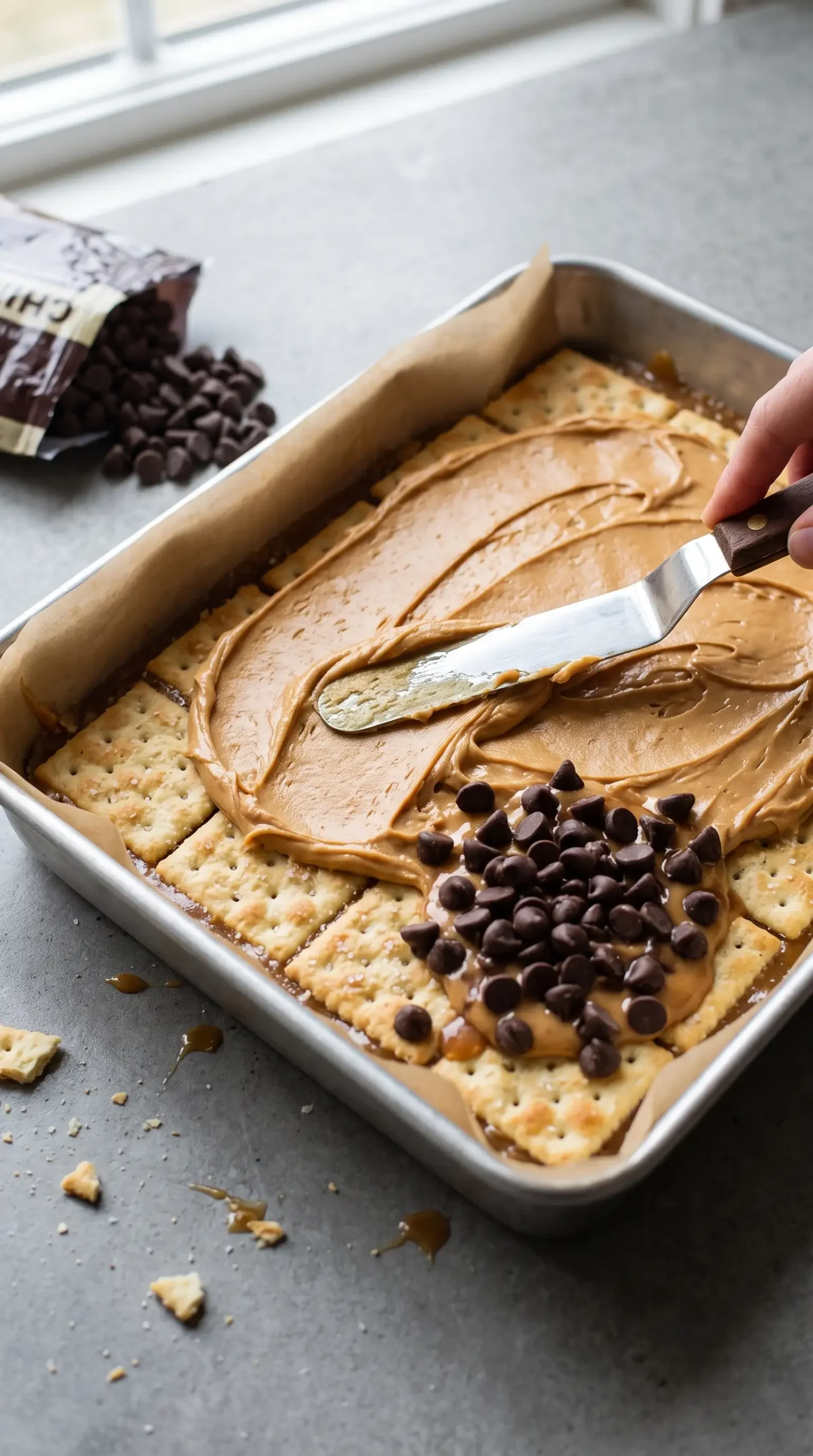
Chocolate and peanut butter transform the baked cracker base into a dessert with a softer upper layer. The peanut butter melts into the warm surface, making it easier to spread without disturbing the structure underneath. Chocolate chips then soften and create a rich topping that firms after chilling.
Decorative sprinkles add color and a playful finish, but they also reinforce the contrast between the smooth chocolate surface and the crisp pieces underneath. Once set, the bars can be broken into irregular portions that highlight the layered appearance.
Layered desserts benefit from allowing each component to set before cutting. A firm chocolate top and stable base make portioning cleaner, which is important for chocolate caramel oatmeal bars with multiple texture layers.
Chilling Decisions Protect the Shape of Saltine Toffee Pieces
Cooling plays an important role because the dessert changes from a soft, warm mixture into a firm snack bar. Allowing enough time for the layers to set helps the chocolate topping hold its place and makes the pieces easier to separate.
Large cracks or uneven breaks often happen when the slab has not fully firmed. Waiting until the layers are stable allows the crackers, toffee coating, and toppings to stay connected during serving.
Baking Control Keeps Saltine Toffee Layers Consistent
Execution depends on controlling heat at the moments when texture changes occur. The butter and brown sugar mixture needs proper boiling time so it develops the coating that defines the dessert. The oven steps are brief because the main purpose is to help the layers combine and melt.
Several visual cues help during preparation:
- Before baking: The crackers should cover the pan surface in a neat single layer with small spaces between pieces.
- After the toffee bake: The cracker layer should be coated with the warm sugar mixture.
- After topping: The peanut butter and chocolate should spread into connected layers before chilling.
Understanding these changes makes it easier to judge progress without relying only on timing. The dessert succeeds when the separate layers become one sliceable treat while keeping their individual textures.
Common Saltine Toffee Mistakes That Affect the Finished Bars
Saltine toffee mistakes usually come from uneven layering or rushed handling. Because the dessert relies on a thin cracker base and quick melting steps, small preparation choices can change the final texture.
| Problem | Possible cause | Better approach |
|---|---|---|
| Uneven topping | Chocolate or peanut butter not spread fully | Use the warm surface to help create smooth layers |
| Loose pieces | Layers not fully set | Allow adequate chilling before breaking |
| Missing toffee coverage | Crackers arranged unevenly | Create a complete base layer before adding the coating |
Another common issue happens when the cracker arrangement leaves large gaps. The warm sugar mixture is meant to cover the base, so an inconsistent foundation can affect how the finished pieces hold together.
Serving Ideas Highlight Chocolate Saltine Toffee Bars
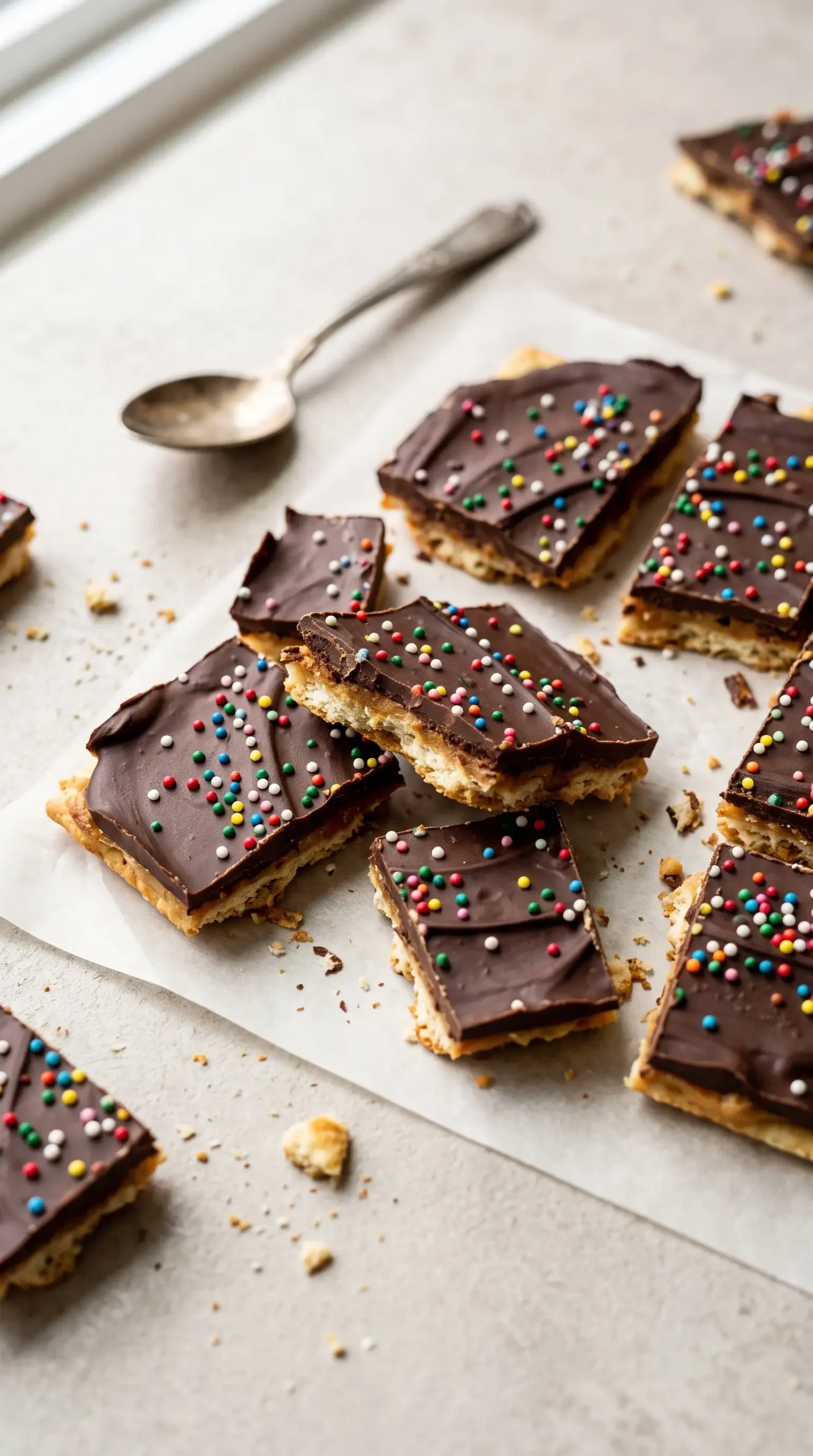
Chocolate saltine toffee bars work well when served as small pieces because the dessert is rich and layered. Breaking the chilled slab into portions creates a casual presentation that suits gatherings, snack trays, or dessert plates.
Texture is part of the serving experience. Pieces with visible cracker layers, chocolate tops, and colorful sprinkles showcase the contrast that makes the dessert recognizable.
Storage Choices Preserve Saltine Toffee Texture
Keeping the finished pieces protected helps maintain the difference between the crisp base and firm topping. A sealed container reduces exposure to air and helps prevent the dessert from losing its intended texture.
Because the topping sets after cooling, handling the pieces gently during storage keeps the chocolate layer intact. Separating layers with parchment can help when stacking multiple pieces.
Simple Variations Keep Chocolate Peanut Butter Saltine Toffee Familiar
Small adjustments can change the flavor profile while keeping the structure of the dessert recognizable. The core combination of crackers, cooked sugar coating, peanut butter, and chocolate provides enough flexibility for personal touches.
- Chocolate choice: Different chocolate chips can shift the sweetness and richness of the topping.
- Peanut butter style: A smooth variety creates an easy-to-spread layer over the warm surface.
- Decoration: Sprinkles can match holidays, celebrations, or simple everyday serving.
Changes work best when they respect the thin layered design. Adding too many extra toppings can distract from the crisp cracker and candy-like base that defines the dessert.
Saltine Toffee Becomes a Balanced Treat Through Layer Control
Saltine toffee succeeds because each layer has a clear purpose. The crackers provide structure, the brown sugar butter coating creates the signature candy texture, and the peanut butter and chocolate finish the dessert with richness.
Careful spreading, controlled heating, and complete chilling determine the difference between a messy topping and a cohesive bar. The simple ingredients work together when each stage receives the attention needed to preserve the contrast.
Questions About Saltine Toffee Texture and Preparation
Why does saltine toffee use crackers as the base?
Saltine crackers provide a sturdy, crisp foundation that supports the warm sugar coating and toppings. Their mild flavor allows the sweet and creamy layers to become the focus while adding a light salty contrast.
Can peanut butter saltine cracker toffee be made with different chocolate?
Different chocolate chips can be used if they melt well into a spreadable layer. The important consideration is keeping the chocolate topping smooth enough to cover the surface after melting.
Why does the toffee layer need boiling before baking?
Boiling the butter and brown sugar mixture helps combine the ingredients into the coating that gives the dessert its toffee character. Without proper heating, the layer may not develop the same texture.
How should saltine toffee pieces be broken after chilling?
Once the layers have firmed, the slab can be broken into smaller pieces by hand. Irregular edges are part of the dessert’s casual style and reveal the different layers inside.
What makes chocolate peanut butter saltine toffee different from regular cracker candy?
The addition of peanut butter creates a creamy layer between the toffee coating and chocolate topping. That extra layer adds a richer texture while keeping the familiar crisp cracker base.
Chocolate Peanut Butter Saltine Toffee Bars with Chocolate
Ingredients
Method
- Line a 9×13 baking dish with foil and coat it with nonstick cooking spray or oil. Arrange the Saltine crackers in a single layer with a little space between crackers, then set the pan aside.
- Preheat the oven to 400°F (204°C).
- Heat the butter and brown sugar together in a small nonstick saucepan. Bring the mixture to a boil and continue boiling for 3 minutes without stirring.
- Pour the hot butter mixture over the crackers and bake for 5 minutes.
- Add the peanut butter over the warm cracker and toffee layer, then bake for 1 minute to soften it. Spread the peanut butter evenly across the surface.
- Scatter the chocolate chips over the peanut butter layer and bake for 1 minute to melt them. Spread the chocolate into an even layer and add sprinkles on top.
- Chill or freeze the dessert for 1 hour or until the layers are set. Break the finished slab into small pieces for serving.