
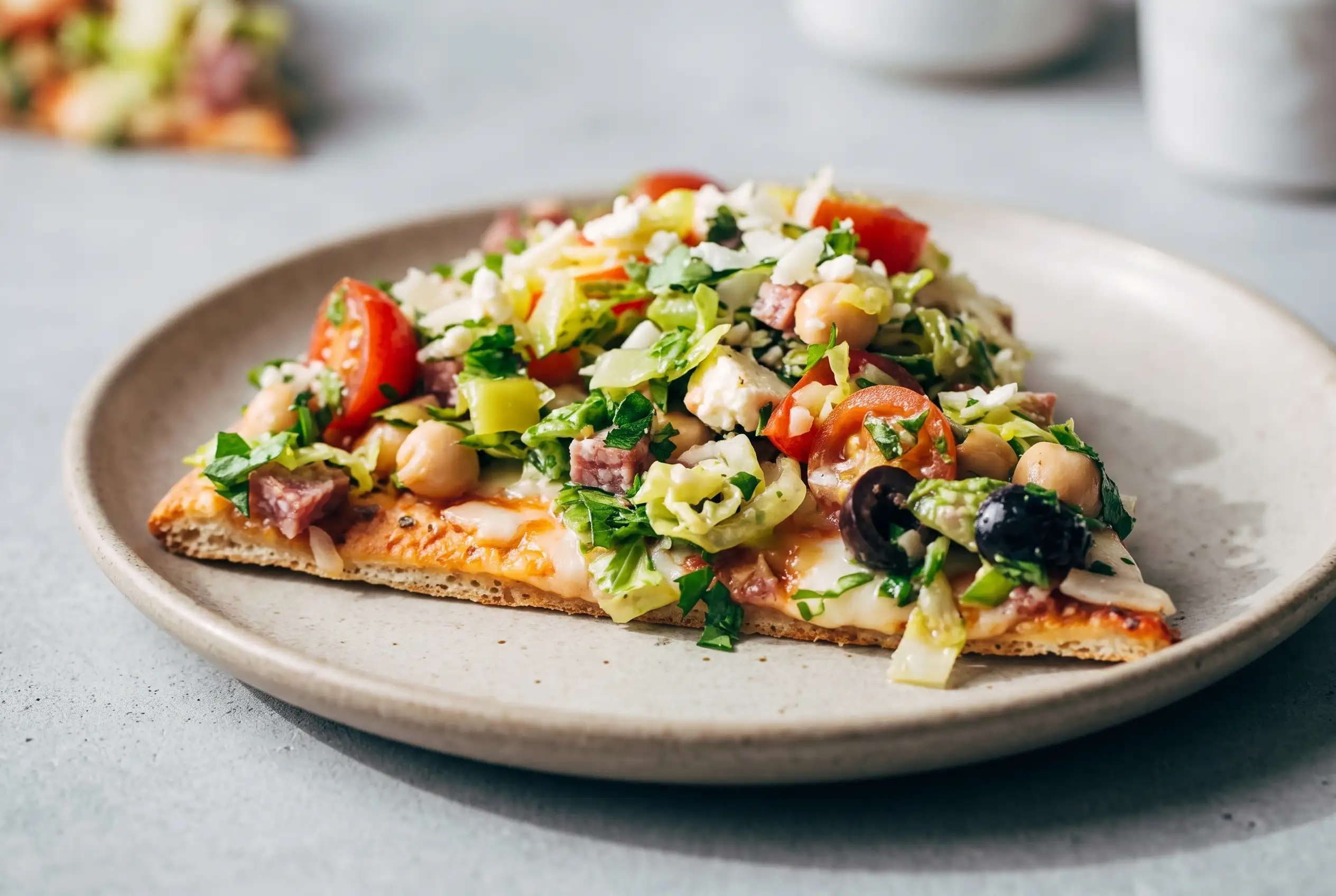
Chopped salad pizza brings together a crisp romaine salad and a classic cheesy pizza base for a meal that balances fresh vegetables, savory toppings, and a flavorful dressing. The combination creates a pizza topped with chopped salad where the cool, seasoned greens meet warm crust, sauce, and melted mozzarella in every slice.
Fresh textures define the appeal of this dish. Crunchy lettuce, juicy tomatoes, creamy feta, salty salami, and tangy pepperoncini create contrast that keeps the pizza from feeling heavy. Each bite changes slightly depending on how the salad ingredients mingle with the toppings underneath.
Simple preparation makes this style of pizza especially approachable. A prepared crust, jarred pizza sauce, and a quick blended dressing allow the focus to stay on the contrast between the baked foundation and the dressed salad layer added afterward.
Why Chopped Salad Pizza Works Beyond Ordinary Pizza
Balanced flavors are what make this combination stand out. The pizza base supplies familiar comfort, while the chopped salad introduces brightness through vinegar, herbs, vegetables, and briny ingredients. The result feels complete without requiring a long list of extra additions.
Classic pizza toppings often stay on the surface during baking, but the salad layer changes the experience after the crust comes out. Romaine, chickpeas, olives, and pepperoncini remain distinct, giving the finished slices a fresh character that complements the melted cheese.
Layered textures also make this meal memorable. The crisp lettuce and halved tomatoes contrast with the tender chickpeas and chewy salami, while mozzarella and feta bring creamy elements that connect the salad and pizza portions together.
Romaine and Feta Choices Shape the Salad Layer
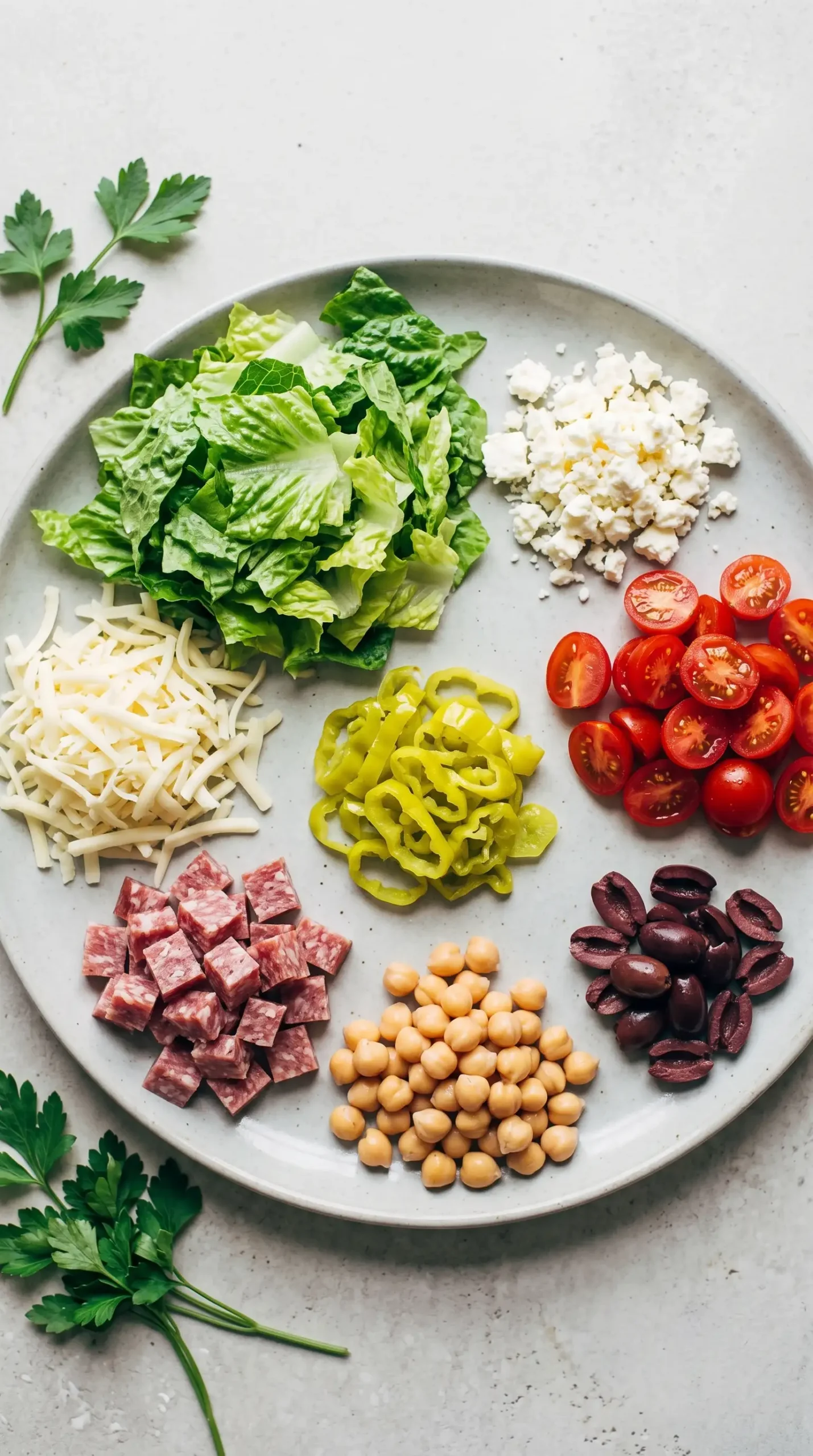
Ingredient selection matters most when the salad sits directly on top of pizza. Romaine provides a sturdy base that can hold dressing without immediately losing its texture, making it a practical choice for a chopped salad pizza.
Cheese decisions create another important balance. Shredded mozzarella melts into the crust and sauce during baking, while crumbled feta stays part of the chilled salad topping. Keeping those roles separate preserves the contrast between warm and cool components.
Briny additions bring strong flavors that help the salad taste complete. Pepperoncini and kalamata olives add sharp notes, while parsley or other fresh herbs can brighten the mixture without overpowering the other toppings.
Crisp Salad Assembly Creates Better Pizza Slices
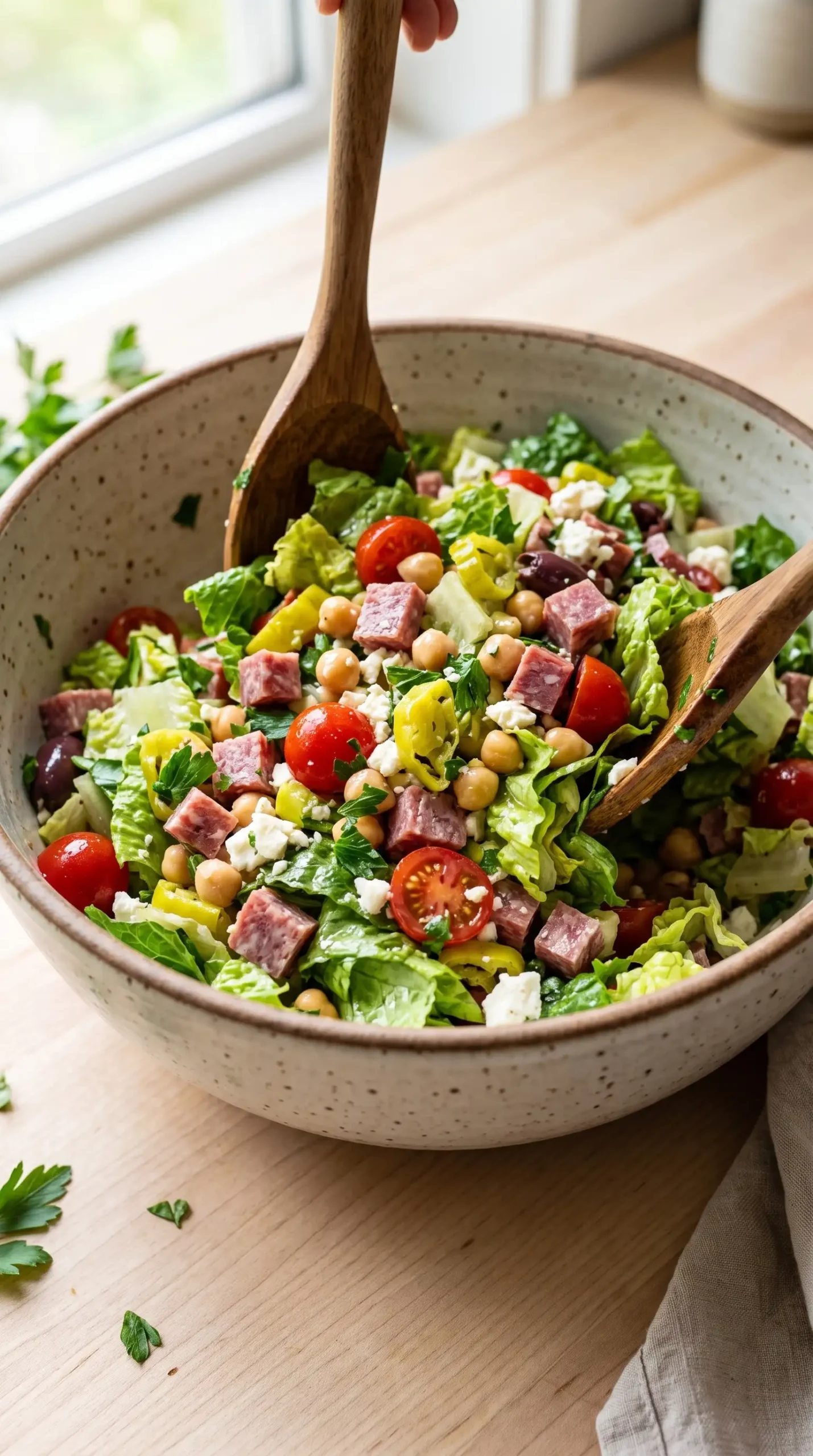
Timing the salad preparation around serving helps maintain the textures that make this dish successful. Tossing the chopped ingredients with dressing allows flavors to combine, but adding the salad after baking keeps the vegetables from being exposed to oven heat.
Pizza Base Decisions Change the Finished Texture
Crust choice influences how the pizza supports the salad topping. A shelf-stable crust creates a thinner base, while a refrigerated crust can produce a thicker result. For a homemade foundation with a more substantial texture, whole wheat pizza dough can be prepared before adding the sauce, cheese, and fresh salad layer.
| Crust option | Texture result | Preparation consideration |
|---|---|---|
| Shelf-stable crust | Thinner pizza base | Follow package baking instructions before adding the salad |
| Refrigerated crust | Thicker pizza base | May require pre-baking before sauce and cheese |
| Finished pizza base | Warm cheese-covered surface | Ready for the dressed salad topping after baking |
Careful layering helps prevent the crust from becoming overwhelmed. A light amount of pizza sauce and cheese creates a stable foundation where the fresh topping can stand out instead of disappearing beneath heavier layers.
Choosing the right balance of toppings also matters for slicing. A salad-covered pizza needs enough structure underneath so pieces can be lifted easily while still carrying the chopped ingredients.
Dressing Balance Keeps the Salad Pizza Fresh
Homemade dressing connects the vegetables with the pizza flavors. Olive oil, white vinegar, garlic, salt, basil, and oregano create a simple seasoning blend that coats the chopped salad before it reaches the crust.
Cooking Control for Chopped Salad Pizza Success
Oven handling has one important purpose: creating a warm, cheesy base that can support the fresh topping. Baking the crust with sauce and mozzarella before adding the salad keeps the lettuce and herbs crisp.
The crust texture also depends on how heat reaches the dough during baking. Using a heated baking surface can help create better browning and a firmer pizza base before the fresh salad topping is added.
Attention to topping temperature improves the finished dish. The salad ingredients should be prepared separately from the baked portion so the vegetables maintain their fresh texture when combined with the warm pizza.
Consistent chopping also affects every bite. Similar-sized pieces of romaine, tomatoes, chickpeas, salami, olives, and pepperoncini help distribute flavors evenly across each slice instead of leaving some areas overloaded.
Common Chopped Salad Pizza Mistakes to Avoid
Several small choices can affect the outcome of chopped salad pizza. Avoiding these issues helps maintain the contrast between crisp vegetables, creamy cheese, and sturdy crust.
- Overdressing the salad: Use enough dressing to coat the vegetables while keeping the topping from becoming excessively wet.
- Adding salad too early: Place the chopped salad on the baked pizza so the lettuce and herbs keep their fresh texture.
- Heavy crust loading: Keep the sauce and cheese layer light enough to support the salad topping.
Serving Ideas Highlight the Pizza and Salad Contrast
Serving chopped salad pizza soon after assembly emphasizes the difference between the warm crust and the fresh topping. Slices work well as a complete meal because they combine vegetables, cheese, protein-rich chickpeas, and savory salami in one dish.
Keeping Chopped Salad Pizza Components Ready
Separate storage is the most practical way to preserve the qualities of the ingredients. The salad mixture and dressing can be kept apart from the baked pizza components until the dish is ready to assemble.
Prepared vegetables benefit from being handled with care before serving. Keeping the chopped romaine, tomatoes, chickpeas, and other toppings away from excess moisture helps them remain suitable for topping the pizza later.
Extra flexibility comes from preparing only the portions needed for each serving. Since the salad topping is added after baking, individual slices can be finished when desired instead of requiring the entire pizza to be assembled at once.
Flavor Variations Fit the Chopped Salad Pizza Format
Small adjustments can change the personality of this pizza while keeping its core structure. Different fresh herbs can replace parsley, and the salad elements can be adjusted while maintaining the combination of crisp vegetables and a cheesy crust.
Chopped Salad Pizza Delivers a Fresh Finish on a Warm Crust
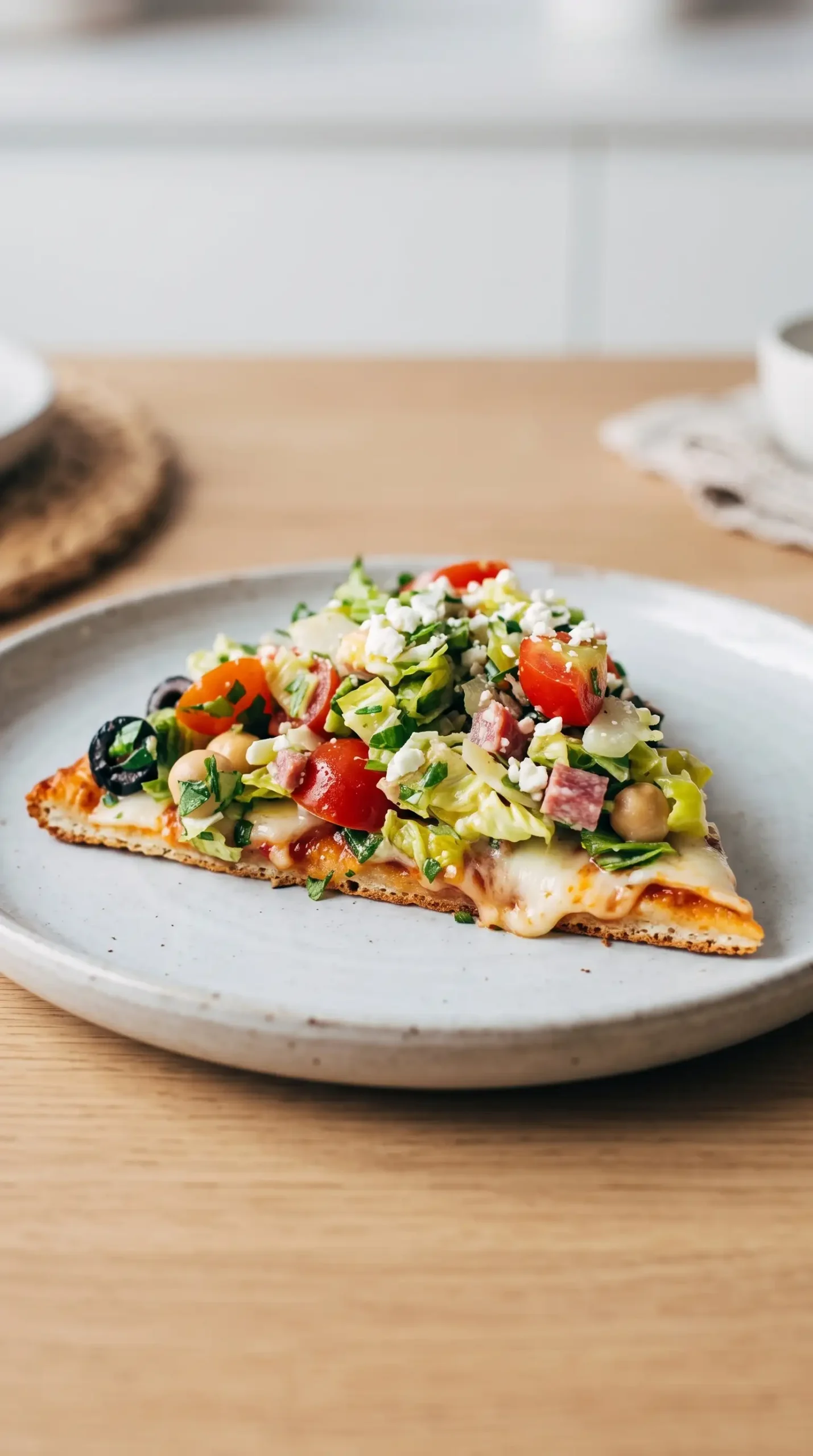
Warm crust, melted mozzarella, and a chilled dressed salad create the defining contrast of chopped salad pizza. The most important cooking decision is protecting that contrast by keeping the salad fresh and adding it after the baked pizza base is ready.
Romaine salad pizza with feta and mozzarella succeeds because each layer keeps its own character. The crust provides structure, the cheeses provide richness, and the chopped topping brings the vegetables and seasoning that make every slice feel balanced.
Questions About Chopped Salad Pizza Preparation
Can the salad topping be prepared before the pizza?
Yes, the chopped salad ingredients can be prepared ahead and combined with dressing when you are ready to serve. Keeping the salad separate from the baked crust helps preserve the texture of the vegetables.
Why is the salad added after baking?
The salad is added after baking because the fresh romaine, herbs, and vegetables are meant to remain crisp. Placing them on the hot pizza after the crust and cheese are finished keeps their texture distinct.
Can chickpeas be used in a chopped salad pizza?
Chickpeas work well because they add a hearty element to the topping without requiring another cooking step. A chickpea chopped salad pizza combines the beans with vegetables, herbs, cheese, and dressing for a satisfying topping.
What makes this different from a regular salad served with pizza?
The chopped salad becomes part of the pizza itself instead of sitting separately on the plate. The dressed vegetables interact with the warm crust, sauce, and cheese to create a combined dish with different textures in every slice.
How can the crust texture be adjusted?
The crust texture depends on the type of crust selected. A shelf-stable option creates a thinner base, while refrigerated dough can provide a thicker texture when prepared according to its package directions.
Chopped Salad Pizza with Feta, Salami and Pepperoncini
Ingredients
Method
- Blend the dressing ingredients together until combined.
- Combine the salad ingredients and toss with the desired amount of dressing. Allow the mixture to sit briefly so the flavors can combine.
- Prepare the pizza crusts according to package directions, adding a light layer of pizza sauce and mozzarella cheese.
- If using refrigerated crusts, pre-bake them as needed before adding the sauce and cheese.
- Place the prepared chopped salad on top of the baked pizzas.
- Slice the pizzas and serve.